

Thúy Kiều (Grace) is a travel blogger and content contributor for Loop Trails Tours Ha Giang. She holds a bachelor’s degree in Sustainable Tourism from Vietnam National University, Hanoi, and has a strong passion for exploring and promoting responsible travel experiences in Vietnam’s northern highlands.
Learn more: Ha Giang Loop Tours
Ask most travelers why they’re heading to Trung Khanh and they’ll say the same thing: Ban Gioc. Which is completely reasonable — Ban Gioc Waterfall is legitimately extraordinary, a cascading curtain of water on the Vietnamese-Chinese border that earns every photograph ever taken of it. If Ban Gioc is the only reason you visit Trung Khanh District, you’ve still made a good decision.
But Trung Khanh is larger than its waterfall, and the travelers who figure that out tend to stay longer than planned.
This is a rural district in northeastern Cao Bang Province with a landscape built from karst ridges, river valleys, chestnut groves, and the unhurried rhythm of Tay ethnic minority communities who’ve been farming this land for generations. The roads between villages are quiet enough that you can ride for an hour and see nothing but water buffalo, terraced paddies, and the occasional farmer heading somewhere on a bicycle with a load strapped to the back that defies physics. Nguom Ngao Cave is here — one of the best cave systems in northern Vietnam, consistently undersold compared to the waterfall it sits alongside. The chestnuts are here, harvested in autumn and sold at roadside stalls in quantities that make it impossible to leave without eating several handfuls. And the weekly markets nearby draw highland communities in traditional dress in the way that has largely disappeared from more tourist-trafficked parts of the north.
None of this replaces Ban Gioc. It adds to it. This guide covers the whole picture.
Learn more: Ban Gioc Waterfall Guide
Trung Khanh (Trùng Khánh) is a district in northeastern Cao Bang Province, sharing a border with China’s Guangxi region to the north. The district center — Trung Khanh town — is the main service hub, with the Ban Gioc area located further north from the town center toward the border.
The district is predominantly populated by Tay ethnic minority communities, one of Vietnam’s largest ethnic groups, who maintain distinct cultural traditions, architectural styles (traditional stilt houses), and agricultural practices across the landscape. Nung communities are also present in parts of the district.
What makes Trung Khanh more than a one-stop waterfall destination is the combination of accessible rural scenery, genuine cultural activity, and the fact that the road network through the district allows for extended exploration without needing a fixed attraction at the end of every turn. The countryside between Trung Khanh town, the Ban Gioc area, and the surrounding villages is some of the most picturesque agricultural landscape in Cao Bang Province.
The district also has a culinary identity that’s unusual for such a small area: the Trung Khanh chestnut (hạt dẻ Trùng Khánh) is specifically renowned across Vietnam — a product of the district’s particular soil and climate conditions that produces a sweeter, more aromatic chestnut than varieties grown elsewhere. In season, they’re everywhere and unavoidable, which is exactly right.
Learn more: Ha Giang Cao Bang 5 Days
Trung Khanh District occupies the northeastern corner of Cao Bang Province, bordered by China to the north, and connecting to Cao Bang city (the provincial capital) to the southwest. The Quay Son River (Sông Quây Sơn) — which forms the border at Ban Gioc — flows through the district.
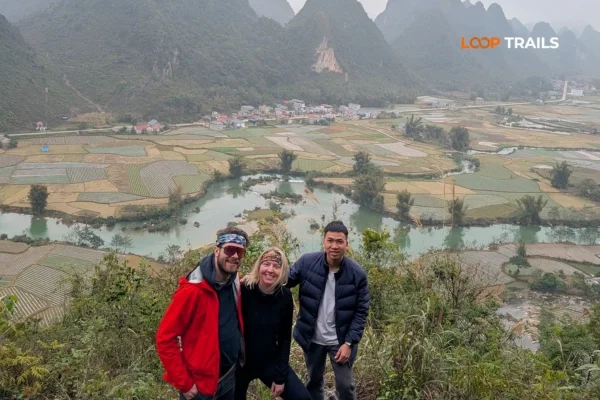
The terrain is classic northern Vietnamese karst: steep limestone formations, forested ridgelines, flat valley floors used for rice cultivation, and the river system that cuts through everything. The landscape is greener and more heavily vegetated than the harsher karst of the Dong Van Plateau in Ha Giang — Trung Khanh has reliable rainfall, dense forest cover, and river systems that keep the district lush across most of the year.
From a regional positioning standpoint, Trung Khanh sits at the northeastern end of the Cao Bang Loop circuit. Travelers coming from Cao Bang city heading toward Ban Gioc pass through or near Trung Khanh town. Travelers doing the Ha Giang–Cao Bang combine route typically reach this area after passing through Nguyen Binh and Cao Bang city, making Trung Khanh a natural final chapter of the combine before returning south.
Learn more: Ha Giang Motorbike tour
The standard approach to Trung Khanh from Cao Bang city follows National Highway 3 (or connecting provincial roads) northeast toward the district. The road passes through increasingly rural and scenic terrain as it approaches the border area.
The route is generally well-maintained by northern Vietnamese standards, with some sections better than others depending on seasonal maintenance. As with all highland roads in this region, conditions after heavy rainfall can change quickly — check locally before setting out in wet season.
Approximate distance from Cao Bang city to Trung Khanh town is roughly 60–65 km; the Ban Gioc area is further north from the district town. Actual travel time depends on road conditions and stops — ask at your accommodation for current estimates rather than relying on map predictions, which often underestimate time on mountain roads.
Learn more: Ha Giang to Cao Bang
For travelers arriving from the Ha Giang direction on the combine route — via Bao Lac and Nguyen Binh — Cao Bang city is the natural staging point before heading northeast into Trung Khanh. Most combine itineraries spend a night in Cao Bang city before making the run to Ban Gioc and the district.
Alternatively, some itineraries approach Trung Khanh from the Tra Linh direction (south of Trung Khanh), which adds an interesting angle on the district’s southern landscape and may include a stop at the Tra Linh market depending on day of the week.
Buses and local transport connect Cao Bang city to Trung Khanh town, with onward local connections toward Ban Gioc. Schedules are not oriented toward independent tourist itineraries, and the last stretch to Ban Gioc from Trung Khanh town typically requires a local xe om (motorbike taxi) or private vehicle. For travelers without their own transport, a guided tour or pre-arranged vehicle is considerably more practical than trying to assemble public connections.
There’s no version of a Trung Khanh guide that skips Ban Gioc, so let’s address it properly.
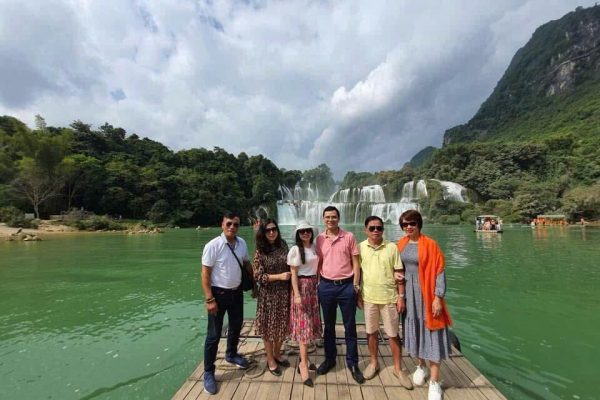
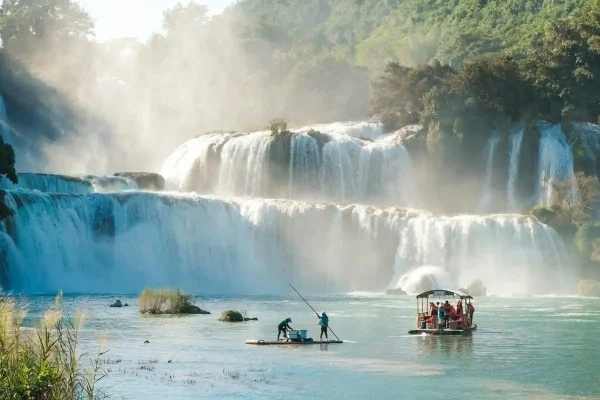
Ban Gioc (Thác Bản Giốc) is the largest waterfall in Vietnam and, by the measurements used, one of the largest in Asia. It sits directly on the border between Vietnam and China’s Guangxi Province, with the Quay Son River flowing over a wide, tiered limestone shelf that drops in cascades — the main fall tumbling in a broad sheet, secondary cascades visible on either side. In the dry season the water is clear and the falls are elegant; in the wet season the volume is immense and the scale is physically impressive in a way that photographs don’t fully capture.
The viewing area on the Vietnamese side is accessible by a short walk from the parking area, and boat trips onto the river approach the base of the falls more closely. The boat option is worth taking if you’ve never been — the perspective from the water is different from the shore view.
A few practical notes:
Learn more: Nguom Ngao Cave
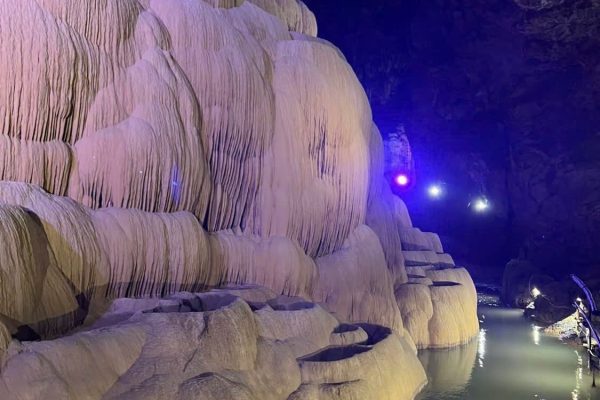
Nguom Ngao (Động Nguom Ngao) is a few kilometers from Ban Gioc and is, in terms of sheer geological spectacle, arguably the highlight of the day for people who care about cave systems. “Nguom Ngao” means “Tiger Cave” in Tay language, reportedly named for the tigers that once sheltered there.
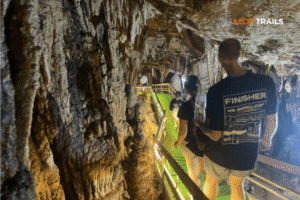
The cave extends for several kilometers into the limestone, with organized tourist access covering a significant section. Inside, it’s a world of oversized stalactites and stalagmites, multi-colored mineral formations, and chambers large enough to lose perspective on scale. The formations are genuinely extraordinary — some resemble coral gardens, others look like frozen waterfalls of mineral deposit. The cave is well-lit along the tourist route, and the path is reasonably accessible.
Nguom Ngao is consistently underrated in most Cao Bang travel content, overshadowed by Ban Gioc despite being directly alongside it. If you visit Ban Gioc without going into Nguom Ngao, you’ve done roughly half a day’s actual content in the area. Budget time for both — they’re not in competition, they’re complementary.
Bring a light jacket into the cave; the temperature drops noticeably from the outside air. Entrance fee applies — check current pricing at the ticket window.
Learn more: Ha Giang Food guide
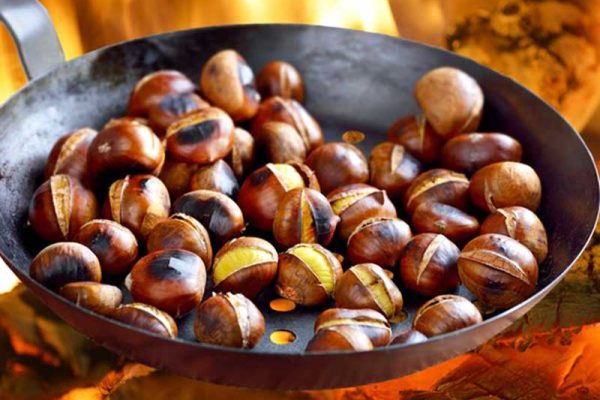
The Trung Khanh chestnut (hạt dẻ Trùng Khánh) deserves its own section because it’s genuinely distinctive and because it’s one of those food products that, once you’ve had it in context, becomes part of how you remember the place.
The chestnuts grown in Trung Khanh — particularly in the area around Trung Khanh town and the villages between the town and Ban Gioc — have a reputation across Vietnam for being the best in the country. The local soil and microclimate produce a chestnut that’s sweeter and more aromatic than chestnuts from other regions, with a texture that holds up well to roasting. In season (October through December roughly, peaking in October–November), roadside vendors sell them freshly roasted in small charcoal-heated pans, paper bags twisted at the top, still warm. They’re cheap, filling, and addictive.
Outside of peak season, you’ll see dried chestnuts and chestnut-based products at markets and local shops. The roasted fresh chestnut experience is seasonal — if your visit coincides with harvest season, don’t miss it.
The chestnut groves themselves are worth looking at — old trees with spreading canopies lining the roadsides and field edges around the district. In autumn, the combination of golden chestnut leaves, harvest-ready rice paddies, and the limestone hills behind makes for a landscape that’s as photogenic as anything in the province.
Traveling through Cao Bang in October or November? The chestnut harvest and autumn rice fields make this the best time to experience Trung Khanh at its most atmospheric. Our [Cao Bang Loop Tours →] include this region — ask us about autumn availability.
Tra Linh District sits just south of Trung Khanh and its weekly market is one of the better highland markets accessible on a Cao Bang circuit. The Tra Linh market follows a weekly schedule (check locally for current market days — schedules can shift) and draws Tay, Nung, and other highland communities from surrounding villages to trade, socialize, and buy goods that the village economy doesn’t produce locally.
The market has the characteristics of genuinely functional highland commerce: livestock sections, fresh produce from highland farms, basic tools and goods, textiles, and a food section where local specialties are cooked and sold on-site. It’s less well-known to international travelers than some Ha Giang markets, which means it’s still an authentic trading event rather than a tourist-oriented production.
Timing your Trung Khanh visit to catch the Tra Linh market adds meaningful cultural texture to what might otherwise be a purely natural-attractions itinerary. Ask at your accommodation in Cao Bang or Trung Khanh town for the current market day schedule.
Learn more: Phia Thap Insense Village
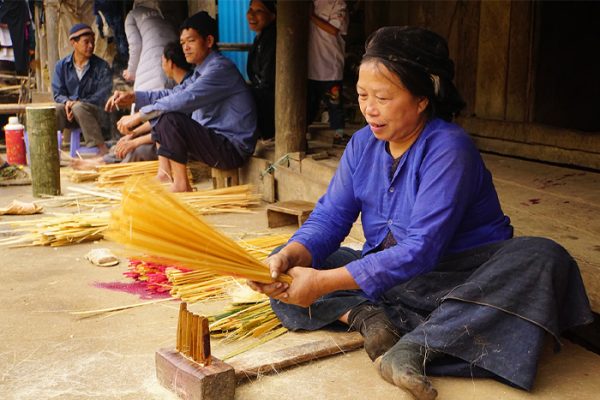
The roads between Trung Khanh town and the Ban Gioc area pass through a sequence of Tay villages that individually offer exactly what you’d hope for from a rural highland district: wooden stilt houses on raised platforms with gardens and livestock below, women weaving or preparing food under the house in the morning hours, children heading to school along the road, fields being worked by hand in the way they’ve been worked for generations.
None of these villages are tourist attractions. They’re places people live, and the experience of riding or driving through them slowly — stopping for water or snacks at a roadside shop, watching the village go about its morning — is one of the things that makes Trung Khanh worth more than a single-day rush to and from the waterfall.
The Tay stilt house architecture is distinctive — long, rectangular structures on stilts with specific construction patterns that vary by sub-group and village tradition. If you’re interested in traditional architecture, Trung Khanh’s village roads are an open-air exhibition that most visitors drive through without realizing what they’re looking at.
Respectful engagement applies here as always: slow down, don’t photograph individuals without permission, and treat the villages as what they are — people’s homes, not backdrop.
The road network in Trung Khanh, particularly between Trung Khanh town and the Ban Gioc area, is quiet enough and flat enough in the valley sections to be excellent cycling territory. A few guesthouses and rental operations in the Ban Gioc area offer bicycle rentals — if you’re spending two nights in the district, a morning or afternoon cycling the village roads is a completely different experience from arriving by vehicle.
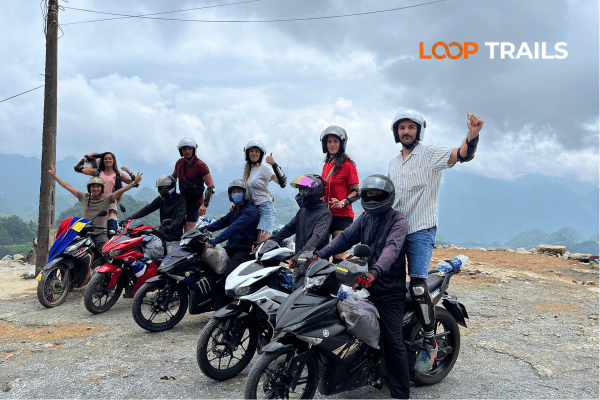
For motorbike riders, the loop roads through the district countryside — off the main highway, through village tracks, along river valley roads — are some of the more enjoyable low-speed riding in Cao Bang Province. The terrain doesn’t have the dramatic elevation of the Ha Giang passes, but what it offers instead is the particular satisfaction of riding through agricultural landscape with the feeling that nobody is scheduled to be anywhere in a hurry, including you.
Learn more: Ha Giang Loop Solo Travel
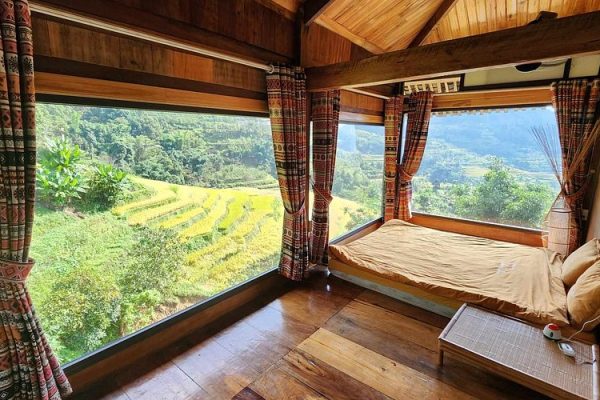
The main accommodation options for visiting Ban Gioc and Trung Khanh District cluster in two places: Trung Khanh town itself, and the Ban Gioc area closer to the waterfall.
Ban Gioc area guesthouses: There’s a growing selection of guesthouses and small homestays in the villages near the waterfall, ranging from basic family homestays to slightly more developed tourist guesthouses with private rooms and hot water. Staying here gives you easiest access to the waterfall at sunrise and sunset, and cuts your riding time from accommodation to the falls to minutes. The tradeoff is that this area is almost entirely focused on Ban Gioc tourism — the village options for evening food are limited and the atmosphere is quiet to the point of being sparse outside of busy periods.
Trung Khanh town: The district center has a wider range of guesthouses and local hotels, more food options, and a more functional town atmosphere. It’s roughly 15–20 km from the Ban Gioc area — close enough that a morning drive to the falls is easy, far enough that you get the town-life experience in the evenings.
Which to choose: If your priority is the waterfall at dawn and maximum time at the falls, stay near Ban Gioc. If you want a base that allows exploration of the wider district and feel more comfortable in a town with services, Trung Khanh town is the better call. A two-night visit can comfortably use both — one night near Ban Gioc, one in the town.
Booking: Accommodation near Ban Gioc can fill up during Vietnamese holidays and peak domestic tourism weekends. If visiting during Tet, national holidays, or the autumn peak season (October–November), book ahead. Mid-week visits outside holiday periods rarely have availability issues.
Learn more: Ngoc Con Valley& Pi Pha Viewpoint
October to November is the peak for good reason. The chestnut harvest is happening, the rice terraces across the district are gold before harvest, the weather is dry and clear, and road conditions are excellent after the wet season. This window is Trung Khanh at its most complete: best food, best landscapes, best light.
September is the final stretch of rainy season, with the landscape at maximum lushness. The falls at Ban Gioc run at higher volume in September — more dramatic but also cloudier and wetter for visiting. The transition from wet to dry usually happens in late September to early October.
December to February is cool to cold. The chestnut season is ending or over, but the countryside is peaceful and uncrowded. Ban Gioc in the winter months, with morning mist rising from the river valley and the falls running at lower but still beautiful volume, is a different but rewarding experience. Bring warm layers.
March to May sees the landscape greening up again and temperatures warming. A good secondary window, particularly in April and May when the valley floor is planted and the fields are vivid green. No chestnuts, but the overall scenery is excellent.
June to August is rainy season. Roads can be affected by flooding or landslides in severe rain periods. Ban Gioc runs at maximum volume and the falls are genuinely spectacular when the river is high — but getting there safely requires current road condition checks. For experienced travelers with appropriate preparation and local guidance, the wet season has its own raw appeal. For first-time visitors or those on tight schedules, it adds uncertainty that’s easier to avoid.
Learn more: Ha Giang Loop route and itinerary
Trung Khanh typically sits at the northeastern end of any Cao Bang circuit. Here’s how it fits into two common itinerary structures:
Short Cao Bang visit (3–4 days from Hanoi):
| Day | Itinerary |
|---|---|
| Day 1 | Hanoi → Cao Bang city (bus or drive) |
| Day 2 | Cao Bang → Trung Khanh → Ban Gioc Waterfall + Nguom Ngao Cave (overnight near Ban Gioc) |
| Day 3 | Morning at Ban Gioc, explore village roads, afternoon Trung Khanh town market area |
| Day 4 | Trung Khanh → Cao Bang → return toward Hanoi |
Ha Giang–Cao Bang Combine (7–10 days):
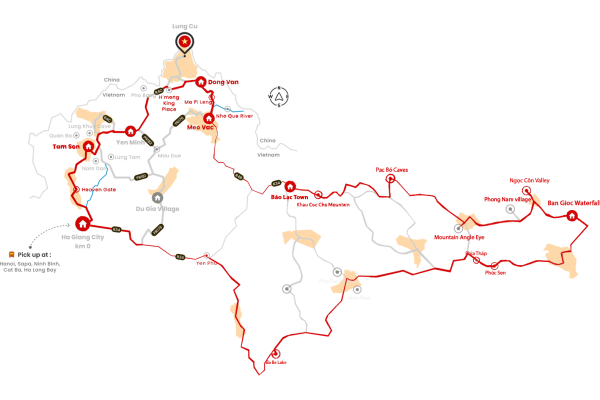
…Ha Giang → Quan Ba → Dong Van → Meo Vac → Bao Lac → Nguyen Binh → Cao Bang city → Trung Khanh → Ban Gioc Waterfall → Nguom Ngao Cave → return via Cao Bang or continue…
In the combine route, Trung Khanh and Ban Gioc represent the eastern terminus — the furthest point from Ha Giang and the natural point at which the route begins turning back. Staying two nights in the Ban Gioc/Trung Khanh area gives you the waterfall, the cave, a village morning, and the drive back through the district landscape without rushing.
Pac Bo add-on: If you’re spending time in Cao Bang city before heading to Trung Khanh, a morning trip to Pac Bo Historical Site in Ha Quang District (north of Cao Bang city) fits naturally as a day before continuing northeast to Trung Khanh. This adds a historical dimension to what might otherwise be a purely natural-highlights itinerary.
Doing the full Cao Bang Loop or the Ha Giang–Cao Bang Combine? Loop Trails runs guided tours covering this entire circuit, including Trung Khanh, Ban Gioc, and all the stops in between. [See our Cao Bang Loop Tours →] or [Ha Giang–Cao Bang Combine Tours →] for full itinerary details.
Learn more: Ha Giang Cao Bang by Jeep and motorbike
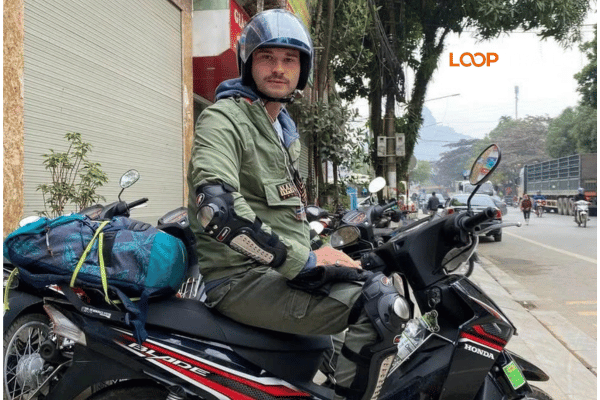
You’re a confident independent rider with experience on mountain roads: Self-drive from Cao Bang city to Trung Khanh is a great option. The road is manageable, the countryside is rewarding to ride through, and having your own motorbike lets you stop freely along the village roads and chestnut groves without waiting for anyone. Bring offline maps and enough cash before leaving Cao Bang city.
You want to focus on experience rather than logistics: An Easy Rider-guided tour with a local guide familiar with Trung Khanh makes the village stops, market timing, and Ban Gioc visit more efficient and more contextual. A good guide knows which roads through the countryside are worth taking, when the light hits the falls best, and where to eat in Trung Khanh town without the tourist markup. That knowledge is particularly useful in a district where the best things aren’t signposted.
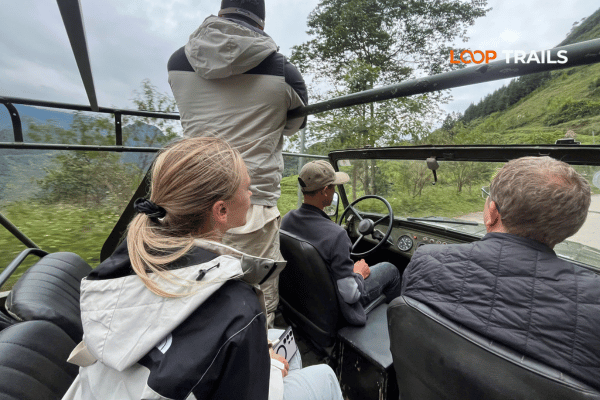
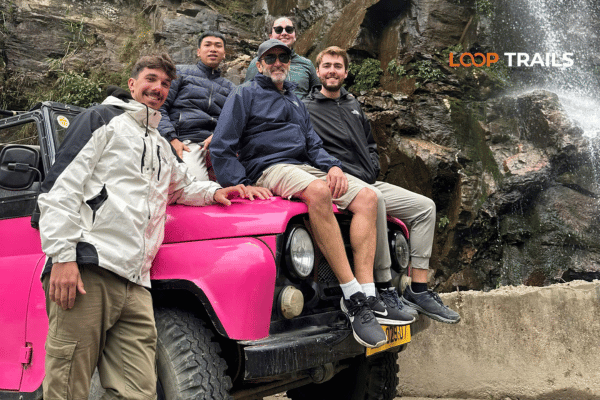
You’re traveling with someone who doesn’t ride, or want maximum comfort: A jeep tour handles the Cao Bang circuit in comfort without requiring anyone to manage a motorbike on the mountain stretches between Ha Giang, Bao Lac, Nguyen Binh, and Cao Bang. You still get out and walk everywhere that matters — the falls, the cave, the village lanes — the jeep just handles the kilometers between them.
Your time in Cao Bang is limited to one full day: Go to Ban Gioc. Start early, arrive by 7–8am, do the boat, walk to Nguom Ngao Cave, have lunch at a local restaurant, ride back via Trung Khanh town in the afternoon. That’s a complete single-day circuit. You’ll miss the chestnuts (unless October–November), the Tra Linh market, and the village roads — but you’ll have seen Cao Bang’s two best-known highlights properly.
Still working out the logistics? [Message us on WhatsApp] and we’ll help you figure out what’s realistic for your timeframe. No pressure — just straight advice on what fits.
Learn more: Ha Giang Safety Tips
Cash: ATMs exist in Trung Khanh town but are not always reliable. Bring sufficient cash from Cao Bang city before heading northeast. The Ban Gioc area near the falls has very limited banking infrastructure.
Entrance fees: Ban Gioc Waterfall and Nguom Ngao Cave both charge entrance fees. Boat trips at Ban Gioc are additional. Current pricing changes periodically — check at the gate rather than relying on figures published online.
Border zone awareness: The Ban Gioc area is right on the Chinese border. This is a legitimate international border zone and there may be checkpoints or restrictions in certain areas. Standard behavior applies: don’t approach or photograph the border directly, follow instructions from site staff and any border personnel, and don’t attempt to cross or get close to the dividing line in the river. For independent riders, verify current access protocols locally before riding the roads closest to the border.
Motorbike licensing and permits: Vietnam’s regulations around foreign nationals riding motorbikes change periodically. Check current requirements before riding independently. If you’re on a guided tour, your operator handles any necessary arrangements.
Chestnut season timing: Fresh roasted chestnuts at their best: October to November. Outside this window, dried chestnuts and packaged products are available but the fresh-roasted roadside experience is seasonal.
Market day research: The Tra Linh market and other highland markets in the district operate on specific days of the week. Check the current schedule locally before planning your itinerary around them — days can change seasonally or for administrative reasons.
Footwear for Nguom Ngao: The cave path is well-maintained but involves uneven stone surfaces and may be damp. Closed shoes with grip are more comfortable than sandals. The cave is cool — bring a light jacket if you run cold.
Ban Gioc boat trips: Boat trips onto the Quay Son River toward the base of the falls typically operate from early morning to late afternoon. Prices and operators vary — book on-site. The boat trip is worth doing at least once for the different perspective on the falls.
Photography at Ban Gioc: The main falls face roughly north-northeast. Morning light comes from the east and is the most flattering for the falls. Midday is harsh. Late afternoon light on the falls can also be beautiful in clear conditions. If you have two visits possible — arrive the first day in the afternoon to orient yourself, and go back at dawn the next morning.
Village etiquette: As with all ethnic minority villages in northern Vietnam, dress modestly, ask before photographing individuals, and approach village interactions with the assumption that privacy is valued. The Tay communities in Trung Khanh have more regular contact with domestic tourists than many highland villages, but that doesn’t mean the usual courtesies don’t apply.
![hdb]](https://looptrails.com/wp-content/uploads/elementor/thumbs/hdb-1-rk74e2avoqawbe0yic0ubqk0mmtbi9mmlra0yskae8.jpg "hdb]")
Learn more: Ha Giang Loop 4 Days 3 Nights
Trung Khanh is best known as the location of Ban Gioc Waterfall — Vietnam’s largest waterfall, situated on the border with China. The district is also renowned for its chestnuts (hạt dẻ Trùng Khánh), Nguom Ngao Cave, traditional Tay ethnic minority villages, and an agricultural landscape that represents one of the more authentic rural areas in Cao Bang Province.
Yes, particularly if you have more than one day. Nguom Ngao Cave alone justifies extending your visit. Add the chestnut harvest season, village roads, and the Tra Linh market, and Trung Khanh has a full two to three days of content for travelers willing to slow down and explore.
Trung Khanh is in northeastern Cao Bang Province, bordering China’s Guangxi region to the north. It’s roughly 60–65 km northeast of Cao Bang city by road, with the Ban Gioc area located further north within the district near the border.
October to November is the optimal window — dry weather, harvest-season landscapes, and the fresh chestnut season all coincide. March to May is a strong secondary option. Avoid rainy season (June–August) unless you’re an experienced traveler comfortable with variable road conditions.
Hạt dẻ Trùng Khánh are chestnuts grown in Trung Khanh District, considered the best in Vietnam due to the local soil and climate conditions. They’re sold freshly roasted at roadside stalls during the October–November harvest season and are a regional food specialty worth seeking out.
The most practical option is by motorbike or car via Trung Khanh. The road runs northeast from Cao Bang city for roughly 80–90 km total to the Ban Gioc area. Buses run from Cao Bang city but are infrequent and not timed for tourist use — a guided tour, rental vehicle, or xe om is more practical for international travelers.
Yes — they’re a few kilometers apart and most visitors do both on the same day. Ban Gioc typically takes 1.5–2.5 hours including a boat trip; Nguom Ngao Cave takes 1–1.5 hours. Together, they fill a morning to early afternoon, leaving the afternoon for village roads or the return ride.
Trung Khanh has a predominantly Tay ethnic minority population, with Nung communities also present. Tay culture is visible in the stilt house architecture, traditional clothing worn at markets, farming practices, and village social structures throughout the district.
Yes, for standard tourist visits. The Ban Gioc viewing area and Nguom Ngao Cave are well within the organized tourist zone. Normal precautions apply near any international border — follow site staff instructions, don’t approach the borderline directly, and stay within designated visitor areas. Current access protocols can be verified locally before your visit.
Yes — it’s typically the final eastern destination on the combine route before travelers return toward Hanoi or Cao Bang city. Spending two nights in the Trung Khanh/Ban Gioc area at the end of a 7–10 day combine tour allows you to finish the route at a natural, unhurried pace.
Contact information for Loop Trails
Website: Loop Trails Official Website
Email: looptrailshostel@gmail.com
Hotline & WhatSapp:
+84862379288
+84938988593
Social Media:
Facebook: Loop Trails Tours Ha Giang
Instagram: Loop Trails Tours Ha Giang
TikTok: Loop Trails
Office Address: 48 Nguyen Du, Ha Giang 1, Tuyen Quang
Address: 48 Nguyen Du, Ha Giang 1, Tuyen Quang
Facebook X Reddit Table of Contents Learn more: Ha Giang Loop Tours This is the question that sits in almost every Ha
Facebook X Reddit Table of Contents Learn more: Ha Giang Loop Tours Most people drive past the Quan Ba area twice on