

Phong Nam Valley: Where to Go After Ban Gioc
Facebook X Reddit Table of Contents Ban Gioc is the photograph. It is on every poster, it is why most people come

Thúy Kiều (Grace) is a travel blogger and content contributor for Loop Trails Tours Ha Giang. She holds a bachelor’s degree in Sustainable Tourism from Vietnam National University, Hanoi, and has a strong passion for exploring and promoting responsible travel experiences in Vietnam’s northern highlands.

Learn more: Cao Bang Loop Tours Vietnam best kept secret
Most travelers who make it to Cao Bang are there for Ban Gioc Waterfall. Which is fair — Ban Gioc is legitimately one of the most stunning natural sights in Southeast Asia. But Cao Bang Province is considerably larger than its most famous postcard, and there are corners of it that even well-traveled visitors to the north consistently miss.
Ngoc Con Valley is one of those corners.
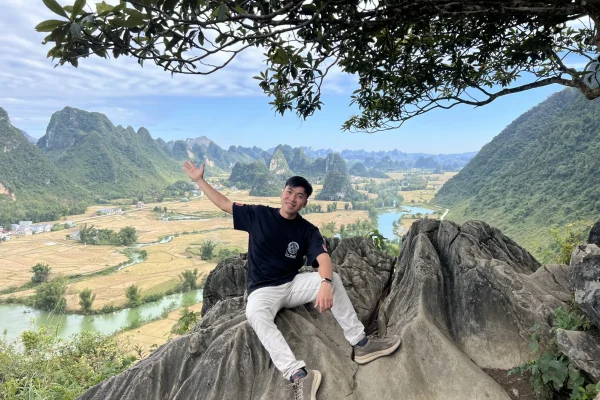
Set deep inside Nguyen Binh District, roughly an hour’s ride south of Cao Bang city, Ngoc Con is a highland valley wrapped in limestone karst, forested ridgelines, and the kind of layered green that only northern Vietnamese mountains produce in rainy and harvest seasons. Pi Pha Viewpoint — perched above the valley — offers one of the more dramatic landscape views in the entire province. And on most days, you’ll have it entirely to yourself.
This guide covers what’s actually at Ngoc Con and Pi Pha, how to get there, when to go, and how it fits into a broader Cao Bang or Ha Giang–Cao Bang combine itinerary. No inflated superlatives, no phantom attractions — just what’s there and what’s worth your time.
Learn more: Ha Giang Cao Bang Loop Jeep tour Guide
Ngoc Con is a commune in Nguyen Binh District, Cao Bang Province. The Nguyen Binh area itself is already relatively under-visited compared to the Ban Gioc corridor, and Ngoc Con sits at an additional remove — accessible, but requiring a deliberate choice to go there rather than staying on the main tourist trail.
Pi Pha is the viewpoint that anchors the area’s growing (if still modest) reputation among travelers doing extended northern Vietnam loops. “Pi Pha” translates roughly from the local Tay language as “cliff of the spirits” or “cliff of heaven” depending on who you ask — and given the views, neither translation feels like an overstatement.
The combination of valley depth, karst scale, and atmospheric conditions (mist in the morning, golden light in late afternoon, the occasional low cloud that drifts through mid-frame) makes this the kind of viewpoint that photographers actively seek out. The fact that it remains almost unknown outside Vietnam’s domestic travel circles is partly geographic — it’s not on the road between any two famous landmarks — and partly a matter of timing. English-language coverage is sparse.
That’s changing, slowly. But for now, Ngoc Con Valley is still genuinely quiet.
Learn more: Ha Giang to Cao Bang
Ngoc Con Commune sits in the highlands of Nguyen Binh District, southwest of Cao Bang city. The broader Nguyen Binh area is itself notable — it’s the district that also encompasses Phia Oac Mountain (Cao Bang’s highest peak) and Phia Den Forest, a cool-climate highland ecosystem that feels nothing like the rest of Vietnam.
Pi Pha Viewpoint sits on elevated ground above the valley floor, accessible by road and then by foot. The exact approach and trail condition can vary — surfaces may differ between seasons — so local inquiry before setting out is always sensible.
Cao Bang to Ngoc Con via Nguyen Binh is the most common approach for travelers based in the provincial capital. The route follows roads southwest into the mountains, passing through Nguyen Binh town before continuing toward Ngoc Con. The roads in this section of Cao Bang Province are generally good quality by northern Vietnamese standards, though mountain roads always warrant attention.
Approximate distance and riding time: check current conditions locally, as road improvements and seasonal damage both affect journey times. Budget at least a half day for the round trip from Cao Bang city if you want time to properly explore the viewpoint and valley — a full day is better.
If you’re using Nguyen Binh as a base (a reasonable choice given the district’s attractions), Ngoc Con is considerably closer. Nguyen Binh town is a small highland center with guesthouses, local restaurants, and basic supplies — a practical overnight option for travelers exploring this part of Cao Bang without the longer ride back to the city.
From Nguyen Binh, you’re looking at a shorter mountain ride to reach Ngoc Con and the Pi Pha area. Ask locally for the most current road conditions and directions — the area has limited signage in English, and the approach to the viewpoint specifically is easier with local guidance.
For travelers arriving from the west — either from Bao Lac or completing the Ha Giang–Cao Bang combine route — Nguyen Binh sits naturally on the route between Bao Lac and Cao Bang city via Highway 34. Ngoc Con is a logical detour off this corridor, adding a day without significantly disrupting a combine itinerary.
If you’re riding this direction and have flexibility in your schedule, the sequence of Bao Lac → Nguyen Binh (overnight) → Ngoc Con / Pi Pha (morning) → Cao Bang city → Ban Gioc works well as a pace that doesn’t rush any individual section.

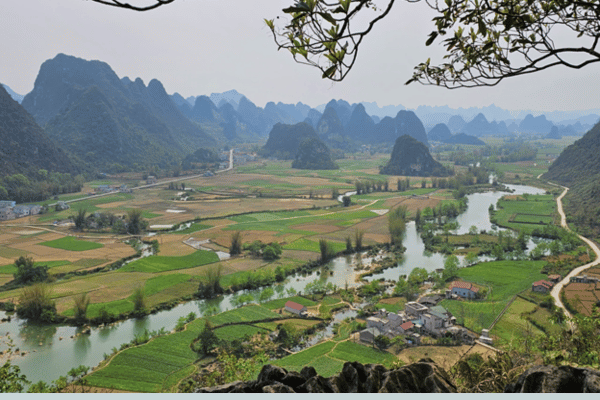
Pi Pha’s view is best understood as a classic highland valley panorama taken to an extreme. From the viewpoint, you look down into Ngoc Con Valley — a deep, green basin enclosed by steep karst ridges and forested slopes. The valley floor far below has a patchwork of cultivated fields, small hamlets, and the threading line of a stream or river depending on the season.
What distinguishes Pi Pha from other northern Vietnamese viewpoints is the sense of enclosure and scale. The valley is deep enough and the surrounding ridges high enough that you genuinely feel suspended above the landscape rather than simply elevated. On clear mornings, when the low cloud sits at mid-ridge level and the valley floor is still in soft light, the effect is close to otherworldly.
It’s not the same kind of view as the Nho Que River from Ma Pi Leng Pass — that’s a more dramatic, sharper-edged landscape. Ngoc Con is greener, softer, more layered. Different travelers will have different preferences. Both are worth seeing if you’re in the region.
The approach to Pi Pha involves riding to the base of the viewing area and then a walk or short climb to the viewpoint itself. Trail conditions depend on recent weather — after rain, paths can be slippery on the steeper sections. Appropriate footwear matters here. Flip-flops are fine for Hanoi street food, not for this.
There is no formal entrance fee or managed structure at the viewpoint as of available information — but conditions and access arrangements in smaller Vietnamese natural sites do change, so verify locally before assuming anything. If there’s a local guide or caretaker when you arrive, consider hiring them for the trail walk; the fee is usually minimal and the local knowledge is useful.
Morning is the clear winner for Pi Pha, for two reasons. First, the mist. Ngoc Con Valley generates atmospheric mist in the early hours, particularly after cool nights, and catching that mist still sitting in the valley from above is the difference between a good photo and a memorable one. By mid-morning on clear days, the mist has usually burned off.
Second, light. The valley orientation and surrounding ridges mean that mid-day sun flattens the landscape significantly. Morning and late afternoon light brings out the depth of the terrain.
If you can only do one, morning. If you have a full day, come back in the late afternoon for comparison — the colors in the valley at golden hour before sunset are different from morning and worth seeing.
Learn more: Ban Gioc Waterfall Guide
The viewpoint is the headline, but the valley itself rewards time beyond just the climb to Pi Pha.
The Nguyen Binh District, which encompasses Ngoc Con, has several waterfalls and forest walking areas. The terrain in this part of Cao Bang is different from the barren karst of Dong Van — there’s actual forest here, denser and cooler, particularly around the elevated areas near Phia Oac.
Specific waterfall locations and trail access in Ngoc Con vary and the infrastructure is minimal by design — these aren’t developed tourist sites. If you have a local guide or your accommodation host knows the area, ask for current recommendations. What’s accessible changes seasonally with water levels and trail conditions.
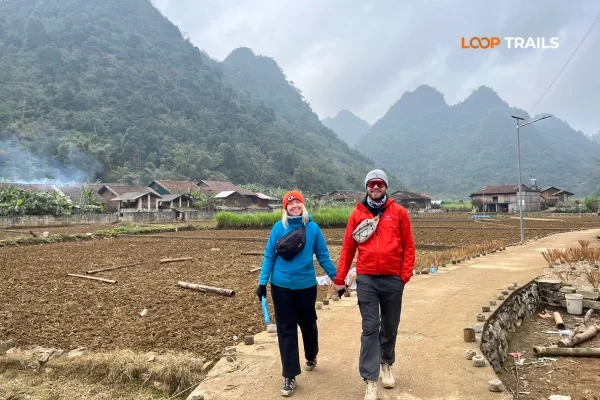
Ngoc Con Commune has Tay and Nung ethnic minority communities living in the valley and on the surrounding hillsides. The villages are unhurried and genuinely rural — not reconstructed for tourism, not particularly interested in posing for photographs. The kind of place where village life is happening around you if you walk through it, not performed at you.
Motorbike exploration of the valley’s smaller tracks between villages is rewarding specifically because it’s slow and undirected. There’s no named attraction at the end of a lane — just farms, wooden houses, kids heading somewhere, elderly residents doing what they do. This is northern Vietnam at a pace that the more touristed parts have lost.
Respectful behavior is the standard note here: ask before photographing individuals, don’t enter homes without an invitation, dress modestly. These villages have limited daily contact with foreign tourists and the social norms are conservative by international backpacker standards. None of this is difficult — it just requires the same basic awareness you’d apply anywhere.
If you’re spending more than one day in the Nguyen Binh area — and it’s worth it — Phia Oac Mountain deserves mention. At over 1,900 meters, it’s Cao Bang’s highest peak, and the area around it (Phia Oac–Phia Den National Park) is a cool-climate highland ecosystem with rhododendron forests, endemic bird species, and walking trails that feel genuinely remote.
Phia Oac and Ngoc Con are in the same district, making them natural partners on a Nguyen Binh-based itinerary. If you have two days in the area, combining Pi Pha one day and Phia Oac the next gives you the panoramic valley experience and the forest immersion in sequence.

Learn more: Ha Giang Loop 4 Days 3 Nights
Nguyen Binh town is your best base for food — a few local restaurants along the main street serving Vietnamese staples, rice dishes, and highland specialties. Don’t expect menu translation or English-speaking staff in most places. Point at the dishes others are eating. This works everywhere in rural Vietnam.
In Ngoc Con itself, food options are minimal outside of what your accommodation host might prepare. If you’re day-tripping from Nguyen Binh, eat before you go and bring snacks and water. The viewpoint area has no food infrastructure.
Things worth eating in the Nguyen Binh area:

Learn more: Ha Giang Loop route and itinerary
Ngoc Con Valley and the Nguyen Binh highlands follow the standard northern Vietnamese highland seasonal pattern, with some nuances specific to the elevation and forest character of this area.
September to November is the most consistently rewarding window. The wet season is ending, harvest colors appear in the terraced fields, road conditions improve, and the temperatures are pleasantly cool without being cold. Mist in the valley is common in the early morning during this period, which is exactly what you want at Pi Pha.
March to May is the secondary peak, particularly appealing because the area’s forest is actively growing and the various shades of green are at their most intense. The rhododendron flowering near Phia Oac happens in spring and is worth timing a visit around if that interests you.
December to February brings cold to the highlands — not just cool, genuinely cold at elevation, with frost possible on the higher ground near Phia Oac. Roads can be affected by frost in early morning. If you’re visiting during this window, budget for later start times and appropriate gear. The landscapes in winter light have their own appeal, and the lack of any tourism infrastructure means you’ll have the valley entirely to yourself.
June to August is rainy season. Trail access to Pi Pha and surrounding areas can be affected by landslides and track erosion. Roads in the valley may have damaged sections. Traveling this period is possible with appropriate preparation and local guidance, but the reward-to-risk ratio is lower than other seasons for casual visitors.
Learn more: Ha Giang Loop for Beginners
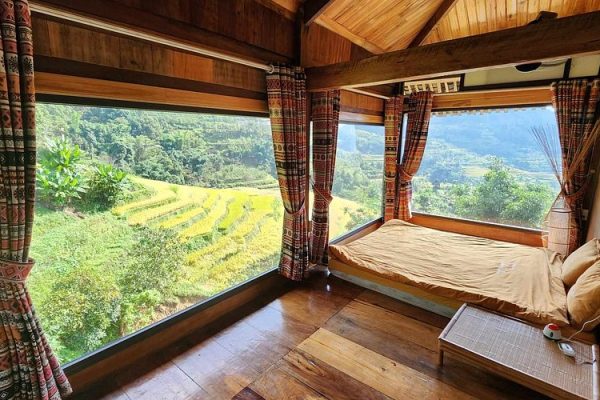
The most practical base for exploring Ngoc Con Valley is Nguyen Binh town, which has a small selection of guesthouses (nhà nghỉ) and local hotels catering primarily to Vietnamese domestic tourists and business travelers. Standards are functional rather than luxurious — private rooms, basic amenities, wifi that varies, and usually a shared or small private bathroom.
Staying directly in Ngoc Con Commune is possible if you arrange a homestay with a local family — this option isn’t consistently bookable through online platforms, but local guesthouses in Nguyen Binh often know who in the surrounding villages accepts overnight guests. If your Vietnamese is functional or you have a guide, asking directly at the district center is the most reliable approach.
For travelers on a guided tour, accommodation in Nguyen Binh or the Ngoc Con area is typically arranged by your guide or operator — which is one of the less-discussed but genuinely valuable aspects of having local support on remote routes.
Cao Bang city is the alternative base — larger, more accommodation options, better food scene — but adds meaningful riding time to each day if you want to properly explore the Nguyen Binh highlands rather than doing a single rushed day trip.
Learn more: Cao Bang Travel Guide
Ngoc Con works best when it’s given a full day rather than squeezed into a multi-stop day as an afterthought. The Pi Pha Viewpoint alone is half a day minimum if you want the morning mist, the valley walk, and a proper look around. Add village exploration and a Phia Oac extension and you have a comfortable full day.
Here are two practical ways to slot it into a broader northern Vietnam itinerary:
Option A — Cao Bang City as Base Day 1: Arrive Cao Bang, rest, explore city market Day 2: Nguyen Binh District — Pi Pha Viewpoint + Ngoc Con Valley (full day) Day 3: Phia Oac Mountain Day 4: Head north toward Ban Gioc Waterfall (via Tra Linh or direct) Day 5: Ban Gioc + Nguom Ngao Cave, return to Cao Bang
Option B — Ha Giang–Cao Bang Combine …Ha Giang → Quan Ba → Dong Van → Meo Vac → Bao Lac → Nguyen Binh (overnight) → Ngoc Con / Pi Pha (morning) → Cao Bang city → Ban Gioc…
In the combine route context, Nguyen Binh is a natural overnight break between Bao Lac and Cao Bang city — and spending a morning at Pi Pha before continuing east costs you two to three hours at most. That’s a small investment for one of the better views you’ll encounter on the entire route.
Planning the Ha Giang–Cao Bang combine? This route — including stops at Ngoc Con and Nguyen Binh — is something our guides do regularly. [See our Ha Giang–Cao Bang Combine Tours →]
Learn more: Ha Giang Cao Bang by Jeep and motorbike
Ngoc Con Valley is off the obvious tourist trail, and how you get there matters. Here’s a quick breakdown by traveler type:
You’re an experienced rider, comfortable navigating without English signage: Self-drive works well here. The roads from Nguyen Binh to Ngoc Con are manageable, and the valley exploration rewards a go-slow, stop-when-curious approach that self-driving enables. Download offline maps beforehand, bring cash, and check local road conditions before riding the valley’s smaller tracks.
You want someone who knows the area: An Easy Rider guide with local knowledge of the Nguyen Binh area is particularly valuable in Ngoc Con. The trail to Pi Pha, the best village tracks, the waterfall access points that are actually worth visiting versus those that are overgrown or dry — local knowledge makes the difference between a good day and an excellent one.
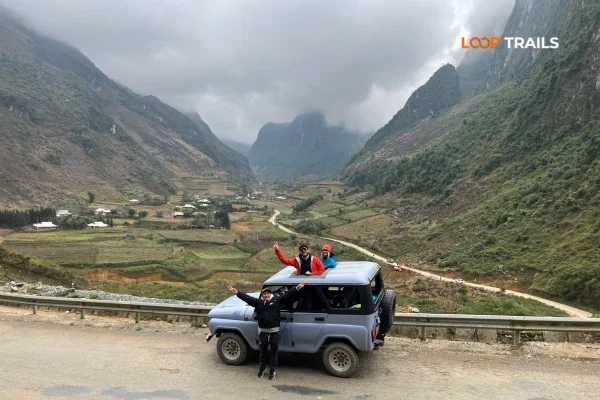
You’re traveling with people who don’t ride: A jeep tour covering Cao Bang’s highlights — including Nguyen Binh and Ngoc Con — lets you access the viewpoint and valley without anyone needing to manage a motorbike on mountain roads. The jeep gets you to the Pi Pha trailhead; the walk up is on foot regardless.
You have three days or fewer for Cao Bang: Prioritize Ban Gioc Waterfall and Nguom Ngao Cave, then add a half-day at Pi Pha if your schedule has the space. Don’t try to cram Phia Oac in on the same day as Ngoc Con unless you have an early start and a very flexible afternoon.
Not sure which fits best? [Browse our Cao Bang Loop Tours →] or [check our Ha Giang–Cao Bang Combine Tours →] and message us on WhatsApp if you want to talk through an itinerary. We’ll tell you straight what’s realistic for your timeframe.

Learn more: Ha Giang Safety Tips
Navigation: English-language signage in the Ngoc Con area is essentially nonexistent. Offline maps (Google Maps offline or Maps.me) are useful but may not have the smaller valley tracks updated. Having Ngoc Con Commune (Xã Ngọc Côn, Huyện Nguyên Bình, Cao Bằng) saved as a location pin helps.
Trail footwear: The walk to Pi Pha involves uneven and sometimes steep terrain. Decent trail shoes or boots make the difference. If you’ve been doing the whole northern loop in sandals, this is the moment to dig the shoes out of the bottom of your bag.
Water and snacks: No food or drink vendors at or near the Pi Pha trailhead. Bring more water than you think you need — the combination of altitude, humidity, and physical effort adds up.
Weather windows: Mist in the valley is typically a morning phenomenon. If you arrive midday on a clear day and find the view unremarkable, come back the next morning before 8am. The difference is significant.
Photography: A wide-angle lens or your phone’s ultra-wide mode is worth using at Pi Pha — the valley is genuinely wide, and a standard focal length clips the edges of what makes the view special. Bring a spare battery if you’re shooting heavily; cold highland air drains batteries faster than lowland conditions.
Cash: Nguyen Binh town has ATM options, but don’t rely on them working — bring sufficient cash from Cao Bang city before heading into the district. Guesthouses and restaurants in this area deal in cash only.
Motorcycle permits and documentation: Regulations around foreign nationals riding motorbikes in Vietnam, required licenses, and regional permits can change. Don’t rely on this article for legal guidance — verify current requirements with a reputable local operator or official source before you ride.
Ask at your guesthouse: The single most useful piece of pre-departure research you can do in the Nguyen Binh area is a ten-minute conversation with your guesthouse owner or guide. Current road conditions, best trail access, which waterfalls have water this week — none of this is in a guidebook. It’s in the heads of local people who were on those roads yesterday.
Learn more: Phia Thap Insense in Cao Bang
Pi Pha is a high viewpoint above Ngoc Con Valley in Nguyen Binh District, Cao Bang Province. It offers panoramic views down into a deep highland valley surrounded by karst limestone ridges and forested hillsides. It’s accessible by motorbike plus a short trail walk and remains largely unknown to international tourists.
Ngoc Con is a commune in Nguyen Binh District, Cao Bang Province, in northern Vietnam. It’s located southwest of Cao Bang city, roughly in the highlands between the Cao Bang–Ha Giang border region and the provincial center. Nguyen Binh town is the nearest service hub.
The most practical approach is by motorbike from Nguyen Binh town, then a short walk to the viewpoint itself. The roads are manageable for experienced riders; having a local guide helps significantly for navigating smaller tracks and confirming current trail access. No formal transportation service runs to Pi Pha.
If you’re already in the Cao Bang area and have a day to spare, yes — it’s one of the better valley panoramas in northern Vietnam and sees almost no international traffic. If you’re on a tight schedule focused purely on Ban Gioc Waterfall, it may require extending your stay to fit in.
Early morning is best for the valley mist effect that makes Pi Pha particularly photogenic. September to November (autumn) is the best overall season — harvest colors, clearer skies, and good road conditions. Avoid mid-day visits in all seasons if you’re primarily there for the views.
Ngoc Con works best as part of an extended Cao Bang visit or the Ha Giang–Cao Bang combine route. On the combine, Nguyen Binh is a natural overnight stop between Bao Lac and Cao Bang city, and Pi Pha fits into a morning on that route without major itinerary disruption.
The Nguyen Binh area has several waterfalls accessible by motorbike and trail. Infrastructure is minimal and accessibility varies seasonally. Ask locally in Nguyen Binh town for current recommendations — conditions change with rainfall and trail maintenance.
The valley is home primarily to Tay and Nung ethnic minority communities, who farm the valley floor and surrounding hillsides. Their villages are active and genuine rather than tourist-oriented, and a respectful walk or ride through them is one of the better parts of visiting the area.
Yes — Phia Oac Mountain and Phia Den Forest (part of Phia Oac–Phia Den National Park) are in the same Nguyen Binh District. Phia Oac is Cao Bang’s highest peak and an excellent companion destination to Ngoc Con if you have two days in the district.
Not strictly required, but strongly recommended for first-time visitors to northern Vietnam. A guide’s knowledge of current trail conditions, village access norms, and local roads saves time and improves the experience considerably — particularly in a district as off-the-beaten-path as Nguyen Binh.
Contact information for Loop Trails
Website: Loop Trails Official Website
Email: looptrailshostel@gmail.com
Hotline & WhatSapp:
+84862379288
+84938988593
Social Media:
Facebook: Loop Trails Tours Ha Giang
Instagram: Loop Trails Tours Ha Giang
TikTok: Loop Trails
Office Address: 48 Nguyen Du, Ha Giang 1, Tuyen Quang
Address: 48 Nguyen Du, Ha Giang 1, Tuyen Quang
Facebook X Reddit Table of Contents Ban Gioc is the photograph. It is on every poster, it is why most people come
Facebook X Reddit Table of Contents Learn more: Ha Giang Loop Tours Northern Vietnam is a long way from Europe and it
Facebook X Reddit Table of Contents Learn more: Ha Giang Loop Tours Every operator on the Ha Giang Loop says “small groups”.