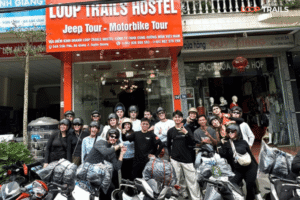


Thúy Kiều (Grace) is a travel blogger and content contributor for Loop Trails Tours Ha Giang. She holds a bachelor’s degree in Sustainable Tourism from Vietnam National University, Hanoi, and has a strong passion for exploring and promoting responsible travel experiences in Vietnam’s northern highlands.
Learn more: Ha Giang Loop Tours
Most people come to Hà Giang for the roads — the switchbacks, the rock plateau, the ridiculous views from Mã Pí Lèng. That’s fair. But somewhere around day two, usually with a bowl of something smoky and unfamiliar in front of you at a roadside shack while rain clouds roll over the Nho Quế River valley, you realize the food has quietly become one of your favorite parts.
This isn’t a tourist food trail with fancy restaurants and curated menus. The Ha Giang Loop runs through one of Vietnam’s most remote ethnic minority regions — home to H’Mong, Tày, Dao, Lô Lô, and other communities who have been growing, foraging, and fermenting food in these mountains for centuries. What ends up on your plate reflects that: smoky, fermented, hearty, occasionally challenging, and genuinely unlike anything you’ll find in Hanoi or Hội An.
This guide covers every dish worth trying, where to find it, how much to pay, and how to eat well regardless of your budget or dietary restrictions. No fluff, no “must-try exotic foods!” clickbait — just practical information for people actually riding the Loop.
Lorem ipsum dolor sit amet, consectetur adipiscing elit. Ut elit tellus, luctus nec ullamcorper mattis, pulvinar dapibus leo.
Learn more: Ha Giang Loop 2 Days 1 Night
Up here, food and culture are inseparable. The Sunday markets at Đồng Văn, Mèo Vạc, and Lũng Cú aren’t tourist attractions — they’re where ethnic minority communities from surrounding villages come to trade, socialize, and eat together. Sitting down to a bowl of thắng cố at one of these markets, surrounded by H’Mong women in embroidered indigo jackets, is one of those travel moments you don’t manufacture.
The cuisine of the Đồng Văn Karst Plateau is also shaped heavily by the landscape. Corn grows where rice struggles — you’ll see it drying on rooftops, woven into fences, ground into porridge. Buffalo and pigs roam freely across hillsides. Wild herbs and greens are foraged from the forest. The result is a food culture that’s intensely local, seasonal, and tied to altitude in a way lowland Vietnamese cuisine simply isn’t.
Understanding what you’re eating — and why it exists — makes the Loop a richer experience. So let’s get into it.
Learn more: Ha Giang Loop 3 Days 2 Nights
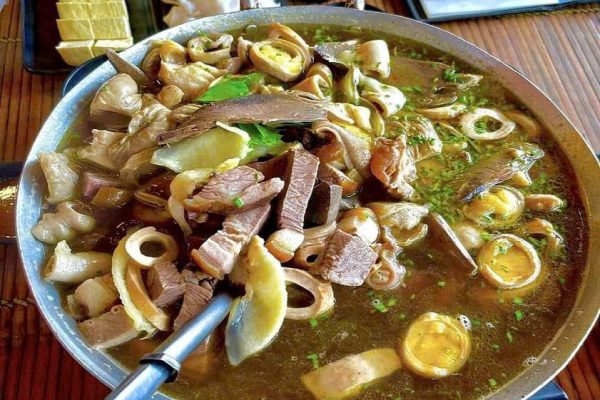
This is the dish that separates the curious from the cautious. Thắng cố is a slow-cooked stew traditionally made with horse meat and offal — organs, bones, everything — simmered for hours in a clay pot with herbs, spices, and sometimes blood. It has a deeply fermented, earthy smell that hits you before you see it.
It originated with the H’Mong people and is still the centrepiece dish at Sunday markets. A bowl typically costs 30,000–50,000 VND depending on where you are. The taste is rich, gamey, and genuinely complex — not easy going for everyone, but if you’re open to it, it’s one of the most distinctive food experiences in northern Vietnam.
Not every version uses horse; some restaurants substitute beef or buffalo for a milder result. If you’re unsure, ask — ngựa means horse, bò means beef.
Where to find it: Đồng Văn Sunday Market, Mèo Vạc Market, roadside restaurants throughout the plateau.
This one’s universally loved. Glutinous rice is packed into green bamboo tubes along with water and sometimes coconut milk, then slow-roasted over an open fire until the bamboo chars and the rice inside steams to a smoky, slightly sweet perfection. You peel back the bamboo like a wrapper and eat it by hand.
Cơm lam is sold at roadside stalls, homestays, and markets for around 10,000–25,000 VND per tube. It’s common everywhere on the Loop and pairs well with smoked meat or just eaten on its own as a snack while you take in the view from a mountain pass.
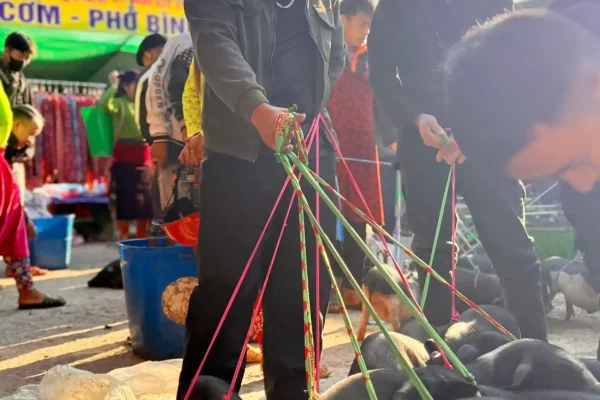
The name translates roughly to “armpit pig” — a reference to the small, wiry black pigs that roam the mountainsides and are carried to market by hand. These are genuinely free-range animals, eating what they find on the hillsides, which gives the meat a flavour that’s noticeably different from factory-raised pork: leaner, more intense, slightly wild.
It’s usually grilled over charcoal and served with dipping sauces, rice, and wild greens. Expect to pay more than you would for regular pork — this is a prized local product. A full meal with this pork as the centrepiece might run 80,000–150,000 VND per person.
Where to find it: Đồng Văn, Mèo Vạc, and in homestay dinners if you’re lucky enough to be at the right place on the right night.
Learn more: Ha Giang Loop 4 Days 3 Nights
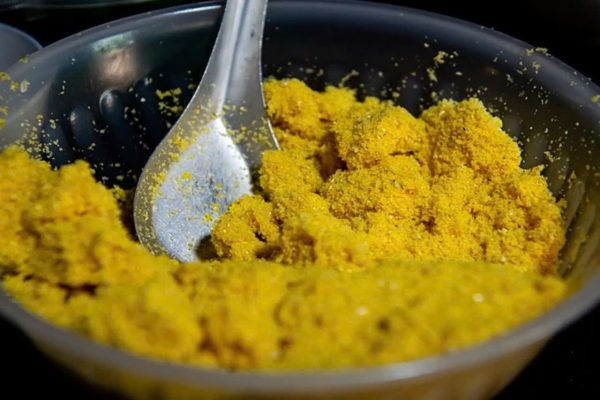
This is everyday food in H’Mong households, not a dish designed for tourists. Mèn mén is made from steamed ground corn, cooked plain or with a small amount of fat, and is the staple carbohydrate on the plateau where rice is harder to grow. It’s dense, slightly grainy, and nutritionally sustaining.
You’re unlikely to find it on a restaurant menu as a standalone dish — it more often appears as a side at homestay dinners or at market stalls where locals are eating. Some travelers find it bland; others appreciate its honesty. Either way, trying it gives you real context for how communities here have traditionally eaten.
One of the great snack foods of northern Vietnam. Strips of buffalo meat are heavily seasoned with chili, ginger, lemongrass, and other spices, then hung above a wood-burning fire and slow-smoked over days or weeks until they are completely dry and deeply flavored. The result is intensely chewy, spicy, and aromatic — something between beef jerky and charcuterie, but smokier and more complex than either.
You’ll see it hanging in bundles at market stalls and convenience shops all along the Loop. It keeps well, packs well, and is excellent for long riding days. A small bag costs around 30,000–80,000 VND depending on size and quality. It also makes an excellent gift to bring back from the trip.
Not the broth-based phở you know from Hanoi. Phở chua is a cold noodle dish — flat rice noodles mixed with a sour, vinegar-based sauce and topped with shredded pork, fried shallots, roasted peanuts, and fresh herbs. It has a refreshing tartness that makes it perfect after a hot morning on the road.
It’s a Tày dish, more common around Hà Giang City and Yên Minh than on the higher plateau. Look for it at breakfast and lunch spots in town centres. Price is typically 25,000–40,000 VND.
Mornings on the Loop start early, and breakfast is important. Most towns have stalls selling bánh cuốn — steamed rice rolls filled with minced pork or mushroom, served with a light fish sauce broth. Hà Giang’s version tends to be slightly thicker and less refined than the Hanoi style, but equally satisfying.
Other common breakfast options include: sticky rice with sesame salt (xôi vừng), bún bò (spicy beef noodle soup), corn cakes, and simple fried eggs with rice. Budget 20,000–40,000 VND for a full street breakfast.
Don’t rush breakfast. Sitting at a plastic stool on a foggy mountain morning eating fresh noodles is one of the small pleasures of the Loop that doesn’t photograph well but stays with you.
Every proper meal at a homestay or local restaurant comes with a plate of rau rừng — foraged wild greens from the surrounding forest and hillsides. The specific mix changes by season and location, but you’ll commonly find bitter greens, young fern shoots, water spinach, and varieties that have no direct English translation.
They’re typically stir-fried simply with garlic and a little oil, and they anchor the meal. Don’t overlook them. The variety and freshness of these greens is genuinely better than anything you’ll find in a lowland market.
Learn more: Ha Giang Cao Bang 5 Days 4 Nights
If there’s one drink defined by the Đồng Văn plateau, it’s corn wine. Made from fermented corn — the same crop that feeds the plateau through harsh winters — it’s a clear, high-proof spirit that varies enormously in quality depending on who made it and how recently. A good batch is smooth with a warm sweetness; a rough batch will make your eyes water.
It’s offered everywhere: at homestays, at markets, at roadside stops. Refusing is fine — nobody forces it — but accepting a small glass as a gesture of hospitality is part of the cultural experience. Locals drink it in small ceramic cups.
Practical warning: It’s stronger than it tastes. If you’re riding the next morning, go easy. Many a traveler has underestimated a late-evening corn wine session and regretted it on a mountain switchback.
At lower elevations around Yên Minh and Đồng Văn, roadside stalls press fresh sugarcane juice to order. Ice cold, intensely sweet, about 10,000 VND. It’s a perfect mid-ride refresher.
The region also produces some decent green tea — the terraced tea fields around Hoàng Su Phì and Lung Tam are legitimate. Simple tea-houses in town centres serve it fresh and cheap, and it’s a good caffeine alternative to the instant coffee packets you’ll find at most homestays.
Learn more: Ha Giang Cao Bang Ba Be Lake 6 Days 5 Nights
The starting point. Hà Giang City has the widest food variety on the Loop — a proper restaurant scene by regional standards, with options ranging from phở and bún chả to full sit-down meals with a menu.
What to eat here: Phở chua, bánh cuốn, fresh banh mi from morning stalls near the market, and bún bò. There are also a handful of Western-friendly cafes near the guesthouses on Trần Hưng Đạo Street if you need a coffee and an English menu moment before setting off.
Breakfast tip: The morning market area near the Lô River bridge has excellent street food from around 6–9am.
A quiet town about 2–3 hours from Hà Giang City that most riders use as a lunch or overnight stop. The main street has several local restaurants with picture menus or English translations. Nothing fancy, but honest food at honest prices.
What to eat here: Lunch rice dishes (cơm) with your choice of stir-fried greens, pork, and tofu. Simple and filling. Phở chua also appears here. This is a good town for vegetarians — the vegetable options are decent.
The food scene here punches above its size. Đồng Văn is the cultural hub of the plateau — a UNESCO-recognized karst geopark town with a restored old quarter, regular ethnic minority market gatherings, and an increasing number of traveler-friendly eateries that have learned to serve both local and Western palates.
What to eat here: Thắng cố (especially on market days), smoked buffalo meat, cơm lam, grilled corn with chili butter from street vendors, and hot pot dinners with fresh mountain vegetables. The old quarter has a few small restaurants with views of the stone houses and lantern lights after dark.
Market day: Đồng Văn has a Sunday market that draws H’Mong, Lô Lô, and other communities from surrounding villages. Arrive by 8am for the best food atmosphere. The market thins out by midday.
Most travelers’ favourite food stop on the Loop, and for good reason. Mèo Vạc is a more authentically local town than Đồng Văn in terms of food — less tourist infrastructure, more genuine market energy, and the best setting on the plateau (it sits above the Nho Quế River gorge with views toward Mã Pí Lèng Pass).
What to eat here: The best thắng cố on the Loop. Grilled corn. Fresh river fish from the Nho Quế if it’s on the menu (ask — it appears seasonally). Strong coffee at one of the small cafes facing the valley. The Sunday market here is arguably better than Đồng Văn’s for food — more local, less tourist.
Practical note: Mèo Vạc Sunday Market is one of the highlights of the entire Loop trip. If your itinerary allows, time your schedule to be here on a Sunday morning.
The lower valley section of the Loop — warmer, greener, and culinarily different from the high plateau. You’re back in rice-growing territory here, which means fresh rice dishes, lighter flavors, and more diverse vegetables.
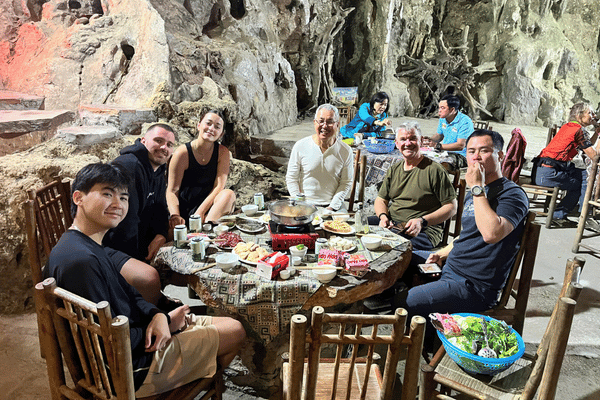
What to eat here: Fresh fish from the Nho Quế or local streams (this is the best area for it), local sticky rice, and simpler countryside cooking. Homestay dinners in Du Già tend to be generous — multiple dishes, fresh ingredients, and the host family cooking what they actually eat.
Learn more: Explore just the Cao Bang Loop
This question comes up constantly, and the honest answer is: both, for different reasons.
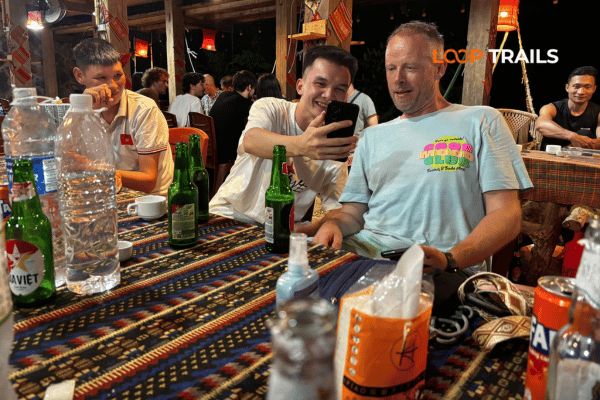
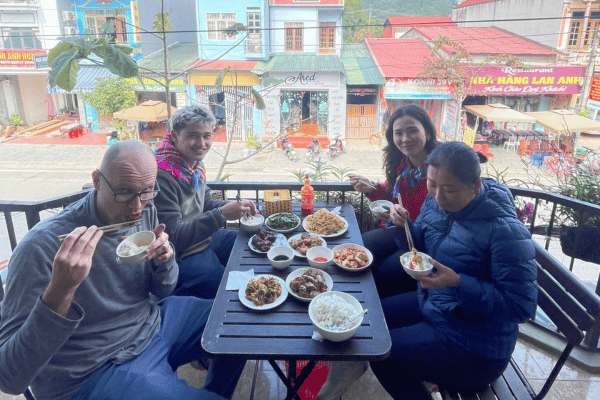
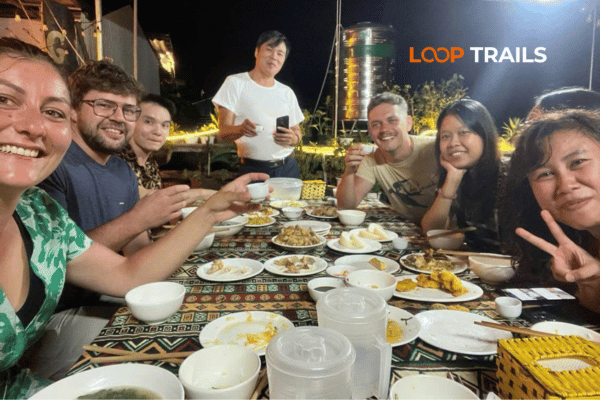
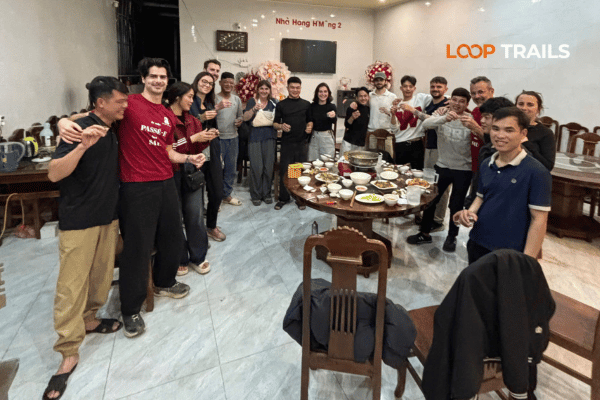
Homestay dinners are often the best meals on the Loop. A local family cooking for 4–10 guests puts out a proper spread: multiple dishes, fresh vegetables from their garden, smoked meats they’ve prepared themselves, rice wine, and real hospitality. The experience of eating with a family — watching the grandmother roll sticky rice, sharing corn wine around a wood fire — is irreplaceable.
Most homestays charge around 80,000–150,000 VND for dinner (check with your specific homestay, as prices vary and change). Breakfast is usually included or minimal cost. Some homestays provide lunch if arranged in advance; others don’t, so plan accordingly for long riding days.
Local restaurants offer more control and flexibility — you can choose what you eat, cater to dietary needs more explicitly, and skip the communal eating obligation if you’re tired. They’re also where you’ll try dishes that homestay families don’t typically cook: phở chua, certain market dishes, specific regional specialties.
The best approach: eat dinner at homestays whenever possible, and use local restaurants for breakfast, lunch, and whenever you want to explore a town’s food culture at your own pace.
If you’re booking a guided tour, your guide can be an invaluable food resource — they know which stalls are fresh, which market sections to visit, and can order for you in Vietnamese with adjustments for your preferences. [Loop Trails Easy Rider and jeep tours include a local guide who handles exactly this — check our tour options here →]
Learn more: Ha Giang Market Days
The market system is one of the most distinctive aspects of Hà Giang’s food culture, and it’s tied to the ethnic minority communities’ traditional social calendar rather than tourist schedules.
Key markets with strong food scenes:
At these markets, food is eaten communally — you sit on low benches at outdoor stalls, surrounded by people who’ve ridden or walked hours to be there. Common market foods: thắng cố, grilled meat on skewers, cơm lam, steamed buns, fresh greens, roasted corn, and copious amounts of corn wine.
Street food etiquette is simple: point at what looks good, hold up fingers for how many you want, pay what’s indicated (often written on a piece of cardboard or just communicated by gesture). Prices at markets are generally honest — there’s no tourist pricing system here the way there might be at Hội An night markets.

Learn more: Ha Giang Food guide
Hà Giang is one of the most affordable eating destinations in Vietnam. Here’s a realistic daily food budget:
| Meal | Budget option | Mid-range |
|---|---|---|
| Breakfast | 20,000–30,000 VND | 30,000–50,000 VND |
| Lunch | 30,000–50,000 VND | 60,000–100,000 VND |
| Dinner (restaurant) | 50,000–80,000 VND | 80,000–150,000 VND |
| Dinner (homestay) | 80,000–120,000 VND | 100,000–150,000 VND |
| Snacks/drinks | 20,000–40,000 VND | 30,000–60,000 VND |
| Daily total | ~200,000–320,000 VND | ~300,000–500,000 VND |
At current exchange rates (check latest), this is roughly USD $8–12/day on a budget and $12–20/day eating more comfortably. The Loop is genuinely cheap to eat on — you don’t need to budget-sacrifice to eat well here.
Where money is wasted: Pre-packaged snacks at guesthouses and tourist-facing convenience stores are overpriced relative to what you get. Buy smoked buffalo meat and local snacks at markets instead.
Learn more: Ha Giang Loop route and itinerary
This is a real concern and worth addressing honestly: the Ha Giang Loop is not an easy destination for strict vegetarians or vegans, but it’s manageable with some preparation.
The local diet is heavily meat- and offal-centric. Most dishes have some pork fat or fish sauce in the base. “Vegetarian” isn’t a concept that translates easily in remote H’Mong villages.
What works:
What doesn’t work:
Practical tips: Learn the Vietnamese phrase “Tôi ăn chay” (I eat vegetarian) and “Không thịt, không cá” (No meat, no fish). A guide or your tour operator can communicate dietary needs in advance to homestay hosts — this is one of the genuine advantages of booking a guided tour rather than going fully self-organized.
For gluten intolerance: most traditional dishes (rice-based, grilled meats, fresh greens) are naturally gluten-free, but soy sauce appears in some cooking. Communication is the key issue — Vietnamese kitchens don’t have a strong awareness of gluten as a dietary category.
For halal requirements: there are no certified halal restaurants on the Loop route. This is a genuine limitation — travelers with strict halal requirements should plan carefully and consider what they’re comfortable with.
Learn more: Ha Giang Safety Tips
Drink bottled or filtered water. Tap water is not safe to drink anywhere on the Loop. Bottled water is available everywhere for 5,000–10,000 VND per 1.5L bottle. Many homestays provide a kettle — boiled water is fine.
Ice is a judgment call. At established restaurants in town centres, commercial ice is generally fine. At small roadside stalls, particularly in remote areas, be more cautious. When in doubt, drinks without ice are always an option.
Corn wine quality varies significantly. Homemade batches at homestays are usually fine but vary in strength and cleanliness. In very rare cases, improperly distilled spirits can cause serious illness. If something smells chemically wrong, don’t drink it. This is uncommon, but worth knowing.
Raw meat at markets: Thắng cố is slow-cooked for hours and is generally fine. The raw butchery you’ll see at markets (fresh pork, offal on open counters) is normal for the region — cooked fresh throughout the day. Apply the same judgment you would to any outdoor market.
Stomach adjustment: Even if nothing is unsafe, your stomach may need a day or two to adjust to new fermented flavors, spices, and food preparation styles. Start with simpler dishes on day one — rice, grilled meat, fresh greens — before diving into thắng cố and corn wine.
Street stalls that have turnover (lots of locals eating, food being cooked fresh to order) are almost always safer than something that’s been sitting out. Follow the crowds.
Learn more: Ha Giang Motorbike Rental
This is worth thinking about before you book, because your tour format genuinely affects what you eat.
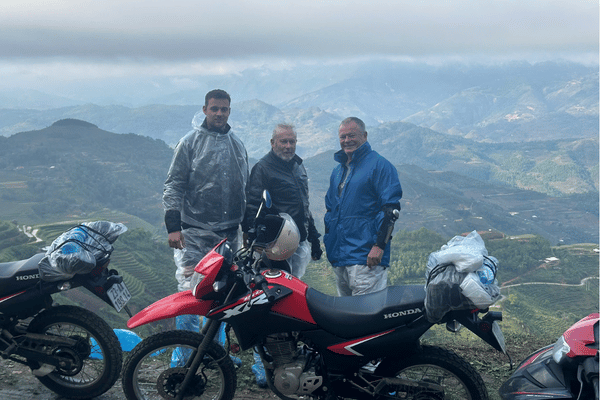
Easy Rider (Guided Motorbike Tour) Your guide sits behind you or leads the way on their own bike, and since they’re local — usually from an ethnic minority community themselves — they know exactly where to eat. They’ll take you to market stalls that self-drivers walk past, order food for you in Vietnamese with any adjustments, explain what you’re eating, and often have relationships with specific homestay families who cook particularly well. If food culture is a priority for you, this is the tour format that delivers it most richly.
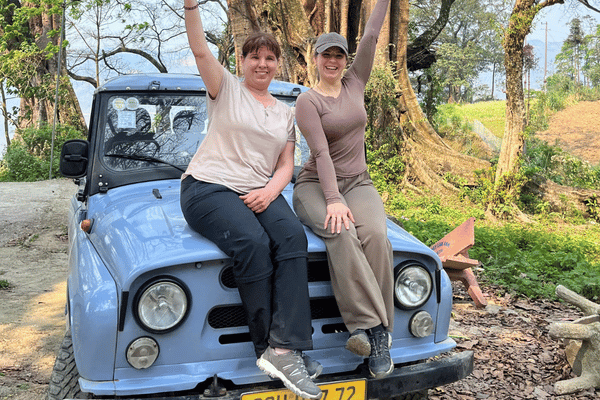
Jeep Tour Slightly more comfortable, great for couples and small groups, and your driver-guide plays the same food ambassador role as an Easy Rider guide. The advantage here is that you can carry more snacks and supplies between stops, and you’re slightly less exposed to the elements (relevant if you’re eating hot food in rain). Our jeep tours on the Loop include guide-led food stops throughout the day.
Self-Drive Motorbike Maximum freedom — you eat where you want, when you want. The trade-off is that without a local guide, you’ll miss some food experiences. You may walk past the best thắng cố stall at a Sunday market without knowing it. For self-drivers, the advice is: when you see locals crowded around a food stall, stop. That’s the only rule you need.
Not sure which is right for you? Take a look at our Ha Giang Loop tour options — Easy Rider, jeep tours, and self-drive motorbike rental are all available through Loop Trails, and we’re happy to talk through which fits your trip. [Browse tours →] or [send us a message on WhatsApp →] and we’ll sort it out quickly.
Learn more: Ha Giang Loop by Jeep for Families & Groups
Food on the Ha Giang Loop isn’t about restaurants. It’s about a bowl of horse stew at a muddy market table on a Sunday morning, a bamboo tube of sticky rice eaten standing on a mountain pass, a homestay grandmother pressing corn wine on you before you’ve even sat down. The flavors are unfamiliar, sometimes challenging, occasionally extraordinary — and they are inseparable from the places and people that produce them.
Eat as locally as you can. Try the things that make you hesitate. Talk to your guide about what you’re eating. And budget a little extra time at every market, because the food experience there is just as worth your attention as the view from Mã Pí Lèng.
The Loop rewards the curious in every direction. Food included.
Thắng cố (horse stew) is the most culturally significant dish — it’s tied to H’Mong tradition and is central to Sunday market culture. Cơm lam (bamboo sticky rice) and smoked buffalo meat are also iconic and more widely enjoyed by travelers.
Yes, with normal travel precautions. Stick to cooked food, drink bottled water, and follow the crowd to busy stalls. The region doesn’t have a reputation for food-safety issues beyond the usual advice for rural Vietnam.
Budget travelers can eat very well for 200,000–320,000 VND per day (roughly USD $8–12). Mid-range eating — including homestay dinners and trying more varied dishes — runs 300,000–500,000 VND/day. Food is genuinely cheap here.
Yes, but it requires effort and some compromise. Rice with stir-fried vegetables and tofu is widely available. Strict vegans will find it harder, especially at homestays. Learning key Vietnamese phrases and booking a guided tour (where your guide can communicate your needs in advance) makes this significantly easier.
Thắng cố is the centrepiece — go early (before 9am) for the best atmosphere. Also try cơm lam, grilled meat skewers, roasted corn, and smoked buffalo meat. Don’t skip the corn wine if you’re open to it.
Generally yes, particularly at established homestays and restaurants. Quality varies — very cheap, unbranded batches from unknown sources are where occasional issues arise. If it smells chemically off, skip it. Drink in moderation, especially the night before a full day of riding.
Some in Đồng Văn and Hà Giang City do. Most elsewhere do not. Picture menus are common point at what you want. A guided tour removes this friction entirely.
Mèo Vạc, especially on market days. It has the most authentic food atmosphere, the best thắng cố, and the most compelling market setting. Đồng Văn is a close second with slightly more variety for Western palates.
Yes ,smoked buffalo meat (thịt trâu gác bếp) is the best edible souvenir. It’s vacuum-packed at some market stalls and keeps for several weeks. Corn wine is also sold in decorative ceramic bottles. Both are available at Đồng Văn and Mèo Vạc markets.
Yes. All guided tours (Easy Rider and jeep) include local guide-led food stops throughout the day, and guide knowledge of local markets, restaurants, and homestay dinners is part of what you’re paying for. Dietary requirements can be communicated in advance.
Contact information for Loop Trails
Website: Loop Trails Official Website
Email: looptrailshostel@gmail.com
Hotline & WhatSapp:
+84862379288
+84938988593
Social Media:
Facebook: Loop Trails Tours Ha Giang
Instagram: Loop Trails Tours Ha Giang
TikTok: Loop Trails
Office Address: 48 Nguyen Du, Ha Giang 1, Tuyen Quang
Address: 48 Nguyen Du, Ha Giang 1, Tuyen Quang
Facebook X Reddit Table of Contents Learn more: Ha Giang Loop Tours This is the question that sits in almost every Ha
Facebook X Reddit Table of Contents Learn more: Ha Giang Loop Tours Most people drive past the Quan Ba area twice on