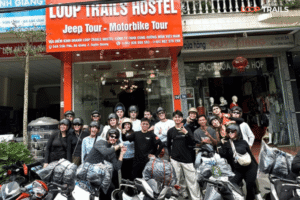


Thúy Kiều (Grace) is a travel blogger and content contributor for Loop Trails Tours Ha Giang. She holds a bachelor’s degree in Sustainable Tourism from Vietnam National University, Hanoi, and has a strong passion for exploring and promoting responsible travel experiences in Vietnam’s northern highlands.
Learn more: Ha Giang Loop Tours
If you’ve spent any time scrolling Vietnam content over the past few years, you’ve seen Ha Giang. The serpent road on Ma Pi Leng Pass. The river so green it looks photoshopped. Someone in a helmet shouting “easy rider!” into a GoPro.
Here’s the thing: it actually does live up to it. But not in the way most short videos suggest. Ha Giang is not a quick stop. It’s not Instagram in three days and home. It’s a region of stone-walled villages, market days that haven’t really changed, and roads that demand attention. If you come ready for that, it becomes the kind of trip you talk about for years.
This guide is for travelers who want the real picture: where it is, when to come, what the loop actually involves, what it costs, and how to choose between riding pillion, driving yourself, or sitting in a jeep. No fluff, no recycled blog clichés.
Learn more: Ha Giang Loop 2 Days 1 Night
Most of northern Vietnam is beautiful. Sapa, Mu Cang Chai, Cao Bang, Ban Gioc: each has its moment. What makes Ha Giang stand out is the combination.
You get karst limestone mountains that look like a different planet, ethnic minority villages where Sunday markets are still the social event of the week, and a road network that strings it all together into one continuous, dramatic loop. There’s no other place in Vietnam where you can ride for four days and feel like every single bend gives you a new postcard.
It’s also still a place where mass tourism hasn’t flattened the texture. You’ll see homestays, sure, and a few cafes with English menus. But ten minutes outside any town you’re back in stone fields, buffalo crossings, and grandmothers carrying firewood that weighs more than they do.
It’s the kind of region you understand better with a guide who lives there, which is why the Easy Rider model became so popular here in the first place.

Learn more: Hanoi Sleeper Bus
Ha Giang province sits in Vietnam’s far north, bumping right up against the Chinese border. The capital is Ha Giang City, a relaxed mid-sized town that serves as the gateway to the loop. Almost every traveler starts and ends here.
This is the most common route by a wide margin. There are sleeper buses and limousine vans running daily between Hanoi and Ha Giang City. The journey is roughly an overnight ride, with most departures leaving Hanoi in the late afternoon or evening so you arrive in Ha Giang early the next morning.
A few things that help:
If you’re flying into Hanoi and want to head north right away, you can do it the same day, but most people prefer one night in Hanoi to reset.
You can connect from Sapa via Lao Cai, but it usually involves a transfer somewhere along the way. The same goes for Cat Ba and Ha Long: there isn’t a direct route, so you’ll typically loop back through Hanoi.
Coming from Da Nang, Hoi An, or Ho Chi Minh City? Fly into Hanoi first. Trying to skip Hanoi adds days and headaches you don’t need.
Quick CTA: If figuring out logistics already feels like work, that’s exactly what we handle. Loop Trails packages can include the bus from Hanoi, transfers, gear, and the loop itself, so you arrive and ride. Browse the Ha Giang Loop tours page for the current line-up.

Learn more: Ha Giang Loop Weather
There isn’t really a “wrong” month, but the experience shifts a lot across the year. Here’s the honest breakdown.
This is one of the best windows. Mornings are cool, afternoons mild, and the valleys go through several waves of flowers: peach blossoms early in the season, then plum, then the green starts pushing through the rice terraces. Roads are mostly dry. Crowds are reasonable. If you’re picking blind, this is a safe bet.
Summer is the lush, dramatic version of Ha Giang. Rice fields turn deep green. Waterfalls run hard. The downside: rain. Storms can hit suddenly, and landslides occasionally close sections of road for a few hours or a day. Riding is still very doable, just plan a buffer day if you can. Bring real rain gear, not a poncho from a 7-Eleven.
This is peak season for a reason. The rice terraces in the lower valleys ripen into gold, the air is clear, the light is good in every direction. Booking ahead becomes important: tours, homestays, and even bus tickets go quickly on weekends. If you want the postcard version of Ha Giang, this is it.
Cold, but stunning. Late October through November brings the famous tam giac mach (buckwheat) flowers covering whole hillsides in pink and purple. December and January can be genuinely cold up at altitude, sometimes near freezing in the early morning, with thick fog on the passes. If you handle cold well and pack properly, winter Ha Giang has a moody beauty most travelers never see.
A simple rule: if you only have one shot and you’re flexible, aim for late September to early November or March to May.
Learn more: Ha Giang Loop 3 Days 2 Nights
When people say “Ha Giang Loop,” they’re talking about the multi-day road trip starting and ending in Ha Giang City, threading through the karst mountains of the Dong Van Karst Plateau Geopark. The loop crosses some of the most dramatic mountain road in Southeast Asia.
You’ll hear it described as 3 days, 4 days, 5 days. Each version has trade-offs.
The fastest realistic option. You’ll cover the main highlights: Quan Ba, Yen Minh, Dong Van, Ma Pi Leng Pass, Meo Vac, and back. It’s a great choice if you’re tight on time, but you’ll spend a lot of hours on the bike each day and skip a few of the slower, more atmospheric villages.
Adding one more day changes the trip. You can detour through Du Gia, swim in a waterfall, take time at viewpoints instead of clicking and moving, and actually have a proper evening at a homestay. If your schedule allows, this is the version we usually recommend.
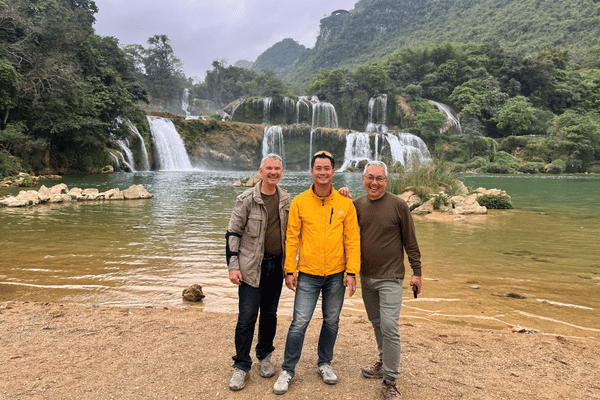
Cao Bang is Ha Giang’s quieter eastern cousin. Ban Gioc Waterfall, Phia Oac, the Quay Son River: it’s a different aesthetic, more rivers and emerald pools, fewer towering passes. Combining the two regions makes for an unforgettable 7 to 10 day ride.
If this version interests you, our Ha Giang and Cao Bang combined tours are designed exactly for that: a single continuous trip across both regions without the headache of figuring out the connection roads yourself. We also run dedicated Cao Bang loop tours for travelers who want to focus on that region alone.
Learn more: Ha Giang Loop 4 Days 3 Nights
This is the single most important decision you’ll make. Let’s go through each.
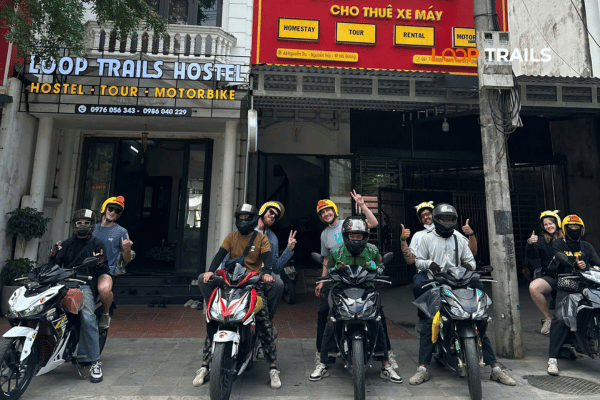
You sit on the back. A local guide drives. They speak English (to varying degrees), know the roads cold, and handle every logistical thing: fuel, lunch stops, photo viewpoints, homestay check-in, communication.
Best for:
You give up some independence but you gain a guide, safety, and constant insider context. A good Easy Rider can completely change your trip.
You rent a bike and ride solo, usually with a small group, sometimes with a lead guide who rides ahead and a tail guide at the back. Total freedom, your own pace, and a real sense of accomplishment when you finish the loop.
Best for:
A real warning: this loop is not the place to learn. The roads are mountainous, sometimes wet, with switchbacks, livestock, and unpredictable trucks. If your only riding experience is a scooter on flat tourist beaches, please be honest with yourself. The hospital in Ha Giang City sees too many tourists every season.
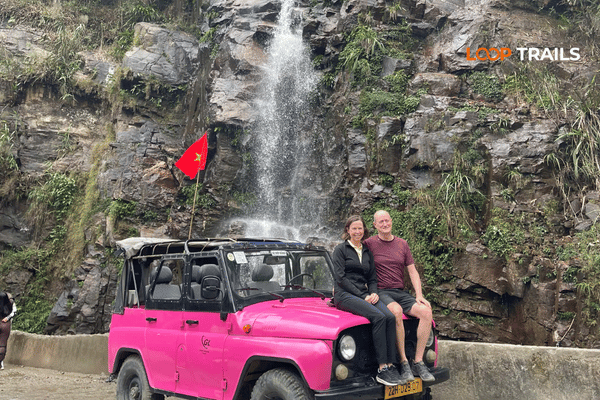
A driver, air conditioning, weather protection, and a comfortable seat for as many days as you want. You won’t get the wind-in-the-face experience, but you also won’t be cold, wet, or tired. Jeeps add an off-road, slightly more adventurous feel and tend to photograph well at viewpoints.
Best for:
Learn more: Ha Giang Cao Bang 5 Days 4 Nights
Quick mental test:
There’s no shame in pillion. Many of the best travelers I’ve met on this loop chose Easy Rider and had a better trip because of it.
Quick CTA: Still on the fence? Send us a quick message on WhatsApp with your dates and group size and we’ll suggest the format that fits. We don’t push the most expensive option, we push the one that fits your trip. Or browse the current Ha Giang Loop tours to see all formats side by side.
Learn more: Cao Bang Loop 3 Days best kept secret
This is the highlights reel. Most loops will hit most of these, but the order and time spent at each varies.
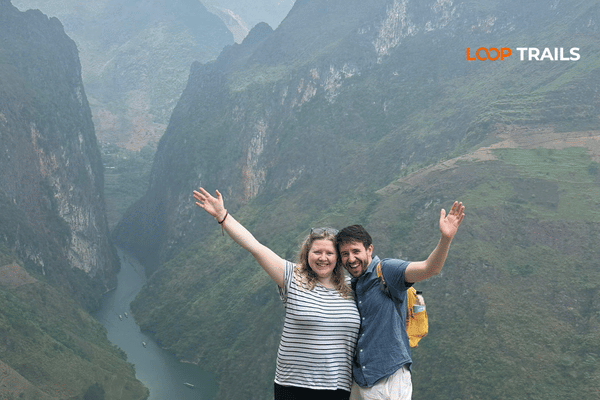
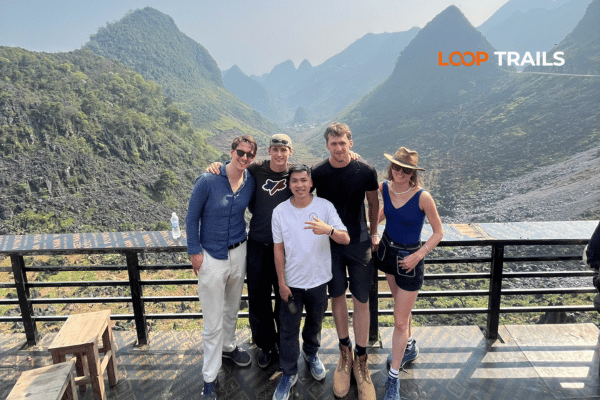
The headline. A high mountain pass between Dong Van and Meo Vac with viewpoints overlooking the Nho Que River canyon. The scale takes a moment to register: you’re looking down what is sometimes called the deepest canyon in Southeast Asia, with the river a thin emerald ribbon nearly a kilometer below.
You’ll stop here. Multiple times. Every angle is different.
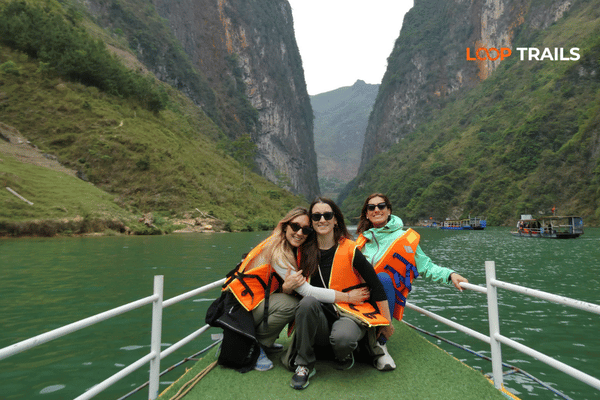
You can ride down to the river and take a small boat through Tu San Canyon. The walls rise vertically on either side, the water is unbelievably green, and the sound carries strangely. It’s a short trip, usually under an hour on the boat, but it’s one of those experiences that ends up on more memory cards than people expect.
Boat schedules can change with water levels and weather. Check the day-of, or let your guide handle it.
A small mountain town with a quiet old quarter of stone houses, a historic Sunday market, and a few cafes that serve good coffee in a French-Hmong hybrid style. Most loops overnight here. Walk around in the early evening when the lights come on, it has a different mood than midday.
Learn more: Lung Cu Flag Tower
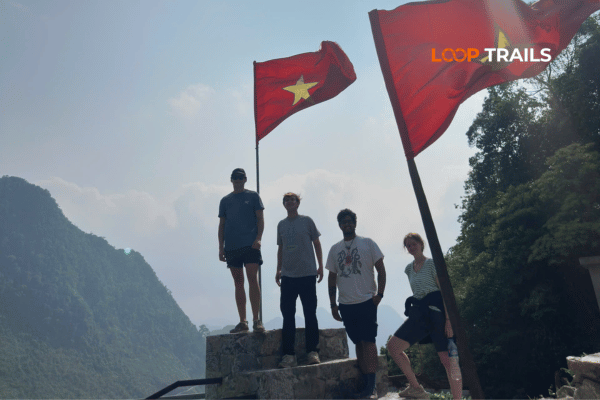
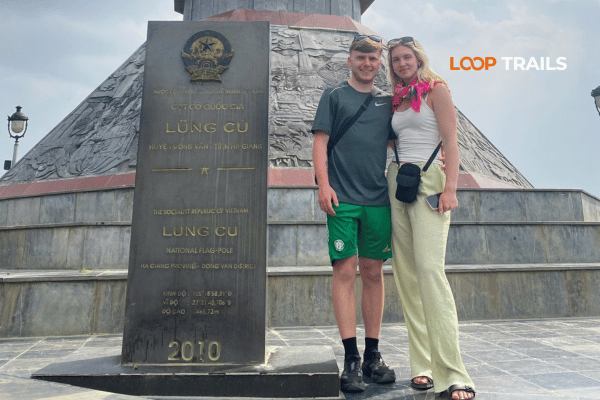
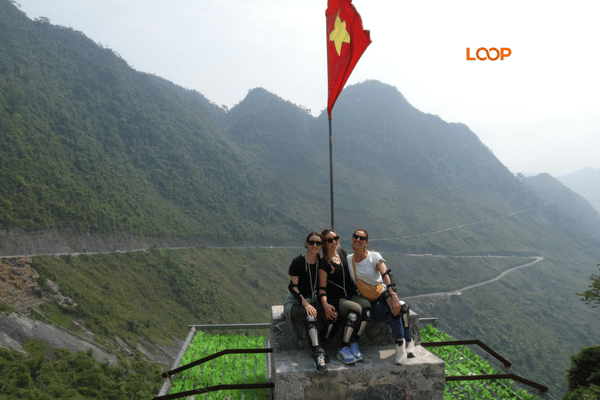
The northernmost point of Vietnam, marked by a large flag tower on a hill. Climbing up gives you a sweeping view across into China. It’s a side trip from the main loop and you’ll lose half a morning to do it. Whether it’s worth it depends on the kind of traveler you are. Symbol-hunters love it. Pure-scenery travelers sometimes skip it.
Meo Vac is smaller and rougher than Dong Van, in a good way. The Sunday market is one of the most authentic ethnic minority markets in northern Vietnam: H’Mong, Lo Lo, and Giay people coming in from surrounding villages to trade everything from livestock to textiles to home-distilled corn liquor. If your itinerary lines up with a Sunday morning here, treat it as a highlight, not a sidebar.
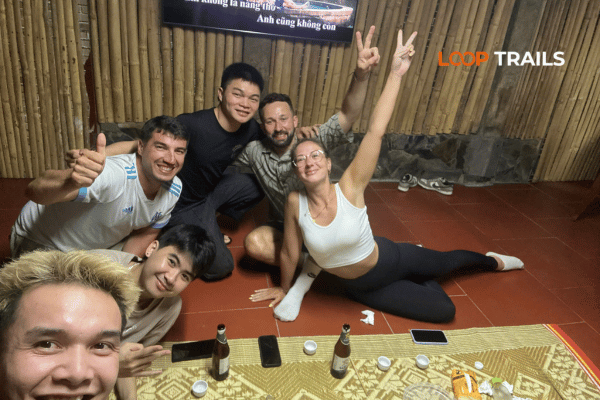
Often included in the 4-day loop. Du Gia is a small village in a green valley, with a swimming hole and waterfall that travelers usually visit in the late afternoon. This is the unwind portion of the trip: cold water, warm rice wine at dinner, conversation that goes longer than expected.
The first major viewpoint after leaving Ha Giang City. You’ll see the famous “fairy bosom” twin mountains and a wide green valley below. It’s an early stop, usually within the first hour or two of riding, and it sets the tone.
The former residence of the H’Mong king, set in a small valley near Sa Phin. Stone walls, courtyards, and a backstory that involves opium, French colonial politics, and minority autonomy. The architecture and history make it a worthwhile 30 to 45 minute stop, particularly if you like context with your scenery.
Learn more: Corn wine “Happy Water” in Ha Giang
Food in Ha Giang is mountain food: hearty, simple, often made from what’s grown that week.
A few things to try:
Markets are the social fabric here. Each town has its own day. Beyond Meo Vac on Sunday, Dong Van also has a Sunday market, and smaller villages run rotating market days throughout the week. If your guide tells you tomorrow is a market day in a place you wouldn’t otherwise go, listen to them.
Learn more: Ha Giang Homestay Guide
Most loop trips alternate between simple homestays and basic hotels.
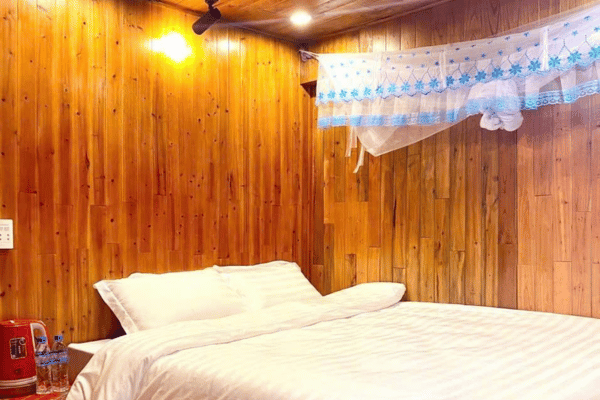
Homestays are usually large wooden stilt houses, sometimes with private rooms, sometimes dormitory-style with mattresses on the floor and curtain dividers. Shared bathrooms, hot water, dinner cooked by the family, and the chance to actually meet people who aren’t part of the tourism industry. Some travelers love them. Others find the lack of privacy a stretch.
Hotels in Dong Van and Meo Vac are basic but comfortable. Private bathroom, hot shower, AC, sometimes an elevator if you’re lucky. If you’ve been on the road and want a quiet night, this is the version most people prefer.
Most tour operators, including Loop Trails, mix the two so you get a taste of both. If you have a strong preference, mention it when you book.
Learn more: Ha Giang Cao Bang Ba Be Lake 6 Days 5 Nights
I’ll be honest here: prices change too often to put exact numbers in a guide that should stay relevant. What I can give you is the frame.
Your total cost depends on:
What’s usually included in a tour package:
What’s usually not included:
For the latest prices, the simplest move is to message us directly on WhatsApp with your dates and group size. We’ll send back honest options. Beware of any operator quoting suspiciously low rates: in Ha Giang, very cheap usually means old bikes, untrained guides, or hidden costs that show up on day one.

Learn more: Ha Giang Road Conditions 2026
This is the section that doesn’t make the highlight reel but probably matters most.
The roads on the Ha Giang Loop are paved for the most part, but they are mountain roads. Expect:
Drive slowly. Hold your line on the right. Use your horn lightly on blind corners (this is normal and helpful here, not rude). If a section feels too much, stop and breathe before continuing.
Vietnam’s rules around foreign drivers’ licenses, IDPs (International Driving Permits), and motorbike riding have shifted over the years and are interpreted differently in different provinces. Rather than give you a number that might be wrong by the time you read this, the honest advice is: check the latest official guidance close to your travel date, and ask your tour operator what their current policy is.
In any case, here’s what’s not in dispute:
Loop Trails can advise on what we currently see on the ground, but we won’t pretend to be the final word on regulations. Rules can change, and you should verify.
Learn more: Ha Giang Loop Mistake to Avoid
Most operators in Ha Giang are honest. A few aren’t. Things to keep an eye on:
The most common rider mistakes I see are not really scams, just bad decisions:
A practical list, not exhaustive:
Most operators will store your big luggage at their office while you’re on the loop. Confirm before you leave.
Learn more: Tu San Canyon & Nho Que River Boat Trip
Routes vary, but here’s the rhythm of a typical 4-day loop.
Day 1: Ha Giang City to Yen Minh (or Tham Ma area) Morning briefing, gear check, depart late morning. Quan Ba Heaven Gate stop. Lunch in Quan Ba or Yen Minh. Afternoon ride through Tham Ma Pass. Overnight in a homestay.
Day 2: Yen Minh to Dong Van Through Sa Phin and the Vuong Family Palace. Optional Lung Cu Flag Tower side trip. Arrive Dong Van mid to late afternoon, time to walk the old quarter. Overnight in town.
Day 3: Dong Van to Du Gia (via Ma Pi Leng and Meo Vac) The big day. Early ride along Ma Pi Leng Pass with multiple viewpoints. Optional Nho Que River boat trip. Lunch in Meo Vac. Afternoon ride to Du Gia. Sunset at the waterfall, dinner at homestay.
Day 4: Du Gia back to Ha Giang City Easier ride day. Smaller mountain roads, river valleys, returning to Ha Giang City by early afternoon. Bus or van back to Hanoi in the evening if you booked the connection.
Adjust based on weather, energy, and whether your group prefers riding or stopping. A good guide will read this for you in real time.
Learn more: Ha Giang Motorbike Rental
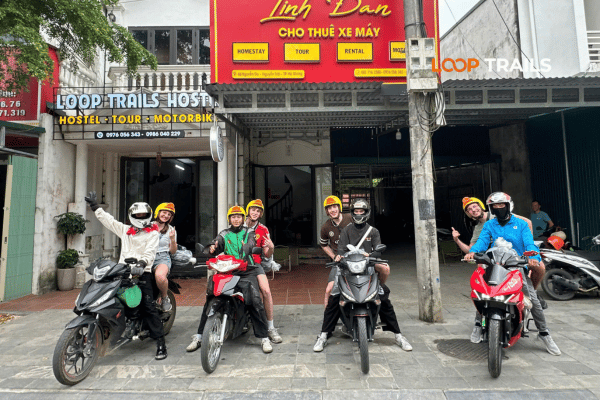
If you’ve made it this far, you’re probably leaning toward making it real. Here’s how working with us tends to go:
What we focus on:
Whether you’re after a guided Ha Giang Loop tour, a motorbike rental in Ha Giang for an independent ride, or a longer combined trip into Cao Bang, we can usually put together what you need. If you don’t see exactly what you want on the site, just ask.
Learn more: Ban Gioc Waterfall Guide
Mostly yes, if you make smart choices. The bigger risks come from inexperienced riders trying to self-drive, alcohol-fueled rides, and skipping helmets or insurance. Going with a guide and a reputable operator removes most of the risk.
Three days is the bare minimum, four is the sweet spot, five lets you go deeper or combine with Cao Bang. Including travel from Hanoi, plan five to seven days door-to-door.
Yes. Either as a passenger on an Easy Rider tour or in a private car or jeep. You’ll see almost everything, just from a different seat.
Vietnam’s regulations on foreign drivers can change and are interpreted differently in different provinces. Check the latest official guidance close to your travel date and ask your operator. Don’t ride without insurance that covers motorbiking, regardless.
October is the most popular for a reason: gold rice, clear skies, comfortable temperatures. April and May are also excellent and a bit quieter.
They’re simple. Mattresses on a wooden floor, shared bathrooms, family-cooked meals. Comfort-wise, basic. Experience-wise, often a highlight. Most loops mix homestays with hotels.
There are ATMs in Ha Giang City, Dong Van, and Meo Vac. Outside those, count on cash. Bring small bills for markets and homestays.
Solo Easy Rider trips are easy to arrange. Solo self-drive is possible if you’re an experienced rider, but joining a small group for the social side and safety is what most solo travelers prefer.
Spotty in remote sections, fine in towns. A local SIM with data is cheap and easy to pick up in Hanoi or Ha Giang City. Don’t count on continuous signal on Ma Pi Leng.
For Easy Rider or car: not very. For self-drive: comfortable on a motorbike for several hours a day with breaks. The hardest physical part is honestly the cold weather in winter and the long days in any season.
Tipping isn’t required but it’s appreciated, especially after a 4-day trip where the guide has handled food, route, photos, and probably your mood at some point. Use your judgment based on the experience.
Operators adjust. We’ve shifted overnight stops, added rest hours, and rerouted around landslides plenty of times. Build a buffer day into your overall Vietnam itinerary if you can.

Learn more: Ha Giang Loop Hidden Gems
Ha Giang isn’t a tick-box. If you go expecting a polished, packaged version of Vietnam, you’ll be a little disappointed and a little surprised. The roads are real roads. The homestays are real homes. The weather does what it wants.
That’s also why it’s worth it. Most travelers come back from Ha Giang quieter than they were when they arrived, in a good way. You spend four days where the only decisions are what to eat and when to stop for the next view, and something resets.
When you’re ready, message us. We’ll handle the rest.
Final CTA: Browse the latest Ha Giang Loop tours and motorbike rental options, or send us a quick WhatsApp with your dates. We’ll get back to you the same day with honest options, no pressure to book.
Contact information for Loop Trails
Website: Loop Trails Official Website
Email: looptrailshostel@gmail.com
Hotline & WhatSapp:
+84862379288
+84938988593
Social Media:
Facebook: Loop Trails Tours Ha Giang
Instagram: Loop Trails Tours Ha Giang
TikTok: Loop Trails
Office Address: 48 Nguyen Du, Ha Giang 1, Tuyen Quang
Address: 48 Nguyen Du, Ha Giang 1, Tuyen Quang
Facebook X Reddit Table of Contents Learn more: Ha Giang Loop Tours This is the question that sits in almost every Ha
Facebook X Reddit Table of Contents Learn more: Ha Giang Loop Tours Most people drive past the Quan Ba area twice on