

Thúy Kiều (Grace) is a travel blogger and content contributor for Loop Trails Tours Ha Giang. She holds a bachelor’s degree in Sustainable Tourism from Vietnam National University, Hanoi, and has a strong passion for exploring and promoting responsible travel experiences in Vietnam’s northern highlands.
Learn more: Ha Giang Loop Tours
There’s a version of the Ha Giang Loop that ends up in every Instagram reel: Ma Pi Leng Pass, the Nho Que River from a distance, the flag tower at Lung Cu. And those spots are genuinely great — no argument there.
But then there’s the other version of the loop. The one where you pull off the road because a farmer waves at you from a terrace and you end up drinking corn wine at 10am. The one where you follow a dirt track that wasn’t on the map and find a valley that looks like someone assembled it specifically to make you feel small. That version doesn’t trend. And honestly? That’s part of why it still exists.
This guide is about that version.
These aren’t obscure secrets that require a satellite phone and three days of bushwhacking. They’re accessible — but they take a bit more intention, a willingness to slow down, and ideally a guide or a decent motorbike under you. Here’s what to look for when you ride beyond the highlights.
Learn more: Ha Giang Loop 2 Days 1 Night
Ha Giang province covers roughly 7,900 km² of some of the most geologically complex terrain in Southeast Asia. The Dong Van Karst Plateau — a UNESCO Global Geopark — is layered with limestone formations, deep river gorges, and villages that have been trading along these ridges for centuries. The “loop” itself (typically Ha Giang City → Quan Ba → Yen Minh → Dong Van → Meo Vac → back) is around 350 km of paved road, plus whatever side tracks you add.
The issue is that most 3–4 day itineraries follow the same spine. Riders move at the same pace, stop at the same viewpoints, and eat at the same guesthouses in Dong Van. None of that is wrong — but it does mean entire subdistricts, river sections, and communities sit five minutes off the main road, unseen.
What makes Ha Giang genuinely different from other motorbike routes in Vietnam is density of experience per kilometer. You don’t have to go far to find something that almost nobody else is looking at.
Learn more: Ha Giang Loop 3 Days 2 Nights
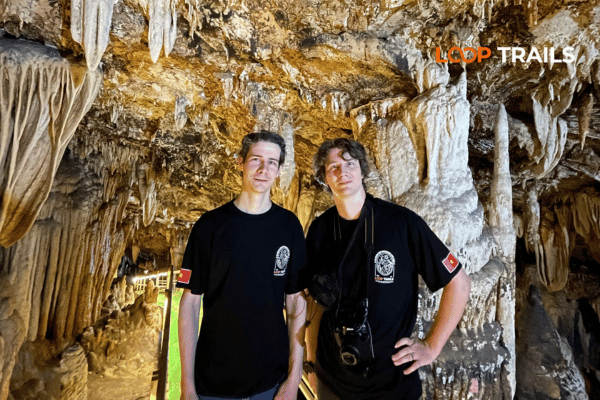
Most riders stop at Quan Ba Heaven Gate for the twin mountains view, take a photo, and keep moving. About 10 km before that, near the town of Tam Son, is Lung Khuy Cave — a stalactite cave that’s genuinely impressive in scale and almost always quiet.
The entrance involves a short uphill hike (roughly 20–30 minutes depending on your pace), and inside you’ll find chambers with ceiling formations that dwarf similar spots in more-trafficked areas of Vietnam. Lighting has been installed, which helps orientation, but it still feels raw rather than over-produced.
The cave sits in a limestone karst hollow and the walk up offers early views across the Quan Ba valley — it’s worth the detour even if you’re pressed for time. Entry fees apply; check locally for current rates as these can change seasonally.
Why nobody goes: It’s not on the “loop highlight” lists. That’s the only reason.
Learn more: Ha Giang Loop 4 Days 3 Nights
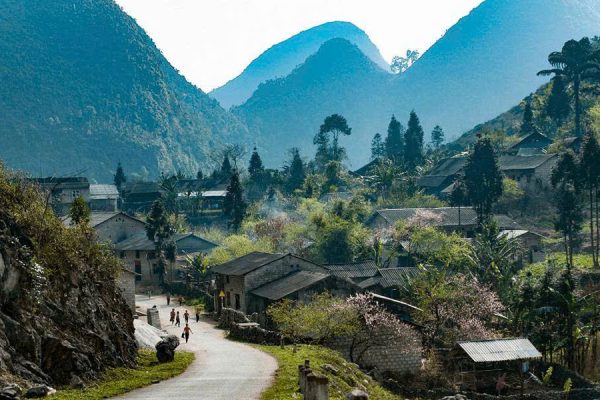
If you’ve seen the film The Story of Pao (Chuyện của Pao), you’ve seen Sung La. It’s an ethnic H’Mong valley tucked between ridgelines, wide and flat in a way that the rest of Ha Giang isn’t, lined with wildflowers depending on the season, and populated by small stone houses and terraced plots that look like they were carved out of the mountain with patience rather than machinery.
The valley sits off the road between Yen Minh and Dong Van — accessible via a detour that most self-riders miss because the signage isn’t aggressive. A guide who knows the route will often stop here in the late afternoon when the light goes golden across the fields. If you’re riding self-drive, mark it on maps.me or download an offline map before you leave Yen Minh.
This is one of those places where you might genuinely sit for an hour and not feel like you’ve wasted time.
Khau Vai is known for its annual Love Market (Phiên Chợ Tình) — historically a gathering where former partners and unmarried people from surrounding ethnic minority communities would meet once a year. The market itself draws large crowds when it runs (typically around the third month of the lunar calendar; check current dates as these vary), but the village outside market season is largely empty of tourists and genuinely interesting as a place.
The surrounding landscape between Khau Vai and Meo Vac is one of the most dramatic on the entire loop — tight gorge roads, views opening suddenly across canyon systems, small Nung and Giay villages on the slopes. If you’re riding the section between Meo Vac and heading back north, adding Khau Vai as a diversion costs maybe 30–45 minutes and pays off.

Learn more: Ha Giang Cao Bang 5 Days 4 Nights
Du Gia sits on the outer edge of the standard loop — technically part of an “extended loop” that adds a day but is increasingly popular with riders who’ve either done the main route before or specifically want more water and green terrain to offset the karst.
The village itself is Lo Lo and Tay community-inhabited, quiet, set along a river, and has a genuine homestay culture that hasn’t been overly formalized. The trail to the nearby waterfall is walkable in under an hour from the main village cluster and follows a river path through bamboo and secondary forest. It’s not a hike in any demanding sense, but it’s a good leg-stretch after a day on the bike.
The road to Du Gia involves some unpaved sections depending on which approach you take — conditions vary significantly by season. If you’re on a semi-automatic and not confident on loose surfaces, ask about road conditions before you commit to this stretch.
Thinking about adding Du Gia to your itinerary? Our [Ha Giang Loop Tours] include flexible routing options that incorporate extended loop stops like Du Gia when conditions are right. [Check available tours →]
Learn more: Ha Giang Cao Bang Ba Be Lake 6 Days 5 Nights
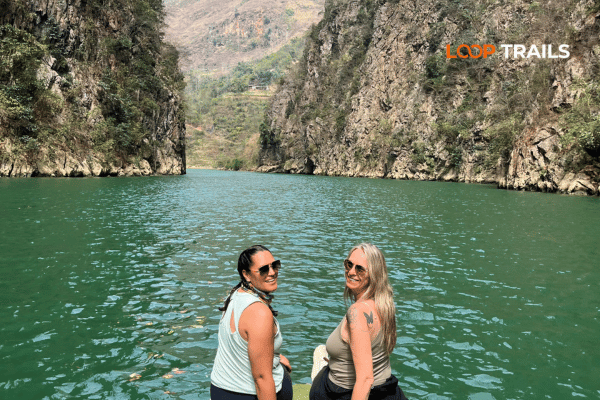
Everyone sees the Nho Que River from the cliff on Ma Pi Leng Pass. The turquoise water against the grey limestone is one of the most photographed scenes in northern Vietnam — it earns the attention. But almost nobody is down in it.
There are local operators running kayak and boat trips on the Nho Que from the riverbank below Ma Pi Leng — you descend via a steep road to the launch point and can take a short boat ride through the canyon. The scale of the cliff faces from water level is completely different from the aerial view. It’s one of those rare cases where the famous version of a place turns out to not be the best version.
Trips are typically short (30–90 minutes depending on operator), and pricing changes — ask locally or check with your guide before building it into a rigid schedule. This is worth adding if your group has any flexibility in the Ma Pi Leng section.
Pho Bang is roughly 20 km from Dong Van town and takes maybe 30 minutes by bike on a paved side road. It doesn’t appear on most itineraries. This is confusing, because Pho Bang has some of the best-preserved Hmong and Chinese-influenced architecture in the entire province — old family compounds with carved wooden doors, stone walls, and a layout that hasn’t changed much in a century.
There are no big signs. No ticket booth. A few guesthouses have appeared in recent years, but the morning light on the old quarter here — especially in the houses of former opium trade-era merchants — is the kind of thing travel photographers cross continents for and then find by accident.
If you stay in Dong Van, Pho Bang is an easy half-morning detour before continuing toward Ma Pi Leng.
Learn more: Ha Giang Motorbike Rental
The Lung Cu Flag Tower at Vietnam’s northern tip is on every map and every itinerary. It should be — the symbolic weight of standing at the country’s northernmost point is real, and the views across the border into China and back over the Ha Giang plateau are worth it.
But the villages surrounding Lung Cu — Lo Lo Chai in particular — are where the actual experience lives. Lo Lo Chai is a Lo Lo ethnic minority village at the base of the Lung Cu hill, with traditional stilt-style homes, textile culture, and a community that has been doing low-key homestay tourism for years without turning it into a theme park. Walking through at dusk, when the fires start and the kids come home from school, is a better version of “authentic travel” than almost anything you’ll be told to seek out.
Most riders drive up to the flag tower, get the stamp in the mental passport, and leave. Budget 90 extra minutes for the village and you’ll leave with something actually memorable.

Learn more: Ma Pi Leng Pass
This feels almost like a cheat to include, since Ma Pi Leng is the most famous section of the loop. But the point is: most people stop at one viewpoint, take photos, and move on. The pass is roughly 20 km of mountain road, and there are three or four pull-off points along it that offer completely different perspectives.
The early-morning light on the canyon from the first high point (before the famous curve) is different from the midday view from the main stop. The section approaching Meo Vac has a final lookout that most riders pass without stopping because they’re already mentally in town.
Ride Ma Pi Leng slowly. Stop more than once. The people who say it was their favorite part of the whole trip are usually the ones who weren’t in a hurry.
Learn more: Lung Tam Linen Village
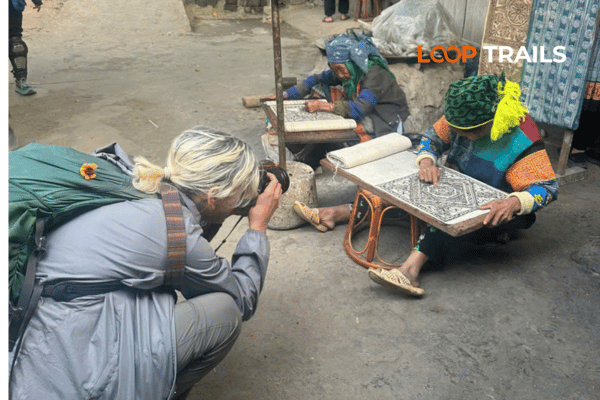
Between Quan Ba and Yen Minh, Lung Tam is a small H’Mong village with a community weaving cooperative that’s been operating for over two decades. Women here produce hand-woven hemp linen — from planting and harvesting the hemp to spinning, dyeing with natural indigo, and weaving on traditional looms. The process takes weeks per piece.
It’s not a staged cultural show. Women work in their homes and the cooperative’s workshop, and you’re welcome to watch (respectfully) and buy directly if you want. The textiles are genuinely high quality and the prices are fair — this is one of the few places on the loop where buying something feels like it goes directly to someone rather than into a souvenir supply chain.
Easily doable as a 30-minute stop on the way from Quan Ba to Yen Minh.
This one is for riders who are comfortable on unpaved terrain and have either a guide or solid offline navigation. The main road between Meo Vac and Khau Vai is paved and fine. But there are secondary tracks that drop into smaller valleys, pass through Giay and Nung villages, and connect to the river system below the main road in ways that feel genuinely exploratory.
These tracks aren’t always marked and road quality changes with the season — after heavy rain, some sections become difficult even for experienced riders. A local guide is the safest way to navigate them without losing time or ending up somewhere complicated.
If you’re self-riding and want to explore these areas, ask at your guesthouse in Meo Vac the night before. Local staff know which tracks are rideable and which aren’t, and that information is worth more than any map.
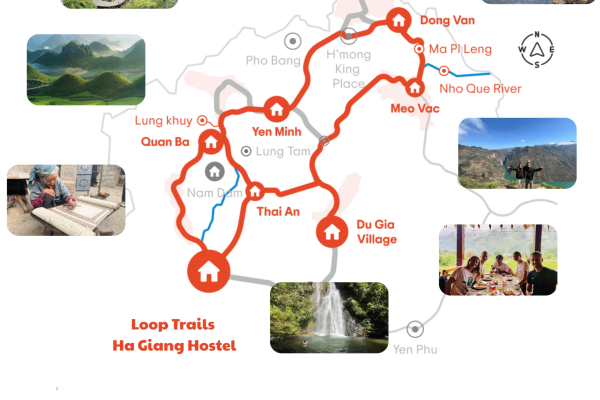
Learn more: Ha Giang Loop Map
The honest answer is: most of these places require knowing where to turn. That sounds simple until you’re on a mountain road with limited signage, no cell signal, and three possible forks ahead.
A few practical notes:
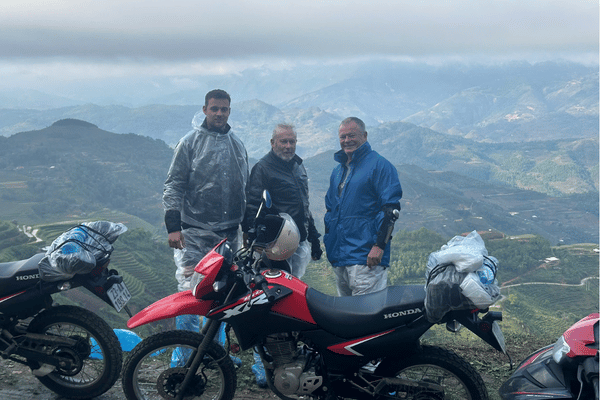
Learn more: Ha Giang Loop Self-Drive & hire a motorbike
This is genuinely a question worth thinking through before you book. The hidden gems on this list range from a 30-minute detour on a paved road to a full-day backroad ride on unsealed tracks. Which ones you can access depends significantly on how you’re traveling.
Best for: First-timers, travelers who want to explore off-route without the navigation stress, couples, anyone who isn’t confident on a motorbike.
A good Easy Rider guide isn’t just a driver — they know the back routes, speak enough local languages to navigate small villages, and can adapt the day if a road is closed or conditions change. The hidden gems on this list become significantly more accessible when you’re not simultaneously managing a bike, a map, and your own safety.
This is the most common recommendation for first-time Ha Giang visitors who want to go beyond the highlights.
Best for: Experienced riders who want full control over pace and route, solo travelers, people returning to Ha Giang for a second trip.
Self-drive gives you the freedom to stop when you want, stay longer, leave earlier, and make the trip your own. The trade-off is that off-route exploration requires real confidence on mountain roads and solid navigation. For experienced riders, the Ha Giang Loop is one of the best self-drive motorcycle routes in Asia — but it’s not forgiving of overconfidence.
Renting in Ha Giang City? Loop Trails offers well-maintained motorbikes suited for the loop’s terrain. [Check our motorbike rental options →]
Best for: Small groups, families, travelers who want panoramic views and comfort, those who want to cover more distance without riding fatigue.
A Jeep tour trades the intimate road feel of a motorbike for a wider view, more luggage space, and the ability to bring along people who aren’t comfortable on two wheels. Many of the paved hidden gems on this list are fully accessible by Jeep — and a good guide will know which are and aren’t.
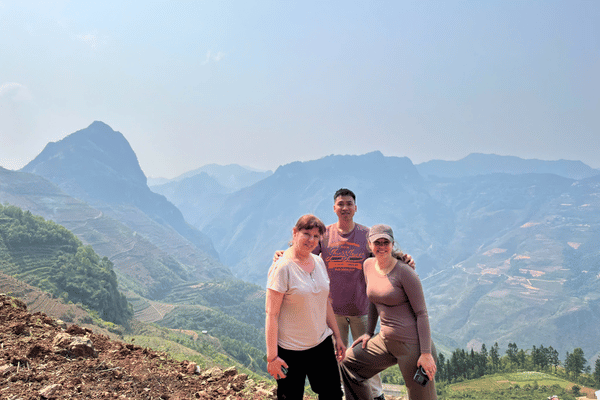
Learn more: Ha Giang in September & October
Ha Giang has roughly two seasons that matter for the loop: the dry season (roughly October to April) and the wet season (May to September). But within that, there are sub-seasons that change the experience dramatically.
| Season | What It Looks Like | Hidden Gem Impact |
|---|---|---|
| Sept–Oct (Buckwheat) | Pink/purple buckwheat flowers carpet the valleys around Dong Van and Meo Vac | Sung La and Khau Vai area are stunning; roads can still be muddy from end of rains |
| Nov–Dec (Golden Rice) | Terraces turn gold in lower elevations; cooler, cleaner air | Du Gia and Lung Tam are especially photogenic; all paved spots accessible |
| Jan–Feb (Winter/Fog) | Mist sits in the valleys, dramatic light conditions | Ma Pi Leng secondary viewpoints, Pho Bang — eerie and beautiful; some backroads risky |
| Mar–Apr (Spring) | Peach and plum blossoms near Dong Van; warmer weather | Everything opens up; best time for kayaking on Nho Que |
| May–Aug (Wet Season) | Terraces fill with young rice; lush green everywhere | Waterfalls at Du Gia are at full flow; backroads may be impassable |
None of these seasons is “wrong” for Ha Giang — but the hidden gems shift in value depending on when you arrive. The buckwheat season (Sept–Oct) and the golden rice harvest (Nov–Dec) are peak for a reason.
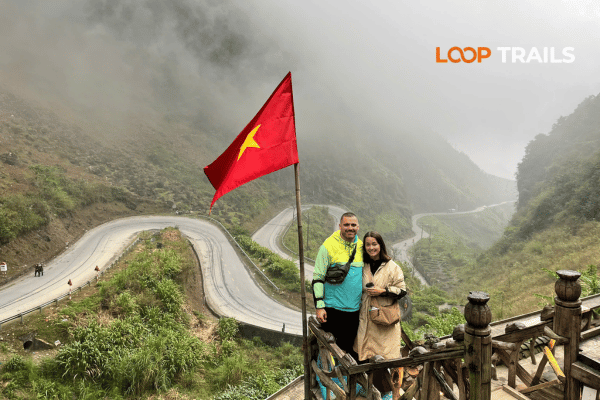
Learn more: Ha Giang Packing list
This isn’t a comprehensive packing list — it’s the stuff that matters specifically for the hidden gems and backroad sections.
On the bike:
For the stops:
Clothing:
Learn more: Ha Giang Loop Mistake to Avoid
Moving too fast. The most common issue on the loop. Ha Giang is not a 3-day sprint. Adding a fourth or fifth day doesn’t mean seeing “less” — it usually means seeing more of the right things. The hidden gems are almost all in gaps between the main stops.
Relying entirely on Google Maps. It has gaps, outdated route data, and no information about road quality. Use offline maps as backup and ask locally for anything off the main route.
Not confirming road conditions the night before. Especially true during and after rain, and especially true for backroad sections. Conditions can change in 24 hours in the mountains.
Going during the buckwheat festival without a booking. Accommodation in Dong Van and Meo Vac fills up weeks in advance during peak buckwheat season (roughly mid-October). If you’re going then, plan ahead.
Underestimating cold at altitude. Even in May, the passes above 1,400 meters can be cold enough to make riding miserable if you’re underprepared. Check the altitude profile of your day before you pack.
Rushing Lung Cu. Five minutes at the flag tower and straight back to the main road is a waste of the drive. Budget for Lo Lo Chai village.
Ready to stop scrolling and start planning? Whether you want a guided Easy Rider experience or prefer to ride self-drive with a well-maintained bike, Loop Trails can help you build an itinerary that actually gets you to these places. [Browse our Ha Giang Loop tours] or [get in touch on WhatsApp] — we reply fast and we know this road well.
Learn more: What to wear on Ha Giang Loop?
Most of the paved spots on this list (Sung La, Pho Bang, Lung Tam, Khau Vai, Lung Cu) are accessible on semi-auto scooters by confident riders. The unpaved backroads between Meo Vac and Khau Vai, and some approaches to Du Gia, are better suited to manual bikes with off-road capability. If you’re unsure, a guided Easy Rider tour solves the uncertainty entirely.
Vietnamese traffic law and international license recognition rules can change — this is an area where you should check the latest official updates before your trip rather than rely on outdated forum posts. Ask locally in Ha Giang City or contact your rental provider for current requirements.
The standard loop is often done in 3–4 days. To include meaningful detours to Du Gia, proper time in Lo Lo Chai, the Nho Que River boat section, and some of the off-route valleys, budget 5–6 days. You won’t regret the extra time.
The paved off-route spots are generally fine solo with good offline navigation. The unpaved backroad sections carry real risks if you’re not familiar with the terrain — getting stuck on a remote track at dusk with a damaged bike is not a fun situation. These sections are better explored with a guide or at minimum with a riding partner and solid local information.
October to December is the most popular window for good reason — the buckwheat flowers, golden rice terraces, and dry roads align. March to April is a close second with spring blossoms and warming temperatures. The wet season (June–August) has its own beauty but backroads become unreliable.
Yes, it’s independently accessible and there’s basic tourism infrastructure at the entrance. A local guide adds context and helps with the path, but it’s not required for this particular spot.
The launch point is accessed via a steep road that descends from the main Ma Pi Leng Pass road toward the river. Operators work from the riverbank. Your guesthouse in Dong Van or Meo Vac can advise on current operators and pricing — this is better confirmed locally than booked in advance.
It’s easily a day-trip or morning detour from Dong Van (about 30 minutes by bike). There are a small number of guesthouses appearing in the area, but most travelers visit and return to Dong Van for accommodation. The morning light on the old town is the main reason to go early rather than late.
The standard loop follows the main road circuit — roughly Ha Giang City to Quan Ba, Yen Minh, Dong Van, Ma Pi Leng, Meo Vac, and back. The extended loop adds sections like Du Gia and sometimes Bac Me, adding a day or more and including more river and forest terrain. Some operators also connect Ha Giang with Cao Bang for a combined longer journey.
Yes, and it’s one of the best multi-day itineraries in northern Vietnam. Cao Bang includes Ban Gioc Waterfall (one of the largest in Southeast Asia), Phia Oac National Park, and a very different landscape from Ha Giang’s karst plateau. Allow at least 7–10 days for a combined trip that does both properly.
There are ATMs in both towns, but they can run out of cash during busy season and reliability isn’t guaranteed. Carry enough cash from Ha Giang City or Yen Minh to cover a day or two, especially if you’re heading into villages where card payment isn’t an option.
Yes, this is a conversation worth having directly with your tour operator. Loop Trails offers customizable itineraries that can prioritize off-route spots over the standard highlight reel. [Contact us to discuss what you’re looking for.]
Learn more: Ha Giang Adventure
The Ha Giang Loop’s famous spots are famous for a reason — don’t skip them. But the riders who come back from this trip talking about it for years are almost never the ones who ticked the viewpoints and kept moving. They’re the ones who stopped in Lo Lo Chai at dusk, or paddled the Nho Que at water level, or found Sung La in the late afternoon by accident and stayed longer than they planned.
The infrastructure for “going off the beaten path” here doesn’t require heroics. It requires a bit more time, a decent map, and ideally a guide or rental bike that won’t let you down on a mountain road. The hidden gems of the Ha Giang Loop are genuinely accessible — they’re just waiting for someone who bothered to look.
If you want help building an itinerary that gets you to the right places, [Loop Trails offers guided tours and motorbike rental in Ha Giang] with people who ride these roads regularly. We keep group sizes small and routes flexible — because the best day on the loop is usually the one you didn’t fully plan.
Contact information for Loop Trails
Website: Loop Trails Official Website
Email: looptrailshostel@gmail.com
Hotline & WhatSapp:
+84862379288
+84938988593
Social Media:
Facebook: Loop Trails Tours Ha Giang
Instagram: Loop Trails Tours Ha Giang
TikTok: Loop Trails
Office Address: 48 Nguyen Du, Ha Giang 1, Tuyen Quang
Address: 48 Nguyen Du, Ha Giang 1, Tuyen Quang

Facebook X Reddit Table of Contents Learn more: Ha Giang Loop Tours Stand on the road between Trung Khanh and Phục Hòa
Facebook X Reddit Table of Contents Learn more: Ha Giang Loop Tours You’re traveling with three friends. Or maybe it’s four of