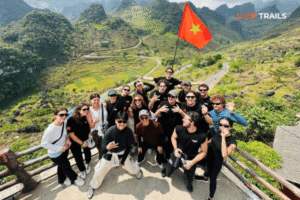


Thúy Kiều (Grace) is a travel blogger and content contributor for Loop Trails Tours Ha Giang. She holds a bachelor’s degree in Sustainable Tourism from Vietnam National University, Hanoi, and has a strong passion for exploring and promoting responsible travel experiences in Vietnam’s northern highlands.
Learn more: Ha Giang Loop Tours
If you’ve spent more than a day or two in a Hanoi hostel, someone has already told you to do the Ha Giang Loop. They probably said it like a secret, even though half a million travelers have ridden it before them. That’s the loop’s strange magic. It’s both Vietnam’s most talked-about motorbike route and somehow still capable of feeling like a personal discovery the first time you roll out of Ha Giang City and the karst peaks open up in front of you.
This is the long version. Routes, costs, safety, weather, the difference between an easy rider and a self drive trip, where the boat at Nho Que actually goes, and how to plan the whole thing without overthinking it. No fluff, no fake numbers, no scare-mongering. If you’re ten browser tabs deep into Ha Giang research, this should close most of them.
Learn more: Ha Giang Loop 2 Days 1 Night
The Ha Giang Loop is a circular motorbike route through Ha Giang province in far northern Vietnam, near the Chinese border. It starts and ends in Ha Giang City and weaves through the Dong Van Karst Plateau, a UNESCO Global Geopark of dramatic limestone mountains, terraced valleys, and small ethnic minority villages.
The loop became famous for a few specific reasons: the road, the canyon, and the people. The road carves through some of the most photogenic mountain country in Southeast Asia. The canyon, Tu San, is the deepest in Vietnam. And the people, mostly Hmong, Tay, Dao, and Lo Lo, have lived on this plateau for centuries and still farm the steep slopes by hand.
Most travelers ride the loop in 3 or 4 days. Some do 2 days if they’re tight. Others stretch to 5 or more, sometimes continuing into Cao Bang for a longer ride. You can ride it yourself, ride on the back with a local guide driving, or skip the bike entirely and go by jeep. All three work; they just produce different trips.
Learn more: Ha Giang Loop 3 Days 2 Nights
Ha Giang province sits in the far north of Vietnam, sharing a long border with China’s Yunnan province. Ha Giang City is the provincial capital and the start point of the loop. From Hanoi, it’s roughly an overnight bus ride or a day in a private vehicle.
Geographically, Ha Giang is mountainous, remote, and historically poor by Vietnamese standards. Tourism has been a major economic shift over the past decade, and the loop is most of why. Driving north from Ha Giang City, you climb almost immediately. Within an hour you’re in karst country, with peaks shaped like teeth and valleys so steep the rice terraces look stacked.
This isn’t sleepy farmland scenery. It’s vertical, theatrical landscape, and it changes from one curve to the next. That’s the actual reason people travel halfway around the world to ride a loop they’ve never heard of in a country they barely know.
Learn more: Ha Giang Loop 4 Days 3 Nights
A few honest reasons:
The loop also has a real social element. Easy rider tours often run with small groups (2 to 8 travelers), which means you’ll usually leave with new contacts and a few group dinners that go later than they should.
Learn more: Ha Giang Cao Bang 5 Days 4 Nights
It’s for:
It’s not for:
A simple test: if your idea of a great trip includes phrases like “I want to be surprised by what’s around the next corner” and “I’d rather eat where the locals eat than where the menu has photos,” the loop is for you.

Learn more: Ha Giang Cao Bang Ba Be Lake 6 Days 5 Nights
This is the most asked question in any pre-trip conversation. Quick honest version:
You’ll see the headline sights including Ma Pi Leng Pass, Dong Van, and the Nho Que canyon, but the days are long, the photo stops are short, and you’ll skip much of the cultural depth. Works for travelers with a flight booked and zero flexibility. Not the best version of the loop.
The most booked option for a reason. Hits Quan Ba, Tham Ma Pass, Dong Van, Lung Cu (optional), Ma Pi Leng, the Nho Que River boat, Meo Vac, and the return route through Mau Due. It’s the practical sweet spot for most travelers. We’ve written a full breakdown of this format in our [Ha Giang Loop 3 days itinerary] post if you want the day-by-day.
Same headline sights as the 3 days, plus a night in Du Gia, an off-route village with a swim spot and a quieter pace. The 4th day removes the hurried parts of the 3 days schedule. If you have the time, this is the better trip. Less impressive on paper, more memorable in practice.
Five days lets you slow further or add detours like Pho Bang or Sung La Valley. Beyond five days, most travelers either combine with Cao Bang province or use the loop as the centerpiece of a longer northern Vietnam trip. The combined Ha Giang and Cao Bang option is increasingly popular for travelers with a week or more.
A simple way to choose: if you’re cutting time off something else to make the loop fit, 3 days. If the loop is the reason you came, 4 days. If you want the full northern Vietnam mountain experience, combined.
Soft CTA: Not sure which version fits your dates? Our [Ha Giang Loop tour page] lays out current schedules for 3 days, 4 days, easy rider, self drive, and jeep options. Or message us on WhatsApp with how long you have and we’ll suggest the format that works best.
Learn more: Ha Giang Motorbike Rental
The format you choose changes the trip more than the day count does.
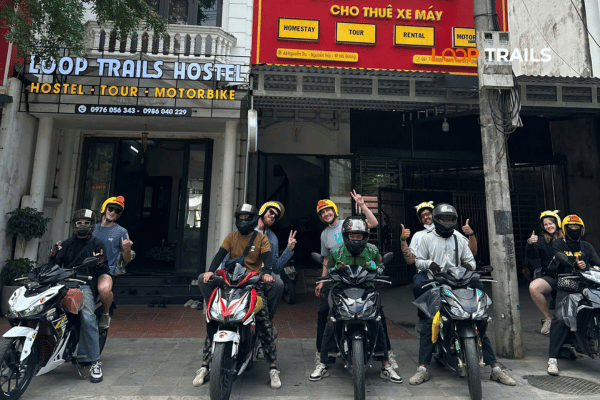
You ride pillion on the back of a motorbike. A local guide drives. He handles the road, the route, the homestay arrivals, the meal stops, and the photo timing. You bring a daypack and pay attention to the view.
Most popular option, by a wide margin. It’s the right choice for travelers who don’t have manual motorbike experience, don’t want to drive in unfamiliar mountain conditions, or simply want to enjoy the trip without watching every pothole. Couples often book two easy rider bikes (one driver each) so both partners can ride pillion.
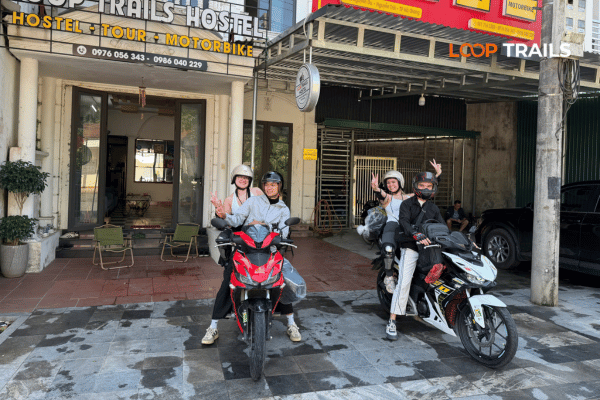
You drive your own bike. A guide rides in front of the group on his own bike, you follow. The group sticks together but you’re handling the controls.
Best for travelers who already ride at home, have done at least some manual or semi-automatic motorbike travel, and are comfortable with mountain roads. Vietnam’s licensing rules for motorbike use have been more strictly enforced in recent years. Whether your home license is valid here depends on type, country, and current regulations. Rules can change. Check current requirements before you book a self drive trip and confirm your travel insurance covers motorbike incidents under whatever license you actually hold.
If you want to drive without joining a fixed tour, [motorbike rental in Ha Giang] is the other path. You take a bike for the days you want, get a route map, and ride at your own pace.
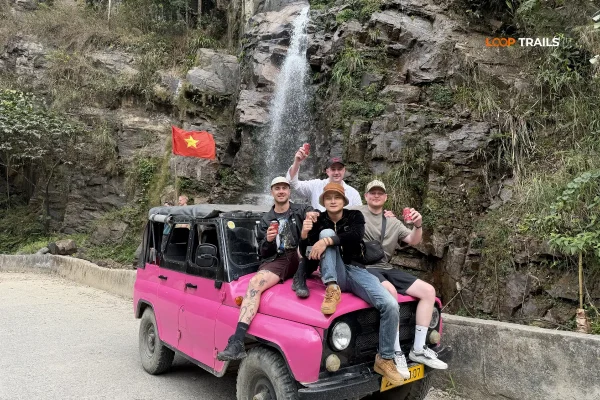
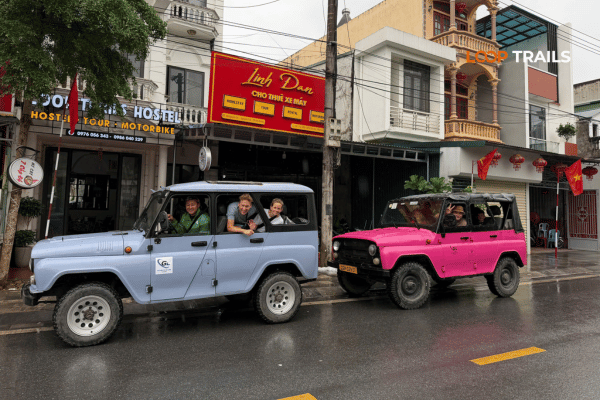
You’re driven in a 4×4, usually with another small group. You stop at the same viewpoints as the bike groups, you have a guide, and you’re inside the vehicle the whole time.
Best for travelers who can’t or don’t want to be on a bike for hours each day, families with kids, anyone with a back or knee issue that would make pillion riding rough, or groups where one person doesn’t want to ride and the rest are flexible. Less photogenic for social media, more comfortable for the body, equally scenic for the eyes.
Decision frame:

Learn more: Quan Ba Twin Mountains
Tour itineraries list the names. Here’s what each one is actually like.
Quan Ba Twin Mountains and Heaven’s Gate. First major viewpoint of the trip, on day one. The pass opens onto a valley with two rounded hills called the Twin Mountains by everyone and “Fairy Bosom” by some local guides who can’t help themselves. Photogenic and a good warm-up.
Tham Ma Pass. The famous switchback road photo. Easy rider drivers slow down here so you can take the shot. There’s usually a small viewpoint cafe.
Hmong King’s Palace (Vuong Palace). A mansion built by a powerful Hmong family in the early 20th century, still standing in Sa Phin valley. Worth a 30-minute walk-through if your operator includes it.
Sung La Valley. A small valley between Yen Minh and Dong Van with traditional houses and (in season) a sweep of buckwheat or canola flowers. Photo stop more than destination.
Pho Bang. A small old town near the Chinese border, often skipped by 3 days tours. Worth the detour if you have time and your guide knows it.
Dong Van Old Town. Most likely your night one stop. The old quarter has a Saturday night market and a Sunday morning market that are both worth structuring your trip around if you can.
Lung Cu Flag Tower. The northernmost point of Vietnam, a flagpole on a hill, panoramic view across the karst into China. Optional on most 3 days tours, included on most 4 days. Climb the steps. Take the photo.
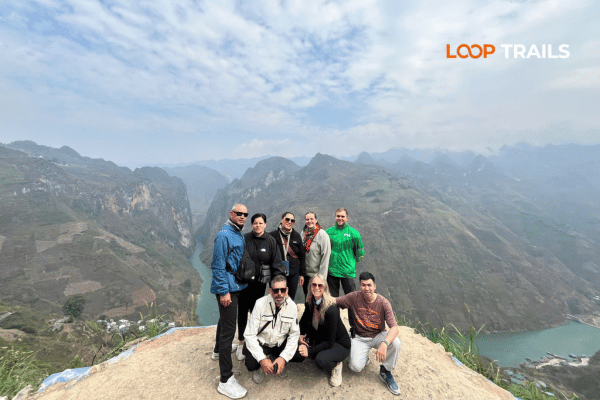
Ma Pi Leng Pass. The headline. The road carves along the cliff above Tu San Canyon and you’ll spend longer here than the schedule suggests. Skywalk extension pier and the Panorama Cafe are both popular stops. Don’t rush this one.
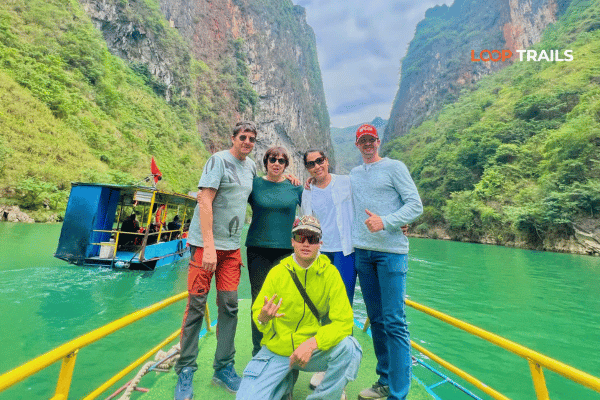
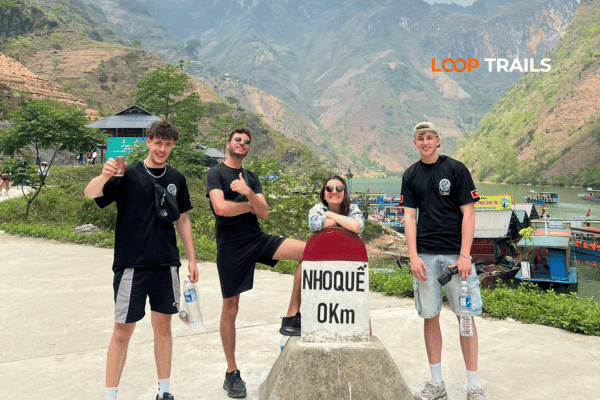
Nho Que River. From Ma Pi Leng you descend to the river for an optional boat trip into Tu San Canyon. The boat goes between sheer limestone walls. It’s quiet, slow, and one of those experiences that doesn’t need a soundtrack. Most tours include the boat; verify before booking.
Meo Vac. Small town in a karst-ringed valley, often the night two stop. Has a Sunday market that’s quieter than Dong Van’s but in some ways more authentic.
Du Gia. Off the standard 3 days route, included on 4 days tours. Small village, swim spot, slow homestay pace. Some travelers’ favorite night of the whole loop.
Mau Due and the southern return. Day three back to Ha Giang City takes a different route than day one to avoid retracing. Quieter scenery, more village life, fewer headline viewpoints. Good closing chapter.
Learn more: Ha Giang Loop Easy Rider
The honest part of any Ha Giang Loop guide.
Most of the loop’s roads are paved and in generally good condition. There are stretches that are rough, under repair, or affected by recent rain, especially in wet season. Tham Ma Pass, Ma Pi Leng, and the descent to Nho Que River are steep and twisting. None of this is a problem on the back of a bike with an experienced guide. It can be a problem if you’re driving yourself for the first time and underestimating the gradient or weather.
Things that make the trip safer:
Things that make it less safe:
Weather is the biggest variable. Wet season (broadly June to August) can bring fog on the passes, slick roads, and occasional landslide closures. A reputable operator reroutes or shuffles the schedule. Cheaper operators sometimes don’t, and that’s where preventable incidents happen. Read recent reviews of the specific operator, not just generic Ha Giang Loop guides.
Learn more: Ha Giang in September & October
Northern Vietnam has rough seasons rather than fixed ones, and weather varies year to year. General guidance:
Tet (Lunar New Year, usually late January or February) closes many homestays and small businesses for several days. Plan around it.
The buckwheat flower bloom in late October and November draws extra travelers but the scenery is genuinely beautiful and worth a slight crowd bump.

Learn more: Ha Giang Loop Hidden Gems
I’m not going to write a specific price in this article because rates shift through the year and quoting a number is the fastest way to mislead someone planning a trip. What I will give you is a way to read tour quotes properly.
When comparing tour prices, check:
If a tour quote is dramatically cheaper than three other operators on the same dates, ask why. The answer is usually older bikes, less experienced drivers, weaker insurance, or a packed group.
Learn more: Ha Giang Loop route and itinerary
A typical Ha Giang Loop package, regardless of duration, covers:
Usually not included:
Always read the actual tour page before booking. Operators differ. The cheapest tour often differs from the next-cheapest in inclusions, not just price.

Learn more: Ha Giang Packing list
Travel light. You’re on a bike. Anything you don’t need will be on your back for three days.
Bring:
Skip:
Most operators have spare jackets, ponchos, and sometimes gloves to lend. Ask before day one.

Learn more: Ha Giang Loop Mistake to Avoid
A short list, written from watching too many travelers learn the hard way:
Outright scams are rare on the Ha Giang Loop compared to other tourist regions, but inflated last-minute add-ons (extra fees on day one for things that should have been included) do happen with the cheapest operators. Get inclusions in writing before you pay a deposit.

Learn more: Ha Giang Sleeper Bus
There’s no airport in Ha Giang. Your options from Hanoi:
Most travelers take the night bus the evening before their tour starts, sleep on the bus, and arrive in Ha Giang City in the early morning. You have time for breakfast and a coffee before the office briefing.
After your loop ends, you can usually catch an evening bus back to Hanoi the same day or stay one night and travel the next morning. From Ha Giang you can also continue east toward Cao Bang or Ba Be Lake instead of returning to Hanoi, if you’re not flying out immediately.
If you book your tour through us, we can help arrange the Hanoi to Ha Giang transfer. Booking it yourself works fine too; major travel platforms list buses and limousine vans with traveler reviews.
Learn more: Ha Giang Loop with Kids
A simple framework:
If you want to do all of this in one conversation, message us. We’ll send a real itinerary the same day with current pricing and what’s actually included.
CTA: Ready to lock in your dates? Send us your travel window and group size on [WhatsApp] and we’ll send back a tailored itinerary the same day. Or browse the [Ha Giang Loop tour page] for current schedules across 3 days, 4 days, easy rider, self drive, and jeep options.
Learn more: Ha Giang Jeep Tours
A simple decision matrix:
| If you… | Book… |
|---|---|
| Don’t ride or don’t want to drive in Vietnam | Easy rider 3 days |
| Have manual or semi-auto experience and a valid license | Self drive 3 days |
| Don’t want to be on a bike at all | Jeep 3 days |
| Want a more relaxed pace and an extra night in Du Gia | Easy rider 4 days |
| Want both Ha Giang and Cao Bang in one trip | Combined Ha Giang and Cao Bang |
| Want to drive your own bike on a flexible route | Motorbike rental in Ha Giang |
Most travelers reading this should book easy rider 3 or 4 days. If you’re at the edges of that majority, one of the other options will fit better.
The Ha Giang Loop earns its reputation. It’s not a hidden gem, it’s not a backpacker secret, and it doesn’t need oversold language to be worth the trip. Show up, ride safely, eat what your guide eats, and let the road do the work. You’ll leave with photos that don’t quite capture it and a few stories that will outlast the photos anyway.
Learn more: Cao Bang Loop 3 Days best kept secret
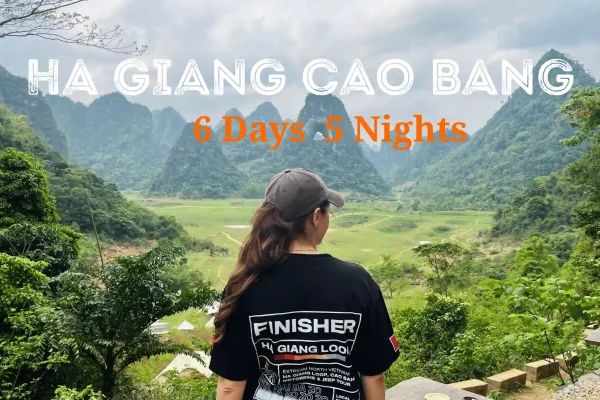
Most travelers ride it in 3 days. 4 days is the more relaxed option and includes a night in Du Gia. 2 days is possible but rushed. 5+ days is for travelers extending the trip or combining with Cao Bang.
Not for easy rider or jeep tours. You’re a passenger. For self drive tours and rentals, you should already have manual or semi-automatic motorbike experience and check current Vietnamese license requirements before booking.
With a reputable operator, properly maintained bikes, and sensible behavior, it’s no more dangerous than other mountain motorbike trips. Most incidents involve self drive travelers without much experience or operators cutting corners on bike maintenance. Travel insurance is essential.
Easy rider means a local guide drives the motorbike and you ride pillion. Self drive means you drive your own bike with a guide leading the group. Jeep means you ride in a 4×4 and don’t ride a bike at all.
September to November for clear skies and golden rice terraces. March to May for flowers and warmer weather. December to February is dry but cold. June to August is wet but lush. Avoid Tet (Lunar New Year) week.
Sleeper bus is the standard backpacker route. Limousine van is faster and more comfortable. Private car is the most flexible option. There’s no airport in Ha Giang. Most travelers take a night bus and start the loop the next morning.
Both in Ha Giang City. You’ll travel from Hanoi the day before, do the loop over your chosen number of days, and return to Ha Giang City to catch transport back.
Most operators include it as part of day two on standard 3 days tours, but a few charge it separately. Verify before booking. Skip it only if you’re seriously short on time.
Yes, with a rented bike and a route map, but you’ll need to handle bookings, route planning, and any issues yourself. Self drive tours sit in the middle: you drive but a guide leads the group.
Mostly homestays and small hotels in towns like Dong Van, Yen Minh, Du Gia, and Meo Vac. Homestays are clean and basic, often family-run, with shared or private bathrooms depending on the property. Some operators offer upgraded private rooms.
Costs vary by duration, format, group size, and operator. Get quotes from at least three operators on your specific dates and compare what’s actually included. Cheapest is rarely best value.
Ha Giang for the dramatic, famous version. Cao Bang for the quieter, water-filled, less crowded version. Combined if you have a week or more. If you only do one, Ha Giang is the icon, but Cao Bang is increasingly popular with travelers looking for fewer crowds.
Contact information for Loop Trails
Website: Loop Trails Official Website
Email: looptrailshostel@gmail.com
Hotline & WhatSapp:
+84862379288
+84938988593
Social Media:
Facebook: Loop Trails Tours Ha Giang
Instagram: Loop Trails Tours Ha Giang
TikTok: Loop Trails
Office Address: 48 Nguyen Du, Ha Giang 1, Tuyen Quang
Address: 48 Nguyen Du, Ha Giang 1, Tuyen Quang
Facebook X Reddit Table of Contents Learn more: Ha Giang Loop Tours Most people drive past the Quan Ba area twice on

Facebook X Reddit Table of Contents Learn more: Ha Giang Loop Tours The Ha Giang Loop has a reputation problem with older