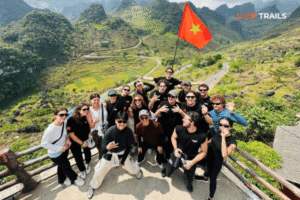


Thúy Kiều (Grace) is a travel blogger and content contributor for Loop Trails Tours Ha Giang. She holds a bachelor’s degree in Sustainable Tourism from Vietnam National University, Hanoi, and has a strong passion for exploring and promoting responsible travel experiences in Vietnam’s northern highlands.
Learn more: Ha Giang Loop Tours
People show up in Ha Giang expecting a “loop.” They leave talking about the swim under a waterfall at dusk, the boat that pushed into a canyon so narrow the sky shrunk to a strip of blue, the cliff path their guide swore was perfectly safe right before they doubted everything. Adventure is not the marketing layer of this place. It is the actual product.
This guide is for travelers who want the wild side of the Ha Giang Loop. Not the photo stop version. The version where you come back with a sunburn shaped like your helmet strap and a story your friends will not quite believe.
We will go through 12 of the most extreme Ha Giang Loop adventure activities you can stack into a 3 days or 4 days trip, plus how to choose your travel mode, when to go for each one, what to actually pack, and which mistakes locals quietly watch tourists repeat every season.

Learn more: Ha Giang Loop 2 Days 1 Night
Some context first. The Ha Giang Loop is a roughly 350 km mountain circuit through Vietnam’s northernmost province, climbing across four major passes (Bac Sum, Quan Ba, Tham Ma, Ma Pi Leng) and threading through Hmong, Tay, and Dao villages. It is not Iceland. It is not New Zealand. There are no manicured visitor centers. Most of the activities here exist in a half formed, locally run, sometimes safety questionable but always exhilarating state.
That mix is exactly why people fall for it. You can swim in a waterfall pool that no one has ever charged you to enter, then sleep on a stilted house porch above terraced rice fields with a Hmong host who does not speak English but pours you rice wine until you do not need to talk.
Most activities below are accessible to reasonably fit travelers in their 20s through their 60s. A few require some nerve. None of them require professional gear or prior training. What they do require is the right mode of travel, decent weather, and a willingness to not bail when the road turns sketchy.
Learn more: Ha Giang Loop 3 Days 2 Nights
We weighted four things, roughly equally:
The list runs in rough order of extremeness, but every entry has its own profile. A canyon kayak burns your shoulders. A cliff walk burns your knees. A border lookout burns your patience. Pick the burn you want.
Learn more: Ha Giang Loop 4 Days 3 Nights
This is the most cinematic adventure activity in northern Vietnam right now. You descend the switchback road from Ma Pi Leng down to a small landing on the Nho Que River, drop into a tandem kayak with a guide or partner, and paddle straight into Tu San Canyon, the deepest gorge in Southeast Asia by some measures, with walls rising over 700 meters above the water.
The water is glacial green, cold even in summer, and weirdly calm. You hear your own paddle stroke echo off limestone. Most operators let you push about 4 to 5 km in before turning back, which is about all your shoulders will tolerate anyway.
This is the activity to add if you only have time for one. The boat cruise (#4 below) is easier, drier, and shorter, but kayaking puts you inside the canyon at water level with no engine noise.
It is seasonal. The river runs lowest and clearest between November and April. In peak rainy weeks (June to August), operators sometimes pause kayaking when the current spikes.
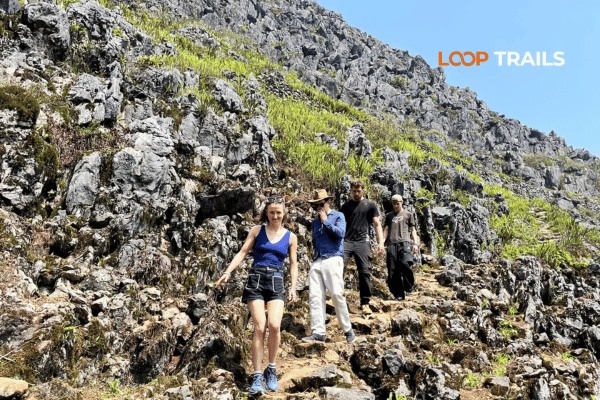
A few hundred meters east of the famous Ma Pi Leng viewpoint, a narrow trail clings to the cliff face, traversing along the gorge edge with a sheer drop into Tu San Canyon below. Locals informally call it the “Skywalk.” There is no railing in most sections. The path is maybe 60 to 90 cm wide in places.
It is not technically difficult. It is psychologically intense. If you have any aversion to exposed heights, this is the one to skip. If you do not, the views are easily the best on the entire Loop, with the river ribboning below and the old Hmong King’s territory unfolding to the north.
A small fee is sometimes collected at the trailhead by a local family who maintains the path. Wear shoes with grip. Do not do it in the rain.
Learn more: Ha Giang Cao Bang 5 Days 4 Nights
Below the main road, an older footpath runs along the gorge wall toward Meo Vac, the route locals used before “Con Duong Hanh Phuc” (the Happiness Road) was built in the 1960s. Today it is a serious half day to full day trek, depending on how far you push.
It is steep, rocky, and lonely in the best way. You will pass exactly zero food stalls. Bring water and a sandwich. A local guide is recommended because the path forks in several spots that are not on Google Maps.
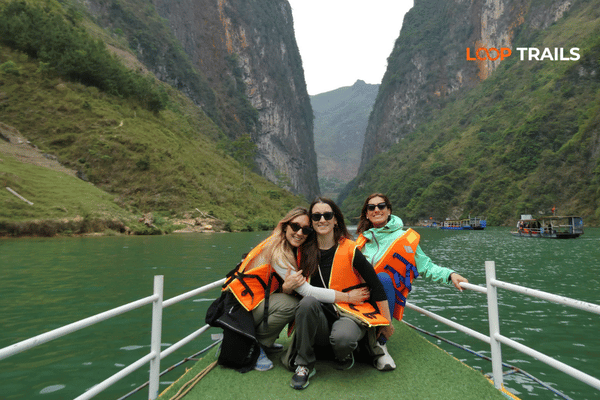
The accessible cousin of the kayak. Small longtail boats run on a near hourly schedule during peak season from the same Nho Que landing. The cruise pushes about 5 km into Tu San Canyon and back, total time around 60 to 90 minutes.
It is touristy. Boats fill up. You will probably share with a Vietnamese tour group blasting bolero music. But the canyon does its work regardless. The walls rise straight out of green water and you crane your neck the entire way.
This is the activity for travelers, especially older parents or kids, who want the canyon experience without paddling.
Learn more: Ha Giang Motorbike Rental
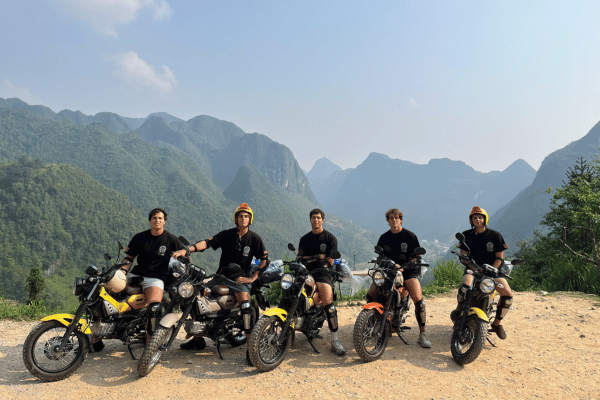
Riding the Loop yourself, on a 150cc semi automatic or manual, is its own extreme. Four passes, hairpin switchbacks tighter than anything you have probably ridden, rain that arrives sideways, fog that erases the road in twenty seconds.
The pure ride is the thing. Most accidents happen in the rain or on gravel patches where the road has been recently torn up for repair. Both conditions are common.
If you have never ridden anything bigger than a Bali scooter, do not start your motorbike career here. Hire an easy rider (a local guide who rides you on the back). The Loop is the wrong place to learn clutch control.
Quick honest take: If you are debating between self drive and easy rider, the answer is almost always easy rider unless you ride regularly back home. The roads are not really the problem. The buses overtaking on blind corners are. Browse our easy rider Loop tours if you want the ride without the responsibility, or check our motorbike rental options in Ha Giang if you are confident on two wheels.
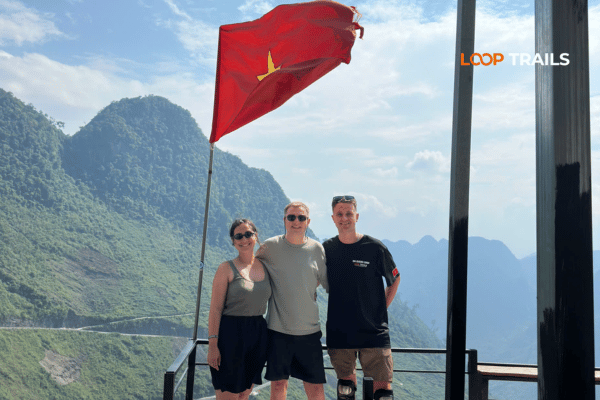
Lung Cu is Vietnam’s northernmost point, marked by a 33 meter flag tower planted on a karst hill within shouting distance of the Chinese border. You climb 839 steps to the base, then a narrow internal staircase to the top.
The off road part comes if you take the lesser used side roads into the surrounding Lo Lo Chai village, a Black Lo Lo ethnic community with mud walled houses and a quiet coffee scene. The roads in and out are partly unpaved, gravel and dirt, and after rain they get slick. This is where most rental motorbikes get scratched.
Combine with the flag tower climb and you have a half day. More of a cultural extreme than a physical one.
Learn more: Cao Bang Loop 3 Days best kept secret
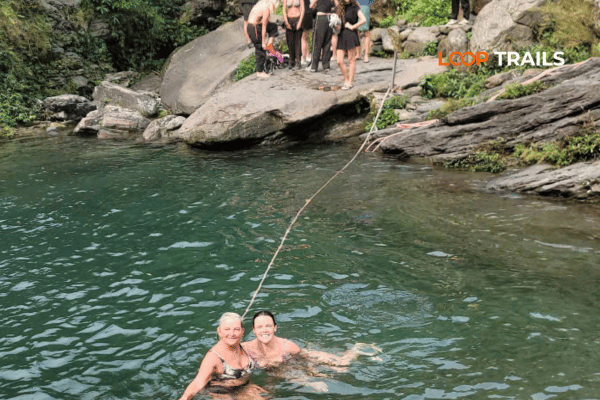
Du Gia is the off Loop detour everyone whispers about. Roughly 50 km off the main Loop, the village sits at the end of a winding road and has become a popular Day 2 or Day 3 stopover for travelers wanting a slower, wilder night.
The waterfall sits a short walk from the village, hidden in a notch in the jungle. The pool is deep, cold, and emerald. You can cliff jump from a low ledge (around 3 to 4 meters), and most people do. After a long sweaty day on the bike, this swim ranks in the top three sensory memories of the whole trip for most travelers.
There is no entrance booth, no rescue presence. Swim within your limits.
Lung Tam is a Hmong village famous for its indigo dyed linen cooperative. The village itself is the reason most people visit, but if you ask around, an unsigned trail climbs out the back of the village into terraced fields, past a small ancestor shrine, and along a ridge with 360 degree views of the Quan Ba valley.
It is a 2 to 3 hours round trip, not particularly steep, but the path braids and you will need either a local guide or a recent GPS track. The reward is one of the few hikes on the Loop where you do not hear a single motorbike for the entire walk.
Learn more: Lung Khuy Cave Ha Giang
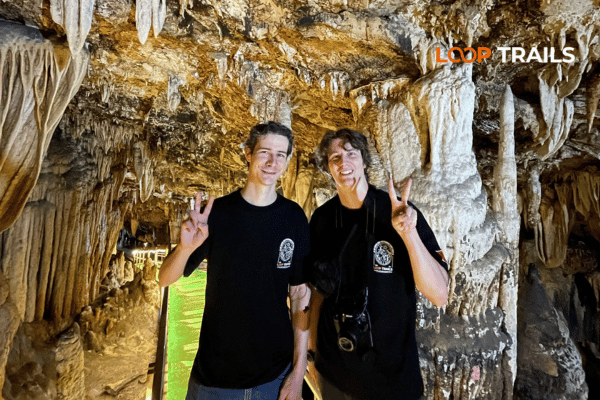
Lung Khuy Cave sits a 15 minutes ride out of Quan Ba town, then a 30 minutes uphill walk to reach the entrance. Inside, a wooden boardwalk takes you about 1 km deep through chambers studded with stalactites and stalagmites the size of cars.
It is lit, walkable, and safe by Vietnamese cave standards, meaning it is not a Disney attraction but it is not technical caving either. Entrance fee is small. Combine with a Quan Ba Twin Mountain viewpoint stop the same morning.
For travelers who want a cave experience without flying to Phong Nha, this is your shortcut.
The extreme version of accommodation. Several stilted home stays now operate above 1,500m in villages like Ta Lung, Lung Cam, and Pa Vi. You sleep on a thin mattress on a wooden floor, share a long table dinner with the family, and wake up to a sea of cloud below your feet around 6 a.m.
It is cold at night, even in summer. December and January nights occasionally drop near freezing. Bring layers. The bathroom is shared and basic.
Travelers consistently rate the village home stay night as the single most memorable part of the trip. It is the closest you can get on a normal itinerary to feeling like a guest rather than a customer.
Learn more: Quan Ba Heaven Gate
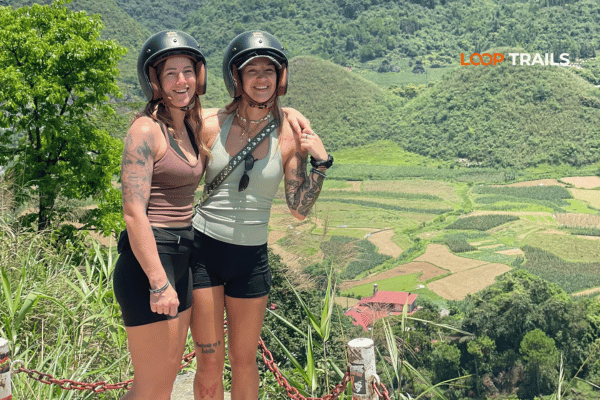
Quan Ba Heaven Gate is the first big viewpoint on the Loop, about 45 minutes north of Ha Giang City. The famous Twin Mountains (Nui Doi Co Tien) are visible from the viewpoint, but the extreme version of this stop is hiking up to the higher ridge above the viewpoint at sunrise.
It is short, maybe 30 to 45 minutes up, but it is steep and uneven. You start in the dark with a headlamp. By 5:45 a.m. you are above the cloud line, the valley filled with mist, the twin peaks emerging in pink light.
Most Loop tours do not include this because it requires sleeping in Quan Ba town the night before and waking at 4:30 a.m. If you are doing a private trip, ask for it specifically.
This one is a different kind of extreme: cultural and emotional, not physical. Khau Vai is a remote village in Meo Vac district that hosts the annual “Love Market” (Cho Tinh Khau Vai), traditionally held on the 26th and 27th day of the third lunar month, where former lovers reunite for a single day, openly and without judgment, often with their current spouses’ knowledge.
It is one of the more anthropologically intense things you can witness in Vietnam. Outsiders are tolerated but you are absolutely a guest. No photos of faces without permission. No interviews. Show up if you happen to be in Ha Giang at that exact time of year. Do not build a trip around it as a spectacle.
For the rest of the year, Khau Vai is a sleepy village with one of the better lookout roads in Meo Vac district, worth the detour purely for the scenery.
Learn more: Ha Giang Cao Bang Ba Be Lake 6 Days 5 Nights
Your travel mode determines which of these 12 you can realistically reach.
Easy rider (you ride on the back of a local driver’s motorbike):
Self drive motorbike:
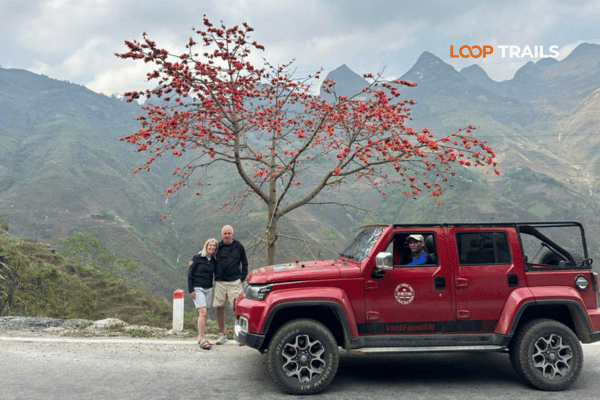
Jeep:
If you want the full extreme adventure circuit and you are not a regular rider, the honest call is: book an easy rider tour or a jeep tour and skip the rental.
Learn more: Ha Giang in September & October
The Loop is a year round destination, but the activity that brings you here should set the month.
Dry season (October to April):
Shoulder (May, September):
Wet season (June to August):
Best month for each activity (rough guide):
| Activity | Best months |
|---|---|
| Kayaking Tu San | November to April |
| Boat cruise Nho Que | Year round, best Nov to Apr |
| Hiking trails | October, November, March, April |
| Waterfall swimming | July to September |
| Photography (rice) | September (gold), May (flood) |
| Pass riding | October, November |
Rules and conditions can change. Always check recent reports closer to your travel date
Learn more: Ha Giang Loop Price
For a 3 days adventure focused Loop including these activities, here is the rough mid range budget logic per person (not the absolute cheapest, not premium):
| Item | Notes |
|---|---|
| Easy rider tour 3D2N (all in) | Varies by season and operator |
| Self drive rental 3 days | Varies, ask for current rates |
| Kayak Tu San Canyon | Small additional fee per person, often not included |
| Boat cruise Nho Que | Small fee, sometimes included in tours |
| Skywalk fee | Nominal local fee at the trailhead |
| Du Gia waterfall | Free |
| Lung Khuy Cave | Nominal entry fee |
| Home stay night | Included in most tours, separate if independent |
We deliberately do not publish hard prices in evergreen guides because they shift seasonally and across operators. Check our current Ha Giang Loop tour rates for what is included in a LoopTrails package, or message us on WhatsApp for a custom quote.
Most travelers book their Loop tour 2 to 8 weeks before arrival. High season (October, November, March, April) books out earlier.

Learn more: Ha Giang Packing list
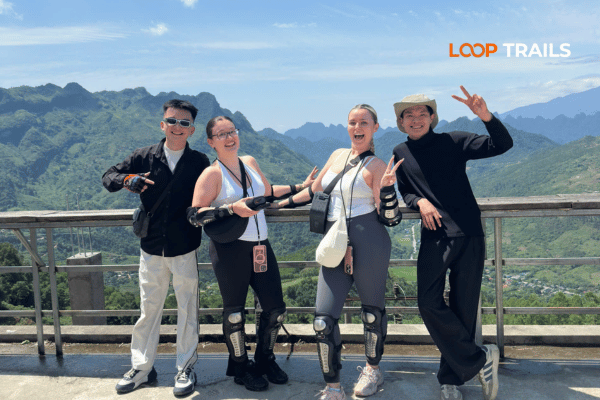
Trim, useful, no fluff:
Learn more: Ha Giang Safety Tips
Real talk.
Insurance. Many standard travel insurance policies exclude motorbike accidents in Vietnam unless you hold a valid local equivalent license. Read your policy. Some travelers get a separate adventure rider rider. Rules can change, so verify directly with your provider before assuming you are covered.
Helmets. Vietnamese law requires a helmet. Rental shops provide them. The helmets are often basic. If you are renting and you are serious, bring your own or buy a better one in Hanoi before you head north.
Road conditions. Sections of the Loop are under near constant repair. You will hit gravel patches, broken asphalt, and the occasional landslide cleanup zone. Slow down on blind corners. Buses and trucks own the road and they do not yield.
Altitude. The Loop tops out around 1,600m. Not enough to cause altitude sickness in healthy travelers, but enough to magnify cold and fatigue. Hydrate.
Rescue. There is no formal mountain rescue service. If something happens off the road, you are reliant on locals and your guide. Another reason to ride with an experienced operator rather than truly solo.
License question. Vietnam’s enforcement of motorbike license requirements for tourists has historically been inconsistent. Rules and enforcement can change. If this matters to your insurance or peace of mind, check the most recent official sources before you arrive.

Learn more: Ha Giang Loop Mistake to Avoid
Five mistakes locals quietly watch tourists make every season:
Learn more: Ha Giang Loop by Army Jeep Tours
Quick decision filter:
If you are still unsure, send us a WhatsApp message with your dates and travel style. We will tell you honestly which mode fits.
Learn more: Ha Giang Loop Hidden Gems
The Ha Giang Loop rewards travelers who treat adventure as a verb, not a brand. You do not need to do all 12 of these to walk away changed. Pick 4 to 6 that align with your fitness, your nerve, and the season you are coming in. Then commit. The Loop has a way of escalating on its own anyway.
See you on the passes.
It carries real risk, mostly motorbike accidents and weather related road hazards. The risk drops significantly if you ride with an experienced easy rider or take a jeep. Most tourist injuries are minor and happen on Day 1 within the first hour. Slow down, take the morning slow, and the rest of the trip generally smooths out.
Yes. The water is calm in dry season and most operators pair you with a guide in a tandem kayak. No paddling experience needed. Your shoulders will still be sore the next day.
Vietnam’s licensing rules and enforcement for foreign tourists have shifted over the years. We do not give legal advice in this guide, but if your travel insurance depends on holding a valid local license equivalent, check directly with both your insurer and a current official Vietnamese source before riding.
Kayaking, by a wide margin. The boat is touristy and dry. The kayak is silent, slow, and physical, with the canyon walls pressing in on both sides
Honestly, 5 to 7 days. A standard 3 days Loop tour covers about 7 to 8 of these. A 4 days tour with Du Gia covers around 10. To hit all 12 including Khau Vai Love Market, you need to time it with the lunar calendar and add a buffer day.
It is not formally maintained as a tourist path. It is a narrow trail on a cliff edge with no rails in most sections. If you have any height anxiety or you have been drinking, do not do it. In dry conditions and good shoes, plenty of normal travelers walk it without issue.
Late October to April for the best mix of clear weather, calm rivers, and rideable roads. May and September are stunning for rice terrace photography. June to August has the loudest waterfalls but the most road risk.
Yes. The 12 activities above are 80 percent off the bike anyway. The kayak, the boat, the hikes, the cave, the swim, the home stay: none of them require you to be on a motorbike to reach. Jeep travelers consistently report the same activity list and the same memories as motorbike travelers, just with dryer pants. Browse our jeep tour options if comfort matters more than the bike itself.
No. Cao Bang is a separate province east of Ha Giang. You can combine them on a 5 to 6 days route, which we run as a Ha Giang and Cao Bang combine tour. Cao Bang adds Ban Gioc Waterfall, Nguom Ngao Cave, and a very different cultural landscape from the Hmong heavy Ha Giang region.
Most travelers take an overnight sleeper bus or daytime limousine van from Hanoi (around 6 to 8 hours). Our tours include pickup arrangements. If you book independently, the My Dinh bus station is the main departure point in Hanoi.
You need to be reasonably fit, not athletic. The kayak is the most physically demanding, followed by the Quan Ba sunrise climb and the original Ma Pi Leng trail. Everything else is moderate. If you can walk 5 km on uneven ground without trouble, you are fine for almost the entire list.
Contact information for Loop Trails
Website: Loop Trails Official Website
Email: looptrailshostel@gmail.com
Hotline & WhatSapp:
+84862379288
+84938988593
Social Media:
Facebook: Loop Trails Tours Ha Giang
Instagram: Loop Trails Tours Ha Giang
TikTok: Loop Trails
Office Address: 48 Nguyen Du, Ha Giang 1, Tuyen Quang
Address: 48 Nguyen Du, Ha Giang 1, Tuyen Quang
Facebook X Reddit Table of Contents Learn more: Ha Giang Loop Tours Most people drive past the Quan Ba area twice on

Facebook X Reddit Table of Contents Learn more: Ha Giang Loop Tours The Ha Giang Loop has a reputation problem with older