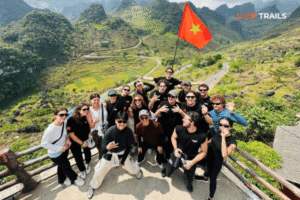


Thúy Kiều (Grace) is a travel blogger and content contributor for Loop Trails Tours Ha Giang. She holds a bachelor’s degree in Sustainable Tourism from Vietnam National University, Hanoi, and has a strong passion for exploring and promoting responsible travel experiences in Vietnam’s northern highlands.
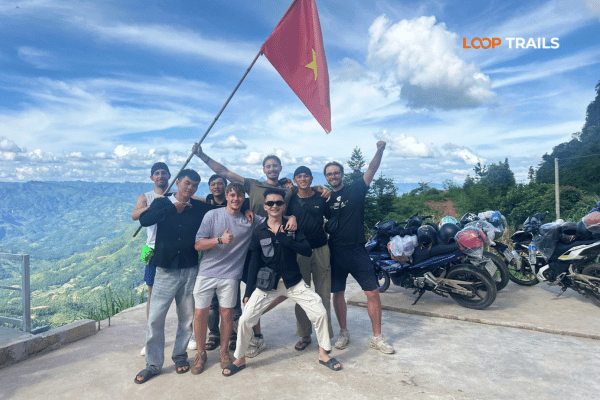
Learn more: Ha Giang Loop Tours
Most travelers come to northern Vietnam planning to do the Ha Giang Loop. It’s the famous one, after all. The one with the TikTok videos and Instagram reels showing winding mountain roads and dramatic cliff passes.
But here’s what many don’t realize: just east of Ha Giang lies Cao Bang province, home to Vietnam’s most spectacular waterfall and landscapes that rival anything Ha Giang offers, with a fraction of the tourists.
The Ha Giang Cao Bang combination tour connects these two regions into one continuous journey. Instead of doing the Ha Giang Loop and returning the same way you came, you continue east through mountain passes few foreigners ever see, past ethnic minority villages unchanged for generations, until you reach Ban Gioc Waterfall on the Chinese border.
It’s the difference between seeing northern Vietnam’s greatest hits and experiencing its complete symphony.
This guide covers everything you need to know: the full 5-day itinerary, what makes each section special, how to choose between tour types, and honest advice on whether this longer route is right for you.
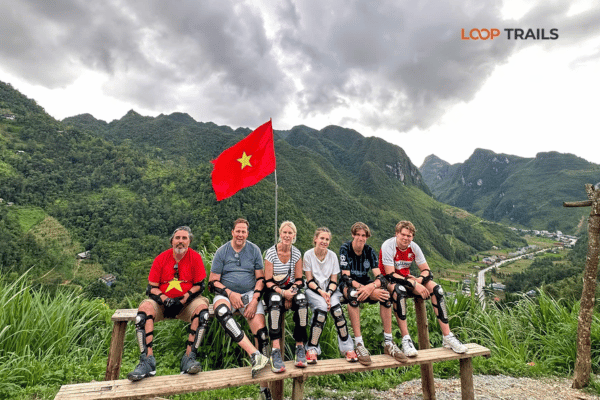
Learn more: Ha Giang Loop 2 Days 1 Night
The standard Ha Giang Loop is a circuit. You start in Ha Giang City, ride north through the mountains, and return to Ha Giang City via a southern route. It’s spectacular, but it’s also self-contained.
The Ha Giang Cao Bang combination breaks that circuit. Instead of looping back, you continue east from Meo Vac into Cao Bang province, crossing through territory that sees very few tourists. The journey ends at Ban Gioc Waterfall and Cao Bang City, from where you can catch transport back to Hanoi.
This means:
More variety: Two distinct landscapes, two different provincial characters, more ethnic minority groups, and a true sense of covering ground rather than circling back.
Less backtracking: You see new scenery every day instead of revisiting roads you’ve already traveled.
The waterfall finale: Ending at Ban Gioc Waterfall, Vietnam’s largest and most impressive waterfall, is a perfect climax to the journey.
Deeper immersion: Five days allows for a more relaxed pace, more village visits, more cultural experiences, and more time to actually absorb what you’re seeing.
The Ha Giang portion gives you everything that route is famous for: Ma Pi Leng Pass, Dong Van Karst Plateau, Lung Cu Flag Tower, the Nho Que River canyon.
The Cao Bang extension adds:
Khau Coc Cha Pass: Often called the “15 layer pass” because you can count the layers of road switchbacking down the mountain. It’s not as famous as Ma Pi Leng, but some travelers find it even more impressive.
Completely different scenery: Cao Bang’s landscape shifts from karst plateau to lush river valleys. The terrain feels gentler but no less beautiful.
Ban Gioc Waterfall: Vietnam’s largest waterfall, sitting directly on the border with China. Half the falls are in Vietnam, half in China. The scale and power of this waterfall rivals Iguazu or Victoria Falls in terms of impact.
Nguom Ngao Cave: One of the longest and most impressive cave systems in Vietnam, right near Ban Gioc.
Traditional villages: Nung and Tay minority communities that see far fewer tourists than those in Ha Giang.
The road less traveled: Between Meo Vac and Ban Gioc, you’ll pass through areas where foreign tourists are still a novelty. People wave, children run out to see you, and you get a glimpse of northern Vietnam that most visitors never experience.
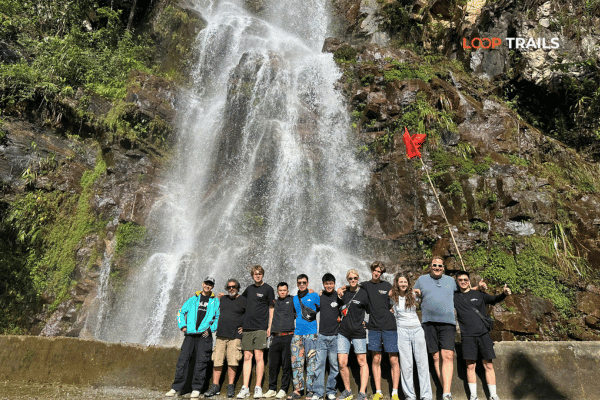
Learn more: Ha Giang Cao Bang 5 Days 4 Nights
Here’s what a typical Ha Giang Cao Bang tour looks like, day by day.
Most travelers take an overnight sleeper bus from Hanoi to Ha Giang. The journey takes approximately 6 to 8 hours depending on traffic and bus type. You arrive in Ha Giang City early morning.
Bus options: VIP sleeper bus, cabin sleeper bus, limousine bus, or private car transfer. The sleeper options let you save a night of accommodation and arrive ready to start the tour.
After arrival, you check into your accommodation in Ha Giang City, rest, and prepare for the adventure ahead.
Distance: Approximately 150km Riding time: 5 to 6 hours with stops
The journey begins. After breakfast and a safety briefing at your tour operator’s office, you head north into the mountains.
Morning highlights:
Bac Sum Pass: Your first real climb out of the valley. The views open up quickly.
Heaven’s Gate (Quan Ba): The famous viewpoint overlooking the Twin Mountains, also called Fairy Bosom Mountains. This is where most travelers take their first “I can’t believe this is real” photos.
Afternoon:
Enter the Dong Van Karst Plateau Geopark, a UNESCO recognized area of limestone formations, terraced fields, and ethnic minority villages.
Tham Ma Pass: That iconic winding road you’ve seen in every Ha Giang photo. Multiple switchbacks carved into the mountainside.
Lao Sa village: Ancient H’Mong stone houses near the Chinese border.
Evening:
Arrive in Lao Xa village near Dong Van. Check into a local homestay. Dinner with your hosts, traditional music, local corn wine (if you’re feeling brave), and an early night before tomorrow’s big day.
Distance: Approximately 80km Riding time: 4 to 5 hours with stops
This is the day everyone remembers. You’ll hit the major highlights that make Ha Giang famous.
Morning:
Vuong Palace: The former residence of the “H’Mong King,” a fascinating historical site that tells the story of this region’s unique past.
Lung Cu Flag Tower: Vietnam’s northernmost point. Climb to the top of the tower and you’re standing at the very top of the country, looking directly into China.
Midday:
Return to Dong Van for lunch, then prepare for the main event.
Afternoon:
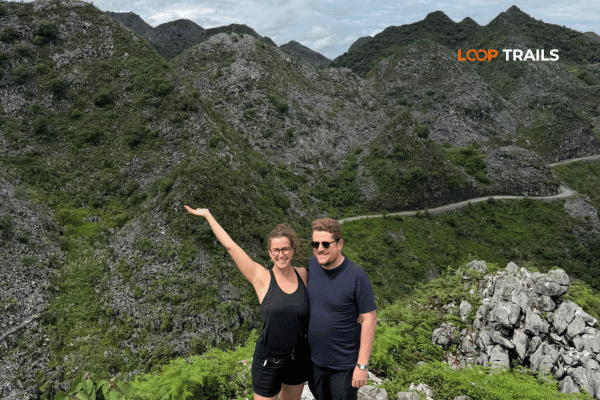
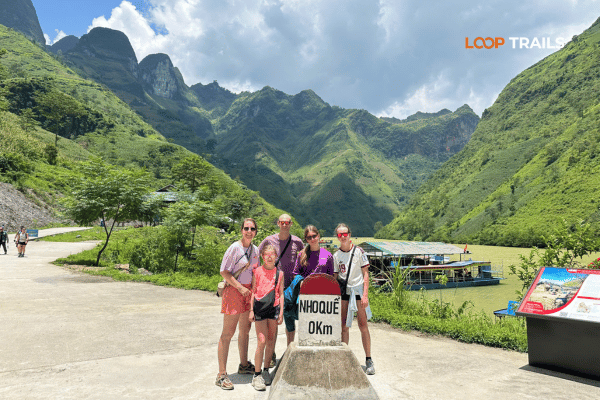
Ma Pi Leng Pass: This 20 kilometer stretch of road is considered one of the four great passes of Vietnam, and many would argue it’s the most spectacular. The road was carved into cliff faces by hand in the early 1960s. Below you, Tu San Canyon drops nearly a kilometer to where the Nho Que River flows turquoise green.
Ma Pi Leng Skywalk: A walking trail along the cliff edge with viewing platforms. Not for those afraid of heights, but unforgettable if you’re comfortable with exposure.
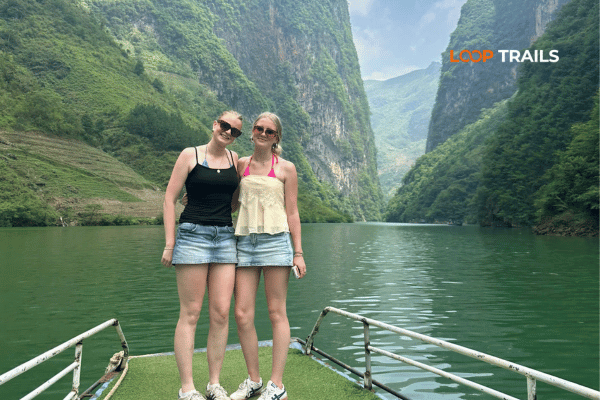
Nho Que River boat trip: Optional but highly recommended. Take a boat into Tu San Canyon and see the cliffs from below. The scale is staggering when you’re floating at the bottom looking up at the road you just traveled.
Evening:
Arrive in Meo Vac town. Hotel accommodation, dinner, and rest. Tomorrow you leave Ha Giang province behind.
Learn more: Ha Giang Loop 3 Days 2 Nights
Distance: Approximately 120km Riding time: 5 to 6 hours with stops
This is the transition day, where you leave the Ha Giang Loop and enter territory few tourists explore.
Morning:
Depart Meo Vac and head east toward Cao Bang province. The landscape begins to shift. The dramatic karst towers of Ha Giang give way to rolling mountains and river valleys.
Midday:
Lunch in Bao Lac, a small town on the border between provinces.
Afternoon:
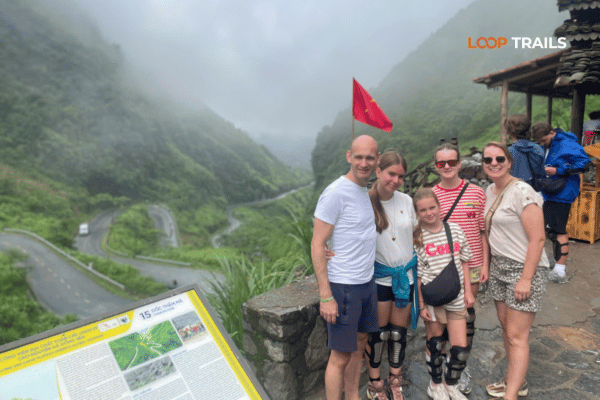
Khau Coc Cha Pass: The famous “15 layer pass.” From the viewpoint at the top, you can count the switchbacks descending into Xuan Truong Valley below. Some travelers find this pass even more photogenic than Ma Pi Leng.
Xuan Truong Valley: A peaceful highland valley that feels a world away from the tourist trail.
Pac Bo historical site: Where Ho Chi Minh lived in a cave after returning to Vietnam in 1941. Important for Vietnamese history, and a peaceful spot regardless of your interest in politics.
Evening:
Arrive at Me Farmstay in Ha Quang district. This is a more rural, authentic homestay experience. Simple but comfortable, with incredible hospitality.
Distance: Approximately 100km Riding time: 4 to 5 hours with stops
Today builds toward the climax of the journey: Ban Gioc Waterfall.
Morning:
Depart Me Farmstay and head toward Trung Khanh district.
Tra Linh: Brief stop to see local scenery.
Midday:
Lunch in Trung Khanh town.
Pi Pha Viewpoint: Hike to a stunning overlook of Ngoc Con Valley. Worth the effort for photographers.
Afternoon:
Country roads through Trung Khanh: Some of the most beautiful riding of the entire trip. Rice paddies, karst mountains, rural villages.
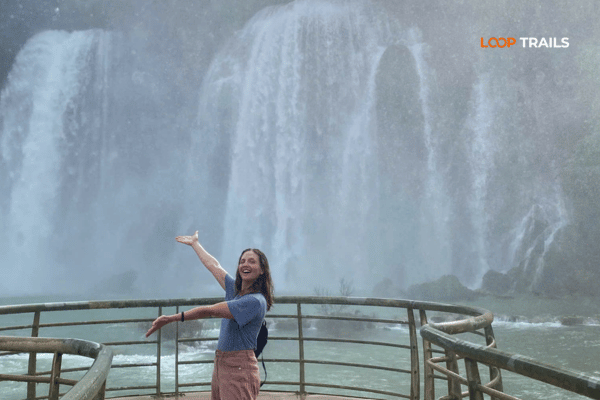
Ban Gioc Waterfall: The finale. Vietnam’s largest waterfall, 300 meters wide and dropping 70 meters in multiple tiers. It sits directly on the border with China, so you’re literally looking at two countries. The power and scale of this waterfall is genuinely impressive.
Bamboo rafting: Take a bamboo raft right up to the base of the falls. You’ll get wet from the spray, but it’s the best way to experience the waterfall’s power.
Rock Village swimming: Optional swimming spot near the falls to cool off after the day’s riding.
Evening:
Accommodation near Ban Gioc Waterfall. Dinner with views of the falls if your accommodation allows.
Learn more: Ha Giang Loop 4 Days 3 Nights
Distance: Approximately 90km Riding time: 3 to 4 hours with stops
The final day, packed with unique stops before returning to civilization.
Morning:
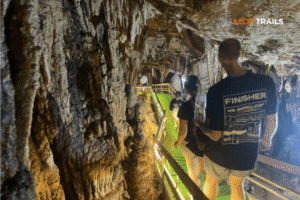
Nguom Ngao Cave: One of the longest and most impressive caves in Vietnam. The formations inside are stunning, and the scale of the chambers is vast.
Quay Son River: See traditional water wheels that have been used for centuries to irrigate rice fields.
Midday:
Phuc Sen village: A traditional blacksmith village where artisans still forge tools by hand using techniques passed down for generations.
Phia Thap village: Watch Nung people make traditional incense sticks. The process is fascinating and the smell is wonderful.
Afternoon:
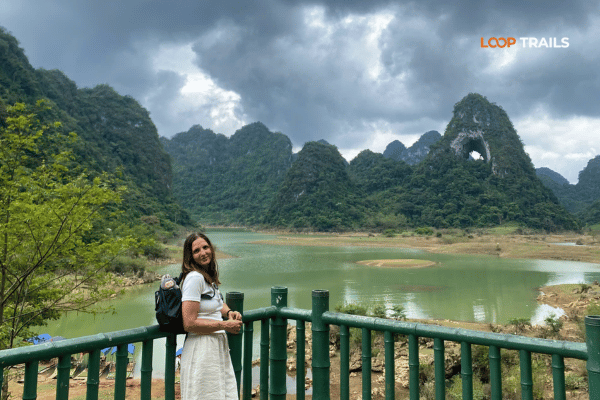
Thung Mountain (God’s Eye Mountain): A karst formation with a natural circular hole that looks like an eye. One of Cao Bang’s most unique landmarks.
Arrive in Cao Bang City by late afternoon.
Evening:
From Cao Bang City, you can take a night bus back to Hanoi (approximately 7 hours), continue to Ha Long Bay, or stay another night and explore the city.
Learn more: Cao Bang Loop 3 Days best kept secret
People often ask: how are the two provinces different? Here’s a quick comparison:
| Aspect | Ha Giang | Cao Bang |
|---|---|---|
| Landscape | Dramatic karst plateau, extreme cliff roads | Gentler valleys, river systems, still karst but softer |
| Famous for | Ma Pi Leng Pass, Dong Van, Lung Cu | Ban Gioc Waterfall, caves, traditional villages |
| Tourism level | Growing fast, especially the Loop | Still relatively undiscovered |
| Ethnic groups | Primarily H’Mong, also Tay, Lo Lo | More Nung and Tay presence |
| Vibe | Raw, dramatic, intense | Peaceful, lush, gentler |
| Infrastructure | More developed for tourists | Simpler, more rural |
Neither is “better.” They complement each other perfectly. Ha Giang hits you with drama and intensity. Cao Bang rewards you with peace and hidden beauty.
→ [Compare all Ha Giang and Cao Bang tour options] (link to tours page)
Learn more: Ha Giang Cao Bang 6 Days 5 Nights
The crown jewel of Day 2. Ma Pi Leng Pass is consistently rated as one of the most spectacular roads in Asia. The engineering required to carve this road into sheer cliff faces using hand tools in the 1960s is almost impossible to comprehend.
Below the pass, Tu San Canyon plunges nearly 1,000 meters to the Nho Que River. The boat trip on the river is optional, but I strongly recommend it. Floating through the canyon while looking up at the road you just traveled gives you perspective on the scale of this landscape.
Vietnam’s northernmost point. The giant Vietnamese flag at the top marks the border with China. On clear days, you can see Chinese villages across the valley.
Beyond the patriotic significance, it’s simply a beautiful spot with panoramic views of the borderlands.
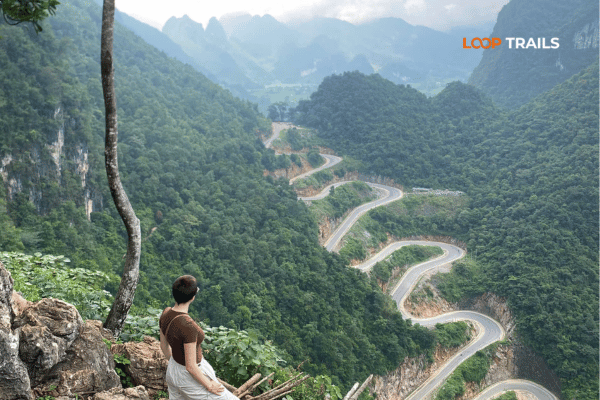
This pass doesn’t get the fame of Ma Pi Leng, but photographers often prefer it. From the viewpoint, you can count the layers of road switchbacking down the mountain into Xuan Truong Valley. It’s a stunning visual composition.
The finale and arguably the most photogenic single spot on the entire journey. Ban Gioc is 300 meters wide with multiple tiers, surrounded by lush green vegetation, with the Chinese portion of the falls (called Detian Falls) visible on the far side.
The bamboo raft trip gets you close enough to feel the spray on your face. It’s one of those experiences that lives up to the photos.
Just 3km from Ban Gioc, this cave system extends over 2km into the mountain. The stalactites and stalagmites are impressive, and the lighting inside creates an otherworldly atmosphere.
Don’t rush past the villages. Lo Lo Chai with its distinctive architecture. Lung Tam with its traditional linen weaving. Phia Thap with its incense makers. Phuc Sen with its blacksmiths.
These are living communities, not tourist attractions. But they welcome visitors with genuine warmth, and spending even 30 minutes in conversation (through a guide translator) adds depth to your understanding of this region.
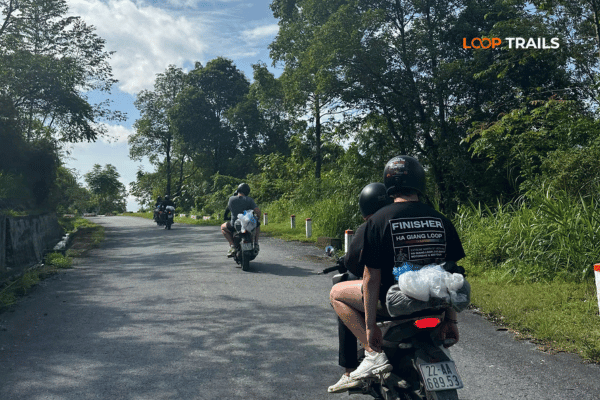
Learn more: Ha Giang Motorbike Rental
The Ha Giang Cao Bang combo is available in the same formats as the standard Ha Giang Loop:
What it is: You ride as a passenger behind an experienced local driver.
Why choose it: You want to focus on the scenery, not the road You’re not confident riding challenging mountain roads You want local knowledge and conversation along the way You prefer less physical and mental fatigue
For the 5 day combo: Easy Rider is an excellent choice. The route is long, and having a skilled driver handle the challenging sections lets you actually enjoy the journey.
What it is: You ride your own motorbike, following a guide.
Why choose it: You’re an experienced rider who wants control You enjoy the challenge of mountain roads Budget is a priority (self-drive is usually cheapest) You want maximum independence
Caution for 5 days: This is a lot of riding. Make sure you’re genuinely comfortable with 5 consecutive days on a motorbike in challenging terrain. If you’re newer to motorbike travel, consider starting with a shorter trip.
→ [Check motorbike rental options in Ha Giang] (link to rental page)
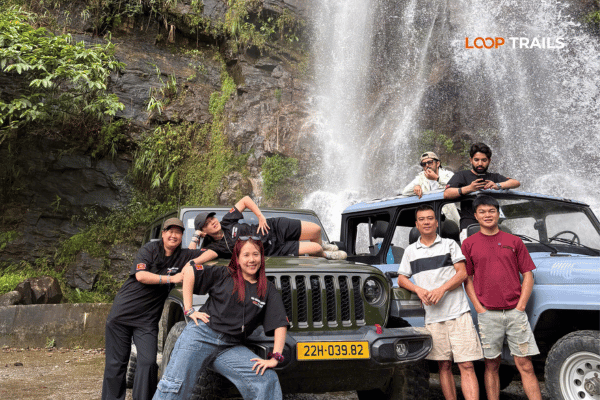
What it is: Private 4×4 vehicle with professional driver and dedicated guide.
Why choose it: Traveling with family or children Prefer comfort and climate control Want maximum flexibility for stops Rainy season travel Physical limitations that make motorbikes difficult
For the 5 day combo: The jeep really shines on longer routes. Five days of comfort versus five days of physical exertion is a significant difference. And the activities (hiking, boat trips, waterfall visits) are the same regardless of vehicle.
→ [See Ha Giang Cao Bang Jeep Tour details] (link to jeep tour page)
| If you are… | Consider… |
|---|---|
| A solo backpacker wanting adventure | Easy Rider or Self-Drive |
| A couple wanting to share the experience | Easy Rider or Jeep |
| A family with children | Jeep (only option we recommend for families) |
| An experienced rider seeking challenge | Self-Drive |
| Visiting during rainy season | Jeep |
| Over 50 or with physical concerns | Easy Rider or Jeep |
| A photographer needing flexibility | Jeep |
| Budget-conscious | Self-Drive or Easy Rider |
Learn more: Ha Giang Loop by Wrangler Rubicon Jeep
This is when northern Vietnam is at its most photogenic. Rice harvests turn the terraces golden (September to October). Buckwheat flowers bloom pink and white across the hillsides (late October to November). Weather is dry and clear.
The downside: more tourists, though Cao Bang still sees relatively few visitors.
Spring (March to May) brings wildflowers and lush green landscapes. December offers misty mountain mornings and fewer tourists.
These months are excellent for the combo tour, with good weather and thinner crowds.
Summer (June to August) means regular rain, sometimes heavy. Roads can be slippery, and views may be obscured by clouds. But the landscape is incredibly green, and jeep tours handle rain well.
Winter (January to February) can be cold at high elevations. Pack warm layers.
Ban Gioc Waterfall is most impressive during and after the rainy season (June to October) when water flow is highest. In dry season, the falls can be less dramatic. For the ultimate waterfall experience, consider visiting September or October when you get good weather AND strong water flow.
Learn more: Best time to visit Cao Bang
The standard Ha Giang Cao Bang combo is 5 days 4 nights of touring, plus overnight buses on either end.
Typical schedule: Night 0: Night bus Hanoi to Ha Giang Days 1 through 5: Tour Night 5: Night bus Cao Bang to Hanoi (or stay in Cao Bang)
Total time from Hanoi: approximately 7 days.
Quality tours include: Private room accommodation with ensuite bathroom All meals (breakfast, lunch, dinner) except final evening Experienced guide and/or driver All fuel Entrance fees to attractions Boat trip on Nho Que River Bamboo rafting at Ban Gioc Cave visits 24/7 support
Not typically included: Bus tickets Hanoi to Ha Giang and Cao Bang to Hanoi Drinks beyond water Tips (optional but appreciated) Travel insurance (bring your own)
For the 5 day combo, especially for jeep tours, book 2 to 4 weeks in advance during peak season. This longer tour requires more coordination than standard Ha Giang Loop tours.
→ [Contact us on WhatsApp: +84 862 379 288] (link to WhatsApp)
Essentials: Layers (temperature varies significantly with elevation) Rain jacket (even in dry season, weather changes quickly) Comfortable shoes for hiking and village walks Sunscreen and sunglasses Camera with extra batteries and memory cards Motion sickness medication if prone Small daypack for daily items
For the waterfall: Swimsuit (for Ban Gioc bamboo rafting and swimming) Quick dry towel Waterproof bag for electronics
Don’t overpack: You’ll access your bag daily, but excess luggage is a hassle. Three to four changes of clothes is plenty.
Learn more: Ha Giang Cao Bang Packing List
Let me give you my honest assessment.
Lorem ipsum dolor sit amet, consectetur adipiscing elit. Ut elit tellus, luctus nec ullamcorper mattis, pulvinar dapibus leo.
You have the time. If you can allocate 7 days from your Vietnam trip (including travel days), this is an incredibly rewarding use of that time.
You want the complete northern Vietnam experience. The combo covers more ground, more variety, and more highlights than any single route.
Ban Gioc Waterfall appeals to you. If you have any interest in waterfalls, Ban Gioc is world class. It’s reason enough to do the extension.
You prefer ending somewhere different. The psychological satisfaction of traveling “through” rather than “around” is real. You start in one city and end in another, with a true journey in between.
You’ve already done the standard Ha Giang Loop. The combo is perfect for repeat visitors who want to go deeper into the region.
Time is tight. If you only have 5 days total from Hanoi, the Ha Giang Loop (3 to 4 days of touring) is the better choice.
You’re uncertain about multi-day adventure travel. If you’ve never done a motorbike tour before, starting with 3 days is wise. You can always come back for the Cao Bang extension.
Budget is very limited. The 5 day combo costs more (more nights, more fuel, more distance). If budget is the primary constraint, the shorter loop gives excellent value.
You specifically want the “Loop” experience. Some travelers like the idea of returning to where they started. The combo is a one-way journey.
The Ha Giang Cao Bang combo is the most comprehensive northern Vietnam adventure available. You see everything the Ha Giang Loop offers, plus an entire additional province that most tourists never visit, ending at one of Southeast Asia’s most impressive waterfalls.
If you have the time and interest, it’s absolutely worth it. You’ll come away with a deeper understanding of this region and memories that span five distinct days of adventure.
→ [Book the Ha Giang Cao Bang 5-Day Tour] (link to combo tour page)
→ [Compare with 3-Day and 4-Day Ha Giang Loop options] (link to tours page)
→ [Questions? WhatsApp: +84 862 379 288] (link to WhatsApp)
Learn more: Ha Giang Border Area Permit 2026
The standard tour is 5 days 4 nights of actual touring. Add overnight buses on either end (Hanoi to Ha Giang, Cao Bang to Hanoi), and you need approximately 7 days total from Hanoi.
Not significantly harder, just longer. The road conditions are similar. The main difference is more days of travel. If you can handle a 3 day tour, you can handle 5 days with proper rest.
Technically yes, but we don’t recommend it for first-timers. The Cao Bang section is much less traveled than Ha Giang, signage is limited, and local knowledge is valuable. A guide makes the experience significantly richer and safer.
The waterfall is most impressive from June to October when water flow is highest. September and October offer the best combination of strong water flow and good weather. In dry season (November to April), the falls can be less dramatic.
Night buses run from Cao Bang City to Hanoi, taking approximately 7 hours. You can also connect to other destinations like Lang Son or Ha Long Bay. Your tour operator can help arrange transport.
Yes. The Ha Giang Cao Bang jeep tour follows the same itinerary as motorbike tours. It’s particularly recommended for families, older travelers, rainy season visits, or anyone prioritizing comfort over the motorbike experience.
The highest point is around Lung Cu (approximately 1,600 meters). Most of the route is between 800 and 1,400 meters. Temperature can vary significantly, so bring layers.
Yes. You can do the Ha Giang Loop (3 to 4 days) as one trip and the Cao Bang Loop (separate tour) as another. However, the combined route is more efficient and gives you the “transition” experience between the two provinces that separate tours miss.
The route includes opportunities to visit H’Mong, Tay, Lo Lo, and Nung communities. Specific villages vary by tour, but typically include Lao Sa, Lo Lo Chai, Lung Tam, Phia Thap, and Phuc Sen.
Excellent. The variety of landscapes (karst mountains, river valleys, waterfall, caves, villages) gives photographers diverse subjects. The longer duration also allows for better timing, including golden hour opportunities. Jeep tours offer the most flexibility for photo stops.
For Easy Rider or jeep tours: moderate. You’ll do some hiking (viewpoints, caves) and walking (villages), but nothing extreme. For self-drive: demanding. Five days of mountain road riding requires genuine physical stamina.
We offer a condensed version in some cases, but the experience is significantly rushed. If you only have 4 days, consider the full Ha Giang Loop (4D3N) instead, which is more comfortable at that duration.
Contact information for Loop Trails
Website: Loop Trails Official Website
Email: looptrailshostel@gmail.com
Hotline & WhatSapp:
+84862379288
+84938988593
Social Media:
Facebook: Loop Trails Tours Ha Giang
Instagram: Loop Trails Tours Ha Giang
TikTok: Loop Trails
Office Address: 54A Tran Phu, Ha Giang 2, Tuyen Quang
Address: 54A Tran Phu, Ha Giang 2, Tuyen Quang
Facebook X Reddit Table of Contents Learn more: Ha Giang Loop Tours Most people drive past the Quan Ba area twice on

Facebook X Reddit Table of Contents Learn more: Ha Giang Loop Tours The Ha Giang Loop has a reputation problem with older