
UK Driving Licence in Vietnam: IDP and Motorbike Rules
Facebook X Reddit Table of Contents Learn more: Ha Giang Loop Tours If you are a UK traveler planning to ride a
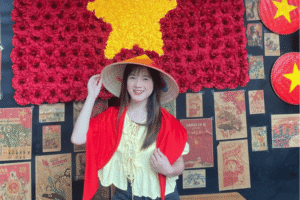
Thúy Kiều (Grace) is a travel blogger and content contributor for Loop Trails Tours Ha Giang. She holds a bachelor’s degree in Sustainable Tourism from Vietnam National University, Hanoi, and has a strong passion for exploring and promoting responsible travel experiences in Vietnam’s northern highlands.
Learn more: Ha Giang Loop Tours
Cao Bang is one of those places that rewards good timing. Show up in the right week and you get thundering water at Ban Gioc, golden rice terraces, cool mountain air and quiet roads you can actually enjoy. Show up at the wrong time and you might spend two days watching fog drift past the homestay window while the waterfall hides somewhere behind grey drizzle.
So the honest question is never whether Cao Bang is worth it. It always is. The real question is timing, and that is exactly what this guide is for. Below you will find the best time to visit Cao Bang broken down month by month, what to expect from the weather, when Ban Gioc looks its best, and how to match your trip to the kind of experience you actually want.
We run trips through this corner of the northeast all year, so most of what follows comes from watching the seasons turn here in person rather than from a chart. Let’s get into it.
Learn more: Ha Giang Loop 2 Days 1 Night
If you want one answer and one answer only: late September to October is the sweet spot. The heavy summer rain is winding down, so Ban Gioc still has plenty of water, the sky starts to clear, the temperature drops to something comfortable, and the rice terraces around the falls turn gold at the same time. It is the rare window where the waterfall, the weather and the scenery all line up.
Close behind it: October into November and March into April. These are the calm, dry, clear months that make riding, trekking and photography easy, with fewer crowds than the autumn peak.
Here is the quick version before we go deeper:
| If you want… | Go around… |
|---|---|
| The best all round experience | Late September to October |
| Clear skies and easy roads | October, November, March, April |
| Maximum waterfall power | June to August (expect rain) |
| Green landscapes and lower prices | May to August (low season) |
| Cool, misty, quiet highlands | December to February |
Nowhere in Cao Bang is truly a bad choice. Every season here has a personality. The rest of this guide is about helping you pick the one that fits your trip.
Learn more: Ha Giang Loop 3 Days 2 Nights
Cao Bang sits up in the far northeast of Vietnam, close to the Chinese border, in a landscape of limestone peaks, river valleys and small mountain towns. The climate is humid subtropical, which in plain language means two clear seasons: a wet one and a dry one.
This is the easy half of the year. Rain becomes occasional rather than constant, the humidity drops, and you get more of those crisp blue sky days that make the karst scenery pop. Days are mild and mornings can be genuinely cold, especially from December to February. The Quay Son River near Ban Gioc often turns a beautiful clear turquoise in these months because it is no longer carrying so much sediment from the rains.
The trade off is water volume. Ban Gioc keeps flowing all year and never dries up, but by mid dry season it is running gentler than at its summer peak. Many travelers actually prefer that, because you can see the individual tiers of rock more clearly.
Now the monsoon arrives. June, July and August are the wettest months of the year, and August is usually both the hottest and the rainiest all at once. Expect heavy afternoon downpours, high humidity, dramatic skies and very green everything. This is when Ban Gioc is at full roar.
The catch is that rain up here is not gentle. It can turn mountain roads muddy and slippery, wash out visibility, and occasionally close trails for safety. Storms and even the tail end of typhoons can reach this far inland, mostly from August into October, so weather can shift fast. None of this makes travel impossible, it just means you plan for slow days and pack properly.
One thing chart based guides miss: Cao Bang is not one temperature. The valleys and the town are one thing, but places like Phia Oac mountain climb close to 1,900 meters, and up there it gets seriously cold in winter. Frost is possible in the highest spots in December and January, and the air stays cool and misty even when the valleys feel mild. If your plan includes the high ground, add a warm layer no matter what the town forecast says.
A quick, honest caveat before the monthly breakdown: the temperatures below are typical long term averages, not promises. Mountain weather does what it wants. Always check a live forecast for your actual dates before you commit to a plan.
Not sure your dates line up? This is exactly the kind of thing we help with. Tell us the week you are thinking about and we will tell you honestly what Cao Bang usually looks like then and whether to nudge the plan. Take a look at our Cao Bang loop tours, or just message us on WhatsApp and ask.
Learn more: Ha Giang Loop 4 Days 3 Nights
Here is what each month actually feels like on the ground, plus what it is best for and what to watch out for.
The coldest month of the year. Daytime highs sit around 15°C to 18°C, and nights can drop to roughly 8°C to 10°C in the valleys, colder on the high ground. Mornings are often foggy and clear up by midday. Rain is light. It is quiet, atmospheric and great for slow travel and photography, as long as you bring warm clothes. Note that Lunar New Year sometimes falls in late January, which brings crowds and some closures. Best for: peaceful, misty, low season trips. Watch out for: genuine cold at altitude, Tet timing.
Still cool but slowly softening, with days around 16°C to 20°C. Often one of the drier months, with misty mornings and bright afternoons. Early blossoms start to appear in the hills. If Tet lands in February, expect the same crowd and closure pattern for about a week around the holiday, so check the calendar. Best for: clear, quiet sightseeing. Watch out for: Tet closures, chilly mornings.
Learn more: Explore just the Cao Bang Loop
One of the most pleasant months to be here. Mild days around 15°C to 23°C, low rainfall, and greenery starting to spread across the valleys. Roads are dry and easy, humidity is comfortable, and the light is lovely for photos. If you want gentle weather and quiet trails, March is hard to beat. Best for: riding, trekking, photography. Watch out for: cool mornings, still worth a light jacket.
Warming up nicely into the low to high 20s, often 19°C to 27°C, with the countryside turning lush and green. It is one of the best all round months in northern Vietnam. The only thing to note is the occasional pre monsoon thunderstorm creeping in later in the month, and a rare hot spike. Overall, still firmly in the easy season. Best for: comfortable weather, green scenery. Watch out for: the odd early storm.
The shoulder into summer. Days climb to around 23°C to 30°C and the first proper monsoon rains begin. It is hot, increasingly humid, and one of the sunniest months when it is not raining. The landscape is deep green and prices are starting to soften as the low season begins. Ban Gioc gains power. Best for: green landscapes, fewer crowds, budget travel. Watch out for: the first real rain and humidity.
Firmly in the wet season now, and one of the wettest months of the year. Hot and sticky, roughly 24°C to 31°C, with frequent heavy downpours. Ban Gioc is loud and impressive, the valleys are jungle green, and there are very few tourists. This is a real adventure month rather than a relaxed one. Best for: powerful waterfall, solitude, lush scenery. Watch out for: mud, slippery roads, low visibility during storms.
Similar to June and often the rainiest of all for number of rainy days. Hot, humid and dramatic. The upside is a waterfall at close to full strength and a countryside that looks impossibly green. The downside is real: this is not the month for nervous riders or tight schedules, because rain can eat a whole afternoon. Best for: thunderous Ban Gioc, cheap and quiet. Watch out for: heavy rain, road conditions, humidity.
Learn more: Ha Giang Cao Bang 5 Days 4 Nights
The peak of everything. Usually the hottest and the wettest month at the same time, around 24°C to 31°C with the highest total rainfall of the year. Ban Gioc is at its most powerful, mist rising off the base, sound carrying across the valley. It is spectacular. It is also the start of the window when storms and typhoon systems can reach the region, so weather is at its most unpredictable. Best for: maximum waterfall drama. Watch out for: storms, flooding risk, slippery roads.
This is where the year turns. Early September can still be wet, but through the month the heavy rain eases off, the humidity starts to drop, and the sky begins to clear. Temperatures ease to a comfortable 23°C to 30°C. Best of all, the rice around Ban Gioc starts turning gold as the harvest approaches. Late September is many people’s single favorite time to be here. Best for: the start of the golden rice and clearer skies with water still high. Watch out for: a lingering chance of late storms early in the month.
For most travelers, the best month overall. Dry, clear, comfortable at roughly 20°C to 28°C, with the golden rice harvest in full swing around the falls in the first half of the month. Ban Gioc still carries strong water from the rains that just ended, the Quay Son River glows, and the whole region looks its absolute best. It is also the most popular month, so book ahead. Best for: the full package of water, weather and scenery. Watch out for: crowds, a small remaining storm risk early on.
The quiet gem. Cooler now, around 17°C to 25°C, dry, clear and crisp, with excellent light and very stable roads. The harvest color has mostly gone by mid month, but the weather is arguably the most reliable of the year for riding and trekking. Fewer people than October, still beautiful. Best for: clear skies, easy riding, calm sightseeing. Watch out for: cool nights, the first hint of winter late in the month.
Winter settles in. Mild days around 15°C to 20°C, cold nights near 10°C in the valleys and colder up high, with foggy mornings that usually burn off by midday. Rain is minimal and skies are often clear once the fog lifts. Ban Gioc runs gentler and the water turns clear and green. Frost is possible on the high ground like Phia Oac. It is quiet, moody and lovely if you dress for it. Best for: misty highland scenery, low season calm. Watch out for: genuine cold at altitude, short daylight.
Learn more: Cao Bang Loop 3 Days best kept secret
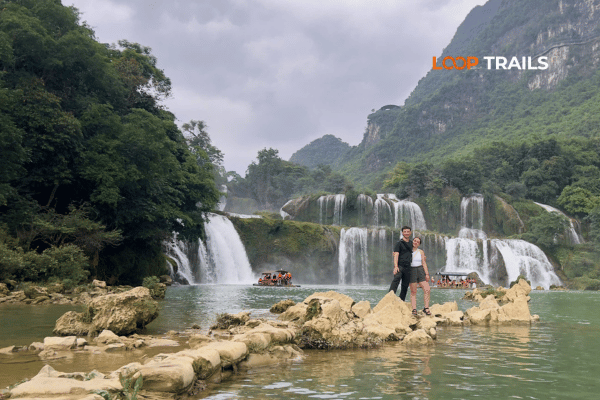
Ban Gioc deserves its own answer, because “best time for Cao Bang” and “best time for the waterfall” are not quite the same thing.
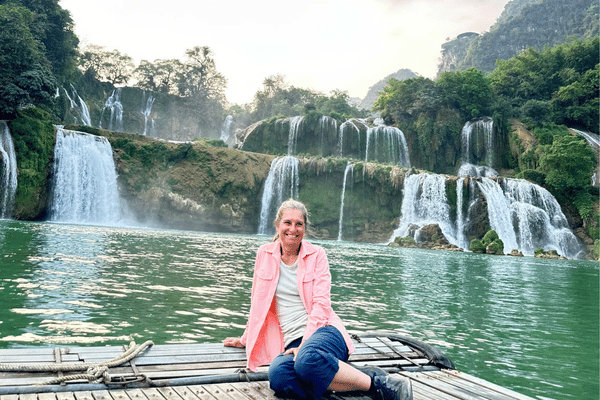
For raw power, go in the rainy season, especially July and August. This is when Ban Gioc is at its loudest and widest, with the tiers merging into one huge sheet of water and mist rising off the base. It is genuinely awesome. The price you pay is unpredictable weather and roads that need respect.
For the best overall look, target late September to October. The rains have mostly stopped so the water is still strong, the sky is clearing, and the rice terraces around the falls turn gold at the same time. Green karst, white water and yellow rice in one frame is why photographers plan their whole year around this window.
For clarity and calm, come in the dry season from November to April. The flow drops to gentler levels, but the Quay Son River turns a striking turquoise, the individual rock tiers become visible, and you get reliable weather with far less crowd pressure. Plenty of travelers actually prefer Ban Gioc like this.
One tip that holds true in every season: get there early, ideally between about 7:00 and 9:30 in the morning. The light is softer, the mist over the river is at its prettiest, and you beat both the heat and the tour buses. If you want the deeper detail on the falls themselves, our full Ban Gioc waterfall guide goes stop by stop.
Learn more: Nguom Ngao Cave
Different travelers want different things from the same place. Match the month to your goal.
Learn more: Pac Bo Historical Site
Cao Bang is much more than one waterfall, and knowing the season helps you plan around the weather.
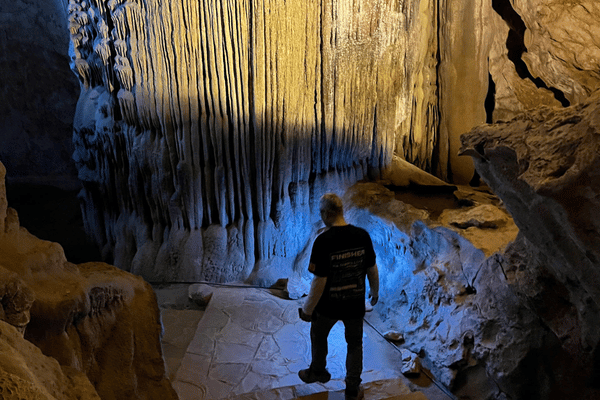
Nguom Ngao Cave sits close to Ban Gioc and is your best friend on a rainy day, because it is underground and completely weatherproof. If a downpour rolls in during the wet season, this is where you go.
Thang Hen Lake and the surrounding valleys look their fullest and greenest in the rainy and early autumn months, when water levels are high.
Phia Oac mountain is the place to go if you specifically want cold, cloud and mist. December and January are the moody months up there, occasionally with frost, so it suits winter travelers who like dramatic, foggy landscapes over blue sky.
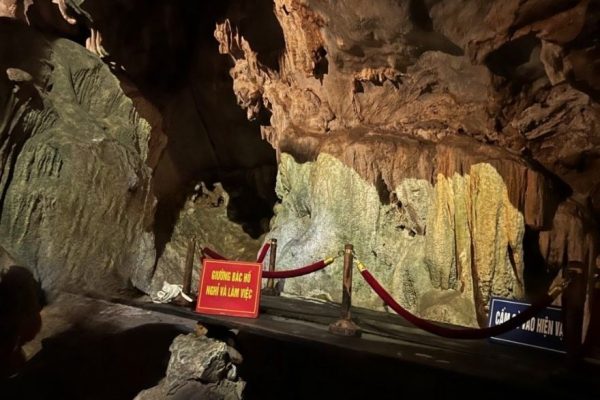
Pac Bo and the historical sites, along with the wider Non Nuoc Cao Bang UNESCO Global Geopark, are comfortable to explore in any of the dry, mild months, so they slot easily into a spring or autumn trip.
Village homestays across the region are pleasant year round, though the cool dry months make walking between villages far more comfortable than the humid peak of summer.

Learn more: Ha Giang Cao Bang Packing list
The right packing list depends heavily on when you come.
Dry and cool months (November to March):
Warm and wet months (May to September):
Any time of year:
Border areas have their own local rules and those can change, so check the latest before you travel rather than assuming.
Learn more: Things to do in Cao Bang
Most travelers reach Cao Bang from Hanoi. There are regular buses, and the journey takes the better part of a day, so many people build in an overnight rather than trying to see the falls in a single exhausting round trip. Exact schedules, prices and road conditions shift over time, so treat any timetable you read online as a starting point and check current updates close to your travel date.
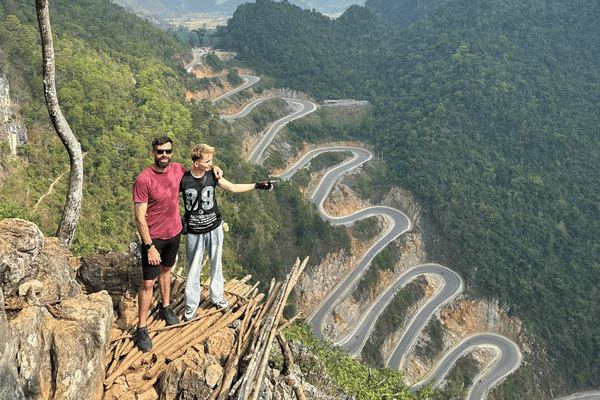
The bigger opportunity, if you have the days, is to combine Cao Bang with the Ha Giang Loop. The two regions sit in the same broad corner of the north, share a similar climate, and back to back they make one of the most rewarding trips in Vietnam. The autumn window that suits Cao Bang, roughly September to November, also happens to be some of the best weather for the Ha Giang Loop, which is why we build a Ha Giang to Cao Bang combo for exactly this season.
If you would rather do it independently, you can rent a motorbike in Ha Giang and ride your own route. Just be realistic about your experience level in the wet months, when the roads demand more from a rider.

Learn more: Ha Giang Loop by Wrangler Rubicon Jeep
There is no single right way to do Cao Bang. It depends on how you like to travel.
Choose an easy rider tour if: you want to see everything, take photos freely and soak in the scenery without the stress of driving yourself. You ride on the back with an experienced local rider who knows the roads, the weather and the good stops. This is the most popular option for a reason, and it works in almost any season because a good rider adapts to the conditions.
Choose self drive if: you are a confident, experienced rider who wants full freedom and control. It is the most independent way to travel, and it is fantastic in the dry season. In the wet months, be honest with yourself about the roads before you commit.
Choose a jeep if: you would rather not be on a motorbike at all, whether that is because you have family along, prefer comfort, or simply want to enjoy the views through a window in any weather. You reach the same stops and do the same activities, just with a roof over your head. Jeeps are especially worth considering in the rainy season or the cold heart of winter.
Choose the combo if: you have the time and want the full northeast in one trip. Pairing the Ha Giang Loop with Cao Bang gives you the famous passes and the great waterfall in a single, well timed adventure.
Learn more: Phia Thap Insense Village
A few things worth knowing before you lock in dates.
Book earlier for October. It is the most popular month here, and good homestays and guides fill up. If your heart is set on the golden rice window, plan a month or two ahead where you can.
Do not write off the low season. Yes, summer is wet, but a rainy season Cao Bang with a powerful waterfall, empty roads and green everywhere is a genuine experience, and it costs less. With a jeep or a good guide, the rain becomes part of the adventure rather than a problem.
Build in a buffer day. Mountain weather is honest but stubborn. If Ban Gioc is your main goal, giving yourself a spare morning means a foggy day does not cost you the whole reason you came.
Check current conditions close to your dates. Roads, transport and any local access rules can change, so treat older blog posts, including the timing in this one, as a guide rather than a guarantee, and confirm the details near your trip.
Ready to lock in your dates? Take a look at our Cao Bang loop tours, or if you want the full northeast, our Ha Giang to Cao Bang combo covers both in one trip. Prefer to ride your own way? You can rent a motorbike in Ha Giang and we will happily point you toward the good roads. Whatever you pick, message us on WhatsApp and we will help you time it right.

Learn more: Ha Giang Motorbike Rental
Late September to October is the overall sweet spot, with strong water at Ban Gioc, clearing skies and the golden rice harvest all overlapping. October, November, March and April are also excellent for dry, comfortable weather and easy roads.
For raw power, come in the rainy season around July and August. For the best combination of strong flow, good weather and golden rice, aim for late September to October. For clear turquoise water and calm conditions, the dry months from November to April are lovely, just with gentler flow.
Yes, if you go in with the right expectations. Summer brings the most powerful waterfall, the greenest scenery, far fewer tourists and lower prices. The trade off is heavy rain, humidity and muddier roads, so a jeep or an experienced guide makes a big difference.
Winter, from December to February, is cool to cold, with mild days, chilly nights and foggy mornings that usually clear by midday. Rain is minimal and skies are often clear. Up on the high ground like Phia Oac it gets genuinely cold, with frost possible.
Snow is very rare in Cao Bang. What you can get in the coldest snaps of December and January is frost on the highest mountains such as Phia Oac. In the town and valleys it stays cold rather than snowy.
The golden rice around Ban Gioc and the surrounding valleys usually turns from late September into the first half of October. This is why autumn is such a popular time to visit, because the harvest lines up with clearing weather.
Absolutely, and it is one of the best trips in northern Vietnam. The two regions share a similar climate, so the autumn window that suits Cao Bang also suits the Ha Giang Loop. A combined route lets you see the famous passes and the big waterfall in one trip.
For the highlights around Ban Gioc, Nguom Ngao Cave and a couple of viewpoints, two to three days is comfortable. If you are combining it with Ha Giang or want to slow down and add villages and lakes, plan for more
The two are broadly similar, both cool in winter and warm in summer, and both much cooler on the high passes and peaks than in the valleys. Your comfort depends far more on altitude and the specific week than on which province you are in.
Ban Gioc is a border area, and rules for border zones can change over time. Rather than relying on an old blog post, check the current requirements close to your travel date, or ask us and we will confirm what is needed for your trip.
Contact information for Loop Trails
Website: Loop Trails Official Website
Email: looptrailshostel@gmail.com
Hotline & WhatSapp:
+84862379288
+84938988593
Social Media:
Facebook: Loop Trails Tours Ha Giang
Instagram: Loop Trails Tours Ha Giang
TikTok: Loop Trails
Office Address: 54A Tran Phu, Ha Giang 2, Tuyen Quang
Address: 54A Tran Phu, Ha Giang 2, Tuyen Quang
Facebook X Reddit Table of Contents Learn more: Ha Giang Loop Tours If you are a UK traveler planning to ride a

Facebook Twitter LinkedIn Table of Contents Learn more: Ha Giang Loop Tours Most people planning the Ha Giang Loop focus entirely on

Facebook X Reddit Table of Contents Learn more: Ha Giang Loop Tours Most articles about the Ha Giang Loop assume everyone in