


Thúy Kiều (Grace) is a travel blogger and content contributor for Loop Trails Tours Ha Giang. She holds a bachelor’s degree in Sustainable Tourism from Vietnam National University, Hanoi, and has a strong passion for exploring and promoting responsible travel experiences in Vietnam’s northern highlands.

Learn more: Ha Giang Loop Tours
So you have decided to ride the Ha Giang Loop. Good call. It is one of the last great motorbike roads in Southeast Asia, and the photos do not oversell it. But before you get anywhere near Ma Pi Leng Pass, there is one small piece of admin standing between you and those mountains: your Vietnam eVisa.
Here is the honest version. The Vietnam eVisa is not complicated, but it does have a few traps that catch first time visitors every single week, and most of them are avoidable if you know what to look for. This guide walks you through the whole thing the way we would explain it to a friend booking their first Loop trip: what you need, where to apply, how much it costs, and the two or three details that actually matter for a trip that ends up in the far north of the country.
We run tours in Ha Giang, so we deal with the arrival side of this constantly. That is the angle you will not always find on the big visa websites: not just how to get the visa, but how to get it right for a trip that starts in Hanoi and heads straight up to the border highlands.
One thing up front, and we will repeat it a few times because it matters: visa rules change. Fees, forms, and requirements get updated by the Vietnam Immigration Department without much warning. Everything below reflects how things stand in 2026, but always confirm the current details on the official government portal before you pay for anything.
Learn more: Ha Giang Loop 2 Days 1 Night
Start here, because some travelers skip the eVisa entirely.
Vietnam gives a number of nationalities visa free entry for a set number of days. As of 2026, citizens of several countries can enter with no visa at all for up to 45 days, and that list has included places like the United Kingdom, France, Germany, Italy, Spain, and a handful of others. Travelers from most ASEAN neighbours also get visa free stays, often 30 days. If your whole Ha Giang trip fits inside your visa free window, you may not need an eVisa at all.
Two honest caveats though. First, that exemption list changes, and the number of days differs by country, so check the current exemption rules for your exact nationality before you assume anything. Second, if there is any chance your trip runs long, or you want a buffer, the eVisa is cheap insurance. A tight Loop trip is usually 3 to 4 days, but plenty of guests tack on Cao Bang, Sapa, or a few beach days, and suddenly a 15 day exemption feels short.
If you are not on the visa free list, or you simply want the flexibility of a longer stay, the eVisa is the standard route for a Ha Giang trip. The rest of this guide is for you.
Learn more: Ha Giang Loop 3 Days 2 Nights
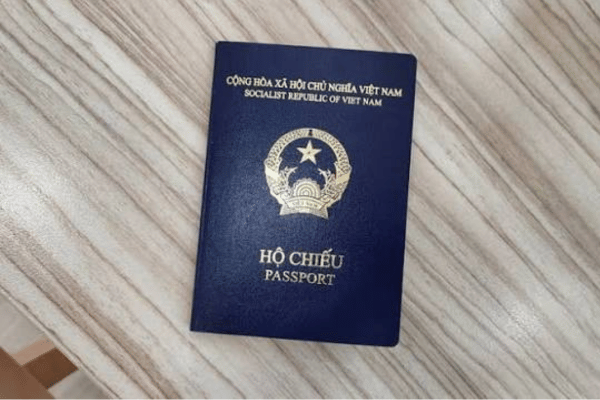
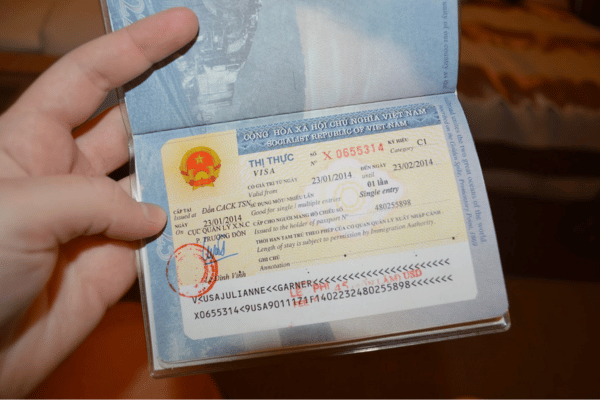
The eVisa is an electronic visa issued online by the Vietnam Immigration Department. No embassy visit, no posting your passport anywhere, no queueing for a stamp when you land. You apply on a website, pay by card, and a few days later you download a PDF. You print it, bring it, and show it at immigration.
A few facts worth knowing:
For a Ha Giang trip, single entry is usually all you need. You fly in, you ride the Loop, you fly out. You would only want multiple entry if you plan to leave Vietnam and come back during the same trip, for example a side hop to Laos or Cambodia before returning north. If in doubt, multiple entry costs a bit more but removes the worry.
Why the eVisa beats the older visa on arrival for most Ha Giang travelers is simple: it is cheaper, it is fully online, and it works whether you arrive by air or later cross a land border. Visa on arrival still exists, but it only works at major airports and involves paying a stamping fee in cash when you land, which is exactly the kind of friction you do not want after a long flight.

Learn more: Ha Giang Loop 4 Days 3 Nights
Get these five things in front of you before you open the application. Having them ready is the difference between a ten minute job and a frustrating afternoon.
Learn more: Ha Giang Cao Bang 5 Days 4 Nights
This is the one section people skim and then regret. Your eVisa asks you to name the port where you will enter Vietnam, and it needs to match where you actually arrive.
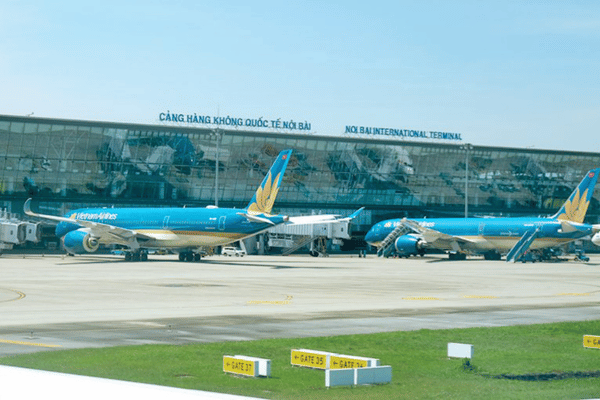
For almost every Ha Giang trip, that entry point is Hanoi, at Noi Bai International Airport (HAN). Ha Giang has no airport of its own. The standard route is to fly into Hanoi, then travel north by road: a night bus, a limousine van, or a private transfer gets you from Hanoi up to Ha Giang city, where the Loop begins. So when the form asks for your arrival point, Noi Bai (Hanoi) is almost always the right answer.
A few things to keep straight:
Getting this right is genuinely the most Ha Giang specific part of the whole process, so slow down on this screen.
Planning the Hanoi to Ha Giang leg already? Once your visa is sorted, the next question is how to actually get up to the mountains. We break down the night bus, the limousine van, and private transfer options in our guide on getting from Hanoi to Ha Giang, and every LoopTrails tour can be arranged with transfers included so you do not have to piece it together yourself.
Learn more: Ha Giang Cao Bang Ba Be Lake 6 Days 5 Nights
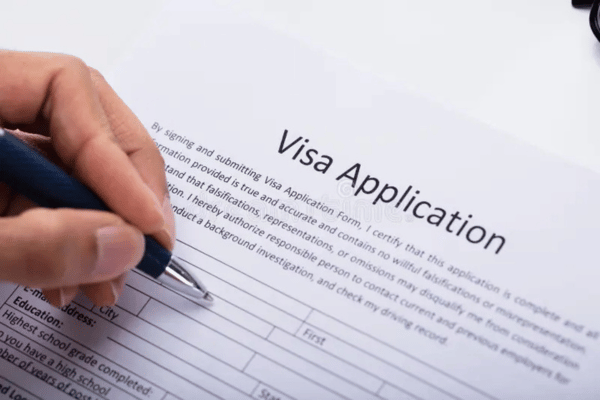
Here is the process from start to finish. It really is straightforward once you are on the right website.
Apply on the official Vietnam Immigration portal. In 2026 the official eVisa site runs on the government domains, currently evisa.gov.vn (and thithucdientu.gov.vn). Look for the English language option and the apply button.
This is the single most important step, so read this twice. There are dozens of copycat websites that look official, rank high in search, and charge you two or three times the real fee for the same thing. Some are legitimate agencies offering a paid service. Others are simply overpriced. If you want to pay only the official fee, make sure you are on the government site before you enter any details.
You will upload the digital passport photo and the scan of your passport bio page. Take your time here. If the images are blurry, cropped, or badly lit, your application can be held up or rejected, and the fee is not refunded. A clear, well lit scan on a flat surface beats a rushed phone photo taken at an angle.
Enter your name exactly as it appears in the machine readable zone of your passport, which is the row of letters and numbers at the bottom of the bio page. If your passport shows a middle name or a suffix, include it. Small mismatches between your visa and your passport cause real headaches at the airport.
Watch the date format. Vietnam uses day, then month, then year. Swapping to a month first format is a classic mistake that has stopped travelers from boarding, so read every date field twice.
Select single entry or multiple entry. Enter your intended entry point (for most Ha Giang trips, Noi Bai in Hanoi) and your exit point. Enter your planned entry date. Remember, your stay window runs from the start date you declare, so line it up with your actual arrival, not the day you apply.
Pay online by card. As of 2026 the official government fee is USD 25 for a single entry eVisa and USD 50 for a multiple entry eVisa. This fee is paid through the portal and is not refunded if the application is refused, so confirm every field before you hit submit. Fees can change, so treat these numbers as current guidance and check the live amount on the portal.
After you pay, you get a registration code or document number. Save it. Screenshot it, email it to yourself, write it down somewhere. You need it to check your application status later.
Once approved, you download your eVisa as a PDF. Before you relax, read it line by line: name spelling, passport number, dates, entry point, single or multiple entry. If anything is wrong, deal with it now, not at the airport. Then print at least one paper copy and keep a photo on your phone as backup. You show this at check in and again at immigration.

Learn more: Cao Bang Loop 3 Days best kept secret
Two numbers to plan around.
| Item | Detail (2026) |
|---|---|
| Single entry eVisa fee | USD 25 (paid online) |
| Multiple entry eVisa fee | USD 50 (paid online) |
| Standard processing time | Around 3 to 5 working days |
| Peak season processing | Can run longer, so leave a buffer |
| Refund if refused | No, the government fee is not refundable |
The processing time is the part that trips people up. Three to five working days is normal, but it can stretch during busy periods or public holidays, and weekends do not count as working days. The safe move is to apply at least two to three weeks before you fly. That way, if something needs fixing, you have room to fix it without panicking the night before departure.
If you are reading this and your flight is very soon, faster processing options exist through paid services, but they cost more and are not always available for every entry point. Applying early is always cheaper and calmer.
Learn more: Ha Giang Border Area Permit 2026
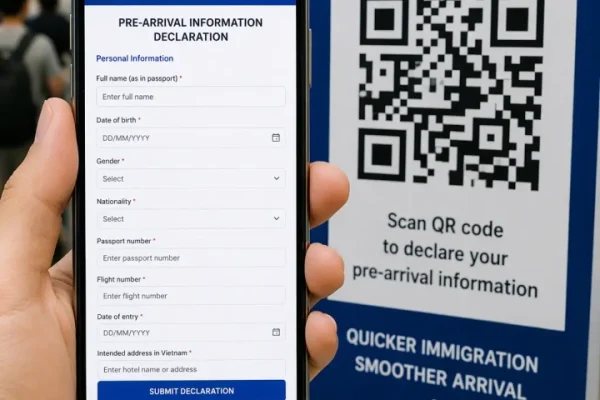
Here is a 2026 update a lot of older guides miss. Vietnam has rolled out a Digital Arrival Card, an online immigration declaration you fill in before you land. It is not a visa, and it does not replace your eVisa. It is a separate form.
What you need to know:
For a Ha Giang trip, most travelers fly into Noi Bai in Hanoi, where this card is not required in the same way as at the Ho Chi Minh City airport, at least at the time of writing. But the rollout is expanding, and requirements like this move fast. So the practical advice is simple: a week or two before you fly, check whether your specific entry airport requires the Digital Arrival Card, and if it does, fill it in inside the allowed window. Do not confuse it with your visa, and do not pay anyone for it, because the official form is free.

Learn more: Ha Giang Loop Mistake to Avoid
We see the same avoidable slip ups again and again. None of these are rare, and all of them are easy to dodge once you know they exist.
Treat this list as a pre flight check. Two minutes of care here saves a lot of stress at the airport.

Learn more: Ma Pi Leng Pass
The eVisa gives you a window, and you want that window to comfortably wrap around your actual trip.
Think of it this way. You declare a start date, and your stay runs from there up to the expiry printed on the visa. So do not apply with a start date of today if you are not flying for six weeks. Set the start to line up with your arrival, with a little cushion on either side in case flights shift.
For a typical Ha Giang plan, that means: pick your rough arrival date in Hanoi, add a day or two of buffer before and after, and make sure the visa window covers your whole time in the country, not just the Loop days. If you are combining Ha Giang with Cao Bang, Sapa, or the coast, count those days too. The 90 day maximum is generous, so there is no reason to run it tight.
And the golden rule again: apply two to three weeks before you fly. Early enough to fix a problem, close enough that your dates are locked in.

Learn more: Ha Giang Sleeper Bus
Wheels down in Hanoi. Here is what actually happens next.
At immigration, you present your passport and your printed eVisa. The officer checks it and stamps you in. Queues at Noi Bai and the Ho Chi Minh City airport can run 30 to 60 minutes at busy times, so if you have an onward connection or a booked transfer, factor that in. Keep your printed eVisa handy, keep some small cash for a coffee or a SIM card, and only ever use the official immigration counters, never a stranger offering to speed things up.
From Hanoi, the journey to Ha Giang is a road trip of its own: a night bus or a comfortable limousine van covers the distance, and then the Loop begins in Ha Giang city. If your tour is booked with us, this transfer can be arranged so you step off your flight and everything downstream is already handled.
One more thing worth flagging, because it is Ha Giang specific and separate from your national visa. Ha Giang sits right on the northern border, and some sensitive border zones near the China frontier can have their own local permit rules that change over time. This is not the same as your eVisa, and for the popular Loop route it is rarely an issue for travelers on an organised tour, because your operator handles any local permits that apply. If you want the detail, our dedicated guide on Ha Giang border permits covers exactly which areas this touches and when it matters.

Learn more: Ha Giang Motorbike Rental
Visa sorted, transfer sorted. The last real decision is how you want to actually ride the Loop, and this is where a bit of honesty helps more than a sales pitch.
Not sure which fits? That is normal, and it is the exact question we help people answer every day. Tell us your riding experience, your dates, and your group, and we will point you to the honest best fit, not the most expensive one.
Ready to lock in your Loop? Get your eVisa moving first, then message us on WhatsApp with your travel dates. We will help you match the right tour, sort your Hanoi to Ha Giang transfer, and make sure everything from the airport to Ma Pi Leng is handled. Most guests book one to three months ahead, and for jeep trips especially, earlier is better because availability is limited.

Learn more: Ha Giang Loop by Wrangler Rubicon Jeep
No separate national visa is needed. The Vietnam eVisa covers your entry into the country, and Ha Giang is inside Vietnam, so the same visa applies. Some sensitive border zones can have local permit rules, but for the standard Loop route your tour operator normally handles any of that.
For most trips, Noi Bai International Airport in Hanoi, because Ha Giang has no airport and the road journey north starts from Hanoi. If you fly into Ho Chi Minh City or Da Nang first, choose that city instead, since that is where you clear immigration.
The official government fee is USD 25 for single entry and USD 50 for multiple entry, paid online. Fees can change, so confirm the current amount on the official portal before you apply.
Usually around 3 to 5 working days, and longer during peak periods or public holidays. Apply at least two to three weeks before you fly so you have time to fix any problems.
Single entry is enough for most Ha Giang trips, since you fly in, ride, and fly out. Choose multiple entry only if you plan to leave Vietnam and return during the same trip.
In 2026 the official government portal runs on evisa.gov.vn (and thithucdientu.gov.vn). Be careful with copycat sites that charge extra for the same service.
No. The government fee is not refunded even if the application is refused, so check every detail carefully before you pay.
It is a free online immigration declaration, separate from your visa. It currently applies to most arrivals at the Ho Chi Minh City airport. Most Ha Giang travelers arrive through Hanoi, where it may not be required in the same way, but the rollout is expanding, so check your entry airport before you fly.
Two to three weeks before departure is the safe window. It gives you room to correct errors or handle any delay without last minute stress.
Extension options exist through the immigration system, but rules and timing change, and it is not always simple. For most trips the 90 day maximum is more than enough, so plan your dates to fit inside it.
You generally need at least six months of passport validity beyond your entry date, and this is checked strictly. Renew your passport before applying if you are anywhere near that limit.
By road: a night bus, a limousine van, or a private transfer, roughly a journey of several hours north from Hanoi. If you book a tour with us, the transfer can be arranged so it is handled from the moment you land.
Contact information for Loop Trails
Website: Loop Trails Official Website
Email: looptrailshostel@gmail.com
Hotline & WhatSapp:
+84862379288
+84938988593
Social Media:
Facebook: Loop Trails Tours Ha Giang
Instagram: Loop Trails Tours Ha Giang
TikTok: Loop Trails
Office Address: 54A Tran Phu, Ha Giang 2, Tuyen Quang
Address: 54A Tran Phu, Ha Giang 2, Tuyen Quang

Facebook X Reddit Table of Contents Learn more: Ha Giang Loop Tours Most people drive past the Quan Ba area twice on

Facebook X Reddit Table of Contents Learn more: Ha Giang Loop Tours The Ha Giang Loop has a reputation problem with older