

Thúy Kiều (Grace) is a travel blogger and content contributor for Loop Trails Tours Ha Giang. She holds a bachelor’s degree in Sustainable Tourism from Vietnam National University, Hanoi, and has a strong passion for exploring and promoting responsible travel experiences in Vietnam’s northern highlands.
Learn more: Ha Giang Loop Tours
Most travelers come to Cao Bang for one thing: Ban Gioc Waterfall. They see the photos, book a quick trip, tick the box, and head back to Hanoi. They miss most of what makes this province special.
Cao Bang is one of those places where the named attractions are excellent and the in-between is sometimes even better. A pierced karst mountain that looks like a cartoon. Stone villages where families still cook on open fires. A 14-bend pass that stacks like a folded ribbon down a hillside. Markets where Tay and Nung farmers swap rice wine and cured pork on the same wooden tables their parents used.
This guide is the long version of what to actually do once you’re here. Sixteen experiences that each earn their spot, organized so you can pick the ones that match your travel style and your time. Some are bucket-list scenery. Some are slow mornings in a valley you’ll forget the name of. Both belong on the list.
Learn more: Ha Giang Loop 2 Days 1 Night
A short pitch before we dive in.
Cao Bang sits in Vietnam’s far northeast, sharing a border with China’s Guangxi region. The landscape is karst country: limestone hills, slow rivers, broad valleys, rice fields. It’s the same geological story as Ha Giang next door, but softer. Less vertical, more painterly.
The province sits inside the Non Nuoc Cao Bang UNESCO Global Geopark, which has helped organize the main sights into a network of routes. Roads are mostly paved and in good shape. Crowds are still light compared to Sapa, Ninh Binh, or Hoi An.
It’s also the kind of place that rewards travelers who plan a few days here instead of a single day trip. You can do Ban Gioc as a sprint. You shouldn’t.
Learn more: Ha Giang Loop 3 Days 2 Nights
This is the obvious one and the one to anchor the trip around.
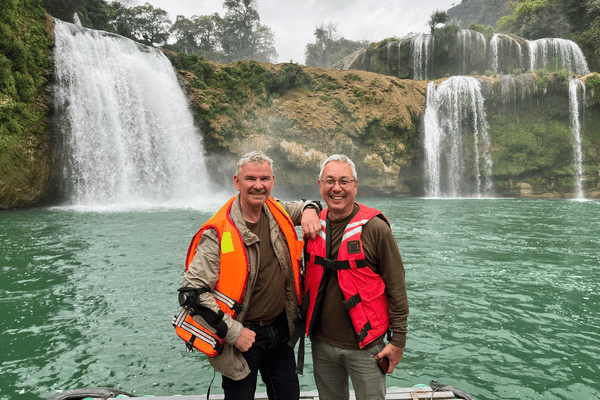
Ban Gioc spans the Vietnam–China border, with a wider tier on the Vietnamese side and a smaller one across the river. From the main viewpoint, you see multiple tiers cascading into a green river, framed by karst peaks that rise on both sides. It’s one of the most photographed waterfalls in Vietnam, and the photos don’t lie.
What makes it different from other big waterfalls in Asia: scale plus quietness. You can stand here, especially on a weekday morning, with a handful of other people and just listen. There aren’t huge crowds bottlenecking every angle. There aren’t food stalls blasting music. It’s mostly the falls and the wind.
Practical notes:
Don’t skip this just because it sounds touristy.
Local operators run small bamboo rafts from the Vietnamese riverbank up close to the waterfall. The ride is short, maybe 15 to 20 minutes, but it puts you at the foot of a waterfall this big in a way photos can’t. You’ll feel the spray. You’ll watch the water hit the rocks. You’ll briefly forget which country you’re in.
Wear something you don’t mind getting wet. Bring a dry bag for your phone or accept that you’ll be one-handing it. Operators take Vietnamese cash; have small notes ready.
Learn more: Ha Giang Loop 4 Days 3 Nights
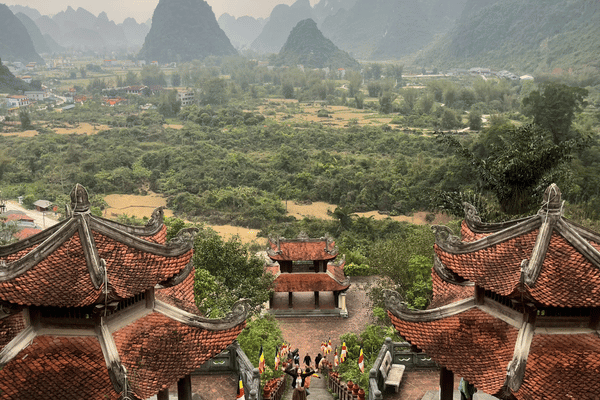
Most people stop at the falls and head out. The pagoda above them is the second-best view in the area, and it takes most of an hour round trip.
Truc Lam Phat Tich is a relatively new Buddhist pagoda built into the hillside overlooking Ban Gioc. The climb is moderate, well-marked, and the reward at the top is a top-down view of the waterfall and the border valley. Sunset light here is excellent.
Bring water and don’t rush in the heat. If it’s been raining, the steps can be slick.
About 5 kilometers from Ban Gioc, almost everyone bundles them on the same day.
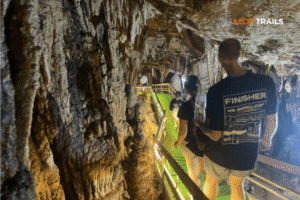
Nguom Ngao is a long limestone cave with lit walkways winding through chambers of stalactites, stalagmites, and natural curtains of mineral that look like draped fabric. The cave is well developed for visitors but doesn’t feel like a theme park. Lighting is warm and minimal. The walkways follow the natural shape of the chambers.
You can comfortably do it in 45 to 60 minutes. Wear shoes with grip; some sections drip.
Officially called Khau Coc Cha, but every rider you meet just calls it the 14-bend or 15-bend pass.
Me Pia is a tight switchback road climbing a hillside in the western part of the province, near Bao Lac. From the right viewpoint, the bends stack on top of each other in a dense zigzag pattern that’s almost impossible to photograph properly with a phone. You really need a drone, or to at least walk to the marked viewpoint and find the exact angle.
Riding it is short but focused. You’re not going fast; you’re concentrating. Visit in clear weather. Fog can hide the whole pattern from the viewpoint and make the climb itself unpleasant.
Learn more: Ha Giang Cao Bang 5 Days 4 Nights
This is one of the most underrated photo spots in northern Vietnam.
Mat Than, or Angel Eye Mountain, is a karst peak with a perfectly round natural hole punched through it near the top. Stand in the right spot in the field below and you can frame the sunlight or the moon through the eye. It looks like something out of a fantasy film.
The mountain sits near Thang Hen Lake in the Quoc Toan area. Access involves walking across rice fields. Wear shoes that can handle mud after rain. Locals charge a small entry fee for crossing the field, which is fair, since you’re walking through their farmland to get the shot.
Best light is early morning or late afternoon. Avoid the harsh midday sun.
Phong Nam is the postcard valley most travelers never hear about.
Long flat rice fields, the Quay Son River winding through, low traditional Tay houses, karst peaks that frame everything. There’s no headline attraction. The valley itself is the attraction. You can walk it, cycle it, ride a motorbike through it slowly, or just sit at a homestay porch and watch buffalo cross.
If you only have one slow morning in Cao Bang, spend it here. Bring a book. The valley does the rest.
A few minutes from Phong Nam, Khuoi Ky is a Tay village famous for houses built almost entirely from local stone. It’s a tradition that’s largely unique to this corner of Vietnam.
A handful of homestays operate inside the village, ranging from very basic (mattress on the floor, shared bathroom) to nicer (private rooms, hot water). Even the simpler ones include dinner with the family, which is half the reason to be there. You’ll eat sticky rice, smoked sausage, herbs from the garden, and probably get offered rice wine. Pace yourself with the wine.
Wi-Fi is spotty. Power can flicker. That’s the trade-off, and it’s worth it.
If a self-organized homestay search sounds like a hassle, this is the kind of stop a guided tour handles well. Our Cao Bang Loop tour builds Khuoi Ky into the route with a vetted family stay.
Learn more: Ha Giang Cao Bang Ba Be Lake 6 Days 5 Nights
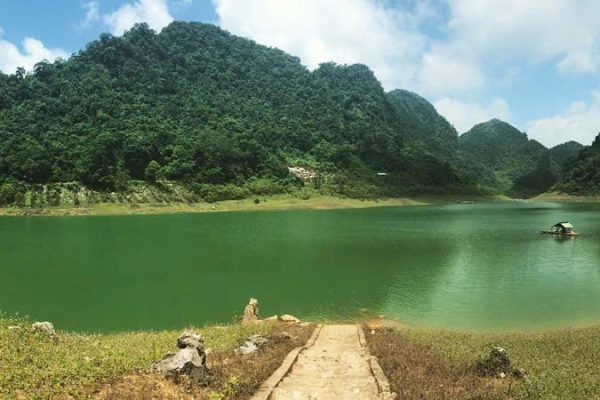
Thang Hen is a cluster of mountain lakes east of Cao Bang City, surrounded by limestone walls. The water level shifts seasonally, sometimes dramatically, which is part of what makes the area worth a visit.
When water levels and conditions allow, local operators rent kayaks and small boats. It’s not a big extreme-sports operation: you paddle out for an hour, take photos, paddle back. Quiet, uncomplicated, and a good break between bigger riding days.
Combine it with a ride to Mat Than Mountain in the same loop. They’re close.
In the far north of the province, Pac Bo is the cave where Ho Chi Minh lived after returning to Vietnam from China in 1941. It’s a national pilgrimage site for Vietnamese visitors.
For foreign travelers, the history is interesting context, but the setting is the real reason to come. Clear streams, forested hills, marked trails along the water. Even if 20th-century revolutionary history isn’t your thing, the walk through the area is genuinely pleasant.
Most travelers do it as a half-day from Cao Bang City or pair it with sights along the way north.
If you’ve had enough of viewpoints from a motorbike seat and want to actually walk, Phia Oac is where to do it.
The park is in Nguyen Binh district, higher elevation, noticeably cooler. Trails wind through forest and tea plantations. There are French colonial ruins from old hill stations scattered through the area, half-reclaimed by moss and tree roots, which gives the place a quiet, slightly haunted feel.
In December and January, occasional frost forms on the trees and grasses. Once every few years there’s a dusting of snow, which is rare anywhere in Vietnam and a genuine event when it happens. Pack warm layers if visiting in winter.
Learn more: Explore just the Cao Bang Loop
The mountain markets of northern Vietnam are one of the things most travelers wish they’d planned around better.
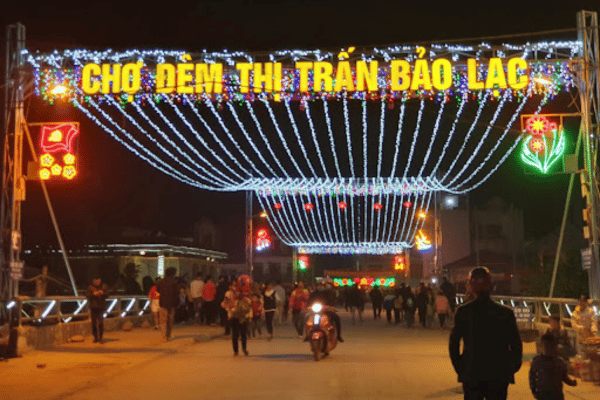
In Cao Bang, weekly markets in Bao Lac, Trung Khanh, and smaller villages bring Tay, Nung, San Chi, Lo Lo, and other ethnic minority groups down from surrounding hills to trade. You’ll see textiles, fresh produce, livestock, herbal medicines, hot food cooked on the spot, and a lot of social activity that has nothing to do with money changing hands.
Markets generally run early. Arrive before 8 AM if you want the full atmosphere. Be respectful with photos: ask before photographing people, or at least make eye contact and read the response. Most market days happen on a fixed weekly cycle (Sundays are common for the bigger ones), but check locally because some smaller markets follow lunar calendar rotations.
The food is one of the most underrated things about visiting this province. A short list of what to actually try:
Most homestays will offer a set family-style dinner if you ask in advance. It’s almost always more interesting than ordering off a menu in town.
Want someone else to handle the where-and-how? Our Cao Bang Loop and Ha Giang and Cao Bang combine tours include local meals at family-run homestays and known restaurants, so you eat well without research.
If you have any motorbike experience and decent confidence, riding here is the single best way to experience the province.
The Cao Bang Loop isn’t as standardized as the Ha Giang Loop. Routes vary depending on which corners of the province you want to hit. A common multi-day version covers Cao Bang City, Ban Gioc, Phong Nam, Khuoi Ky, Thang Hen, Pac Bo, and a leg out toward Bao Lac. Some riders extend to Phia Oac.
The roads are mostly paved and in good shape compared to other northern provinces. You’ll still hit occasional rough patches, livestock on the road, and steep gradients on side routes. A semi-automatic or manual bike (typically 110cc to 150cc) handles the terrain well.
A note on licenses: foreign driving license rules in Vietnam are a moving topic. Some travelers ride for years with no issue, others get fined. Rules can change. Check the latest situation before you go, and make insurance decisions accordingly. We recommend a properly licensed setup if you can arrange one.
If you’re starting from Ha Giang, our motorbike rental covers a lot of these scenarios with bikes that are road-ready and supported with roadside help.
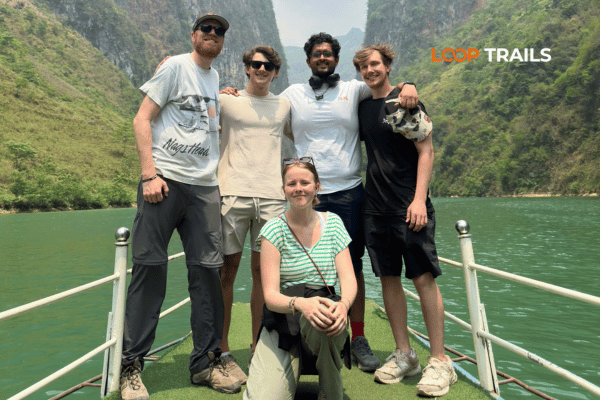
Learn more: Tu San Canyon & Nho Que River Boat Trip
This is the single best decision most riders make in northern Vietnam, and most of them only realize it once they’re already halfway through.
The two provinces share a continuous mountain region. There’s no reason to backtrack to Hanoi between them. The road from Meo Vac to Bao Lac is one of the prettiest stretches in the north, with river canyons, very little traffic, and small villages along the way. From Bao Lac, you ride into Cao Bang’s main sights.
Doing it this way turns two separate trips into one continuous journey. You see two genuinely different landscapes (Ha Giang’s vertical drama, Cao Bang’s softer karst valleys) in one trip without doubling your travel time.
The logistics are the trickiest part. Cross-province motorbike drop-offs aren’t always straightforward. Bus connections exist but require planning. A combine tour solves both, which is why most travelers who do this trip do it through a guided itinerary. Our Ha Giang and Cao Bang combine tour is built around exactly this routing.
End on something gentle.
The Quay Son flows through Phong Nam Valley and past Ban Gioc, and there’s a good half-hour around sunrise when mist sits on the surface and the water turns from grey to pale green to gold. Buffalo wade in. Fishermen check nets. Smoke from cooking fires drifts out of the stone houses.
You don’t need to plan this. You just need to be in or near the valley, set an alarm earlier than you want to, and walk down to the river before the world fully wakes up. It costs nothing and it’s the kind of memory you’ll come back to long after the named sights blur together.
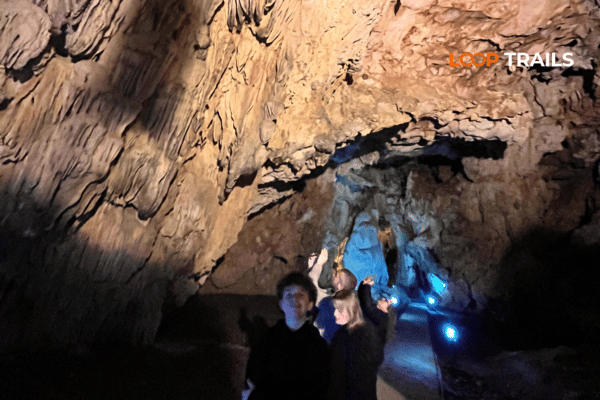
Learn more: Cao Bang Travel
A quick season-by-season cheat sheet, since some activities work better in certain months.
| Season | Best for | Watch out for |
|---|---|---|
| March to May | Pagoda climbs, Phia Oac hiking, mild riding weather | Lower waterfall volume by April |
| June to August | Lush rice fields, full waterfalls, bamboo rafts at Ban Gioc | Heat, humidity, occasional storms |
| September to October | Best overall: ripe terraces, Ban Gioc strong, comfortable temps | Vietnamese tourist crowds on weekends |
| November to early December | Crisp light, chestnut harvest, market season | Cooler in higher areas |
| Late December to February | Frost in Phia Oac, quietest crowds, dramatic mist | Cold mornings, foggy mountain roads, lower water flow |
For most travelers picking one window, late September to early November is the sweet spot for hitting the widest range of activities in good conditions.
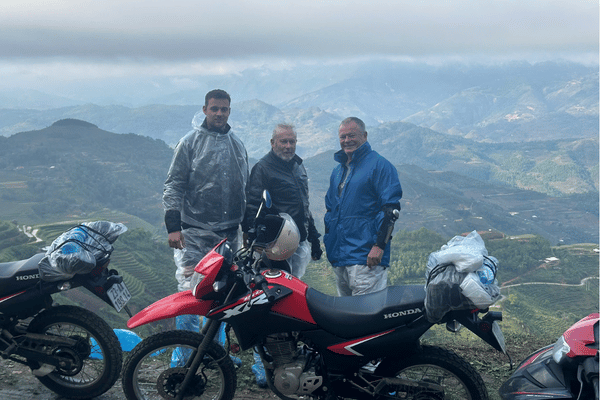
Learn more: Ha Giang Motorbike Rental
You have three real options, and the right one depends on the activities you’re prioritizing.
Most flexible if you’re a confident rider. You can stop on every pass, every viewpoint, every roadside food stall. Activities like the 14-bend pass and the Cao Bang Loop reach their full potential on two wheels.
Trade-off: you’re managing the bike, the route, your own fatigue, and (where it applies) the licensing situation. If any of those feel like too much, this isn’t the right option.
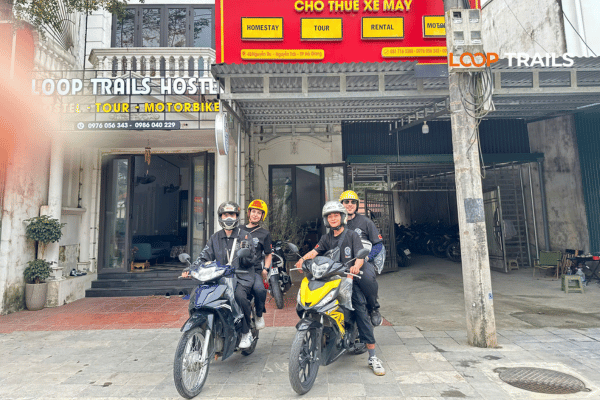
Learn more: Ha Giang Loop Easy Rider
You sit on the back, a local guide drives. Easy riders can reach the same activities a self-driver does, with the added benefit that your guide knows where to stop, where the food’s good, and which sections are worth slowing down for.
This is the best fit for solo travelers, couples where one person doesn’t want to ride, and anyone who wants to enjoy the views without watching the road. Almost everyone we’ve taken out as an easy rider passenger has been surprised by how much they enjoyed it.
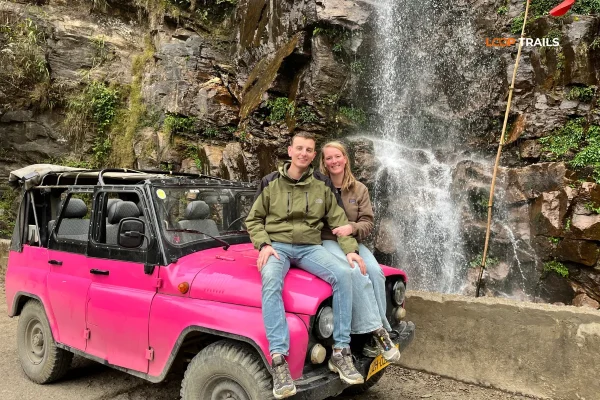
Learn more: Ha Giang Jeep Tours
Better for travelers with kids, anyone with a back or knee issue, or trips falling in cooler/wetter months. You’ll skip some of the smaller side roads and the open-air feel, but you’ll be dry in rain and you can carry more luggage.
Jeep tours work well for the headline sights (Ban Gioc, Nguom Ngao, Pac Bo, Thang Hen) and for the longer drives between them. Some side activities like the 14-bend pass are still better experienced on a bike.
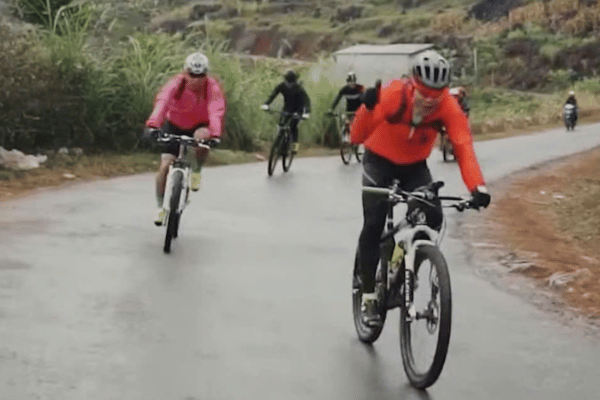
Learn more: Ha Giang Loop Trekking
A quick filter based on what you actually want out of the trip.
Choose self-drive motorbike if: you’ve ridden before, you want maximum flexibility, and you’re comfortable with the responsibility for the bike, the route, and the licensing situation. You’ll get the most out of activities like the 14-bend pass and the loop sections.
Choose easy rider if: you don’t ride, you’re a nervous rider, or you want to enjoy the landscape without watching the road. Easy rider trips reach almost every activity on this list and add a local guide’s perspective at no extra effort.
Choose a jeep tour if: you’re traveling with mixed group needs, in cooler/wetter months, or with luggage you can’t carry on a bike. You’ll cover the main attractions comfortably.
Choose a Ha Giang and Cao Bang combine tour if: this is likely a once-in-a-lifetime trip and you want both provinces in one continuous journey. Almost everyone who does this version says they’re glad they did. The two landscapes complement each other in a way that’s hard to appreciate until you’ve seen both back to back.
If you’re not sure, message us with your dates, group size, and riding experience. We’ll point you to the option that suits you, even when it isn’t the most expensive package.
Learn more: Ha Giang Safety Tips
A short list of things that come up regularly with travelers we’ve hosted.
Cash matters more than you think. ATMs work in Cao Bang City and major towns. Outside of those, plan to carry cash. Card payment is rare at homestays, smaller restaurants, entry tickets, and fuel stations.
Distances on Google Maps are optimistic. A “two-hour” ride here can take three and a half once you factor in road quality, weather, and stops. Build in buffer.
Travel insurance for motorbike riding has fine print. Many standard travel insurance policies exclude motorbike accidents unless you have a valid license and engine size coverage. Read it before you ride, not after.
Weather changes fast in the mountains. Mist can roll into Phia Oac in minutes. Pack a light rain layer regardless of season.
Photograph your rental bike at pickup. Every angle. This protects you and the rental company from disputes about pre-existing damage.
Border zones have rules that can change. The immediate area around Ban Gioc sits near the Vietnam–China border. Rules around photography, drone use, and access can shift. Most guesthouses can advise on the latest. If you’re on a tour, your operator handles this.
Learn more: Cao Bang Loop 3 Days best kept secret
The best version of a Cao Bang trip isn’t a checklist. It’s a mix.
Two or three of the headline sights done well, with enough time to actually be there and not just photograph them. A homestay night in a stone village. One slow morning along a river. A meal you’ll think about for weeks. A pass that scares you a little. A market that confuses you in the best way.
You don’t need to do all 16 things on this list. You probably shouldn’t try. Pick the ones that match your travel style, leave room for the in-between, and trust that the province will fill the gaps better than any itinerary will.
Whether you ride yourself, sit pillion, or take the jeep, Cao Bang is ready when you are.
Ban Gioc Waterfall, one of the largest cross-border waterfalls in Asia, is the headline attraction. Beyond that, Cao Bang is known for limestone karst landscapes, ethnic minority villages, the UNESCO Non Nuoc Cao Bang Geopark, and quieter mountain riding compared to neighboring Ha Giang.
Three days covers the headline sights (Ban Gioc, Nguom Ngao, Phong Nam, plus one more) at a tight pace. Four to five days is the relaxed version with time for slower mornings, Pac Bo, and either Thang Hen or Phia Oac as a side trip.
Technically yes, but you’ll spend most of the day on the road. An overnight near Trung Khanh or in a Khuoi Ky homestay transforms the experience and lets you visit Ban Gioc in the morning when light and crowds are best.
Yes, Cao Bang is generally safe for foreign travelers. Petty crime is rare, locals are welcoming, and the main risks are road-related: mountain weather, livestock crossings, and rough sections. Standard travel sense applies.
Both work. Independent travel is doable if you’re confident with motorbikes and limited English in rural areas. Tours remove the planning, handle the bike and accommodation, and connect routes you’d struggle to piece together alone, especially for combine trips with Ha Giang.
Late September through early November hits the sweet spot: ripe rice terraces, strong waterfalls, comfortable temperatures, and clearer skies. December and January are quieter and more dramatic in Phia Oac but cold in higher areas.
Yes, and most riders who’ve done both prefer this version. The two provinces share a continuous mountain region, and the connecting road from Meo Vac to Bao Lac is one of the prettiest stretches in the north. Combine tours run this as one continuous trip without backtracking through Hanoi.
If you’re interested in ethnic minority culture, yes. Markets in Bao Lac, Trung Khanh, and smaller villages are some of the most authentic in northern Vietnam. They generally run early and follow a fixed weekly or lunar cycle, so check locally for dates.
Yes. Easy rider trips and jeep tours both make most of the activities on this list accessible without driving. The landscape is the draw, and you can enjoy it from the back of a bike or through a window.
Genuinely interesting, not just a side note. Specialties include seven-flavor roasted duck (vit quay 7 vi), local-style banh cuon in bone broth, sour pho chua, Trung Khanh chestnuts in autumn, smoked sausage, and warm rice wine at homestays.
It’s near Thang Hen Lake in the Quoc Toan area. Access involves walking across local rice fields, and farmers usually charge a small fee for crossing. A guide or detailed offline map helps. Best photographed early morning or late afternoon.
Yes, and it’s part of the experience. It’s also strong. Drink slowly, accept that toasts will be insistent, and never ride after. If a homestay dinner runs long, sleep where you are and ride in the morning.
Contact information for Loop Trails
Website: Loop Trails Official Website
Email: looptrailshostel@gmail.com
Hotline & WhatSapp:
+84862379288
+84938988593
Social Media:
Facebook: Loop Trails Tours Ha Giang
Instagram: Loop Trails Tours Ha Giang
TikTok: Loop Trails
Office Address: 48 Nguyen Du, Ha Giang 1, Tuyen Quang
Address: 48 Nguyen Du, Ha Giang 1, Tuyen Quang
Facebook X Reddit Table of Contents Learn more: Ha Giang Loop Tours The Ha Giang Loop has a reputation problem with older
Facebook X Reddit Table of Contents The passes get the photos. The homestay nights get the stories. Ask anyone who’s done the