
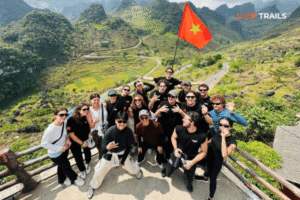
Ha Giang Loop: 3 Days or 4 Days? An Honest Comparison
Facebook X Reddit Table of Contents Learn more: Ha Giang Loop Tours This is the question that sits in almost every Ha

Thúy Kiều (Grace) is a travel blogger and content contributor for Loop Trails Tours Ha Giang. She holds a bachelor’s degree in Sustainable Tourism from Vietnam National University, Hanoi, and has a strong passion for exploring and promoting responsible travel experiences in Vietnam’s northern highlands.
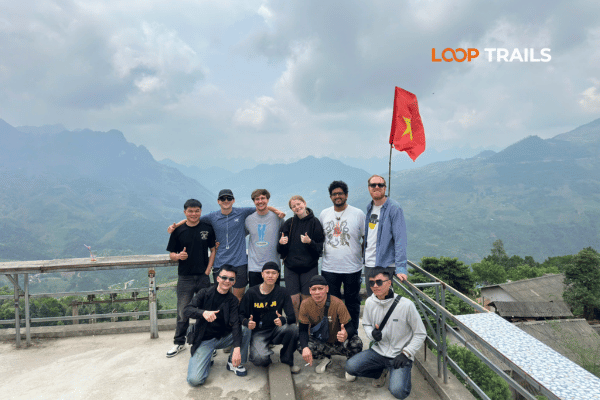
Learn more: Ha Giang Loop Tours
If you’ve spent any time researching northern Vietnam, you’ve probably hit a wall of Ha Giang Loop tour options. Hundreds of operators. Dozens of itineraries. Easy rider, self-drive, jeep, three days, four days, group, private, premium, budget. Every page promises the best experience.
Most of that confusion is solvable in about ten minutes if someone honest walks you through it.
This guide is that walk-through. We run Ha Giang Loop tours for a living, but we’ll be straight: the right tour for you depends on how you ride, who you’re with, and what you actually want from the trip. Some travelers should self-drive. Others absolutely shouldn’t. A jeep is the right answer for a specific kind of group, and the wrong answer for everyone else.
By the end, you’ll know which option fits your trip, what you should be paying attention to before you book, and how to avoid the mistakes that cost most travelers either money or a bad experience.
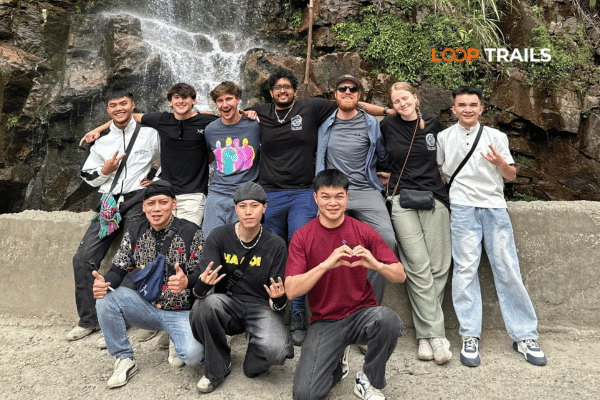
Learn more: Ha Giang Loop 2 Days 1 Night
The Ha Giang Loop is a circular motorbike route through Ha Giang province in Vietnam’s far north, near the Chinese border. It passes through some of the most dramatic karst mountain scenery in Southeast Asia, including Ma Pi Leng Pass, Dong Van Karst Plateau Geopark (a UNESCO Global Geopark), the Nho Que River canyon, and a string of villages lived in by Hmong, Tay, Dao, and other ethnic minority groups.
A “tour” in this context means a guided multi-day version of that route, with the bike, accommodation, meals, permits, and a guide handled for you. You ride either yourself, on the back of a guide’s bike, or in a vehicle, depending on the type of tour you book.
Tours typically run 3 to 4 days, start and end in Ha Giang City, and stop at the same set of headline locations: Quan Ba, Yen Minh, Dong Van, Lung Cu, Ma Pi Leng, Meo Vac, Du Gia, and back. The route itself is fairly standardized. What changes from operator to operator is the quality of the bikes, the guides, the homestays, the group sizes, and how they handle the unpredictable parts of mountain travel.
That last bit, how an operator handles the unpredictable, is what separates a good tour from a memorable one.
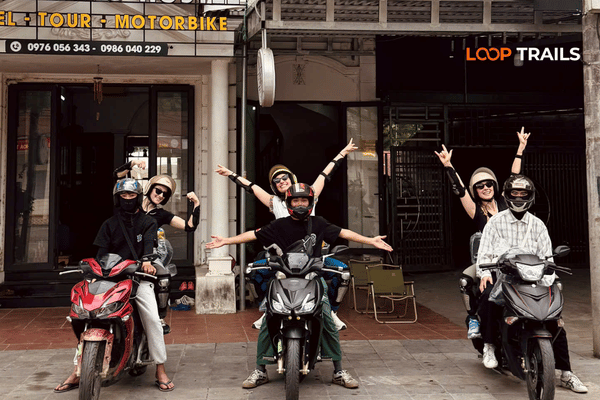
Learn more: Ha Giang Loop Easy Rider
Pick the type first, then pick the operator. In that order.
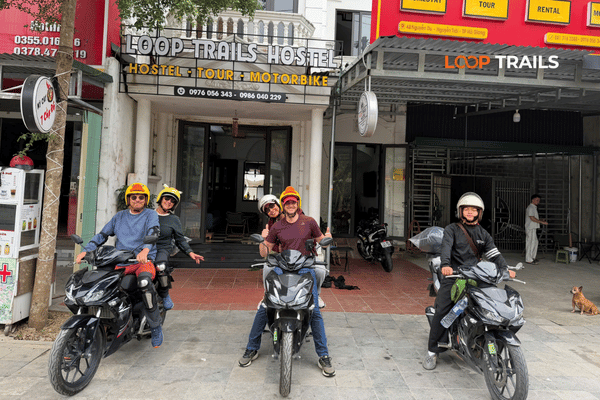
You sit on the back of a motorbike. A local guide drives. You enjoy the scenery without thinking about throttle, brakes, gravel, or oncoming buses on a blind corner.
Easy rider tours are by far the most common option for first-time visitors and for travelers who don’t ride. A good easy rider guide does much more than steer the bike. They know which viewpoints are worth stopping at versus which are tourist traps. They handle the homestay logistics. They translate at meals. They’re the reason a four-day trip turns into a story you’ll tell for years.
Best for:
Trade-offs: You’re not in control of the bike. You’re sharing a bike with one driver. Photo stops happen at the guide’s discretion (a good guide stops where you want, but you’ll need to communicate).
If this sounds like your trip, our easy rider Ha Giang Loop tour is the one we recommend most often, especially for solo travelers and couples.
Learn more: Ha Giang Motorbike Rental
You ride your own bike. The tour still includes a guide leading the group, accommodation, meals, and route planning, but the riding is on you.
Self-drive is the option that gets most romanticized online and most underestimated in person. The Ha Giang Loop is a real mountain ride. There are sections with steep descents, sharp switchbacks, livestock on the road, sudden weather changes, and traffic from buses and trucks. If you’ve ridden in cities only, or if you’ve been on a scooter twice on holiday, this isn’t the place to learn.
That said, if you have genuine motorbike experience, self-driving here is genuinely incredible. The freedom of pulling over wherever you want, the rhythm of the riding, the slow accumulation of confidence over four days. There’s a reason riders come back again and again.
Best for:
Trade-offs: You’re responsible for the bike, your fatigue, and (where it applies) the licensing situation. Foreign driving license rules in Vietnam are a moving topic and rules can change. Check the latest before you go and make insurance decisions accordingly. We always recommend a properly licensed setup if you can arrange one.
For travelers in this category, a quality bike matters more than almost anything else. Our Ha Giang motorbike rental covers self-driving riders with road-ready bikes, regular servicing, and roadside support.
Learn more: Ha Giang Loop 3 Days 2 Nights
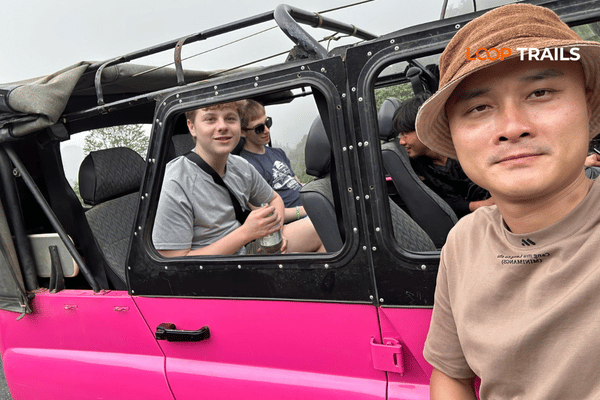
You sit in a vehicle with a driver. The tour covers the same headline route, with stops at the major viewpoints and villages.
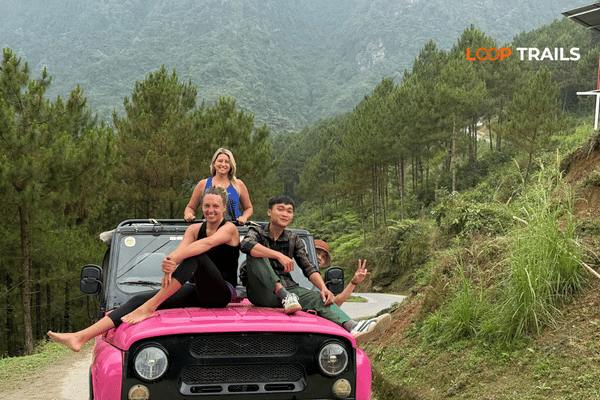
Jeep tours have grown significantly in the last few years, and for good reason: not everyone wants to be on a motorbike for four days. Travelers with kids, parents joining their adult children, couples where neither person rides, photographers with heavy gear, anyone with a back or knee issue, anyone in cooler/wetter months who just doesn’t want to be soaked and freezing on a bike. Jeep tours work for all of these.
You’ll skip some of the smaller side roads and the open-air feeling. You won’t feel the mountain in the same way. But you’ll see the same landscape from a window, in comfort, with somewhere to put your luggage.
Best for:
Trade-offs: Less spontaneity on the road. Less sense of “doing” the loop in the rider sense.
Learn more: Ha Giang Loop 4 Days 3 Nights
The answer depends on how much time you have and how much rushing you can stomach.
The shortest standard option. You hit the headline sights but you’re moving fast. Mornings start early, afternoons run late, and one bad weather day can compress your schedule painfully. A 3-day tour is fine if your total Vietnam time is tight, but it’s not the relaxed version.
Best for: Travelers with limited time who still want to see the loop’s main highlights.
The sweet spot, and the version we recommend most often. Four days gives you enough room to stop at viewpoints without feeling rushed, take a longer lunch when the food is good, ride Ma Pi Leng twice if you want, and slot in a homestay night somewhere quieter like Du Gia. Most travelers who do the four-day version say afterward that they wouldn’t have wanted less.
Best for: Most first-time travelers who want the full experience without burning a week.
For travelers who want to genuinely slow down or who want to add extensions. Five days lets you spend an extra night in Du Gia or Dong Van without compressing anything. Longer versions can include a side trip toward Lung Cu, a more relaxed Nho Que River afternoon, or a starting extension into the Cao Bang province.
Best for: Couples and small groups who prioritize pace over checklist, plus anyone interested in combining provinces.
Not sure which length fits? If you’ve got 7 days or more in northern Vietnam, the right call is usually a Ha Giang and Cao Bang combine tour, which links the loop with Cao Bang’s Ban Gioc Waterfall and stone villages without backtracking through Hanoi.
Learn more: Ha Giang Safety Tips
Before you compare prices between operators, make sure you’re comparing the same package. The “what’s included” varies more than most travelers realize.
Usually included:
Usually not included:
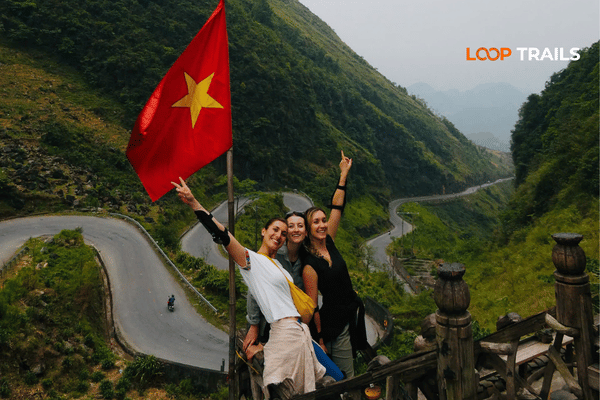
If a quote looks suspiciously cheap, look at this list and figure out what’s missing. Most often it’s meals, gear quality, or guide ratio.
Learn more: Ha Giang Road Conditions 2026
Almost every operator runs a variation of the same general route, with small differences in pacing and overnight stops. Here’s the standard 4-day version.
You start in Ha Giang City after the night bus from Hanoi. The morning is for bike check, riding gear fitting, briefing, and a proper breakfast. By mid-morning you’re on the road heading north.
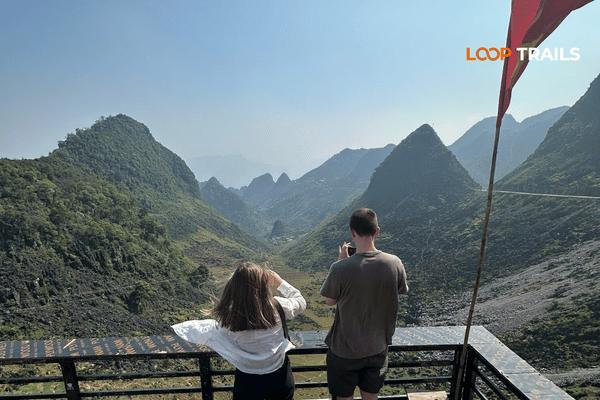
The first day eases you in. You ride through Quan Ba district with its first big viewpoint over the “Twin Mountains” valley. The road is winding but not punishing. By afternoon you reach Yen Minh, a quiet pine-forested town that’s the standard night-one stop.
It’s an intentionally lighter day. The harder riding starts tomorrow.
Day two takes you deeper into the karst plateau. You pass through Sung La Valley (occasionally called the “garden in the rocks”), the Hmong King’s Palace at Sa Phin, and on to Dong Van Old Town for the night. Optional side trips include Lung Cu Flag Tower, the northernmost point of Vietnam.
Riding-wise, day two has more elevation and tighter corners than day one. Self-drivers usually feel a real jump in confidence by the end of the day.
Dong Van Old Town has a small night market on weekends and decent food. Most homestays here are on the basic side but comfortable.
This is the day everyone comes for.
The road from Dong Van to Meo Vac runs over Ma Pi Leng Pass, widely considered the most dramatic stretch of road in Vietnam. The pass climbs along the rim of a deep gorge with the Nho Que River far below. There’s a viewpoint about halfway across where most groups stop for photos and where many travelers add the optional boat trip on the river itself, which slows things down nicely if you have time.
After Meo Vac, you ride south toward Du Gia, a smaller village with a more rural feel and homestays that lean into family-style dinners and waterfalls nearby. It’s the homestay night most riders remember most clearly.
The final day winds back through smaller mountain roads, often the prettiest “in-between” riding of the whole trip. You’re back in Ha Giang City by mid to late afternoon, in time for an evening shower, dinner, and the night bus to Hanoi.
If you booked the bus on a tight schedule, give yourself buffer. Mountain riding doesn’t always run to plan.

Learn more: Ha Giang Sleeper Bus
There’s no airport in Ha Giang and no train. You’ll travel from Hanoi by road.
The two main options are:
Sleeper bus from Hanoi’s My Dinh station, leaving in the evening and arriving in Ha Giang City around dawn. Travel time is usually 6 to 8 hours depending on traffic and stops. This is what most independent travelers and budget tour packages use. Quality varies, so book through a reputable platform or via your tour operator (we handle this for clients who want it).
Limousine van services running similar routes with smaller groups and slightly more comfort. More expensive than the sleeper bus, often a better experience.
Private transfer if you’re traveling as a small group and want to leave on your own schedule. Significantly more expensive, much faster.
Most tours start in the morning in Ha Giang City, so the night bus arriving at dawn lines up well. You shower, eat, kit up, and you’re on the road within a few hours.

Learn more: Ha Giang in September & October
Ha Giang has four broad seasons, and each one trades something:
| Season | What you get | What to know |
|---|---|---|
| March to May | Mild temperatures, peach and pear blossoms in early spring, clear riding | Some rain showers, especially in late May |
| June to August | Lush green rice terraces, dramatic clouds | Hot, humid, real risk of heavy rain and landslides on some sections |
| September to October | Best overall: ripe golden rice terraces, comfortable temps, clearer skies | Most popular tourist window, busier homestays |
| November to early December | Crisp, dry, golden buckwheat flowers in some valleys | Cooler, especially mornings |
| Late December to February | Quiet, dramatic mist, lowest crowds | Cold mornings, occasional fog limiting views, less green |
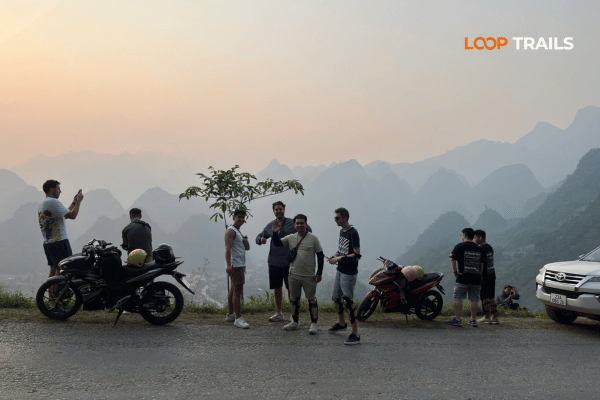
If you’re planning around scenery, late September to early November hits the sweet spot. The terraces are at their peak, the buckwheat starts blooming in some valleys, and the riding weather is reliably good.
For booking timing: we recommend reserving at least 2 to 4 weeks in advance for high-season dates (September, October, holidays), and as far ahead as you can if you want a specific tour type or a smaller group size. Last-minute bookings work in low season but you lose choice.
Learn more: Ha Giang Cao Bang 5 Days 4 Nights
Honest answer: prices vary, and we won’t list specific numbers in a blog post that might be read months from now and still be wrong. What we can tell you is what drives the price, so you can read any quote and understand what you’re looking at.
Cost drivers:
If a tour quote seems much cheaper than everyone else, it’s almost certainly cutting one of the above. The most common cuts are bike quality, guide-to-rider ratio (one guide to twelve riders is too many on this terrain), or homestay quality.
For current pricing on any of our tours, send us a message with your dates, group size, and tour type. We’ll send you exact numbers without the markup that comes with intermediary booking platforms.
Learn more: Ha Giang Cao Bang Ba Be Lake 6 Days 5 Nights
A choice most travelers don’t realize they have.
Group tours join you with other travelers booking the same dates. Group sizes vary by operator (we keep our groups small, but industry standards range from 4 to 15 plus riders). You meet people, the cost per person is lower, the pace is set by the group.
Private tours are just you and your travel partners with a guide (or guides). You set the pace. You decide if you want to stop at a viewpoint for ten minutes or an hour. You eat where you choose. The cost per person is higher.
Group tours work well for solo travelers and couples who like meeting other travelers. Private tours work better for families, groups of friends who want their own pace, photographers, or anyone who wants flexibility.
There’s no universally right answer. Just be honest with yourself about which type of trip you’ll actually enjoy.
Learn more: Ha Giang Loop by Jeep for Families & Groups
Most of the bad-experience stories you’ll find online trace back to the same handful of issues. A reliable operator solves these before you book:
A few things you might overweight that actually matter less than you think: a flashy website, a “luxury” label (the loop’s homestays are mostly simple by design), or social media follower count.
Learn more: Ha Giang Loop Mistake to Avoid
A short list of patterns we see often:
Booking purely on price. A 30% cheaper tour with a worn-out bike, a tired guide, and an over-stuffed group is not a deal. It’s a worse trip.
Underestimating their riding ability for self-drive. If you’re not sure whether you’re ready to self-drive, you’re not ready. Easy rider exists for a reason.
Not reading what’s included. “All meals” sometimes means breakfast and dinner. “Permit included” sometimes means just the entry fee, not the border permit. Read carefully.
Booking the wrong duration. Three days is doable. Four is recommended. Don’t compress the trip just because the bus arrived early.
Skipping travel insurance. Or assuming standard travel insurance covers motorbike accidents. Many policies don’t unless you have a valid license and the right engine size coverage. Check the fine print before you ride, not after.
Treating the night bus arrival as the start of the riding day. Give yourself the morning to shower, eat properly, and let the bus fatigue lift before you put on a helmet.
Not telling the operator about real considerations. Knee issues, motion sickness, dietary restrictions, anxiety about heights. A good operator can plan around almost anything if you tell them in advance.
Learn more: Cao Bang Travel
This is one of the most underused decisions in northern Vietnam, and it’s the single move most riders look back on as their best.
The two provinces share a continuous mountain region. The road from Meo Vac to Bao Lac (over in Cao Bang) is one of the prettiest stretches in the north, and once you’re across, you’re in waterfall country. Ban Gioc Waterfall, Nguom Ngao Cave, the 14-bend Me Pia Pass, and the stone villages of Khuoi Ky.
Ha Giang is dramatic and vertical. Cao Bang is softer karst, slower rivers, broad valleys. They’re different enough that doing both feels like two trips, but the geography links them, so there’s no reason to backtrack to Hanoi between them.
The combine version typically runs 7 to 9 days total. It’s the trip we get the most “I’m so glad we did it this way” feedback on. If you have the days, our Ha Giang and Cao Bang combine tour handles the routing and logistics as one continuous itinerary
Learn more: Ha Giang Packing list
Pack for variable weather even in summer. A practical list:
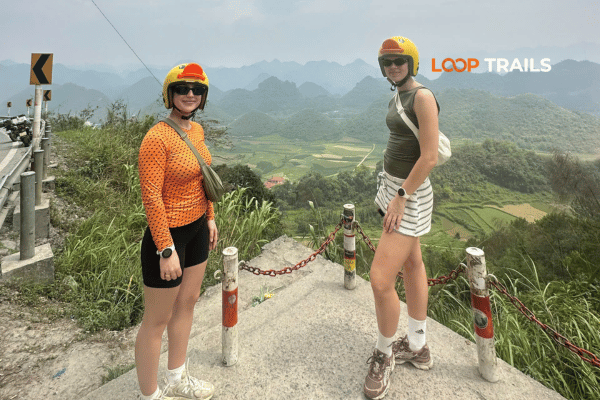
Skip: heavy hiking boots (clunky for daily riding), formal clothes (not needed anywhere on the loop), and oversized luggage (your big bag goes in the support vehicle, but smaller is still easier).
Most tour operators provide helmets, riding jackets, and basic protective gear. Confirm exactly what’s provided so you’re not packing redundantly.
Learn more: Ha Giang Loop Self-Drive
A quick filter, since this is the question we get most often.
Choose an easy rider tour if: you don’t ride, you’re a nervous rider, you’re traveling solo and want company, or you want to enjoy the views without watching the road. This is the right answer for the largest share of travelers, and there’s no shame in it. Most of the people who’ll tell you the loop is incredible rode it as easy rider passengers.
Choose a self-drive tour if: you have genuine prior motorbike experience, you’re comfortable with the responsibility, and you want maximum flexibility on the road. This is the most immersive version of the trip if you’re ready for it.
Choose a jeep tour if: you’re traveling with kids, with mixed-mobility group members, or in cold/wet months. You’ll see the same landscape comfortably without compromising on the route.
Choose a Ha Giang and Cao Bang combine tour if: you have 7 or more days for northern Vietnam and you want the best version of the trip. Two genuinely different landscapes, one continuous route, no backtracking.
Choose a motorbike rental only (no tour) if: you’re an experienced rider who has researched the loop in detail and wants full independence. Be honest with yourself: most travelers we meet who say this is what they want would have had a better trip with a guide. But for the right rider, full self-organized works. Our Ha Giang motorbike rental supports independent riders with reliable bikes and roadside backup.
If you’re not sure, message us with your dates, group size, and riding experience. We’ll send you the option that suits you, even when it isn’t the most expensive package.
Learn more: Ha Giang Loop for Beginners
Once you’ve decided on the type and duration, the actual booking is straightforward.
WhatsApp is the easiest way to handle the back-and-forth for most international travelers. Tell us your situation and we’ll handle the rest.

Learn more: Quan Ba Heaven Gate
The Ha Giang Loop earns its reputation. The scenery is real, the riding is real, the homestay nights are real. Travelers come away from this trip changed in small ways that don’t show up in the photos.
The right tour for you is the one that matches how you actually want to travel, not the one with the flashiest marketing. Easy rider for most. Self-drive for confident riders. Jeep for comfort-first groups. Combine with Cao Bang if you have the days.
Once you’ve picked your type, the operator matters more than anything else. A bike that works, a guide who pays attention, a homestay where the family actually feeds you well: those three things are what separate a good loop from a great one.
Whichever way you ride it, Ha Giang is ready when you are.
Most Ha Giang Loop tours run 3 or 4 days, with 4 days being the most popular and most relaxed pace. Longer 5-day or combine versions are available for travelers who want extra time or want to include Cao Bang province.
Foreign driving license rules in Vietnam are a moving topic. Some travelers ride without issues, others get fined or face insurance complications. Rules can change. Check the latest guidance and arrange a properly licensed setup if you can. If licensing is a concern, an easy rider or jeep tour avoids the question entirely.
The loop is generally safe with good preparation. Roads are mostly paved and in decent condition, but mountain riding always carries risk: weather changes fast, livestock cross unpredictably, and some sections have steep drops. Travel insurance, a reliable bike, and not riding tired or after drinking are non-negotiable.
Yes, by booking an easy rider tour or jeep tour. You’ll experience the same route and scenery without driving yourself. Self-drive is not a place to learn motorbiking. If you’ve only ridden a scooter on holiday a couple of times, choose easy rider.
Late September to early November is the sweet spot for most travelers: ripe rice terraces, comfortable temperatures, and reliable riding weather. November to December offers buckwheat flowers and quieter roads. Avoid heavy rain windows in summer if you’re worried about mud and landslides.
Prices vary by tour type, duration, group size, and accommodation tier. Self-drive tours are typically cheapest, jeep tours most expensive, easy rider in between. Private tours cost more than group tours. For current pricing, contact the operator directly with your dates and group size.
Group tours are great for solo travelers and couples who enjoy meeting other travelers, and they cost less per person. Private tours give you full control of pace and stops, which suits families, friend groups, and photographers. Both options work; pick based on how you actually like to travel.
Standard inclusions are bike or vehicle, fuel, guide, accommodation, most meals, entry tickets, and protective gear for self-drive. Hanoi to Ha Giang transport, travel insurance, drinks, and tips are usually separate. Always confirm in writing before booking.
Yes, and most riders who’ve done both prefer the combine version. The road from Meo Vac to Bao Lac links the two provinces continuously with no need to return to Hanoi. Combine tours typically run 7 to 9 days total.
By sleeper bus (most common, overnight, arrives at dawn), limousine van (smaller, more comfortable, daytime or evening), or private transfer (most expensive, fastest). There’s no airport or train. Most tour operators can arrange transport on request.
Layered clothing, light rain jacket, closed-toe shoes, sunglasses, sunscreen, headlamp, cash, photocopies of your passport, and a small daypack. Skip heavy luggage, formal clothes, and hiking boots. Most operators provide helmets and riding jackets.
Yes, if you’re a confident, experienced rider who has researched the route. Self-organized rides work for some travelers but lose the guide, the route logistics, and the homestay arrangements. Reliable rentals exist; choose based on bike quality and roadside support, not price alone.
Contact information for Loop Trails
Website: Loop Trails Official Website
Email: looptrailshostel@gmail.com
Hotline & WhatSapp:
+84862379288
+84938988593
Social Media:
Facebook: Loop Trails Tours Ha Giang
Instagram: Loop Trails Tours Ha Giang
TikTok: Loop Trails
Office Address: 48 Nguyen Du, Ha Giang 1, Tuyen Quang
Address: 48 Nguyen Du, Ha Giang 1, Tuyen Quang
Facebook X Reddit Table of Contents Learn more: Ha Giang Loop Tours This is the question that sits in almost every Ha
Facebook X Reddit Table of Contents Learn more: Ha Giang Loop Tours Most people drive past the Quan Ba area twice on

Facebook X Reddit Table of Contents Learn more: Ha Giang Loop Tours The Ha Giang Loop has a reputation problem with older