
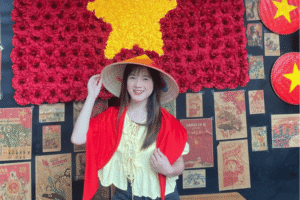
Thúy Kiều (Grace) is a travel blogger and content contributor for Loop Trails Tours Ha Giang. She holds a bachelor’s degree in Sustainable Tourism from Vietnam National University, Hanoi, and has a strong passion for exploring and promoting responsible travel experiences in Vietnam’s northern highlands.
Learn more: Ha Giang Loop Tours
Food allergies shouldn’t stop you from experiencing one of Southeast Asia’s greatest road adventures. But they do require preparation.
The Ha Giang Loop isn’t Hanoi. You won’t find allergy-friendly menus or English-speaking staff at every stop. Meals happen at local restaurants and homestays where communication can be challenging.
This guide gives you the tools to navigate food allergies on the Loop: the Vietnamese phrases you need, how to create an allergy card, what to expect from meals, and strategies that actually work in rural Vietnam.
Learn more: Ha Giang Loop 2 Days 1 Night
Before diving into solutions, let’s understand the context.
Homestays: Family-run accommodation where meals are prepared in the household kitchen. This is where most dinners and breakfasts happen on tours.
Local restaurants: Small roadside restaurants in towns like Yen Minh, Dong Van, and Meo Vac. Simple menus, local food.
Roadside stops: Basic eateries along the route for lunch. Often just a few dishes available.
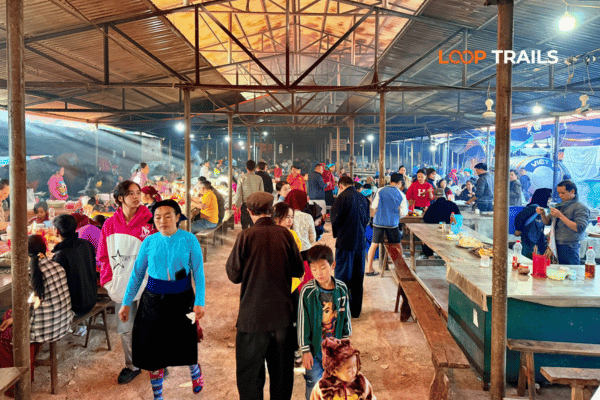
Markets: Morning markets in towns offer local snacks and produce.
English is limited: Outside Ha Giang City, English speakers are rare. Even basic English may not be understood.
Menus are in Vietnamese: If there’s a menu at all. Many places just cook what’s available.
“Allergy” may not translate: The concept of food allergies (as opposed to dislike) isn’t universally understood. Saying you “don’t like” something may not convey the seriousness.
Vietnamese cuisine is fresh: Meals are typically prepared from scratch with visible ingredients.
Homestay hosts are caring: They want guests to be happy and healthy. With clear communication, they’ll accommodate.
Tours provide structure: If you’re on an organized tour, your guide can communicate your needs in advance.
→ [Contact us about dietary needs for your Ha Giang tour] (link to contact page)
Learn more: Ha Giang Loop 3 Days 2 Nights
Understanding what’s in Vietnamese food helps you know what to watch for.
Where they appear:
Satay dishes: Peanut sauce is common in satay and some stir-fries.
Garnishes: Crushed peanuts top many noodle dishes, salads, and bánh cuốn.
Peanut oil: Sometimes used for cooking, though vegetable oil is more common.
Desserts: Sweet soups (chè) and sticky rice dishes may include peanuts.
The challenge: Peanuts are often added as garnish at the last moment. You may not see them until they’re on your plate.
Where they appear:
Fish sauce (nước mắm): The foundation of Vietnamese cooking. Used in nearly every savory dish as a seasoning.
Shrimp paste (mắm tôm): Strong-flavored paste used in certain dishes, especially with bún (noodle soup).
Dried shrimp: Added to soups, stir-fries, and salads for flavor.
Visible seafood: Shrimp, crab, squid in obvious preparations.
The challenge: Fish sauce is so fundamental that avoiding it entirely is difficult. It’s in marinades, dipping sauces, and cooked into dishes.
Where it appears:
Soy sauce: Used in stir-fries and marinades, though less dominant than in Chinese cooking.
Tofu: Common in vegetarian dishes.
The reality: Soy is present but not as pervasive as fish sauce. Easier to avoid with communication.
Where it appears:
Soy sauce: Contains wheat.
Noodles: Some noodles are wheat-based (mì), others are rice-based (phở, bún).
Fried foods: Batter may contain wheat flour.
The good news: Vietnamese cuisine is largely rice-based. Many dishes are naturally gluten-free. The main concerns are soy sauce and wheat noodles.
Where they appear:
Fried eggs: Common breakfast item.
Bánh mì fillings: Sometimes includes omelet.
Fried rice: Often contains egg.
The reality: Eggs are visible and avoidable with communication.
Where it appears:
Coffee: Condensed milk in Vietnamese coffee.
Some desserts: Ice cream, certain sweet dishes.
The good news: Traditional Vietnamese cooking uses very little dairy. It’s one of the easier allergies to manage in Vietnam.
Learn more: Ha Giang Loop 4 Days 3 Nights
These phrases can save your trip. Print them, screenshot them, or learn them.
I am allergic to [food]: “Tôi bị dị ứng với [food].” (Pronunciation: Toy bee zee oong voy…)
I cannot eat [food]: “Tôi không thể ăn [food].” (Pronunciation: Toy kohng teh an…)
If I eat this, I will be very sick: “Nếu tôi ăn cái này, tôi sẽ rất ốm.” (Pronunciation: Nay-oo toy an kai nay, toy seh ruht ohm.)
Please, no [food]: “Làm ơn, không có [food].” (Pronunciation: Lahm ern, kohng kaw…)
Does this contain [food]? “Món này có [food] không?” (Pronunciation: Mohn nay kaw… kohng?)
English | Vietnamese | Pronunciation |
Peanuts | đậu phộng | dow fohng |
Tree nuts | hạt | haht |
Cashews | hạt điều | haht dee-oo |
Shellfish | hải sản có vỏ | hai san kaw vaw |
Shrimp | tôm | tohm |
Crab | cua | coo-ah |
Fish | cá | kah |
Fish sauce | nước mắm | nook mahm |
Eggs | trứng | choong |
Milk | sữa | sua |
Soy | đậu nành | dow nahn |
Wheat | lúa mì | loo-ah mee |
Gluten | gluten | gluten |
Sesame | mè | meh |
I need help: “Tôi cần giúp đỡ.” (Toy can yoop duh.)
I’m having an allergic reaction: “Tôi đang bị dị ứng.” (Toy dahng bee zee oong.)
Hospital: “Bệnh viện.” (Ben vee-en.)
Please call emergency: “Làm ơn gọi cấp cứu.” (Lahm ern goy cap coo.)
Learn more: Ha Giang Cao Bang 5 Days 4 Nights
An allergy card is your most powerful tool. A written message in Vietnamese that clearly explains your allergy.
Your allergy (clear and specific)
The severity: “I will become very sick” or “This is a medical emergency”
A request: What you need them to do
Thank you: Politeness helps
Sample Allergy Card Templates
For Peanut Allergy:
TÔI BỊ DỊ ỨNG VỚI ĐẬU PHỘNG
(I am allergic to peanuts)
Tôi không thể ăn đậu phộng, dầu đậu phộng, hoặc bất cứ thứ gì có đậu phộng.
(I cannot eat peanuts, peanut oil, or anything containing peanuts.)
Nếu tôi ăn đậu phộng, tôi sẽ rất ốm và cần đi bệnh viện.
(If I eat peanuts, I will become very sick and need to go to the hospital.)
Xin vui lòng kiểm tra tất cả nguyên liệu.
(Please check all ingredients.)
Cảm ơn rất nhiều!
(Thank you very much!)
For Shellfish/Seafood Allergy:
TÔI BỊ DỊ ỨNG VỚI HẢI SẢN
(I am allergic to seafood)
Tôi không thể ăn tôm, cua, cá, hoặc nước mắm.
(I cannot eat shrimp, crab, fish, or fish sauce.)
Đây là vấn đề y tế nghiêm trọng.
(This is a serious medical issue.)
Xin vui lòng nấu món ăn của tôi mà không có hải sản.
(Please prepare my food without any seafood.)
Cảm ơn rất nhiều!
(Thank you very much!)
For Multiple Allergies:
TÔI BỊ DỊ ỨNG THỰC PHẨM
(I have food allergies)
Tôi KHÔNG THỂ ăn:
(I CANNOT eat:)
Đậu phộng (Peanuts)
Tôm (Shrimp)
Cua (Crab)
[Add your allergens]
Nếu tôi ăn những thứ này, tôi sẽ rất ốm.
(If I eat these things, I will become very sick.)
Xin vui lòng giúp tôi.
(Please help me.)
Cảm ơn rất nhiều!
(Thank you very much!)
Show it early: Before ordering, before sitting down at a homestay meal.
Point as you speak: Even if your Vietnamese is minimal, pointing to the card while speaking shows seriousness.
Let them read it: Give them time. They may need to translate for others in the kitchen.
Be patient and grateful: A smile and “cảm ơn” (thank you) go a long way.
Print multiple copies: Cards get wet, lost, or damaged.
Laminate if possible: Or use a waterproof phone case.
Save on your phone: As backup, even if you prefer paper.
Have your tour guide review it: They can confirm the Vietnamese is natural and correct.
Learn more: Cao Bang Loop 3 Days best kept secret
Beyond the allergy card, these strategies help ensure your message is understood.
Inform your tour operator: When booking, clearly state your allergies. Good operators will note this and communicate to guides and accommodations.
Ask about accommodation: Can the homestays be informed in advance? Preparation makes a huge difference.
Pack emergency supplies: Antihistamines, EpiPen if prescribed, emergency information.
Briefing on Day 1: Explain your allergy clearly to your guide. Show them your card. Make sure they understand the severity.
Empower them to communicate: Let your guide speak to restaurant staff and homestay hosts. They know how to explain in ways that locals understand.
Trust but verify: A good guide will double-check ingredients, but watch for garnishes added after the fact.
Arrive early when possible: Gives time to communicate before food is prepared.
Watch the cooking: At many places, you can see the kitchen. Watch for your allergens being added.
Ask about each dish: Don’t assume. Even dishes that seem safe might have unexpected ingredients.
Be specific about cross-contamination: If your allergy is severe, explain that the pan shouldn’t have touched your allergen.
Serious face: Show that this isn’t a preference; it’s a health issue.
X gesture: Cross your arms or make an X when indicating “no.”
Point and shake head: Simple but universally understood.
Show gratitude: After they accommodate you, genuine thanks builds goodwill.
Learn more: Ha Giang Cao Bang 6 Days 5 Nights
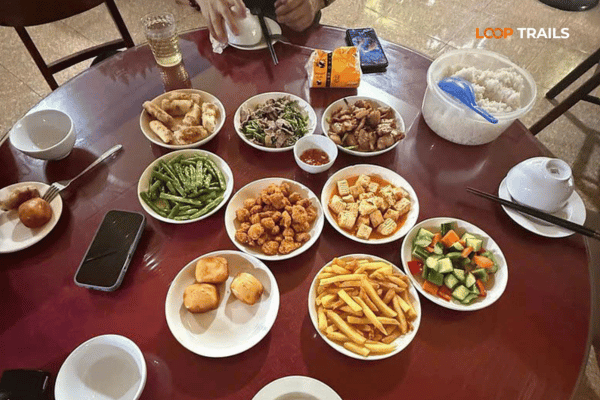
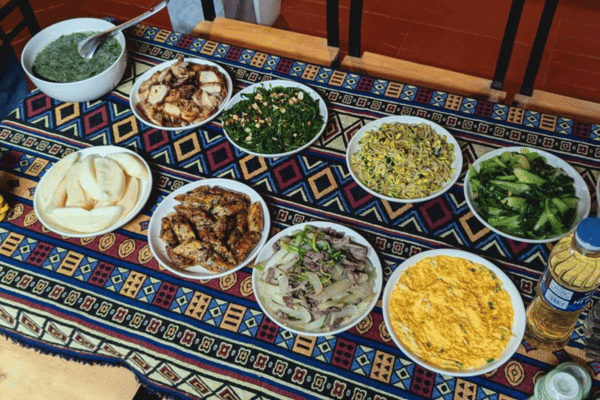
Homestay meals are the heart of the Ha Giang Loop food experience. Here’s how they work:
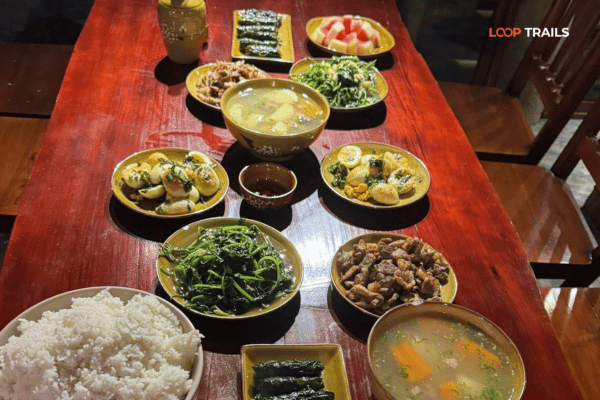
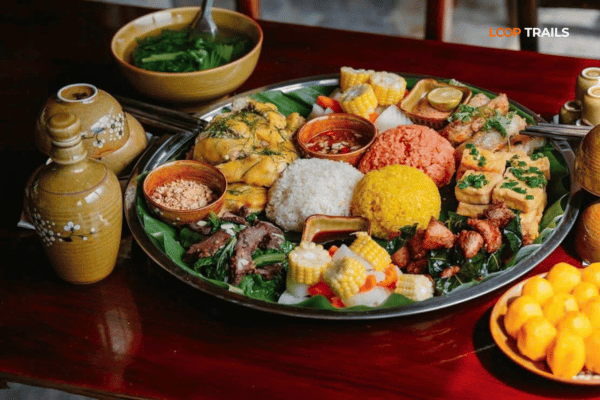
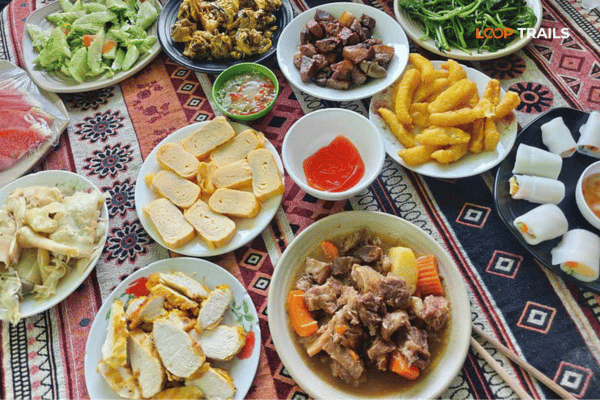
Family-style dining: Dishes are placed on a shared table. Everyone serves themselves.
Fresh preparation: Meals are typically cooked that day from local ingredients.
Set menu: You don’t order. The family prepares what they’re making for everyone.
Local cuisine: Expect rice, vegetables, meat (pork or chicken usually), tofu, soup.
Advance notice is key: If your tour operator or guide has contacted the homestay ahead, they’ll have prepared.
Identify safe dishes: Work with your guide to identify which dishes on the table are safe for you.
Separate preparation: For severe allergies, ask if your portion can be prepared separately.
Bring backup food: If you’re concerned, bring safe snacks to supplement.
Dish | Likely Contains | Usually Safe For |
Steamed rice | None | Most allergies |
Stir-fried vegetables | Fish sauce, possibly peanuts | Soy, egg, dairy |
Grilled pork | Fish sauce in marinade | Peanut, shellfish, dairy |
Chicken soup | Fish sauce | Peanut, shellfish, dairy |
Spring rolls | Shrimp, peanuts (varies) | Check individually |
Morning glory (rau muống) | Fish sauce, garlic | Peanut, shellfish, egg |
Tofu dishes | Soy, possibly fish sauce | Peanut, shellfish, egg |
Reality check: Fish sauce is in almost every savory dish. If you have a severe fish or shellfish allergy, you’ll need specific preparation without it.
Learn more: Ha Giang Food guide
Level of difficulty: Moderate
Where to watch: Satay sauce dishes Garnishes on noodle dishes Sweet desserts
Strategy: Show allergy card specifically mentioning đậu phộng Ask your guide to request no peanut garnishes Watch for last-minute additions to plates
What’s usually safe: Plain rice Steamed vegetables (without satay sauce) Grilled meats (check marinade)
Level of difficulty: Challenging (due to fish sauce)
Where to watch: Fish sauce in almost everything Shrimp paste in certain dishes Dried shrimp in soups and stir-fries
Strategy: You cannot avoid fish sauce without special preparation Communicate clearly that you need dishes made without nước mắm Request salt or soy sauce as alternative seasoning
What’s usually safe: Plain rice Fruit Dishes your guide confirms were prepared without fish sauce
Level of difficulty: Moderate
Where to watch: Soy sauce (contains wheat) Wheat noodles (mì) Fried batter
Strategy: Request rice noodles (phở, bún) instead of wheat noodles Ask about soy sauce in marinades Avoid fried foods unless confirmed gluten-free
What’s usually safe: Rice Rice noodles Grilled meats (without soy-based marinade) Fresh vegetables
Level of difficulty: Easy to moderate
Where to watch: Fried eggs at breakfast Fried rice Certain noodle dishes
Strategy: Eggs are visible in most dishes Simply decline egg dishes Request no egg in fried rice
What’s usually safe: Most Vietnamese savory dishes (egg-free by default) Soups Stir-fries (unless egg added)
Level of difficulty: Easy
Where to watch: Vietnamese coffee (contains condensed milk) Some desserts Ice cream
Strategy: Order black coffee (cà phê đen) instead of white coffee Avoid desserts or ask about ingredients
What’s usually safe: Almost all savory Vietnamese food Traditional Vietnamese cooking rarely uses dairy
Learn more: Best time to visit Cao Bang
If your allergy is severe (anaphylactic), additional precautions are essential.
Consult your doctor: Discuss travel with severe allergies. Get medical advice specific to your situation.
Carry an EpiPen: And know how to use it. Bring multiple if allowed.
Medical documentation: Carry a doctor’s letter explaining your condition in English and Vietnamese if possible.
Travel insurance: Confirm your insurance covers allergy-related emergencies and medical evacuation.
Tour with guide strongly recommended: A guide who understands your allergy and can communicate is invaluable.
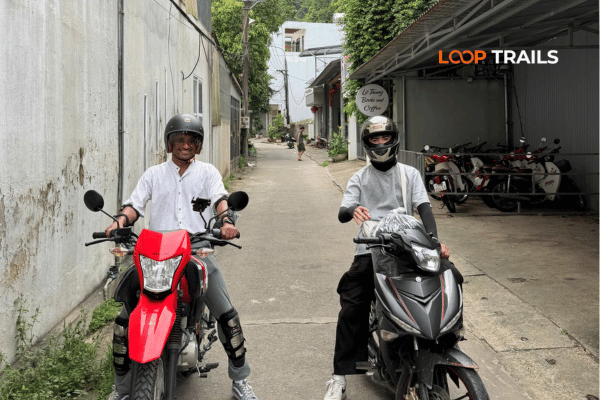
Jeep tours offer advantages: You’re not operating a vehicle, so if you feel unwell, the driver handles everything.
Small groups or private tours: More control over meals and logistics.
→ [View Ha Giang tours suitable for special dietary needs] (link to tours page)
Carry safe snacks: Protein bars, nuts (if safe for you), dried fruit. If a meal is uncertain, you have backup.
Know the nearest hospitals: Ha Giang City has a hospital. Dong Van and Meo Vac have clinics but limited emergency capacity.
Inform your group: If traveling with others, let them know about your allergy and what to do in an emergency.
Trust your instincts: If something doesn’t feel right about a dish, don’t eat it. Better hungry than sick.
Phone numbers saved: Emergency services: 115 Your tour operator’s emergency line Your embassy or consulate
Location awareness: Know which town you’re in Know how far to the nearest medical facility
Communication ready: Emergency phrases printed Your guide’s phone number accessible
Learn more: Ha Giang Motorbike Rental
A knowledgeable guide is your biggest asset when managing food allergies on the Loop.
Communicate in Vietnamese: They explain your allergy clearly, with cultural context that resonates.
Advance communication: Contact homestays and restaurants before you arrive.
Menu translation: Identify which dishes are safe at each meal.
Kitchen coordination: Speak directly with cooks about preparation.
Watch your food: An extra set of eyes on what goes into your dish.
Emergency support: If something goes wrong, they can communicate with medical providers.
State your allergies clearly: In writing, when you book.
Ask about experience: Has the operator handled similar allergies before?
Request confirmation: Ask for written confirmation that your guide will be informed.
Communicate severity: Make sure they understand if your allergy is severe.
Day 1 briefing: Spend 10 minutes explaining your allergy thoroughly. Show your card. Answer questions.
Empower them: Let them take the lead on food communication.
Appreciate their effort: Guides who handle this well are doing extra work for your safety.
Learn more: Ha Giang Market Day
Yes, with proper preparation. Bring allergy cards, communicate with your tour operator in advance, and choose a tour with a knowledgeable guide. Thousands of travelers with allergies have completed the Loop safely.
Nearly every savory Vietnamese dish contains fish sauce. For fish or shellfish allergies, you’ll need dishes specially prepared without it. Communicate this clearly; it’s possible but requires advance notice.
Bring safe snacks as backup, especially for severe allergies. You don’t need full meals, but having protein bars, crackers, or similar items provides security if a meal situation is uncertain.
Most homestay hosts want guests to be happy and healthy. With advance notice (through your tour operator) and clear communication, they’ll usually accommodate allergies. Simple allergies are easier; complex ones need more preparation.
Strongly recommended. A Vietnamese-speaking guide can communicate your needs far more effectively than phrase cards alone. For severe allergies, a guide is essential.
Carry antihistamines for mild reactions. For severe allergies, carry an EpiPen and know how to use it. Ha Giang City has a hospital; Dong Van and Meo Vac have clinics. Your guide can help coordinate emergency response.
“Tôi bị dị ứng với đậu phộng” (toy bee zee oong voy dow fohng). But a written allergy card is more reliable than pronunciation.
Yes, with communication. Vegetarian (ăn chay) is understood in Vietnam. Vegan is more challenging as fish sauce appears in many vegetable dishes. Communicate no fish sauce (không nước mắm) and no eggs (không trứng) clearly.
Halal options are very limited in Ha Giang province. Communicate no pork (không thịt heo) and consider bringing some of your own food. Seafood and vegetable dishes are safer options.
No dedicated allergy-friendly restaurants. All eating establishments are local, family-run operations. Your safety depends on communication, not restaurant labeling.
Not necessarily. Many travelers with allergies successfully complete the Loop with proper preparation. Assess your allergy severity, prepare thoroughly, and choose a tour that can support your needs.
Final Thoughts
Food allergies add a layer of planning to the Ha Giang Loop, but they don’t have to stop you from experiencing this incredible journey.
The keys are preparation, communication, and choosing the right support. With allergy cards, a good guide, and advance communication with your tour operator, you can navigate meals safely.
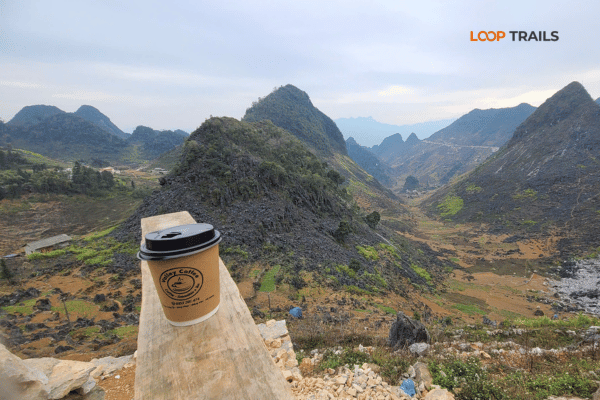
The views from Ma Pi Leng Pass are worth the extra planning.
Planning your Ha Giang trip with dietary needs?
→ [Ha Giang Loop Tours (discuss dietary needs when booking)] (link to tours page)
→ [Ha Giang Cao Bang Tours] (link to combo tours page)
→ [Contact us with dietary questions: WhatsApp +84 862 379 288] (link to contact)
Contact information for Loop Trails
Website: Loop Trails Official Website
Email: looptrailshostel@gmail.com
Hotline & WhatSapp:
+84862379288
+84938988593
Social Media:
Facebook: Loop Trails Tours Ha Giang
Instagram: Loop Trails Tours Ha Giang
TikTok: Loop Trails
Office Address: 54A Tran Phu, Ha Giang 2, Tuyen Quang
Address: 54A Tran Phu, Ha Giang 2, Tuyen Quang
Facebook X Reddit Table of Contents Learn more: Ha Giang Loop Tours Most people drive past the Quan Ba area twice on
Facebook X Reddit Table of Contents Learn more: Ha Giang Loop Tours The Ha Giang Loop has a reputation problem with older