
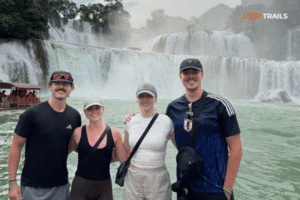
Cao Bang Loop Cost: A Real Price Breakdown
Facebook X Reddit Table of Contents Learn more: Ha Giang Loop Tours Most cost articles about Vietnam are guesses. Somebody rode a

Thúy Kiều (Grace) is a travel blogger and content contributor for Loop Trails Tours Ha Giang. She holds a bachelor’s degree in Sustainable Tourism from Vietnam National University, Hanoi, and has a strong passion for exploring and promoting responsible travel experiences in Vietnam’s northern highlands.
Learn more: Ha Giang Loop Tours
Vietnam is a very good country to scare yourself in. Limestone everywhere, which means climbing and caves. Mountains folded into the north and the centre, which means passes and long walks. Waterfalls you can abseil down, sea cliffs you can climb above deep water, and roads that were cut into the sides of cliffs by people with hand tools.
It is also a country where the gap between a well run adventure operator and a badly run one is enormous, and where the badly run ones are usually cheaper.
So this is two articles in one. The first part is what the good adventure activities in Vietnam actually are and what each feels like. The second is how to choose who takes you, which is the part that decides whether you come home.
We run exactly one thing on this list: the mountain roads. Everything else here we have done as customers, which is a useful position to write from.
Learn more: Ha Giang Loop 2 Days 1 Night
Three things worth having in your head before you book anything.
Vietnam has a licensing system for adventure tourism, and enforcement is uneven. Some operators are properly licensed, insured and inspected. Some are not, and they are often the ones quoting the lowest price. The difference is invisible from a listing page and obvious in person if you know what to ask.
There have been fatalities on adventure activities here. The cases that made international news involved operators working outside the licensing system, and they led to tighter enforcement in the places where they happened. That is not a reason to avoid these activities. It is a reason to spend twenty minutes choosing who you go with.
Your travel insurance probably has more exclusions than you think. More on that below, but read the wording before you leave home rather than after you have signed a waiver.
None of this is meant to put you off. Thousands of people do all of these things every year and have a brilliant time. It is meant to make you the kind of customer who asks a couple of questions, because the operators who deserve your money enjoy those questions and the ones who do not will change the subject.
The Central Highlands town of Da Lat is the canyoning capital of Vietnam and the single most popular adrenaline activity in the country.
What it involves. Abseiling down waterfalls, jumping into pools, sliding down natural rock chutes, and swimming through sections of river between them. A typical day works through a sequence of drops that get progressively bigger, ending with a descent through falling water where you cannot see or hear much of anything.
What it feels like. The abseiling is technical and controlled and the guides do most of the thinking for you. The jumps are the part people remember, and the water slide is the part people queue up to do twice. It is genuinely accessible: you do not need climbing experience, and a reasonably fit person who can swim will manage a standard trip.
The honest caveat. This is the activity where operator choice matters most in Vietnam. The gear is doing the work, the guide is managing your life, and both are invisible on a booking site. Book with a licensed operator, look at the harnesses and helmets before you put them on, and do not choose on price. The section further down on vetting operators is written primarily with this activity in mind.
When. The dry months are generally better for water conditions and visibility. Heavy rain raises the river fast, and any operator who runs regardless of conditions is telling you something important about how they make decisions.
Learn more: Best Adventure Activities in Vietnam
Vietnam is a limestone country, which makes it a climbing country. Two areas stand out.
Cat Ba island has bolted sport climbing on the limestone inland, and, more famously, deep water soloing out in the bay.
Deep water soloing means climbing a sea cliff without a rope, above deep water, and falling off into it. You go out by boat, you climb until you cannot hold on, and then you drop. It is one of the purest forms of climbing there is and it is also, done properly, one of the safer ones, because the consequence of failure is a swim rather than a fall.
Done improperly it is not safe at all. The variables are tide height, what is under the water, how high you are when you let go and how you hit. That is why you do it with an operator who knows the specific routes and the specific tides rather than hiring a boat and improvising.
When. Warmer months, broadly, when the water is comfortable and the sea is calm. The inland sport climbing is better in the cooler dry season.
Less known internationally and increasingly the best sport climbing area in the country. Limestone towers rise straight out of rice fields in a valley a few hours from Hanoi, with a large number of bolted routes developed over the past decade or so, and homestays and camping right at the base.
The setting is what makes it: you belay standing in a rice field, water buffalo wander past, and the walls go straight up above you. Bring your own gear or arrange it in Hanoi, and if you are new to climbing, go with an instructor rather than turning up with a rope you bought online.
It also sits close to the Bac Son valley, which makes for a good combined weekend out of Hanoi.
The caves of Quang Binh are the most serious adventure product in Vietnam, and the most professionally run.
Tu Lan is the standard entry point: a river cave system you enter by swimming, with sections where you are in the water in the dark with a head torch, and camping outside the entrances on the longer trips. It is guided, permitted, properly equipped and it is superb.
Hang En involves a trek in through the forest and past a remote village, then a night camping on a beach inside an enormous cave chamber, which is a strange and excellent thing to do.
Son Doong is the one everybody has heard of. Permits are strictly limited, trips are booked a very long way ahead and it costs many times what any other trip on this list costs. If your budget is the sort where you need to ask, it is not this trip, and Hang En or Tu Lan will give you most of the feeling for a fraction of it.
The Dark Cave near Phong Nha is the light version: a zip line across the river, a swim into the cave mouth, and a mud bath inside. Good with children, good with people who do not want to commit to a full caving day.
When. Broadly February to August. The region floods seriously in autumn and cave trips close, which is not an inconvenience, it is a safety decision.
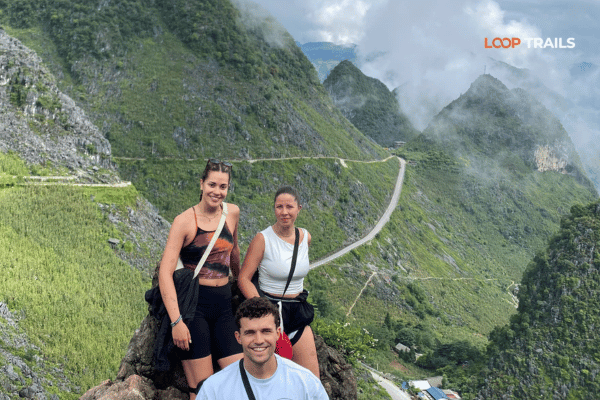
Building a trip around the adventurous stuff? The passes are the one thing on this list we do run, and they are the part of a northern Vietnam trip most people remember. Our Ha Giang Loop tours cover Ma Pi Leng, the Nho Que boat and the skywalk, and the Cao Bang loop trades altitude for waterfalls, caves and river valleys.
Learn more: Ha Giang Loop 3 Days 2 Nights
Two very different categories that get lumped together.
Below the main pass in Ha Giang there is a narrow path cut along the cliff face above the Nho Que river. Walking it puts you out on the wall with the gorge dropping away beside you and the river a long way below, and it is one of the most exposed things you can do in Vietnam without any equipment at all.
That last part is the point. This is not a via ferrata. There is no cable to clip into, no harness and no consistent barrier. In places the path is narrow and the edge is right there. A small local fee is sometimes collected for access.
Be honest with yourself about heights before you start walking, and do not do it in rain or when the rock is wet. If you have any doubt, the view from the pass itself is superb and costs you nothing but a parking spot.
Below it, boats run along the Nho Que through the Tu San canyon, with the walls rising sheer on both sides. Less adrenaline, more awe, and it is on our itineraries because it is one of the best hours in the north.
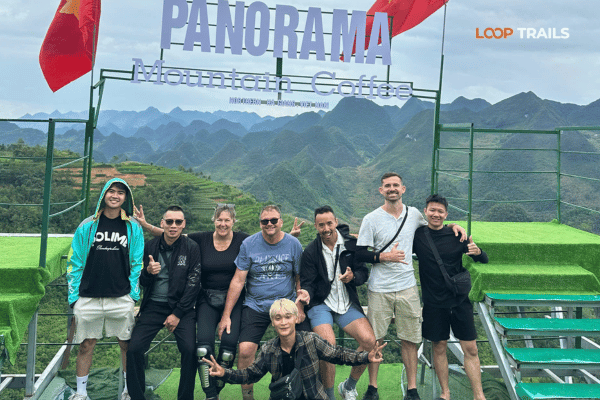
Vietnam has gone in for glass bottomed walkways in a big way. There is a long one at Moc Chau in Son La, promoted as among the longest in the world, and a glass viewing platform projecting out from the cliff on the O Quy Ho pass near Sapa, reached by lift.
These are engineered attractions rather than sport. If standing on a transparent floor above a large drop is your idea of a good time, they deliver exactly that. If you want to earn the exposure, go and walk a cliff path instead.
This is the one we know best, so here is the honest version.
Riding a big northern pass is not an extreme sport. Nobody is clipping into anything and the skill required is ordinary road riding, done attentively. What makes it feel like an adventure is the scale: a road cut into a cliff wall with a river a very long way down, sustained climbs and descents, and weather that changes while you are on it.
The passes worth planning around:
| Pass | Where | Why |
|---|---|---|
| Ma Pi Leng | Ha Giang | The famous one. Cut into the wall above the Nho Que river |
| Khau Coc Cha | Cao Bang | Switchbacks stacked up a mountainside on the road from Bao Lac |
| O Quy Ho | Lao Cai and Lai Chau | The long one, between Sapa and the northwest |
| Tham Ma | Ha Giang | Tight repeated switchbacks, a rider’s favourite |
| Ma Phuc | Cao Bang | Twin limestone blocks over the road, the gateway to Ban Gioc |
| Thung Khe | Hoa Binh | The white rock pass on the way to Mai Chau, with roadside corn stalls |
Around the passes, the northern loops fold in the other things worth doing: swimming under the waterfall at Du Gia, the boat through Tu San canyon, walking into caves, and, in Cao Bang, swimming in the Quay Son river.
The honest safety line. More travellers are hurt on these roads than in any of the guided activities on this list, and it is not because the roads are extreme. It is because guided activities have somebody managing risk for you and a motorbike does not. The pattern is consistent: late in the day, tired, running behind, slightly too fast into a corner with gravel on it. Finish every riding day before dark and you remove most of it.
Learn more: Ha Giang Loop 4 Days 3 Nights
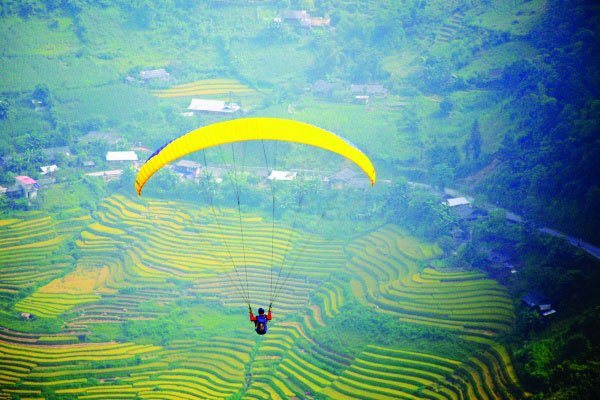
Tandem paragliding runs from a small number of sites, and the best known is Khau Pha in the Mu Cang Chai area of Yen Bai, where you launch from a pass and fly over terraced fields. The season peaks around September when the rice turns gold, and there is an annual flying event that draws pilots from all over the country.
There is also flying on the central coast near Da Nang and a few inland sites closer to Hanoi.
What to know. Flying depends entirely on wind and weather, and trips are cancelled often. That is the system working. Ask the pilot how long they have been flying that site specifically, since local knowledge matters more than total hours, and check what the operator’s insurance actually covers.
The far north has real mountains and a growing scene of multi day treks up them, almost all run with local guides and porters.
Fansipan is the highest and the most famous, and there is a cable car, which means the summit itself is not a wilderness experience. Walking it is still a proper two day effort and the route is guided.
Ta Chi Nhu, in Yen Bai, is walked for the flowers on the ridge in autumn and for the cloud in the mornings.
Bach Moc Luong Tu, also called Ky Quan San, is a multi day walk with cloud seas from the camp, and it is the one experienced trekkers tend to rate highest.
Pu Ta Leng, in Lai Chau, is walked for the rhododendrons around late winter and early spring.
The Ta Xua ridge in Son La is a shorter, more accessible version of the same idea, with a thin spine of rock and cloud filling the valleys either side.
What to know. Most of these need a local guide, some involve registration or permits, and conditions on the high ground are colder and more serious than people expect. Arrange through a homestay in the nearest village or through a licensed operator, and do not go up alone in winter.
Learn more: Ha Giang Cao Bang 5 Days 4 Nights
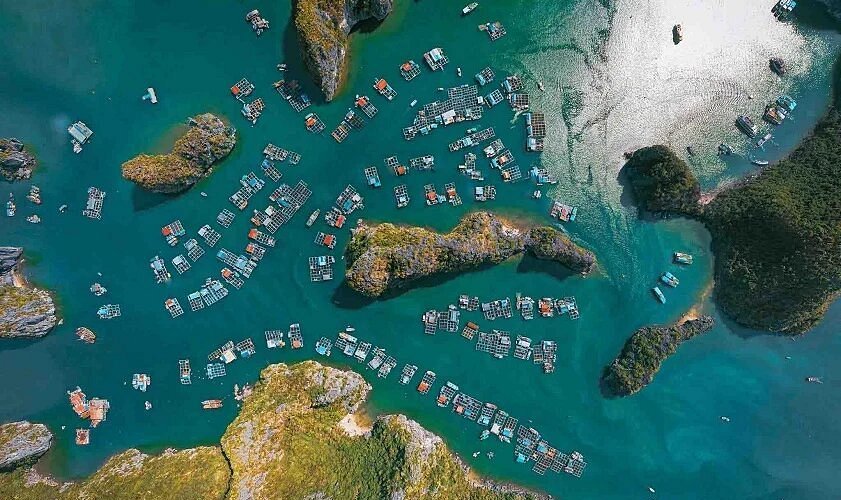
Kayaking in Lan Ha Bay takes you through caves and into enclosed lagoons that boats cannot reach, and it is the best way to experience the karst seascape without a hundred other people in the frame.
Kitesurfing at Mui Ne is genuinely world class, with reliable wind through the winter months and a well established school scene. It is also one of the best places in Asia to learn.
Sandboarding on the Mui Ne dunes is a tourist activity rather than a sport, and it is more fun than it has any right to be.
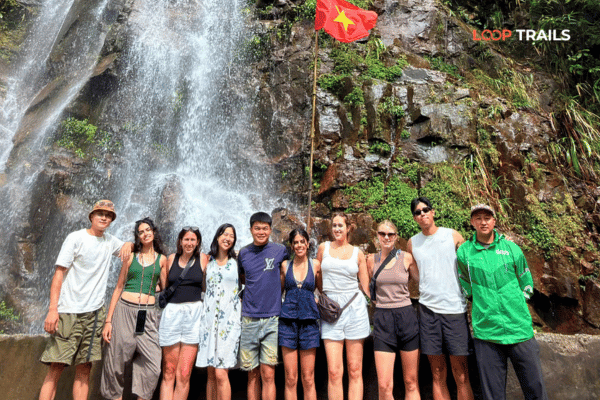
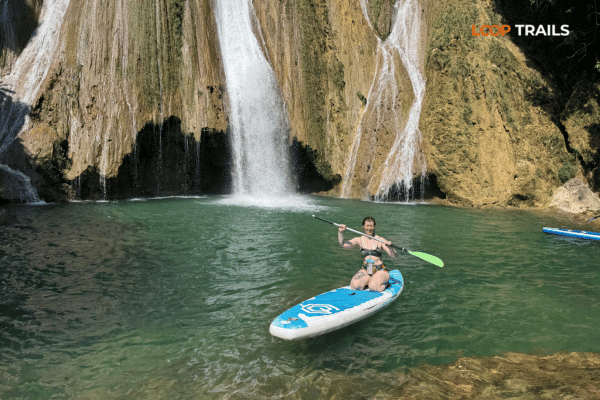
Swimming under waterfalls happens all over the north. Du Gia in Ha Giang and the pools around the Quay Son in Cao Bang are the two on our own routes. Standard water safety applies: check what locals are doing, avoid fast water, and never swim near the lip of a falls.
Learn more: Ha Giang Cao Bang 6 Days 5 Nights
This is the most important section in this article, so it is the longest.
You cannot assess technical competence directly. What you can do is ask questions whose answers reveal how an operation thinks. A good operator enjoys these questions. A bad one deflects.
Ask whether they are licensed for that activity in that province. Adventure activities in Vietnam require permits and licences, and enforcement varies by place and by year. A licensed operator will answer this immediately and without irritation.
Look at the equipment before you put it on. You do not need to be an expert. Frayed webbing, rusted metal, cracked helmet shells and ropes that are visibly furred are all visible to anyone. Ask when the ropes and harnesses were last inspected and when they get retired. An operation with an answer has a system. An operation without one does not.
Ask the guest to guide ratio. Then look at what actually turns up on the day. If the number has quietly doubled, that is a decision somebody made about your safety in order to make more money.
Listen to the briefing. A real briefing covers what happens if something goes wrong: how to signal, what the bail out is, who is where. A briefing that is only about how to have fun is not a briefing.
Ask when they last cancelled a trip. This is the single best question on this list. Weather calls are the core safety decision in canyoning, caving, climbing and flying. An operator who has never cancelled anything is either extremely lucky or is not making the call.
Ask what their insurance covers and get it in writing. Then check your own policy separately, because theirs is not yours.
Read the bad reviews, not the good ones. Look specifically for anything about equipment, group size or going out in poor conditions. One angry review about a rude driver is noise. Three separate reviews mentioning broken gear is a pattern.
Be suspicious of the cheapest option. In adventure activities the price is cut somewhere, and the places to cut are equipment, guide numbers, guide experience and insurance. All four are the things keeping you alive.
Trust the feeling in the car park. If the vibe is chaotic, if nobody seems to be in charge, if the gear is in a heap rather than sorted, you are allowed to walk away. Losing a deposit is a cheap outcome.
Learn more: Cao Bang Loop 3 Days best kept secret
Most travel policies exclude a long list of activities unless you bought an add on. The usual suspects: canyoning, abseiling, caving, climbing, paragliding, and riding a motorbike above a certain engine size or without the correct licence.
Read the actual policy wording rather than the marketing page, and read the exclusions section specifically. Then check two things: whether the activity is covered at all, and whether it is covered when done with a commercial operator versus independently.
For riders this is worth repeating, because it is the most common gap we see. A great many policies will not pay out on a motorbike accident if you did not hold a valid licence for that class of bike, which in Vietnam means your home licence plus an International Driving Permit issued under the 1968 Vienna Convention. The 1949 style permit is not recognised here. Rules change, so verify the current position rather than relying on an article.
A medical evacuation from a mountain province or a cave system is a very large bill. Sorting insurance out properly costs an hour at home.
Learn more: Ha Giang Border Area Permit 2026
Almost never anything exotic.
People going beyond their ability because everyone else in the group is doing it. The pressure is social and it is strong and it is worth naming so you can recognise it.
Going out in conditions that should have stopped the trip, usually because somebody had already paid and the operator did not want to refund it.
Alcohol. Including the rice wine at lunch. Including the night before a hard morning.
Fatigue at the end of the day, which is when most riding incidents and a fair share of trekking injuries happen.
Choosing on price and discovering afterwards what was cut.
Ignoring a bad feeling. Everybody who has done a lot of outdoor activity has a story about the day they carried on despite the feeling. Almost nobody has a story about the time they went home early and regretted it.
| Activity | Roughly best | Avoid |
|---|---|---|
| Canyoning, Da Lat | Dry months | Heavy rain periods, when rivers rise fast |
| Deep water soloing, Cat Ba | Warm months, calm sea | Cold season, rough water |
| Sport climbing, Huu Lung and Cat Ba | Cool dry months | Peak summer heat and humidity |
| Wet caving, Quang Binh | Roughly Feb to Aug | Autumn floods, when trips close |
| Northern passes | Sep to Nov, Mar to May | Deep winter fog, heaviest summer rain |
| Paragliding, Khau Pha | Around September | Anything windy or wet, which cancels flights |
| High mountain trekking | Autumn and spring | Midsummer rain, deep winter on the high ground |
| Kitesurfing, Mui Ne | Winter months | The calm season |
Patterns, not promises. Check conditions close to your dates and accept that a good operator will sometimes tell you no..
The passes. That is it.
We are a motorbike and jeep operator in Ha Giang and Cao Bang, and the adventure content on our trips is the roads, the Ma Pi Leng skywalk, the Nho Que boat, the caves you can walk into and the waterfalls you can swim under. We do not run canyoning, climbing, caving or flying, and we are not going to sell you something we do not do.
| Trip | Easy rider, per person | Self drive, per person | Jeep, whole vehicle for 2 guests |
|---|---|---|---|
| Ha Giang Loop, 2 days | 3,490,000 VND | not offered on the 2 day | 15,990,000 VND |
| Ha Giang Loop, 3 days | 4,490,000 VND | 3,790,000 VND | 19,990,000 VND |
| Ha Giang Loop, 4 days | 5,890,000 VND | 4,990,000 VND | 25,990,000 VND |
| Cao Bang Loop, 3 days | 6,490,000 VND | 5,990,000 VND | 19,990,000 VND |
| Ha Giang and Cao Bang, 5 days | 10,990,000 VND | 10,590,000 VND | 36,990,000 VND |
Jeep prices cover the whole vehicle rather than a seat, shown at two guests. Rates for one, three and four guests differ, so check the tour page. Everything includes dormitory style accommodation and all tour inclusions, and excludes private room upgrades and the bus tickets to and from the start and end points. These figures were current when this page went up.
The 4 day Ha Giang route is the one with Du Gia and the waterfall swim. The 5 day combined route adds the Khau Coc Cha pass and the Cao Bang half
Learn more: Ha Giang Loop by Wrangler Rubicon Jeep
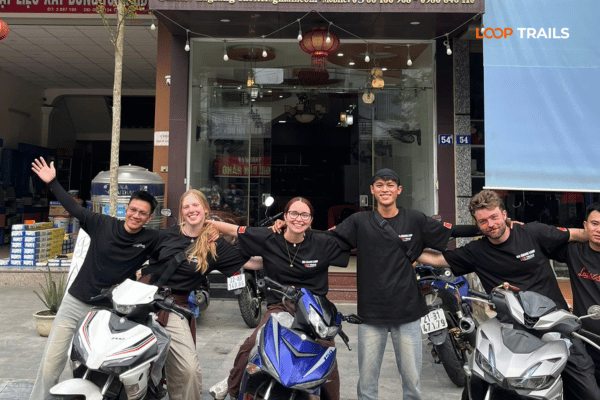
Self drive is the adrenaline choice and it comes with the one caveat that matters in an article like this: a northern pass is not the place to find out what you are capable of. If you ride regularly at home, this is the best version of a northern trip there is. If you do not, please do not use Ma Pi Leng as a learning environment. You need your passport, a home motorbike licence and an IDP under the 1968 convention. We handle motorbike rental in Ha Giang if you want a bike without a tour, and there is more on the paperwork here.
Easy rider puts you on the bike without the responsibility. You ride pillion behind an experienced local rider, which on a pass like Ma Pi Leng means you actually get to look at it. It is the most popular option we run and the one guests are happiest with.
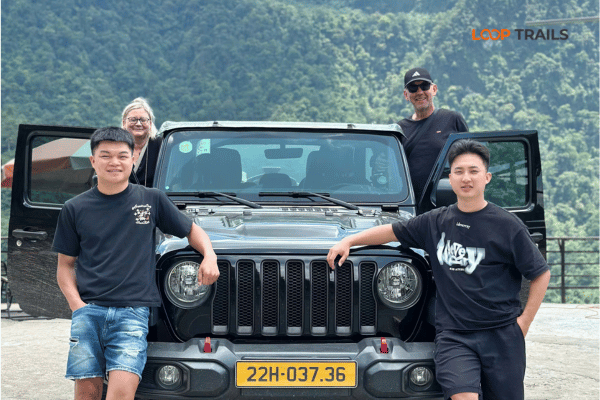
A jeep if somebody in the group does not ride, if you are travelling with children or older parents, or if it is the wet season. Everything on these routes, including the skywalk and the boat, is identical from a vehicle.
Once your dates are set, book early. Most guests book one to three months ahead and jeep availability is tighter than motorbikes.
Working out what fits your trip? Message us on WhatsApp with your dates and what you are hoping to do. If it is the northern roads, we will tell you exactly which version suits. If it is canyoning in Da Lat, we will tell you what to ask the operator and then get out of your way.
Learn more: Ha Giang Motorbike Rental
Canyoning in Da Lat, deep water soloing and sport climbing on Cat Ba, sport climbing at Huu Lung, wet caving in Quang Binh, paragliding at Khau Pha, high mountain trekking in the far north, and riding the mountain passes. Each suits a different appetite and a different season.
It is safe with a licensed, properly equipped operator and genuinely dangerous without one, and there have been fatalities in Vietnam involving operators working outside the licensing system. Check the licence, look at the gear before you wear it, ask the guest to guide ratio and never choose on price alone.
Cat Ba island for sport climbing and deep water soloing above the sea in Lan Ha Bay, and Huu Lung in Lang Son for limestone towers rising out of rice fields with a large number of bolted routes. Huu Lung is a few hours from Hanoi and pairs well with the Bac Son valley.
Climbing a sea cliff without a rope, above deep water, so that falling off means dropping into the sea. It is done from boats around Lan Ha Bay in the warmer months, and it needs an operator who knows the specific routes and tides rather than an improvised boat hire.
Not for the standard Tu Lan and Hang En trips, which are run by experienced guides with proper equipment, though you should be a confident swimmer and reasonably fit. Trips run broadly from February to August, since the region floods in autumn and caving closes.
It is a narrow, exposed cliff path with no harness, no cable and no consistent barrier, so it depends entirely on your head for heights and the conditions. Do not walk it in rain or on wet rock, and if you have any doubt, the view from the pass itself is excellent and free of exposure.
Often only with an add on. Canyoning, caving, climbing, paragliding and motorbiking are commonly excluded from standard policies, and motorbike cover frequently depends on holding the correct licence. Read the exclusions section of your actual policy wording before you travel.
Yes, if you are riding yourself: your passport, a valid motorbike licence from home and an International Driving Permit issued under the 1968 Vienna Convention. The 1949 style permit is not recognised in Vietnam. If you ride pillion with a guide or take a jeep, no licence is needed.
Ma Pi Leng in Ha Giang, cut into the wall above the Nho Que river, is the one most people rank first. Khau Coc Cha in Cao Bang and O Quy Ho in the northwest are the two that come closest, and Khau Coc Cha is the one almost nobody rides.
It depends on the activity and the region. Broadly, the northern passes and trekking are best in autumn and spring, caving in Quang Binh runs from around February to August, kitesurfing at Mui Ne peaks in winter, and paragliding at Khau Pha centres on September.
Ask whether they are licensed for that activity in that province, inspect the equipment, ask the guest to guide ratio and when gear is retired, listen for a briefing that covers what happens if something goes wrong, and ask when they last cancelled a trip for weather. Then read the bad reviews rather than the good ones.
No. We are a motorbike and jeep operator in Ha Giang and Cao Bang, so the passes, the skywalk, the Nho Que boat and the waterfall swims are ours. Everything else in this article is a recommendation rather than a product.
Contact information for Loop Trails
Website: Loop Trails Official Website
Email: looptrailshostel@gmail.com
Hotline & WhatSapp:
+84862379288
+84938988593
Social Media:
Facebook: Loop Trails Tours Ha Giang
Instagram: Loop Trails Tours Ha Giang
TikTok: Loop Trails
Office Address: 54A Tran Phu, Ha Giang 2, Tuyen Quang
Address: 54A Tran Phu, Ha Giang 2, Tuyen Quang
Facebook X Reddit Table of Contents Learn more: Ha Giang Loop Tours Most cost articles about Vietnam are guesses. Somebody rode a
Facebook X Reddit Table of Contents Learn more: Ha Giang Loop Tours Everybody arrives in Hanoi with the same question. There are
Facebook X Reddit Table of Contents Learn more: Ha Giang Loop Tours Most people see the same Vietnam. Hanoi, Ha Long, Hoi