
UK Driving Licence in Vietnam: IDP and Motorbike Rules
Facebook X Reddit Table of Contents If you are a UK traveler planning to ride a motorbike in Vietnam, the most important

Thúy Kiều (Grace) is a travel blogger and content contributor for Loop Trails Tours Ha Giang. She holds a bachelor’s degree in Sustainable Tourism from Vietnam National University, Hanoi, and has a strong passion for exploring and promoting responsible travel experiences in Vietnam’s northern highlands.
Learn more: Ha Giang Loop Tours
There is a version of Vietnam that lives entirely on a scooter seat between Hanoi and a beach, and there is another version where you finish the day with mud on your boots, salt in your hair, or your hands still shaking a little from a mountain pass. This guide is about the second one.
We run tours in the far north, so we spend most of our year on roads that show up on lists like this. That means two things. First, we know exactly which of these experiences deliver and which ones look better on Instagram than in real life. Second, we have a bias, and we would rather tell you about it up front than pretend we do not.
Here are the best adventure activities in Vietnam, ranked by how much they actually give you back for the time and money you put in. Some are famous. A few of them still are not, which is the whole point.
Learn more: Ha Giang Loop 2 Days 1 Night
Every experience on this list had to pass three tests.
We have grouped them by region so you can build a real route instead of a shopping list, because the single biggest mistake we see is people trying to fit the far north, the caves of the centre, and the southern coast into ten days. You can. You will also spend most of it on a bus.
Learn more: Ha Giang Loop 3 Days 2 Nights
This is the part of the country we know best, and it is not close. If you only have room for one adventure region in Vietnam, make it this one.
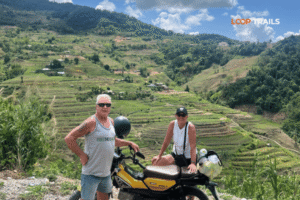
The Ha Giang Loop is the reason most adventure travellers come to Vietnam in the first place, and it earns that reputation about four hours in, somewhere on the climb out of Quan Ba, when the road stops being a road and starts being a series of decisions.
The route runs a circuit through the Dong Van karst plateau, over Ma Pi Leng Pass, down into Meo Vac, and back through Du Gia or Yen Minh depending on how many days you have. What makes it different from every other mountain road in Southeast Asia is the density. There is no filler. You climb, you drop, you climb again, and every ten minutes there is a village where children walk to school along a cliff edge with the calm of people who have done it a thousand times.
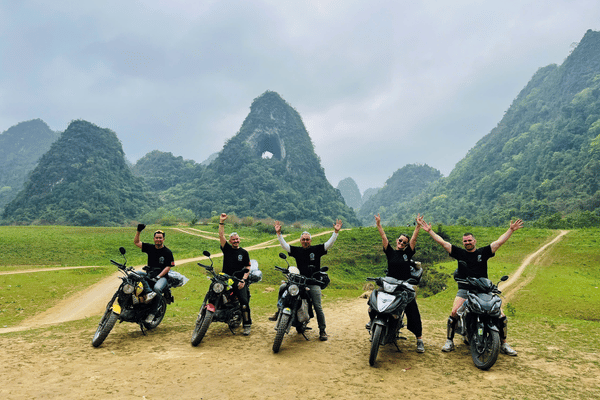
You have three ways to do it: on the back of a bike with a local driver, on your own bike, or in a jeep. We break that decision down properly further below, because it matters more than the tour company you pick.
Honest note: the Loop is busy now, especially in peak months. It has not ruined the experience, but if you want the version with fewer bikes, run it in the opposite direction to the crowd or go with an operator who knows how to time the passes.
Learn more: Ha Giang Loop 4 Days 3 Nights
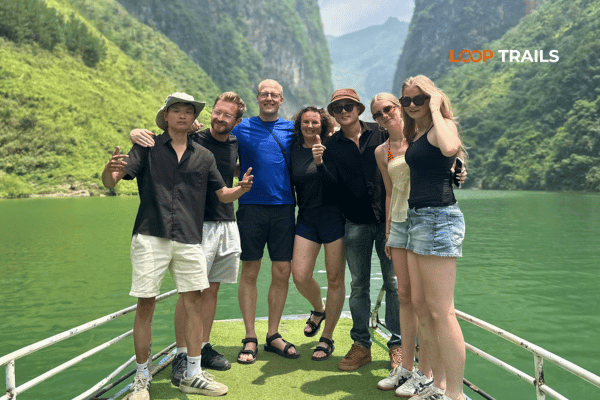
From the top of Ma Pi Leng, the Nho Que River is a green line so far below that it does not look real. Getting down to it is a steep, switchback descent, and then you board a small boat and motor into Tu San Canyon with limestone walls rising vertically on both sides.
It is the closest thing Vietnam has to a fjord, and the change in scale from the pass to the water level is the whole reward. Up top you are looking at the canyon. Down there, the canyon is looking at you.
Boats run on their own schedule and get busy in the middle of the day. Early morning is quieter, the light is better, and the water is glass. Any decent tour builds this in, but check that it is actually included rather than “optional”.
Lung Cu is the northernmost point of Vietnam, a flag tower on a hill with China on three sides. The ride there peels off the main Loop route and rewards you with some of the emptiest tarmac on the plateau.
There are stairs from the base to the tower, and then more stairs inside it. Take them. The view from the top is a working border landscape: two countries, terraced fields, and a giant flag snapping hard enough to hear from the car park.
Nearby, Lo Lo Chai village sits below the tower and is worth an hour on foot. Stone walls, mud brick houses, coffee served by families who have lived here for generations.
Learn more: Ha Giang Cao Bang 5 Days 4 Nights
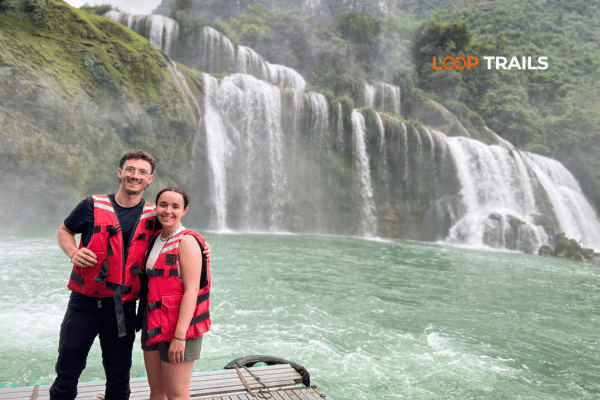
Ban Gioc, in Cao Bang province, is a wide, tiered waterfall on the border with China, and it does not photograph the way it feels. The scale only lands when you are on a bamboo raft close enough to feel the spray.
The waterfall changes personality with the season. After the rains it is brown, thunderous and enormous. In the dry months it turns clearer, gentler, and the terraces separate into distinct curtains of water. Both versions are worth the trip, and locals will argue with each other about which is better.
Cao Bang gets a fraction of Ha Giang’s traffic, which is the main reason we keep pushing it.
Twenty minutes from Ban Gioc, Nguom Ngao is a long limestone cave you walk through rather than crawl through. Lit sections, a proper path, formations that look like coral, curtains, and in one chamber a fossilised lotus.
It is the easy option on this list, and we include it deliberately. After two days on a bike, a cool, quiet cave with a flat floor is exactly what your body wants. Bring a light layer. It is colder inside than you expect.
Lung Khuy sits above Quan Ba, up a track that most Loop riders never turn onto. It is less commercial than the Cao Bang caves, the walkway is basic in places, and that is exactly the appeal. You get chambers to yourself.
The climb from the car park to the entrance is short but genuinely steep. Shoes with grip, not sandals.
Learn more: Ha Giang Cao Bang Ba Be Lake 6 Days 5 Nights
If Ha Giang is Vietnam’s greatest hits album, Cao Bang is the deep cut that people who ride here recommend to each other quietly. Fewer bikes, softer landscapes, forest instead of bare karst, and a completely different feel through the pine and moss country around Phia Oac.
You can ride Cao Bang on its own, or, and this is what we would actually recommend if you have the days, run it straight on from Ha Giang as one long journey through the entire northern border. The transition between the two provinces is one of the best stretches of road in the country and almost nobody rides it.
Ba Be is the largest natural lake in the country, sunk into a national park of limestone and forest in Bac Kan province. You kayak between karsts, past Tay villages on stilts, and stay in a homestay where dinner is whatever came out of the lake and the garden that afternoon.
It is slower than everything else in this section, and it works best as a decompression stop at the end of a hard riding week rather than as a headline event.
Sapa town itself has been built up hard, and plenty of travellers arrive, look at the construction, and write the whole region off. That is a mistake. Walk out of town into the Muong Hoa valley and within an hour you are on footpaths between rice terraces, crossing streams, and arriving at a village where you are staying the night in someone’s home.
Two days of walking beats two days of viewpoints. Go with a local guide, ideally a Hmong or Dao guide from one of the valley villages, and the trip becomes about the people rather than the scenery.
Learn more: Ha Giang Market Days
This is the one nobody tells you to do, and it might be the most memorable day of your trip.
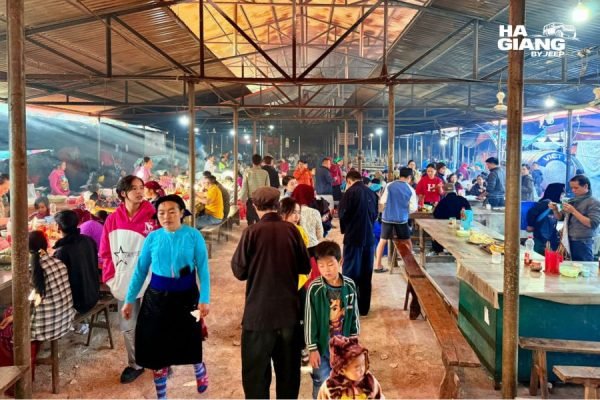
The markets of the far north run on a rotating schedule. Meo Vac’s Sunday market, Dong Van, Khau Vai, Bac Ha. They start before dawn, they are for trade rather than tourists, and the whole regional economy shows up: livestock, textiles, tools, corn wine, and a food section where you eat standing up next to a farmer who rode two hours to get there.
Market days do not move for you, so build the itinerary around them rather than hoping. Schedules can shift with the lunar calendar, so check current dates before you commit.
Not sure how to fit the north into your route? Tell us how many days you have and how you want to travel, and we will map it honestly, including telling you if it does not fit. Message us on WhatsApp at +84 862 379 288 or +84 938 988 593.

Learn more: Northen Vietnam Itinerary
Closer to Hanoi, easier to reach, and easy to underrate.
Everyone knows Ha Long Bay. Lan Ha, immediately to the south and reached from Cat Ba Island, is the same drowned karst landscape with a fraction of the cruise traffic.
The move is to skip the big overnight boats and get into a kayak. You paddle through tunnels at low tide into hidden lagoons that are silent apart from birds and the water off your paddle. Floating fishing villages, empty beaches on the back side of islands, and the option to swim off the boat.
Check tide times, because the tunnels are only passable at certain water levels, and any guide worth hiring will already be planning around this.
Cat Ba is Vietnam’s climbing capital. There is bolted sport climbing on land at Butterfly Valley and elsewhere, and there is deep water soloing, which means climbing a sea cliff with no rope and falling into the ocean when you run out of grip.
You do not need experience for a guided intro day. You do need to accept that you are going to fall in the water repeatedly, which is roughly the entire point.
Ninh Binh is limestone towers rising straight out of flooded rice fields, threaded with rivers, and the correct way to see it is on a bicycle with no fixed plan.
Two things earn their place here. The rowing boat trip at Trang An, where the boats are rowed through caves that cut clean through the base of the mountains, often by women rowing with their feet. And the stairway at Hang Mua, a steep climb of stone steps to a ridge that looks down over the whole valley. It is a short climb and a hard one in the heat. Go early.
Pu Luong, in Thanh Hoa province, is what Sapa was fifteen years ago: terraced valleys, water wheels, small lodges, and trails between Thai villages where you will not see another foreign traveller for hours.
It is the best short trekking destination within reach of Hanoi, and it works beautifully as a soft landing after the far north.

Learn more: Vietnam Motorbike Routes Ranked
Phong Nha Ke Bang National Park is, without exaggeration, one of the great caving destinations on earth, and it is the single strongest reason to break your journey in central Vietnam.
You have a ladder of options here:
| Experience | Effort | Who it suits |
|---|---|---|
| Paradise Cave (walkway section) | Low | Anyone, including families |
| Phong Nha Cave by boat | Low | Anyone |
| Tu Lan cave system | Medium to high | Swimming, jungle trekking, camping |
| Hang En | High | Multi day trek and a night camping inside a cave |
| Son Doong | Expedition level | Booked far in advance, limited permits, serious budget |
Hang En is the sweet spot for most fit travellers: you trek in through jungle and a river valley, and you sleep on a beach inside a cave big enough to hold a city block, with a shaft of daylight coming through the roof in the morning. Son Doong, the largest cave in the world, is real and it is bookable, but permits are limited and it is priced as an expedition. If that is your trip, plan a year out.
Also in Phong Nha, and a completely different register. You zipline across a river, swim into the mouth of the cave, and then wade and scramble through the dark to a mud pool where you can float on your back in mud thick enough to hold you up.
It is silly. It is also one of the loudest, happiest hours you will have in Vietnam, and it is a good barometer of whether you are travelling with the right people.
Learn more: Ha Giang vs Hai Van Pass
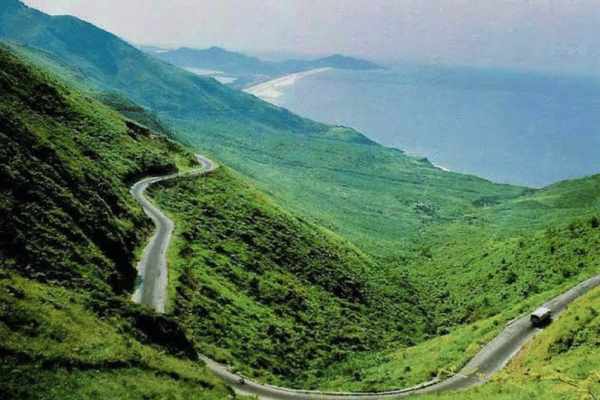
The coastal road between Hue and Da Nang climbs over a headland where the mountains run straight into the South China Sea, and on the right day, with the clouds sitting halfway down the slope and the sea flat below, it is the finest coastal ride in the country.
The pass is short. Treat it as one leg of a longer ride between Hue and Hoi An rather than a destination, take the old road over the top rather than the tunnel, and stop at the fortified gate at the summit even though everyone else does too.
If you want long distance riding rather than a loop, the western branch of the Ho Chi Minh Road running through the Truong Son mountains is the answer. Empty tarmac, jungle on both sides, very few towns, and hours of riding without a single traffic light.
This is a route for people who already ride. Fuel stops are far apart, phone signal comes and goes, and you need to be genuinely comfortable on a bike, not just enthusiastic.
Da Nang has a long, sandy, forgiving beach break and a surf season that runs opposite to the peak beach months, which catches people out. The waves come with the northeast monsoon, roughly through the cooler part of the year, and the summer months that everyone books for are usually flat.
It is a great place to learn. It is not a place to plan an entire trip around unless you check current conditions first.
Between Hue and Da Nang, Bach Ma is a mountain of cloud forest, waterfalls, and a summit road that ends in views over lagoons and coastline. The Five Lakes trail links a chain of swimming holes and cascades, and you can spend a day moving between them.
Cooler, wetter, and greener than anywhere on the coast below it, and a genuine break from the heat.
Learn more: Ha Giang Loop from Da Nang
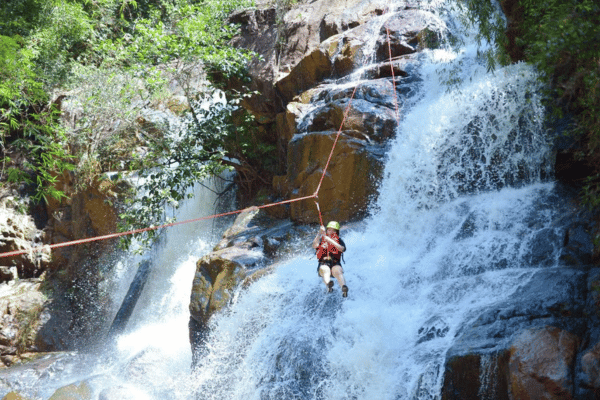
Da Lat sits in the cool pine hills of the Central Highlands, and canyoning here means abseiling down waterfalls, sliding down natural rock chutes, and jumping into pools.
This is the one experience on the list where we want to be blunt about operator choice. Canyoning involves ropes, water, and real consequences. There have been serious incidents in Da Lat over the years, all of them tied to the same causes: unlicensed operators, poor equipment, no safety briefing. Book with a licensed company, ask to see the gear, ask about guide certification, and walk away from anyone who cannot answer. The cheapest quote is not the one to take.
The classic multi day trek of southern Vietnam, crossing from the highlands of Lam Dong down through grassland and pine ridges to the dry coast of Binh Thuan. Big open ridgelines, camping under stars, and a genuine sense of distance covered.
Take a guide. People have got seriously lost on this route, and the trail is not consistently marked.
Mui Ne is a wind machine. It is one of the most reliable kitesurfing spots in Asia during the windy season, with a whole industry of schools along the beach and a steady community of people who came for a week and stayed for a season.
Beginners get taught in shallow water. Everyone else comes for the consistency. Wind is seasonal, so check the calendar before booking flights around it.
Con Dao is an island group off the southern coast, reachable by flight or ferry, and it has the best diving in Vietnam along with the country’s most serious marine conservation work. Coral, turtles nesting on protected beaches, and a fraction of the crowds you would find on the mainland resort coast.
It carries heavy history as a former prison island, and the museums there are worth your time between dives. Nha Trang and Phu Quoc are easier to reach and have their own dive scenes, but Con Dao is the one that divers talk about.
The Delta is the anti mountain adventure: flat, hot, green, and moving at the speed of water. Skip the day trip from Ho Chi Minh City that buses you to a coconut candy workshop. Instead, get to Ben Tre or Can Tho, stay with a family, take a kayak into the narrow canals under the palms, and cycle the dykes between villages at dawn.
The reward is not adrenaline. It is a completely different Vietnam, and it balances a trip that is otherwise all mountains and passes.
Learn more: Ha Giang in September & October
Vietnam does not have one climate. It has several, and they disagree with each other. That is why “when is the best time to visit Vietnam” is a bad question and “when is the best time for what I want to do” is a good one.
| Region | Generally good for adventure | Watch out for |
|---|---|---|
| Far north (Ha Giang, Cao Bang) | Autumn and spring, plus clear dry season days | Cold and fog in deep winter, rain and landslide risk in the wettest summer months |
| Northern lowlands (Ninh Binh, Cat Ba) | Spring and autumn | Summer heat and humidity, storms in typhoon season |
| Central (Phong Nha, Hue, Da Nang) | Late winter through spring for caving and riding | Heavy rain and flooding late in the year, which closes cave systems |
| Central Highlands (Da Lat) | Dry season for canyoning | Wet season raises river levels and cancels trips |
| Southern coast and islands | Dry season | Rough seas cut visibility for diving in the wrong months |
Two rules that will save your trip. Conditions on the ground change year to year, so treat any season chart, including this one, as a starting point and check current local updates before you lock in flights. And build in a spare day. Rain closes passes, cancels boats, and shuts caves, and the travellers who cope best are the ones who left themselves room.
Learn more: Ha Giang Motorbike Rental
The honest version: you cannot do everything on this list in one holiday, and trying is how good trips get ruined. Here is what actually fits.
Ten days, north only. Hanoi, then straight to Ha Giang for the Loop, then either add Cao Bang or drop back through Ba Be. This is the highest quality per day of any Vietnam itinerary and we say that as people who obviously benefit from you believing it, so weigh it accordingly. It is still true.
Two weeks, north and centre. The Loop, then a night train or flight south to Phong Nha for caving, then Hue to Hoi An over the Hai Van Pass. Two flagship adventures, one great ride, no wasted days.
Three weeks, the full spine. Add the south: Da Lat canyoning, Mui Ne, and finish in the Delta. Fly the long legs. The overland journey between the centre and the south is far less interesting than what sits at either end of it, and burning three days on buses to prove a point is a poor trade.
Learn more: Ha Giang Loop by Wrangler Rubicon Jeep
Almost everything above can be done independently. The far north is the one place where the choice of how you travel changes the entire experience, so here it is plainly.
Choose Easy Rider if: you want to be in the mountains, you do not ride, and you would rather look at the scenery than at the next pothole. You sit on the back of a semi automatic motorbike while an experienced local driver handles the road. It is the most popular choice for a reason, and it removes almost all of the risk from the Loop while keeping the feeling of being out in it.
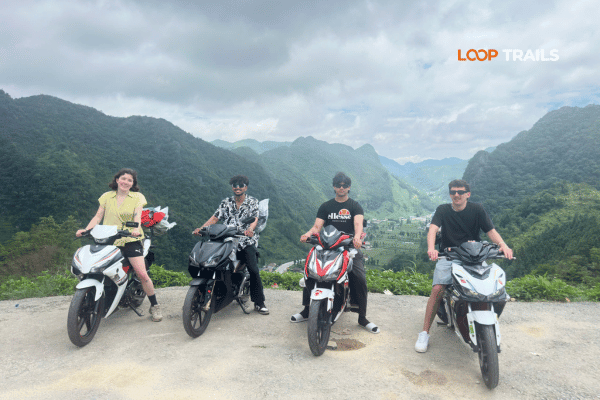
Choose Self Drive if: you already ride at home, you are comfortable on mountain roads in poor conditions, and you understand that Vietnamese traffic, weather, and licensing rules are not the same as yours. We rent bikes and we will happily set you up. We will also tell you honestly if we think you are not ready, because the Loop is not the place to learn.
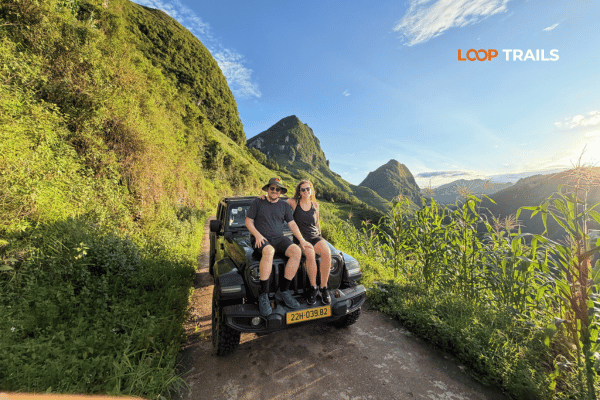
Choose a Jeep if: you are travelling with family, with someone who cannot ride, in a group that wants to talk to each other on the way, or you simply want to do the Loop in comfort with the roof off. You stop at the same viewpoints, you eat at the same places, you sleep at the same homestays. You just arrive dry.
And how many days? Two days is a taste and it is rushed. Three days is the sweet spot and what most travellers should book. Four days adds Du Gia, waterfalls, and the parts of the plateau most people never reach. Five or six days takes you all the way through to Cao Bang and Ban Gioc.
Learn more: Ha Giang Loop Licence
We have picked people up from bad situations, and almost every one of them traces back to something on this short list.
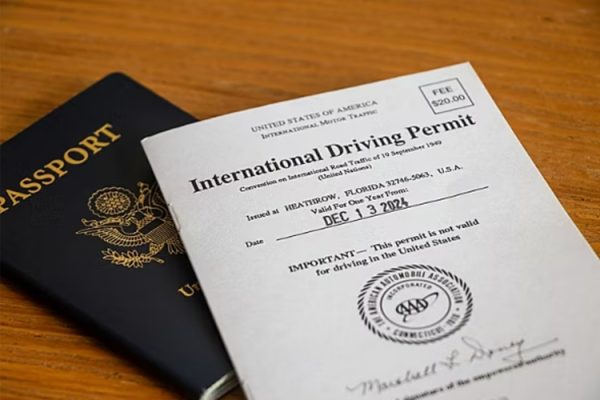
Licences and insurance. Requirements for riding legally in Vietnam as a foreign visitor, and the paperwork that makes travel insurance valid, are not the same thing, and both can change. Do not take a hostel’s word for it, do not take a forum post’s word for it, and do not take ours as final either. Check the current rules with your insurer and with official sources before you leave home. A policy that will not pay out is worse than no policy, because you thought you were covered.
The bike is too much bike. The most common cause of a bad first day is renting something more powerful than you can handle because it looked good in the photo. Take the machine you can control on wet gravel, not the one that looks fastest.
Riding tired, riding late, riding drunk. Corn wine is part of the culture up here and it is stronger than it tastes. Mountain roads at night have no lighting, livestock wander, and trucks take the whole lane on the corners. Finish the day’s riding before dark.
Booking on price alone. There is a race to the bottom in this market and it shows up in the equipment. When you compare operators, ask what the bikes or vehicles actually are, how old they are, what the driver to guest ratio is, and what happens if it rains. The answers separate everyone very quickly.
Cash. ATMs thin out fast once you leave the provincial towns, and cards are not accepted in most homestays and roadside kitchens. Carry more cash than you think you need.

Learn more: Ha Giang Packing list
You are packing for several climates at once, which is why so many people get this wrong.

Learn more: Cao Bang Loop 3 Days best kept secret
If you have one week, go north and ride the Ha Giang Loop. If you have two, add the caves of Phong Nha. If you have three, add the south and fly between them. Everything else on this list is a bonus, and every one of them is better than another day on a beach chair.
We run the northern half of this list every week, from Ha Giang and Cao Bang, on motorbikes and in jeeps, with small groups and drivers who grew up on these passes. If that is the trip you want, we will build it honestly around the days you have.
Ready to plan it? Message us on WhatsApp at +84 862 379 288 or +84 938 988 593, or email looptrailshostel@gmail.com. Tell us your dates, how you want to travel, and what you are nervous about. We will tell you straight whether it works.
The Ha Giang Loop, by a clear margin. It packs the country’s best mountain scenery, road, and cultural encounters into a few days, and it is accessible whether you ride or not. If you can only do one thing on this list, do that one.
No. Most travellers do the Loop on the back of a bike with a local driver, called an Easy Rider, or in a jeep. Both options cover the same route, viewpoints and homestays. Riding yourself is a choice, not a requirement.
The activities themselves are as safe as your operator and your judgement. The risks that actually hurt people are riding beyond your ability, riding at night, and booking unlicensed operators for rope based activities like canyoning. Choose carefully and the country is very manageable.
Three days is the standard and the best balance for most people. Two days is possible but rushed. Four days opens up Du Gia and quieter corners of the plateau, and five or six days lets you continue through to Cao Bang and Ban Gioc Waterfall.
It depends entirely on the region and the activity, because the north, centre and south have different climates and different wet seasons. Autumn and spring are broadly the strongest windows in the far north. Always check current local conditions before booking, since seasons shift year to year.
Yes, and it is the best two week itinerary in Vietnam. Do the Loop first from Hanoi, then fly or take an overnight train south to Dong Hoi for Phong Nha. Budget a full travel day between them.
Rules around foreign licences, international permits and insurance validity are specific and they change. Check the current requirements with official sources and with your insurance provider before you travel rather than relying on what a rental shop tells you.
Yes, but treat it as an expedition rather than an activity. Permits are strictly limited, it is booked far in advance through a single licensed operator, and it is priced accordingly. Hang En is the realistic alternative and it is spectacular.
Book anything with limited capacity well ahead: Son Doong, Hang En, jeep tours, and travel during major Vietnamese holidays. Trekking, kayaking and surf lessons can usually be arranged locally with a day or two of notice.
It is busier than it was, and anyone telling you otherwise is selling something. It is still extraordinary. The difference between a crowded Loop and a quiet one comes down to timing the passes, the direction you ride, and whether your guide knows where everyone else will be at 11am.
The jeep option exists for exactly this. Same route, same stops, seatbelts, a roof when it rains, and no one has to ride. Families do the Loop regularly and it works.
More than you plan to spend. ATMs are limited outside the provincial towns and most homestays, roadside kitchens and small vendors are cash only. Withdraw in Ha Giang city or Cao Bang city before heading out.
Contact information for Loop Trails
Website: Loop Trails Official Website
Email: looptrailshostel@gmail.com
Hotline & WhatSapp:
+84862379288
+84938988593
Social Media:
Facebook: Loop Trails Tours Ha Giang
Instagram: Loop Trails Tours Ha Giang
TikTok: Loop Trails
Office Address: 54A Tran Phu, Ha Giang 2, Tuyen Quang
Address: 54A Tran Phu, Ha Giang 2, Tuyen Quang
Facebook X Reddit Table of Contents If you are a UK traveler planning to ride a motorbike in Vietnam, the most important

Facebook Twitter LinkedIn Table of Contents Learn more: Ha Giang Loop Tours Most people planning the Ha Giang Loop focus entirely on

Facebook X Reddit Table of Contents Learn more: Ha Giang Loop Tours Most articles about the Ha Giang Loop assume everyone in