
Ha Giang Loop No Licence: Your Legal Options
Facebook X Reddit Table of Contents Learn more: Ha Giang Loop Tours The Ha Giang Loop is one of the most talked

Thúy Kiều (Grace) is a travel blogger and content contributor for Loop Trails Tours Ha Giang. She holds a bachelor’s degree in Sustainable Tourism from Vietnam National University, Hanoi, and has a strong passion for exploring and promoting responsible travel experiences in Vietnam’s northern highlands.
Learn more: Ha Giang Loop Tours
The photographs that bring most people to Ha Giang are photographs of passes: the cliff road on Ma Pi Leng, the switchbacks rising into cloud at Heaven Gate, the Nho Que River glowing green a thousand meters below. Those passes are real and they are every bit as dramatic in person as any photograph suggests.
But the guides on the Ha Giang Loop know something those photographs do not show. The ha giang hidden villages, the ones that sit a short detour from the main road or behind a ridge the tour buses drive past, are often the part of the trip that travelers remember most clearly six months after they get home.
This is not a list of secret coordinates. Most of these places appear on maps. What makes them feel hidden is the context: arriving with someone who knows the village, who greets the families there by name, who can explain why the houses are built at that specific angle to the wind, what the patterns carved above a door mean, or what the women weaving near the path are making and how long the whole process takes. Without that context, a village is scenery. With it, the village becomes a place.
Learn more: Ha Giang Loop 2 Days 1 Night
The passes are the photographs. The villages are the stories.
Most travelers planning a Ha Giang Loop trip spend their research time looking at images of Ma Pi Leng and reading about the number of hairpin bends on the road to Dong Van. That is understandable: the landscape is genuinely extraordinary and those images are what makes the Loop different from any other road trip in Southeast Asia.
But travelers who have done the loop consistently report something unexpected when they describe the trip afterward. They talk about the passes for about thirty seconds. Then they spend the next five minutes describing a village. The grandmother who showed them how to wind flax thread onto a loom. The H’Mong family who brought out rice wine before the group had even finished unpacking at the homestay. The stone houses in Lao Xa that looked so permanent they seemed to have grown from the plateau itself.
The landscape creates the context. The villages deliver the experience.
This is a guide to the villages that Loop Trails tours visit: where they are, what makes each one worth the stop, and what a guide adds to the experience that is simply not available to travelers passing through alone.
Learn more: Ha Giang Loop 3 Days 2 Nights
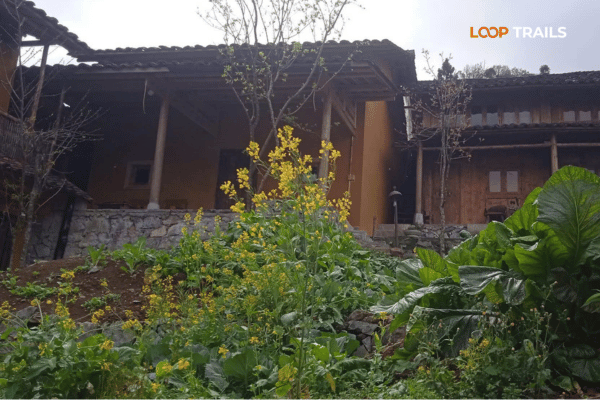
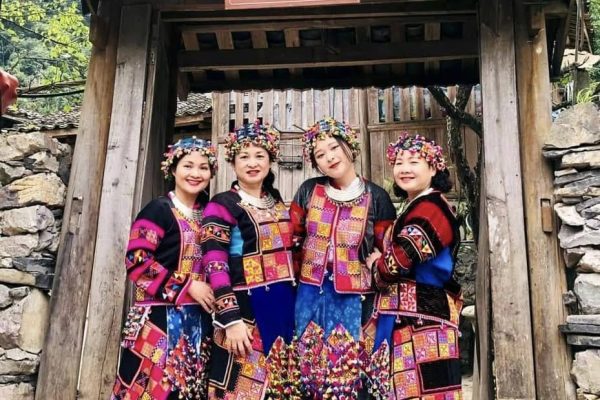
Lao Xa sits close to the Chinese border, in the section of the Dong Van Karst Plateau Geopark that most travelers pass through on the way to Lung Cu Flag Tower. The houses here are built from the same dark limestone that covers the plateau: heavy, permanent, flat faced walls that absorb the light differently from a rendered surface.
H’Mong stone houses in Lao Xa are constructed without the kind of framing materials common in lower elevation villages. The walls are dry stone or minimally mortared, built to absorb cold rather than resist wind, with small window openings and low doorways that reflect both the climate and the functional logic of a borderland community that has been building this way for generations.
What a guide adds: the layout of a H’Mong compound is not random. The position of the main door, the separate cooking structure, the placement of the spirit altar inside: these follow a system of meaning that is completely invisible to someone walking past. A guide who knows the village can explain, with permission, what you are looking at and why it is arranged this way.
The stop in Lao Xa also sits on the segment of road that runs closest to the Chinese border on the entire loop. The guide can point out, from the road, where Vietnam ends. For most travelers this is the first time in their life they have been able to see a national border as a physical line in the landscape.
Learn more: Ha Giang Loop 4 Days 3 Nights
Sung La is a valley settlement, lower in elevation than the karst plateau villages and therefore greener for more of the year. The village sits in a bowl of cultivated land where corn and buckwheat are farmed in the fields visible from the road.
The stop in Sung La is brief on most itinerary days: it is a valley the route passes through rather than a major destination. But the contrast with the plateau is worth noticing. After a morning of limestone karst at elevation, dropping into a valley that is visibly farmed, where the houses are spaced further apart and children are visible near the path, gives the landscape a human scale it does not always have on the dramatic pass sections.
Sung La is also one of the places where buckwheat flowers are visible in October, which is the month that brings more visitors to Ha Giang than any other. The pink and white fields against the karst backdrop produce the images that circulate most widely after that season.
Learn more: Hmong’s King Vuong Palace
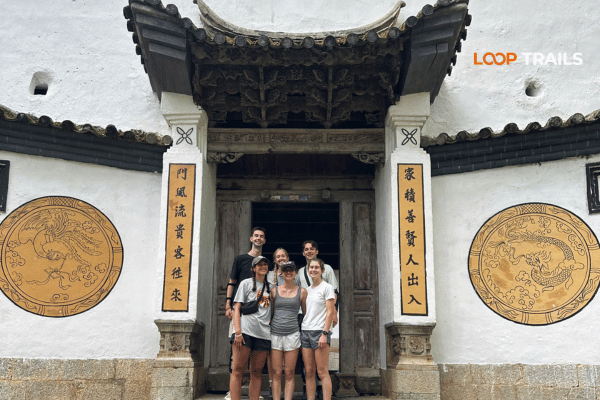
Vuong Palace stands in a narrow valley about 15 kilometers from Dong Van town. It was built around 1900 by the H’Mong king Vuong Chi Thanh, and the construction took around ten years and several generations of skilled workers drawn from both the local H’Mong community and craftsmen brought from southern China.
The palace is not hidden: it is one of the most visited stops on the entire loop. But it belongs in this article because the experience at Vuong Palace is entirely different depending on whether you arrive with a guide or without one.
The architecture is the most obvious thing to notice first. The building blends southern Chinese courtyard design with local H’Mong spatial traditions in a way that was deliberate rather than accidental: the Vuong family was a powerful regional political force with connections to both Hanoi and Yunnan, and the palace reflects that dual identity. The entrance gates, the carved timber, the floor plan of the main residence and the defensive wall logic: each element carries meaning that a guide who has studied this site can describe, while a solo visitor reads the same features as impressive but opaque.
The less visible story is the one about power and loss. The Vuong dynasty controlled the opium trade through this region for decades. The palace was constructed at the height of that influence. The family’s eventual decline, and what happened to the palace through the twentieth century, is a history that the physical structure does not tell on its own. A guide tells it.
Visits include time in the main courtyard and the residential rooms. Photography is permitted in most areas.
Learn more: Lo Lo Chai Village
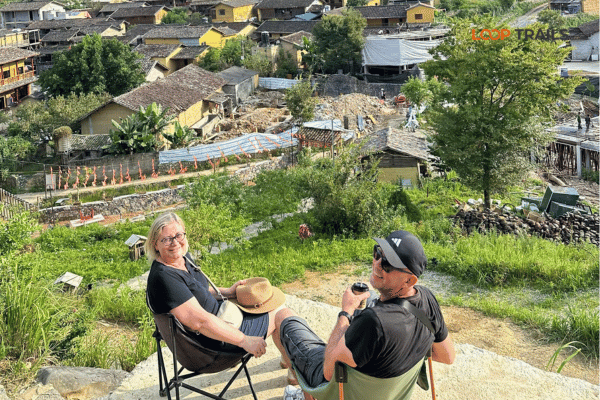
Lo Lo Chai sits near the base of Lung Cu Flag Tower hill, about five kilometers from the tower itself. The village is home to the Lo Lo ethnic group, one of the smaller minority communities in Ha Giang, and it is widely considered the most intact traditional Lo Lo village remaining in Vietnam.
The houses in Lo Lo Chai are built on wooden stilts with a distinctive roofline that differs from both the H’Mong stone houses and the more typical lowland Vietnamese construction. The carved wooden patterns on the structural elements use geometric shapes that recur throughout Lo Lo textile and material culture. The overall layout of the village follows the curve of a small hill, which gives it a visual coherence that distinguishes it from settlements that have grown more irregularly.
What makes Lo Lo Chai different from many village stops on the loop is that it still functions entirely as a lived community rather than a preserved tourist site. Families are farming, children are at school, animals are in the courtyards. The tourism access that has developed here over the past decade has arrived slowly enough that the village retains its basic character.
Your guide will take the group through the lanes of the village rather than around the perimeter. There are a small number of homestay families who receive visitors, and the interaction is genuinely social rather than managed. The Lo Lo community is known for their textile weaving, and if timing and availability align, it is sometimes possible to see the process in a family compound.
The afternoon light at Lo Lo Chai, in the hour before the sun drops behind the hill to the west, is the light most of the photographs from this stop are taken in. Plan for a slow arrival if your guide can arrange the timing.
Learn more: Du Gia Waterfall
Du Gia village is in a valley at the eastern edge of the Ha Giang Loop, and it is the overnight stop at the end of Day 3 on the 4 day 3 night itinerary. Most travelers arrive there after the most intense day of the trip: the Ma Pi Leng Pass, the Tu San Canyon, the boat tour on the Nho Que River. By the time the vehicle pulls into Du Gia, the group has seen approximately everything Ha Giang promised in its photographs.
And then Du Gia adds something none of those photographs prepared them for.
The village sits in a valley surrounded by terraced rice fields. In the late afternoon the terraces catch the light at an angle that makes the entire hillside appear to be tiled in gold. The homestay families in Du Gia are known for their food, their hospitality and their rice wine, which is produced locally and is strong enough that most groups make a collective decision to stop after two rounds.
The evening at Du Gia is consistently described by travelers as the most social night of the loop. The homestay format, which puts the whole group around a low table for dinner with the host family present, combined with the fatigue and satisfaction of a full day on the road, tends to produce the kind of conversation that does not happen over dinner in a guesthouse restaurant.
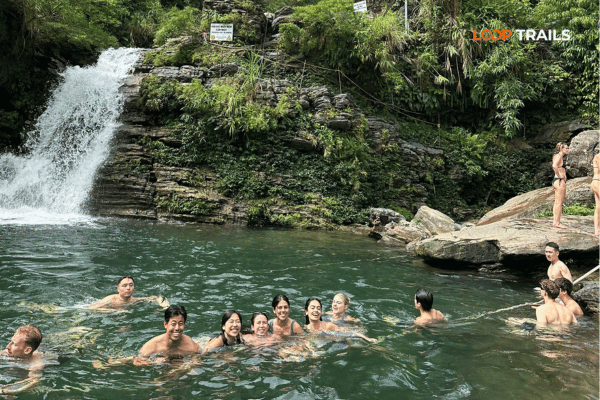
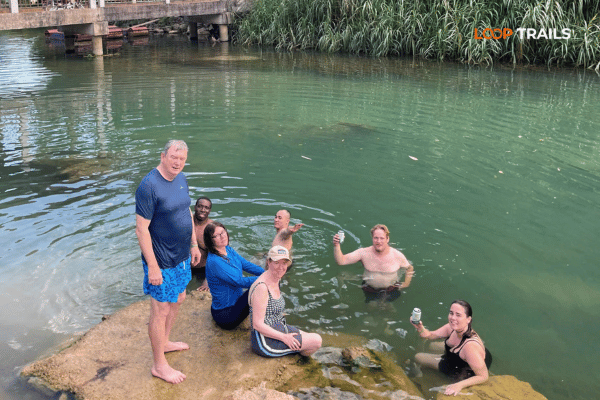
The following morning starts at the Du Gia waterfall, a short walk from the homestay. Swimming in cold mountain water before breakfast, in a valley that is still mostly silent at that hour, is one of those experiences that travelers describe as disproportionately memorable relative to how simple it actually is.
If you are deciding between a 3 day and a 4 day loop, Du Gia is the main argument for the longer option. The 3 day itinerary bypasses the overnight here. The 4 day version was built around it.
Learn more: Lung Tam Linen Village
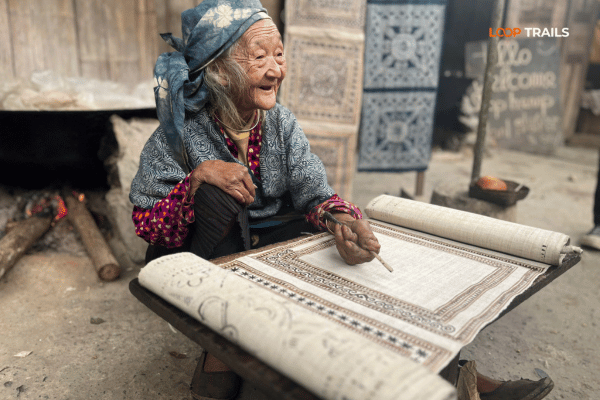
Lung Tam village is on the return route south from Du Gia toward Ha Giang city, and it is home to a cooperative of H’Mong women who grow flax, process it by hand and weave it into linen fabric using traditional methods.
The stop at Lung Tam is short on the itinerary, usually an hour, but the demonstration is remarkably dense with information. The flax processing chain from raw plant to finished fabric involves multiple steps: retting the stalks in water, beating them to separate the fibers, spinning the fibers into thread, and finally weaving the thread on a traditional loom. The women in the cooperative work through all stages, and the finished products, including scarves, fabric lengths and smaller items, are available to purchase directly.
What makes Lung Tam worth more than a passing mention is the context the guide provides about why this craft is practiced here and not just in museums. The H’Mong textile tradition in this region has been sustained partly because there is genuine demand for the products, both from travelers on the loop and from local markets. The weaving is not performed for tourists: it is practiced because the fabric has value. The tourist interest sustains it, but it is not the reason it exists.
The cooperative in Lung Tam has been operating long enough to have established a reputation that goes beyond the loop tour circuit. Some of the fabrics available here have been sold internationally through craft export channels. Prices at the source are fair and the quality is consistent.
Learn more: Phia Thap Insense Village
Phia Thap is a village in Trung Khanh district in Cao Bang province, on the route of the Ha Giang Cao Bang 5 day and 6 day extensions. The village is home to a Nung ethnic minority community whose traditional craft is the production of incense sticks by hand.
The incense production in Phia Thap is one of those crafts that looks straightforward until you see how it is actually done. The raw materials: bamboo splints, aromatic wood powder, binding compounds and natural dyes, are combined through a process that requires both precision and a physical technique that takes years to develop. The finished sticks are bundled, dried and sent to markets throughout northern Vietnam and across the border into China.
A visit to Phia Thap during the production period, which happens across most of the year, gives travelers access to an active workshop environment rather than a reconstructed demonstration. The families who work here are producing for sale, and the process is continuous. The guide’s role here is primarily translation and context: explaining the production steps, the significance of different incense types and their uses in local religious practice, and the economics of the craft for the families who depend on it.
Phia Thap is only accessible on the Cao Bang extension. Travelers doing the standard Ha Giang Loop route will not pass through it. For those considering the 5 day Ha Giang Cao Bang itinerary, the combination of Phia Thap and the Nguom Ngao Cave on the same day represents one of the strongest cultural and landscape combinations on the entire route.
Learn more: Ha Giang Cao Bang 5 Days 4 Nights
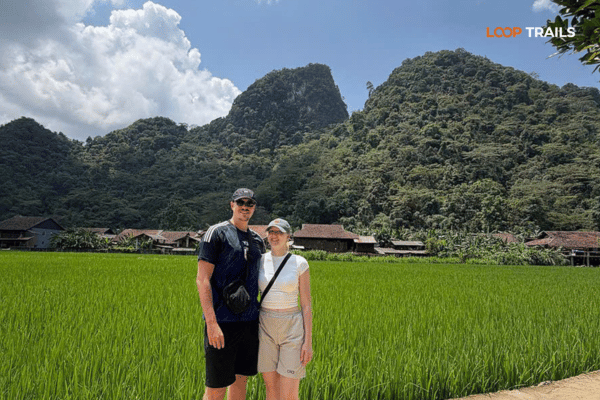
Xuan Truong valley appears on Day 3 of the Ha Giang Cao Bang 5 day itinerary, in the section that passes through Ha Quang district. The valley is described as peaceful, and the word is accurate in the specific sense that it is not yet widely known outside the Ha Giang Cao Bang tour circuit.
The landscape here is different from the karst plateau to the west. The valley floor is cultivated, with the kind of settled, unhurried agricultural character that the Dong Van section, for all its drama, does not have. The approach via Khau Coc Cha pass gives the valley an arrival moment that the guide uses: from the pass, the view over the valley below is one of the places on the Cao Bang section where travelers consistently stop to take photographs that end up not on Instagram, but as desktop backgrounds.
The stop here is a breather after the intensity of the border zone passes, and it functions as one as a result. If the Ha Giang side of the tour is about drama and scale, the section around Xuan Truong is about the kind of landscape that rewards sitting quietly rather than photographing it continuously.
Learn more: Ha Giang Cao Bang 6 Days 5 Nights
Every village in this article appears on maps. Most of them can be reached on a motorbike with a navigation app. A self drive traveler doing the Ha Giang Loop independently will pass through some of these places and not know what they are passing.
The difference that a guide makes is not access. It is comprehension.
Ha Giang’s ethnic minority communities follow social and spatial conventions that are invisible without explanation. The orientation of a house, the design of a gate, the pattern on a piece of cloth, the structure of an evening meal at a homestay: each of these carries meaning that local guides understand and can translate. Not every guide explains all of this equally well, and not every traveler wants every detail. But the option is there in a way it simply is not when you are navigating alone.
The other thing a guide provides is relationship. The villages on the Loop Trails route are places the team visits regularly, and the families there know the operation by name. That recognition changes the dynamic of a visit. You arrive as someone who has been recommended, not as a stranger who wandered in from the road.
This matters most at Du Gia and Lo Lo Chai, where the evenings at the homestay are the core of the experience. A guide who has eaten at that table before, who knows which rice wine to pour first and which song the host family will start with after dinner, is not a logistical convenience. They are the reason the evening is what it is.
If you are thinking about booking the Ha Giang Loop and weighing the tour options, the village experiences described in this article are the strongest argument for choosing a guided option over renting a motorbike independently. Message the Loop Trails team to find out which itinerary covers the most village stops for your available dates.

Learn more: Ha Giang Loop by Wrangler Rubicon Jeep
All three guided tour options from Loop Trails, Easy Rider, self drive and jeep, follow the same route and stop at the same villages. The village experiences are not exclusive to one option.
The practical differences are in how you arrive and how you experience the road between stops.
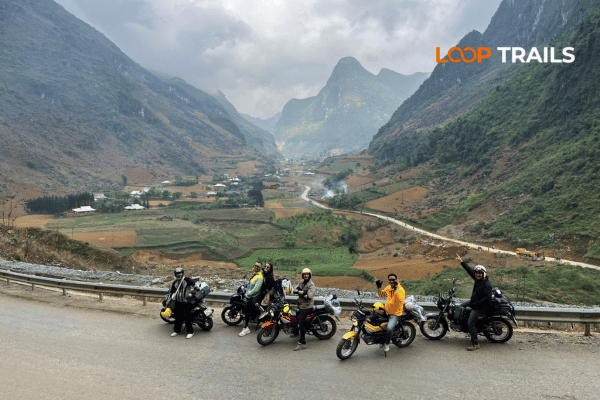
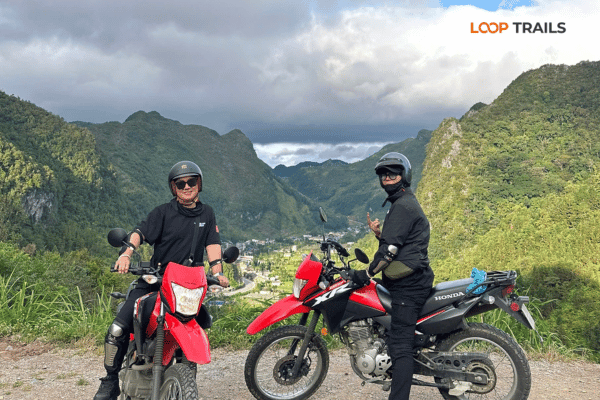
Easy Rider. You ride with a local driver who is often from the plateau region and may know families in some of the villages personally. Conversation happens on the road rather than only at stops. The guide is available in real time as you pass through areas, not just at designated stopping points. For solo travelers and pairs, Easy Rider is the format that delivers the most continuous cultural contact.
Self drive. You control your pace completely. If a village stop is interesting enough to extend, you extend it without consulting a schedule. The trade off is that you are responsible for the road, which means you are less available for observation during the riding sections. This option suits confident riders who want physical autonomy over the route.
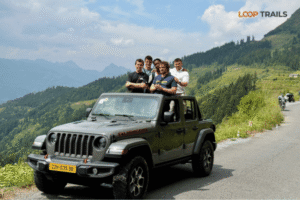
Private jeep. The group travels together and the driver handles all the logistics. For groups of three or four, the jeep is the option that keeps everyone in the same vehicle through every village and every stop. For families or groups where some members do not ride, it is also the only practical option.
None of these is the wrong choice for the village experiences specifically. The guides on all three options have the same local knowledge and the same relationships with the families on the route. The villages are the same.
If you are traveling with friends and want the most village contact possible, the 4 day 3 night option covers more ground than the 3 day version and includes Du Gia overnight, Lung Tam and the full Dong Van Geopark section with Lao Xa and Lo Lo Chai. The 5 day Ha Giang Cao Bang extension adds Phia Thap, Xuan Truong and the Cao Bang villages to the list.
View the Ha Giang Loop tour options on the Loop Trails site to see which itinerary fits your travel window.
Learn more: Ha Giang Motorbike Rental
The 4 day 3 night loop itinerary includes Lao Xa, Sung La, Vuong Palace, Lo Lo Chai, Du Gia and Lung Tam, which is the most comprehensive village coverage on the Ha Giang section. The 5 day Ha Giang Cao Bang extension adds Phia Thap incense village, Xuan Truong valley and further cultural stops in Trung Khanh and Cao Bang. For the widest range, the 5 or 6 day combined route is the right choice
Yes. Lao Xa, Lo Lo Chai and Du Gia in particular are not on the standard itineraries of large group tours. Loop Trails keeps groups small so that village visits remain genuine rather than overwhelming for the host communities
It is when done through an operator that has established relationships with the villages over time. The communities on the Loop Trails route receive tour groups regularly and host travelers at their homestays. The visits are structured to be mutually beneficial rather than purely extractive. Purchasing directly from craft producers, as at Lung Tam linen village, is one of the most direct ways to contribute to village income
Modest clothing is appropriate: covered shoulders and knees at a minimum. Some village areas have specific conventions around entering spirit rooms or approaching altars. Your guide will brief the group before entering any space where particular etiquette applies.
Yes at Lung Tam linen cooperative, where fabric, scarves and small woven items are sold directly by the women who make them. Some homestay families also sell small crafts. Your guide can advise on what is available and where fair prices are
Loop Trails keeps tour groups small: Easy Rider groups are typically two to eight people, and private jeep tours by definition carry one to four passengers. This means village stops feel like a group of friends arriving rather than a crowd descending on the community
It is worth the stop. The palace is relatively well known, but the experience with a guide who can explain the architectural detail, the family history and the broader political context of the H’Mong dynasty is significantly richer than visiting independently. Most travelers who arrive at Vuong Palace without a guide spend twenty minutes there. With a guide, groups typically stay forty to sixty minutes and leave with a much clearer sense of what they saw
Generally yes, though your guide will indicate specific areas or situations where photography is not appropriate: inside spirit rooms, during ceremonies or when individuals have not given permission. This is standard practice on well run cultural tours and is not a restriction that limits photography significantly in practice
Du Gia homestays are family run guesthouses at the simpler end of the accommodation spectrum: clean, functional and genuinely local rather than styled for tourists. The meals are typically among the best of the trip, cooked by the family using local vegetables, river fish and proteins. The evenings include traditional music and local rice wine. Most travelers rate the Du Gia night as the highlight of the accommodation on the loop
Yes. Phia Thap is in Trung Khanh district, Cao Bang province, which is only reached on the 5 day or 6 day Ha Giang Cao Bang combined tour. Travelers doing the standard Ha Giang Loop alone will not pass through it
Contact information for Loop Trails
Website: Loop Trails Official Website
Email: looptrailshostel@gmail.com
Hotline & WhatSapp:
+84862379288
+84938988593
Social Media:
Facebook: Loop Trails Tours Ha Giang
Instagram: Loop Trails Tours Ha Giang
TikTok: Loop Trails
Office Address: 54A Tran Phu, Ha Giang 2, Tuyen Quang
Address: 54A Tran Phu, Ha Giang 2, Tuyen Quang
Facebook X Reddit Table of Contents Learn more: Ha Giang Loop Tours The Ha Giang Loop is one of the most talked
Facebook X Reddit Table of Contents Learn more: Ha Giang Loop Tours There is a specific moment on the Ha Giang Loop

Facebook X Reddit Table of Contents Learn more: Ha Giang Loop Tours You’ve done the research on the Ha Giang Loop and