

Ha Giang Loop Tour Prices 2026: Jeep vs Motorbike, Honestly
Facebook X Reddit Table of Contents Learn more: Ha Giang Loop Tours Every week someone messages us with the same two questions,

Thúy Kiều (Grace) is a travel blogger and content contributor for Loop Trails Tours Ha Giang. She holds a bachelor’s degree in Sustainable Tourism from Vietnam National University, Hanoi, and has a strong passion for exploring and promoting responsible travel experiences in Vietnam’s northern highlands.
Learn more: Ha Giang Loop Tours
Most people come to Ha Giang for the passes. The road climbing to Ma Pi Leng, the vertiginous drop into Tu San Canyon, the moment your motorbike crests Heaven Gate and the entire karst plateau opens in front of you: these are the images that dominate every Instagram feed and travel reel from the region. But the Ha Giang Loop is not only about landscape. It is also about the communities living inside it.
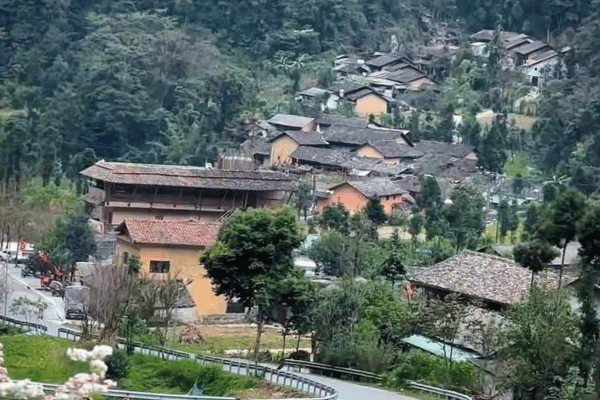
Lo Lo Chai village in Ha Giang is one of those communities: a small settlement of Lo Lo people nestled in a valley bowl near the Chinese border, where houses made from compressed earth have stood for generations and where daily life looks almost nothing like anywhere else in Vietnam. It sits close to Lung Cu Flag Tower on Day 2 of the standard loop itinerary, and many travelers pass through it in thirty minutes and move on. That is a mistake. Lo Lo Chai is worth slowing down for.
This guide explains who the Lo Lo people are, what makes their earth houses architecturally distinct, what you will actually see and experience walking through the village, and how to visit with the respect the community deserves.
Learn more: Ha Giang Loop 2 Days 1 Night
Lo Lo Chai sits in Lung Cu commune, Dong Van district, Ha Giang province. The commune shares a border with Yunnan Province, China, and Lung Cu Flag Tower, the northernmost point of Vietnam, stands on a limestone peak just a few kilometers from the village. The two are almost always visited together on the loop.
On the standard 4 day 3 night itinerary, Lo Lo Chai is a Day 2 stop. After visiting Vuong Palace, the former residence of the H’Mong king in Dong Van, riders continue north to Lung Cu, stop at the flag tower, and then descend into the valley where Lo Lo Chai sits. The village is tucked away from the main road, accessed by a short track that leads through terraced fields before the first earth walls come into view.
On the Ha Giang to Cao Bang 5 day 4 night tour, Lo Lo Chai also appears on Day 2. The sequence is the same: Vuong Palace, then Lung Cu, then the village.
The practical takeaway: if you are doing the Ha Giang Loop with Loop Trails on a 3, 4, 5, or 6 day tour that includes Lung Cu, Lo Lo Chai is on the route.
Learn more: Ha Giang Loop 3 Days 2 Nights
Vietnam has 54 officially recognized ethnic groups, and the Lo Lo are among the smallest. They are concentrated in Ha Giang province, particularly in the Dong Van district, with smaller communities in Cao Bang province. Their language belongs to the Tibeto Burman family, making it structurally distinct from Vietnamese and from the Hmong Mien languages spoken by the H’Mong, who are the dominant minority group on the Ha Giang plateau.
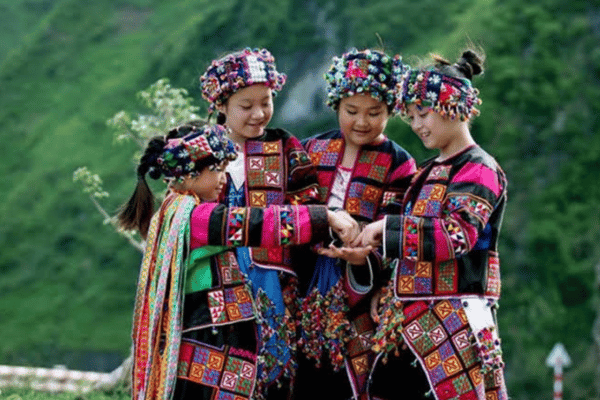
The Lo Lo have two main sub groups, distinguished primarily by dress: the Black Lo Lo (Lo Lo Den) and the Flower Lo Lo (Lo Lo Hoa). Lo Lo Chai village is associated with the Lo Lo Hoa, whose traditional clothing features vivid geometric embroidery in red, yellow, green, and orange on a black base. When you see a woman in the village wearing full traditional dress, the detail in the embroidery is striking: each pattern is hand stitched and carries meaning within the community’s visual language.
The Lo Lo people’s historical roots trace back to migrations from what is now Yunnan Province, China. Their proximity to the border is not coincidental: the community straddles a cultural and geographic boundary that predates modern national borders by centuries. This gives Lo Lo Chai a distinctive cross border quality: some practices and design elements visible in the village have more in common with Yunnan minority traditions than with lowland Vietnamese culture.
The community practices subsistence farming, growing maize, rice, and vegetables on the terraced fields surrounding the village. Some families also keep livestock, and local handicrafts, particularly embroidered textiles, are made primarily by women.
Learn more: Ha Giang Loop 4 Days 3 Nights
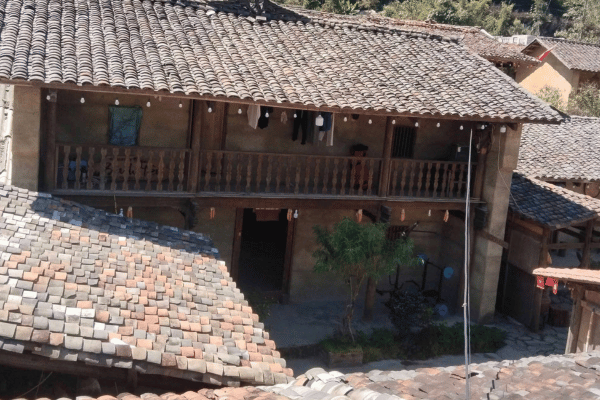
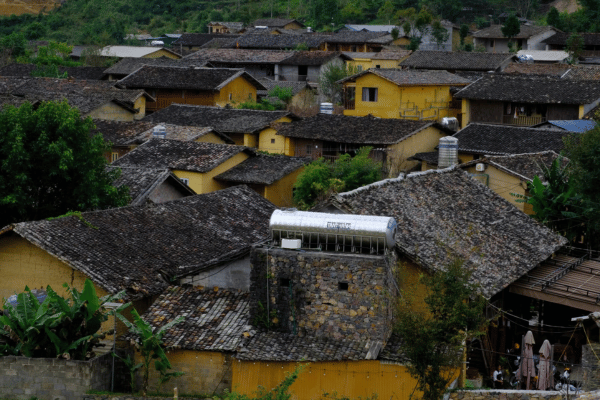
The defining architectural feature of Lo Lo Chai, and the reason the village is immediately visually distinctive even from a distance, is its earth houses. These are not mud huts or basic shelters. They are substantial, multi room residences built using a technique called rammed earth construction, known in Vietnamese as nhà trình tường.
The walls are built from local earth mixed with organic material such as straw or rice husks, then compacted in layers inside a wooden form. Each layer is tamped down firmly before the next is added. The resulting walls are dense, structurally strong, and typically between 50 and 80 centimeters thick. When the forms are removed, the walls are smooth on the outside and have the characteristic warm tan to dark brown color of compressed local clay.
This technique has been used in the region for generations and is well suited to the highland climate. The thick earth walls act as thermal mass: they absorb heat during the day and release it slowly overnight, keeping interiors cool in the summer heat and significantly warmer than thin walled houses during the cold highland winters, when temperatures at this elevation can drop to near freezing. The walls also provide good sound insulation and are resistant to both wind and moderate rain.
Structurally, the earth walls carry the weight of a wooden roof frame. The roofing material varies: older houses use handmade clay tiles, while some newer structures have adopted corrugated metal sheeting. The all wood interior structure supports a second floor sleeping loft in many houses, accessed by a steep wooden staircase.
The ground floor of a traditional Lo Lo earth house is typically a single open space used for cooking, eating, and receiving guests. A fire pit or simple hearth is centrally located, and the cooking area is defined by the blackened ceiling above it rather than a separate kitchen space. Animal feed storage and tool storage often share the ground floor in houses without separate outbuildings.
The upper loft provides sleeping space and, in some houses, storage for grain and dried produce. The transition between ground floor and loft is abrupt: the stairs are steep and the ceiling height shifts as you move through the space.
What strikes most visitors is not the size or the decoration but the sense of layered time in the objects and surfaces. Tools hang from wooden pegs. Corn cobs dry in bundles from the rafters. Handmade baskets sit stacked in a corner. The earth walls are marked at shoulder height by decades of use. Everything in the house has been placed there for a reason, and nothing is decorative in the conventional sense.
If you are invited into a family home, which does happen when visiting with a local guide who has an existing relationship with the village, take that opportunity seriously. It is not a museum experience. It is someone’s house, and the family is extending genuine hospitality.
Learn more: Ha Giang Cao Bang 5 Days 4 Nights
Lo Lo Chai is a small village. A slow walk through the main lanes takes around twenty to thirty minutes. The experience of that walk, however, is unusually dense.
The houses are arranged along narrow earthen lanes, with garden plots and small livestock enclosures between them. The surrounding fields, planted in concentric bands on the valley slopes, provide a backdrop that shifts with the season: dry maize stalks in the winter months, vivid green terraces in the summer water season, and harvested stubble in the autumn.
The earth walls of adjacent houses sometimes share corners or lean toward each other across a lane, creating an almost tunnel like feeling in the narrower sections of the village. Light filters between rooflines. The ground is packed earth, not paved.
The overall scale is intimate. This is not a village built for visitors. The scale reflects the actual population of the community, and walking through it feels accordingly different from visiting a touristified heritage site where the lanes have been widened and the gift stalls positioned for crowd flow.
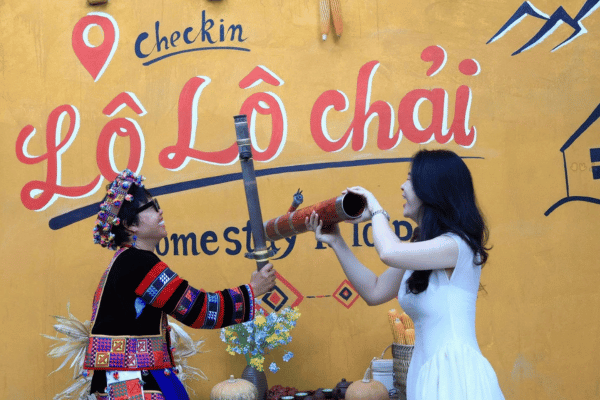
If you visit in the morning, you are likely to see women in various stages of their daily work: carrying water, tending to garden plots, feeding animals, or sitting outside stitching embroidery. Full traditional dress is worn more commonly on market days, festival occasions, and by older women who wear it daily as a matter of personal continuity. Younger women in the village often wear a mix of traditional and contemporary clothing, depending on the day’s activity.
The geometric embroidery patterns on traditional Lo Lo clothing are distinctive enough that, once you have seen them in Lo Lo Chai, you will recognize them immediately in market stalls across Dong Van and Meo Vac. The patterns are not random: different sections of a garment carry different designs, and the overall composition follows a visual grammar that the community has maintained across generations.
Men in the village are typically less visibly traditional in dress but no less present in daily life: working in the fields, maintaining tools, or gathered in conversation outside a house.
The Lo Lo people produce textiles as a core craft practice, primarily by women. The base cloth is typically indigo dyed cotton, into which colored thread is worked in cross stitch or similar embroidery techniques. Some households also practice batik adjacent resist dyeing methods for specific garment sections.
Small quantities of embroidered items are sometimes available to purchase directly from families in the village: small bags, decorative panels, or finished garment sections. These are genuinely handmade and priced accordingly. If you want to buy, ask your guide to inquire rather than approaching households directly: the transaction is smoother and the pricing is fairer when facilitated by someone with a relationship in the community.
Lear more: Lung Cu Flag Tower
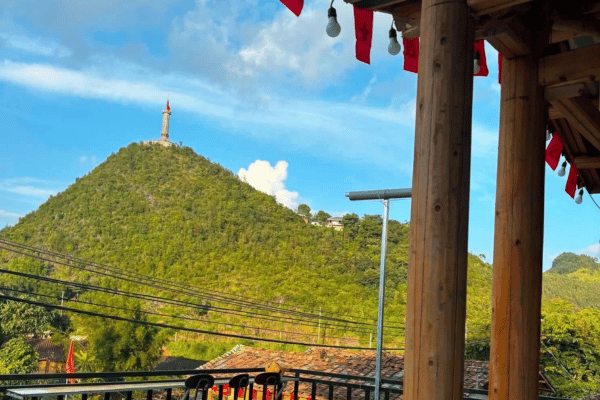
Part of what makes Lo Lo Chai feel unlike anywhere else on the Ha Giang Loop is its proximity to the Chinese border. Lung Cu Flag Tower, which stands on the peak of Rong Mountain approximately 1,468 meters above sea level, is visible from parts of the village on clear days. The tower marks the northernmost point of Vietnam: beyond it is China.
This border setting is not just geographical. It shapes the character of the community. The Lo Lo people here have maintained cultural practices that reflect their historical movement along a corridor that crossed what is now a national boundary. The architectural style, the embroidery patterns, and aspects of community ritual all share elements with minority groups on the Chinese side of the border. This cross border cultural thread is not something a brief visit will reveal in full, but it adds a layer of depth to the village that a good guide can illuminate.
The border zone itself requires a permit for foreign visitors, which costs 260,000 VND per person. Loop Trails arranges this permit on behalf of all tour participants. You do not need to handle it separately.
The feeling of being at the edge of the country is tangible at Lung Cu. At Lo Lo Chai, a few kilometers away, that feeling is different: quieter, more domestic, more rooted. The village exists because people have lived here for generations, not because a border was drawn through the landscape. The two places make a natural pair on the same afternoon.
Lean more: Ha Giang in October
Lo Lo Chai is accessible year round, but the conditions and the experience change significantly with the season.
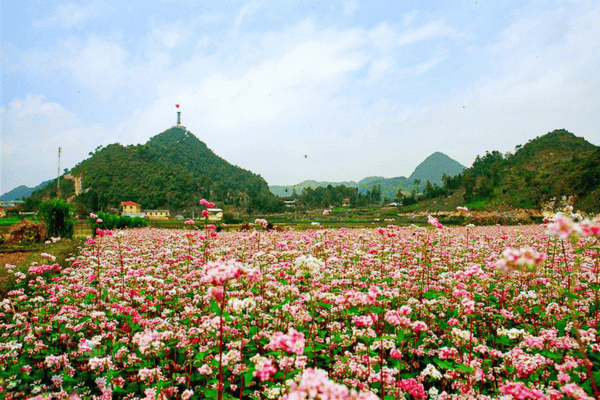
October to April (dry season): The recommended window for the full loop. Clear skies make for better visibility at Lung Cu and better light in the village in the late afternoon. The earth walls photograph well in direct sunlight, with the texture of the compressed layers clearly visible. The buckwheat flower season in October and November adds pink purple color to the fields surrounding the village, making this the most photographed time of year.
May to September (water season): Rain comes frequently, and the access track to the village can be muddy. The surrounding terraces are intensely green, and the village has a lush, damp quality. The earth walls turn a deeper shade when wet. If you are comfortable with wet weather riding or traveling by jeep, this is a genuinely beautiful time to visit: fewer tourists, more vivid color, and a more subdued atmosphere in the village.
The best time within any day is morning or late afternoon. The midday light is flat and harsh at this latitude in the dry season. In the morning, activity in the village is at its highest: people moving, animals being fed, cooking smoke rising from the earth house rooftops. In the late afternoon, the light on the earth walls turns golden, and the valley fills with the sound of the working day winding down.
Learn more: Ha Giang Motorbike Rental
Lo Lo Chai is not reachable by public transport from Ha Giang city. The standard way to visit is as part of a guided Ha Giang Loop tour that includes Lung Cu in its Day 2 itinerary.
If you are on an Easy Rider or self drive motorbike tour, your guide will lead you to Lo Lo Chai directly after the Lung Cu Flag Tower stop. The access road to the village branches off the main route and requires knowing which turning to take: the signage is in Vietnamese and not always clearly visible to first time visitors.
If you are on a Jeep Wrangler Rubicon tour, the jeep can reach the village access track, and the final approach on foot through the lanes is part of the experience.
If you are renting a motorbike independently and navigating yourself, download the village location offline before leaving Ha Giang city. The GPS coordinates for Lo Lo Chai are well documented in travel apps. The access track is narrow but passable on a standard motorbike in dry conditions.
The drive from Lung Cu Flag Tower to Lo Lo Chai takes around ten to fifteen minutes. The drive from Lo Lo Chai back to Dong Van town takes around thirty to forty minutes via the main road.
Learn more: Ha Giang Loop Photography Guide
Lo Lo Chai is one of the most photogenic stops on the Ha Giang Loop, and also one of the most easily over photographed in a way that reduces the experience to a surface transaction.
A few principles that make the difference:
Ask before photographing people. This applies everywhere in ethnic minority villages, and Lo Lo Chai is no exception. Your guide can facilitate introductions and make a portrait request feel like a conversation rather than an ambush. Some families are open to being photographed; others prefer not. Respect either answer immediately and without negotiation.
Focus on the architecture. The earth walls, the wooden roof frames, the texture of the tamped layers, the transitions between adjacent houses: these photograph beautifully with almost any lens. No consent issues, no intrusion, and genuinely interesting subject matter that most visitors skip because they are looking for the costumed portrait shot.
Use morning light on the east facing walls. The main village lanes run roughly north south, which means the east facing walls catch the morning sun directly. The texture of rammed earth in raking morning light is extraordinary.
Shoot the landscape from the village edge. The view back toward the valley from the outer edge of the village, with earth house rooftops in the foreground and the karst peaks behind, is one of the more compelling wide shots available on the loop. No people required.
Bring a wide angle and a standard prime if possible. The lanes are narrow and the walls are close. A wide angle handles the compression. A standard prime (around 35mm on a full frame, 23mm on crop) works well for interior shots in a home if you are invited in.
Learn more: Ha Giang Border Area Permit 2026
Visiting a village like Lo Lo Chai is a privilege, not a right. The community hosts visitors because it brings some economic benefit and because the interaction, when handled well, is genuinely positive for both sides. When handled poorly, it is extractive and leaves a bad impression that affects how subsequent visitors are received.
Basic etiquette for Lo Lo Chai:
Dress modestly. Upper arms and knees covered is the standard for minority village visits in northern Vietnam. This is not a law but a matter of respect.
Do not enter a house without an explicit invitation. Peering through open doorways or walking into ground floor spaces uninvited is intrusive regardless of local curiosity.
If you buy anything, pay the asking price without aggressive bargaining. Embroidery and handicrafts are priced by the time they took to make, not by the market logic of a tourist souvenir stall.
Do not photograph ceremonies, rituals, or religious objects without specific permission, facilitated by your guide.
Do not give sweets, money, or gifts directly to children. It reinforces a behavior pattern that the community has to manage and that is ultimately harmful to the children. If you want to contribute something to the community, ask your guide what is actually needed.
Leave the village as you found it. This sounds obvious. It is also routinely ignored.

Learn more: Ha Giang Loop Easy Rider
Lo Lo Chai appears on the Day 2 itinerary of all Ha Giang Loop tours that include Lung Cu. At Loop Trails, that means:
Ha Giang Loop 4 days 3 nights: Lo Lo Chai on Day 2, after Vuong Palace and Lung Cu Flag Tower. Available as Easy Rider, self drive, or Jeep Wrangler Rubicon. This is the most popular format and the one that gives you the most time at each stop.
Ha Giang Loop 3 days 2 nights: A condensed version of the loop that includes Lung Cu on Day 1. The Lung Cu and Lo Lo Chai visit is included but slightly abbreviated compared to the 4D3N pace.
Ha Giang to Cao Bang 5 days 4 nights: Lo Lo Chai on Day 2, same sequence as the 4D3N loop. The tour then continues northeast toward Cao Bang, Ban Gioc Waterfall, and the Cao Bang karst plateau over the following days.
Ha Giang to Cao Bang 6 days 5 nights: The extended combined tour, with Lo Lo Chai on Day 2. More time at each location across the full route.
If your primary reason for visiting Ha Giang is cultural immersion in ethnic minority villages, the 4 day 3 night tour gives the right balance of time and coverage. The 3 day 2 night tour is tighter and better suited to travelers whose main priority is the landscape passes rather than the village stops.
For families or groups who want to reach all the same points with more comfort, the jeep tour covers Lo Lo Chai as a standard stop. The jeep parks near the village access, and the village walk is on foot, the same as for motorbike riders.
Reach out to Loop Trails on WhatsApp to check current availability and confirm that Lo Lo Chai is on your chosen itinerary. Loop Trails tours run year round, with small groups and local guides who have direct relationships in the village communities.

Learn more: Ha Giang Loop by Wrangler Rubicon Jeep
Lo Lo Chai is known as the best preserved Lo Lo ethnic minority village in Vietnam. Its traditional rammed earth houses (nhà trình tường), built from compressed local clay, are architecturally distinctive and genuinely old. The village is located near Lung Cu Flag Tower, the northernmost point of Vietnam, and sits close to the Chinese border
Lo Lo Chai is not accessible by public transport from Ha Giang city. The standard access is as part of a Ha Giang Loop tour that includes Lung Cu on Day 2. You can also self navigate on a rented motorbike by following directions to Lung Cu commune and then taking the access track to the village. Download the location offline before leaving Ha Giang city
There is no general entrance fee for the village itself. However, foreign visitors entering the border zone near Lung Cu, which includes the Lo Lo Chai area, require a border area permit costing 260,000 VND per person. If you are booked on a Loop Trails tour, this permit is arranged for you
A thorough visit takes around 45 minutes to one hour. A rushed walk takes twenty minutes but misses most of what makes the village interesting. If your guide has connections in the village and can facilitate a home visit, allow up to ninety minutes
The Lo Lo are one of Vietnam’s 54 recognized ethnic groups, concentrated in Ha Giang and Cao Bang provinces. Their language belongs to the Tibeto Burman family. The Lo Lo in Lung Cu commune are primarily Lo Lo Hoa (Flower Lo Lo), known for their vivid geometric embroidery on traditional clothing
The houses use rammed earth construction: local clay mixed with organic material such as straw, compacted in layers inside a wooden form. The resulting walls are 50 to 80 centimeters thick, structurally strong, and thermally efficient. The technique has been practiced in the region for generations
Yes. Some families sell small embroidered items such as bags and decorative panels directly. Ask your guide to inquire on your behalf rather than approaching households directly. Items are hand made and fairly priced for the work involved
Only with permission, and only after a proper introduction facilitated by your guide. Never photograph people without asking, and respect a no immediately. The earth house architecture and the surrounding landscape can be photographed freely
October and November for the buckwheat flower season, when the valley is covered in pink and purple flowers and the weather is clear. March and April for warm, mostly clear days with fewer tourists. The village is worth visiting in any season: the character shifts with the light and the agricultural cycle
Yes. Lo Lo Chai appears on the Day 2 itinerary of all Loop Trails tours that include Lung Cu: the 3D2N, 4D3N, 5D4N, and 6D5N formats. It is also available on jeep tours as a standard stop
Contact information for Loop Trails
Website: Loop Trails Official Website
Email: looptrailshostel@gmail.com
Hotline & WhatSapp:
+84862379288
+84938988593
Social Media:
Facebook: Loop Trails Tours Ha Giang
Instagram: Loop Trails Tours Ha Giang
TikTok: Loop Trails
Office Address: 54A Tran Phu, Ha Giang 2, Tuyen Quang
Address: 54A Tran Phu, Ha Giang 2, Tuyen Quang
Facebook X Reddit Table of Contents Learn more: Ha Giang Loop Tours Every week someone messages us with the same two questions,

Facebook X Reddit Table of Contents Learn more: Ha Giang Loop Tours The Ha Giang Loop is a road built on bends.
Facebook X Reddit Table of Contents Learn more: Ha Giang Loop Tours If you could pick one month to see the Ha