

Thúy Kiều (Grace) is a travel blogger and content contributor for Loop Trails Tours Ha Giang. She holds a bachelor’s degree in Sustainable Tourism from Vietnam National University, Hanoi, and has a strong passion for exploring and promoting responsible travel experiences in Vietnam’s northern highlands.
Learn more: Ha Giang Loop Tours
Taking a group trip to Ha Giang and Cao Bang is different from solo travel or couples touring. You’ve got more voices, more needs, and more logistics to coordinate. But there’s also something special about navigating mountain passes, limestone peaks, and minority villages as a crew. Everyone’s memory gets sharper when you’re sharing the experience in real time.
The challenge isn’t whether groups can tour these regions—they can, and plenty do. It’s whether you’ll plan it so everyone has a good time, costs make sense, and nobody ends up frustrated halfway through. That’s what this guide covers.
Learn more: Ha Giang Loop 2 Days 1 Night
A group of two or three is easy. A group of twelve gets complicated fast.
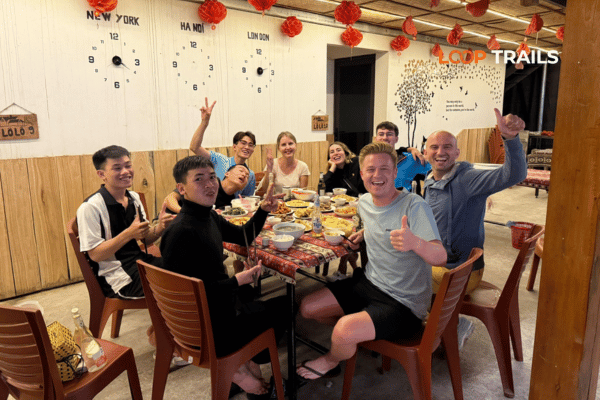
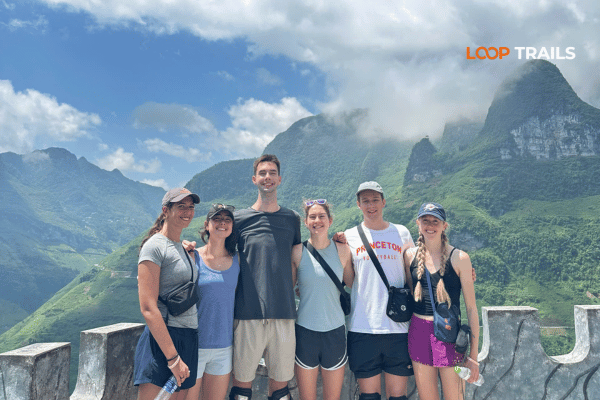
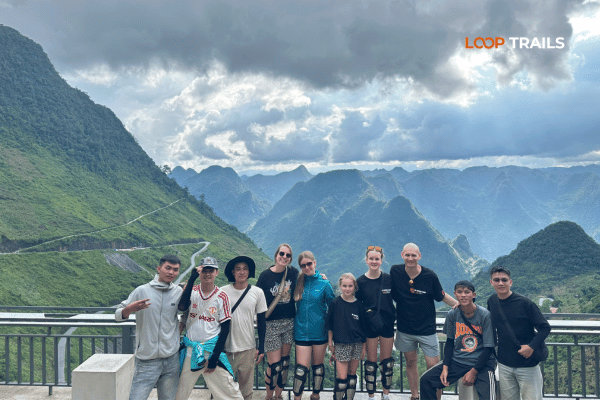
A group of four to eight is the Goldilocks zone. You split costs meaningfully. You have enough people that someone’s always up for that early sunrise hike. But you’re small enough that a single van or two Jeeps can accommodate you, and decision-making doesn’t turn into a committee meeting.
Below four, individual lodging becomes expensive and transportation costs don’t scale. Above eight, you need two vehicles minimum, logistics multiply, and group rhythm gets harder to maintain. A couple people will be ready to sleep while others want to explore at midnight.
Four to eight works because: You can share one or two guides. One vehicle can hold you comfortably (think a spacious van or two smaller Jeeps). Restaurant tables seat you at one spot or very close by. You can make decisions in five minutes instead of thirty.
The financial math also changes here. Solo travelers pay premium per-person rates. Groups of 4–8 start getting volume discounts on accommodations and tours that actually matter: often 15–25% less than the posted rate for individual bookings.
Learn more: Ha Giang Loop 3 Days 2 Nights
Three main formats work for groups this size. Each has real trade-offs.
Organized Jeep Tours
An operator (like Loop Trails) books your entire group into a Jeep tour with one or two guides. Everyone travels together in the same vehicle or consecutive vehicles. Accommodation and meals are typically arranged; logistics are largely handled.
Pros: Minimal planning burden on you, experienced guides who know the region, built-in social structure (other potential group members), flexibility around group size and dates.
Cons: Less independence, you follow the operator’s itinerary, price is fixed and higher than DIY, meal choices are preset.
Best for: Groups prioritizing ease and structure, first-time visitors, teams who want local expertise built-in.
Easy Rider Mix
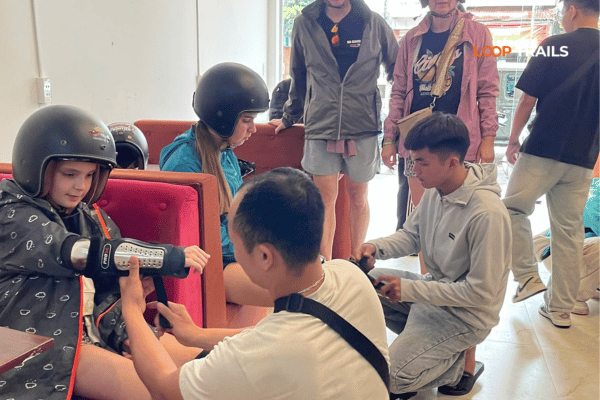
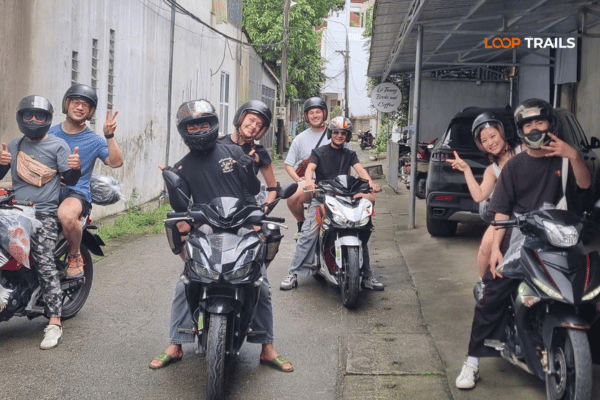
Pair your group with multiple Easy Rider drivers. Each driver takes a passenger or two on the back of their own motorbike. You stay together as a loose convoy; everyone has independence but a local perspective. Works great if half your group is motorcycling-comfortable.
Pros: More adventurous, intimate one-on-one driver conversations, flexible itinerary, good cost control.
Cons: Your non-motorcycle people don’t get the full experience, coordination across multiple drivers takes effort, weather/mechanical issues affect the whole timeline.
Best for: Groups with mixed interests where some want the motorbike intensity and others prefer a co-passenger experience.
Private Van Rental
You rent a 7-9 seater van, hire a local driver (often arranged through your accommodation contact), and chart your own route. Group buys gas; group figures out meals and lodging.
Pros: Maximum independence and flexibility, cheapest per-person cost structure, you dictate pace and stops completely, group bonding through shared decision-making.
Cons: You’re responsible for navigation and logistics, finding reliable drivers/accommodations is DIY, medical emergencies require you to coordinate, breakdown/accident issues are your liability.
Best for: Experienced travelers, groups confident in self-organizing, people who want to minimize costs, adventurous crews comfortable with uncertainty.
Honest assessment: Organized tours cost more but handle the stress. Van rentals cost less but give you the stress. Where you land depends on your group’s tolerance for planning versus tolerance for price.
Learn more: Ha Giang Loop 4 Days 3 Nights
Accommodation makes or breaks group trips. You want everyone comfortable but not isolated.
Group Lodges
These exist in main towns like Dong Van and Cao Bang town. Typically 2-3 rooms with attached bathrooms, small common areas, and a shared kitchen. Costs run USD $40-80 for the entire group per night depending on quality.
Pros: Everyone’s in one location, easier group meals, common space to decompress, often cheaper per-person than separate rooms.
Cons: Limited privacy, if one room has noise issues everyone notices, smaller selection of properties, bathrooms can get backed up in the morning.
Homestays
Local families rent rooms (often 2-3 per homestay) to travelers. You get home-cooked breakfast, genuine interaction, and atmosphere that hotels can’t match. USD $25-50 per room.
Pros: Authentic experience, local interaction often leads to unexpected recommendations, affordable, memorable meals.
Cons: Bathroom sharing (sometimes across hallway), bedding quality varies, you’re a guest in someone’s actual home (respect matters), some families aren’t equipped for large groups.
Mix-and-Match
Split your group across 2-3 homestays or guesthouses in close proximity. Book one private room per couple, shared rooms for solo travelers. Creates autonomy while keeping everyone nearby.
Pros: Privacy for couples, cost-efficiency for solos, community feel without forcing everyone into one building.
Cons: Requires coordination across multiple bookings, fractured group means harder to organize group meals/activities.
Booking Strategy
Book accommodations once you’ve locked in your group size and dates. Groups of 6-8 should reach out directly to properties rather than relying on online booking sites: managers often discount 20-30% for group inquiries and can reserve multiple rooms or adjust availability.
Ask the accommodation directly: Do you have group space? Can you accommodate X people? Do you cook group dinners? This gets you better rates and builds a relationship before arrival.
Learn more: Ha Giang Cao Bang 5 Days 4 Nights
A good group transport setup means everyone arrives at the same time, nobody’s waiting around, and costs are reasonable.
Vehicle Capacity
A single van holds 7-8 people comfortably with luggage. Two Jeeps (or an Easy Rider combo) handle groups of 4-8 more flexibly because people can switch vehicles or pair differently depending on mood.
If your group has significant luggage (which most international travelers do), assume 6-7 actual people per vehicle to leave room. You might need two vehicles for anything over 7.
Driver Coordination
Whether you hire a private driver or join a tour, make clear agreements in writing: departure time, route stops, expected arrival time, meal arrangements. No surprises at 4 PM when the driver decides to take a “shortcut” that adds three hours.
Your driver should know basic mechanics (tire repair, overheating), understand safe mountain driving, and ideally speak English well enough to explain route and safety. Most of these drivers do. Some don’t. Ask in advance.
Daily Rhythm
A realistic group schedule:
06:30 AM: Wake up, breakfast (arrange this night before).
08:00 AM: Load vehicles, depart.
12:00 PM: Lunch stop. Everyone out for 60-90 minutes. Eat, walk around village, use bathrooms. Group resets.
02:00 PM: Continue driving or explore a specific site (cave, waterfall, pass viewpoint).
06:00 PM: Arrival at next accommodation. Unload, settle in, let people rest 60-90 minutes.
07:30 PM: Dinner. Either group meal arranged by accommodation, or split into smaller groups at nearby restaurants.
You’ll deviate from this. Weather changes plans. Someone feels unwell. But this rhythm keeps everyone on the same clock without feeling rushed.
Learn more: Cao Bang Loop 3 Days best kept secret
Groups often underestimate how much things cost or how to split fairly. Here’s the math.
Typical Group Tour Costs (Ha Giang Loop, 4 days)
Accommodation: USD $30-60 per night, 3 nights = $90-180 per person. Transportation/Vehicle: USD $80-150 split among group, so $15-30 per person. Guide: USD $50-100 total for the group = $10-25 per person. Fuel/Gas: USD $20-30 split = $5-8 per person. Food: USD $15-25 per day = $60-100 for 4 days.
Total per person: $180-350 USD for a 4-day Ha Giang Loop.
Add Cao Bang and extend to 6 days, you’re looking $280-550 USD per person depending on accommodation choices and whether you add paid activities (cave tours, kayaking, etc.).
Splitting Payments
One person paying upfront for everything and collecting cash later is chaos. Here’s what works:
If paying via bank transfer in Vietnam: Get the accommodation’s bank details in advance. Transfers often take 1-2 days. Plan accordingly. Some places accept PayPal if you ask.
Learn more: Ha Giang to Cao Bang
Two primary options:
Ha Giang Loop: 3-4 Days
Circles through Du Gia, Dong Van, Meo Vac, and Ma Pi Leng Pass. Compact, easier pace, all limestone karst drama. Good for groups with limited time or less-experienced riders/travelers.
Typically: Hanoi to Ha Giang city (5-6 hours drive) → 3-4 day loop → return to Hanoi. Works as a standalone trip.
Ha Giang + Cao Bang: 5-6 Days
Extends loop to include Ban Gioc Waterfall, Nho Que River, and caves. More diverse scenery (waterfalls, rivers, caves alongside karst). Longer drive between regions but absorbs more of Northern Vietnam’s geography.
Typically: Hanoi → Ha Giang (3-4 days) → Cao Bang (2-3 days) → back to Hanoi.
Which for Your Group
4 days is the minimum to feel Ha Giang properly without exhaustion. If your group can do 5-6 days, Cao Bang adds genuine value: it’s less touristy, less crowded, and waterfalls hit different after three days of rock passes.
Groups with one or two people tired early? Stay Ha Giang. Everyone’s energized and wants more? Push to Cao Bang. Honestly assess fitness level during days 1-2 and adjust.

Learn more: Ha Giang Loop Coporate Retreat
A dedicated guide for your group (not the driver, a separate guide) changes the experience.
What a Good Group Guide Does
Navigates logistics: ensures you’re on schedule, accommodations are ready, vehicles run smoothly.
Explains sites: tells you the story of Du Gia marble, the history of Dong Van, the geopolitics of Ma Pi Leng (it’s literally on a border).
Manages safety: watches group members for fatigue, suggests breaks, assesses risk during risky activities (river crossings, cave climbing).
Bridges language gaps: translation beyond basics, helps negotiate with locals, handles emergency communications.
Handles unexpected situations: your vehicle needs repair, someone gets ill, weather changes plans mid-day.
Provides logistics intelligence: knows which restaurants serve actual good food, which homestays are clean, which sites are worth stopping for versus which are tourist traps.
Cost
A guide runs USD $40-80 per day for the whole group (splits their daily rate across everyone). Most group tours include a guide. If you’re doing a private van, you can hire a guide separately through a tourism operator or sometimes through your accommodation’s connections.
Without a guide, your driver becomes your guide (sometimes they’re good at it, sometimes not). With a guide, your driver is just driving.
Local Relationships
If one person in your group speaks Vietnamese or has local connections, that’s golden: they can negotiate directly with accommodation owners, secure discounts, and add a layer of authenticity to interactions.
If nobody does, don’t fake it. Asking to negotiate in English rarely works. Having a guide or using a tour operator who has established relationships is worth the cost.
Learn more: Ha Giang Border Area Permit 2026
Groups of 4–8 fall apart when nobody’s managing the social layer.
Establish Pace Early
On day one, ask everyone: How do you want to pace this? Some groups want early starts and maximum activity. Others want lazy mornings and fewer mandatory activities. Neither is wrong, but the group needs to be on the same page.
A simple check-in each morning: “What’s the vibe today?” prevents resentment building through misaligned expectations.
Decision-Making Authority
Decide upfront: Who makes the call if the group’s split on routing? Is it democratic (majority vote), or does the trip organizer decide?
Having this clear prevents endless discussions when you’re tired and need to move.
Different Energy Levels
Someone will run out of energy before others. Not a failure: normal. Have a plan for parallel activities. If the group’s hiking a cave and one person’s exhausted, they hang at a cafe with a book and a coffee. Everyone’s fine.
Don’t force people to participate in optional activities they’re too tired for. It builds resentment.
Mediate Conflicts Early
Two group members disagree on dinner spot. One wants adventure, one wants safety. Address it immediately, don’t let it simmer. “Hey, I noticed some disagreement. Let’s figure out what works for both of you.”
Small conflicts become trip-ending feuds if ignored.
The Leader
One person should be the tie-breaker, the final decision-maker. Usually the trip organizer. This isn’t dictatorship: solicit input, be generous with votes. But when consensus isn’t possible, this person decides and everyone accepts it. Clear authority prevents endless debate.
Learn more: Ha Giang Food guide
Logistics aside, groups need rhythm: wake, move, eat, rest, sleep. Break that rhythm and people get grumpy.
Breakfast
Arrange this with your accommodation the night before. “Can you do breakfast for 6 at 7 AM?” Most will. Costs USD $3-5 per person. Ensures everyone eats before a long drive rather than stopping randomly for mediocre pho at 10 AM.
Lunch
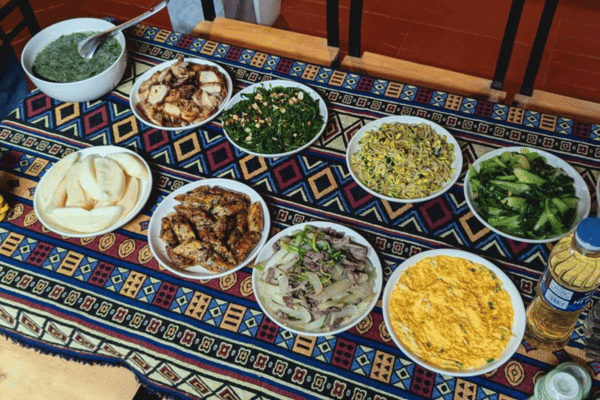
The midday stop is critical. 12 to 1:30 PM, find a restaurant (your guide knows good ones), sit together, eat slowly. This is group bonding time. Food doesn’t need to be fancy: local pho, fresh spring rolls, rice with greens. Costs USD $5-8 per person.
Use this time to stretch, walk around the village, use clean bathrooms, decompress. People arrive at the next destination less exhausted.
Dinner
Some nights the group eats together at the accommodation or a recommended restaurant. Other nights people split into smaller groups and explore independently. Both work. Together meals build community; separate meals give autonomy.
Pro tip: If the group splits, reconvene at a central meeting point an hour later rather than coordinating separate return times. Less logistical overhead.
Snacks
Carry snacks: dried fruit, trail mix, chocolate, crackers. Especially important on long drive days. Hungry people are irritable people.
Rest Stops
Every 2-3 hours of driving, your driver will hit a rest stop (gas station, small shop). 10-15 minutes. Let people use the bathroom, grab water, stretch legs. Non-negotiable.
Energy Management
By day 3, people are tired. Not miserable, but tired. Acknowledge it. Dial back expectations on day 3 or 4. Lighter hike, later start time, longer lunch break. You’ll ride that energy wave better.
Learn more: Ha Giang Loop Easy Rider
Groups need to understand liability and emergency protocols before something goes wrong.
Travel Insurance
Every group member needs travel insurance that covers accident, illness, and (if motorbike-riding) motorbike riding. Not everyone’s policy covers motorcycle activities: read the fine print.
Purchase insurance before leaving your home country. It’s cheaper and avoids arguments about who pays if someone gets hurt.
Group Liability
If you’re on an organized tour, the tour operator carries liability. If you’re in a private van, this gets murky. Make sure the driver has insurance (ask to see it). Make sure the vehicle has proper registration and tags. In Vietnam, enforcement is inconsistent, but if something goes wrong, proof of insurance saves arguments.
Emergency Protocol
As a group, agree on this before you need it: If someone gets seriously ill or injured, do we go to the nearest hospital or wait for evacuation to Hanoi? Who makes that decision? Who has contact info for embassies?
Sounds dramatic, but these conversations prevent chaos in an actual emergency. Most people never need them. Some do.
Road Safety
Defensive driving matters on Ha Giang roads. If your driver is reckless (speeding on mountain passes, swerving through oncoming traffic), speak up. You’re a customer. It’s okay to ask for slower, safer driving. A responsible driver will respect this.
If the driver won’t slow down, request a different driver or find a different tour. Non-negotiable.
Activity Risks
Caving, swimming, river crossings carry inherent risk. Understand the risk before you commit. If you’re uncomfortable, skip it. Nobody’s forcing you. The group won’t judge.

Learn more: Ha Giang Loop by Wrangler Rubicon Jeep
3-Day Ha Giang Loop (Quick & Scenic)
Day 1: Hanoi → Ha Giang city (5-6 hour drive). Settle in. Evening explore local market, walk around town, eat dinner.
Day 2: Ha Giang city → Du Gia → Dong Van → Meo Vac. Major driving day (6-7 hours with stops). Arrive mid-afternoon. Rest. Late afternoon walk around Meo Vac.
Day 3: Meo Vac → Ma Pi Leng Pass → return toward Hanoi. Drive to pass, spend hours there (views), lunch nearby. Return to Ha Giang city or halfway point. Evening drive back to Hanoi.
Pace: Driven, tight, but doable. Suits groups with limited time.
4-Day Ha Giang Loop (Comfortable Rhythm)
Day 1: Hanoi → Ha Giang city. Settle.
Day 2: Ha Giang city → Du Gia → Dong Van. Explore marble village, walk old town.
Day 3: Dong Van → Meo Vac → Ma Pi Leng Pass. Summit and spend significant time. Late afternoon return to Dong Van or Meo Vac.
Day 4: Meo Vac → Hanoi (6-7 hour drive). Long day but manageable.
Pace: Balanced. Lets you absorb sites without exhaustion. Easiest transition for most groups.
5-Day Ha Giang + Cao Bang (Full Experience)
Day 1: Hanoi → Ha Giang city.
Day 2: Ha Giang loop (Du Gia, Dong Van, Meo Vac).
Day 3: Meo Vac → Ma Pi Leng Pass → continue northeast toward Cao Bang. Overnight in Cao Bang town.
Day 4: Cao Bang town → Ban Gioc Waterfall. Explore waterfall, Nho Que River, caves. Overnight Cao Bang town.
Day 5: Cao Bang → Hanoi (5-6 hour drive).
Pace: Leisurely, absorbs two regions, less fatigue. Best for groups with 5+ days available.
All three work. Pick based on your group’s time and energy levels.
Learn more: Ha Giang Loop by Jeep for Families & Groups
Expecting Everyone to Be Ready at the Same Time
One person is always a bit slower. Don’t penalize them: build a 15-minute buffer into departure times. Tell the group 8:00 AM, really mean 8:15 AM.
Not Confirming Arrangements in Advance
You assume the accommodation will feed you breakfast. They assumed you’d eat elsewhere. Avoidable chaos. Confirm everything.
Splitting Costs Incorrectly
One person insisted on the nicer room and three people split a standard room. At the end, splitting costs equally means the budget-conscious people subsidize the luxury-seeker. Clarify upfront.
Trying to See Everything
Groups often overestimate what they can cover. You visit seven villages, three passes, two waterfalls, one cave, and end the trip exhausted. Visit four things and actually absorb them instead.
Nobody Leading
A group without a decision-maker becomes a group that argues. Appoint one.
Not Accounting for Personality Conflicts
You didn’t know these people before day one. Not everyone gets along. It’s okay to take solo time. Doesn’t mean the trip failed.
Pushing Through Exhaustion
By day 4 of driving mountain roads, people are tired. Push a full activity day anyway and people snap at each other. Have a rest day, trust me.
Assuming Local Knowledge
Just because someone in the group visited Vietnam before doesn’t mean they know Ha Giang logistics. Use guides. Respect expertise.
Learn more: Ha Giang Motorbike Rental
Choose an organized Jeep tour if: You value minimal planning, want experienced guides, prefer structure, are visiting for the first time.
Choose Easy Rider mix if: You want adventure and intimacy but also group bonding, your group has mixed interests, you’re comfortable with less structure.
Choose private van rental if: You want maximum flexibility and lowest cost, your group is self-sufficient in decision-making, you’re adventurous and comfortable with risks.
Hybrid approach: Book a Ha Giang Loop organized tour, then independently arrange a private van to Cao Bang afterward. Best of both worlds.
Learn more: Ha Giang Cao Bang Packing List
Organized Tours
Contact Loop Trails or a similar operator with your group size, dates, and flexibility. They’ll design an itinerary, provide pricing, and handle logistics. Book 3-4 weeks in advance for summer season; 1-2 weeks is fine for shoulder seasons.
Private Van
Contact your accommodation in Ha Giang city; they can arrange a driver and van. Or use a tourism booking site. Expect USD $150-250 per day for a reliable vehicle and driver. Negotiate a multi-day rate: usually 10-15% cheaper.
Easy Rider Mix
Contact Easy Rider operators or reach out to Loop Trails about coordinating Easy Riders. Same lead time as organized tours.
Group Communications
Once you’ve booked, set up a group chat (WhatsApp, Telegram). Share itinerary, contact information for drivers and accommodations, dietary restrictions, meeting points. Minimal but clear communication prevents day-one confusion.
Final Prep
Confirm accommodations 2-3 days before arrival. Confirm driver/guide contact info. Share a simple WhatsApp message with your group: “We’re leaving Hanoi at X time, arriving in Ha Giang at Y time.”
Four people. Below that, you’re better off as solo/couple travelers. Above eight, logistics get complicated. 4-8 is the efficiency band.
Yes. Organized tour operators are flexible for group bookings. Tell them your preferences (more driving, less activity; more culture, less action; etc.) and they’ll adjust. Private van gives you total customization.
Smaller towns have basic clinics; Hanoi has proper hospitals. If someone has a chronic condition, mention it upfront so accommodations and guides are aware. Travel insurance covers evacuation.
Tell your accommodation or tour guide in advance. Most will accommodate vegetarian, vegan, or gluten-free diets with notice. Tell them at least 24 hours before each meal.
Totally normal. Some people want solo time. Some want extra activities. Some want to sleep instead of joining group activities. That’s fine. Agree on a regular regrouping point (like dinner) and give people space otherwise.
4-6. Beyond that, coordinating multiple drivers gets messy. Below that, costs-per-person spike.
Younger kids (under 8) struggle with long drive days. Ages 10+ generally handle it fine. Pregnant women should skip mountain drives; altitude and road conditions don’t mix.
That’s okay. One person wants to go back, one wants to push to Cao Bang. Clarify who’s in which vehicle, confirm your regrouping point, and move on. Groups evolve.
USD $3-5 per person per day is standard. If the guide was exceptional, tip more. If the experience was subpar, you’re not obligated. Cash, handed directly.
Contact information for Loop Trails
Website: Loop Trails Official Website
Email: looptrailshostel@gmail.com
Hotline & WhatSapp:
+84862379288
+84938988593
Social Media:
Facebook: Loop Trails Tours Ha Giang
Instagram: Loop Trails Tours Ha Giang
TikTok: Loop Trails
Office Address: 54A Tran Phu, Ha Giang 2, Tuyen Quang
Address: 54A Tran Phu, Ha Giang 2, Tuyen Quang
Facebook X Reddit Table of Contents Learn more: Ha Giang Loop Tours Most people drive past the Quan Ba area twice on
Facebook X Reddit Table of Contents Learn more: Ha Giang Loop Tours The Ha Giang Loop has a reputation problem with older