

Ha Giang at Christmas & New Year: Travel Guide 2026
Facebook X Reddit Table of Contents Learn more: Ha Giang Loop Tours Most travelers discover Ha Giang through the photos — buckwheat

Thúy Kiều (Grace) is a travel blogger and content contributor for Loop Trails Tours Ha Giang. She holds a bachelor’s degree in Sustainable Tourism from Vietnam National University, Hanoi, and has a strong passion for exploring and promoting responsible travel experiences in Vietnam’s northern highlands.
If you’ve been researching a trip to Ha Giang and typed “Ha Giang airport” into a search engine, you’re in the same position as most travelers before they visit: looking for the quickest way to get to one of the most extraordinary destinations in northern Vietnam, and wondering whether flying is an option.
The answer is no — Ha Giang does not have an airport. There are no commercial flights to Ha Giang Province, and no airport serving the area at present. The nearest you can fly is Hanoi, and from there, the journey to Ha Giang is entirely overland.
That sounds like a complication. In practice, it’s not. The road journey from Hanoi to Ha Giang is well-served by multiple transport options, the route itself is increasingly comfortable, and — for many travelers — the arrival by road through the limestone foothills of northern Vietnam sets the mood for the loop before it’s even begun.
This guide covers everything: why there’s no airport, what your nearest options are, how to get from Hanoi to Ha Giang, and what to do once you arrive.

Learn more: Ha Giang Loop Tours
No. Ha Giang Province has no civilian airport, no airstrip serving commercial traffic, and no scheduled domestic flights. This has been the case historically and remains true as of now — check for any future infrastructure updates if you’re planning well ahead, but don’t expect this to change in the near term.
The reasons are partly geographic and partly economic. Ha Giang Province sits in a mountainous region of northern Vietnam where flat land suitable for airport construction is scarce. The province’s population and tourism economy, while growing rapidly, hasn’t yet reached the threshold that would make a regional airport commercially viable in the way that airports in Lao Cai (serving Sapa) or Dien Bien Phu have been.
For travelers, this means the journey to Ha Giang is a ground journey regardless of where you’re flying into Vietnam. Hanoi is the practical starting point for almost everyone.
Learn more: Northern Viet Nam Itinerary 2026
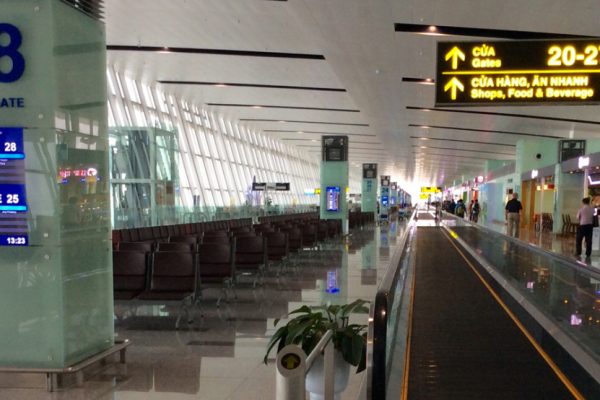
Noi Bai International Airport (HAN) is the nearest commercial airport to Ha Giang and the one you’ll use as your arrival point. It serves Hanoi and is Vietnam’s second-busiest airport after Ho Chi Minh City’s Tan Son Nhat.
Noi Bai has direct international connections from most major hubs in Asia, including Bangkok, Singapore, Kuala Lumpur, Hong Kong, Seoul, Tokyo, and various Chinese cities. European and other long-haul travelers typically connect through one of these hubs. Vietnam Airlines, VietJet, Bamboo Airways, and numerous international carriers serve the airport.
From a practical trip-planning perspective: fly into Hanoi, then travel overland to Ha Giang. That’s the route. Everything else in this guide is about making that overland leg as smooth as possible.
Ha Giang City is approximately 300–320km north of Hanoi, depending on the route taken. The journey typically takes somewhere in the range of 5–7 hours by road — again, depending on the transport mode, the specific route, and traffic conditions around Hanoi.
Rather than quoting a fixed time that may not match your experience, plan for a half-day journey and treat anything faster as a bonus. The road from Hanoi climbs gradually into the mountains, and the final section approaching Ha Giang City — where the limestone karst begins to emerge from the green hills — is scenic enough that you won’t mind the duration.
The main route runs roughly: Hanoi → Vinh Phuc → Tuyen Quang → Ha Giang City. The road condition has improved significantly in recent years — large sections have been upgraded to dual carriageway or good single-lane highway. The final stretch into Ha Giang Province is mountain road, winding but well-paved.
Night buses do this run regularly and efficiently. Daytime road users tend to find the latter part of the journey — the mountain section — more interesting than the flat lowland portion out of Hanoi.

Learn more: Ha Giang Cao Bang 5 Days
While Noi Bai in Hanoi is the clear and dominant option for reaching Ha Giang, a few other airports occasionally come up in planning discussions. Here’s how they actually stack up.
Cat Bi Airport serves Hai Phong, Vietnam’s main northern port city, roughly 120km from Hanoi. Some travelers flying into Hai Phong ask whether it’s a viable alternative for reaching Ha Giang.
Practically: no. Hai Phong is in the opposite direction — east of Hanoi, toward the coast — while Ha Giang is north. Flying into Cat Bi and then travelling to Ha Giang requires transiting through or around Hanoi anyway, adding distance and complexity with no benefit. Fly into Hanoi.
Dien Bien Phu Airport is in the northwestern corner of Vietnam, serving flights from Hanoi to the historical Dien Bien Phu valley. It occasionally comes up because Dien Bien Phu is also a mountainous northern Vietnam destination, and some travelers wonder whether it’s geographically closer to Ha Giang.
It isn’t — at least not in any useful way. Ha Giang is in the northeast of northern Vietnam; Dien Bien Phu is in the northwest. Flying to Dien Bien Phu and driving to Ha Giang would be a very long, complicated overland journey through difficult terrain. This is not a practical route.
Na San Airport in Son La Province serves domestic routes from Hanoi and is part of Vietnam’s effort to connect remote northern provinces by air. Son La is closer to Ha Giang than Dien Bien Phu, but the road connection between Son La and Ha Giang is still a lengthy mountain drive. Check current route maps and schedules if you’re specifically transiting through Son La for other reasons, but for most Ha Giang travelers, this adds complexity without simplifying anything.
The summary: Hanoi (Noi Bai) is your airport. There is no practical alternative.

Learn more: Ha Giang Sleeper Bus
Once you’ve landed at Noi Bai, you have several options for the onward journey to Ha Giang. They vary significantly in cost, comfort, and convenience.
The sleeper bus from Hanoi to Ha Giang is the most common choice for independent travelers and backpackers. Multiple operators run this route daily, typically with both day and overnight departures.
Night buses are the most efficient option for many travelers: you board in the evening in Hanoi, sleep through the journey, and arrive in Ha Giang City in the early morning — ready to start the loop or check into accommodation without losing a full day of travel.
Day buses are fine if you want to see the scenery en route, or if night bus sleeping isn’t something you manage easily.
Key practical points:
Sleeper buses are comfortable enough for the journey and significantly cheaper than private car options. For solo travelers and budget-conscious pairs, this is the standard choice.

Learn more: Ha Giang Loop Private Car from Hanoi
A private car from Hanoi to Ha Giang City is the most comfortable option and makes sense for groups of three or more travelers splitting the cost, or for anyone who prioritises comfort and flexibility over budget.
A private car or van can pick you up directly from Noi Bai airport — no separate transit to central Hanoi required — and deliver you to your specific accommodation in Ha Giang City. Departure time is flexible, you can stop for food and photos along the way, and you’re not sharing the vehicle with strangers.
For families, small groups, or travelers with significant luggage, the cost-per-person of a private transfer becomes very reasonable when split. Ask your Ha Giang tour operator about arranging this as part of your booking — Loop Trails can connect you with reliable transfer options when you book a tour. [Contact us on WhatsApp here.]
Some experienced riders choose to ride a motorbike from Hanoi to Ha Giang, turning the journey to the loop into part of the adventure itself.
This is genuinely enjoyable if you know what you’re getting into. The road from Hanoi to Ha Giang is not a simple highway — it involves real mountain riding in the final sections. Riding from Hanoi to Ha Giang on the same day as a long-haul flight is not a good idea for anyone. If you want to ride to Ha Giang, plan to spend at least one night in Hanoi first to recover from travel before getting on a bike for 5–7 hours.
For riders renting motorbikes specifically for the Ha Giang Loop, it’s generally more practical to take a bus to Ha Giang City and rent locally — the selection of well-maintained loop-specific bikes is better in Ha Giang than what you’ll typically find in Hanoi for this purpose. [See Ha Giang motorbike rental options here.]
Learn more: Limousine bus to Ha Giang
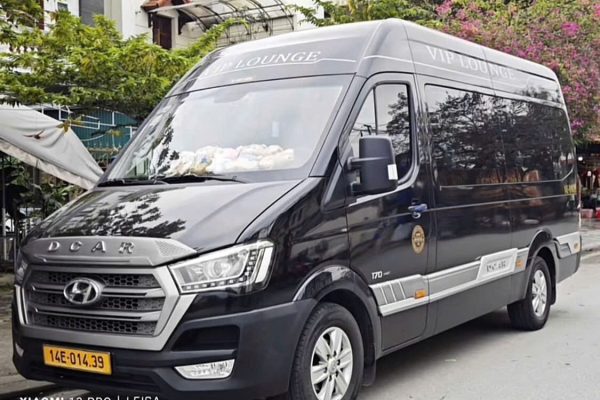
A middle ground between sleeper bus and private car: limousine vans (9-seater minibuses) run the Hanoi–Ha Giang route with more comfort than a standard bus and at lower cost than a full private car. These operate on a shared basis — you book seats rather than the whole vehicle.
Quality varies between operators. Read recent reviews before booking and confirm pickup locations — some pick up from central Hanoi points rather than the airport, requiring an airport transfer first.

Learn more: Ma Pi Leng Pass
This question comes up often, usually from travelers hoping the infrastructure will change before their planned visit.
Ha Giang’s provincial government has discussed the possibility of airport development in broader infrastructure planning documents over the years — this is a matter of public record. However, as of now, no airport construction is underway and no confirmed timeline exists for a Ha Giang airport to open.
The geography of the province makes it challenging: the terrain around Ha Giang City and the Dong Van plateau is mountainous, and suitable flat land for an airstrip is limited. The tourism growth of recent years has been rapid, but the investment required for airport infrastructure is substantial.
Practical advice: don’t plan your trip around the expectation of a Ha Giang airport. The overland journey from Hanoi is well-established, reasonably comfortable, and manageable. Plan for it from the start.
If you’re reading this article considerably after its publication date, it’s worth doing a quick search for the latest infrastructure news — things can change in Vietnam’s rapidly developing transport network, and new information may have emerged since this was written.

Learn more: Ha Giang Motorbike tour
Arriving in Ha Giang City is not the end of the transport question — it’s the beginning of the part that actually matters for most visitors: the Ha Giang Loop.
The loop circuit covers roughly 350km through the Dong Van Karst Plateau, taking in Quan Ba, Yen Minh, Dong Van, Lung Cu, Meo Vac, and Du Gia before returning to Ha Giang City. How you travel that circuit determines your entire experience of the region.

Learn more: Ha Giang Loop Easy Rider
An Easy Rider tour means you ride pillion behind an experienced local guide on a motorbike. You don’t drive — your guide does. This format requires no motorbike licence, no riding experience, and no navigation skill. Your guide handles everything: the roads, the fuel, the accommodation, the route timing, and the cultural context of what you’re seeing.
Easy Rider tours run on a 3- or 4-day format, with 4 days being the recommended option for a first visit. Small group tours keep the experience from feeling like a convoy, and a good guide turns the loop into something far more than a scenic drive.
Loop Trails runs small-group and private Easy Rider tours with experienced local guides who know the plateau intimately. [See Easy Rider tour options here.]

Learn more: Ha Giang Loop Self-Drive & Motorbike Rental
Self-driving the loop means renting a motorbike in Ha Giang City and riding the circuit under your own control. This gives you complete freedom over pace, stops, and route — you go where you want, when you want, and stay as long as you like at any viewpoint.
Self-drive is deeply rewarding for riders with genuine experience. The roads are real mountain roads — paved for the most part, but narrow, winding, and unforgiving of inattention. If your motorbike experience is limited to flat city riding, the Ha Giang Loop is not the place to expand your range.
Ha Giang City has multiple motorbike rental options. Quality varies considerably — well-maintained bikes with reliable brakes, good tyres, and functional lights are not universal. Loop Trails rents well-maintained bikes with a pre-departure briefing covering route, fuel stops, and road conditions. [Check Ha Giang motorbike rental availability here.]

Learn more: Ha Giang Loop by Jeep for Families & Groups
Jeep tours cover the full loop circuit in a 4WD vehicle with a local driver, making the Ha Giang experience accessible to anyone regardless of motorbike comfort level. Groups, families, couples where one partner doesn’t ride, older travelers — all find jeep tours a completely valid and genuinely excellent way to experience the loop.
The trade-off is a degree of separation from the open-air immersion of motorbike riding. But on Ma Pi Leng Pass — where you’re looking straight down hundreds of metres into the Nho Que River gorge — the view is just as spectacular from a jeep window as from a motorbike saddle. [See Ha Giang jeep tour options here.]

Learn more: Ha Giang Loop 4 Days 3 Nights
For getting to Ha Giang:
Choose the sleeper bus if:
Choose a private car transfer if:
Choose the limousine van if:
For getting around Ha Giang:
Choose Easy Rider if this is your first loop, you’re not a motorbike rider, or you want cultural depth alongside the scenery.
Choose self-drive if you have real riding experience and freedom is your priority.
Choose a jeep if you want the loop experience in the most comfortable, accessible format — or if motorbike riding simply isn’t for you.
Not sure what fits your group? Drop Loop Trails a message on WhatsApp. A quick conversation about your dates, group size, and experience level gets you a direct recommendation — no sales pressure, just practical advice. [Get in touch here.]

Learn more: Ha Giang Safety Tips
A few things that regularly catch travelers off-guard on this route:
Get from Noi Bai to central Hanoi before your bus. Most bus services to Ha Giang depart from Hanoi’s bus stations or central pickup points, not from the airport. Budget time and cost for the airport-to-city leg — Grab (Vietnam’s Uber equivalent) is reliable and clearly priced from Noi Bai to the city.
Don’t try to do the airport-to-Ha Giang journey in one seamless connection. Unless you’re on a private car transfer picking up directly from the airport, plan to spend at least one night in Hanoi to buffer against flight delays, reorganise your luggage, and rest before the overland leg. Trying to land, transit Hanoi, and catch an evening bus on the same day is possible but fragile if anything goes wrong.
Book Ha Giang accommodation before you travel. Ha Giang City itself has reasonable accommodation options at various price points — guesthouses, small hotels, and a growing number of mid-range properties. In peak season (September–November), good options fill up. Book ahead rather than arriving and hunting.
Tell your Ha Giang tour or rental provider your arrival date and time. Whether you’re booking an Easy Rider tour, a jeep, or a motorbike rental, your provider needs to know when you’re arriving so they can prepare your bike, brief your guide, and have everything ready for your departure day. Last-minute arrivals without notice create problems that a simple message in advance would prevent.
The journey is part of the experience. The Hanoi–Ha Giang road passes through Tuyen Quang Province, which has its own understated scenery, and the final approach to Ha Giang City — where the road enters the limestone foothills — is genuinely beautiful. If you’re on a daytime bus or a private car, don’t bury your face in a phone for the whole journey. The scenery earns your attention before the loop even starts.

Learn more: Ha Giang Loop for Digital Nomads
No. Ha Giang Province has no commercial airport and no scheduled domestic or international flights. The nearest airport is Noi Bai International Airport in Hanoi, roughly 300–320km south of Ha Giang City. All travel to Ha Giang is overland from Hanoi.
Noi Bai International Airport (HAN) in Hanoi is the closest commercial airport. There is no closer alternative that makes practical sense for reaching Ha Giang — other regional airports in northern Vietnam are in different directions and require significantly more complex routing.
The total journey — including transit from Noi Bai airport to central Hanoi and the overland leg to Ha Giang City — typically takes 6–8 hours depending on your transport choice and conditions. Overnight sleeper buses do the Hanoi–Ha Giang leg while you sleep, making the timing largely irrelevant for that segment.
No direct bus runs from Noi Bai airport to Ha Giang. You’ll need to reach central Hanoi first (by Grab, taxi, or airport bus), then catch one of the regular bus services to Ha Giang from Hanoi’s bus stations or central pickup points.
Not directly — Ha Giang has no airport. The standard route from Ho Chi Minh City is to fly to Hanoi (Noi Bai), then travel overland to Ha Giang. Multiple daily flights connect Ho Chi Minh City and Hanoi on Vietnamese carriers.
No direct train service connects Hanoi to Ha Giang City. Vietnam’s northern train network does not extend to Ha Giang Province. Bus or private car are the standard overland options.
A private car or minivan transfer is usually the most cost-effective and comfortable option for a group of four. The cost split across four people makes it competitive with bus tickets while offering direct door-to-door service, flexible departure time, and the ability to stop along the route. Ask your Ha Giang tour provider about arranging this as part of your booking.
Ha Giang airport development has been discussed in provincial planning contexts, but no confirmed construction timeline exists as of the time of writing. The mountainous terrain makes it challenging, and current demand is served by road transport. Check for the latest infrastructure news if you’re planning a trip well into the future.
Yes, some experienced riders do this. However, for most travelers doing the Ha Giang Loop specifically, it’s more practical to take a bus to Ha Giang City and rent locally — the selection of well-maintained loop-specific bikes is better in Ha Giang, and you arrive without the fatigue of a 300km+ ride from Hanoi.
Hanoi is worth at least one night — two if you can manage it. The Old Quarter, Hoan Kiem Lake, and the street food scene are all worth time. Use the stopover to sort any gear you’re missing (warm layers for Ha Giang, rain jackets, comfortable riding clothes), confirm your transport booking, and rest before the overland journey north.
Loop Trails can connect you with reliable private car transfers from Hanoi to Ha Giang when you book a tour or motorbike rental. Reach out via WhatsApp with your flight arrival details and group size and the team can advise on the best option for your situation.
Contact information for Loop Trails
Website: Loop Trails Official Website
Email: looptrailshostel@gmail.com
Hotline & WhatSapp:
+84862379288
+84938988593
Social Media:
Facebook: Loop Trails Tours Ha Giang
Instagram: Loop Trails Tours Ha Giang
TikTok: Loop Trails
Office Address: 48 Nguyen Du, Ha Giang 1, Tuyen Quang
Address: 48 Nguyen Du, Ha Giang 1, Tuyen Quang
Facebook X Reddit Table of Contents Learn more: Ha Giang Loop Tours Most travelers discover Ha Giang through the photos — buckwheat

Facebook X Reddit Table of Contents Learn more: Ha Giang Loop Tours Running out of fuel on a mountain road in northern

Facebook X Reddit Table of Contents Learn more: Ha Giang Loop Tours Both come up in every northern Vietnam itinerary conversation. Both