

Ha Giang Loop Jeep Tour: The Complete Guide (2026)
Facebook X Reddit Table of Contents Learn more: Ha Giang Loop Tours There’s a version of the Ha Giang Loop that doesn’t

Thúy Kiều (Grace) is a travel blogger and content contributor for Loop Trails Tours Ha Giang. She holds a bachelor’s degree in Sustainable Tourism from Vietnam National University, Hanoi, and has a strong passion for exploring and promoting responsible travel experiences in Vietnam’s northern highlands.

Learn more: Ha Giang Loop Tours
Most travelers treat Ha Giang City the way you treat a highway rest stop — pull in, sleep, leave at sunrise. And honestly? That’s a shame.
The city itself sits at the edge of something extraordinary. To the north, the karst plateau begins its slow, violent rise toward Dong Van and Ma Pi Leng Pass. To the south, the road back to Hanoi unfolds through rice fields and river bends you barely noticed on the way up. Ha Giang City is the hinge point — and if you give it even a day or two, it pays you back.
This guide covers everything worth knowing about Ha Giang City as a base: what to do before you start the Loop, what to handle after you get back, where to eat, sleep, and stock up, and how to avoid wasting your first (or last) day doing nothing useful.

Learn more: Ha Giang Loop 2 Days 1 Night
Ha Giang is the provincial capital, but don’t let that title mislead you into expecting a busy, chaotic city. It’s small, walkable, and genuinely pleasant. The Lo River cuts right through the center. The streets have that mix of Vietnamese market life and mountain-town slowness that’s hard to find once you go further south.
Practically speaking, this is your last real city before the Loop. Last ATM. Last proper pharmacy. Last place to get bike issues sorted before the road gets serious. It’s also where you collect your Loop permit if you haven’t already.
But beyond logistics, Ha Giang City has its own rhythm worth settling into. The Saturday/Sunday market draws ethnic minority communities from surrounding villages. There are good bowls of pho and plates of thắng cố (horse meat stew) if you want to lean into local food culture. A couple of solid cafes exist where you can actually sit and plan your route properly.
Arrive at least half a day early — a full day is better. And when you come back, resist the urge to book the first bus south. Give yourself a night to decompress.
Learn more: Ha Giang Loop 3 Days 2 Nights
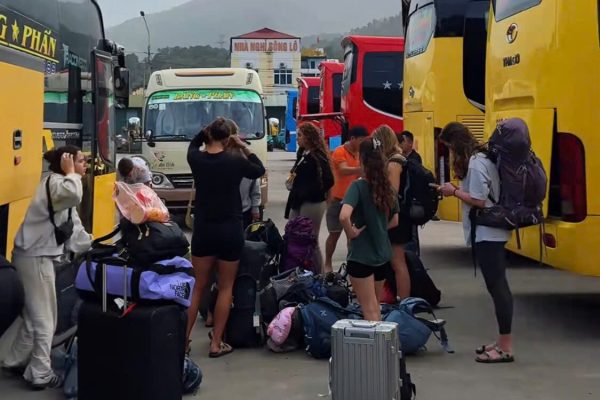
The standard route is a sleeper bus from Hanoi’s My Dinh bus station or Gia Lam bus station, depending on the operator. Journey time is roughly 5–6 hours, though overnight buses can stretch longer. Most travelers take the overnight option — you leave Hanoi around 10–11pm and arrive in Ha Giang in the early morning, which makes practical sense if you want to start the Loop the next day.
Operators like Hung Thanh, Queen Cafe, and a few others run this route regularly. Prices vary — check current rates directly when booking, as they shift seasonally and with fuel costs. Booking through your guesthouse in Hanoi or via a reputable booking site is usually the easiest option.
A few things to know:
The same operators run the return leg. If you’re continuing to Cao Bang for the Ba Be Lake or Ban Gioc Waterfall loop, there are connecting routes, though they’re less frequent and often require an early start or a change in Bac Kan. Check locally for current schedules — this route isn’t as well-documented online.
Learn more: Ha Giang Loop 4 Days 3 Nights
Ha Giang’s weekend market is the real thing — not a tourist market, but a weekly gathering where H’mong, Tay, Dao, and Lo Lo communities come down from the surrounding mountains to trade. You’ll see traditional indigo-dyed textiles, hand-embroidered bags, fresh produce from highland farms, live animals, and an atmosphere that feels genuinely unchanged.
The market area is walkable from most guesthouses in town. Go early — activity peaks in the morning and winds down by midday. If your schedule aligns with a Saturday or Sunday arrival, this alone is a reason to spend the night before your Loop starts.
Even outside market days, the area around the central market has morning vendors worth wandering through.
The Ha Giang Provincial Museum is small but worth an hour of your time, especially if this is your first time in the region. It covers the cultural history of the ethnic minority groups living across the province — the Hmong, Dao, Nung, and others — with exhibits on traditional clothing, agriculture, and the history of the border region.
It won’t blow you away visually, but it gives you useful context before you ride through villages on the Loop. You’ll recognize clothing styles, understand a bit about the farming terraces, and feel less like a passing tourist when you stop to look around.
Admission is typically very low. Opening hours can vary — check locally or ask your guesthouse.
If you’re renting a motorbike in Ha Giang City, this is the time to go over everything carefully before you leave. Test the brakes properly. Check the tire pressure. Make sure the lights work — both headlight and brake light. Confirm fuel reserve behavior if it’s a model you haven’t ridden before.
A checklist before departure:
If you’re riding with Loop Trails, your guide will typically do a full bike check before departure — but it’s still worth knowing what to look for yourself.
If you’re deciding between self-drive, Easy Rider, or a Jeep tour, scroll down to the “Which Option Is Right for You?” section — it breaks it down clearly.
Foreign visitors need a permit to ride the Ha Giang Loop because parts of the route pass through restricted border areas. The good news: this is not complicated. Your guesthouse or tour operator in Ha Giang City can arrange it for you, usually within a few hours and for a small fee.
If you’re booking through Loop Trails, permit handling is typically included or clearly outlined in your package — confirm this when booking.
Important: Permit requirements and procedures can change. As of the time of writing, the process involves registering with local authorities and receiving a physical permit you carry with you on the road. Rules around what’s required have shifted over the years — always confirm current requirements locally or with your tour operator before assuming anything.
Do this on arrival day, not the morning you want to leave. Bureaucratic delays are real.
Learn more: Ha Giang Cao Bang 5 Days 4 Nights
Ha Giang’s food scene isn’t going to make it onto a gastronomy map anytime soon, but there’s good, honest eating to be done here if you know what to look for.
Pho Bo (beef pho): Ha Giang has its own style — slightly different broth depth than Hanoi, often served with fresh mountain herbs you won’t find down south. Morning pho spots near the market area are usually your best bet.
Thắng Cố: This is the traditional horse meat stew cooked in a large pot — a staple at ethnic minority markets across the northern highlands. It’s acquired taste territory, but if you’re curious about regional food culture, the market day versions are the most authentic.
Bánh Cuốn: Steamed rice rolls, usually served as breakfast. Light, cheap, and a good option if you want something easy on the stomach before a long riding day.
Corn wine (rượu ngô): Ha Giang’s locally distilled corn liquor is genuinely good — smoother than you’d expect, with a slightly sweet finish. Pick up a bottle from a local shop if you want to take something back.
Thịt Lợn Cắp Nách (free-range mountain pork): The pigs in this region roam, forage, and grow slowly. The meat has a different flavor profile from commercially raised pork. Find it at local rice and meat restaurants — ask your guesthouse for recommendations.
Ha Giang has a small but decent cafe scene. A few spots near the town center have good coffee and reliable WiFi — useful if you need to plan your route, download maps, or sort out final logistics before departure. Ask locally for current favorites, as these change with the seasons.
Learn more: Ha Giang Homestay Guide
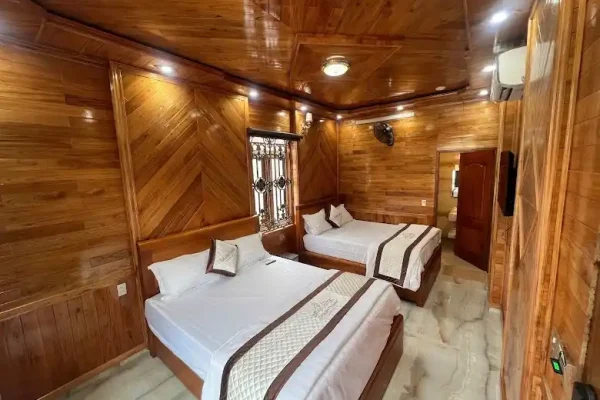
Accommodation clusters around the center of town, within walking distance of the market and main street restaurants. Options range from basic guesthouses to mid-range hotels. Most Loop-focused travelers don’t spend a fortune here — you’re saving energy for the road.
What to look for:
If you’re booking a tour with Loop Trails, accommodation recommendations can be included based on your itinerary and preferences. It’s worth asking.
Luggage storage note: Most guesthouses in Ha Giang City will hold your main bag while you’re on the Loop. You don’t want to ride with a 20-kg backpack — pack a day bag with what you need for 3–5 days and leave the rest behind.
Learn more: Ha Giang Cao Bang Ba Be Lake 6 Days 5 Nights
You’ve come back. Your legs are tired. Your phone is full of photos you haven’t looked at yet. The Loop has a way of leaving you slightly disoriented — somewhere between exhausted and wired. Here’s how to spend that return day or two well.
This sounds obvious, but it’s genuinely important. After 3–5 days of altitude, cold, and mountain roads, your body needs a beat. Treat yourself to a sit-down meal somewhere with a proper menu. Ha Giang’s local restaurants do good versions of braised pork rice, fresh spring rolls, and simple Vietnamese standards that feel like a relief after three days of roadside noodles.
Find a cafe. Charge everything. Back up your photos somewhere.
Lorem ipsum dolor sit amet, consectetur adipiscing elit. Ut elit tellus,
If your Loop route didn’t include Du Gia village or you came back via a different road and skipped a stretch of the Nho Que River valley, the area around Ha Giang City offers a quieter, lower-altitude version of that landscape. Some travelers rent a bike for a half-day to explore closer villages along the Lo River, which is gentler riding than the Loop itself.
This is also a good option if you arrived in Ha Giang a day early and haven’t started the Loop yet — it’s a low-stakes way to get a feel for the terrain before the real thing.
Ha Giang’s markets and small shops carry genuine crafts and products from the highland communities — many made by H’mong and Dao artisans who sell through local cooperatives or market stalls.
Worth looking for:
Prices are generally fair. Bargaining is acceptable in market settings but do it respectfully — these aren’t big-margin tourist shops.
Learn more: Ha Giang ATM
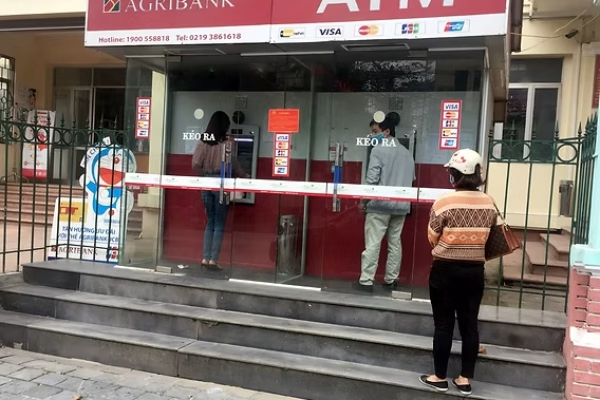
Ha Giang City has ATMs — Vietcombank, Agribank, and Techcombank branches exist in the center. Withdraw what you need here. Once you’re on the Loop, ATMs become rare and unreliable, especially past Dong Van. Cards are not accepted at most guesthouses or restaurants on the route.
A rough budget note: daily costs on the Loop (accommodation, food, fuel) can be surprisingly low, but the exact figure depends on your riding style, group size, and choices. Don’t rely on estimates you read online — they date quickly. Ask your operator or guesthouse for current ballpark figures.
If you don’t already have a Vietnamese SIM, get one in Hanoi — not because you can’t get one in Ha Giang, but because Hanoi has more options and clearer data plan choices. Viettel has the best coverage in remote areas of Ha Giang province — this matters on the Loop. Other networks can drop to nothing past Meo Vac.
You can top up data in Ha Giang City at mobile shops near the market. Download offline maps before you leave town.
Ha Giang has a provincial hospital and a few clinics for basic care. If you have a medical condition that requires ongoing treatment or if you’re carrying prescription medication, bring enough supply from Hanoi — don’t count on finding specific products here. Basic first aid supplies and common medications (rehydration salts, antidiarrheals, pain relief, antihistamines) are available at pharmacies in the center.
Travel insurance that covers motorbike riding in Vietnam is non-negotiable. Check your policy explicitly — some standard travel insurance policies exclude motorbike accidents. Know what you’re covered for before you ride.
Learn more: Ha Giang Loop by Jeep for Families & Groups
This is the question that comes up more than any other, and the honest answer is: it depends on your experience level, your travel style, and what kind of trip you want.
Here’s a straight breakdown:
| Self-Drive | Easy Rider (Guided) | Jeep Tour | |
|---|---|---|---|
| Best for | Confident riders, freedom seekers | First-timers, solo travelers, those who want a local guide | Groups, non-riders, comfort seekers |
| Experience needed | Manual motorbike riding experience | None required | None required |
| Social vibe | Independent | Connected — you’ll hear stories and local context along the way | Group-focused |
| Flexibility | High | Moderate | Lower (group schedule) |
| Difficulty | You manage everything | Guide handles navigation and logistics | Fully managed |
If this is your first time on a motorbike in Vietnam, the mountain roads of Ha Giang are not the place to learn. The grades are steep, the conditions unpredictable, and the traffic (especially trucks) requires real experience. An Easy Rider option with a local guide is the better call — and Loop Trails’ guides know these roads intimately.
If you’re a confident rider who wants the full experience of navigating Ma Pi Leng Pass under your own control, self-drive is genuinely one of the best motorcycle experiences in Southeast Asia.
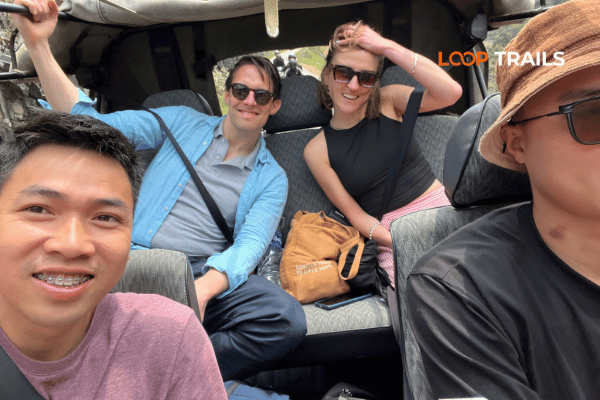
If you’re traveling in a group with mixed abilities, or you’d rather sit back and take in the landscape without managing road stress, a Jeep tour covers the major viewpoints and highlights with comfort.
[Browse Ha Giang Loop tour options on Loop Trails] — pick the format that fits and reach out if you want to talk through the options before booking.
Learn more: Ha Giang Packing list
Before the Loop:
After the Loop:
Learn more: Ha Giang Motorbike Rental
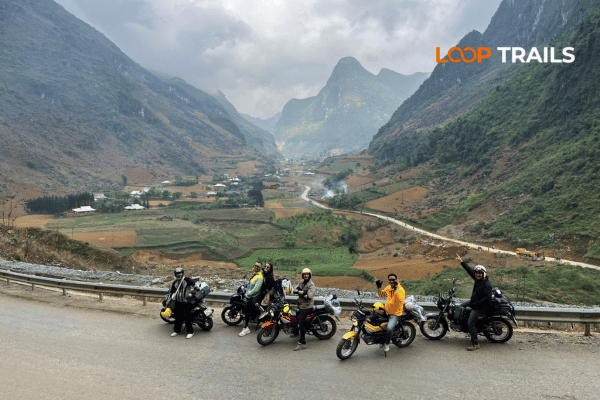
Ha Giang City isn’t the destination — the plateau is. But the city is the gateway, the preparation zone, and the landing pad. Treat it that way: arrive with enough time to get properly set up, leave with enough energy to enjoy what’s coming, and come back with enough sense to rest before you go.
The Loop will give you memories that take a while to fully process. Ha Giang City, quiet and practical as it is, bookends that experience in a way you’ll appreciate more than you expect.
Planning your Ha Giang trip and not sure which tour format fits your group? [Get in touch with Loop Trails on WhatsApp] — we’ll help you figure it out without any pressure.
Learn more: Ha Giang Adventure
Yes. Foreign visitors require a permit to enter certain restricted areas along the Loop route. Your guesthouse or tour operator in Ha Giang City can arrange this — confirm current requirements locally as procedures can change. Allow time on arrival day rather than the morning you plan to leave.
One full day is comfortable for most travelers — enough to sort the permit, check your bike, explore the market or museum, and eat well. If you arrive on a Friday night before a Saturday market, arriving a day early is worth it.
Generally yes. It’s a small, low-key provincial capital with a strong local community. Standard travel awareness applies — keep valuables secure, don’t leave items visible on your motorbike, and trust your instincts in unfamiliar areas at night.
Yes. Several rental operators exist in town, and Loop Trails offers motorbike rental in Ha Giang with a range of models. If you’re renting independently, inspect the bike carefully before signing anything and understand what you’re responsible for in case of damage.
Ha Giang has year-round appeal but the experience varies significantly by season. The buckwheat flower bloom (roughly October–November) is famous and draws larger crowds. The rice terrace harvest (September–October) is beautiful. Winter months (December–February) are cold at altitude but dramatic in landscape. Summer brings rain and fog but also lush greenery. Each season has genuine appeal — check current conditions before planning.
There are a few ATMs in Dong Van town, but availability and reliability are inconsistent. Don’t rely on them. Withdraw everything you need in Ha Giang City before departure.
You should be fully comfortable riding a manual motorbike in varied traffic conditions — not just straight roads, but hills, wet surfaces, and loose gravel. If you’ve rented a scooter in Bali or ridden around Hanoi, that is not equivalent experience. Ha Giang’s roads involve serious elevation changes and truck traffic. Be honest with yourself, or choose the Easy Rider option.
Yes — Loop Trails offers a combined Ha Giang + Cao Bang tour that covers both regions efficiently. If you’re already coming this far north, the Cao Bang loop (including Ban Gioc Waterfall and Phia Oac mountain area) is worth adding. It requires more total days but the combined route is one of northern Vietnam’s best.
Anything you don’t need for 3–5 days. Most guesthouses offer free luggage storage. Ride with a day bag: clothes for the weather, toiletries, chargers, cash, documents, and your camera. Leave the big backpack behind.
Food is available at every overnight stop and most villages along the main route. Quality varies, but you won’t go hungry. Bring snacks for long riding stretches between towns — energy bars or biscuits are useful. Roadside coffee is consistently available and surprisingly good.
Thắng cố is a traditional horse meat and organ stew, slow-cooked in a large communal pot and sold at highland markets across Ha Giang province. It’s an acquired taste and very much a cultural food experience. Give it a try at a market if you’re open to it — don’t expect it to taste like anything familiar.
You can browse available tour formats on the Loop Trails website and reach out via the contact/WhatsApp page with your travel dates, group size, and preferred format. The team will confirm availability and walk you through options. Booking in advance is recommended during peak season (October–November).
Contact information for Loop Trails
Website: Loop Trails Official Website
Email: looptrailshostel@gmail.com
Hotline & WhatSapp:
+84862379288
+84938988593
Social Media:
Facebook: Loop Trails Tours Ha Giang
Instagram: Loop Trails Tours Ha Giang
TikTok: Loop Trails
Office Address: 48 Nguyen Du, Ha Giang 1, Tuyen Quang
Address: 48 Nguyen Du, Ha Giang 1, Tuyen Quang
Facebook X Reddit Table of Contents Learn more: Ha Giang Loop Tours There’s a version of the Ha Giang Loop that doesn’t

Facebook X Reddit Table of Contents Learn more: Ha Giang Loop Tours There’s a moment somewhere on the Ma Pi Leng Pass

Facebook X Reddit Table of Contents Learn more: Ha Giang Loop Tours There’s a version of the Ha Giang Loop that ends