
Ha Giang Easy Rider: The Complete Guide (2026)
Facebook X Reddit Table of Contents Learn more: Ha Giang Loop Tours There’s a moment, usually somewhere on Ma Pi Leng Pass,

Thúy Kiều (Grace) is a travel blogger and content contributor for Loop Trails Tours Ha Giang. She holds a bachelor’s degree in Sustainable Tourism from Vietnam National University, Hanoi, and has a strong passion for exploring and promoting responsible travel experiences in Vietnam’s northern highlands.
Learn more: Ha Giang Loop Tours
Nobody comes to Ha Giang just for the food. They come for the passes, the rice terraces, the sheer cliff faces dropping into the Nho Que River. But somewhere between Ma Pi Leng and Dong Van, something shifts — you find yourself standing in a Sunday market with a bowl of something dark and earthy in your hands, surrounded by Hmong and Dao families who’ve been eating this way for generations, and the food becomes part of why the place stays with you long after you’re home.
Ha Giang’s cuisine isn’t designed to impress travelers. It’s functional, deeply tied to highland agriculture and ethnic minority culture, and in many cases it takes a little getting used to. But that’s exactly what makes it worth paying attention to.
This guide covers the dishes you’ll actually encounter on the Ha Giang Loop — what they are, where to find them, how to approach them if you’re skeptical, and what they tell you about the people who live here.

Ha Giang sits at Vietnam’s northern edge, bordering China, and its food reflects both that geography and the patchwork of ethnic minority communities who’ve called these mountains home for centuries — Hmong, Tay, Dao, Lo Lo, Nung, and others. Each group has its own food traditions, and the highland markets are where those traditions converge.
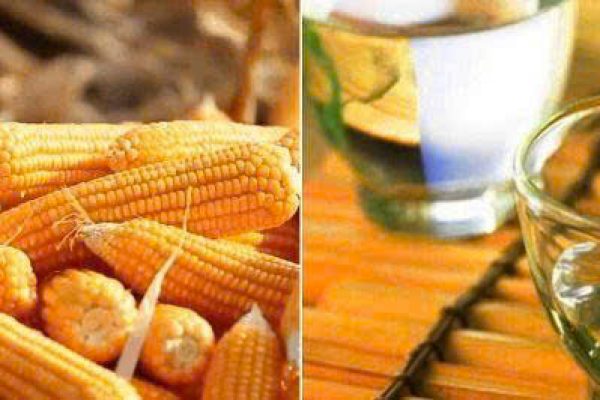
The landscape shapes what’s grown. Corn dominates the rocky karst terrain of the Dong Van Geopark, where rice paddies can’t take hold. Buckwheat flowers bloom in October and November, briefly turning the plateau violet-pink. Buffalo are raised for labor and meat. Foraging — herbs, mushrooms, bamboo shoots — fills the gaps.
What you won’t find much of: menus in English, fusion interpretations, Instagram-friendly plating. Ha Giang’s food scene is still largely local, which means the best eating happens at morning markets, at family-run homestays, and at roadside stalls where the cook is also the farmer.
That’s not a complaint. It’s the whole point.
Learn more: Ha Giang Food guide
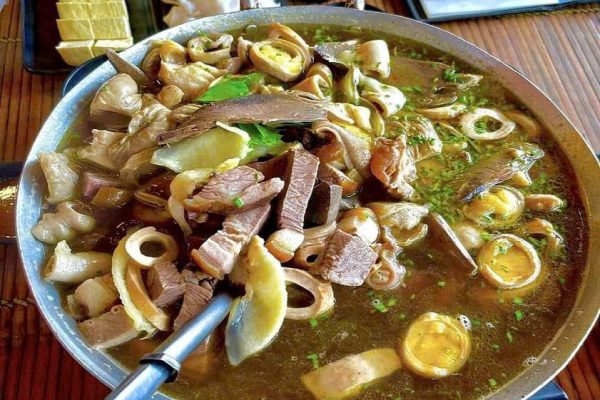
If you spend any time at a highland market in Ha Giang, you’ll smell Thang Co before you see it — a deep, complex, slightly funky aroma rising from large iron cauldrons over wood fires.
Thang Co is a Hmong stew with roots going back centuries. The traditional version uses horse meat and offal — heart, lungs, liver, intestines — slow-cooked with a mix of spices that typically includes star anise, cardamom, lemongrass, and chili. Some versions use buffalo or beef instead of horse, particularly in areas where horse meat is less common or more expensive.
The broth is thick and dark, the flavor intensely savory and warming. It’s not subtle. The spice blend cuts through what might otherwise be an overwhelming richness.
Markets closer to Meo Vac and the Hmong heartland tend to serve the most traditional versions. In Dong Van town and further toward Ha Giang city, you’ll find versions that have been softened slightly for broader palates — less offal, more standard cuts of meat.
Thang Co is market food, which means timing matters. The best bowls appear at:
Thang Co is almost always served with a small side of corn wine — the pairing is traditional and, once you understand the logic, makes complete sense. The wine cuts the richness; the stew carries the cold.
The short answer: yes, if you have any openness to offal and nose-to-tail eating. No, if the idea of organ meat is a firm dealbreaker — there’s no shame in that.
A few practical notes: Thang Co is cooked for a long time over heat, which handles food safety. The “market stall = risky” assumption doesn’t really apply here — these vendors have been running the same operation for years, often decades. Trust your eyes: if the pot is busy, the turnover is high, and that’s a good sign.
Go early. The best Thang Co is gone by mid-morning at busy markets.
Learn more: Ha Giang Loop 4 Days 3 Nights
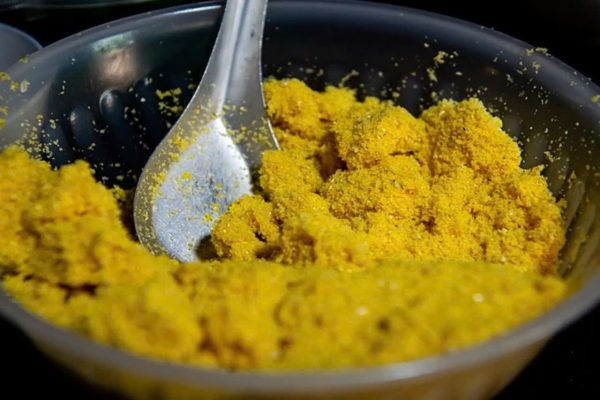
Men Men (pronounced roughly “mern mern”) is the everyday staple of the Hmong highlands — a steamed corn porridge that functions like rice does in the rest of Vietnam. It’s made from dried corn that’s been ground into a coarse flour, then steamed in a bamboo basket until it comes together in a soft, slightly grainy texture somewhere between polenta and couscous.
The flavor is mild and slightly sweet from the corn itself. It doesn’t have the stickiness of rice or the creaminess of a Western polenta — it’s drier, earthier, and more filling than you’d expect from something that looks so simple.
Men Men is typically eaten with accompanying dishes rather than on its own: braised pork, pickled vegetables, leafy greens stir-fried with garlic, or whatever’s available from the market that day. At homestays along the Loop, you’ll often see it served alongside a broth or soup.
Homestays are your best bet. Many family-run homestays in the Dong Van Geopark area — particularly around Lung Cu, Meo Vac, and the villages north of Yen Minh — serve Men Men as part of their evening meals. If you’re eating breakfast at a local market stall rather than a tourist-facing café, you may find it there too.
Don’t expect it on many menus with English translations. Ask, or look for what the locals at the next table are eating.
Learn more: Ha Giang Loop for Families & Groups
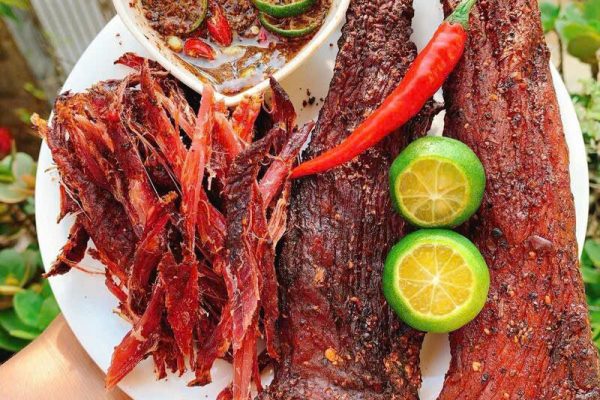
This is the highland equivalent of jerky, and it’s extraordinary. Chunks of buffalo meat are marinated with herbs and spices, then hung above a wood fire and smoked slowly for days — sometimes weeks. The result is intensely flavored, slightly chewy, deeply smoky, with a complexity that bears no resemblance to commercial dried meat.
You’ll see it hanging in bundles at markets and sold in vacuum-sealed packets in town shops. The market versions tend to be better. It keeps well, which makes it a popular thing to bring home — though check your country’s import rules if you’re planning to pack some in your luggage.
Learn more: Ha Giang Loop 2 Days 1 Night
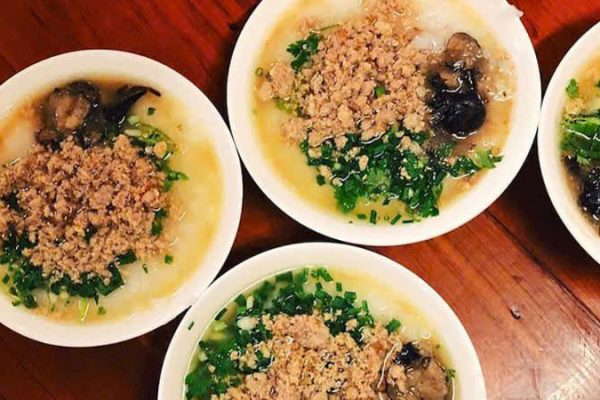
This one surprises a lot of travelers. Au Tau is a type of poppy cultivated in the highlands (related to but different from opium poppies — it’s grown legally for food use here), and the seeds are used to make a dark, rich porridge with a distinctive slightly bitter, warming quality.
Chao Au Tau is considered a medicinal dish — warming in cold weather, good for circulation, traditionally eaten in the morning. You’ll find it most readily in Dong Van town, where a few small stalls and family restaurants specialize in it. It’s unusual, a little polarizing, and entirely worth trying at least once.
Note: The legality and cultivation specifics of Au Tau vary — this is a legal, food-use crop in Ha Giang’s context, but it’s worth knowing what you’re eating.
Learn more: Ha Giang Loop Weather
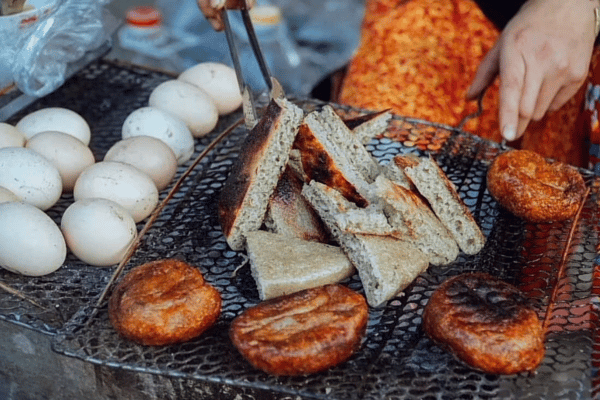
October and November turn the Dong Van plateau into something out of a film set — buckwheat flowers bloom across the rocky fields in waves of pink, white, and deep violet. But buckwheat isn’t just a photo opportunity.
The locals use it across a surprising range of products:
Even outside flowering season, buckwheat products are widely available throughout the Loop. Stock up on honey cake at Dong Van market — it travels well and makes a genuinely good souvenir.
Learn more: Ha Giang Loop for Beginners
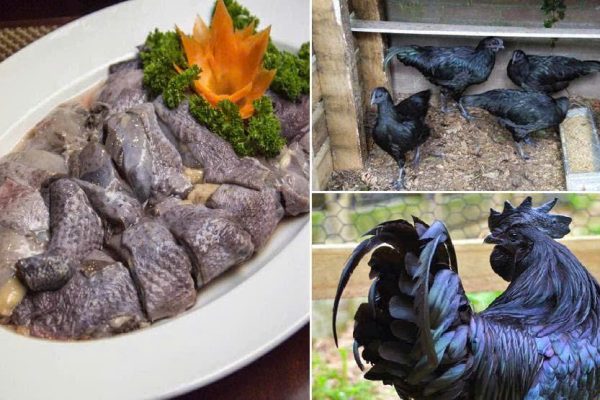
Common throughout northern Vietnam’s highland regions, Ga Den is a breed of chicken with black skin, black bones, and darker, more intensely flavored meat than the standard commercial bird. It’s typically prepared as a slow-cooked soup (minh mon) or grilled over charcoal.
The flavor is noticeably richer and gamier than regular chicken — people either love it or find it too strong. At homestays where the family raises their own chickens, there’s a reasonable chance what you’re eating is Ga Den or a local variant.
Learn more: Ha Giang in September & October
We’ve written a full guide to Ha Giang’s corn wine culture separately (link below), but it deserves a mention here because it’s woven into every food experience on the Loop. Distilled from fermented corn and typically served at room temperature in small cups or shot glasses, this is the social glue of highland gatherings.
Expect it at homestay dinners, market stalls alongside Thang Co, and anywhere a local wants to show you hospitality. Alcohol content varies — some batches are relatively mild, others will genuinely catch you off guard. Drink slowly and eat alongside it.
Learn more: Ha Giang Market Days
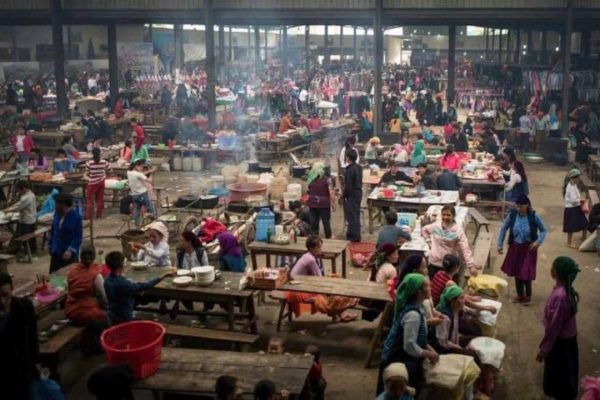
The highland markets of Ha Giang aren’t set up for tourism. They exist because communities spread across remote valleys and mountain ridges need a regular place to trade — animals, crops, textiles, tools, and food. The fact that travelers can attend them is incidental, and that’s what makes them worth going to.
Dong Van’s Sunday market is the most accessible of the major highland markets — the town has proper guesthouses and restaurants, and the market draws significant crowds including travelers. That said, the food section remains largely local: Thang Co vendors, grilled corn, sticky rice wrapped in leaves, fresh herbs and vegetables, live poultry and livestock in the outer areas.
Get there early — the market peaks between 7am and 10am. By midday many vendors are packing up.
A harder-to-reach but arguably more atmospheric option than Dong Van. Meo Vac sits deep in the valley below Ma Pi Leng Pass, and its Sunday market pulls in Hmong, Dao, and Giay communities from surrounding villages. The food stalls here tend to be more traditional, less adapted for outside eyes.
Thang Co is front and center. So is corn wine. So is the kind of market energy that’s genuinely hard to find anywhere else.
Located further west in Xin Man district, Can Cau isn’t on every Loop itinerary — but it’s one of the most photogenic and least tourist-heavy markets in the region. The Saturday timing means you’d need to plan your Loop route around it deliberately.
The food offering is smaller than Dong Van or Meo Vac, but what’s there is consistent: Thang Co, grilled meats, local produce, corn wine.
Du Gia Waterfall is a popular stop on the eastern arm of the Loop (and we’ve covered it in detail elsewhere on this site). The surrounding Tay villages have a distinctly different food culture from the Hmong highlands — more emphasis on rice, fresh river fish, bamboo-cooked dishes. If you’re spending a night near Du Gia, dinner at a family homestay is the move.
Learn more: Ha Giang to Cao Bang
Eat where locals eat. This sounds obvious but it takes some nerve when you’re faced with a stall that has no menu, no English, and a bench made of a plank. Those stalls are almost always the best option.
Morning markets are the main event. Most highland market food is gone by 10–11am. Plan your riding schedule accordingly.
Point and smile. You don’t need Vietnamese to order at a market stall. Point at what looks good, hold up fingers for quantity, hand over money when someone tells you a price. It works.
Carry small bills. Market transactions are cash only and vendors rarely have change for large notes. Have a stash of 10,000–50,000 VND notes ready.
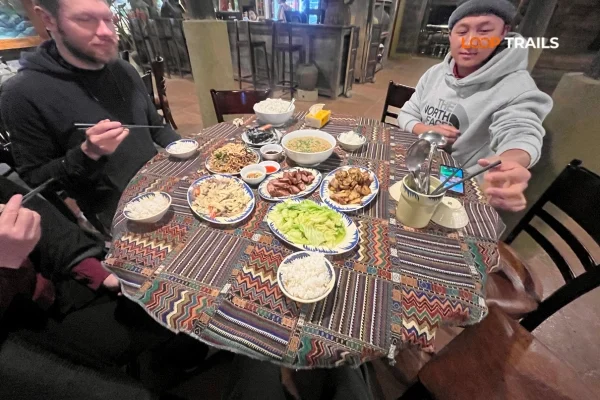
Homestay dinners are often the highlight. Don’t skip them in favor of restaurant eating in town. A proper family-cooked homestay dinner — multiple shared dishes, local rice wine, a host who wants to know where you’re from — is frequently the meal travelers remember most.
Stomach adjustments are normal. You’re eating differently than usual, with different bacteria in different water in a different climate. Go easy the first day or two, stay hydrated, and carry some basic stomach medication as a precaution. Thang Co specifically — if you’ve never eaten offal, start with a small portion.
Vegetarians: it’s manageable but requires planning. Men Men, fresh vegetables, rice dishes, tofu, and eggs are widely available. Communicating “no meat” is harder without Vietnamese, but showing a translation on your phone (“không ăn thịt”) helps. Vegetarian options thin out significantly at highland market stalls.
Learn more: Ha Giang Jeep Tours
This is a real consideration, not just a sales pitch. How you travel the Loop affects what you eat and how deeply you engage with the food culture.
Easy Rider tours (guided motorbike, you ride pillion) give you the most flexibility for spontaneous stops. Your guide knows where the good market stalls are, can order for you, can translate, and can steer you away from tourist traps. If experiencing the food culture deeply matters to you, an Easy Rider with a knowledgeable local guide is the best option.
Self-drive motorbike gives you freedom but requires more navigation and local knowledge on your part. You can absolutely find great food self-riding the Loop — but you’ll need to do more work to find it, and you’ll miss the context a good guide provides.
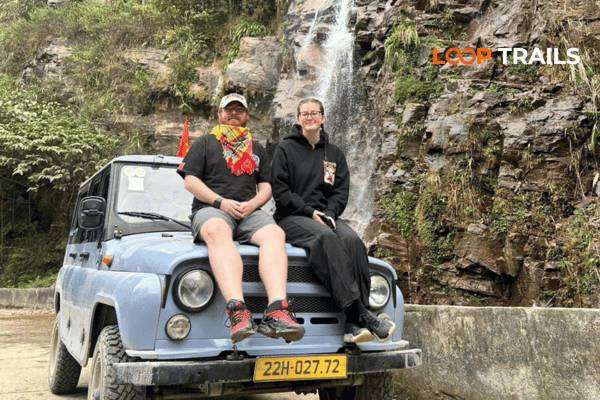
Jeep tours cover more ground with more comfort, which can be the right call for certain travelers. Our jeep itineraries include market stops and meals at local spots, and your driver/guide can handle ordering and recommendations. The trade-off is slightly less flexibility for impromptu roadside stops compared to motorbike.
All Loop Trails tours — whether Easy Rider, self-drive, or jeep — are built around authentic experiences rather than tourist-track meals. We deliberately route itineraries through markets on the right days of the week so you don’t miss the food that actually matters.
→ Not sure which option fits your travel style? [Browse our Ha Giang Loop tour options] or [drop us a message on WhatsApp] — we’re happy to help you figure it out based on your experience level and what you want to get out of the trip.
Learn more: Ha Giang Loop Self-Drive & Motorbike Rental
| What | Where/When | Notes |
|---|---|---|
| Thang Co | Sunday markets (Dong Van, Meo Vac) | Go before 10am |
| Men Men | Homestays, local market stalls | Ask — not always on a menu |
| Smoked buffalo | Markets, town shops | Vacuum-sealed versions travel well |
| Chao Au Tau | Dong Van town restaurants | Morning dish, ask locally |
| Buckwheat products | Throughout Dong Van Plateau | Year-round availability |
| Ga Den chicken | Homestays, local restaurants | Ask if it’s local breed |
| Corn wine | Everywhere | Drink with food, pace yourself |
Learn more: Loop Trails Tour Ha Giang
Thang Co is a traditional Hmong stew made with horse or buffalo meat and offal, slow-cooked with highland spices. Market stall versions are generally safe — they’re cooked for hours over heat and vendors have been running the same operation for years. Go early for the best quality and highest turnover.
Men Men is a steamed corn flour porridge with a mild, slightly sweet, earthy flavor — drier and grainier than polenta. It’s the highland staple that replaces rice in Hmong communities. Try it at a family homestay for the best version.
Yes, though it requires some effort. Rice, tofu, eggs, fresh vegetables, and Men Men are widely available. At market stalls, options are more limited. Having a translation ready on your phone (“không ăn thịt” — I don’t eat meat) helps significantly.
Most highland markets run on specific days — Dong Van and Meo Vac on Sundays, Can Cau on Saturdays. Markets are busiest and food stalls best-stocked between 7am and 10am. If you want to hit a specific market, plan your Loop itinerary around the day.
Generally yes, when purchased from established local vendors and homestays. Homemade distilled spirits carry some small risk (methanol contamination) when sourced from unknown producers — stick to what your homestay host serves you rather than buying from random roadside sellers. And eat while you drink.
Chao Au Tau is a porridge made from highland poppy seeds (a food-use crop legal in Ha Giang). The flavor is slightly bitter, warming, and quite distinctive — often described as medicinal. It’s considered a morning dish. Try it in Dong Van town, where several small restaurants specialize in it.
Yes. Vacuum-sealed smoked buffalo meat, buckwheat honey cake, buckwheat tea, and jarred corn wine all travel reasonably well. Check your home country’s import regulations for meat products before packing them. Buckwheat products and tea are generally unrestricted.
Not strictly necessary, but a knowledgeable guide makes a significant difference — especially at markets, where knowing which stall to choose, how to order, and what you’re actually eating adds a lot to the experience. Easy Rider guides on the Loop typically have strong local food knowledge.
Yes — Ha Giang city has a range of restaurants catering to travelers, and Dong Van town has several guesthouses with decent food. But the most memorable eating on the Loop happens at homestays and markets, not in restaurants.
Head to the local market near wherever you’re staying, look for a busy food stall, and point at whatever’s in the pot. Pho, banh mi, and rice-based breakfast dishes are common in Ha Giang city. If you’re already up in the plateau near Dong Van, Men Men and grilled corn with a buckwheat tea are a solid start.
The famous buckwheat flower season is October–November, when the plateau blooms. But buckwheat products — tea, honey cake, wine — are available year-round across the Dong Van area.
The whole dinner is usually the best dish. Homestay meals are typically shared, multi-course affairs: whatever the family grew or bought at market that week. Expect fresh vegetables, some form of pork or chicken, rice or Men Men, and almost certainly a round of corn wine. Say yes to everything.
Contact information for Loop Trails
Website: Loop Trails Official Website
Email: looptrailshostel@gmail.com
Hotline & WhatSapp:
+84862379288
+84938988593
Social Media:
Facebook: Loop Trails Tours Ha Giang
Instagram: Loop Trails Tours Ha Giang
TikTok: Loop Trails
Office Address: 48 Nguyen Du, Ha Giang 1, Tuyen Quang
Address: 48 Nguyen Du, Ha Giang 1, Tuyen Quang
Facebook X Reddit Table of Contents Learn more: Ha Giang Loop Tours There’s a moment, usually somewhere on Ma Pi Leng Pass,

Facebook X Reddit Table of Contents Learn more: Ha Giang Loop Tours There’s a version of the Ha Giang Loop that people
Facebook X Reddit Table of Contents Learn more: Ha Giang Loop Tours There’s a moment on the Ma Pi Leng Pass —