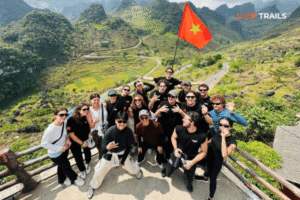


Thúy Kiều (Grace) is a travel blogger and content contributor for Loop Trails Tours Ha Giang. She holds a bachelor’s degree in Sustainable Tourism from Vietnam National University, Hanoi, and has a strong passion for exploring and promoting responsible travel experiences in Vietnam’s northern highlands.

Learn more: Ha Giang Loop Tours
If you’ve been searching around for a Ha Giang Loop 4 days plan, you’ve probably noticed two things. First, every blog post says it’s the perfect length. Second, almost none of them actually explain why, or what the days look like once you stop scrolling Pinterest and start packing a bag.
This guide is the version I wish I’d had on my first run. I’ll walk you through what 4 days really delivers, the day by day route, what each style of riding feels like (Easy Rider, self drive, jeep), what the trip costs to budget around, and the practical stuff most posts skip: weather windows, paperwork, common mistakes, and where things actually go wrong. No fluff. No “embark on a journey” language.
If you’ve already decided and just want to lock in dates, you can jump to a Ha Giang Loop tour or motorbike rental. Otherwise, keep reading.
Learn more: Ha Giang Loop 2 Days 1 Night
Let’s just answer this first. Yes, 4 days is enough for the Ha Giang Loop, and it’s the length most travelers settle on after researching. But “enough” depends on what you want from the trip.
Three days versions of the loop almost always cut Day 3, which is the day with the Du Gia detour, the Nho Que River boat, and the homestay night that most travelers remember more than anything else. You can technically ride the standard loop in three days, but you’ll be skipping the parts that make people emotional about the trip.
A 4 days loop adds:
Five days lets you stretch out, add Lung Cu Flag Tower (the northernmost point of Vietnam) without rushing, take a slower morning at Du Gia, and not feel like every single hour has to be productive. If you have the time, take it. But the bump from 3 to 4 days is bigger than the bump from 4 to 5.
If you have exactly 4 days and not a minute more, this is the version of the trip the loop was practically designed for. You’ll see the headline scenery, ride the named passes, sleep in the right villages, and come back with the photos and the stories. If your trip has more flex, push toward 5. If it has less, take 3 with a jeep and skip the agonizing.
Learn more: Ha Giang Loop 3 Days 2 Nights
Distances vary, ride times vary, weather varies. So I’m not going to write fake hour by hour pacing. What I will do is describe what each day genuinely looks like when it’s done well.
The morning starts in Ha Giang City. If you arrived on an overnight sleeper bus, you’ll have time for breakfast and a shower before the safety briefing. Real talk: don’t try to ride the loop on the same morning you arrive on the sleeper. You’ll be tired, the briefing will feel rushed, and the first hour of riding is when most low experience riders make their first mistake.
The actual ride day starts after breakfast. You leave the city heading north, follow the Mien River for a while, and start the climb toward Tam Son. The first big stop is the Quan Ba Heaven Gate, with the Twin Mountains rising out of the rice terraces below. Your guide will probably make a joke about what they’re locally called. Just go with it.
From Heaven Gate, you continue through Quan Ba town, then climb again toward Yen Minh. The pine forest descent into Yen Minh is one of those quietly underrated stretches: the road is smooth, the smell of pine is everywhere, and after the first big day of riding, you’re starting to settle in. By late afternoon you’re checked into a small hotel or guesthouse, showering off the road dust, and probably eating a lot of rice with vegetables and pork.
Day 1 isn’t the most dramatic day of the loop. It’s the warmup. That’s the point.
This is where the loop really starts to deliver. You leave Yen Minh and climb into the karst plateau proper. The first major moment is the Tham Ma Pass, the photogenic switchback section that shows up in every Instagram post about Ha Giang. There’s a viewpoint above the bends where local kids sometimes rent flower bouquets to travelers for photos, a small cottage industry that’s grown since the loop got famous.
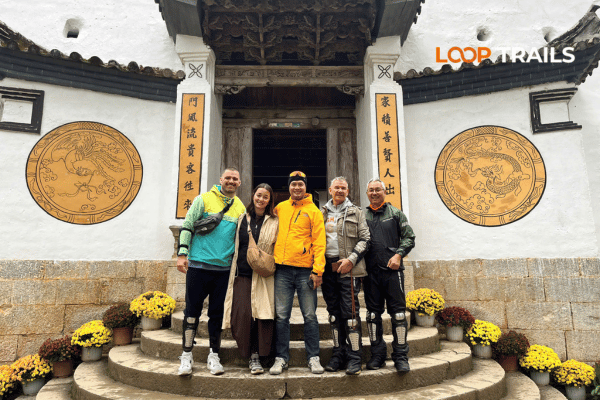
After Tham Ma, you drop into Sung La Valley and stop at the H’mong King Vuong’s old mansion. It’s not the most spectacular building you’ll see in Vietnam, but the courtyard and stone walls are worth the half hour. From Sung La, the road continues to Pho Bang and Lo Lo Chai, with the option to detour to Lung Cu Flag Tower if your group has the energy and the weather is clear.
Most groups push on to Dong Van by mid afternoon. The town has a small French era Old Quarter, a few coffee shops, and a Sunday market that’s one of the best on the loop if your dates align. After the riding day, walk the Old Quarter at dusk. It’s small but worth a slow lap.
Day 2 is the day the trip starts to feel real.
This is the day you’ll think about for weeks afterward.
After breakfast in Dong Van, you ride out toward Meo Vac via the Ma Pi Leng Pass. Ma Pi Leng is the signature road of the loop: a high, narrow pass cut into cliffs above the Nho Que River. There are several viewpoints along the way, including the Skywalk, where almost every group stops for the canyon photos. The view down into the canyon is the kind of thing photos don’t really capture. You’re better off putting the phone down for a minute.
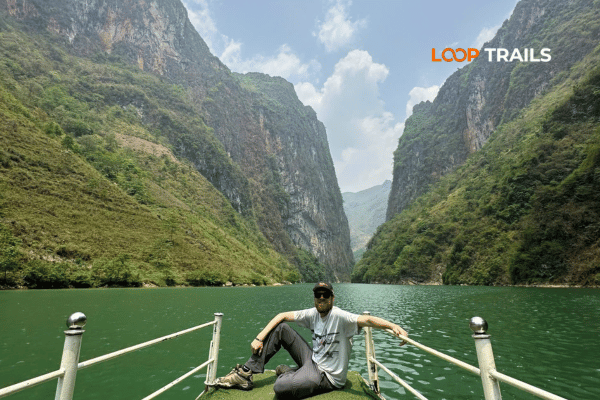
A few kilometers further, there’s the option to detour to the Nho Que River for a short boat trip into the Tu San Canyon. This is paid separately and isn’t part of every tour, but it’s worth the small extra cost when the weather is good. The water is a deep emerald green, the canyon walls rise sharply on either side, and the boats are quiet enough that you can actually hear the canyon’s silence. If it’s pouring, skip it. The view doesn’t translate through rain.
After Meo Vac, the road turns south toward Du Gia, smaller villages and quieter roads. Du Gia itself is a village built around a waterfall, with a swimming hole that’s heaven after a long ride day. The homestays here are family run wooden stilt houses, and dinner is usually served family style on long shared tables. There will be corn wine. Your guide will pour. Pace yourself, you have a ride day tomorrow.
This is the night travelers remember.
The final ride day is calmer. You head out of Du Gia along smaller back roads through valleys and small markets. There aren’t many “named” stops, but the riding is some of the most enjoyable on the loop, low traffic, gentler curves, slower pace. Most groups stop for lunch in a roadside village and arrive in Ha Giang City by mid afternoon.
Once you’re back, you’ll have time to shower, repack, and grab dinner before catching an evening bus or sleeper to Hanoi. Don’t underestimate how tired you’ll be. A long ride day plus a 6 to 8 hour bus is a lot. If your schedule allows, sleep in Ha Giang City one more night and travel back the next morning.
Quick CTA: If this version of 4 days is the trip you want, you can lock in dates with our Ha Giang Loop 4 days tour or message us on WhatsApp with your dates. We’ll match you to the right style (Easy Rider, self drive, or jeep) without the hard sell.
Learn more: Ha Giang Motorbike Rental
The itinerary is roughly the same across all three styles. What changes is how you actually experience it.
You ride pillion behind a local driver. He carries your luggage, sets the pace, picks the stops, knows the road. You hold your camera, you look at the view, you don’t think about gears or potholes.
The driver matters more than the bike. A good Easy Rider has done the loop dozens of times in every season, knows where the rough patches are this month, knows which homestays serve better dinners, and speaks enough English for the day to feel like a real guided trip rather than a transfer. Cheap tours often skimp on driver experience. Ask in advance who’ll be driving you.
Best for: travelers who don’t ride, nervous riders, solo travelers who want company on the road, anyone whose priority is photos and zero stress.
You rent the motorbike, you ride it. Most well run self drive tours include a lead guide riding ahead and a tail guide at the back. The lead sets the pace, knows the route, handles bookings. The tail keeps an eye on slower riders and helps with mechanical issues.
Self drive on the loop is genuinely rewarding, but it’s not a place to learn to ride. You’ll handle real mountain roads with switchbacks, gravel patches, blind corners, and trucks that swing wide. If you ride at home regularly and you’re comfortable on a manual or semi auto bike, this is the most immersive way to experience the loop. If you’ve only ridden a scooter on flat tourist beaches, this isn’t where you build skill.
Best for: confident riders who want the full experience.
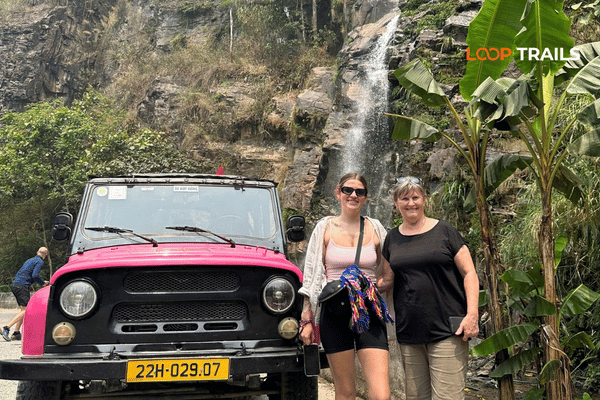
You ride in a 4 to 7 seater jeep or van, driven by a local. Same route, same stops, same scenery, but behind a windshield. You give up some immersion in exchange for comfort, weather protection, and zero physical demand on you.
Jeep tours have grown a lot in 2024 and 2025. They’re now the standard option for travelers with kids, older parents, or anyone who’s done the math on the weather and doesn’t want to gamble.
Best for: families, older travelers, couples where one person doesn’t want to ride, anyone worried about rain or cold.

Learn more: Ha Giang Loop 4 Days 3 Nights
Here’s the honest cheat sheet:
| Your situation | Best fit for 4 days |
|---|---|
| Never ridden a motorbike | Easy Rider or jeep |
| Ride a scooter at home, nothing more | Easy Rider |
| Ride a real motorbike at home regularly | Self drive |
| Solo, want the trip handled | Easy Rider |
| Couple, both confident riders | Self drive (one bike each) |
| Couple, only one rides | Easy Rider for both, or self drive plus pillion |
| Traveling with kids or older parents | Jeep |
| Traveling in summer monsoon or deep winter | Jeep, or be flexible on dates |
| Want maximum independence | Self drive |
| Just want it sorted | Easy Rider |
If you genuinely can’t decide, default to Easy Rider. It’s the lowest risk option for the same scenery. Self drive is more rewarding for the right rider, but the cost of getting it wrong is real and can include hospital trips that aren’t covered by your insurance.

Learn more: Ha Giang Cao Bang 5 Days 4 Nights
Specific weather varies year to year. What follows is the general feel, not a guarantee, and you should always check forecasts 48 hours before departure.
If you’re flexible on dates, late September, late October, and April are the windows I’d push you toward. If you have to ride in monsoon, plan for rain and be willing to wait out a bad weather day.
Learn more: Ha Giang Cao Bang Ba Be Lake 6 Days 5 Nights
You can absolutely DIY the loop. People do it. Here’s what it actually involves:
For experienced solo travelers who’ve done multi day rides before in other countries, this can be the right move. For most first time Vietnam travelers, it’s more friction than fun. The gap between “DIY budget” and “joining a small group tour” is usually smaller than people expect once you add up the parts.
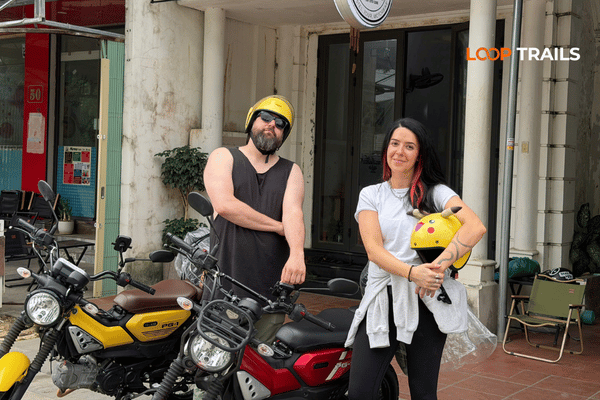
There’s also a middle option: rent the bike but follow a guide. Our motorbike rental in Ha Giang can be paired with a route guide if you want to ride yourself but skip the navigation and booking headaches. That’s the option I’d push toward for confident riders who don’t want a full guided tour.

Learn more: Loop Trails Tour Ha Giang website
I’m not going to quote specific numbers because rates change with season, group size, and inclusions, and dropping a number in a blog post is how outdated bad info spreads. Instead, here’s what your budget needs to cover:
When you compare quotes from different operators, ask:
A dramatically cheaper tour usually cuts something from this list. That’s not necessarily wrong, but you should know what you’re buying before you book.

Learn more: Ha Giang Sleeper Bus
There’s no airport in Ha Giang City. You’re getting there by road from Hanoi.
Three main options:
A few practical things:
Learn more: Motorbike License IDP Guide 2026
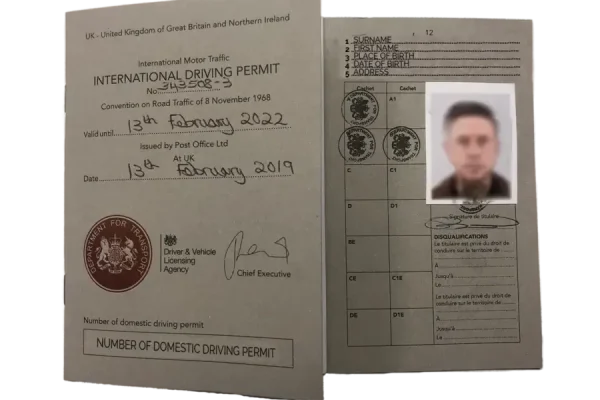
To legally ride a motorbike in Vietnam, you generally need a Vietnamese license or a 1968 International Driving Permit (IDP) with a motorbike category endorsement. Many travelers ride without one. Many tour companies rent without checking. Whether police enforce this on the loop varies, and rules can change.
We don’t promote any specific workaround. What we recommend:
The biggest issue isn’t roadside checks. It’s insurance disputes after a crash. If something goes wrong and you weren’t licensed, your policy may not pay. Worth thinking about before you sign up for self drive on a road you’ve never seen.

Learn more: Ha Giang Packing list
You’re carrying everything on a bike or in a small jeep. Pack light. Most main bags travel with the support vehicle if your tour has one, with a small day pack on the bike.
Essentials:
Worth bringing: a small dry bag or zip lock for your phone and documents. Mountain rain isn’t predictable.
Skip: a second pair of shoes, hardback books, anything you’d cry about losing in a low speed slide.
Learn more: Ha Giang Road Conditions 2026
Most of the loop is paved. Quality varies. Patches of broken asphalt, gravel, ongoing construction, and occasional landslide cleanups are normal. Conditions change every season. Reports from a year ago are usually outdated.
Some honest things:
CTA: If you want a lead rider on the route who actually knows where the rough patches are this season, our Easy Rider and self drive 4 days tours include experienced local guides who ride with you the entire loop, not just the photo stops.

Learn more: Quan Ba Heaven Gate
Beyond the day by day, the highlights most travelers come for:
You’ll see most of this comfortably in 4 days. You won’t see all of it, that’s where Day 5 starts to make sense.

Learn more: Ha Giang Food guide
Three nights, three different vibes:
If you have specific needs (private bathroom, queen bed, dietary restrictions), flag them when you book. Most operators can adjust with enough notice.
On food, what you’ll likely meet:
Vegetarians and vegans can eat well, but flag dietary needs early so homestays can prep.

Learn more: Ha Giang Loop Mistake to Avoid
Patterns we see again and again:
There’s no big scam epidemic on the loop. Just normal traveler mistakes amplified by mountain roads.
Learn more: Cao Bang Loop 3 Days best kept secret
If your trip has more flex, this is worth thinking about. Cao Bang sits east of Ha Giang and is home to Ban Gioc Waterfall (on the Chinese border) and the Phia Oac mountain area. It’s quieter than Ha Giang in 2026, fewer tourists, more remote feel.
Combining the two well takes 7 to 10 days total and is easier through one operator who covers both regions. If you have that time, our Ha Giang and Cao Bang combine tour is built for that. If you only have 4 days, save Cao Bang for next time, you’ll come back.
Learn more: Ha Giang Loop by Jeep for Families & Groups
A 4 days Ha Giang Loop is one of the best uses of 4 days in Vietnam. The geography is genuinely special, the route is well established, and the standard 4 days structure gives you enough room to actually experience the loop instead of skimming it.
The choice that matters most isn’t the operator. It’s the style: Easy Rider, self drive, or jeep. Pick that based on your honest riding experience, not your ego or your travel friend’s opinion. Once you’ve picked the style, find an operator who’s transparent about what’s included, what bike model you’ll get, and who’s actually leading the route on the day.
If that’s the kind of trip you’re after, that’s what we do. Browse our Ha Giang Loop tours, look at motorbike rental options if you’d rather ride independently, or message us on WhatsApp with your dates and riding background. We’ll send back an honest recommendation, even if it means pointing you toward a different style than the one you came in asking about.
Final CTA: Ready to book? Lock in a Ha Giang Loop 4 days tour or grab a rental bike with a route guide. Still narrowing it down? Send a WhatsApp with your dates and riding experience. We’ll match you with the right option, no hard sell, no fake urgency.
Learn more: What to wear on Ha Giang Loop?
Yes, 4 days is the most popular length for a reason. It covers the full loop including Du Gia and Ma Pi Leng without feeling rushed. Three days skips Du Gia and feels tight. Five days is more relaxed if you have the time.
The 4 days version adds a Du Gia detour with a waterfall, swimming hole, and homestay night that’s a highlight for most travelers. Three days versions cut this and feel more compressed.
Only if you’re self drive. Easy Rider and jeep passengers don’t need any experience. For self drive, you should be comfortable on a real motorbike (not just a scooter) on twisty mountain roads.
It depends on style, season, group size, and inclusions. Rather than focus on a single number, compare what each tour covers (bike, helmet quality, meals, accommodation, transfers) and pick based on value, not the lowest headline price.
You can, but for first time Vietnam travelers it’s usually more friction than fun. You’ll handle bike sourcing, accommodation booking, navigation, and any breakdown alone. A middle option is renting a bike and following a route guide.
Late September to early November for autumn rice and clearer skies (also the busiest). March to May for milder weather and fewer crowds. Summer is lush but rainy. Winter is cold but quiet and sometimes spectacular.
The roads are real mountain roads with risks: traffic, weather, hairpins. Most accidents happen to inexperienced riders going too fast. With a proper helmet, conservative riding, and a guide who knows the route, the loop is doable for most travelers. If you’re unsure, take Easy Rider or jeep.
To legally ride in Vietnam you generally need a Vietnamese license or a 1968 IDP with a motorbike category. Rules can change and enforcement varies. If license and insurance are a concern, Easy Rider or jeep removes the question.
By sleeper bus, limousine van, or private transfer. Most reputable tours can book the bus for you when you reserve. Don’t try to ride the loop the same morning you arrive on a sleeper, take a rest morning first.
Yes, but it works better as a single combined trip rather than tacking Cao Bang onto a finished loop. A combined Ha Giang and Cao Bang trip usually takes 7 to 10 days total.
For October and weekend departures, several weeks ahead. Off season you can sometimes book a few days out. Bus seats from Hanoi often sell out faster than tour spots, so handle both at once.
Light rain is manageable with proper gear. Heavy rain or fog on high passes means slowing down or pausing. A good operator adjusts the schedule rather than pushing through unsafe conditions. If you’re worried about weather risk, take a jeep.
Contact information for Loop Trails
Website: Loop Trails Official Website
Email: looptrailshostel@gmail.com
Hotline & WhatSapp:
+84862379288
+84938988593
Social Media:
Facebook: Loop Trails Tours Ha Giang
Instagram: Loop Trails Tours Ha Giang
TikTok: Loop Trails
Office Address: 48 Nguyen Du, Ha Giang 1, Tuyen Quang
Address: 48 Nguyen Du, Ha Giang 1, Tuyen Quang

Facebook X Reddit Table of Contents Learn more: Ha Giang Loop Tours Most people drive past the Quan Ba area twice on

Facebook X Reddit Table of Contents Learn more: Ha Giang Loop Tours The Ha Giang Loop has a reputation problem with older