
Ha Giang Loop 3 Days vs 4 Days: Which Duration Is Right for You?
Facebook X Reddit Table of Contents Learn more: Ha Giang Loop Tours Most people land on this question after staring at a

Thúy Kiều (Grace) is a travel blogger and content contributor for Loop Trails Tours Ha Giang. She holds a bachelor’s degree in Sustainable Tourism from Vietnam National University, Hanoi, and has a strong passion for exploring and promoting responsible travel experiences in Vietnam’s northern highlands.
Learn more: Ha Giang Loop Tours
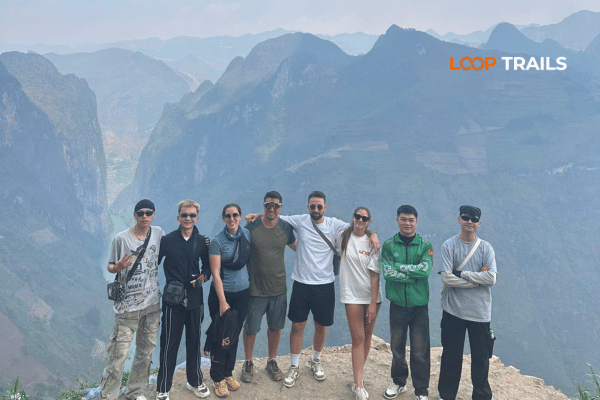
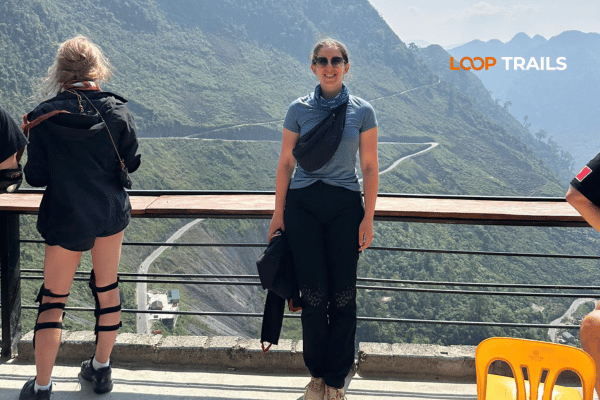
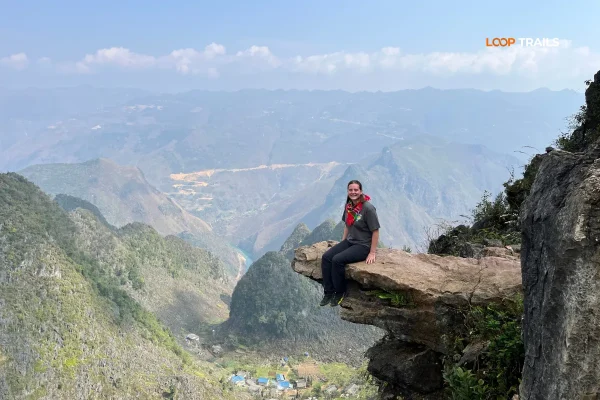
There’s a particular kind of silence at the top of Ma Pi Leng Pass. The kind that arrives after two hours of mountain road, after the switchbacks and the truck dust and the moment you rounded a corner and genuinely forgot how to breathe. Standing there, looking down at the Nho Que River glowing that impossible shade of green, a lot of solo female travelers report the same thing: I can’t believe I almost didn’t come here.
This guide is for you if you’re in that “almost didn’t” phase right now. If you’ve been reading forum threads at midnight, toggling between “this looks incredible” and “but is it actually safe for a woman traveling alone?”
Let’s get into it. Honestly.
Learn more: Ha Giang Loop 2 Days 1 Night
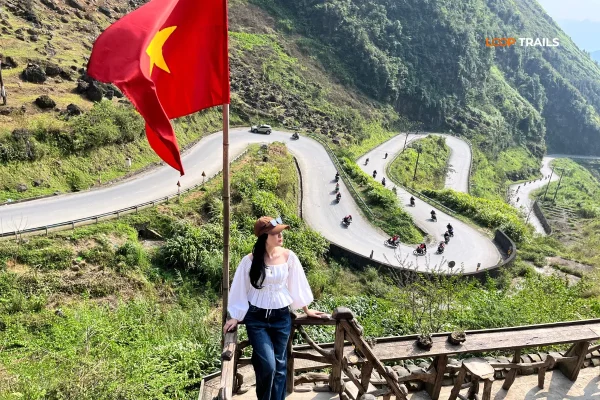
Ha Giang is Vietnam’s northernmost province, and the loop — a roughly 350km circuit through karst mountains, H’mong villages, and some of the most dramatic scenery in Southeast Asia — has become one of the most talked-about routes in the region. And solo female travelers are a massive part of that conversation.
Why? Because unlike a lot of “adventure” destinations that feel built for groups of bros on rented Yamahas, Ha Giang has a different energy. The towns are small and human-scaled. Guesthouses are personal, often family-run. The scenery demands your full attention, which means there’s less pressure to be “on.” Many solo women describe it as one of the first places they’ve traveled where they genuinely stopped performing and started experiencing.
That doesn’t mean it’s without challenges. The road is real. The weather is real. The logistics require actual planning. But the number of solo women who finish this loop and immediately want to do it again — that number is not small.
Learn more: Ha Giang Loop 3 Days 2 Nights
This is the question everyone searches, and it deserves a straight answer rather than vague reassurance.
These are two completely separate topics, and conflating them leads to a lot of confusion online.
Road safety is the more serious concern. The Ha Giang Loop is not a beginner road. Ma Pi Leng Pass, the stretch between Meo Vac and Dong Van, and sections around Du Gia involve narrow mountain roads, steep drop-offs, oncoming traffic (including trucks and buses), and surfaces that can shift from smooth to loose gravel to genuinely broken within a few hundred meters. Fog rolls in without warning. Rain makes certain corners actively dangerous.
This is not meant to scare you off, it’s meant to prepare you. Thousands of people complete this loop every month, and serious accidents are not the norm. But they do happen, almost always when riders are inexperienced, going too fast, or riding in bad weather conditions. Road safety on this loop is something you manage through preparation and good decision-making, not something you’re simply subject to.
Personal safety meaning harassment, theft, or feeling unsafe as a woman — is a much lower concern in Ha Giang than in many other destinations. The region is rural and conservative in a way that typically translates to respectful interactions rather than threatening ones. Local men are generally not the source of the harassment that female travelers sometimes encounter in more tourist-heavy areas of Vietnam. The traveler community on the loop is also notably friendly, and it’s very common for solo travelers to find themselves riding alongside small informal groups within a day or two of starting.
Genuine risk of harassment or assault on this route? Much lower than you might expect based on typical “solo female travel” anxiety. Road conditions? Worth taking very seriously.
The safest choice for a first-time rider on this loop is a guided option. That’s not a hedge — that’s just the math.
Learn more: Ha Giang Loop 4 Days 3 Nights
This is the decision that shapes your entire trip, so let’s break it down properly.
Learn more: Ha Giang Cao Bang 5 Days 4 Nights
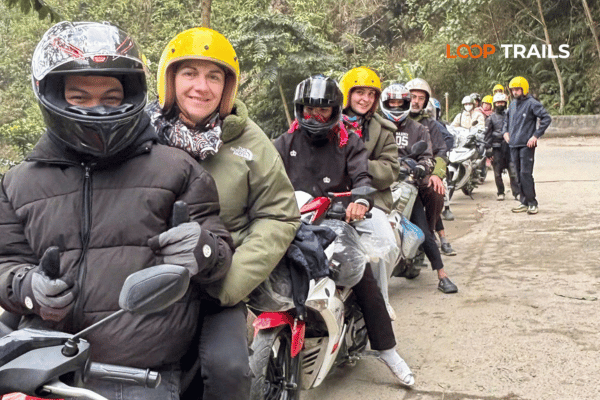
An Easy Rider tour means you ride pillion — on the back of a motorbike driven by a local guide. You don’t need any riding experience. Your guide handles the road while you handle the views, the photos, and the conversations.
This is the option that removes road safety as a variable almost entirely. Your guide knows the road. They know when to stop, when to push through, which guesthouses are reliable, and what’s worth getting off the bike for. For solo female travelers, a good Easy Rider guide also functions as a sort of informal host — someone who handles the language barrier, negotiates where needed, and provides a layer of social legitimacy in small towns where a solo foreign woman might otherwise attract more curious attention than she wants.
Best for: First-time Vietnam riders, travelers who want to focus on experience over logistics, those traveling in low season when road conditions are more unpredictable.
Loop Trails offers guided Easy Rider tours with vetted guides — if you want to check availability or ask about group options, that’s a good place to start →.
Learn more: Ha Giang Loop Self-Drive & hire a motorbike
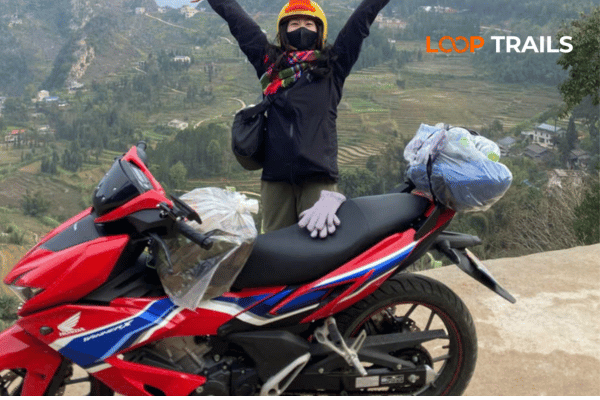
Self-drive is exactly what it sounds like: you rent a motorbike (typically a Honda XR150 or semi-auto option) and ride the loop yourself. You set your own pace, stop wherever you want, take the detours that aren’t on any itinerary.
The freedom is real, and for experienced riders it’s genuinely one of the best ways to do this route. But the word “experienced” is doing a lot of work in that sentence. This loop is not where you learn to ride a motorbike. It is also not where you discover that you’re “pretty okay” on flat roads. The corners at Ma Pi Leng Pass and the long descents around Meo Vac demand genuine control.
Best for: Riders with real motorbike experience (ideally on mountain roads), travelers who are very comfortable with solo navigation, anyone who has done similar routes in Vietnam or elsewhere.
Check out motorbike rental options in Ha Giang if you’re considering self-drive — and be honest with yourself about your skill level before you commit.
What about regulations? Requirements for riding motorbikes in Vietnam — including what licenses foreign visitors need — can and do change. Do not rely on what was true two years ago, or what someone told you in a hostel. Check the current official guidance before you arrive and confirm with your rental provider directly.
Learn more: Ha Giang Jeep Tours
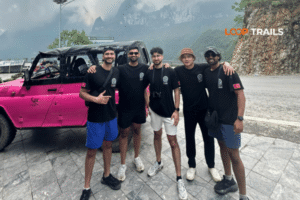
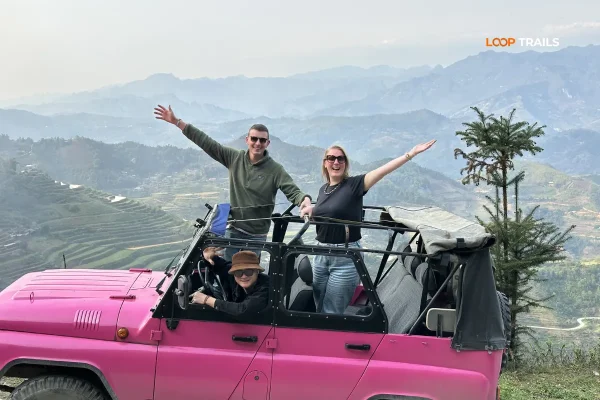
Ha Giang Loop jeep tours travel the same route in a 4WD vehicle, typically with a driver and guide. You get every single view — Ma Pi Leng, the Nho Que River, the Dong Van karst plateau — without touching a motorbike.
The trade-off is some spontaneity. You can’t pull over on a whim the way you can on a bike. But for travelers who aren’t confident riders, are traveling with more luggage, or simply don’t want to add “manage a vehicle on mountain switchbacks” to their list of things to think about, the jeep option is genuinely excellent and underrated.
Best for: Non-riders, travelers combining the loop with heavy gear, anyone who prefers comfort and security over riding experience, first-timers who want to scope the route before potentially self-driving on a return trip.
| Your situation | Recommended option |
|---|---|
| Never ridden a motorbike | Easy Rider or Jeep |
| Some riding experience, but not on mountain roads | Easy Rider (safer choice) |
| Experienced rider, confident on curves | Self-Drive |
| Traveling with a lot of gear | Jeep |
| Want maximum flexibility + storytelling | Self-Drive |
| Want a local guide, cultural context, language help | Easy Rider |
| Want every view, zero riding stress | Jeep |
Learn more: Ha Giang Cao Bang Ba Be Lake 6 Days 5 Nights
The standard loop runs roughly: Ha Giang city → Quan Ba → Yen Minh → Dong Van → Meo Vac → Du Gia → Ha Giang city. Most tours do this over 3–4 days, though some itineraries extend to 5 days with extra stops.
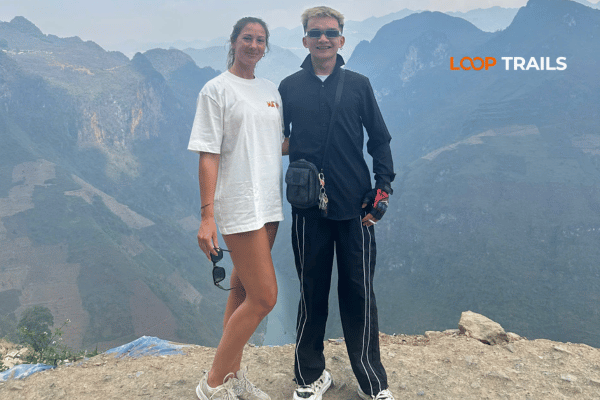
This is the one. The stretch of road between Meo Vac and Dong Van — specifically the Ma Pi Leng Pass — is consistently described as one of the most scenic roads in Vietnam, and the praise is not overblown. The pass sits at around 1,500 meters and winds along the edge of a cliff, with the Nho Que River visible far below, vivid and deeply green.
The viewpoints along this section attract the most cameras, but the road itself is the experience. Take your time here. The temptation to rush to the next destination is a mistake.
Dong Van feels different from what most travelers expect of a Vietnamese town this far north. The old quarter has French colonial-era stone buildings alongside traditional H’mong architecture, and the atmosphere at night — especially when the mist rolls in off the surrounding mountains — is genuinely atmospheric rather than touristy.
Meo Vac hosts a weekly Sunday market that’s one of the most vivid cultural experiences on the loop, drawing ethnic minority communities from the surrounding hills. If your itinerary allows you to time this, it’s worth adjusting your schedule for.
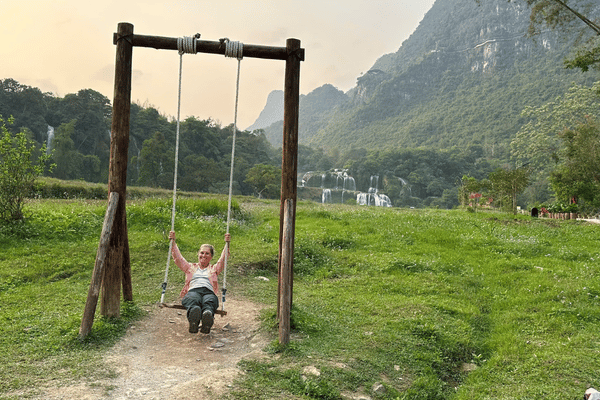
The return section of the loop through Du Gia is often described as the “green” counterpart to the stark karst landscape of the north. The terrain shifts, the road passes through rice paddies and forested valleys, and the Du Gia waterfall is a legitimate stop rather than a tourist checkbox.
Lung Cu — Vietnam’s northernmost point, marked by a massive flag tower — is worth the detour if time allows. The symbolic weight of standing at the literal top of the country is not nothing, and the views from the tower are expansive.
Learn more: Ha Giang Safety Tips
These are practical, not platitudes.
In small towns along the loop, evenings are quiet. Restaurants close early. This is not Hanoi. Solo female travelers generally report feeling comfortable walking around town after dinner, though standard common sense applies — avoid isolated areas, trust your instincts, let someone know where you are.
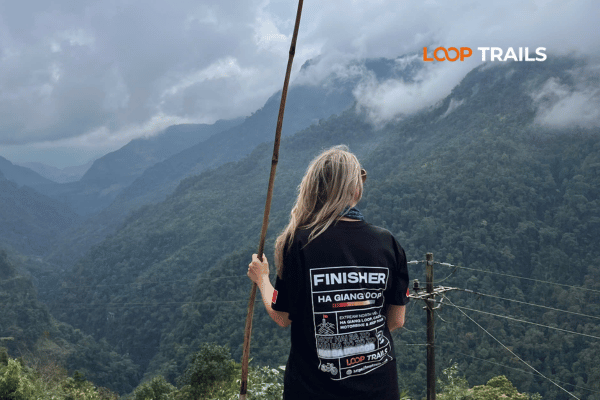
The traveler community on this loop is notably tight-knit. It is extremely common for solo travelers to meet each other at guesthouses, share dinner, and informally ride loosely together the next day. You’re far less isolated than you might imagine.
Learn more: Ha Giang Packing list
This is not a “pack light, live freely” situation. The weather on this loop changes significantly with altitude and season, and you need to be prepared for it.
Clothing:
Gear:
Practical:
Comfort:

Learn more: Ha Giang Loop Weather
The “best” months for Ha Giang are typically cited as March–May (spring flowers, especially buckwheat in late October/November, and the famous triangle flowers in March) and September–November (rice harvest, golden terraces, clear skies). These windows are genuinely excellent and worth timing your trip around if you have flexibility.
But here’s what the simplified advice leaves out:
June–August (rainy season) is genuinely more challenging — roads can be muddy or blocked, visibility at passes drops, and landslides are a real risk. This is when road conditions matter most. Going with an experienced guide during this period is the strongest recommendation, not a soft suggestion.
December–February is cold — genuinely cold, especially at elevation. Some guesthouses have limited heating. But the crowds are also thinnest, the light can be extraordinary, and there’s a particular stark beauty to the karst landscape in winter. It’s not for everyone, but it’s not “off limits” either. Pack accordingly.
The buckwheat flower season in late October and early November is worth mentioning separately — this is when the region turns pink and purple and becomes genuinely breathtaking, and it’s become increasingly popular. Book accommodation in advance during this window.
Whatever month you’re looking at, check current road conditions and weather forecasts in the week before you arrive. This is especially true for passes — conditions at 1,500m don’t match conditions in Ha Giang city.
Learn more: Ha Giang Motorbike Rental
This section exists not to scare you but to make sure you’re not caught off guard by things that are very manageable once you know they exist.
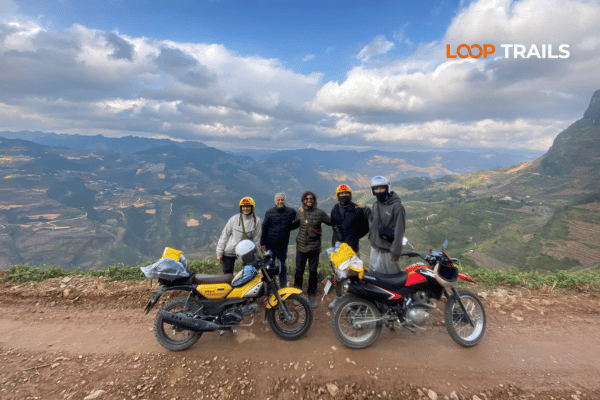
Motorbike rental quality. If renting self-drive, inspect the bike thoroughly before leaving. Test the brakes. Check the tires. Photograph any existing damage — and send those photos to yourself with a timestamp. Rental agreements and what’s charged for damage upon return have caused friction for some travelers. Using a reputable rental provider with clear terms matters here.
Overcharging at guesthouses and restaurants. This is not rampant, but it does happen in areas with high tourist traffic. Check that a price is agreed before ordering or before taking a room. Menus with prices displayed are a good sign.
“Free” upgrades or services that aren’t free. If someone offers to carry your bag, fill your tank, or “show you something” and you didn’t ask for it, clarify the price before accepting. This isn’t unique to Ha Giang — it’s a general Vietnam travel reality.
Fake guides or unofficial “helpers.” If you’re on a guided tour, stick with your booked guide. Well-meaning strangers who attach themselves to your group and then request payment at the end are not unheard of.
The “road is closed, I know a better way” detour. Rare, but documented. If someone tells you a major road is closed and offers to guide you on an alternative for a fee — verify independently before agreeing to anything.
None of this is unique to Ha Giang, and none of it should define your experience of the place. The vast majority of interactions travelers report are genuinely warm and memorable. This is background awareness, not a warning that the region is dangerous.

Learn more: Ha Giang Homestay Guide
Ha Giang has a range of guesthouses, homestays, and small hotels at each major stop on the loop. The experience varies enormously by accommodation type.
Homestays are one of the most recommended options for solo female travelers — not just because they’re often cheaper, but because staying with a local family provides a built-in social structure. You’re not a stranger alone in a room; you’re a guest. Many female travelers report that this context makes them feel significantly more comfortable than a generic guesthouse.
What to look for in guesthouses:
What to avoid:
Most guesthouses along the loop are used to solo female travelers and will not bat an eye at a single booking. This is not a destination where that raises suspicion.

Learn more: Ha Giang Loop Cost & Tips
Prices change, and specific costs depend on your travel style, tour type, and the time of year — so treat these as orientation figures, not guarantees. Always confirm current pricing directly.
| Item | Rough range |
|---|---|
| Guided Easy Rider tour (3–4 days) | Check Loop Trails for current rates |
| Jeep tour (3–4 days) | Check Loop Trails for current rates |
| Self-drive motorbike rental per day | Varies by bike type and rental provider |
| Budget guesthouse per night | Generally affordable, check local listings |
| Meals along the route | Cheap to moderate — local food is significantly cheaper than anything marketed specifically to tourists |
| Cash for entrance fees, incidentals | Bring a reasonable buffer — ATM access between towns is limited |
Key advice on cash: The ATM situation between Ha Giang city and the remote sections of the loop is genuinely limited. Withdraw what you need before leaving the city. Card payments are not widely accepted at guesthouses and small restaurants on the route.

Learn more: Ha Giang Loop for Beginners
The booking process is simpler than it seems. Here’s what to know:
Option 1: Book with a tour operator before you arrive. This is the most stress-free approach. You confirm your dates, tour type, and group size in advance, show up in Ha Giang, and your logistics are handled. Loop Trails runs guided Easy Rider, Jeep, and combined Ha Giang–Cao Bang tours with small groups — check available tour dates and options here →.
Option 2: Arrange motorbike rental in Ha Giang city. If you’re self-driving, rental arrangements can be made in Ha Giang city. Book in advance during peak season. Inspect carefully, as covered above.
Option 3: Combine Ha Giang with Cao Bang. If you have more time, the combined Ha Giang + Cao Bang route adds Ban Gioc Waterfall and Phia Oac mountain area to the itinerary — two experiences that are genuinely different in character from the karst loop. This is worth considering if you have 6–8 days and want to cover the entire northeast. See the combined tour option here →.
When to book: During buckwheat flower season (late October to mid-November) and spring (March–May), spots fill up. If your dates are fixed, don’t assume you can arrange everything when you arrive.
Have questions before committing? Reach out via WhatsApp — it’s the fastest way to get answers on availability, route options, and what’s right for your experience level. Message Loop Trails on WhatsApp →.
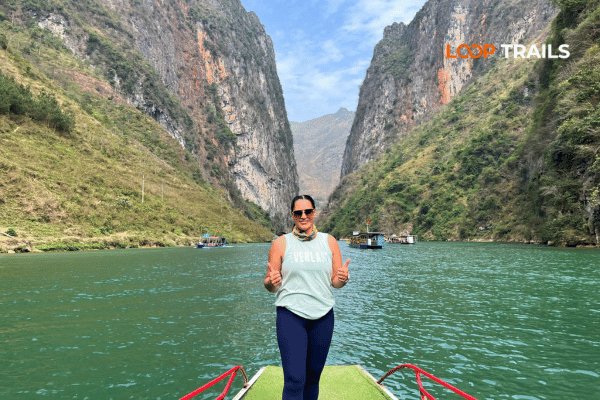
Learn more: Tu San Canyon & Nho Que River Boat Trip
The Ha Giang Loop will ask something of you. It asks you to pay attention, to be a bit humble about the road, to slow down when the weather shifts, to trust the process when the scenery is so relentless that you can’t quite process it.
What it gives back — genuinely — is disproportionate. Solo female travelers who finish this loop consistently describe it as a high point of their time in Vietnam, often of their wider travels. Not because it was easy, but because it wasn’t.
You’re ready for this. Go be uncomfortable in the best possible way.
In terms of personal safety (harassment, theft), Ha Giang is generally considered low-risk — the region is rural, the community is conservative and respectful, and the traveler community on the loop is tight-knit. Road safety is a more significant concern: mountain roads demand experience and good judgment. Choosing a guided tour significantly reduces this risk.
Regulations on what license foreign visitors need to legally ride motorbikes in Vietnam can change. Do not rely on outdated forum advice — confirm current requirements with your rental provider and check official sources before you arrive.
Easy Rider (guided pillion tour) or a Jeep tour. Both give you full access to the route and scenery without requiring you to manage a vehicle on challenging mountain roads.
Most people do the standard loop in 3–4 days. 4 days is the more comfortable pace that allows for detours and unrushed stops. If combining with Cao Bang, plan for 6–8 days.
March–May and September–November are the most popular windows for good reason — weather is more reliable, scenery is peak. The late October buckwheat flower season is exceptional but busy. Rainy season (June–August) is doable but requires extra caution and a guide is strongly recommended.
Yes, and many women do. But “solo” on this route rarely stays solo for long: the guesthouse network connects travelers, and informal riding companionship forms naturally. You won’t be isolated unless you want to be.
If renting from a reputable provider, you should have a contact number for breakdowns. Local mechanics exist in most towns on the route. This is another reason to carry cash, have a local SIM with data, and not be on a tight timeline.
Yes and it’s a great combination if you have time. Ban Gioc Waterfall and the Phia Oac mountain area are very different experiences from the Ha Giang karst, and the combined route gives a much broader picture of Vietnam’s north. Loop Trails offers combined itineraries — worth checking if you have 6+ days.
Absolutely. The Jeep tour option covers the same route and stops. You get every major viewpoint, every key experience — just in a 4WD vehicle. Many travelers who initially resist the jeep option end up recommending it for exactly this reason.
Late October to mid-November, the fields around Dong Van plateau bloom with tam giac mach, buckwheat flowers, turning hillsides pink and purple. It’s genuinely stunning and has become one of Ha Giang’s most recognizable images. Book accommodation and tours in advance during this period — it’s popular.
ATM access is limited once you leave Ha Giang city. Bring enough Vietnamese dong to cover your guesthouse nights, meals, entrance fees, and incidentals for the full duration of the loop. Err on the side of more. Cards are rarely accepted outside the city.
It can be excellent — but logistics matter more here than in, say, Hanoi or Hoi An. First-time Vietnam travelers tend to do better on this route with a guided tour rather than self-driving, and with a bit of general Vietnam travel experience as background. That said, many people make Ha Giang their first major Vietnam destination and have outstanding trips.
Contact information for Loop Trails
Website: Loop Trails Official Website
Email: looptrailshostel@gmail.com
Hotline & WhatSapp:
+84862379288
+84938988593
Social Media:
Facebook: Loop Trails Tours Ha Giang
Instagram: Loop Trails Tours Ha Giang
TikTok: Loop Trails
Office Address: 48 Nguyen Du, Ha Giang 1, Tuyen Quang
Address: 48 Nguyen Du, Ha Giang 1, Tuyen Quang
Facebook X Reddit Table of Contents Learn more: Ha Giang Loop Tours Most people land on this question after staring at a

Facebook X Reddit Table of Contents Learn more: Ha Giang Loop Tours Most people come to Hà Giang for the roads —

Facebook X Reddit Table of Contents Learn more: Ha Giang Loop Tours Most people arrive in Meo Vac from the west —