
Ha Giang Loop from Singapore and Kuala Lumpur
Facebook X Reddit Table of Contents Learn more: Ha Giang Loop Tours Northern Vietnam is closer to you than Bali. It is
Thúy Kiều (Grace) is a travel blogger and content contributor for Loop Trails Tours Ha Giang. She holds a bachelor’s degree in Sustainable Tourism from Vietnam National University, Hanoi, and has a strong passion for exploring and promoting responsible travel experiences in Vietnam’s northern highlands.
Learn more: Ha Giang Loop Tours
Ha Giang is one of the great landscapes in Southeast Asia and one of the more frustrating ones to photograph properly, because almost everybody sees it from the saddle of a motorbike on somebody else’s schedule.
You arrive at Ma Pi Leng at eleven in the morning with forty other people, in flat light, with a wide zoom and a phone, and you leave with the same photograph everyone else has. Meanwhile the frame you actually wanted needed you standing there at five in the morning with a tripod and nowhere to be.
That gap is a logistics problem, not a talent problem. This is how to close it: what the light does at each stop, what the drone situation genuinely is, what gear survives the trip, and why the vehicle you choose decides most of it.
Learn more: Ha Giang Loop 2 Days 1 Night
Riding the loop is wonderful and it is a poor way to work.
Gear. Two bodies, three lenses, a tripod, filters, a drone, batteries, a laptop. That is a normal kit and none of it belongs strapped to a motorbike on a mountain road. Bikes force you to shoot with what fits in a small bag, which means you leave the long lens and the tripod behind and then need them.
Weather. Rain in Ha Giang is not occasional. On a bike, weather is a gear emergency. In a vehicle it is a window with something interesting outside it.
Hours nobody else keeps. This is the real argument. Blue hour and the first light after it are when this landscape works, and riding an unlit mountain road in the dark is a bad idea. In a jeep with a local driver, leaving at half past four to be on a pass before the sun is a normal request rather than a dangerous one.
Repositioning. Light moves. In a vehicle you can chase it, drop back down a pass because the cloud broke lower, or wait somewhere for forty minutes with your kit dry and your batteries warm.
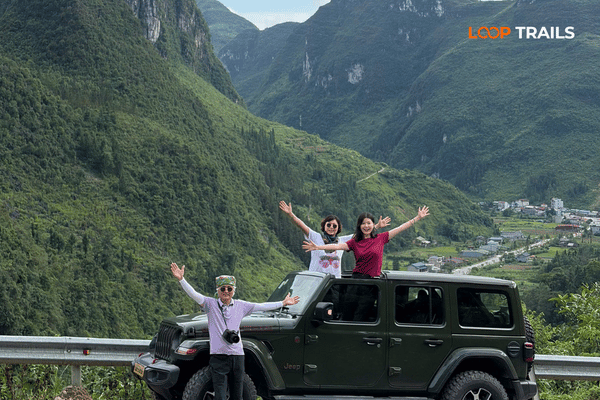
Shooting from the vehicle. Open sided jeeps let you shoot moving, which is how you get the frames between the viewpoints: a road cutting across a slope, a rider coming the other way, a village appearing below.
Tripods. Obvious once you say it. Nobody carries a proper tripod on a loop bike, and half the images worth making here need one.
Learn more: Ha Giang Loop 3 Days 2 Nights
The honest version, because the cheerful version gets people’s equipment confiscated.
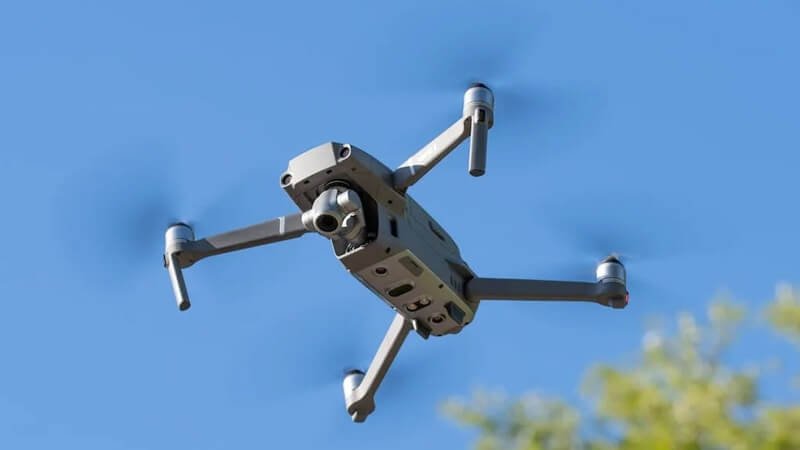
Vietnam has some of the strictest drone rules in Southeast Asia. Flying generally requires permission from the Ministry of National Defence, granted case by case rather than as a blanket licence, and applied for in advance. Reported lead times run from about a week to a couple of weeks depending on the flight and who you ask.
Foreign operators generally need a Vietnamese guarantor, meaning an organisation or individual who sponsors the application. You cannot usually do this as an individual tourist from abroad with no local connection.
There is a registration system and the rules changed during 2026, including discussion of lighter treatment for drones under 250 grams. Sources contradict each other on exactly what applies to whom, and enforcement varies by region. Do not build a shoot on a forum post.
Ha Giang is a border province. A large part of the loop runs close to the Chinese border, and border zones and military areas are the most restricted category of airspace there is. Lung Cu, the northernmost point of the country, is exactly the kind of place where launching without permission is a serious mistake rather than a minor one
What this means practically:
None of that means you cannot fly in Ha Giang. It means the paperwork is part of the shoot and needs to be planned like the rest of it.
Planning a shoot rather than a holiday? Tell us at the enquiry stage. A photography trip is a different itinerary from a normal one: earlier starts, fewer stops, longer at each, and a driver who understands why you are waiting. The Ha Giang jeep tour is the base we build those on.
Learn more: Ha Giang Loop 4 Days 3 Nights
Worth separating, because the two sit in different places legally.
Personal and editorial work, the photographs you take as a traveller and post or sell as stock or editorial, is generally straightforward on the ground beyond the drone question and normal courtesy towards people.
Commercial production, meaning advertising, branded content, a crew, a client, is a different category. Filming commercially in Vietnam normally requires permission and, in practice, a Vietnamese production partner or fixer who handles it. Requirements vary with the scale of the shoot and where you are filming.
If you are somewhere between the two, which most content creators are, the honest advice is to be upfront about what you are doing when you enquire. An operator who knows a client is involved can plan around it. One who finds out when a crew arrives cannot.
Learn more: Ha Giang Cao Bang 5 Days 4 Nights
The single most useful thing in this article. Terrain here is steep and deeply cut, which means the sun reaches different places at wildly different times.
| Location | Best window | Why |
|---|---|---|
| Quan Ba, Heaven Gate and the twin mountains | Early morning | Mist sits in the valley and burns off. Come back for it if you miss it on day one |
| Bac Sum pass | Morning | The road switchbacks are best when they are lit rather than in shadow |
| Tham Ma pass | Late morning to afternoon | The classic overhead of the road needs light on the tarmac, not on the far slope |
| Dong Van old quarter | Early morning and after sunset | Low sun on the old buildings, and the market square empties late |
| Lung Cu flag tower | Any time, better with cloud | It is an object rather than a landscape. Interesting sky beats good light |
| Ma Pi Leng pass viewpoints | Before sunrise and last hour | Everyone else is there in the middle of the day, and the light is worst then |
| Nho Que gorge from above | Middle of the day, and this is deliberate | The canyon is so deep the water is in shadow most of the day. The green only appears when the sun gets down into it |
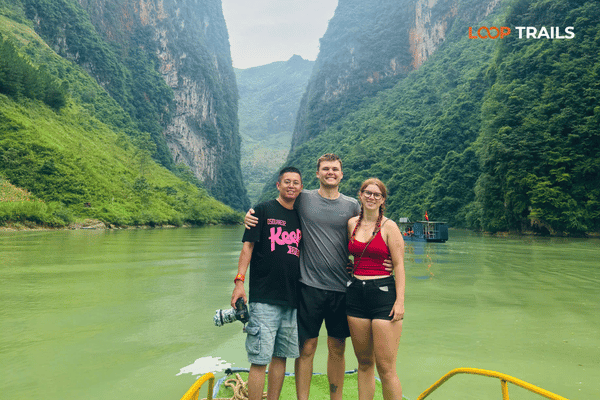
| Nho Que boat, on the water | Middle of the day | Same reason. A gorge trip at eight in the morning is a grey gorge trip |
| Lung Tam and the weaving villages | Overcast or open shade | Indoor and doorway work. Hard sun is your enemy here |
| Du Gia waterfall | Middle of the day | Dappled light through canopy, and the water needs light on it |
| Rice terraces, Hoang Su Phi side | First and last hour | Side light is what shows the steps. Overhead sun flattens them completely |
Two things to add. Use a sun tracking app to check actual positions for your dates rather than trusting any table including this one. And plan for cloud rather than against it: some of the best conditions here are broken cloud with light moving across the valleys, which no forecast will promise you.
Learn more: Cao Bang Loop 3 Days best kept secret
This is where photography trips differ from ordinary ones, and it is the change that produces the pictures.
A normal loop day covers seven or eight stops between roughly 08:00 and 17:30. Everything gets seen. Nothing gets photographed.
A photography day looks like this: out before dawn for a single location, back for breakfast, one or two working stops in the middle of the day chosen because they suit midday light, a long break, then back out for the last two hours and into blue hour.
That is three or four locations instead of eight, and you will come home with more.
The consequence is that a three day loop shot properly covers about as much ground as a two day loop travelled normally. Build in the extra day. The four day version exists for exactly this reason, and the Ha Giang and Cao Bang combined route gives you five, with a second province that almost nobody has photographed properly.
Say all of this when you book. A driver who knows you want to sit at a viewpoint for ninety minutes behaves completely differently from one who thinks he is behind schedule.
Learn more: Ha Giang Market Days
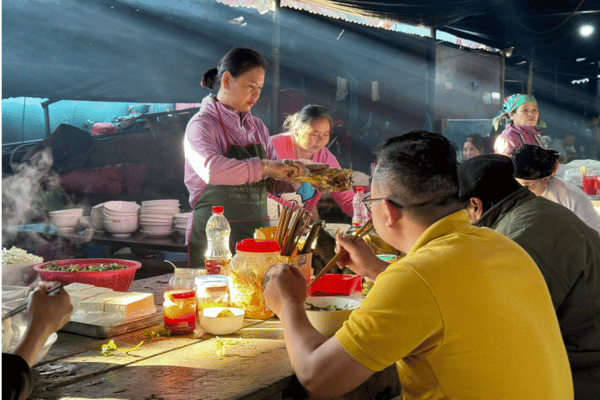
The markets are the strongest photographic subject in Ha Giang and the one most trips miss because they fall on the wrong day.
Markets across the plateau generally run weekly, with the bigger ones at Dong Van and Meo Vac typically on Sunday and smaller ones scattered through the week around Lung Phin, Pho Bang and Sa Phin. Schedules rotate, some are on a lunar cycle rather than a fixed weekday, and they change, so confirm locally rather than planning a whole trip around a day you read somewhere.
If your dates can flex at all, flex them around a market. It is the difference between photographing a landscape and photographing a place.
How to shoot one without being the problem:
The Khau Vai love market, held annually on the twenty seventh day of the third lunar month near Meo Vac, is a genuinely significant event rather than a spectacle. If your trip lands near it, ask your guide how to attend respectfully.
Learn more: Ha Giang Cao Bang 6 Days 5 Nights
| Roughly | What you get | Notes for shooting |
|---|---|---|
| Sep to early Oct | Rice turning gold, especially on the Hoang Su Phi side | Peak terraces. Timing shifts yearly, so ask locally a couple of weeks out |
| Oct to Nov | Buckwheat flowers across the plateau, clear air | The most reliably good month and the busiest. Book early |
| Dec to Feb | Cold, fog, cloud inversions on the high ground | Moodiest conditions and the emptiest roads. Underpacking for cold is the standard mistake |
| Mar to Apr | Blossom, green fields, mist in the mornings | Underrated. Fewer people, softer conditions |
| May to Aug | Deep green, dramatic cloud, heavy rain | Best skies and the worst logistics. Waterfalls at full flow |
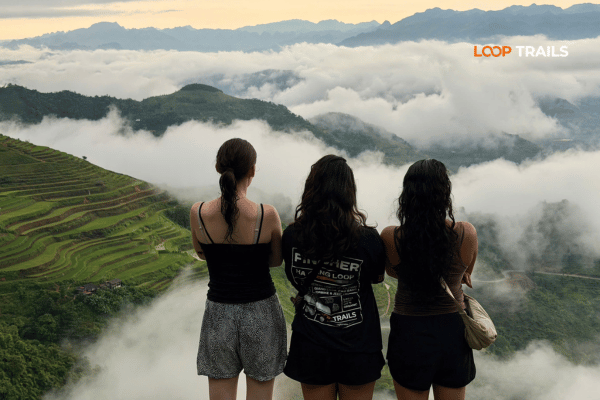
There is no bad month here, but there is a wrong month for a specific picture. If you are travelling for one particular image, say which, and plan the dates around it rather than the other way round.
Learn more: Ha Giang Loop Photography Guide
Ha Giang is home to Hmong, Tay, Dao, Lo Lo and other communities, and this is where a lot of visiting photographers get it wrong.
Ask. A gesture towards the camera and a raised eyebrow works everywhere. If the answer is no, it is no, and a refusal costs you one frame rather than your day.
Children need an adult’s permission, not just their own enthusiasm. This is the one people skip most and the one that matters most.
Do not pay for portraits. It feels generous and it damages the place. Once payment becomes the expectation, every subsequent visitor faces a transaction instead of a conversation, and the people most likely to be pushed towards it are children. Buy from a stall, eat somewhere, hire a local guide. Put money into the village, not into the frame.
Show people the back of the camera. Costs nothing, changes everything, and is often the moment a stiff portrait becomes a real one.
Homes and workshops are not sets. Ask before entering, ask before rearranging anything, and accept that some doors are closed to you.
Send pictures back if you promise to. Your guide can usually arrange it. People remember which photographers did and which did not.
Learn more: Ha Giang Loop Mistake to Avoid
Not a shopping list, just what actually matters on this specific trip.
Bring:
Reconsider:
Learn more: Ha Giang Motorbike Rental
The four practical things that ruin shoots in this region.
Power. Homestays have electricity, and how much of it is available to you at once varies. Bring a multi socket adapter, charge everything at dinner rather than at bedtime, and carry a power bank big enough to matter. Ask your operator what charging the vehicle actually has rather than assuming a modern socket, because that varies by vehicle.
Cards. No reliable internet means no cloud backup. Two sets of cards, offload every evening, and keep the copies in different bags. This region is not the place to discover a single point of failure.
Dust. Constant, particularly in the dry months and around road works. Change lenses inside the vehicle with the doors shut, not on a windy pass.
Condensation. The one people forget. Moving cold gear into warm humid air, or the reverse, fogs lenses and sensors. Let equipment come up to temperature inside a closed bag rather than opening it immediately, and give it time before the shot you actually wanted
Learn more: Ha Giang Loop Easy Rider
More than most photographers use them for.
Timing. A local driver knows how long the pass takes in the dark and whether the fog usually sits in that valley until nine.
Access. Guides know which lane leads to the view rather than the car park, and which family will let you into a workshop.
Language. The difference between photographing a blacksmith and talking to one. It shows in the pictures.
Permission. For people, for buildings, and for anything sensitive. Ask before you shoot, through someone who can actually ask.
Waiting. The most valuable thing of all, and the one you have to say out loud at the start. A guide who knows the plan is to sit somewhere for an hour is an asset. One who thinks you are running late will keep moving you on.
Tell them on day one what you are trying to make. Most guides find it genuinely more interesting than the standard trip.
Everything above applies, plus:
Sound is the problem, not picture. Wind on the passes is constant. Bring proper wind protection and expect to record room tone and wild sound wherever it is quiet, because it rarely is.
Vehicle shots. Open sided jeeps are good for shooting from, and shooting a vehicle from another vehicle needs planning and a driver who is briefed. Say so in advance.
Releases. If the footage is going anywhere commercial, you need permission from the people in it, arranged through someone who can explain what you are asking. Do this properly.
Time lapse and night work need the vehicle standing for long periods in places where that may or may not be appropriate. Ask.
Crew size changes everything, legally and logistically. Two people with a camera is a different proposition from six people with a truck of kit, and it is worth being precise about which you are when you enquire.
Build in weather days. Anyone who has shot in mountains knows this. Anyone who has not will learn it here.
Learn more: Ha Giang Loop by Wrangler Rubicon Jeep
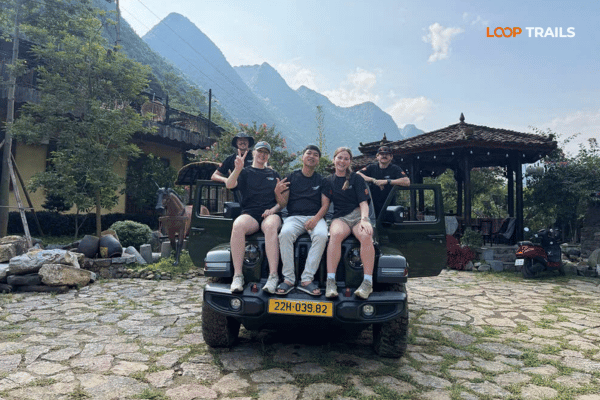
A jeep if you are working. It carries the kit, it keeps it dry, it lets you leave before dawn, it repositions for light and you can shoot from it. The price covers the whole vehicle rather than a seat, which means a photographer travelling alone pays for the jeep, and two or three of you sharing makes it comfortably the best value option on the page. See the jeep tours.
Easy rider if you are shooting light and travelling light: one body, one lens, no tripod, no drone. Riding pillion behind a local rider means you can shoot while moving and you get frames a vehicle cannot, low and close to the road. It is a genuinely different visual language and for some projects it is the better one.
Self drive if you ride and you want the freedom to stop constantly, accepting that you are carrying far less gear and doing your own risk management in bad weather. You need your passport, a valid motorbike licence from home and an International Driving Permit issued under the 1968 Vienna Convention. The 1949 style permit is not recognised in Vietnam. Rules change, so check the current position, and the paperwork guide covers it. We handle motorbike rental in Ha Giang if you want a bike without a tour.
Mixed works too. A jeep carrying the kit with one person riding is a common arrangement for exactly this reason, and we run it regularly.
Book once your dates are set. Most guests book one to three months ahead, and jeep availability is tightest between September and November, which is also when you most want to be here.
Learn more: Tu San Canyon & Nho Que River Boat Trip
Booking a standard itinerary. It is built to see everything, which is the opposite of what you need.
Arriving at Ma Pi Leng at eleven. With everyone else, in the worst light of the day. Go before sunrise, come back at the end.
Bringing a drone with no plan. The single most expensive mistake available here. Sort permissions before you travel or leave it at home.
Shooting the gorge in the morning. It is in shadow. Counterintuitive, and it catches out people who assume early is always better.
Long lenses at markets. Produces distant, furtive pictures and no relationship with anyone.
Paying for portraits. Damages the place for everyone who comes after you.
Underestimating cold. Winter on the plateau is genuinely cold and batteries die fast.
Not telling anyone what you are doing. Guides and drivers will build the day around your shoot if they know. They cannot read your mind at six in the morning.
Planning a shoot here? Message us on WhatsApp with your dates, what you are trying to make, whether a drone is involved and whether there is a client attached. Those four things change the whole plan, and the more precise you are the better the itinerary we can build.
Learn more: What to wear on Ha Giang Loop?
It is one of the best landscapes in Southeast Asia: limestone plateau, deep gorges, terraced valleys and weekly markets that are still functioning markets rather than shows. The difficulty is logistical rather than visual, since the best light happens at hours a standard motorbike itinerary is not built around
Because of gear, weather and hours. A jeep carries bodies, lenses, a tripod and a drone, keeps them dry, and makes a start before dawn safe and normal rather than dangerous. It also lets you reposition as light moves and shoot from the vehicle while travelling.
Only with permission. Vietnam generally requires approval from the Ministry of National Defence, applied for in advance, and foreign operators normally need a Vietnamese guarantor. Ha Giang is a border province, which makes airspace there especially sensitive, so arrange it properly and check the current rules close to your dates.
Commercial production normally requires permission and a Vietnamese production partner or fixer, and requirements scale with the size of the shoot. Personal and editorial photography is generally straightforward on the ground beyond drone rules and ordinary courtesy. If a client is involved, say so when you enquire.
September into early October for gold rice terraces, October and November for buckwheat flowers and clear air, winter for fog and cloud inversions, and the summer months for dramatic skies and heavy rain. Timings shift each year, so if you are travelling for one specific image, confirm locally close to your dates.
Before sunrise, and again in the last hour of the day. The middle of the day gives you flat light and the largest crowds. The exception is the gorge itself, which is so deep that the water only shows its colour when the sun gets high enough to reach it.
More than the standard three. A photography day covers three or four locations rather than eight, so a properly shot loop wants four days, or five if you add Cao Bang. Building in a weather day is sensible in any season
Yes, and they are worth planning your dates around. The bigger plateau markets are generally weekly, with Dong Van and Meo Vac typically on Sunday, but schedules rotate and some follow a lunar cycle, so confirm locally rather than assuming.
Ask first, always, and get an adult’s permission before photographing children. Do not pay for portraits, because it turns every future encounter into a transaction and children are the ones most affected. Support the village by buying, eating and hiring locally instead.
A wide zoom, a short telephoto, a tripod, a polariser, far more batteries than you expect and two sets of cards with an offline backup. Add rain covers regardless of season and a cleaning kit, because dust and spray are constant.
Homestays have electricity, though how much is available at once varies, so charge at dinner rather than overnight and bring a multi socket adapter and a large power bank. Ask your operator what charging the vehicle itself has rather than assuming a modern socket
Yes, and this is the most underused part of a guided trip. Guides can ask on your behalf, get you into workshops and homes you would not otherwise enter, and know which unmarked track leads to the view rather than the car park. Tell them what you are making on day one.
Contact information for Loop Trails
Website: Loop Trails Official Website
Email: looptrailshostel@gmail.com
Hotline & WhatSapp:
+84862379288
+84938988593
Social Media:
Facebook: Loop Trails Tours Ha Giang
Instagram: Loop Trails Tours Ha Giang
TikTok: Loop Trails
Office Address: 54A Tran Phu, Ha Giang 2, Tuyen Quang
Address: 54A Tran Phu, Ha Giang 2, Tuyen Quang
Facebook X Reddit Table of Contents Learn more: Ha Giang Loop Tours Northern Vietnam is closer to you than Bali. It is
Facebook X Reddit Table of Contents Most families write off the mountains in northern Vietnam. The photos are all of people in
Facebook X Reddit Table of Contents Learn more: Ha Giang Loop Tours Almost everyone who rides to Ban Gioc crosses Ma Phuc