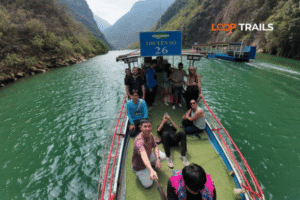


Thúy Kiều (Grace) is a travel blogger and content contributor for Loop Trails Tours Ha Giang. She holds a bachelor’s degree in Sustainable Tourism from Vietnam National University, Hanoi, and has a strong passion for exploring and promoting responsible travel experiences in Vietnam’s northern highlands.

Learn more: Ha Giang Loop Tours
The honest answer is: yes — with real caveats.
Ha Giang Loop is not a sanitized theme-park experience. The roads are narrow, mountainous, and exposed. Some sections have no guardrails. Fuel stations are far apart. Medical facilities thin out fast once you’re past Ha Giang city. And every year, a handful of travelers get hurt — usually from the same predictable, avoidable mistakes.
None of that means you shouldn’t go. Tens of thousands of travelers ride or tour the Loop every year and come back without incident. The ones who run into trouble are almost always the ones who overestimated their ability, underestimated the conditions, or skipped basic precautions.
This guide gives you a clear-eyed picture of what the actual risks are, how serious they are, and what you can do to manage them — whether you’re planning to ride yourself, go with a guide, or get a jeep.
Learn more: Ha Giang to Cao Bang
Before getting into practical advice, it’s worth naming the risks plainly rather than burying them in qualifications.
The Ha Giang Loop involves:
These are real risks. They’re also manageable — but only if you go in with accurate expectations and make good decisions.
The travelers who get into serious trouble on the Loop are almost never victims of random bad luck. They’re people who rode at night, rode drunk, pushed past their skill level on a difficult section, went too fast for the road conditions, or skipped travel insurance. Knowing this is actually reassuring: most of the risk is within your control.
Learn more: Ha Giang Loop route and itinerary
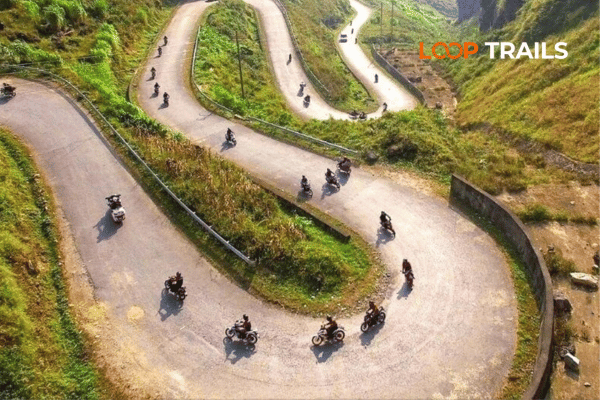
The Ha Giang Loop covers roughly 350km of mountain roads through the Dong Van Karst Geopark and surrounding highland terrain. Road quality varies considerably depending on which sections you’re riding and whether you’re taking the main loop or one of the secondary routes.
The main circuit — Ha Giang city → Yen Minh → Dong Van → Meo Vac → Du Gia → Ha Giang — is mostly paved and increasingly well-maintained, though “well-maintained” in this context means “rideable,” not “smooth.” You’ll encounter sections of broken asphalt, patches of loose gravel (especially after rain), water runoff crossing the road, and occasional rockfall debris — particularly in the rainy season.
Ma Pi Leng Pass is the section that gets the most attention, and for good reason. It’s genuinely dramatic — a narrow road carved into the cliff face above the Nho Que River, with drop-offs that don’t leave much margin for error. The road is paved and in decent condition, but the combination of narrow width, blind bends, and the psychological effect of the exposure catches some riders off guard.
The stretches around Meo Vac, between Meo Vac and Du Gia, and some of the back roads heading toward Lung Cu are where you’ll find rougher surfaces and more variable conditions. These sections reward a slower, more cautious pace.
Road improvement is ongoing in Ha Giang — some sections that were rough a year ago are now paved. Check for current conditions before you go, as this changes.
Most incidents on the Ha Giang Loop don’t happen because of the road. They happen because of rider behavior — often a combination of going too fast, unfamiliarity with the bike, and not accounting for what might be coming around a blind corner.
That applies to you, but it also applies to everyone else on the road. Vehicles coming the other way take their half of the road from the middle. Local trucks move fast on descents. Other travelers on rental motorbikes may be less experienced than they look.
The practical response: ride at a pace where you can stop for what you can see, not just what you can predict. On blind hairpins, slow down, stay to your side, and never overtake unless you have a clear view ahead.
Dry season (roughly October–April): Roads are at their most stable. Dust on unpaved sections can reduce grip, but overall conditions are predictable. This is the recommended window for self-drive riders.
Wet season (roughly May–September): Rain creates several additional hazards — slippery road surfaces, water runoff across roads, reduced visibility, mud on unpaved sections, and elevated rockfall risk. Riding in rain on mountain roads requires significantly more skill and experience than dry-weather riding. Wet season touring is possible, but self-drive is not recommended for anyone without strong wet-weather riding experience.
Rules and road conditions change — check the latest updates before your trip and ask locally when you arrive.
This is the one near-absolute rule on the Ha Giang Loop: don’t ride after dark.
The roads have minimal lighting. Hazards that are obvious in daylight — road edge drop-offs, potholes, animals on the road, rockfall debris — are invisible at night. Local vehicles don’t always use lights consistently. The risk-to-reward ratio is zero.
Plan your daily distances conservatively so you’re never racing the sunset. If you’re behind schedule, stop and spend an extra night somewhere rather than pushing on in the dark.

Learn more: Ha Giang Loop for Beginners
This is the question that gets the most optimistic answers from people who want to rent a bike without admitting they’ve barely ridden before. Let’s be direct.
To self-drive the Ha Giang Loop safely, you should be able to:
If you’ve ridden a motorbike on flat city roads a few times, that’s not the baseline required for the Loop. If you’ve got solid experience on winding roads — in Southeast Asia, in your home country, anywhere — you’re in a much better position.
This isn’t gatekeeping. It’s a straightforward assessment of what the terrain demands.
Semi-automatic (step-through / Honda Wave style): Easier to operate — no clutch to manage, simpler controls. The trade-off is less engine braking on steep descents, which puts more load on your brake hand. Not ideal for the long downhill sections on the Loop, but manageable for riders with limited manual experience.
Manual (Honda XR150 or similar trail bike): Better suited to the Loop terrain. The engine braking on descents is a genuine advantage, and the bike handles rough road surfaces better. Requires clutch operation — if you’re not comfortable with a manual gearbox on a motorbike, practice before you go, not during.
We don’t publish specific bike model specs here — ask when you inquire about rental, and be honest about your experience level. A good rental operator will help you choose the right bike, not just hand you whatever’s available.
Learn more: Ha Giang Loop Easy Rider
The safety gap between a guided tour and self-drive is real and worth understanding before you decide.
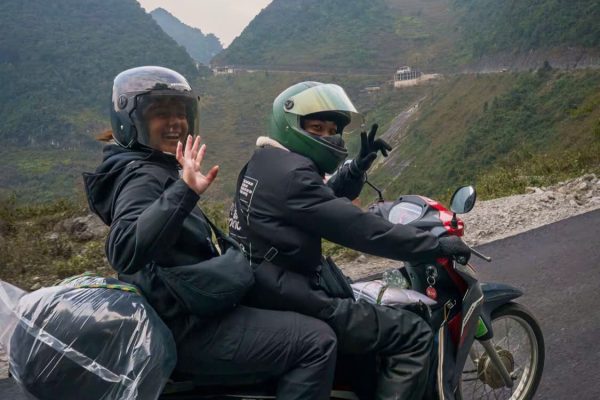
An Easy Rider means you ride pillion on a motorbike driven by an experienced local guide. You’re a passenger — not behind the handlebars. Your guide knows the roads, knows the conditions, knows which sections to take slowly, and has ridden the Loop more times than you can count.
From a pure road-safety perspective, Easy Rider is the lowest-risk way to experience the Loop on a motorbike. You get the same roads, the same viewpoints, the same access to remote areas — without carrying the full weight of riding responsibility yourself.
This is also the option that gives you the most flexibility to actually look at the landscape instead of watching the road.
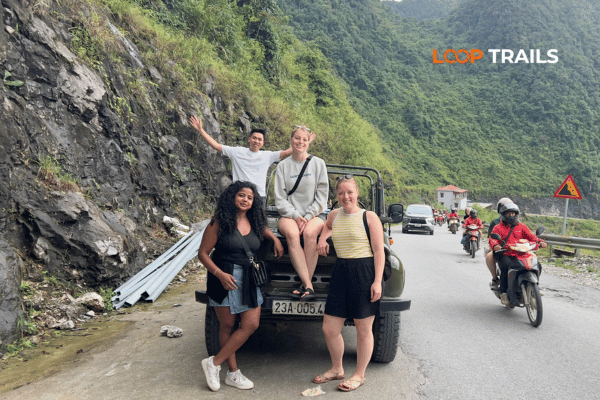
Learn more: Ha Giang Jeep Tours
A fully guided jeep tour removes motorbike risk entirely. You’re in an enclosed vehicle, on roads designed for that vehicle, with an experienced driver. For travelers who aren’t motorbike riders, who are traveling as a couple or small group, or who want to cover more ground with more comfort, a jeep tour is a legitimate choice — not a compromise.
The Ha Giang Geopark roads are accessible by jeep, including Ma Pi Leng Pass and the main circuit. You won’t get the same off-the-beaten-path access as a motorbike, but you’ll see everything that matters.
→ Wondering whether Easy Rider or a jeep makes more sense for your trip? [Check our Ha Giang Loop tour options] or [message us on WhatsApp] — we’ll help you figure it out honestly based on your group size and what you want out of the experience.
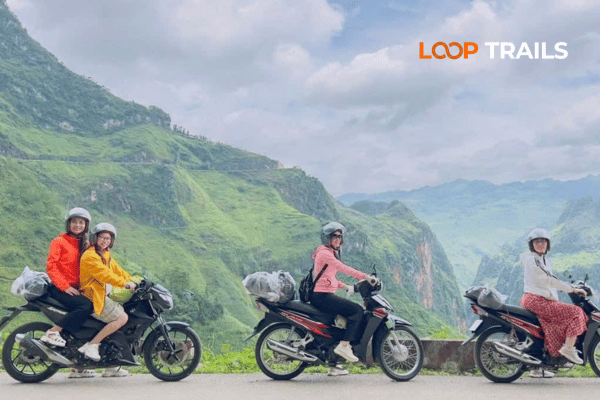
Learn more: Ha Giang Loop Self-Drive
Self-drive is the most popular option among independent travelers, and it’s genuinely rewarding if you’re a capable rider. The freedom to stop wherever you want, take detours, set your own pace — that’s real, and it’s part of why people love it.
It also carries the most risk of the three options, because the outcome depends entirely on your decisions. If you’re an experienced rider, those risks are manageable. If you’re not, they’re not.
Loop Trails offers [motorbike rental in Ha Giang] for riders who are confident in their ability. We’ll give you an honest assessment of the routes, current road conditions, and what to watch for — and we’ll be straight with you if we think a guided option might suit you better.

Learn more: Ha Giang Loop Private Car from Hanoi
Ha Giang’s Loop reaches elevations around 1,500–2,000m at its highest points. For most healthy travelers, this isn’t high enough to trigger serious altitude sickness — but it does affect how tired you get, especially if you’re riding full days back to back.
Physical fatigue is a genuine safety factor. A tired rider makes worse decisions, has slower reaction times, and is more likely to miscalculate a turn. Build rest days or shorter riding days into your itinerary. Don’t try to smash the full Loop in two days if you’ve never ridden mountain terrain before.
Ha Giang city has a provincial hospital. Beyond that, medical facilities become basic very quickly. Dong Van and Meo Vac have small clinics, but for anything serious, you’re looking at a significant journey back to the city — or further to Hanoi, 4–5 hours away under good conditions.
This isn’t a reason to panic. It is a reason to:
If you’re self-driving a motorbike in Ha Giang, you need travel insurance that explicitly covers motorbike riding and emergency medical evacuation. Many standard travel insurance policies exclude motorbike accidents — check your policy carefully before you go, not after.
This applies even if you’re an experienced rider. Accidents happen to experienced riders too, and the cost of emergency evacuation from a remote mountain area without insurance is something you don’t want to find out about from personal experience.
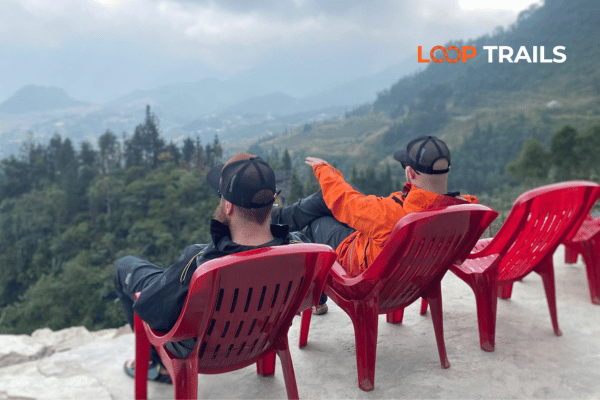
Learn more: Ha Giang in September & October
Ha Giang’s weather patterns have a significant effect on safety, and getting the timing right matters.
October to April (dry season): The most reliable window. Clear skies are common from October through December, with some of the best visibility of the year. January and February can be cold at elevation — budget for layers. March and April bring haze but generally stable road conditions.
May to September (rainy / wet season): Rain is regular, sometimes heavy and sustained. Landslides are a real risk on some mountain sections after prolonged rain. The landscape is dramatically green and beautiful, and the Loop is still doable — but it’s significantly more demanding, especially for self-drive riders.
If you’re planning a wet-season trip:
September–October is the buckwheat flower season in Dong Van — one of the most visually stunning windows to visit, sitting right on the edge of wet/dry season transition. Road conditions are improving through September; October is generally reliable.
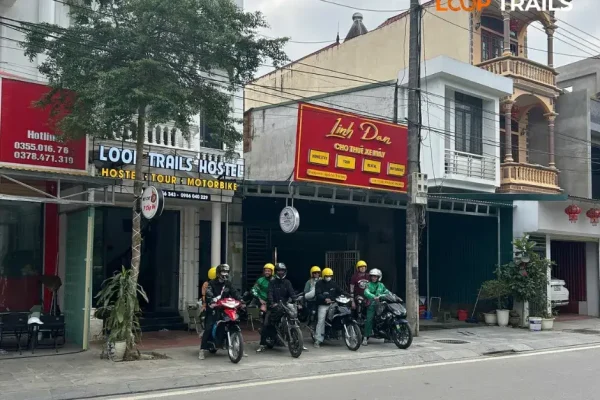
Learn more: Ha Giang Motorbike Rental
Ha Giang is one of the safer regions in Vietnam for travelers in terms of petty crime and personal security. Violent crime targeting tourists is extremely rare. The ethnic minority communities along the Loop are generally hospitable and accustomed to travelers passing through.
That said, a few things are worth knowing:
The biggest “scam” is often yourself. Most negative experiences on the Loop come from poor decisions — overpaying at a guesthouse that looked fine in the dark, renting a bike from someone who didn’t disclose its mechanical issues, or trusting a stranger’s recommendation without checking it against other sources. These aren’t elaborate cons; they’re the ordinary consequences of not doing homework.
Motorbike rental issues: Renting from unknown or unverified sources can lead to problems — a bike with undisclosed damage that you’re then held responsible for, or a mechanical failure in a remote location. Rent from established operators, inspect the bike thoroughly before accepting it, and document any pre-existing damage with photos.
Overcharging: In touristy areas (guesthouses, some market stalls, sometimes transport), foreigners may be quoted higher prices. This is common across Vietnam and is rarely dramatic — but agreeing on prices in advance, especially for multi-day accommodation, reduces friction.
Fake loop guides / unverified tour packages: If someone approaches you in Ha Giang city offering a suspiciously cheap guided tour, ask for verifiable information — company name, reviews, vehicle details. Book through operators with a clear online presence and genuine reviews.
Alcohol + riding = the actual emergency: This is worth saying plainly. Corn wine hospitality at homestays is genuine and generous. The morning after, you might feel fine. The roads do not care how fine you feel. Don’t ride hungover, and be honest with yourself about what “a couple of cups” actually meant.

Learn more: Ha Giang Packing List
Whatever option you choose — Easy Rider, self-drive, or jeep — pack this:
For all travelers:
Additional for motorbike riders (self-drive or Easy Rider):
Bike inspection checklist before riding:

Learn more: Ha Giang Loop for Families & Groups
There’s no single right answer — it depends on your experience, your travel style, and what you’re trying to get out of the trip. Here’s a clear breakdown:
| Option | Safety Level | Best For |
|---|---|---|
| Easy Rider (guided motorbike) | High | First-timers, solo travelers, people who want the motorbike experience without riding responsibility |
| Jeep Tour | High | Couples, small groups, non-riders, travelers prioritizing comfort and coverage |
| Self-Drive Motorbike | Moderate (experience-dependent) | Confident, experienced riders who want full independence |
Choose Easy Rider if: You’ve never ridden a motorbike in mountainous terrain, you want to focus on the landscape rather than the road, or you’re traveling solo and want local knowledge and company.
Choose a Jeep Tour if: You’re not a rider, you’re traveling with someone who can’t or doesn’t want to ride, you have limited days and want to cover more ground with less fatigue, or you want a more comfortable base experience.
Choose Self-Drive if: You have solid motorbike experience on mountain roads, you’ve researched current conditions, your travel insurance covers motorbike riding, and you’re comfortable with the responsibility of managing your own route and safety decisions.
Loop Trails can help you work out which option makes sense for your specific situation. We’d rather help you choose well than sell you the wrong tour. [Browse our Ha Giang Loop tours] or [reach out on WhatsApp] — no hard sell, just straight answers.
Learn more: Loop Trails Tour Ha Giang website
It has real risks — mountain roads, remote terrain, limited medical facilities — but the Loop is done safely by thousands of travelers every year. Most accidents are preventable and result from poor decisions: night riding, overconfidence, going too fast. If you respect the conditions and know your limits, the risk is manageable.
Vietnam’s license requirements for foreign riders are a topic where regulations can and do change. Rather than stating specifics that may be outdated, we strongly recommend checking the latest rules from official sources or asking your rental operator before you go. Regardless of licensing, having adequate travel insurance is non-negotiable.
Ma Pi Leng Pass gets the most attention due to its dramatic exposure — narrow road, cliff face, significant drops. In practice, it’s well-paved and most incidents on the Loop happen on less dramatic sections where riders let their guard down. The stretch between Meo Vac and Du Gia has rougher surfaces and deserves respect in wet conditions.
Yes, generally. Solo female travelers make up a significant portion of Loop visitors. The main safety considerations are the same as for any rider — motorbike competence, appropriate gear, not riding after dark. In terms of personal security, Ha Giang’s communities are typically welcoming and incidents targeting solo female travelers are uncommon, though normal awareness applies as anywhere.
You need a policy that explicitly covers motorbike riding (if self-driving) and emergency medical evacuation. Read the fine print — many standard policies exclude motorbike accidents above a certain engine size, or require a valid local license. World Nomads and similar adventure travel insurers typically have motorbike-specific coverage options.
Possible, but significantly harder than dry season. Rain creates slippery roads, poor visibility, and elevated landslide risk on some sections. If you’re set on a wet-season visit, a guided Easy Rider or jeep option is strongly preferable to self-drive for most travelers.
Book through an established operator with verifiable reviews — not through a random guesthouse offering you a bike the night before. Inspect the bike thoroughly before accepting it, document existing damage, and confirm what happens if you have a breakdown. A good rental operator will have a clear process for all of this.
Beginner riders shouldn’t self-drive the full Loop. The mountain terrain requires genuine riding competence. If you’re new to motorbikes or lack experience on winding roads, Easy Rider (riding pillion with a guide) is the right call — you still get the full experience without the riding responsibility.
ATMs exist in Ha Giang city and a few larger towns (Dong Van, Yen Minh). They’re not reliable everywhere on the Loop — carry sufficient cash. Fuel stations exist at regular intervals on the main circuit, but know where the next one is before you run low on remote sections. Ask your guide or guesthouse host each morning.
Police: 113 | Fire: 114 | Ambulance: 115. Save these in your phone before you leave Ha Giang city. Signal can be patchy in mountain areas — this is another reason to have an offline map and to inform someone of your daily route plan.
Helmets are legally required for all motorbike riders in Vietnam. Beyond legality, a full-face helmet is genuinely the most important piece of safety gear you can wear on the Loop. The helmets sometimes provided with rental bikes are minimum-compliance open-face options — many experienced riders bring their own full-face helmet or purchase one in Hanoi before traveling north.
The standard Loop takes 3–4 days at a comfortable pace. Trying to do it in 2 days means long daily distances, more fatigue, and less margin for stops or delays. 4 days is the sweet spot for most riders. If you want to add the Cao Bang extension or side routes, budget more. Rushing the Loop is one of the most reliable ways to increase your risk.
Contact information for Loop Trails
Website: Loop Trails Official Website
Email: looptrailshostel@gmail.com
Hotline & WhatSapp:
+84862379288
+84938988593
Social Media:
Facebook: Loop Trails Tours Ha Giang
Instagram: Loop Trails Tours Ha Giang
TikTok: Loop Trails
Office Address: 48 Nguyen Du, Ha Giang 1, Tuyen Quang
Address: 48 Nguyen Du, Ha Giang 1, Tuyen Quang

Facebook X Reddit Table of Contents They’re both in the north. They both involve dramatic limestone formations. And if you search “best

Facebook X Reddit Learn more: Ha Giang Loop Tours Table of Contents There’s a conversation that happens in every hostel common room