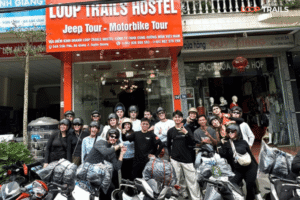


Thúy Kiều (Grace) is a travel blogger and content contributor for Loop Trails Tours Ha Giang. She holds a bachelor’s degree in Sustainable Tourism from Vietnam National University, Hanoi, and has a strong passion for exploring and promoting responsible travel experiences in Vietnam’s northern highlands.
Learn more: Ha Giang Loop Tours
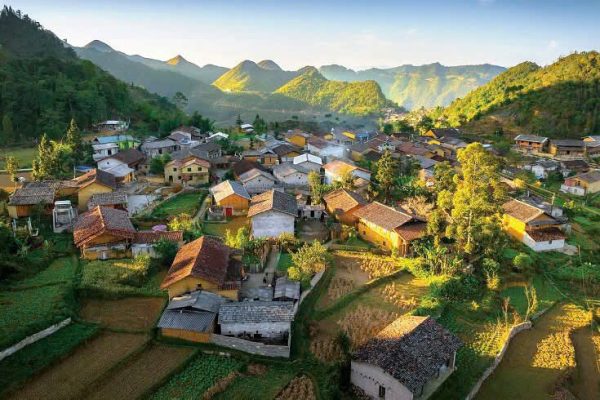
There’s a particular kind of silence in Lo Lo Chai that you don’t find many places in Vietnam anymore. The motorbike noise from the main road fades. The village opens up — stone-walled houses, children running barefoot between vegetable gardens, an older woman stitching bright embroidery in a doorway. And all around, the karst mountains of the Dong Van Geopark rise so sharply they look like they were placed there on purpose.
Lo Lo Chai is not the most visited village on the Ha Giang Loop, and honestly, that’s part of why it’s worth going out of your way for. It sits near the very top of Vietnam — a few kilometers from Lung Cu, the northernmost tip of the country — and it carries a cultural weight that most roadside stops simply don’t have.
This guide covers everything: where it is, how to get there, what to do, where to sleep, and how to make the most of a place that still feels genuinely off the beaten track.
Learn more: Ha Giang Loop 2 Days 1 Night
Lo Lo Chai is a small ethnic minority village in Dong Van District, Ha Giang Province, in the far north of Vietnam. It sits at the base of Lung Cu Mountain, roughly 3 kilometers from the Lung Cu Flag Tower — the symbolic northernmost point of the country, right on the Chinese border.
The village is home to the Lo Lo people (Lô Lô in Vietnamese), one of Vietnam’s 54 officially recognized ethnic groups. There are only around 4,000 Lo Lo people left in the country, making this one of the rarer communities a traveler might encounter anywhere in Southeast Asia. Lo Lo Chai itself is one of their most intact and traditionally preserved settlements.
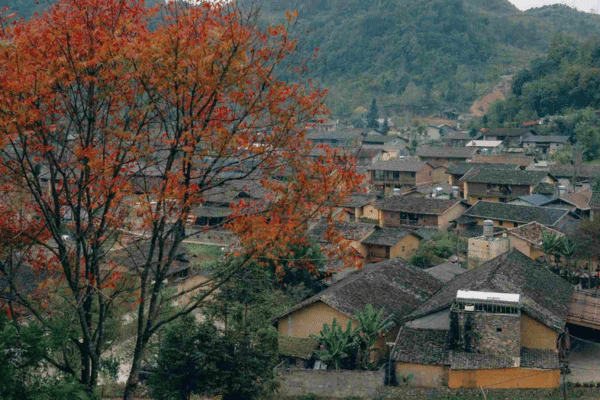
What makes it stand out visually — even from a distance — is the architecture. The houses in Lo Lo Chai are built from local stone and wood in a style that blends traditional highland construction with Chinese border-area influences. The walls are thick, the rooflines low, and the whole village looks like it grew out of the mountain rather than being placed on top of it. In the surrounding fields, terraced plots of corn and buckwheat follow the contours of the valley floor.
If you’re doing the Ha Giang Loop, Lo Lo Chai is most commonly visited on the leg between Dong Van and Lung Cu. It’s not a detour — it’s a stop that makes the whole stretch more meaningful.

Learn more: Ha Giang Loop 3 Days 2 Nights
Coordinates: Dong Van District, Ha Giang Province, northern Vietnam. Located approximately 3 km south of Lung Cu Flag Tower and about 20 km north of Dong Van Town.
Ha Giang City is the starting point for most Ha Giang Loop riders. From there, Lo Lo Chai is roughly 150 km by road — a full day of riding if you take it properly, stopping at Ma Pi Leng Pass and Meo Vac along the way. Most loop itineraries reach Lo Lo Chai on Day 2 or Day 3 depending on pace and how much time you spend at each stop.
The most common route: Ha Giang → Quan Ba → Yen Minh → Dong Van → (north on the road toward Lung Cu) → Lo Lo Chai.
If you’re already in Dong Van, Lo Lo Chai is a straightforward ride of around 20–25 km heading north toward Lung Cu. The road is generally paved but expect some rough patches and steep gradients — the terrain in this part of Ha Giang doesn’t give you easy flat stretches. Plan for 45 minutes to 1 hour from Dong Van town.
The road between Dong Van and Lung Cu is one of the better-maintained stretches in the province because it’s a main route to the flag tower. That said, conditions change with the seasons. After heavy rain, sections can develop potholes quickly, and fog can reduce visibility dramatically in the early mornings from October through February.
If you’re riding yourself, take it at a pace that lets you actually look around. If you’re on a guided tour, your rider will know the road well. Road rules and conditions change — always check local updates before your trip, especially if you’re riding during or just after the rainy season.
Learn more: Ha Giang Loop 4 Days 3 Nights
The Lo Lo are one of the smallest ethnic minorities in Vietnam by population, and their culture reflects centuries of relative isolation in these high-altitude border regions. The community in Lo Lo Chai has managed to hold onto a lot of it.
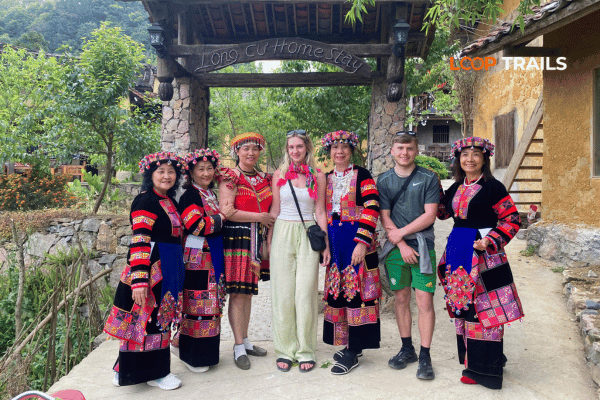
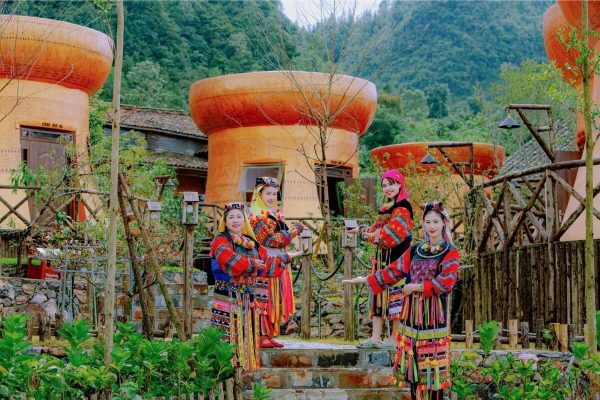
The most immediately visible marker of Lo Lo identity is the clothing — particularly the women’s dress. Traditional Lo Lo costume involves densely embroidered fabric panels in deep reds, blacks, and blues, with geometric patterns that are specific to each sub-group. Black Lo Lo and Colored Lo Lo are the two main branches; Lo Lo Chai is primarily home to the Colored Lo Lo (Lô Lô Hoa), whose dress is among the most visually striking of any ethnic group in northern Vietnam.
The embroidery is not decorative in a casual sense. It carries cultural meaning — different patterns signal things like marital status, age, and regional affiliation. Women learn to sew from childhood, and the traditional costume for festivals and ceremonies can take months to complete. If you’re lucky enough to visit during a festival or market day, the visual impact is remarkable.
The Lo Lo also have a strong musical tradition centered around bronze drums, which are considered sacred objects. Bronze drum rituals mark important events in the agricultural and spiritual calendar. You probably won’t see a bronze drum ceremony as a casual visitor, but knowing this context adds depth to what you’re seeing when you walk through the village.
Agriculture is the backbone of daily life. Corn is the main crop — you’ll see it drying on rooftops and along walls throughout the village, particularly from late autumn into winter. Rice paddies and buckwheat plots fill the lower terraces. The rhythm of the village is very much tied to the growing season, which is worth keeping in mind when you plan your visit.
Learn more: Ha Giang Cao Bang 5 Days 4 Nights
The single best thing you can do in Lo Lo Chai is put your phone in your pocket and walk. The village is small enough to cover on foot in an hour or two, and the layout rewards slow exploration.
Follow the stone paths between the houses. Look at how the walls are built — thick stone, sometimes with carved details, with wooden window frames that have been worn smooth. Vegetable gardens press right up against the paths. Roosters and ducks are a given. The village has a lived-in quality that some more touristy ethnic minority villages have lost.
Interactions with locals are generally warm but low-key. Not everyone speaks Vietnamese, let alone English, but a smile, a nod, and genuine curiosity go a long way. If children approach you, let them — don’t push candy or gifts unprompted, as this creates patterns that aren’t good for the community long term.
Almost everyone who comes to Lo Lo Chai also climbs Lung Cu Flag Tower, which is a short ride from the village. The tower sits at the summit of Dragon Mountain (Nui Rong) and marks the northernmost point of Vietnam. It’s a real landmark, not just a tourist tick — the views over the border landscape into China, and back down into the Dong Van karst plateau, are legitimately extraordinary.
The climb involves several hundred steps. Budget an hour minimum including the ascent. Go early if you want to avoid the midday tour bus crowds.
Lo Lo Chai is one of the most photogenic village stops on the entire Ha Giang Loop, and photographers working in the golden hours (roughly 30 minutes after sunrise and before sunset) will find the light extraordinary against the karst backdrop.
Best spots:
If you’re staying overnight in the village (more on that below), you’ll have the mornings almost entirely to yourself before tour groups arrive from Dong Van. Early morning mist in the valley is a recurring visual that makes the whole place look like a landscape painting.
Dong Van District has a traditional weekly market culture. The Dong Van Old Quarter Market (held on Sunday mornings) is about 20 km from Lo Lo Chai and worth combining with your visit if the timing lines up. Lo Lo villagers attend wearing their traditional dress, which makes it one of the best places to see the full costume in a natural context.
Festivals in the Lo Lo calendar are tied to the lunar calendar and agricultural cycles — check locally for current dates if you’re hoping to time your visit around one. The Lo Lo New Year (different from Tet and the Hmong New Year) is typically celebrated in late autumn, though exact dates vary. If you’re booking a tour, your guide can advise on timing.
Planning to visit Lo Lo Chai as part of the Ha Giang Loop? Loop Trails runs small-group guided tours with experienced local riders who know this village well — check the Ha Giang Loop tour options to find the format that fits your travel style.

Learn more: Ha Giang Cao Bang Ba Be Lake 6 Days 5 Nights
Staying overnight in Lo Lo Chai rather than day-tripping from Dong Van is one of the decisions that separates a good Ha Giang Loop from a great one. When the afternoon tour groups leave, the village becomes noticeably quieter and more itself.
There are a small number of homestays operating in and immediately around the village. These are generally family-run with basic rooms, shared bathrooms, and home-cooked meals included. Don’t expect boutique-hotel comfort — what you’re paying for is the experience of waking up in the village, hearing the sounds of morning farm work start before dawn, and having breakfast with a family who actually lives there.
Booking in advance is recommended if you’re visiting between September and November (peak season), as there aren’t many beds and word has spread about Lo Lo Chai’s appeal. Contact your tour operator or check current listings — accommodation options and availability change, so direct confirmation is smarter than relying on cached online listings.
If you’re riding the loop independently and prefer more facilities, Dong Van Town has more accommodation options and is a 45-minute ride south.
Learn more: Ha Giang Food guide
Meals in Lo Lo Chai are almost exclusively home cooking at homestays or very small local restaurants. The menu is simple, seasonal, and good.
Thắng cố (a hearty soup traditionally made with horse or pork offal, popular throughout the Ha Giang highlands) is the regional specialty. It’s an acquired taste — rich, deeply savory, with a smell that’s not subtle — but it’s the honest food of this region and worth trying at least once.
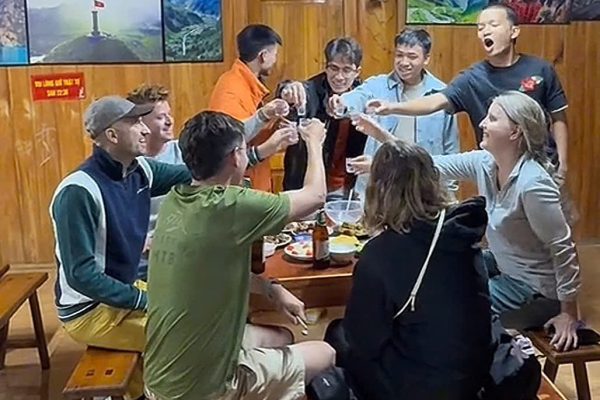
Corn wine (rượu ngô) is produced locally and is a staple of social life in the northern highlands. It’s stronger than it looks. Go easy the night before you have a full day of mountain riding.
Grilled corn and smoked meat appear at almost every market and many roadside stops. The corn in this region is a drier, denser variety than the sweet corn common in the south — charred over coals, it’s excellent.
If you’re staying at a homestay, your meals will likely be whatever the family is cooking that day: stir-fried vegetables from the garden, rice or corn, occasionally pork or chicken. It’s honest, filling food. Bring your appetite and eat what’s offered.

Learn more: Ha Giang in September & October
Ha Giang has a defined season, and Lo Lo Chai’s position near Lung Cu — higher elevation, closer to the Chinese border — means the weather here can be more extreme than in lower parts of the province.
September to November is the most popular window, and for good reason. The rice and buckwheat are ripening, the air is clear after the summer rains, and the landscape is at peak color. Buckwheat flowers (hoa tam giác mạch) bloom across the karst plateau from roughly October into November, turning hillsides pale pink and white — it’s genuinely spectacular and attracts a lot of visitors. Book early if this is your target.
March to May is a secondary sweet spot. The weather is warming, the fields are green with new crops, and the crowds are lighter than autumn. Visibility is generally good and the roads are drier.
December to February brings cold — genuinely cold by tropical Vietnam standards. Frost is possible at higher elevations including Lung Cu, and fog can sit in the valleys for days at a time. The landscape in winter has its own beauty (bare karst, gray skies, wisps of smoke from cooking fires), but riding in these conditions requires more care and the right gear. It can also be surprisingly rewarding if you’re prepared.
June to August is rainy season. Landslides are a real risk on some mountain roads. Experienced riders and guided tours do operate in this season, but road conditions are variable. Not recommended for first-time Ha Giang visitors.
Learn more: Ha Giang Loop Easy Rider
Lo Lo Chai doesn’t exist in isolation it’s a stop on a bigger journey. How you get there shapes what the experience is like, and there’s no one right answer.
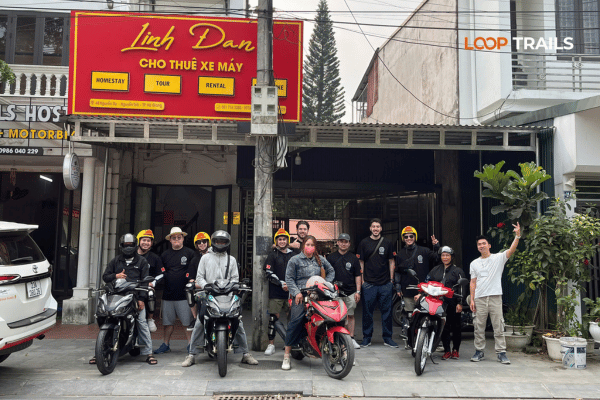
Easy Rider Tour (guided, you ride pillion) Best for: First-time visitors, solo travelers, anyone who wants to focus on the experience rather than the navigation. An experienced local guide doubles as a cultural interpreter they know the village, they know the families, and they know when to stop and when to keep moving. This is the lowest-stress way to visit Lo Lo Chai and get genuine context about what you’re seeing.
Self-Drive Motorbike Best for: Experienced riders who’ve done mountain roads before and want the freedom to set their own pace. Lo Lo Chai rewards lingering. If you want to stay an extra morning, you can. If you want to detour up a dirt track above the village, you can. The trade-off is that you’re navigating solo in terrain that doesn’t forgive mistakes.
Jeep Tour Best for: Couples or small groups who want comfort and coverage without riding motorbikes. Jeep tours cover the major stops efficiently and are a great option when one person in the group isn’t keen on motorbikes. The trade-off is slightly less flexibility on pace and stops.
Ha Giang + Cao Bang Combine Tour For travelers with more time, combining the Ha Giang Loop with Cao Bang which includes Ban Gioc Waterfall and Phia Oac gives a fuller picture of the far north. Lo Lo Chai sits naturally in the Ha Giang portion of an extended itinerary.
Not sure which fits your trip? Loop Trails can help you figure it out drop a message on WhatsApp and describe your group, timeline, and experience level. No hard sell, just honest advice.
Learn more: Ha Giang Packing list
Layering is everything. Even in October, mornings at Lo Lo Chai elevation can be significantly cooler than Ha Giang City. A windproof jacket, a thermal base layer for early rides, and gloves will see you through most of the year outside of peak summer.
Sturdy footwear. The paths through the village are uneven stone. Flip-flops are fine for a beach — not here.
Cash in small denominations. There are no ATMs in Lo Lo Chai. The nearest reliable ATM is in Dong Van Town. Bring enough cash for accommodation, meals, and any purchases before you head north.
A physical or offline map. Mobile signal in the area can be weak or absent. Download your maps before leaving Dong Van.
Sun protection. The UV at elevation is more intense than you might expect, especially in spring and autumn when skies are clear.
A few things worth keeping in mind:
Photographing people, particularly older community members and women in traditional dress, should always involve permission first. Gesture, make eye contact, ask — even without a shared language, the intention comes through. Some people will say no. That’s completely fine.
When entering any home (homestay rooms included), take your shoes off at the door unless the host indicates otherwise.
Religious objects and altars inside homes are not props for photos. If you’re unsure whether something is appropriate to photograph, don’t.
Dress modestly, particularly if you’re visiting during any kind of community gathering or festival. This isn’t a strict formal code, but covering shoulders and knees shows basic awareness.
Rushing through. Lo Lo Chai is easy to do as a 20-minute photo stop between Dong Van and Lung Cu. That’s a waste. Give it at least half a day, preferably a night.
Only visiting in peak season without planning ahead. September to November fills up. If you’re set on this window, arrange accommodation and tours in advance — not the week before.
Underestimating the road. The stretch from Yen Minh through Dong Van to Lung Cu is beautiful but demanding. If you’re self-driving, be honest with yourself about your skill level. The roads here are not the same as riding a scooter around Hoi An.
Assuming all homestays are the same. Quality and experience vary. A tour operator with local connections will steer you toward options that are clean, honest, and where the money actually benefits the family rather than an intermediary.
Missing the context. Lo Lo Chai is more interesting when you know something about the Lo Lo people before you arrive. Even a 10-minute read beforehand changes what you notice.
Ready to make Lo Lo Chai part of your Ha Giang Loop? Browse Loop Trails’ self-drive and guided tour options: small groups, reliable bikes, guides who actually know the north.
Learn more: Ha Giang Loop Mistake to Avoid
Lo Lo Chai is located in Dong Van District, Ha Giang Province, in far northern Vietnam. It sits roughly 3 km south of Lung Cu Flag Tower and about 20–25 km north of Dong Van Town. On the Ha Giang Loop route, it falls on the northern leg between Dong Van and Lung Cu.
Yes, it’s one of the most culturally intact ethnic villages on the entire Ha Giang Loop. Unlike some villages that have become very commercial, Lo Lo Chai retains a genuine daily-life quality. The architecture, the Lo Lo traditional dress, and the mountain backdrop make it stand out even on a route full of remarkable stops.
Yes. There are homestays in and near the village offering basic but comfortable accommodation with home-cooked meals. Staying overnight is strongly recommended — mornings before the day-trip crowds arrive are a completely different experience. Book ahead during the September–November peak season.
At minimum, 2–3 hours for a proper walk around the village. A half-day gives you time to visit Lung Cu Flag Tower as well. An overnight stay is ideal if your schedule allows you’ll get the evening and early morning when the village is at its most peaceful.
September to November is peak season and the most visually spectacular, with buckwheat flowers blooming across the plateau. March to May is also excellent with lighter crowds. Winter (December–February) is cold but has its own appeal. Avoid the height of rainy season (June–August) unless you’re an experienced rider prepared for variable road conditions.
Licensing and permit rules can change — always check the latest local regulations before your trip. For travelers not comfortable riding themselves, guided Easy Rider tours or Jeep tours are excellent alternatives that don’t require you to hold a license.
Ha Giang in general, and Lo Lo Chai specifically, is considered safe for travelers. The main risks on the Ha Giang Loop are road-related — mountain terrain, weather, and traffic rather than personal safety issues. Solo travelers, including solo women, regularly do the loop. A guided tour adds an extra layer of confidence for first-timers.
Lo Lo Chai is roughly 150 km from Ha Giang City by road. Most people spread this over 2–3 days of riding, stopping at Quan Ba, Yen Minh, Meo Vac, Ma Pi Leng Pass, and Dong Van along the way. You can also book a tour from Ha Giang City that includes Lo Lo Chai in the itinerary.
Yes, Dong Van is about 20–25 km south of Lo Lo Chai, roughly 45 minutes to 1 hour by motorbike. A day trip from Dong Van is entirely feasible, and most riders combine Lo Lo Chai with a climb up to Lung Cu Flag Tower in the same outing.
Local embroidery and textiles made by Lo Lo women are the most authentic souvenirs available. If you see traditional embroidered items for sale directly from village women, buying supports the community directly. Be wary of mass-produced “ethnic” souvenirs sold at tourist stops they’re rarely made locally.
Many Ha Giang Loop tours include Lo Lo Chai as a stop, particularly on itineraries that go north through Dong Van to Lung Cu. Check with your tour operator to confirm Loop Trails includes it on relevant itineraries and can advise on how to fit it into your route.
The Lo Lo have their own language within the Sino-Tibetan family. Many community members also speak Vietnamese to varying degrees. English is not widely spoken in the village itself. A local guide who speaks Vietnamese and has relationships in the village is genuinely useful here, both for communication and for context.
Contact information for Loop Trails
Website: Loop Trails Official Website
Email: looptrailshostel@gmail.com
Hotline & WhatSapp:
+84862379288
+84938988593
Social Media:
Facebook: Loop Trails Tours Ha Giang
Instagram: Loop Trails Tours Ha Giang
TikTok: Loop Trails
Office Address: 48 Nguyen Du, Ha Giang 1, Tuyen Quang
Address: 48 Nguyen Du, Ha Giang 1, Tuyen Quang
Facebook X Reddit Table of Contents Learn more: Ha Giang Loop Tours This is the question that sits in almost every Ha
Facebook X Reddit Table of Contents Learn more: Ha Giang Loop Tours Most people drive past the Quan Ba area twice on