
Ha Giang Easy Rider: The Complete Guide (2026)
Facebook X Reddit Table of Contents Learn more: Ha Giang Loop Tours There’s a moment, usually somewhere on Ma Pi Leng Pass,

Thúy Kiều( Grace) is a travel blogger and content contributor for Loop Trails Tours Ha Giang. She holds a bachelor’s degree in Sustainable Tourism from Vietnam National University, Hanoi, and has a strong passion for exploring and promoting responsible travel experiences in Vietnam’s northern highlands.
The first time you round that final bend on Ma Pi Leng Pass and see the glass bridge jutting out over the abyss, your stomach does a little flip. It’s not fear exactly—more like your brain trying to process the sheer drop to the Nho Que River snaking through the canyon 800 meters below.
The Ma Pi Leng Skywalk has become one of the Ha Giang Loop’s headline attractions since it opened, and honestly, it deserves the hype. But there’s more to getting the most from this experience than just showing up and hoping for the best. The weather window can be tight, the crowds unpredictable, and figuring out whether to ride yourself or join a tour isn’t always straightforward.
I’ve watched plenty of travelers nail this stop, and I’ve seen others arrive when the fog’s so thick they can barely see the bridge, let alone the valley. This guide covers everything you actually need to know—entrance details, when to go, what the experience feels like, and how to fit it into your Ha Giang itinerary without the usual rookie mistakes.
Learn more: Ha Giang Loop Tours
Learn more: Ha Giang Loop route and itinerary
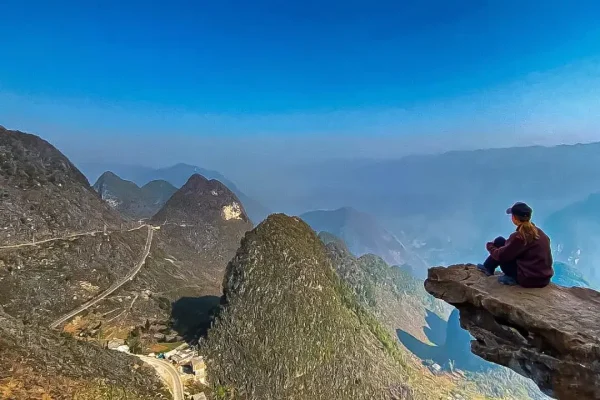
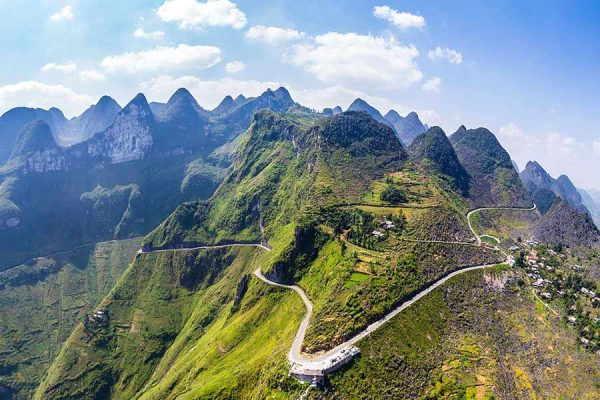
Ma Pi Leng Skywalk is a U-shaped glass walkway that extends 40 meters from the cliff face along one of Vietnam’s most dramatic mountain passes. Built in 2019, it sits roughly at the midpoint of the Ma Pi Leng Pass—the stretch of road between Dong Van and Meo Vac that consistently shows up in “most spectacular drives on earth” lists.
The structure itself features a reinforced glass floor, so you’re literally walking on air above the Nho Que River canyon. The design mirrors similar skywalks you’ll find in China or the Grand Canyon, but the setting here is uniquely Vietnamese: jagged karst peaks, terraced fields clinging to impossible slopes, and that iconic turquoise river winding through the valley.
You’ll find the skywalk approximately 20 kilometers from Dong Van when heading toward Meo Vac, or about 4 kilometers from Meo Vac if you’re approaching from the opposite direction. The exact location is impossible to miss—there’s a large parking area, souvenir stalls, and usually a cluster of motorbikes and tour vehicles pulled over.
GPS coordinates: 23.2089° N, 105.2947° E (useful if you’re navigating independently)
Most people visit as part of their Ha Giang Loop journey. The loop is a 3-4 day motorbike circuit that starts and ends in Ha Giang City, covering roughly 300-350 kilometers depending on your exact route. Ma Pi Leng Pass falls on Day 2 or Day 3 of the standard itinerary, depending on which direction you’re riding and where you spent your previous night.
The skywalk opened to tourists in late 2019, a relatively recent addition to what’s been a legendary stretch of road for decades. Ma Pi Leng Pass itself was hand-carved by ethnic minority soldiers and local workers in the 1960s—one of those construction projects that seems borderline impossible when you consider the tools and conditions they had.
The glass bridge was designed to give visitors a safe way to experience the vertigo-inducing views that previously required leaning over questionable guardrails or scrambling to unofficial viewpoints. Local authorities wanted something that could handle tourist traffic while minimizing the environmental impact on the fragile cliff edges.
Since opening, it’s transformed this section of the pass from a quick photo stop into a 30-60 minute destination. Whether that’s enhancement or commercialization depends on who you ask, but the views remain undeniably spectacular.
Learn more: Ha Giang Cao Bang 5 Days
Walking onto that transparent surface for the first time does something to your equilibrium, even if you’re not particularly scared of heights. Your eyes tell you there’s nothing under your feet, but you can feel the solid structure supporting you. It’s disorienting in the best possible way.
The entrance fee typically runs around 100,000-150,000 VND per person (roughly $4-6 USD). This is separate from any tour or transport costs—it’s purely for accessing the skywalk platform. Ticket prices can fluctuate with local policy changes, so check latest updates when planning your visit.
Opening hours are generally 7:00 AM to 6:00 PM daily, though this can shift slightly during low season or poor weather conditions. They don’t always enforce the closing time strictly if there are still visitors on the platform, but showing up after 5:30 PM is pushing your luck.
Payment is cash-only at the ticket booth. There’s no ATM at the site, and the nearest one is back in Dong Van or ahead in Meo Vac, so budget accordingly. Some tour operators include the skywalk entrance fee in their package price—confirm this when booking to avoid surprises.
The walkway extends in a curved path from the cliff edge, with the glass floor section covering roughly the outer 15-20 meters of the platform. The first section from the entrance uses regular flooring, giving you a chance to adjust before you hit the transparent part.
Once you’re on the glass, you can look straight down through multiple layers of reinforced panels to the river canyon below. The drop is significant enough that vehicles on the road look like toys, and birds fly beneath your feet. The psychological effect is intense, even though you know intellectually that the structure is engineered to hold far more weight than a few dozen tourists.
The platform can hold about 100 people simultaneously, but it rarely feels that spacious. On busy days—particularly weekends and Vietnamese holidays—you might wait 10-15 minutes for your turn and then have about 5-10 minutes on the glass before the next group shuffles in. Off-season or early morning visits give you much more breathing room.
The glass panels are multi-layered and designed to handle the weight of a small vehicle, not just foot traffic. Each panel gets inspected regularly, though the frequency and thoroughness of these checks isn’t publicly posted. The handrails are solid, and there’s no realistic way to accidentally fall from the platform itself.
They’ll ask you to wear shoe covers before walking on the glass—disposable blue slip-ons that prevent dirt and reduce scratching. Everyone gets them at the entrance, and yes, they do make you shuffle a bit awkwardly. They’re not optional.
Bags and backpacks are allowed, but selfie sticks and drones are prohibited on the platform. The drone ban makes sense given the wind conditions and the risk of equipment falling into the canyon. They’re not militant about enforcing these rules, but staff will stop you if you pull out a drone.
Photography is encouraged, and you’ll see plenty of people lying flat on the glass for dramatic shots. Just be aware of the crowd flow—parking yourself in the middle of the walkway for a 10-minute photoshoot when there’s a queue behind you is poor form.
Learn more: Ha Giang in September & October
Timing your visit right makes a massive difference to the experience. I’ve been there when the visibility was crystal clear for 50 kilometers, and I’ve been there when the fog was so dense I could barely see the person standing next to me. Both were memorable, but only one was worth the entrance fee.
The ideal weather window runs from late September through early December and again from March through early May. These periods offer the best combination of clear skies, manageable temperatures, and relatively stable conditions.
September-November tends to give you post-monsoon clarity. The rain has washed the dust from the air, terraced rice fields glow golden-green, and the river runs strong and blue. Morning fog is still possible, but it usually burns off by mid-morning.
March-May brings wildflowers and the plum blossoms that Ha Giang is famous for, though the river level drops and the color shifts from turquoise to darker blue-green. Temperatures are warming up, which means more comfortable riding but also more tourists.
June-August is monsoon season. This doesn’t mean constant rain, but it does mean unpredictable afternoon thunderstorms, slippery roads, and frequent cloud cover that can obscure the canyon views entirely. The mist can create an ethereal atmosphere, but you’re gambling on visibility.
December-February is cold—genuinely cold, especially at Ma Pi Leng’s elevation. Temperatures can drop to 5-10°C, and fog is common. The upside is fewer tourists and occasional dramatic scenes when clouds fill the canyon. The downside is you might spend the whole visit shivering and unable to see much.
Weekends and Vietnamese public holidays see the heaviest traffic. Tet (Vietnamese New Year, usually late January or early February) brings domestic tourists in serious numbers, and the loop can feel genuinely crowded. Same goes for the week-long holiday around April 30th and May 1st.
Mid-week visits during shoulder season (October or March-April) offer the best crowd-to-weather ratio. You’ll still have other people around, but it won’t feel like you’re queueing for a theme park ride.
Peak European and Australian holiday seasons (July-August, December-January) bring more Western backpackers, though the total numbers are still lower than domestic Vietnamese tourism during their holidays. Tour groups tend to arrive between 10 AM and 2 PM, so showing up earlier or later can help you avoid the rush.
Golden hour light—that warm, angled glow shortly after sunrise or before sunset—is tough to catch at Ma Pi Leng because of the mountain shadows and the pass’s east-west orientation. Late morning (9-11 AM) often gives you the best natural light on the canyon and river.
Overcast days can actually work in your favor for photography. The diffused light reduces harsh shadows and brings out the subtle color gradations in the limestone cliffs. Clear blue-sky days are stunning but can create challenging contrast for cameras.
If you’re serious about photos, bring a polarizing filter to manage reflections on the glass and enhance the river’s color. A lens cloth is essential—the glass panels pick up fingerprints and smudges constantly.
For drone operators, you can’t fly from the skywalk platform itself, but there are legal launch points along the pass. Check current regulations before you visit, as rules around drone usage in Ha Giang have tightened in recent years.
Learn more: Ha Giang Loop 4 Days 3 Nights
Getting to Ma Pi Leng is straightforward in theory—follow the Ha Giang Loop north from Ha Giang City, through Quan Ba and Yen Minh, into Dong Van, and then ride the pass toward Meo Vac. In practice, the road conditions, your riding experience, and how you choose to tackle the journey make a significant difference.
Learn more: Ha Giang Loop Self-Driver
The full route from Ha Giang City to the skywalk covers about 160 kilometers and typically takes 6-7 hours of actual riding time, not counting stops. Most people split this into two days, staying overnight in Dong Van before tackling Ma Pi Leng Pass the next morning.
Day 1 typical route: Ha Giang City → Tam Son → Quan Ba (Heaven’s Gate viewpoint) → Yen Minh → Dong Van (sleep in Dong Van)
Day 2: Dong Van → Ma Pi Leng Skywalk → Meo Vac (sleep in Meo Vac or continue further)
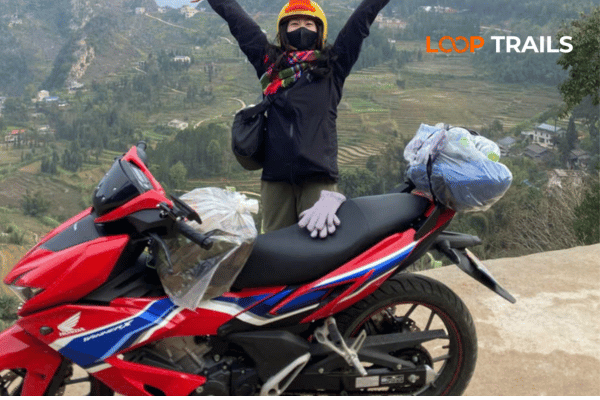
The road to Ma Pi Leng is paved but features constant switchbacks, steep gradients, and sections where erosion or small landslides have left debris. If you’re renting a semi-automatic bike, you’ll want something with decent power—a 110cc or 125cc minimum. Manual bikes (XR150 or similar) handle the climbs more confidently.
Navigation is simple: there’s essentially one main road. Google Maps works adequately, but offline maps (Maps.me or similar) are smart backup given the spotty phone signal.
Road conditions change seasonally and after heavy rain. The pass section approaching the skywalk has seen improvements in recent years, but you’ll still encounter rough patches, gravel, and the occasional pothole that could genuinely damage your bike or cause a spill if you hit it wrong.
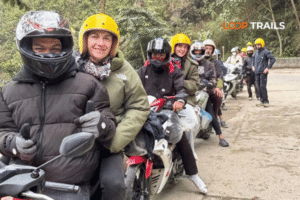
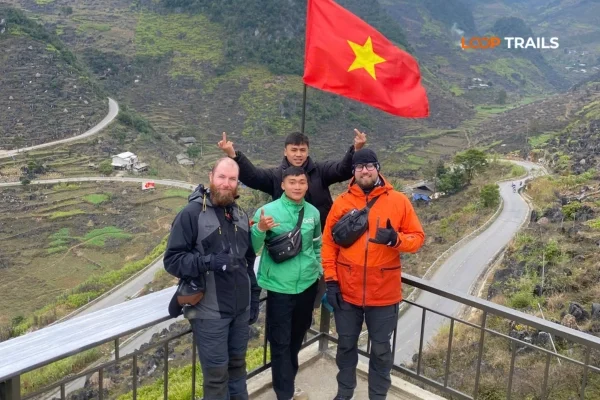
Easy Rider tours pair you with an experienced local driver who handles the riding while you sit on the back and enjoy the scenery. The driver knows the road, speaks some English, and can point out interesting stops or shortcuts you’d miss on your own.
This option makes sense if you’re not confident riding in challenging conditions, if you want to focus on photography without worrying about navigating, or if you simply prefer not to deal with renting and maintaining a motorbike for 3-4 days.
Reputable Easy Rider services include the skywalk stop as a standard part of the itinerary. Your driver will know the best time to arrive based on current crowd patterns and weather, and they’ll typically give you 30-45 minutes at the site while they wait with the bikes.
The main advantage beyond safety and convenience is flexibility. If weather turns bad or you want to adjust the schedule, experienced drivers can suggest alternatives on the spot. The disadvantage is higher cost compared to self-drive rental, and you’re on someone else’s timeline.
Learn more: Ha Giang Loop for Families & Groups
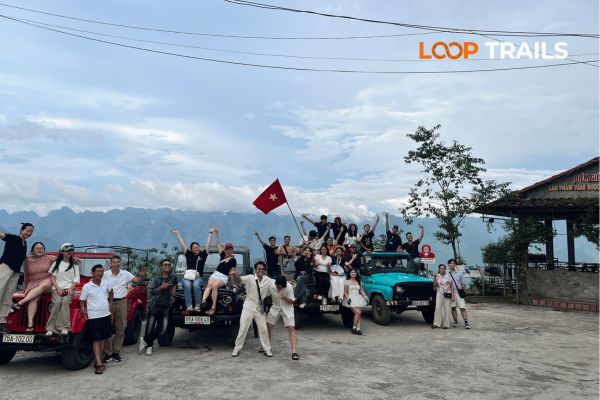
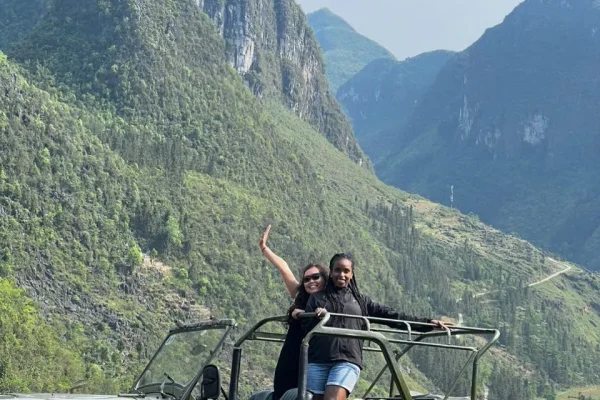
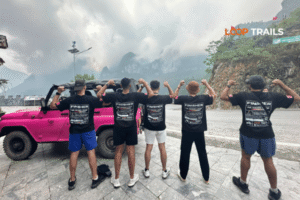
Jeep tours seat 4-8 passengers depending on vehicle size, and they cover the same route as motorbike tours but with more protection from weather and more luggage capacity. You’ll typically share with other travelers unless you book a private jeep.
The trade-off is less immersion. You’re separated from the landscape by windows and air conditioning, and photo stops are more structured. Some people prefer this—especially couples where one person doesn’t want to ride or families with children. Others find it diminishes the adventure.
Jeeps handle the road conditions easily and can navigate through weather that would make motorbike riding miserable or unsafe. If you’re visiting during questionable weather or have limited time and want to maximize comfort, this is the pragmatic choice.
Most jeep tours include the Ma Pi Leng Skywalk stop, but confirm this explicitly when booking. Some operators rush through or make it optional, which defeats part of the purpose.
Learn more: Ha Giang Cao Bang Loop Jeep tour Guide
The glass bridge is the marquee attraction, but the pass itself deserves more than just a quick stop. The entire 20-kilometer stretch between Dong Van and Meo Vac is one of the most visually dramatic roads you’ll ever ride or drive, and there are multiple spots worth exploring.
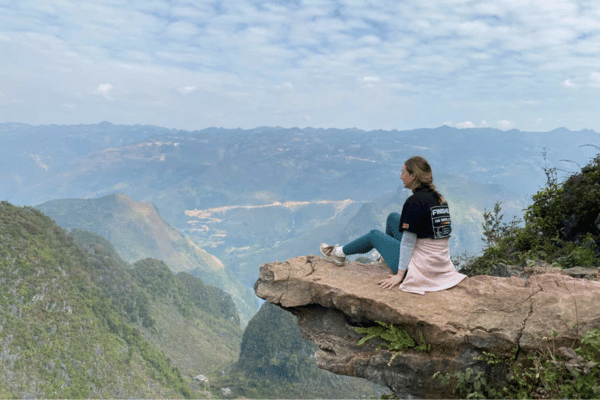
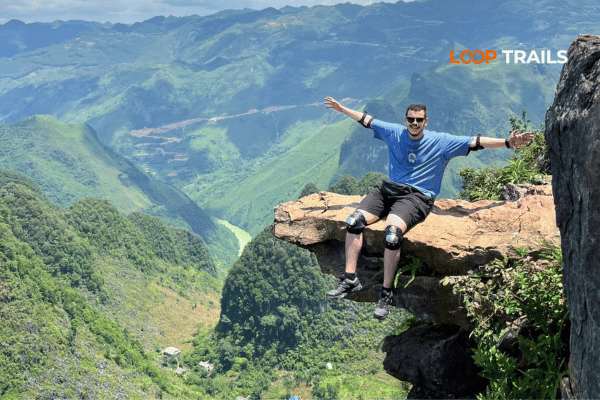
Several unmarked pull-offs along the pass offer perspectives that rival the skywalk itself. About 2 kilometers before the skywalk (coming from Dong Van), there’s a dirt shoulder on the left where you can park and walk to a rock outcrop. The view down to the river and across to the opposite cliffs is unobstructed and completely free.
Another worthwhile stop sits roughly halfway between the skywalk and Meo Vac, where the road makes a particularly dramatic hairpin turn. You can see three or four switchbacks stacked vertically below you, with the river curving around the base of the canyon. This spot sees less traffic but requires careful parking because the shoulder is narrow.
Near the Meo Vac end of the pass, there’s a wider area with a few local vendors selling drinks and snacks. The view looks back toward the skywalk section and gives you a sense of the scale of the entire pass. It’s a good place to take a break before dropping into Meo Vac town.
Learn more: Ha Giang Loop 3 Days 2 Nights
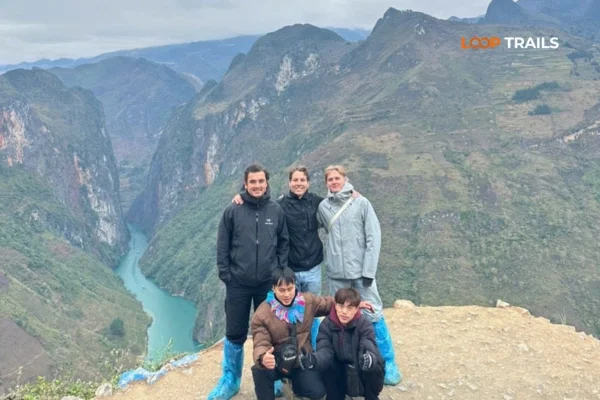
The Nho Que River’s color shifts throughout the day and season. During dry season (December-April), it runs lower and takes on deeper blue-green tones. Wet season brings more volume and a brighter turquoise, though visibility can be compromised by clouds and rain.
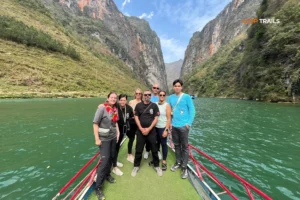
The river isn’t easily accessible from the road—the elevation difference is too great, and there aren’t established paths down. Some tour operators offer boat trips on the river itself, launched from points near Meo Vac. These give you a completely different perspective, looking up at the cliffs you were riding along, but they require separate booking and additional time.
From the skywalk and other viewpoints, you’ll sometimes see small boats on the river. These are usually local fishermen or boatmen ferrying tourists. The river isn’t particularly navigable—there are rapids and shallow sections—so boat trips stick to calmer stretches.
The iconic “Ma Pi Leng Pass sign” sits a few hundred meters before the skywalk parking area. It’s a large stone marker with Vietnamese and English text, and it’s become a standard photo op. The line can get long during peak times, but it moves relatively quickly.
Less crowded but equally photogenic: the sections of road where you can capture the full curve of the pass with the canyon and river in the background. These require some timing and positioning to shoot safely without blocking traffic, but when you nail it, they’re the photos that make people understand why you rode 300 kilometers on a motorbike.
For landscape shots, a wide-angle lens (16-35mm equivalent) works best. The scale is so massive that standard focal lengths can’t capture the depth and layering of the mountains. If you’re shooting on a phone, panorama mode helps but rarely does justice to the three-dimensional reality.
Learn more: Ha Giang Paking List
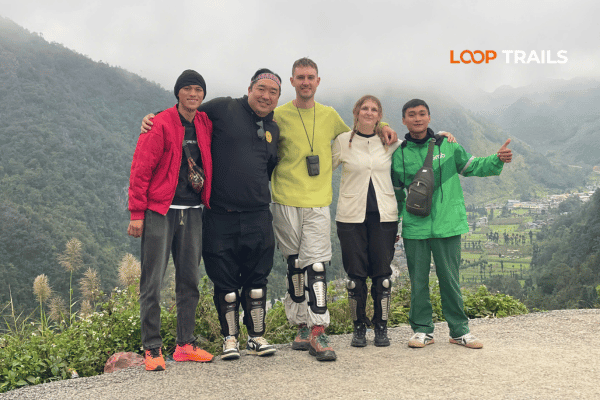
The skywalk visit itself doesn’t require special equipment, but being prepared for the broader Ma Pi Leng Pass experience makes everything smoother. I’ve seen people show up in flip-flops and tank tops, then spend the entire visit uncomfortable and unable to walk around properly.
Must bring:
Strongly recommended:
Nice to have:
Leave valuables you don’t need back at your accommodation. There’s no need to carry your passport to the skywalk—a photo on your phone is sufficient if anyone asks, though they rarely do. Keep your bike keys and wallet secure; petty theft is uncommon but not unheard of in crowded areas.
The structure itself is safe, but the elevation and exposure create risks worth respecting. If you have genuine acrophobia (fear of heights), be honest with yourself about whether this is worth the stress. The views from the regular viewpoints along the pass are nearly as good without the glass floor psychological element.
For those prone to motion sickness or vertigo, avoid looking straight down through the glass for extended periods. Focus on the horizon or the far side of the canyon instead. The sensation passes once you’re back on solid ground.
Watch children carefully. The platform has railings, but kids can be unpredictable and the drop is real. This isn’t the place for letting them run around unsupervised.
Weather can change rapidly at this elevation. If wind picks up significantly or rain starts, get off the glass platform and wait it out. Wet glass becomes slippery despite the shoe covers, and strong wind makes the exposure more dangerous.
Layers work better than a single heavy jacket. The temperature at Ma Pi Leng can be 5-10°C cooler than Ha Giang City, and wind chill adds to that. Start with a base layer, add a light fleece or long-sleeve shirt, and keep a windproof outer layer accessible.
Footwear: closed-toe shoes with decent grip. You’ll be wearing the provided shoe covers over them, but having solid footwear underneath matters for walking around the parking area and to other viewpoints. Sandals or flip-flops are inadequate.
Pants over shorts, even in warmer months. The sun exposure is significant, and if you’re riding a motorbike, shorts offer zero protection in a fall. Quick-dry fabric is ideal since conditions can shift from hot to cold to wet within hours.
Avoid loose scarves or hats without chin straps—the wind can be strong enough to send them sailing into the canyon. If you’re wearing a hat, make sure it’s secured or be ready to hold it.
Learn more: Ha Giang to Cao Bang
The skywalk fits naturally into any Ha Giang Loop itinerary, but how you integrate it depends on whether you’re running a compact 3-day loop or a more relaxed 4-day version, and which direction you’re riding.
Standard 3-day loop:
The tight 3-day version means you’re covering significant distance on Day 2, with limited time for extended stops. You’ll visit the skywalk but won’t have hours to explore the surrounding area. This works fine if your priority is hitting the highlights efficiently.
More comfortable 4-day loop:
The extra day gives you flexibility to handle bad weather, explore side trips, or simply ride without rushing. Ma Pi Leng gets a more relaxed visit, and you can spend time in Meo Vac, which is less touristy than Dong Van but equally interesting.
Some people ride the loop counterclockwise (Ha Giang → Du Gia → Meo Vac → Dong Van → back), which means hitting Ma Pi Leng earlier in the trip. The advantage is tackling the most challenging road section while you’re fresher; the disadvantage is you don’t build up to the highlight gradually.
Dong Van (23 kilometers from the skywalk) is the most common base for visiting Ma Pi Leng. The town has hostels, guesthouses, and a few mid-range hotels. Booking ahead during peak season (October-November, February-April) is smart; other times you can usually find something by showing up.
Meo Vac (4 kilometers from the skywalk) is smaller and quieter but has adequate accommodation. Staying here means you can visit the skywalk first thing in the morning before tour groups arrive, which is ideal for photographers or anyone wanting a less crowded experience.
There’s also a guesthouse roughly 15 kilometers from the skywalk on the Dong Van side, though it’s quite basic. Some riders stop there to break up the journey or avoid backtracking to Dong Van, but options are limited and conditions are rustic.
No accommodation exists right at the skywalk itself—it’s purely a roadside attraction. Plan on staying in one of the towns and riding to the site as part of your day’s itinerary.
Dong Van Old Quarter is worth an hour or two of wandering. The architecture reflects the region’s mixed ethnic heritage (Hmong, Tay, Dao), and there are markets, street food vendors, and a few small museums.
Lung Cu Flag Tower, about 25 kilometers north of Dong Van, marks Vietnam’s northernmost point. The ride up involves more switchbacks and elevation gain, and the views from the top look into China. It’s a popular side trip but adds 2-3 hours to your day.
Hmong King’s Palace (Vuong Family Palace) sits between Dong Van and the skywalk. It’s a historical residence dating back to the early 20th century, showing the lifestyle of a powerful local family. Entrance fee is minimal, and it takes about 30 minutes to tour.
Nho Que River boat trips launch from near Meo Vac and give you that inverted perspective of looking up at Ma Pi Leng Pass from the canyon floor. These aren’t always running—it depends on water levels and weather—so ask locally rather than counting on it as a guaranteed activity.
Learn more: Ha Giang Motorbike Rental
Most problems people encounter at Ma Pi Leng are preventable with a bit of planning and realistic expectations. Here are the patterns I’ve seen repeated often enough that they’re worth flagging explicitly.
Arriving between 11 AM and 2 PM on weekends or holidays means you’ll hit maximum crowds. Tour buses and group tours cluster during this window, and you might spend more time waiting for your turn on the glass than actually walking on it.
Solution: Start early from Dong Van (7:00-7:30 AM) and reach the skywalk by 8:00-8:30 AM. You’ll beat most of the crowds, and morning light is generally better anyway. Alternatively, arrive after 3:30 PM when day tours have moved on, though you’ll need to factor in riding time to your next destination.
Underestimating riding time is another frequent mistake. The road from Dong Van to the skywalk is only 23 kilometers but takes 45-60 minutes because of the curves and conditions. Add time for stops, and suddenly your “quick morning visit” stretches into lunch time.
Checking the forecast but not understanding mountain weather patterns leads to disappointment. A forecast showing “partly cloudy” for Ha Giang City doesn’t tell you what’s happening at 1,500 meters elevation on an exposed mountain pass.
Watch for fog particularly during November-February and June-August. If you wake up to heavy fog in Dong Van, it’s likely even thicker at Ma Pi Leng. Sometimes it burns off by mid-morning, but other times it settles in all day. Ask your accommodation host or local riders for their read on the conditions.
Rain isn’t just about getting wet—it’s about road safety. Ma Pi Leng Pass when wet is significantly more challenging to ride, and visibility drops. If serious rain is forecast, consider delaying your visit or opting for jeep transport instead of motorbike.
Not all tour operators are created equal. Rock-bottom prices usually mean poorly maintained bikes, inexperienced drivers, or rushed itineraries that give you 10 minutes at the skywalk before pushing you on.
When comparing tour options, ask specifically:
Booking through your accommodation in Ha Giang City can work but verify they’re using reputable operators. Some guesthouses get commissions for sending people to specific tour companies regardless of quality.
Random offers from people approaching you on the street in Ha Giang are usually not the best deals. Established operators have offices, reviews, and accountability. If something goes wrong with a bike or itinerary, you want recourse.
The “combined tour” scam involves selling you a cheap package that doesn’t actually include major stops or has hidden extra fees at each attraction. Read terms carefully and get details in writing before paying deposits.
Learn more: Ha Giang Loop Easy Rider
There’s no universally correct answer, but there are logical matches between traveler types and tour styles. Here’s how to think through your options based on what matters most to you.
Best for:
How it works: You sit on the back of a motorbike driven by an experienced local guide (usually Hmong, Tay, or Kinh Vietnamese who’ve been riding these roads for years). The driver handles all navigation, knows safe places to stop, and can offer context about areas you’re passing through.
Tours typically run 3-4 days covering the full loop. You’ll visit Ma Pi Leng Skywalk as part of Day 2 or 3, with the driver coordinating timing to avoid worst crowds when possible. Luggage is limited to what fits in a backpack or small bag—full suitcases don’t work.
Cost range: Expect $80-150 USD per person for a 3-4 day loop, depending on accommodation quality and group size. This usually includes bike, fuel, driver, accommodation, and breakfast. Some tours include all meals; others just breakfast.
Loop Trails Easy Rider tours use experienced drivers, maintain small group sizes, and include proper travel insurance. The itinerary builds in flexibility for weather and rider preference, which matters more than it seems when you’re planning from home.
Best for:
What you need: Realistic assessment of your riding ability is crucial. If you’ve never ridden a manual bike or haven’t dealt with steep mountain switchbacks, Ma Pi Leng Pass isn’t the place to learn. Semi-automatic bikes are more forgiving but still require competence.
License requirements in Vietnam are technically strict (you need an International Driving Permit with motorcycle category plus Vietnamese license), but enforcement varies. Getting stopped without proper documents means fines and potential bike confiscation. Insurance won’t cover you in accidents if you’re riding without valid license.
Cost range: Bike rental runs $8-20 USD per day depending on model. You’ll also pay for fuel (budget ~$15-20 for the full loop), accommodation ($10-30 per night), and food. Total 3-day self-drive cost typically lands around $80-120 USD for the trip.
Loop Trails motorbike rental offers well-maintained bikes (XR150 and semi-automatic models), basic instruction if needed, and 24/7 support phone line if you have mechanical issues or get stuck. They provide offline maps, suggested itineraries, and recommendations on current road conditions before you leave.
Best for:
The experience: Jeeps seat 4-8 people and feature air conditioning, more luggage space, and weather protection. You’ll cover the same route as motorbike tours but with scheduled stops rather than pulling over whenever you want.
The main sacrifice is immersion. You’re separated from the landscape by glass and metal, and the sensory experience of riding through mountain air is replaced by watching it pass outside the window. Some people find this perfectly fine; others feel like they’re missing the essence of the loop.
Cost range: $150-250 USD for a private jeep for 3-4 days (total vehicle cost, not per person). Shared jeep tours cost $60-100 per person depending on group size.
Jeeps make particular sense if you’re traveling with elderly relatives, have mobility limitations, or are dealing with certain weather conditions (heavy rain, extreme cold). They’re also practical if you have large luggage or specific comfort requirements.
Loop Trails jeep tours use modern vehicles with English-speaking drivers, include Ma Pi Leng Skywalk in standard itinerary, and can adjust routes based on passenger preference and weather. Groups stay small (usually 4-6 people max even in larger jeeps) to maintain experience quality.
Which option fits your trip?
If this is your first time in northern Vietnam and you want the classic motorbike experience without undue risk, Easy Rider tours hit the sweet spot. You get the sensory experience of riding but with someone skilled handling the technical challenges.
Experienced riders who’ve tackled similar terrain elsewhere and want total freedom should consider self-drive. Just be honest about your skills and the conditions—overconfidence here has consequences.
Groups with mixed abilities or comfort preferences often find jeeps solve otherwise difficult compromises. One person gets to ride, three others take the jeep, you all end up at the same places at similar times.
Learn more: Ha Giang Loop Solo Travel
After covering the logistics, planning, and options, here are a few final thoughts that don’t fit neatly into other sections but matter for actually having a good experience.
Start your day early. This recommendation appears multiple times in this guide because it genuinely makes that much difference. Early starts mean better light, fewer crowds, cooler temperatures, and more flexibility if something goes wrong.
Don’t rush the pass. Ma Pi Leng isn’t just about the skywalk—the entire stretch of road deserves attention. If your itinerary has you racing from Dong Van to Meo Vac with a 15-minute skywalk stop, you’re missing the point. Build in 2-3 hours minimum for the full pass experience.
Respect local communities. The ethnic minority villages along the route aren’t theme parks. Ask permission before photographing people, don’t enter private property without invitation, and consider buying from local vendors rather than bringing everything from Ha Giang City.
Keep your phone charged. You’ll want it for photos, navigation, and emergency contact. Service is spotty but not nonexistent. Having offline maps and a portable charger removes several stress points.
Trust your gut on weather. If conditions look sketchy and you’re on a motorbike, there’s no shame in waiting, turning back, or switching to alternative transport. The road will still be there, and showing up alive and uninjured beats getting the Instagram shot.
The Ma Pi Leng Skywalk delivers on its promise—standing on that glass platform with 800 meters of nothing beneath your feet genuinely is as dramatic as the photos suggest. But it’s the broader context of the pass, the journey to get there, and the way you choose to make the trip that determine whether this becomes a highlight of your Vietnam travels or just another tourist stop you checked off.
Plan thoughtfully, ride safely, and give yourself enough time to actually absorb where you are. The mountains aren’t going anywhere, and neither is the skywalk. Rushing diminishes the experience more than any weather or crowd issue ever could.
Learn more: Ha Giang Buckwheat Flowers Season
Yes, the structure is engineered with multi-layer reinforced glass designed to hold significantly more weight than tourist foot traffic. Regular safety inspections are conducted, and the platform features solid handrails. The psychological experience of standing on transparent glass over an 800-meter drop is intense, but the actual structural risk is minimal.
Entrance fees typically range from 100,000-150,000 VND (approximately $4-6 USD) per person. This is cash-only and paid at the ticket booth on-site. Some tour packages include this fee, while others charge it separately—confirm when booking your tour or rental.
Arriving between 8:00-9:00 AM typically gives you the smallest crowds, as most tour groups don’t reach the site until 10:00 AM or later. Late afternoon after 3:30 PM is another good window, though you’ll need to factor in remaining daylight for your onward journey. Avoid weekends and Vietnamese public holidays if possible.
Technically yes, but it’s impractical. The skywalk sits roughly halfway through the loop circuit, about 180 kilometers from Ha Giang City. Getting there requires riding the mountain roads regardless. Most visitors incorporate it as part of the full 3-4 day loop itinerary rather than making a specific single-day trip
No special permits are required just to visit the skywalk as a tourist. However, if you’re riding a motorbike yourself, you technically need a valid Vietnamese motorcycle license or International Driving Permit with motorcycle category. For the skywalk entrance itself, you just need the entrance fee—no ID checks or advance booking required.
It depends on what you value. The glass bridge offers a unique perspective and makes for dramatic photos, but several free viewpoints along the pass provide equally stunning views of the canyon and river. If you’re on a tight budget, the free viewpoints deliver 80% of the experience. If you want the glass-floor sensation and don’t mind the fee, it’s worth the stop.
Late September through early December offers the most reliable clear weather post-monsoon, with golden-hour terraced fields and strong river color. March through early May is the second-best window, with warmer temperatures and wildflowers. Avoid June-August (monsoon season with frequent fog) and December-February (cold with low visibility).
Drones are prohibited on the skywalk platform itself for safety reasons. However, there are legal drone launch points along the Ma Pi Leng Pass away from the immediate skywalk area. Drone regulations in Ha Giang have become stricter, so verify current local rules before flying and avoid sensitive areas near borders or military installations.
Plan for 30-60 minutes total. This includes parking, buying tickets, walking the platform, taking photos, and browsing the small souvenir area. If crowds are heavy, expect closer to 45-60 minutes. Budget extra time if you want to explore additional viewpoints along the pass in either direction.
If fog or heavy rain obscures visibility, you might see very little from the skywalk despite paying the entrance fee. There’s no refund for poor weather conditions. Check conditions in Dong Van before leaving that morning—locals can usually predict whether the fog will clear. If conditions are genuinely dangerous (heavy rain, strong wind), staff may temporarily close the platform.
No advance booking is required or even possible. You simply show up, pay the entrance fee at the ticket booth, and walk onto the platform. The only exception would be if you’re part of a large organized tour group, in which case your tour operator might coordinate timing with site staff, but that’s handled on their end.
The platform is relatively flat and has handrails, but accessing it from the parking area involves some uneven ground and steps. Wheelchairs would face significant challenges. The viewing experience requires walking out onto the glass section, and there’s no alternative access that avoids this. People with moderate mobility issues can usually manage with assistance, but severe limitations make it impractical.
Contact information for Loop Trails
Website: Loop Trails Official Website
Email: looptrailshostel@gmail.com
Hotline & WhatSapp:
+84862379288
+84938988593
Social Media:
Facebook: Loop Trails Tours Ha Giang
Instagram: Loop Trails Tours Ha Giang
TikTok: Loop Trails
Office Address: 48 Nguyen Du, Ha Giang 1, Tuyen Quang
Address: 48 Nguyen Du, Ha Giang 1, Tuyen Quang
Facebook X Reddit Table of Contents Learn more: Ha Giang Loop Tours There’s a moment, usually somewhere on Ma Pi Leng Pass,
Facebook X Reddit Table of Contents Learn more: Ha Giang Loop Tours There’s a version of the Ha Giang Loop that people
Facebook X Reddit Table of Contents Learn more: Ha Giang Loop Tours There’s a moment on the Ma Pi Leng Pass —