

Ha Giang Loop Mistakes to Avoid: What Nobody Warns You About
Facebook X Reddit Table of Contents Learn more: Ha Giang Loop Tours There’s a version of the Ha Giang Loop that people

Thúy Kiều (Grace) is a travel blogger and content contributor for Loop Trails Tours Ha Giang. She holds a bachelor’s degree in Sustainable Tourism from Vietnam National University, Hanoi, and has a strong passion for exploring and promoting responsible travel experiences in Vietnam’s northern highlands.
Learn more: Ha Giang Loop Tours
There’s a moment on the Ma Pi Leng Pass — usually around a hairpin bend with a sheer drop on one side — when you look down and see it. A thin ribbon of impossible turquoise threading through a canyon so deep it looks like it belongs on another planet. That’s the Nho Que River. And the boat tour that takes you right into that gorge might be the single most surreal hour you spend in all of Vietnam.
This guide covers everything: where the dock is, how to get there, what the ride actually feels like, how much it costs, the best time to go, and how to work it into a Ha Giang Loop itinerary. No fluff. Just what you need to know before you show up.
Learn more: Ha Giang Loop 2 Days 1 Night
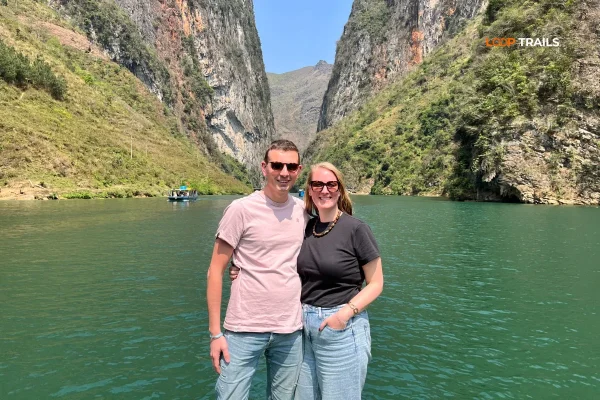
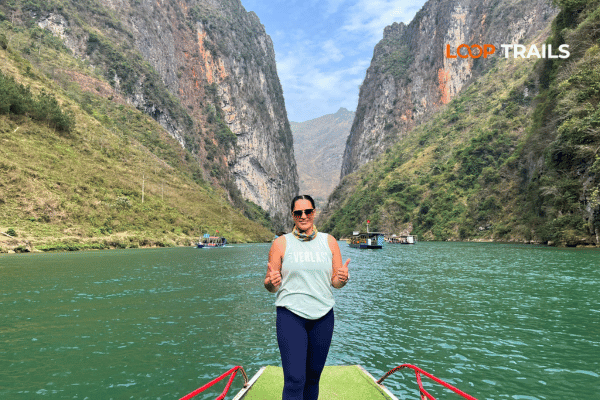
The Nho Que River Boat Tour is a short motorized boat ride that takes you along the Nho Que River through the canyon below Ma Pi Leng Pass — widely considered one of the most dramatic mountain passes in Southeast Asia. The river carves through the Dong Van Karst Plateau Geopark, a UNESCO Global Geopark, and the water here has a distinctive mint-to-emerald green color that looks almost artificially vivid in the right light.
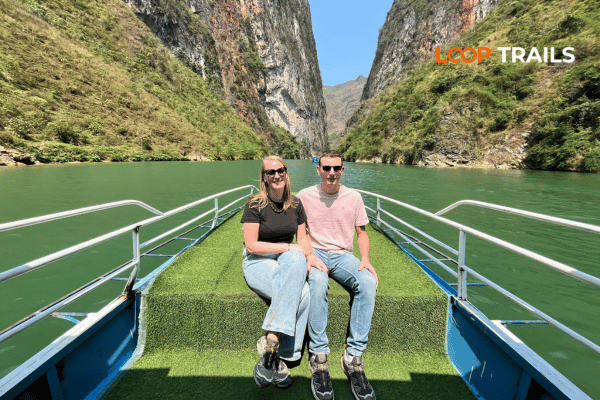
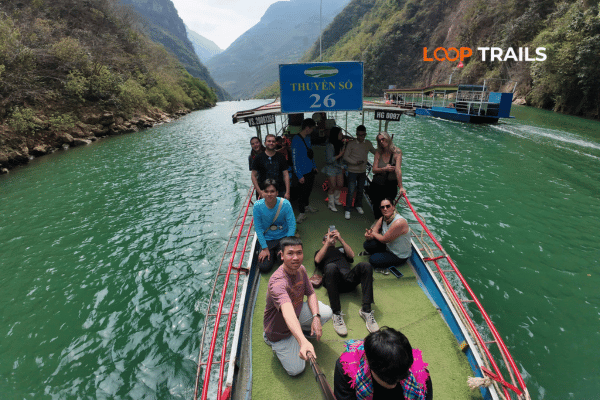
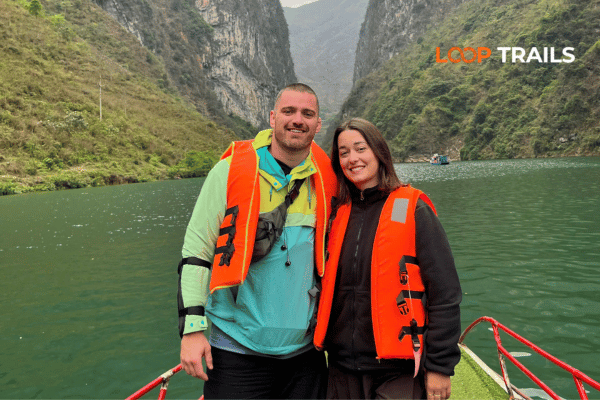
The boat ride itself usually lasts around 20–40 minutes depending on how far the operator takes you and whether you stop for photos. You’re in a small wooden or fiberglass motorboat — nothing fancy — but you don’t need fancy when the scenery is doing that much work. The canyon walls rise hundreds of meters on both sides. Villages perch improbably on clifftops above you. It’s very quiet except for the motor and occasional birdsong.
It’s not a white-water adventure. It’s not a kayak trip. It’s a peaceful drift into one of the most visually striking river gorges in Vietnam — and most travelers who do it say they wished they’d known about it sooner.
Learn more: Ha Giang Loop 3 Days 2 Nights
The Nho Que River (sông Nho Quế in Vietnamese) originates in Yunnan Province, China, and flows south into Ha Giang Province before eventually joining the Gam River near Bao Lac. The section relevant to travelers is the stretch that cuts through the canyon directly below Ma Pi Leng Pass, between Dong Van District and Meo Vac District.
The most-visited boat launch point is near Pai Lung Village (Thôn Pải Lủng) — sometimes written as Pa Lung — on the Meo Vac side of the pass. You’ll find the dock by following the road down from the Ma Pi Leng viewpoint toward Meo Vac. If you’re coming from Dong Van town, the pass itself is part of the route.
Key orientation points:
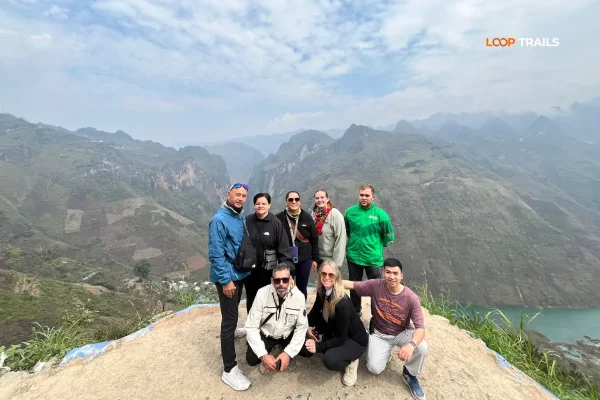
The river forms a natural boundary here — parts of it are only reachable by boat, which is exactly what makes the tour worth doing. Standing up on the pass and looking down is breathtaking. Being down inside the canyon, looking up, is something else entirely.
Learn more: Ha Giang Loop 4 Days 3 Nights
Ha Giang City is the starting point for most visitors doing the Ha Giang Loop. From the city, the typical route goes:
Ha Giang → Quan Ba (Fairy Bosom Pass) → Yen Minh → Dong Van → Ma Pi Leng Pass → Boat Dock → Meo Vac
This is roughly 150 km of mountain road and takes most of a day if you’re stopping for views (which you absolutely should be). The boat dock is effectively a stop on the loop, not a detour. You ride the pass, descend toward Meo Vac, and the turnoff to the dock appears before you reach town.
If you’re already staying in Dong Van — which is a common overnight stop for loop riders — the boat dock is about 20–25 km away via the Ma Pi Leng road. Budget at least an hour of riding time given the pass conditions and the amount you’ll stop to stare.
If you’re coming from Meo Vac (another popular overnight option), the dock is even closer — roughly 10–15 km back toward the pass. This is useful if you want to do the boat tour in the morning before the light gets harsh, then ride west over the pass toward Dong Van afterward.
The Ma Pi Leng road is paved but narrow, with serious drops on one side for much of its length. It’s genuinely one of the most dramatic roads in Vietnam, and that’s both the attraction and the caution. Riding ability matters here. Conditions can change with rain or fog — always check weather before attempting the pass, especially during monsoon season. Rules and road access can change; always verify current conditions locally before you ride.
Learn more: Ha Giang Cao Bang 5 Days 4 Nights
You park the motorbike (or get dropped off if you’re on a guided tour), walk down a short path to the dock, and negotiate or pay for a boat ticket. Boats typically seat 4–8 people, and if you’re traveling solo or in a small group, you’ll often share a boat with other travelers — which is fine, and sometimes how you meet interesting people.
The boat moves slowly upriver into the canyon. Within a few minutes, the walls close in and the noise of the road disappears. What replaces it is the sound of water, the hum of the motor, and an almost surreal quietness for somewhere so spectacular.
What you’ll see:
The boat typically goes upstream for 15–25 minutes, stops at a wider section (sometimes near a small beach or rock outcrop), allows time for photos, then returns. Total time on the water: usually 30–45 minutes. Some operators offer longer routes or different stops — ask before you board.
Photography note: The best light is in the morning before 10am or late afternoon. Midday sun creates harsh shadows in the canyon and can wash out the water color. If you can choose your timing, go early.
Learn more: Ha Giang Cao Bang Ba Be Lake 6 Days 5 Nights
Ha Giang has a clear seasonal rhythm, and the Nho Que boat tour is affected by both weather and the river itself.
This is buckwheat flower season in the Dong Van plateau — the fields around Lung Cu and Dong Van turn pink and white, and the weather is typically clear and cool. The river is often at its most vivid green during this period. Crowds are higher than the rest of the year, but it’s still nothing like, say, Halong Bay.
Clear skies, low humidity, and the water is usually transparent. Cold at elevation — Ma Pi Leng and Dong Van can drop to near freezing at night. Bring proper layers. Fog can be an issue on the pass in the early morning.
Plum and peach blossoms appear in February–March. By April, it’s warming up. This is a good window before the rains come. The river can start to murkify slightly toward May.
This is when the Ha Giang region gets most of its rainfall. Landslides are not uncommon on mountain roads. The river may run higher, faster, and less clearly green. Some travelers still visit during this period and have great experiences — but you need to be flexible and watch conditions closely. The boat tour may be suspended or limited during heavy rainfall. Check local updates before traveling in this season.
Morning is best for the boat tour. You get better light in the canyon, fewer other tourists, and you’ve usually ridden the pass in better conditions before the afternoon cloud rolls in.
Learn more: Ha Giang Loop Cost & Tips
Boat ticket prices are set by a local cooperative and are posted at the dock. As of the time of writing, prices are generally quite reasonable — affordable enough that it’s rarely a deciding factor for visitors who’ve made it this far. However, prices can change, and any specific number quoted in a blog post may be out of date. We’d rather you check the posted rate at the dock than plan around a figure that’s no longer accurate.
What’s typically included:
What’s not typically included:
Tips:
If you’re on a guided tour (Easy Rider, Jeep, or similar), the boat ticket is sometimes included in the tour price — but confirm this with your tour operator before assuming.
Learn more: Ha Giang Motorbike Rental
Getting to the Nho Que River boat tour requires navigating the Ha Giang Loop, and there are a few different ways to do that. Here’s how they compare:
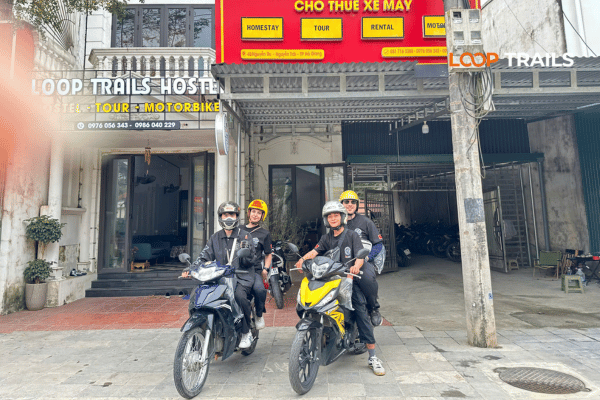
You ride pillion behind an experienced local guide. No riding skill required. Your guide knows exactly where to stop, handles all logistics, and usually speaks enough English to explain what you’re seeing. For the Nho Que section, your guide will take you to the dock, help with tickets, and give you context about the river and the surrounding area. Best for: first-timers, solo travelers, those who want conversation and local insight along the way.
→ Browse Loop Trails’ Easy Rider tour options to find a route that includes Ma Pi Leng and the Nho Que boat stop.

Learn more: Ha Giang Loop Self-Drive & hire a motorbike
You rent a bike and ride the loop at your own pace. Maximum freedom — you stop when and where you want, including as long as you like at the boat dock. Requires riding experience, especially for Ma Pi Leng Pass. Best for: confident riders who want independence and don’t mind figuring logistics out themselves.
→ Check Loop Trails’ motorbike rental options in Ha Giang — XR150 and semi-auto models available.
Learn more: Ha Giang Loop by Jeep for Families & Groups
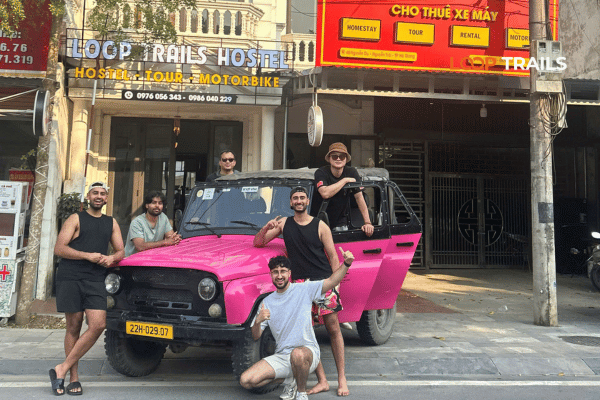
A private or shared 4WD takes you through the loop. You’re off a motorbike entirely. Great if you want comfort and speed, or if you’re traveling with people who don’t want to be on a bike. Some Jeep tours include a stop at the Nho Que dock; confirm this when booking. Best for: couples, small groups, travelers who prioritize comfort over that “on a bike in the mountains” feeling.
→ Loop Trails also runs Jeep tours through Ha Giang — ask about the Ma Pi Leng + Nho Que route.
Not sure which fits you? Drop a message via WhatsApp and the Loop Trails team can help you figure out the right option based on your timeline, experience level, and group size. No pressure, just honest advice.
Learn more: Ha Giang Safety Tips
Learn more: Ha Giang Loop for Beginners
Skipping the boat because “the view from the pass is enough.” It’s not. They’re two completely different experiences. The pass gives you the overview. The boat puts you inside the landscape. Both are worth doing.
Going at midday. Canyon light is harsh and flat between 11am and 2pm. The water color can look dull. The experience is still good, but the photos will tell a different story than what you see in everyone else’s Instagram feed (those are almost all shot in the morning).
Not bringing cash. The dock is not a place with card readers, Grab pickup, or ATMs. Bring enough Vietnamese Dong for the ticket and a bit extra for drinks.
Rushing through to get to Meo Vac. A lot of riders try to cover too much ground in a day. The stretch from Dong Van through Ma Pi Leng to the boat dock to Meo Vac is genuinely one of the most impressive road sections in Southeast Asia. Budget real time for it — not just “30 minutes at the dock.” Give yourself a full morning or afternoon for this part of the loop.
Underestimating the pass in bad weather. Fog and rain on Ma Pi Leng are not something to push through. If conditions look sketchy, wait it out in Dong Van. The road will still be there.
Booking a 2-day “Ha Giang Loop” tour. Two days is not enough for the full loop, and it almost certainly means you’ll blast past the Nho Que stop without getting on the water. A proper loop — especially one that includes the boat tour, Lung Cu Flag Tower, Dong Van Old Quarter, and Meo Vac market — needs at least 3 full days, ideally 4.
Learn more: Quan Ba Heaven Gate
The Nho Que boat tour is the headline attraction in this part of the loop, but it’s surrounded by other things worth your time:
Ma Pi Leng Pass viewpoint (Cổng Trời Ma Pì Lèng) Stop at the marked viewpoint on the pass itself for the aerial perspective of the canyon. This is one of the most-photographed spots in northern Vietnam. Early morning means you might have it mostly to yourself.
Meo Vac Sunday Market One of the most authentic highland markets in Ha Giang Province. H’Mong, Lo Lo, Giay, and other ethnic minority groups gather to trade. It runs on Sundays and is worth timing your loop around if you can. Arrive by 7–8am before it gets busy.
Du Gia Village A quieter corner of the loop between Yen Minh and Dong Van that many travelers overlook. Rice terraces, traditional houses, and a slower pace. Good overnight option if you want to spread the loop across an extra day.
Dong Van Old Quarter and Karst Plateau Geopark Dong Van has a surprisingly preserved old town with French colonial shophouses and a great Sunday night scene. The surrounding geopark has viewpoints and hiking options if you want to get off the bike for a few hours.
Lung Cu Flag Tower Vietnam’s northernmost point. It’s a detour from the main loop, but a meaningful one — standing at the border under that giant flag is one of those “I’m actually here” moments. Around 25 km north of Dong Van town.
Learn more: Ban Gioc Waterfall Guide in Cao Bang
If you have more than 4–5 days in the region, the Ha Giang Loop connects naturally with a broader northern Vietnam circuit that includes Cao Bang Province.
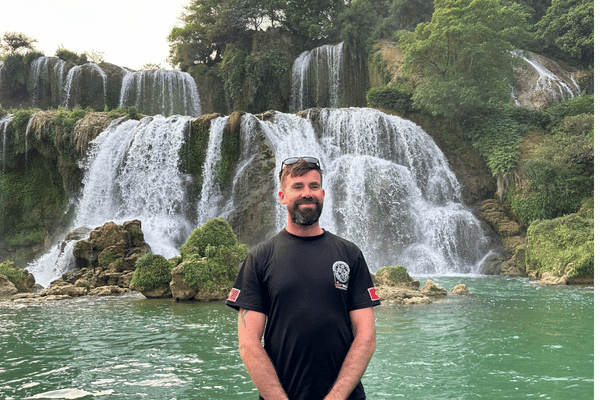
Ha Giang + Cao Bang Combined Tour After completing the Ha Giang Loop through Dong Van, Ma Pi Leng, and Meo Vac, it’s possible to continue east toward Bao Lac and into Cao Bang — home to Ban Gioc Waterfall (one of the largest waterfalls in Southeast Asia, sitting on the Vietnam-China border), Nguom Ngao Cave, and the incredibly scenic Phia Oac mountain range. This combined route is roughly 7–10 days total and covers two of the most spectacular provinces in northern Vietnam.
The Nho Que River is one of the geographic features that links these two regions — the river flows from the gorge below Ma Pi Leng eventually into Bao Lac, right at the gateway to Cao Bang.
→ Loop Trails runs a dedicated Ha Giang + Cao Bang combined tour — check that page for the full route, duration, and what’s included.
If you only have time for one region, Ha Giang is the stronger visual punch for first-time visitors to the north. If you have 10+ days and want to go deeper, the combined circuit is genuinely one of the best road trips in Southeast Asia.
Learn more: Ha Giang Loop Photography guide
The boat ride itself is typically 30–45 minutes round trip. Budget an extra 20–30 minutes for waiting at the dock, buying tickets, and photo stops. In total, block out about 1–1.5 hours for the whole experience.
Under normal river conditions, yes. The water here is calm — not a rapids or whitewater situation. Life jackets are provided. The main variables are weather-related: after heavy rain, the river can run higher and faster, and some days the boats don’t operate. Always check conditions locally.
Kayaking in this section is not a standard tourist offering as of now, though guided kayak tours in Ha Giang do exist in certain areas — check current availability locally. Swimming is possible in some sections but is not something organized tour operators typically facilitate. The current can be stronger than it looks.
October to April gives the clearest skies and best water visibility. October–November specifically is peak season because of buckwheat flowers on the plateau. June–September is monsoon season — possible but less predictable.
Most travelers take an overnight sleeper bus from Hanoi to Ha Giang City (roughly 6–7 hours). There’s also a daytime bus option. From Ha Giang City, you either start riding yourself or join a guided tour. Ha Giang is not currently served by domestic flights.
Vietnam’s license and permit requirements have been subject to updates and enforcement variations — this is exactly the kind of thing that changes. We’d strongly recommend checking the latest regulations with a reliable local source or your tour operator before you arrive, rather than relying on any single blog post (including this one).
It depends on the specific itinerary. Some guided tours include the boat ticket; others give you time at the dock and let you pay separately. Confirm this detail when booking. You can ask directly via WhatsApp before you book.
There’s usually a basic drinks/snack stand near the dock, but don’t rely on it for a meal. Eat before you leave Dong Van or Meo Vac, and bring water.
Technically yes — you could travel specifically to the dock and back. But the boat tour is located in the middle of one of the most spectacular road sections in Vietnam. Doing the Ma Pi Leng Pass and then the boat tour, and nothing else, would be a genuinely strange itinerary. The loop exists because everything in this part of Ha Giang rewards doing it together.
No the Nho Que River flows through Ha Giang Province, while Cao Bang’s famous waterfall (Ban Gioc) is on the Bang Giang River. They’re in neighboring provinces with different geography, though a combined Ha Giang–Cao Bang trip often covers both regions.
The pass gives you a bird’s-eye view of the canyon from above — you’re looking down at the river from 200+ meters up. The boat tour puts you inside the canyon, looking up at the walls.
Yes. Loop Trails can be contacted and booked in advance — which we’d recommend for peak season (October–November) when spots fill quickly. Reach out via WhatsApp for availability and current pricing.
Contact information for Loop Trails
Website: Loop Trails Official Website
Email: looptrailshostel@gmail.com
Hotline & WhatSapp:
+84862379288
+84938988593
Social Media:
Facebook: Loop Trails Tours Ha Giang
Instagram: Loop Trails Tours Ha Giang
TikTok: Loop Trails
Office Address: 48 Nguyen Du, Ha Giang 1, Tuyen Quang
Address: 48 Nguyen Du, Ha Giang 1, Tuyen Quang
Facebook X Reddit Table of Contents Learn more: Ha Giang Loop Tours There’s a version of the Ha Giang Loop that people

Facebook X Reddit Table of Contents Learn more: Ha Giang Loop Tours Most people land on this question after staring at a

Facebook X Reddit Table of Contents Learn more: Ha Giang Loop Tours There’s a particular kind of silence at the top of