

Ha Giang Easy Rider: The Complete Guide (2026)
Facebook X Reddit Table of Contents Learn more: Ha Giang Loop Tours There’s a moment, usually somewhere on Ma Pi Leng Pass,

Thúy Kiều (Grace) is a travel blogger and content contributor for Loop Trails Tours Ha Giang. She holds a bachelor’s degree in Sustainable Tourism from Vietnam National University, Hanoi, and has a strong passion for exploring and promoting responsible travel experiences in Vietnam’s northern highlands.

Learn more: Northern Viet Nam Itinerary 2026
If you’ve already fallen for Ninh Binh — the boat rides through flooded karst caves, the climb up Mua Cave, the stillness of Trang An at dusk — then Ha Giang is probably already on your radar. And it should be.
These two destinations sit at opposite ends of the “northern Vietnam highlights” spectrum. Ninh Binh is polished, accessible, and beloved by photographers and slow travelers alike. Ha Giang is raw, remote, and genuinely unlike anywhere else in Southeast Asia. Getting from one to the other takes a bit of planning, but it’s absolutely worth it.
This guide covers every realistic transport option, what to expect on the way, and how to time your trip so you get the most out of both places.

Learn more: Dong Van Old Quater at Night
Most travelers stumble onto a similar northern Vietnam loop: Hanoi → Ninh Binh → Hanoi → Ha Giang (or some variation of it). And there’s a reason that route keeps appearing in trip reports — it works.
Ninh Binh is often the first “wow” moment outside Hanoi for first-time Vietnam visitors. The boat rides through Trang An’s limestone corridors, the ancient capital ruins at Hoa Lu, and the cycling routes through Tam Coc’s paddy fields give you a taste of rural northern Vietnam without much logistical effort.
Ha Giang is the deeper dive. It’s Vietnam’s northernmost province, bordered by China, and home to the Ha Giang Loop — a multi-day mountain circuit through some of the country’s most dramatic scenery. Think winding passes, deep river canyons, ethnic minority villages, and roads that feel like they were built for the sheer joy of riding.
Doing them back to back isn’t just convenient — it creates a satisfying journey arc, from the serene and accessible to the wild and remote.
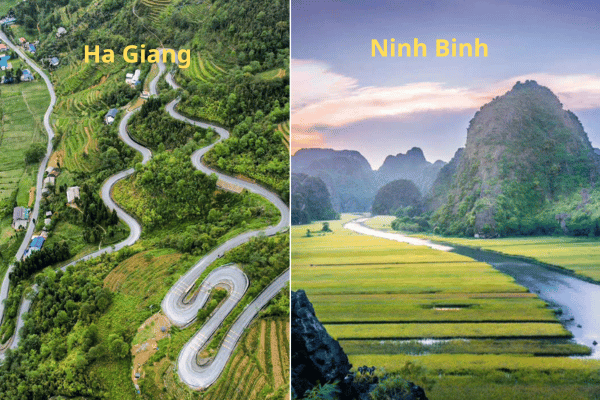
Learn more: Ha Giang vs Ninh Binh
Direct distance: roughly 320–340 km depending on the route.
But “direct” doesn’t mean much in northern Vietnam, where mountain roads and the lack of a direct intercity bus mean you’re almost certainly routing through Hanoi. From Ninh Binh to Hanoi is about 90–100 km south. From Hanoi to Ha Giang City is approximately 300 km north.
So in practice, Ninh Binh to Ha Giang is a two-leg journey, and the total travel time depends heavily on which option you choose.

Learn more: Ha Giang Loop Private Car from Hanoi
There’s no single “best” way — it depends on your budget, schedule, and how much you enjoy the journey itself. Here are the five most realistic options.
This is what most backpackers end up doing, and for good reason: it’s cheap, relatively comfortable, and drops you directly in Ha Giang City.
The catch: there’s no direct sleeper bus from Ninh Binh to Ha Giang. You’ll need to either:
The overnight bus from Hanoi to Ha Giang typically departs in the evening and arrives in Ha Giang City early morning, saving you a night’s accommodation. Journey time is roughly 6–7 hours depending on road conditions.
What to expect: Sleeper buses in Vietnam are usually “limousine” style with reclining pods or flat beds. You’ll share the bus with other travelers and locals. It’s not luxurious, but it gets the job done. Bring a layer — the AC tends to run cold.
Approximate cost: Check current prices with operators in Hanoi or use booking platforms — pricing changes seasonally. Budget travelers typically find this the most economical option overall.
Best for: Budget travelers, backpackers, those who want to maximize time at the destinations rather than in transit.
If you prefer trains, Ninh Binh has a railway station with regular services to Hanoi. The Ninh Binh–Hanoi leg takes approximately 2–2.5 hours by express train.
Once in Hanoi, you’d spend a few hours (or a full day if you time it that way) before catching the evening sleeper bus to Ha Giang. It’s a slightly longer overall journey but some travelers prefer the train to the bus for the Hanoi leg — it’s smoother and the views along the way are pleasant.
Best for: Travelers who enjoy the train experience or are already connecting from further south (Hue, Da Nang, etc.).
If you want door-to-door service without switching vehicles, a private transfer from Ninh Binh to Ha Giang is possible. You’d typically hire a car + driver for the full journey, which is a long day of driving (allow at least 7–9 hours, possibly more depending on stops and road conditions).
This option makes more sense for small groups splitting the cost, families, or anyone who prefers not to deal with bus stations and schedules.
Best for: Couples or small groups, travelers with heavy luggage, those on a tighter schedule.
This one’s for the riders.
Technically, you could ride a motorbike from Ninh Binh all the way to Ha Giang — but almost nobody does it as a single straight route, and we’d encourage you not to. The roads between Ninh Binh, Hanoi, and Ha Giang include a lot of national highway that’s busy, not particularly scenic, and fairly exhausting to ride for hours without a break.
The smarter move for motorbike travelers: get yourself (and the bike) to Ha Giang City via a more practical method, then start the Loop from there. If you’re renting a motorbike specifically for the Ha Giang Loop, Ha Giang City is the place to pick it up — not Ninh Binh or Hanoi.
[→ See our Ha Giang motorbike rental page for bikes available in Ha Giang City — XR150, semi-auto, and other options.]
Best for: Experienced riders who want to combine destinations with a longer Vietnam road trip — not typically recommended as the Ninh Binh–Ha Giang leg specifically.
If you’re coming from further afield — say, Ho Chi Minh City, Da Nang, or internationally — flying into Hanoi (Noi Bai Airport) and then connecting to Ha Giang by bus is very common. Hanoi functions as the natural hub for the whole northern Vietnam circuit.
In this scenario, many travelers do Ninh Binh as a day trip or 2-night side trip from Hanoi before continuing to Ha Giang. That’s a perfectly valid itinerary and avoids the “long transit between two remote spots” problem entirely.

Learn more: Ha Giang Loop Easy Rider
Worth emphasizing: Hanoi is your friend here.
Whether you’re doing Ninh Binh → Hanoi → Ha Giang in sequence, or using Hanoi as a base for day trips before and after, the city makes everything easier. From Hanoi, you have:
Most sleeper bus operators running to Ha Giang depart from the Hanoi bus stations or have hotel pickup. If you’re planning to book a Ha Giang Loop tour rather than doing it independently, most tours also depart from Ha Giang City — but some operators (including us) can help coordinate logistics from Hanoi.

This question comes up constantly, and the honest answer is: it depends on your pace. But here’s a rough guide based on what most travelers find satisfying:
Ninh Binh: 1–3 nights
Ha Giang: 3–5 nights (minimum)
Ha Giang is not a place you want to rush. The Loop typically takes 3–4 days at minimum, and that’s moving at a reasonable pace. Adding time to explore Dong Van, spend a proper evening in Meo Vac, or do a side trip toward Du Gia or the Nho Que River brings it to 5–6 days easily.
If you’re considering combining Ha Giang with Cao Bang (Ban Gioc Waterfall, Phia Oac National Park, Nguom Ngao Cave), budget at least an extra 2–3 days on top of your Ha Giang time. The Ha Giang–Cao Bang combine route is one of the most spectacular extended itineraries in northern Vietnam.
[→ See our Ha Giang + Cao Bang combine tour options for a guided route covering both provinces.]

Learn more: Ha Giang Sleeper Bus
Here’s a quick breakdown to help you decide:
| Your situation | Recommended option |
|---|---|
| Budget traveler, flexible timing | Sleeper bus via Hanoi |
| Small group, want comfort | Private transfer or hired car |
| Rail enthusiast, coming from the south | Train to Hanoi + onward bus |
| Experienced rider, planning a longer trip | Motorbike (but plan carefully) |
| Want to save time, prioritize destinations | Fly to Hanoi, bus to Ha Giang, visit Ninh Binh as day trip |
If this is your first time in northern Vietnam and you want to experience both Ninh Binh and Ha Giang properly without logistical headaches, the cleanest itinerary looks like this:
Simple, flexible, and you don’t have to figure out a direct route between two places that weren’t really designed to connect directly.
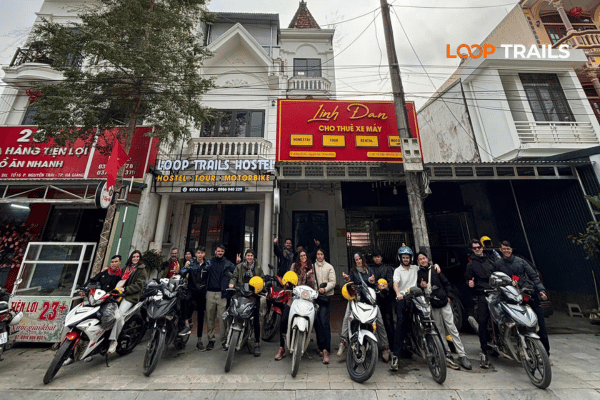
Learn more: Ha Giang Loop Self-Drive & Motorbike Rental
You’ve made the journey. Ha Giang City itself is a pleasant but fairly small provincial capital — most travelers spend one night here to rest up and organize before heading out on the Loop.
Before you leave Ha Giang City, take care of:
The Loop route out of Ha Giang City heads north toward Quan Ba (the Twin Mountains / Heaven’s Gate viewpoint), then on to Yen Minh, Dong Van, and Meo Vac before looping back via Du Gia. The standard circuit covers some of the most photographed roads in Vietnam — including the legendary Ma Pi Leng Pass above the Nho Que River canyon.

Learn more: Quan Ba Heaven Gate
If you’ve traveled as far as Ha Giang, you’re not just passing through. You’re here for the Loop.
The Ha Giang Loop is a roughly 300–350 km circular mountain route that most riders complete over 3–4 days, though many people add extra days to explore properly. The route takes you through the Dong Van Karst Plateau Geopark — a UNESCO-recognized geological wonder — and through villages home to Hmong, Tay, Dao, and Lo Lo ethnic communities.
Some of the highlights along the way:
The Loop is doable three ways: self-drive motorbike, guided Easy Rider (riding pillion with a local guide), or by jeep with a driver/guide. Each option suits a different traveler. If you’re not confident on mountain roads — and these are serious mountain roads — the Easy Rider or jeep option is genuinely worth considering rather than white-knuckling it alone.
Thinking about doing the Loop but not sure which format is right for you? We’ve put together a full breakdown on our tour pages — or just send us a message on WhatsApp and we can help you figure it out based on your experience level and group size.
[→ See our Ha Giang Loop tour options — Easy Rider, Jeep, and Self-Drive available.]

Learn more: Motorbike License IDP Guide 2026v
A few things worth knowing before you go:
Book transport in advance during peak season
October–November and March–April see the highest tourist traffic in both Ninh Binh and Ha Giang. Sleeper buses to Ha Giang can sell out — don’t assume you can walk up the day before. Book at least 1–2 days ahead during these windows.
Weather matters — especially in Ha Giang
Ninh Binh is relatively accessible year-round, though summer (June–August) brings heavy rain. Ha Giang is more seasonal. The buckwheat flower bloom (October–November) is stunning but very busy. January–February can be cold and foggy at altitude. The dry season (roughly October through April) is generally best for the Loop, though even then, fog on the passes is common in early morning.
Don’t rush the journey
The temptation is to compress everything and try to see both destinations in a week. That’s possible, but it rarely feels satisfying. If you have 10–14 days for northern Vietnam, splitting it roughly half-and-half between the two (with travel time accounted for) gives you a much richer experience.
Ha Giang requires planning
Unlike Ninh Binh — where you can largely show up and figure things out on the ground — Ha Giang rewards people who arrive with a plan. Accommodation gets booked out during peak season, certain roads can be affected by weather or construction (rules and conditions change — verify locally before heading out), and the remote nature of the Loop means decisions made in Ha Giang City matter a lot.
Your license and permits
Road regulations in Vietnam can be complex and subject to change. Motorbike riders should research current requirements for operating motorbikes in Vietnam — including whether your license is valid for the bike class you’re riding. For guided tours (Easy Rider or jeep), your guide handles all of this. Always check latest rules rather than relying on information that may be out of date.

Learn more: Tu San Canyon & Nho Que River Boat Trip
No direct bus currently operates this route. Most travelers go via Hanoi — either transferring at the bus station or taking a train to Hanoi and then catching the overnight bus to Ha Giang. Check with local operators for the most current routes, as schedules change.
Expect a minimum of 8–10 hours total travel time (including the Ninh Binh–Hanoi leg and the Hanoi–Ha Giang bus). If you do it as one continuous journey — Ninh Binh to Hanoi by day, overnight bus to Ha Giang — you can arrive at your destination without losing a full day.
Technically yes, but it’s a long, busy highway ride that most people don’t find rewarding. If you want to ride the Ha Giang Loop on a motorbike, it makes more sense to rent one in Ha Giang City specifically, where bikes are well-suited for mountain terrain.
Most travelers do Ninh Binh first (it’s closer to Hanoi and easier to access), then Ha Giang as the deeper adventure later in their trip. Either order works logistically, but Ninh Binh → Ha Giang tends to feel like a satisfying narrative arc — from calm and scenic to wild and remote.
October–November is peak season for both — Ninh Binh’s rice harvest and Ha Giang’s buckwheat flowers overlap roughly. March–April is also excellent before the summer heat. Avoid the rainy season (May–September) if you’re planning to ride mountain roads in Ha Giang.
Ha Giang is a popular destination for independent travelers, but the Loop involves challenging mountain roads. First-timers who aren’t experienced motorcyclists often have the best experience on a guided Easy Rider tour or in a jeep — you get the scenery without the stress of navigating unfamiliar roads solo.
You don’t legally need one, but a local guide adds a lot of value — access to local knowledge, help with accommodation, and safety on roads that can be unpredictable. If you’re going self-drive, at minimum make sure someone knows your itinerary each day.
Costs vary depending on how you do it — self-drive is cheapest, guided tours cost more but include accommodation, transport, and a guide. Check current prices with tour operators as costs change seasonally. Budget at least 3–4 full days of expenses on top of your Ninh Binh trip.
Absolutely, if you have the time. Ban Gioc Waterfall (one of Vietnam’s most spectacular) and the dramatic karst scenery of Cao Bang feel like a natural extension of the Ha Giang experience. The Ha Giang + Cao Bang combine route is one of the best in northern Vietnam for those with 7+ days in the region.
You can book online from anywhere — no need to be in a specific city. Contact tour operators directly (WhatsApp works well) and you can arrange everything in advance, with pickup from Ha Giang City when you arrive.
For the journey itself: layers (sleeper buses and mountain mornings are cold), a small day bag you can access during travel, snacks, and a power bank. For Ha Giang specifically: windproof and waterproof layers, sunscreen (altitude intensifies UV), comfortable riding clothes if you’re doing the Loop.
Book through guesthouses in Hanoi, online travel platforms, or directly with bus companies. Prices and schedules change — check current listings and book ahead during October–November peak season. Most buses depart evening and arrive early morning.
Contact information for Loop Trails
Website: Loop Trails Official Website
Email: looptrailshostel@gmail.com
Hotline & WhatSapp:
+84862379288
+84938988593
Social Media:
Facebook: Loop Trails Tours Ha Giang
Instagram: Loop Trails Tours Ha Giang
TikTok: Loop Trails
Office Address: 48 Nguyen Du, Ha Giang 1, Tuyen Quang
Address: 48 Nguyen Du, Ha Giang 1, Tuyen Quang
Facebook X Reddit Table of Contents Learn more: Ha Giang Loop Tours There’s a moment, usually somewhere on Ma Pi Leng Pass,

Facebook X Reddit Table of Contents Learn more: Ha Giang Loop Tours There’s a version of the Ha Giang Loop that people

Facebook X Reddit Table of Contents Learn more: Ha Giang Loop Tours There’s a moment on the Ma Pi Leng Pass —