

Thúy Kiều (Grace) is a travel blogger and content contributor for Loop Trails Tours Ha Giang. She holds a bachelor’s degree in Sustainable Tourism from Vietnam National University, Hanoi, and has a strong passion for exploring and promoting responsible travel experiences in Vietnam’s northern highlands.
Learn more: Ha Giang Loop Tours
Ten days is enough to see northern Vietnam properly. It is not quite enough to see it lazily, which is why the order of the days matters more than most people expect.
This northern Vietnam itinerary covers three places that feel like three different countries: Hanoi, where you land and eat well and recover from the flight; Ha Giang, where limestone spires stand in rows and the road climbs onto a cliff above a green river; and Cao Bang, where the landscape softens into water, caves and forest, and the traffic almost disappears.
The route runs as a loop, so you never ride or drive the same road twice. Hanoi to Ha Giang, the Ha Giang Loop, the mountain road east into Cao Bang, then back down to Hanoi. We run this exact shape as a guided trip, and we also send self drive travellers off with a map and a phone number. Everything below is written the way we brief guests before they leave, including the parts that are inconvenient.
Learn more: Ha Giang Loop 2 Days 1 Night
The default first trip to northern Vietnam is Hanoi, Halong Bay, Sapa. There is nothing wrong with it. It is also the version that half the people on your flight are doing, and it involves going out and back on the same highways twice.
The Ha Giang and Cao Bang version works differently for three reasons.
It is a genuine circuit. You leave Hanoi heading northwest, you finish coming back from the northeast. No backtracking, no repeated scenery, no second night bus down the same road you already know.
The two regions are not variations of each other. Ha Giang is vertical and dry looking: rock, terraced corn, switchbacks stacked on top of each other, villages balanced on ridgelines. Cao Bang is horizontal and wet: a wide waterfall on the Chinese border, a cave system you can walk through for the better part of an hour, lakes that appear and disappear with the season, pine forest at altitude. Both sit inside UNESCO Global Geoparks, the Dong Van Karst Plateau and Non Nuoc Cao Bang, which is not a coincidence. The geology is the attraction.
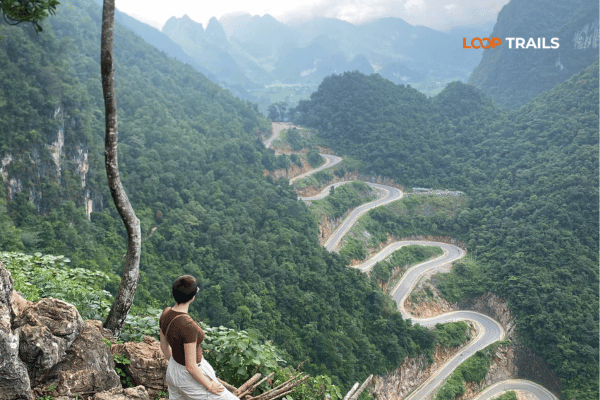
The road between them is the sleeper hit. Ask anyone who has ridden Meo Vac to Bao Lac and on toward Nguyen Binh what their favourite day was. A surprising number of them say it was that one, not Ma Pi Leng. Empty tarmac, river gorges, almost no other foreign travellers, and a pass with a stack of hairpins that looks unreal in photographs.
Who this itinerary suits: travellers who are comfortable spending real time on mountain roads, who care more about landscape and villages than beaches or nightlife, and who would rather do two regions well than four regions badly.
Who it does not suit: anyone who needs a pool every afternoon, anyone travelling with very young children, and anyone whose flight schedule leaves them only seven or eight days on the ground. If that is you, do Ha Giang alone and save Cao Bang for the next trip. It will still be there.
Learn more: Ha Giang Loop 3 Days 2 Nights
Counting arrival and departure days, which is how flights actually work:
It works just as well in reverse if your flights suit that better, and the reverse version has one small advantage: the hardest riding day comes when you are already road fit rather than on day four. We run it both ways.
Learn more: Ha Giang Loop 4 Days 3 Nights
Do these in advance and the trip runs itself. Leave them to the day before and you will spend your first mountain morning in an office instead of on a pass.
Most nationalities now enter Vietnam on an eVisa applied for online, and some passports qualify for exemption. Requirements, validity and the official application portal change from time to time, so check the latest updates on the official Vietnamese immigration site rather than trusting a blog, including this one. Print a copy of the approval letter. Mountain guesthouses sometimes want to see it, and phone batteries die.
This is the paperwork most travellers have never heard of. Large parts of the Ha Giang Loop run inside a designated border zone with China, and foreign passport holders are required to carry a border area entry permit to travel through it. The requirement is not new, but enforcement tightened noticeably during 2026, and checkpoints do ask.
In practice:
Turning up without one is not the end of the world, but it can mean being sent back to the city to fix it, which costs you the best day of the trip.
Vietnam has clear rules about which licences are valid for which engine sizes, and travel insurance policies have equally clear wording about what they will and will not cover on two wheels. Both change, and neither of them cares what a hostel told you at check in.
Read your policy before you book anything. If the wording is ambiguous, call the insurer and get the answer in an email. If you would rather not deal with it at all, take an easy rider or a jeep and the question disappears, because you are a passenger.
Vietnam reorganised its provinces in 2025. Ha Giang province was merged into Tuyen Quang province, and the old district level was replaced by new commune and ward names. Everyone on the ground still calls the region Ha Giang, the Ha Giang Loop is still the Ha Giang Loop, and the route has not changed by a single kilometre. What can change is the address printed on a bus ticket, a hotel booking or an official form. If a name on paper looks unfamiliar, that is usually why. Cao Bang province kept its name.
Book in this sequence and nothing collides: flights, then the Ha Giang portion, then the Cao Bang portion, then Hanoi hotels, then internal transport. Once you have a confirmed travel date, book the mountain sections as early as you can. Most guests book one to three months ahead, and for jeeps in particular, availability is genuinely limited, so early booking is what makes the schedule work rather than a sales line.
Learn more: Ha Giang Cao Bang 5 Days 4 Nights
Two nights in Hanoi at the start of a trip is not a wasted day, it is insurance. Flights get delayed, bags get lost, and nobody rides well on four hours of sleep and a time zone hangover.
Get to your hotel, drop your bags, and go outside immediately even if you feel terrible. Sunlight fixes jet lag faster than a nap does. Walk the Old Quarter without a plan. The streets are still loosely organised by trade, so you will pass a block of nothing but hardware, then a block of nothing but silk, then a corner where four people are cooking on the pavement and there is nowhere to sit except a plastic stool at knee height.
Eat bun cha for lunch or dinner: grilled pork, cold noodles, herbs, a bowl of sweet and sour broth you dip everything into. Have an egg coffee afterwards. It sounds wrong and tastes like liquid tiramisu.
Crossing the road is the first skill Vietnam teaches you. Walk at a steady pace, do not stop, do not run, let the scooters flow around you. It works. It just does not feel like it will.
Pick two things, not six. Options that reward the time: the Temple of Literature for a quiet hour of courtyards and calligraphy, the Ho Chi Minh Mausoleum complex if you want the historical weight, Hoan Kiem Lake at six in the morning when the whole neighbourhood is exercising, or the Long Bien Bridge at the end of the day.
Some Old Quarter attractions have had their access rules changed by local authorities more than once, train side cafes being the obvious example, so check what is currently open rather than planning your afternoon around a photo you saw two years ago.
Use the rest of the day for logistics. Buy a rain poncho, a cheap dry bag and any pharmacy items you want. Everything is available in Hanoi and half of it is not available in a village of two hundred people. Leave your large suitcase at your Hanoi hotel. Most keep luggage free of charge for returning guests, and you do not want a hard case on a mountain road. Take a small backpack north with three or four days of clothes.
Learn more: Cao Bang Loop 3 Days best kept secret
There is no train and no commercial airport at the other end, so this is a road day. Three ways to do it:
Sleeper bus overnight. Leaves Hanoi in the evening, arrives in Ha Giang city early. You save a hotel night and lose a proper night’s sleep. Berths are narrow, the driving is confident, and if you are over about 185cm you will know about it. Fine for hardened travellers, rough for light sleepers.
Limousine van by day. Smaller vehicle, reclining seats, door to door pickup in many cases. You watch the country change from delta rice paddies to hills to actual mountains, which is a nice slow introduction. Costs more than the bus and takes most of the day.
Private car. The comfortable option, and the only one that lets you stop when you feel like it. Worth it for families, groups of three or four splitting the cost, or anyone arriving on a tight schedule.
Road upgrades over recent years have shortened the Hanoi to Ha Giang run compared with what older blog posts describe, and services and schedules change often, so confirm current departure times when you book rather than relying on a screenshot from someone else’s trip.
Whichever you choose, plan to be in Ha Giang city by early afternoon at the latest. That evening is for the briefing: route, weather, permit, luggage storage, bike fitting if you are riding, and an honest conversation about your experience level. Take that conversation seriously. It is the single best predictor of how the next three days will go.
Not sure which mode suits you yet? Have a look at our Ha Giang Loop tours and our motorbike rental in Ha Giang, then message us with your dates. We will tell you straight whether we would put you on your own bike or behind a driver.
Learn more: Ha Giang Cao Bang 6 Days 5 Nights
This is the part people fly across the world for. Two riding days covers the classic circuit properly, and the itinerary below assumes you are continuing east to Cao Bang on day 6 rather than returning to Ha Giang city.
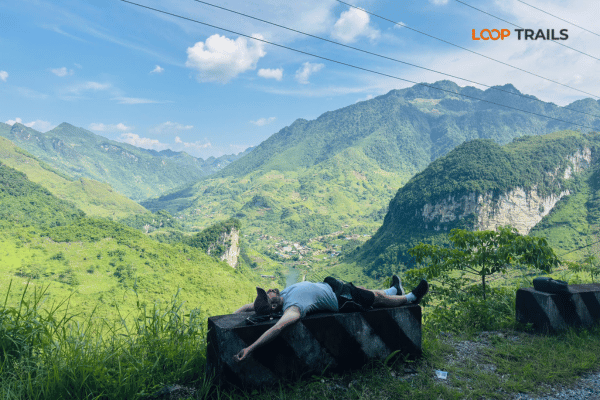
You climb almost from the moment you leave town. The first real stop is Quan Ba, known as Heaven’s Gate, where the road tops out and the twin hills of the Fairy Mountain sit in the valley below. It is usually the first moment where people stop talking.
From there the route runs through Yen Minh, where the landscape switches to pine, then into the section that makes photographers lose their minds: Tham Ma Pass, a stack of switchbacks folded into the hillside, and the valley of Sung La, which gets called the flower garden of the rocky plateau and, in the right season, deserves it. Lung Cam village sits just off the road and is worth twenty minutes on foot.
Before Dong Van, stop at the Vuong family mansion, the residence of the Hmong king. It is small, and the interesting part is the story: a family that ran this plateau, its trade and its opium economy, under both French and Chinese pressure. A guide makes the difference between a nice courtyard and an actual history lesson.
If you have the time and the weather is clear, the detour north to the Lung Cu flag tower takes you to the symbolic northernmost point of Vietnam, a few kilometres from the Chinese border. It is a long detour for a flagpole, and the view from the steps on a clear day justifies it. On a grey day, skip it.
Sleep in Dong Van. The old quarter is a few narrow streets of century old houses, a market square, and enough traveller bars to find company if you want it. Sunday morning brings one of the region’s proper markets, when families come down from the surrounding hills to trade, eat and drink corn liquor at eight in the morning.
The shortest day of the trip and the one everybody remembers.
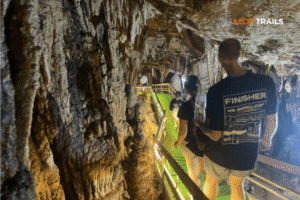
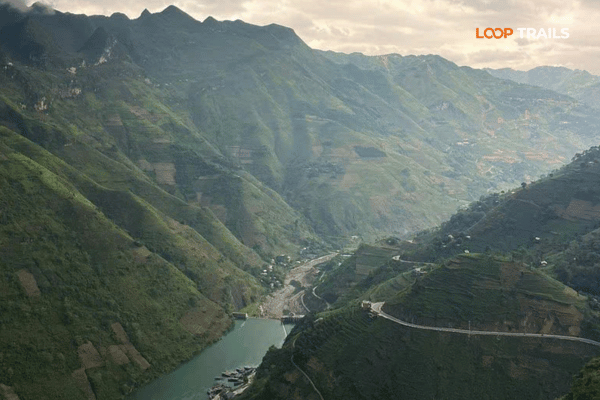
Ma Pi Leng Pass is a road carved into a cliff above the Nho Que River, built by hand in the late 1950s and early 1960s by young volunteers working with hand tools and rope. Knowing that changes how it feels to ride it. The viewpoints are spaced along the pass and each one is better than the last, and the best light is early, before the haze builds.
Halfway along, a steep side road drops to the river for the boat trip through the Tu San canyon, the deepest in Southeast Asia. It is a small boat, a green river, and canyon walls that close in overhead. Two notes: the access road down is steep and rough, so plenty of riders park at the top and take a shuttle, and boat operations can pause depending on water level and conditions. Ask that morning.
Meo Vac is a small town in a bowl of mountains, and it feels a long way from anywhere, because it is. If you happen to be there on a Sunday, the market is one of the best in the north: livestock, textiles, tools, thang co bubbling in cauldrons, and no interest whatsoever in whether tourists find it charming.
Practical honesty about these two days: the plateau makes its own weather. Fog can sit on the passes for hours, especially in the cool months, and roadworks are a permanent feature of a region that is constantly rebuilding after landslides. Some days you get the postcard. Some days you get cloud, a warm bowl of noodles and a story. Build the days so a slow morning does not wreck the schedule.
Learn more: Ha Giang Loop Easy Rider
This is the decision that shapes the whole trip, and there is no universally correct answer. Match it to the truth about yourself, not to the version of yourself in the trip photos.
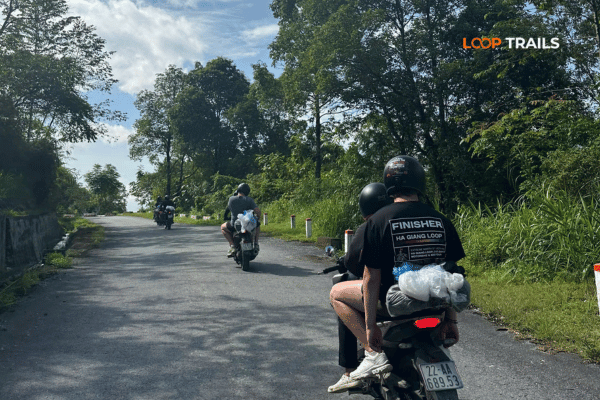
Take an easy rider if: you have limited or no experience on a manual motorbike, you want to look at the scenery rather than the road, you are travelling solo and want company, or your insurance situation is unclear. You ride pillion behind a local driver who knows every corner. You still get the wind, the passes and the photo stops, minus the risk and the fatigue. This is what we put most first time visitors on, and almost nobody regrets it.
Self drive if: you ride at home, you are genuinely comfortable with a manual or semi automatic bike on wet mountain roads with loose gravel, and you want to set your own pace. The freedom is real. So is the responsibility: a minor spill here means a long trip to a clinic, and the roads are not forgiving of overconfidence. Be sober about it. If you have only ridden an automatic scooter on a flat island, this is not the place to learn.
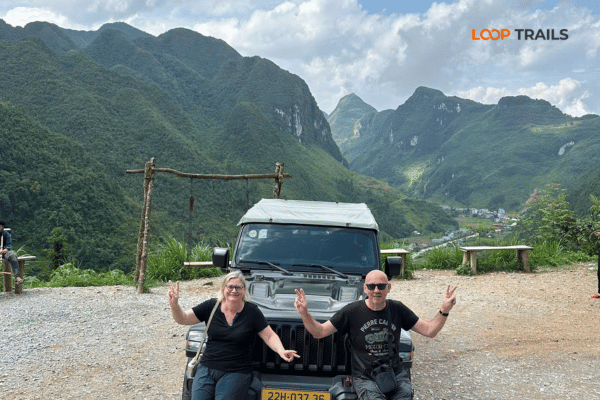
Take a jeep if: you are travelling as a couple or family, you are not a rider and do not want to be, you have a knee or back that objects to eight hours on a saddle, or the forecast is against you. You see the same passes, stop at the same viewpoints and eat at the same places, from a seat, with a roof when you want one and open air when you do not. It is also the most reliable option in heavy rain.
Mixed groups are common and completely workable. We regularly run a group where two people ride, one goes pillion with a driver and two follow in a jeep, all moving together and meeting at the same stops.
Learn more: Ha Giang Loop by Wrangler Rubicon Jeep
The transfer day. Most itineraries treat it as dead time between two headline regions, which is exactly why it stays quiet and exactly why it is often the best day of the ten.
You leave Meo Vac and drop toward the Gam River and Bao Lac, a small riverside town where the mountains stand back a little and the temperature climbs. Somewhere in this section the vegetation changes and you notice you have crossed from the karst plateau into a softer, greener world.
The landmark of the day is Me Pia Pass, near Xuan Truong, better known as the pass with the stacked hairpins. It is short, ridiculous and photographs like a computer generated image. From the viewpoint above, the road folds back on itself so many times it stops looking like a road. Give it half an hour. Do not photograph it while riding.
The rest of the run passes through Nguyen Binh and down into Cao Bang city, and it is a long day on the road no matter what you are travelling in. Start early, eat properly at lunch, and do not plan anything for the evening beyond a shower and dinner.
A practical note if you are doing this independently: public transport on this leg is awkward and infrequent, and the connections are not designed for travellers. This is the section where most self planned trips either lose a full day or quietly turn into a taxi negotiation. Our Ha Giang and Cao Bang combined tours exist mainly because of this day, and it is the one leg where having your own vehicle and driver pays for itself.
Learn more: Best time to visit Cao Bang
Cao Bang gets a fraction of Ha Giang’s visitor numbers, and every year we expect that to change, and every year it mostly does not. Good news for you.
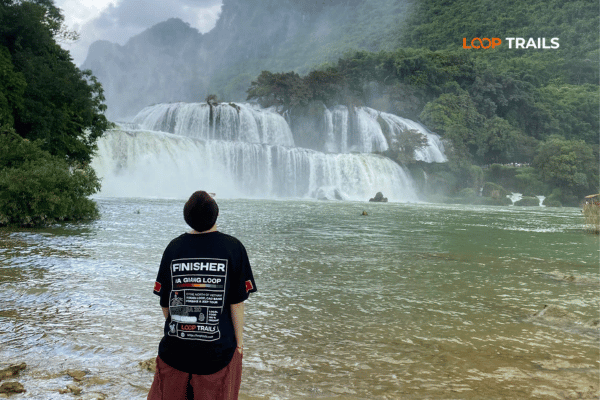
Ban Gioc is the reason most people come. It is a wide, tiered waterfall on the border river, shared between Vietnam and China, framed by karst peaks and rice fields. Unlike a lot of famous waterfalls, you can get properly close to it: bamboo rafts run out toward the base when conditions allow, and the spray reaches you from the viewing area.
Volume varies through the year. After the rainy season it is thunderous and brown with sediment. In the dry months it is thinner, clearer and more elegant, split into more distinct threads. Neither version is a disappointment, they are just different photographs.
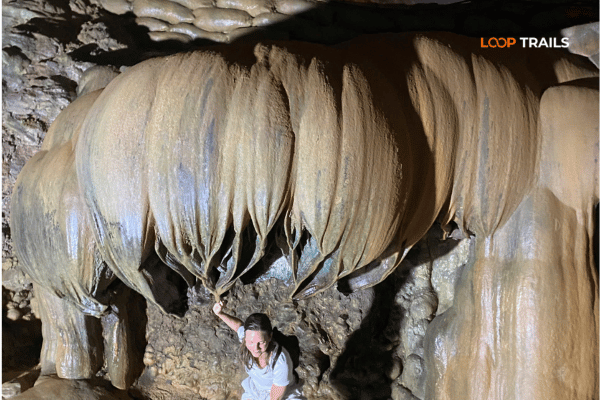
Twenty minutes away, Nguom Ngao Cave runs deep into the hillside with a walkway through chambers of stalactites and columns. It is cool inside, which is a gift in summer, and the lighting is theatrical without being tacky.
Between the two, Khuoi Ky is a small Tay village of houses built from stacked stone, some of them centuries old, on stilts with slate roofs. It takes fifteen minutes to walk through and it is the most photogenic quarter hour of the day. Several families run homestays here, and staying the night rather than returning to Cao Bang city is one of the easiest upgrades in this whole itinerary.
Day two in Cao Bang goes inland and upward. Phia Oac and Phia Den sit at altitude in a national park of pine and moss forest, with the ruins of French era villas scattered around a landscape that is genuinely cold in winter and misty most mornings. It looks nothing like the rest of the trip.
On the way back, the Thang Hen lake system sits in a limestone basin, its water level rising and falling with the season through underground channels, and Ma Phuc Pass gives you a last set of switchbacks and a viewpoint over the valley.
If history interests you more than forests, swap the day for Pac Bo, the cave complex near the border where Ho Chi Minh based himself after returning to Vietnam in 1941. It is a national memorial site and it is treated with real reverence by Vietnamese visitors, which is itself worth observing.
Whichever version you choose, day 8 is the one where the trip slows down. There is less to tick off and more time to sit with a coffee, and after five days of mountain roads that is exactly what you need.
Learn more: Ha Giang Sleeper Bus
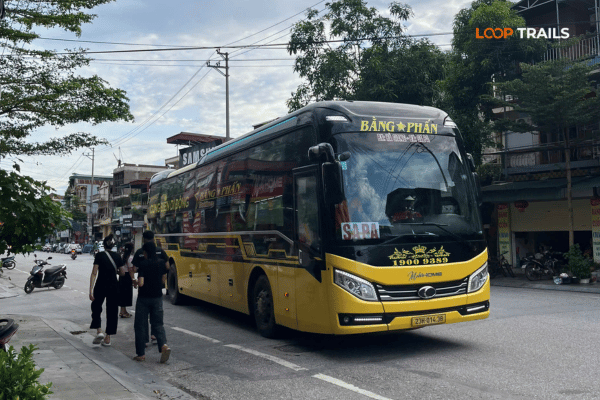
Sleeper buses run from Cao Bang to Hanoi through the day and overnight, and private transfers are available if you would rather travel door to door. It is a long run down through Bac Kan and Thai Nguyen, mostly on good roads, and it is genuinely restful after a week of passes.
Two choices:
Confirm departure times and pickup points when you book. Timetables on this route change with season and demand more often than the internet reflects.
Learn more: Ha Giang Road Conditions 2026
Reserve this day and do not fill it in advance.
Mountain trips generate delays. A landslide closes a road for a few hours after heavy rain, a bus goes late, weather makes a pass slow, or you simply fall in love with a village and stay an extra night. If none of that happens, you have a free day in Hanoi, and there are far worse fates.
Spend it on: the things you did not get to on day 2, a proper sit down meal instead of a roadside stop, a massage that your legs will thank you for, souvenir shopping in the Old Quarter or Dong Xuan market, and repacking so your dirty riding clothes are not in the same bag as everything else.
If your flight is late in the evening, most hotels will hold your bags after checkout. Book the airport transfer the night before rather than the morning of.
Learn more: Ha Giang Loop for Couples
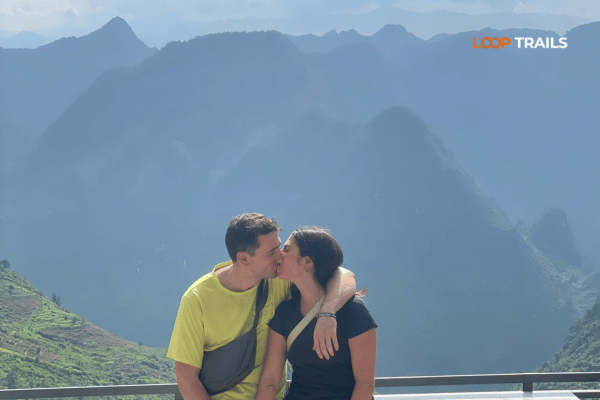
The couples version, slower. Cut one Cao Bang activity day and add a second night in Dong Van or a night at a Khuoi Ky homestay. Travel by jeep or as easy rider passengers. Fewer stops, longer meals, more time on balconies. This is the version most couples over thirty five actually enjoy, whatever they say when they book.
The rider’s version, harder. Add Du Gia to the Ha Giang section by extending the Loop portion, and take the rougher alternative sections where road conditions allow. Do it self drive, and only if you ride at home. You will spend more hours on the bike and see fewer cafes.
The no motorbike version. Everything above, entirely by jeep, from Hanoi to Ha Giang, over Ma Pi Leng, across to Bao Lac and Cao Bang and back. Same viewpoints, same villages, same meals, no saddle. Popular with families, travellers over fifty, and anyone visiting in the wet months.
All three fit inside ten days. The mistake is trying to combine them.
Learn more: Ha Giang Loop Mistake to Avoid
Northern Vietnam has real seasons, and the mountains exaggerate them.
Weather is local and changes fast up here, so treat the above as a pattern rather than a promise, and check the current forecast a few days before you leave Hanoi.

Learn more: Ha Giang Loop Price
We will not print numbers that go stale, and any blog quoting exact prices for a route like this is guessing. What we can do is show you where the money goes so you can build a realistic budget.
Your costs break into six buckets:
Three ways to cut the total without ruining the trip: travel in a group of three or four so vehicle costs split, take the sleeper bus on at least one of the two long transfers, and stay in homestays rather than hotels in the mountains, which is cheaper and considerably more interesting.
One way people waste money: booking each leg separately at the last minute, then paying for taxis to fix the gaps between them. The transfers are where budgets leak.
Learn more: Ha Giang Cao Bang Packing List
You are travelling through three climates in ten days. Pack for the mountains and add one city outfit, not the other way around.
Non negotiable
Worth having
Leave in Hanoi
Learn more: Ha Giang Loop Coporate Retreat
Northern Vietnam is not dangerous. It is unforgiving of carelessness, which is a different thing.
Ride or drive within your actual ability. The most common serious incidents involve travellers on their first or second day, on a bike type they have never used, going faster than the conditions allow. Speed is rarely the point up here. You are not commuting.
Respect the surface. Mountain roads carry gravel, mud, water crossings, livestock and the occasional truck taking the whole width of a bend. Assume a blind corner has something in it.
Wear the helmet properly, and wear more than shorts. Gravel does not care that it was warm at lunchtime.
Drink after the riding is done, not during. Corn liquor arrives at homestay dinners whether you asked for it or not. Enjoy it in the evening, and remember that hangovers and hairpin bends are a poor combination.
Do not chase daylight. Riding these roads after dark is a different sport. Build days that finish with light to spare.
Mistakes that cost people the most:
On scams and bad operators, keep it simple rather than paranoid. Agree exactly what is included before you pay. Get the itinerary and inclusions in writing. Photograph any rental vehicle before you take it, including existing scratches. Be wary of prices that sit far below everyone else’s, because something is always being removed to get there, and it is usually the driver’s experience or the vehicle’s maintenance. And avoid handing over your passport as a deposit if there is any alternative, which there almost always is.
Learn more: Ha Giang Border Area Permit 2026
You can build all of this yourself. Plenty of people do, and if you want to, the information above is genuinely everything we would tell a friend.
Where we help is the middle: the Ha Giang and Cao Bang sections, the transfer day that connects them, and the paperwork.
Tell us your dates, your riding experience and who is travelling with you, and we will tell you which version fits, including when the answer is that ten days is too tight for what you are asking. Message us on WhatsApp at [insert WhatsApp number] or through the contact page, and we will get back to you with a plan rather than a brochure.
Once your dates are fixed, book early. One to three months ahead is normal, and jeep availability in particular runs out well before motorbike availability does.
Yes, if you accept two long transfer days as part of the deal. Ten days gives you two solid days on the Ha Giang Loop, two in Cao Bang, and the mountain road between them. If you want an unhurried version with extra village nights, twelve days is the more comfortable number
Foreign passport holders need a border area entry permit for the districts along the route, since much of it sits inside a regulated zone on the Chinese border. Enforcement tightened during 2026 and checkpoints do ask for it. Any established operator or hostel can arrange it from your passport details, and you should confirm current rules and fees before you travel.
If you ride a manual motorbike regularly at home and are comfortable on wet mountain roads, self drive is a wonderful experience. If you do not, take an easy rider. You see everything, you take better photos, and you remove the one factor most likely to end a trip early.
As a passenger, yes. As a first time rider on a manual bike, it is a poor place to learn: steep gradients, gravel, fog and trucks. Beginners who want to ride should get real practice at home first, or choose the jeep and enjoy the same route without the risk.
September to November is the strongest window for clear weather and comfortable temperatures, with buckwheat flowers late in that period. March to May is the second choice. Summer is green, dramatic and wet, and winter is cold, quiet and often foggy on the high passes.
By road only: sleeper bus, limousine van or private car. There is no train and no nearby airport. Overnight buses save a hotel night, day vans and private cars give you a more comfortable arrival. Confirm current schedules when you book, as they change with season and demand.
Sleeper buses run through the day and overnight, and private transfers are available. It is a long but easy run on mostly good roads. If you have an international flight, travel the day before rather than counting on an overnight arrival.
Completely. The full route works by jeep, from Hanoi through Ha Giang to Cao Bang and back. You visit the same viewpoints, villages and restaurants, with a roof available when the weather turns. It is the standard choice for families, non riders and travellers visiting in the rainy months.
Add it if you want variety and quiet roads: Cao Bang gives you waterfalls, caves and forest rather than more limestone passes, and far fewer travellers. Stay longer in Ha Giang if your priority is riding and you would rather know one region deeply.
Yes, and sometimes it is better. Hanoi to Cao Bang first, then west to Ha Giang, then back to Hanoi. It puts the hardest riding later in the trip when you are more confident, and it can suit certain flight schedules better.
Most guests book one to three months ahead. In the September to November peak, and for jeeps at any time of year, book as early as your dates are confirmed. Vehicle availability, not accommodation, is what runs out first.
Trying to add Sapa or Halong Bay to the same ten days. It turns a well paced trip into a series of long transfers, and you end up seeing three regions at half depth instead of two properly.
Contact information for Loop Trails
Website: Loop Trails Official Website
Email: looptrailshostel@gmail.com
Hotline & WhatSapp:
+84862379288
+84938988593
Social Media:
Facebook: Loop Trails Tours Ha Giang
Instagram: Loop Trails Tours Ha Giang
TikTok: Loop Trails
Office Address: 54A Tran Phu, Ha Giang 2, Tuyen Quang
Address: 54A Tran Phu, Ha Giang 2, Tuyen Quang
Facebook X Reddit Table of Contents Learn more: Ha Giang Loop Tours The Ha Giang Loop has a reputation problem with older

Facebook X Reddit Table of Contents The passes get the photos. The homestay nights get the stories. Ask anyone who’s done the