
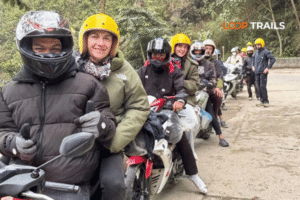
Ha Giang Easy Rider: The Complete Guide (2026)
Facebook X Reddit Table of Contents Learn more: Ha Giang Loop Tours There’s a moment, usually somewhere on Ma Pi Leng Pass,
Thúy Kiều( Grace) is a travel blogger and content contributor for Loop Trails Tours Ha Giang. She holds a bachelor’s degree in Sustainable Tourism from Vietnam National University, Hanoi, and has a strong passion for exploring and promoting responsible travel experiences in Vietnam’s northern highlands.
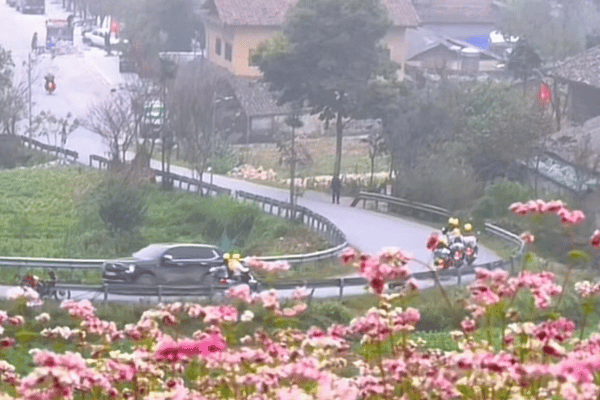
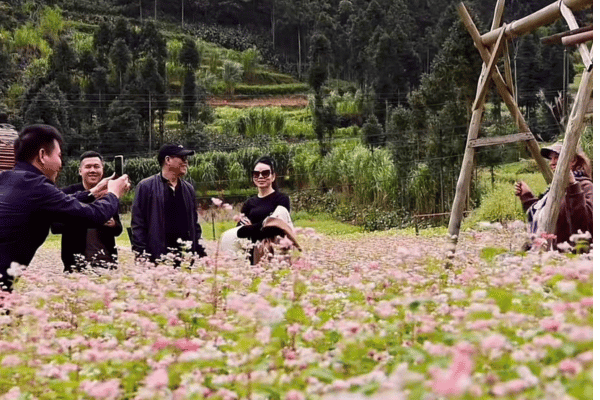
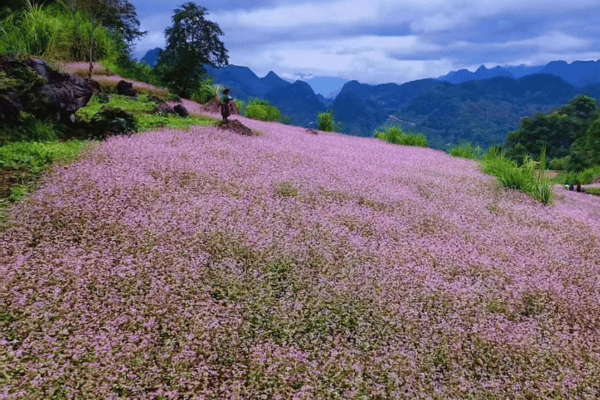
There’s a window of about 6-8 weeks each year when Sung La Valley transforms from a typical Ha Giang agricultural valley into something that looks like someone spilled pink paint across the landscape. Buckwheat flowers blanket the terraced fields in waves of pale pink and white, turning the valley into the kind of scene that stops riders mid-curve and makes them forget about their itinerary.
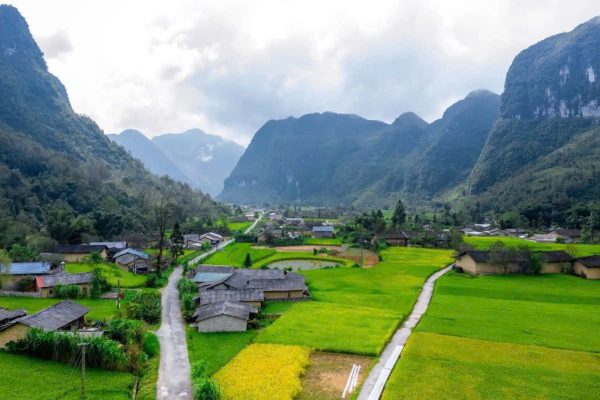
Sung La sits between Dong Van and Meo Vac, tucked into the karst mountains like most valleys in this region. For 10 months of the year, it’s a working agricultural valley where H’mong families grow corn, rice, and other crops. But for those brief weeks when buckwheat is in bloom—typically October through early December, with peak timing varying year to year—the valley becomes one of the Ha Giang Loop’s most photogenic stops.
This isn’t a tourist-created flower garden. Buckwheat is a real crop that H’mong farmers have grown for generations, used for making traditional flour and food. The flowers are a byproduct of the agricultural cycle, not a deliberate attraction. But travelers caught on, and now Sung La during buckwheat season has become a semi-famous stop on the loop.
The challenge is timing. Unlike Ma Pi Leng Pass or Dong Van Old Quarter, which are there year-round, Sung La’s flower show is seasonal and unpredictable. The exact bloom dates shift based on when farmers plant, how much rain falls, and temperature patterns. You need to hit the valley during that specific window, or you’ll see empty fields or harvested stalks instead of the pink carpet everyone’s chasing.
This guide covers what makes Sung La Valley worth the effort, when to visit for the best chance of catching the flowers, how to get there, what to expect, and how to fit it into your Ha Giang Loop plans without gambling your entire itinerary on flower timing.
Learn more: Ha Giang Loop Tours
Learn more: Ha Giang Motorbike Rental
The Ha Giang Loop delivers mountain passes, ethnic minority culture, and dramatic karst landscapes. Sung La Valley adds a different dimension—agricultural beauty and seasonal color that you can walk through rather than just photograph from a viewpoint.
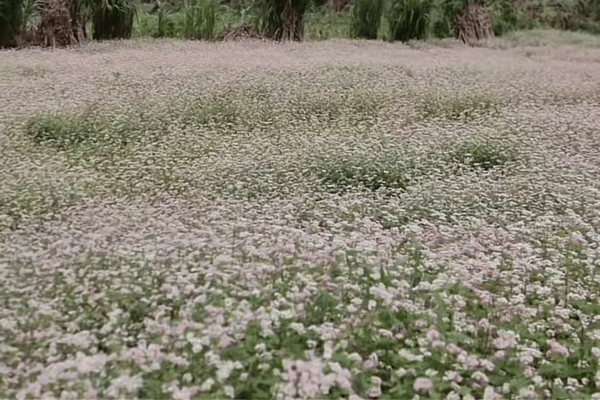
The visual impact is genuine. When buckwheat is in full bloom, the valley floor turns into waves of pink stretching across terraced fields. The color isn’t intense hot pink—it’s softer, more pastel—but against the green of surrounding vegetation and the gray of karst mountains, it creates this otherworldly contrast. Photos don’t quite capture it. You need to stand in the middle of it.
It’s accessible without being difficult. Unlike some flower fields that require hiking or special access, Sung La is right off the main road with paths leading into the fields. You can park your bike, walk 50 meters, and be standing among buckwheat flowers. For travelers who want natural beauty without extreme effort, this works perfectly.
The cultural element matters. These aren’t ornamental flowers planted for tourists. You’re walking through working farmland where H’mong families are growing food. You’ll see farmers tending the fields, children playing between the rows, daily agricultural life continuing around the seasonal tourist attention. It provides context that pure scenic viewpoints lack.
Photography opportunities are exceptional. The combination of flowers, traditional H’mong architecture (stone houses with clay roofs), farmers in traditional clothing, and the karst mountain backdrop gives you multiple layers to work with compositionally. Whether you’re shooting with a phone or a serious camera, you’ll get memorable images.
It breaks up the riding routine. By the time you reach Sung La (typically Day 2 of the loop), you’ve been on a motorbike for two days straight. Walking through flower fields uses different muscles, engages you differently with the landscape, and provides a mental break from navigating mountain roads.
The seasonal rarity adds value. Because you can only experience this during a specific time window, catching Sung La in bloom feels like a fortunate coincidence rather than checking a box on a standard itinerary. There’s satisfaction in timing it right.
One important caveat: if you visit outside buckwheat season, Sung La is just a valley. A nice valley with traditional villages and pretty mountain scenery, but nothing that would justify a specific stop. The flowers are what make it special. Without them, you’d likely ride right through without noticing.
Buckwheat isn’t native to Vietnam—it originated in Central Asia—but it adapted well to the climate and elevation of northern Vietnam’s mountains. H’mong people have been growing it here for generations as a staple crop.
Buckwheat (tam giác mạch in Vietnamese) grows quickly, typically going from planting to harvest in about 75-90 days. The flowers appear roughly 4-6 weeks after planting, bloom for 2-3 weeks, then the plant shifts energy to seed production.
H’mong farmers in Sung La typically plant buckwheat in late August or early September, which means flowers appear in October and early November. Peak bloom usually hits sometime in late October through mid-November, but this varies year to year based on:
The bloom period isn’t a single moment. Different fields peak at different times as you move across the valley. Early season, you might see some fields in full bloom while others are just starting. Late season, some fields are finishing while others are still at peak. This staggered timing means the overall “season” lasts longer than any individual field’s bloom.
The Dong Van karst plateau, where Sung La sits, has specific conditions that buckwheat loves:
For H’mong farmers, buckwheat serves multiple purposes. The grain is ground into flour for traditional foods like buckwheat cake (bánh tam giác mạch) and noodles. The plant is hardy and grows where rice won’t. It’s also a rotational crop—fields used for corn or other crops one season might be planted with buckwheat the next to restore soil nutrients.
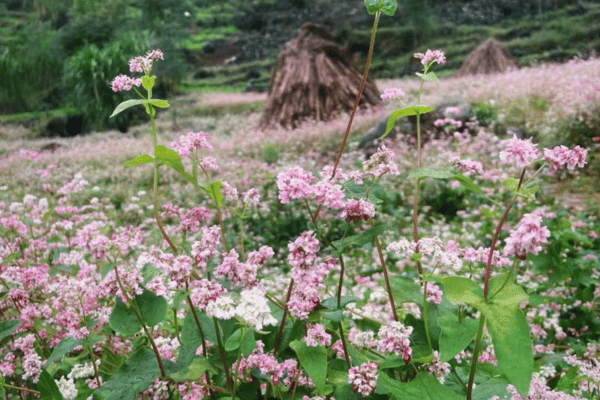
Individual buckwheat flowers are small—maybe 5-8mm across—with 5 petals ranging from white to pale pink. When you’re looking at a single plant, they’re delicate and unimpressive.
But when you plant buckwheat densely across entire terraced fields, those millions of tiny flowers create a cumulative visual effect. From a distance, the fields look like they’ve been painted pink. Up close, walking through them, you see the individual flowers but the overall impression is still this sea of soft color.
The pink isn’t uniform. Some varieties bloom whiter, some pinker. As flowers age, they shift in color. Morning light makes them look different than afternoon light. The result is this textured, varied pink rather than a flat single shade.
Wind moves through the fields in waves, creating patterns in the flower coverage. Combined with the terraced topography—fields at different elevations, different angles, different orientations to light—you get this dynamic landscape rather than a static carpet.
For H’mong people, buckwheat is practical food security, not romantic agricultural aesthetics. But there’s cultural pride in the crop and traditional knowledge about how to grow it in these challenging conditions.
During harvest season (late November into December), entire communities work together to cut, thresh, and process the buckwheat. It’s a social event as much as agricultural work. Some families roast the grain, others make flour immediately, some store it for winter.
The recent tourism attention to buckwheat flowers has created mixed feelings. It brings some economic benefit—families near viewing areas sell drinks, snacks, and sometimes buckwheat products to visitors. But it also means strangers walking through working farmland, sometimes trampling crops or behaving disrespectfully. Most farmers are tolerant but appreciate visitors who ask permission and show respect for the fact that these are working fields, not a theme park.
Learn more: Ha Giang Loop Self-Driver
Sung La Valley extends between Dong Van and Meo Vac along Highway QL4C, the main Ha Giang Loop route. The valley isn’t a single point but rather a stretch of farmland covering several kilometers.
The most photographed and accessible buckwheat fields are concentrated around Sung La village and along the road in both directions. GPS coordinates for a central reference point: approximately 23.2156° N, 105.3125° E.
From Dong Van: Head south on QL4C toward Meo Vac. After about 8-10 kilometers, you’ll start seeing buckwheat fields on both sides of the road. The densest concentrations are roughly 10-12 kilometers from Dong Van town center.
From Meo Vac: Head north on QL4C toward Dong Van. The buckwheat fields begin appearing about 12-15 kilometers from Meo Vac, increasing in density as you continue north.
Visual markers: You won’t miss the fields when they’re in bloom—the pink color is visible from the road. Multiple areas along this stretch have pull-offs where riders park and walk into the fields. During peak season, you’ll see other motorbikes stopped and people photographing, which makes the spots even more obvious.
No formal entrance or signage: There’s no official “Sung La Valley Buckwheat Viewing Area” with gates and tickets. You’re looking at farmland along a public road. You find a safe place to park, walk respectfully into the fields (on paths where they exist), and take in the view.
The valley is linear along the road rather than off on a side route, which makes it extremely easy to find. If you’re riding the standard loop route between Dong Van and Meo Vac during buckwheat season, you’ll pass right through it.
Learn more: Ha Giang Loop route and itinerary
Timing is everything with Sung La Valley. Come at the wrong time and you’ll see empty fields or harvested stalks. Here’s how to maximize your chances.
Late October through mid-November is the most reliable window for peak buckwheat flowers. Individual years vary, but this period historically offers the best odds.
Specific timing within the season:
The sweet spot is roughly October 25 – November 15, though this shifts slightly year to year.
Since timing varies annually, checking current conditions before your trip helps significantly:
Social media: Search Instagram, Facebook, or travel forums for recent posts tagged with Sung La Valley or Ha Giang buckwheat flowers. Recent photos (within the past week) tell you current bloom status.
Tour operators: Ha Giang tour companies and motorbike rental shops track flower timing because their customers ask about it. Contact operators and ask about current bloom status.
Recent traveler reports: Check travel forums, Facebook groups for Ha Giang Loop travelers, or Reddit travel communities. People post real-time updates during the season.
Weather patterns: If you know planting happened in late August/early September and weather has been typical (not excessively dry or wet), you can estimate bloom timing at 6-8 weeks after planting.
Don’t trust old photos or generic articles. That gorgeous photo from 2022 doesn’t tell you what’s blooming today. You need current information.
October and November in Ha Giang offer some of the best riding weather of the year:
Occasional cold fronts can bring cooler temperatures and clouds, but overall conditions are stable and pleasant.
Buckwheat season coincides with peak Ha Giang Loop tourism season (autumn). Expect company when visiting:
Weekdays: Moderate crowds—you’ll share the fields with other travelers but won’t feel overwhelmed
Weekends: Busier, especially Vietnamese tourists from Hanoi who drive up for the weekend specifically for buckwheat viewing
Vietnamese holidays: Very busy if your visit coincides with Vietnamese public holidays
Time of day matters:
If solitude is important, visit very early or accept that during peak season, this is a shared experience. The fields are large enough that you can usually find space away from clusters of people.
Outside of October-November, Sung La Valley offers:
It’s not worth a specific stop outside flower season unless you’re specifically interested in agricultural landscapes or H’mong village life. The flowers are the main attraction.
Learn more: Ha Giang Cao Bang Loop Jeep tour Guide
Sung La Valley sits directly on the main Ha Giang Loop route, making access straightforward regardless of your transportation method.
The standard approach. You’re riding your rented bike along QL4C between Dong Van and Meo Vac, and the buckwheat fields appear alongside the road.
Road conditions: The section of QL4C through Sung La Valley is paved and in decent shape. Some bumps and patches, but nothing extreme. Riding is easy by Ha Giang standards—no technical climbing or difficult corners in the valley itself.
Parking: Pull off the road where you see other bikes parked or where there are obvious wide spots. The road shoulder varies in width—some areas have generous pull-offs, others are tight. Park fully off the road so you’re not blocking traffic.
Safety note: This is an active highway with buses, trucks, cars, and other motorbikes. Park sensibly, use kickstands on stable ground, and don’t leave your bike where it forces traffic into dangerous positions.
If you’re traveling as a passenger with a guide, they’ll handle routing and stops. Most guides include Sung La Valley during buckwheat season as a standard photo stop.
Advantages:
Confirm with your guide that Sung La is included in your itinerary, especially if flower viewing is important to you.
Jeep tours traveling between Dong Van and Meo Vac typically include a buckwheat flower stop during the season. You’ll arrive with your group, have a set amount of time (usually 30-45 minutes), then continue together.
Flexibility is limited on group tours—you stop when the group stops and leave when they leave. If you want extended time in the fields or specific photography opportunities, self-drive or Easy Rider gives you more control.
Once you’ve parked, accessing the flowers requires walking from the roadside into the fields. This is where respectfulness matters.
Follow established paths when they exist. Many fields have narrow dirt tracks used by farmers—stick to these rather than trampling through planted areas.
Ask permission if you want to walk deep into someone’s field or if you’re crossing obviously private property. A friendly gesture and smile usually gets approval, even without shared language.
Stay aware that these are working fields. Watch where you step, don’t damage plants unnecessarily, and if farmers are actively working in an area, give them space or ask if it’s okay to be there.
The best viewing spots are usually obvious—you’ll see where other travelers have walked, where paths lead, and where the flower coverage is densest. Use common sense and respect private property boundaries.
Learn more: Ha Giang Loop 4 Days 3 Nights
Walking through Sung La Valley during buckwheat season delivers a specific type of experience that’s different from viewpoint stops or cultural sites on the loop.
Sung La isn’t a flat valley. Like most Ha Giang agricultural areas, it’s terraced—fields cut into hillsides at different elevations, creating a stepped landscape. The buckwheat grows on these terraces, which means the flower coverage creates patterns following the land’s contours.
Karst mountains surround the valley on multiple sides, providing the dramatic backdrop Ha Giang is known for. The contrast between soft pink flowers in the foreground and hard gray limestone peaks in the background is part of what makes the scenery striking.
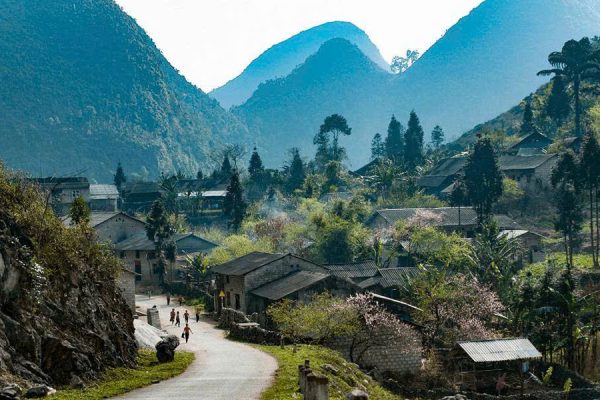
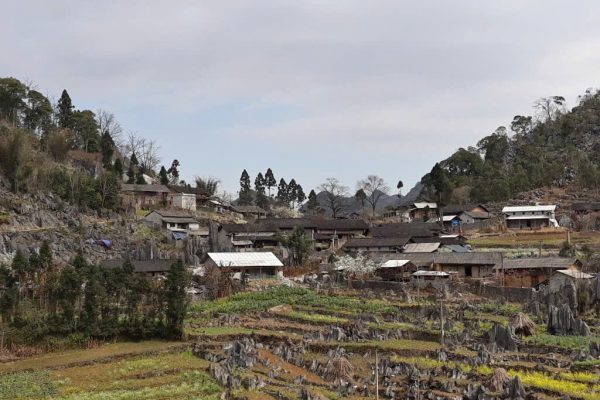
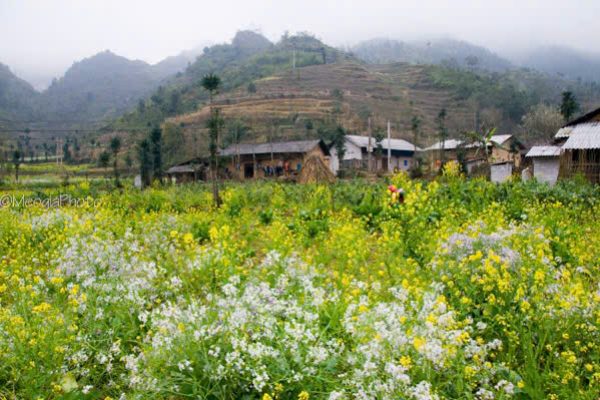
Traditional H’mong houses scatter across the valley—stone buildings with clay tile roofs, wooden structures, compounds surrounded by stone walls. These buildings, when photographed with buckwheat flowers in the foreground, create classic Ha Giang imagery.
The scale is significant. This isn’t a small garden—it’s kilometers of valley floor covered in varying densities of buckwheat. You can spend 20 minutes in one area, walk 500 meters down the road, and find completely different views and compositions.
The buckwheat plants grow maybe 60-90cm tall at full height, depending on variety and growing conditions. The flowers cluster at the top of the plants, so you’re not wading through shoulder-high blooms—you’re walking among waist-high plants with flowers at roughly chest to shoulder level.
The smell is subtle—a light, slightly sweet scent, noticeable if you pay attention but not overwhelming. It’s pleasant without being perfumey.
Bees are present because buckwheat flowers attract pollinators. They’re busy working and generally ignore people. Don’t swat at them or act aggressively, and they’ll leave you alone. If you’re allergic to bee stings, carry appropriate medication and be cautious.
The ground is uneven—typical farmland with rocks, dirt clods, irrigation channels, slight elevation changes. Watch your footing, especially if you’re looking through a camera viewfinder or at your phone screen while walking.
Paths wind through the fields, created by farmers accessing different areas and now reinforced by tourist foot traffic. Following these paths is easier than trying to forge your own route through planted areas.
You’ll see people working in the fields—weeding, checking plant health, sometimes harvesting other crops growing in adjacent plots. These are local H’mong farmers going about their work while tourists photograph their farmland.
Most farmers are friendly and tolerant of visitors, especially if you’re respectful. A smile and greeting (even if you don’t speak Vietnamese) acknowledges their presence and humanity rather than treating them as part of the scenery.
Some farmers sell products—buckwheat cakes, corn, drinks, handmade textiles—to visitors. Buying something is optional but appreciated if you’re interested. Prices are reasonable and not inflated to tourist-trap levels.
Photography of people requires permission. If you want to photograph a farmer or their children, ask first. Use gestures if language is a barrier. Many people will agree, some prefer not to be photographed, and some might indicate they’d like a small payment (10,000-20,000 VND is typical and reasonable).
Don’t treat people as props. They’re working, not performing. If someone’s busy with agricultural tasks, don’t interrupt or expect them to pose for your photo.
Sung La Valley doesn’t have:
This is genuine farmland that happens to be beautiful during a specific season. Set expectations accordingly—you’re visiting a working agricultural area, not a developed tourist attraction.
Most visitors allocate 30-60 minutes at Sung La Valley:
How much time depends on your interest level and itinerary flexibility. Photography enthusiasts and flower lovers could easily spend 2+ hours exploring different areas of the valley. People primarily interested in checking it off the list might be satisfied with 20 minutes.
Learn more: Ha Giang Loop Photography Guide
Sung La Valley during buckwheat season is a photographer’s dream, but getting good images requires more than just pointing and shooting.
Golden hour (early morning, 6-8am): Soft warm light makes the pink flowers glow, long shadows add depth, mist often lingers in the valley creating atmospheric conditions. This is optimal time for serious photography.
Late afternoon (4-5:30pm): Another golden hour with warm light and interesting shadows. The angle is different from morning, offering varied compositions.
Midday (11am-2pm): Harsh overhead light flattens the landscape and washes out the pink color. Workable if you’re stuck with this timing, but not ideal. Look for compositions that don’t rely on color—patterns, textures, details instead.
Overcast days: Soft diffused light can actually work well with the subtle pink of buckwheat flowers. Colors appear more saturated than under harsh sun. Don’t dismiss cloudy weather—it offers different possibilities.
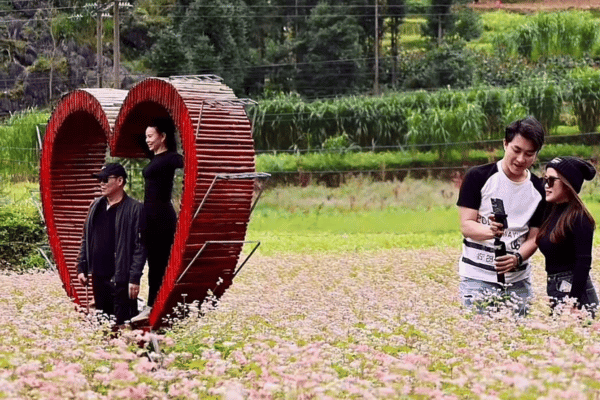
Wide landscape shots: Include layers—buckwheat flowers in foreground, H’mong houses in middle ground, karst mountains in background. This shows the full context of where these flowers grow.
Selective focus: Isolate a small cluster of flowers with shallow depth of field, letting the background blur into soft pink and green. Highlights the flower detail without the clutter.
People in the landscape: Farmers working or travelers walking through the fields provide scale and human interest. Get permission if photographing locals, and consider compensation if using them as your primary subject.
Pattern and texture: The terraced fields create linear patterns. Shoot from elevated positions to emphasize these geometric shapes formed by flower coverage following terrace edges.
Detail shots: Get close to individual flowers, showing the delicate structure and subtle color variations. Macro lens helps if you have one, but phone cameras in macro mode can capture nice details too.
Different perspectives: Shoot from the road looking down into valley, walk into the fields and shoot level with the flowers, climb to higher vantage points for overhead views. Vary your angles.
For landscape shots:
For flower details:
White balance: Auto usually handles it well, but you might warm it up slightly (+1 on the warm/cool scale) to enhance the pink tones
Modern smartphones capture excellent images of buckwheat flowers if you understand their limitations:
Use portrait mode to blur backgrounds and emphasize specific flower clusters
HDR mode helps balance bright sky and darker foreground elements
Avoid digital zoom—walk closer instead to maintain image quality
Edit thoughtfully—a slight saturation boost can enhance the pink, but don’t overdo it into unrealistic candy colors
Shoot in RAW if your phone supports it, giving more editing flexibility later
Buckwheat fields from aerial perspective create stunning abstract patterns—the terraces, the color contrast, the relationship between fields and houses and mountains.
Check regulations: Drone use in Vietnam has specific rules. As of latest information, recreational drone flying is allowed in most of Ha Giang, but regulations can change. Don’t fly over military areas or restricted zones.
Respect privacy: Don’t hover low over houses or follow people around with your drone. Get your shots and land.
Wind can be challenging in the mountains. Monitor conditions and don’t fly in gusty weather.
Battery life: Cold weather and elevation can reduce battery performance. Bring extras and don’t push limits.
Relying solely on the pink: Buckwheat flowers are pretty, but photos of just pink flowers without context get boring. Include elements that tell a story—people, buildings, mountains, farming activity.
Poor timing: Showing up at midday and wondering why your photos look flat. Light matters enormously. Plan for golden hours.
Forgetting permission: Photographing locals without asking, especially in ways that feel intrusive. This creates negative experiences for farmers and ruins it for future visitors.
Oversaturating in editing: Cranking the saturation slider until the flowers look neon pink. The natural color is subtle—preserve that rather than creating artificial intensity.
Ignoring the foreground: Shooting only wide landscape shots where everything is small and distant. Get close to flowers, use them as foreground interest, create depth.
Learn more: Ha Giang in September & October
While buckwheat flowers are the main draw, the valley offers additional experiences if you have time and interest.
Several traditional H’mong villages occupy Sung La Valley, with houses built from local stone and wooden structures that have stood for generations.
Walking through these villages (respectfully, as a visitor not an intruder) gives you glimpses of daily life—women weaving textiles, children playing, men repairing tools or buildings, families cooking over wood fires.
Ask before entering private property. Compounds and houses are family homes, not public spaces. A gesture and friendly expression usually communicate your interest, and people will either welcome you in or indicate you should stay outside.
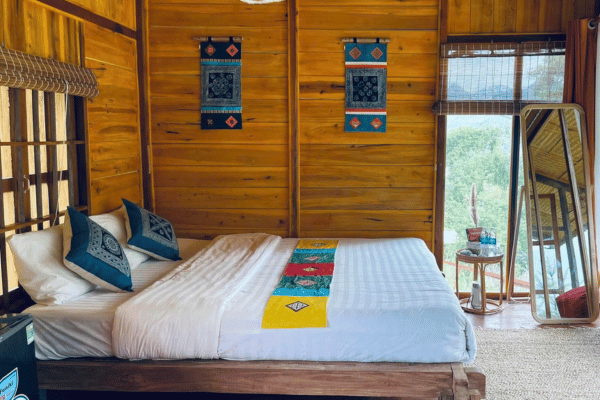
Some families offer informal homestay experiences, though this is less developed than in larger towns like Dong Van or Meo Vac. If you’re interested in staying in the valley itself, ask around or have your guide arrange it.
Learn more: Ha Giang Loop 2 Days 1 Night
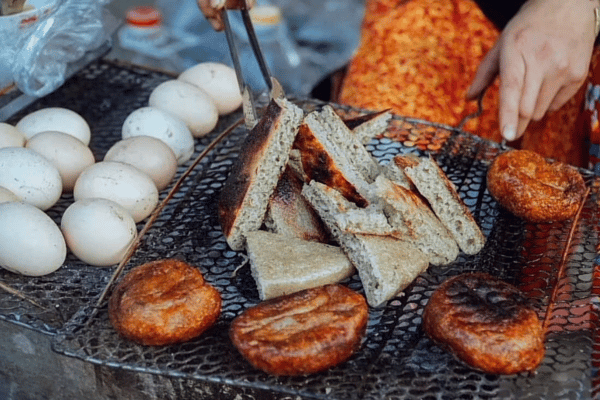
During harvest season and shortly after, local families make and sell buckwheat products:
Buckwheat cakes (bánh tam giác mạch): Small triangular cakes made from buckwheat flour, slightly sweet, distinctive flavor. Some varieties include honey or other ingredients.
Buckwheat noodles: Fresh or dried noodles made from buckwheat flour, used in soups or stir-fried dishes.
Buckwheat tea: Roasted buckwheat kernels used to make a nutty, caffeine-free tea.
These aren’t gourmet products—they’re rustic, traditional foods. Try them for the cultural experience and to support local families, not expecting restaurant-level presentation.
Sung La Valley is surrounded by karst mountains with hiking possibilities for adventurous travelers.
No marked trails exist, so you’re either following farm paths or creating your own route. Don’t attempt serious hiking without proper preparation, navigation tools, and someone knowing your plans.
Easier walks along the valley floor following irrigation channels or farm roads give you different perspectives on the landscape without technical difficulty.
Sunrise/sunset viewing: The valley offers beautiful light during golden hours. If you’re staying nearby, catching sunrise or sunset here (when day-trippers have left) provides special moments.
Some villages in the area hold periodic markets where H’mong people from surrounding areas gather to trade goods. These aren’t daily events—they typically happen weekly or on specific dates in the lunar calendar.
Check with locals or your guide about market timing if you’re interested. Markets feature agricultural products, livestock, textiles, tools, and provide intense social/cultural experiences.
Bring cash if you want to purchase anything. Prices are real local prices, not inflated for tourists, though expect some curiosity if you’re obviously foreign.
If you speak Vietnamese or have a translator, conversations with local H’mong people can provide insights into farming practices, cultural traditions, and how tourism has affected their lives.
Most farmers are busy but some are willing to talk, especially older people who enjoy sharing knowledge. Ask about buckwheat cultivation, why they grow it, how it’s used, how practices have changed over time.
Respect time and work obligations. If someone’s busy with agricultural tasks, don’t expect them to stop for an extended conversation. Brief friendly exchanges are fine; demanding their time is not.
Learn more: Ha Giang Loop for Families & Groups
Sung La Valley itself has minimal accommodation infrastructure. Most travelers stay in nearby towns and visit the valley as a daytime stop.
Dong Van is the nearest developed town with substantial accommodation options.
Range of choices:
Advantages of staying in Dong Van:
Meo Vac offers similar accommodation range to Dong Van but with fewer total properties.
Advantages of staying in Meo Vac:
A few H’mong families in Sung La Valley offer very basic homestay accommodation. This is informal and inconsistent—don’t expect Western standards or amenities.
What to expect:
Why stay here:
Booking: Arrange through a guide or ask around when you visit the valley. Don’t expect online booking or formal reservations.
If flowers are your priority: Stay in Dong Van or Meo Vac, visit Sung La early morning for best light and smaller crowds, spend 1-2 hours there, continue with your loop.
If you want immersion: Stay in the valley itself (arranged in advance or spontaneously), experience sunrise and sunset when the light is magical and tourists are minimal.
If following the standard loop: Most 3-day itineraries have you staying in Dong Van on Day 2, which positions you perfectly for a morning visit to Sung La before continuing toward Meo Vac.
Learn more: Ha Giang Paking List
Ha Giang province has several areas known for seasonal flowers. How does Sung La compare?
Season: October-November
Flower type: Buckwheat (pink/white)
Accessibility: Very easy, right on main road
Crowd level: Moderate to high during peak
Best for: Photographers, people specifically interested in buckwheat, travelers on standard loop timing who happen to be passing through during flower season
The areas around Lung Cu (Vietnam’s northernmost point) also grow buckwheat, with similar timing to Sung La.
Comparison to Sung La: Less concentrated, more scattered fields, fewer tourists because it’s off the main loop route, requires detour to Lung Cu specifically.
Visit both or choose one? If you’re going to Lung Cu anyway (for the flag tower), check out buckwheat there. If not, Sung La is more convenient and offers better flower density.
Some valleys near Ha Giang City have buckwheat and other seasonal flowers.
Comparison: Less dramatic landscape (not the same karst mountain scenery), easier access from Ha Giang City, good for people starting/ending their loop who want a flower preview.
Yen Minh district has agricultural valleys with various crops and occasional flower displays.
Comparison: Less consistent and less famous than Sung La, fewer flowers concentrated in one area, but potentially less crowded.
For buckwheat flowers specifically: Sung La Valley is the most famous, most accessible, and most reliable option on the standard Ha Giang Loop route.
For avoiding crowds: Consider Lung Cu area or less-visited valleys, though you’ll sacrifice convenience and possibly flower density.
For photography: Sung La combines flower coverage, dramatic landscape, and cultural elements (H’mong villages) better than alternatives.
If you’re doing the Ha Giang Loop during buckwheat season and can only visit one flower area, Sung La is the clear choice for most travelers.
Learn more: Tu San Canyon & Nho Que River Boat Trip
Sung La Valley slots naturally into most Ha Giang Loop itineraries without requiring route modifications.
Day 1: Ha Giang City → Quan Ba → Yen Minh → Dong Van (overnight)
Day 2: Dong Van → Sung La Valley (buckwheat stop) → Meo Vac → Du Gia or continue toward Ha Giang
On Day 2 morning:
Alternative Day 2:
Day 3: Meo Vac → Ma Pi Leng Pass → back through Meo Vac → Yen Minh → Quan Ba → Ha Giang City
With an extra day, you can:
Day 2: Dong Van → Sung La Valley (extended stop with better timing) → overnight in Sung La village homestay or continue to Meo Vac
This gives you flexibility for early morning and late afternoon photography without rushing, plus the option to stay in the valley itself.
Starting from Meo Vac and heading toward Dong Van, you’ll hit Sung La on your first or second day depending on routing. The valley is equally accessible from either direction.
Best sequence:
This timing gives you the best light, smallest crowds, and doesn’t disrupt the standard loop flow.
Avoid:
Build 1-2 hours into your Day 2 schedule specifically for Sung La if buckwheat is blooming. Don’t create a tight itinerary that requires you to rush through.
Most riders underestimate how long they’ll want to stay once they see the flowers. Planning for 30 minutes, then spending 90 minutes is common. Better to have buffer time built in.
If you’re riding the Ha Giang Loop outside October-November, Sung La becomes just another valley you pass through. No need to stop specifically unless you’re interested in the villages or landscape for other reasons.
Focus your attention on year-round attractions instead:
The loop remains excellent even without buckwheat flowers.
Learn more: Ha Giang Loop Easy Rider
Some specific advice for making your Sung La Valley visit smooth and respectful:
Check bloom status before committing your itinerary. If flowers are your main interest, verify they’re actually blooming before you book your loop dates. Contact tour operators, check social media, ask recent travelers.
Visit early morning for best experience. Light is better, crowds are smaller, temperatures are cooler. It’s worth the early wake-up.
Bring layers. Mornings can be cool (10-15°C) even when days are warm. A light jacket you can remove works better than being cold while trying to enjoy flowers.
Wear appropriate footwear. You’ll be walking on uneven farm ground potentially wet from dew or recent rain. Sneakers or hiking shoes work better than sandals or flip-flops.
Carry water and snacks. There are no vendors in the fields themselves. Bring what you need.
Charge camera batteries. If photography is important, ensure your devices are fully charged. Bring backup batteries if you have them.
Respect private property. Stay on paths, ask permission to enter deeper into fields, don’t trample crops unnecessarily.
Be culturally sensitive with photos. Ask permission before photographing people, especially close-ups. Offer small payment if someone indicates they expect it.
Leave no trace. Pack out all trash. Don’t pick flowers (they’re part of a food crop, not ornamental decoration).
Support local families if possible. Buy buckwheat products, drinks, or snacks from farmers selling them. It’s minimal cost for you and meaningful income for them.
Don’t expect facilities. No bathrooms, no trash cans, no benches, no infrastructure. Come prepared.
Park safely. Ensure your motorbike is stable and not blocking traffic. Lock it.
Watch for weather changes. Mountain weather shifts quickly. If rain threatens, be prepared to cut your visit short and get back on the road.
Understand seasonal nature. This is a specific-season attraction. Setting correct expectations prevents disappointment if timing is off.
Be patient with other photographers. During peak season, you’ll share popular spots. Wait your turn, be courteous, don’t monopolize prime positions.
Consider local impact. Your visit puts pressure on working farmland and local communities. Minimize negative impact through respectful behavior.
Peak bloom typically occurs late October through mid-November, though exact timing varies year to year based on planting dates and weather. The overall season can extend from early October into late November, but late October to early November offers the most reliable window for peak flowers.
Check recent social media posts (Instagram, Facebook) tagged with Sung La Valley or Ha Giang buckwheat flowers from the past week. Contact Ha Giang tour operators or motorbike rental shops who track bloom status for their customers. Search travel forums and Facebook groups for recent traveler reports.
No official entrance fee. The buckwheat fields are working farmland along a public road, not a formal tourist attraction with gates and tickets. You can park and walk into the fields for free, though buying products from local farmers selling snacks or buckwheat cakes is a nice way to provide some economic benefit.
Most visitors spend 45-90 minutes total. This includes parking, walking into fields, taking photos, and enjoying the scenery. Photography enthusiasts might spend 2+ hours exploring different areas and waiting for optimal light. A quick roadside photo stop might take only 15-20 minutes.
You can walk into the fields on established paths. Follow farmer-created trails where they exist, and ask permission if you want to walk deeper into obviously private areas. Be respectful that these are working crops, not a public park. Watch where you step and don’t damage plants unnecessarily.
Early morning (6-8am) and late afternoon (4-5:30pm) offer the best light—soft, warm, with interesting shadows. These golden hours make the pink flowers glow and create dimensional landscapes. Midday light is harsh and flat. Overcast days can work well too with soft diffused light.
Most travelers stay in Dong Van (12km north) or Meo Vac (15km south), both offering multiple accommodation options ranging from homestays to small hotels. A few H’mong families in Sung La Valley itself offer very basic homestay accommodation if you want to be right in the area for sunrise and sunset.
Not specifically. Without the flowers, it’s a typical Ha Giang agricultural valley—pretty mountain scenery and traditional villages, but nothing that justifies a dedicated stop when you could focus on year-round attractions like Ma Pi Leng Pass, Dong Van Old Quarter, or Vuong Palace instead.
It sits directly on the main route between Dong Van and Meo Vac, typically visited on Day 2 of the classic 3-day loop. Leave Dong Van early morning, stop at Sung La for flowers, continue to Meo Vac or beyond. No route modification needed—you’ll pass right through it.
Yes, buckwheat flowers attract pollinators including bees. They’re working and generally ignore people. Don’t swat at them or act aggressively and they’ll leave you alone. If you’re allergic to bee stings, carry appropriate medication and be cautious.
Generally yes, though regulations can change. As of latest information, recreational drone flying is allowed in most of Ha Giang province. Respect privacy (don’t hover low over houses), be aware of wind conditions, and check current drone regulations before your trip.
Most farmers are tolerant, especially if visitors are respectful. These fields provide some tourism income (selling products to visitors) but are primarily for food production. Ask permission when possible, stay on paths, don’t damage crops, and acknowledge farmers as people rather than treating them as scenery. Your respectful behavior makes it easier for future visitors.
Contact information for Loop Trails
Website: Loop Trails Official Website
Email: looptrailshostel@gmail.com
Hotline & WhatSapp:
+84862379288
+84938988593
Social Media:
Facebook: Loop Trails Tours Ha Giang
Instagram: Loop Trails Tours Ha Giang
TikTok: Loop Trails
Office Address: 48 Nguyen Du, Ha Giang 1, Tuyen Quang
Address: 48 Nguyen Du, Ha Giang 1, Tuyen Quang
Facebook X Reddit Table of Contents Learn more: Ha Giang Loop Tours There’s a moment, usually somewhere on Ma Pi Leng Pass,
Facebook X Reddit Table of Contents Learn more: Ha Giang Loop Tours There’s a version of the Ha Giang Loop that people
Facebook X Reddit Table of Contents Learn more: Ha Giang Loop Tours There’s a moment on the Ma Pi Leng Pass —