

Thúy Kiều( Grace) is a travel blogger and content contributor for Loop Trails Tours Ha Giang. She holds a bachelor’s degree in Sustainable Tourism from Vietnam National University, Hanoi, and has a strong passion for exploring and promoting responsible travel experiences in Vietnam’s northern highlands.

Learn more: Ha Giang Loop Tours
If you search for “Ha Giang Loop difficulty,” you’ll find two types of answers. The first is some version of “it’s fine, anyone can do it!” The second is “I almost died, the roads are insane.”
Both are technically true, which makes them almost useless if you’re trying to figure out whether you can actually handle it.
This is the honest version. No hype in either direction. Just a clear-eyed look at what the Ha Giang Loop demands of riders, why some people breeze through it and others struggle, and how you can make a smart decision before you book.

Learn more: Ha Giang Loop Self-Drive & Motorbike Rental
“Difficult” means different things depending on what you’re measuring. The Ha Giang Loop is:
The short answer: the Ha Giang Loop is not a beginner motorbike route. It’s also not an extreme adventure reserved for seasoned bikers. It sits somewhere in the middle — and where you fall in that spectrum depends heavily on your experience, your route choice, the season, and how you approach it.
Learn more: Ma Pi Leng Pass
Before rating difficulty, it helps to understand what the road actually is.
The main loop roads are paved — not pristine, but paved. You’re not riding dirt tracks or river crossings (unless you deliberately take certain side routes). The surface quality varies considerably: some stretches are smooth and recently resurfaced, others are potholed, cracked, or narrow with loose gravel at the edges.
After rain, the road can be slippery — especially on shaded sections where the surface stays wet. Landslide debris after heavy rain can leave gravel or rocks across the road with no warning. This matters more in rainy season but can happen any time at altitude.
The condition of specific road sections can change year to year as Vietnam’s road authority upgrades and repairs routes. Some stretches that were rough two years ago are now smooth; others have deteriorated. Check recent trip reports before you go — rider forums and Facebook groups for Ha Giang travelers tend to have current road condition updates.
The loop isn’t a highway. You’ll share the road with:
Traffic is light by any urban standard, but the combination of narrow road, sharp bends, and vehicles appearing around blind corners is what catches people out. You can’t see what’s coming in many places until you’re already in it.
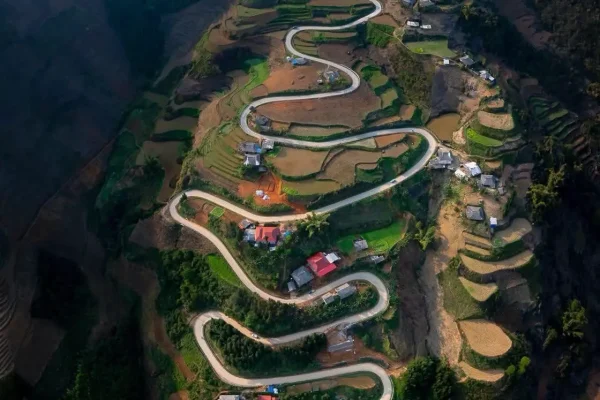
The terrain is mountain road in the truest sense: sustained climbs with gradients that require you to actually use your gears, and descents where you need brakes, not throttle. The famous sections — Ma Pi Leng Pass, Quan Ba Heaven’s Gate, the approaches to Dong Van — involve long sequences of hairpin switchbacks. Not just one or two corners. Dozens, stacked.
The classic loop is roughly 350 km. Spread across 3–4 riding days, that’s 80–120 km per day — which sounds manageable until you factor in mountain terrain. At the speeds you’ll actually be traveling on mountain switchbacks, 100 km can take 3 to 5 hours of riding time. Add stops, and a “short” day can easily become 7–8 hours from saddle to final destination.
That’s a real consideration. Fatigue is a significant risk factor on mountain roads. The longer you ride without breaks, the more your concentration degrades, and the more mistakes happen.
Learn more: Ha Giang Cao Bang Loop Jeep tour Guide
Direct answer: riding the Ha Giang Loop as a complete motorbike beginner is not a good idea.
That’s not meant to gatekeep — it’s just honest. The mountain road demands split attention between vehicle control, road conditions, oncoming traffic, and the sheer drop sometimes visible three inches from your wheel. If you’re simultaneously trying to remember how gears work, that cognitive load is too high.
Beginners who’ve done the loop sometimes say it was fine. Some of them got lucky. Some were on flat sections in good conditions. Some had more experience than they thought. But the risk-to-reward calculation doesn’t work in your favor if you’re genuinely starting from zero.
If you have no riding experience and you want to do the Ha Giang Loop, the realistic options are:
Not sure if a jeep or Easy Rider tour makes sense for you? Browse our Ha Giang Loop tours — we have options for every comfort level and group size.
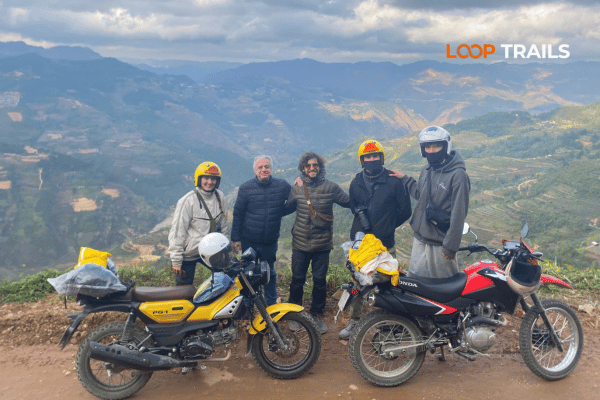
This is where most people asking “how hard is it?” actually sit. You’ve ridden before — maybe you drove a scooter around Bali or Thailand, maybe you ride occasionally at home — but you’re not an experienced biker.
This group can do the Ha Giang Loop, but the decision should be based on specifics:
For this group: a semi-automatic (like the Honda XR150 or similar) is generally more forgiving on mountain terrain than a fully automatic scooter. Talk to your rental provider honestly about your experience level before they hand you keys. A good rental shop will steer you toward the right bike.
If you ride regularly, have mountain road experience, and are comfortable with gears — the Ha Giang Loop is challenging but very doable. Experienced riders typically describe the difficulty as high-focus rather than genuinely dangerous, particularly in good weather.
The main risks for experienced riders are complacency and fatigue. People who are confident on bikes sometimes push too hard, pass too close to the edge, or keep going when they should stop. The loop’s scenery is spectacular and it’s easy to stay in the saddle longer than you should.
Learn more: Ha Giang Loop for Beginers
The drops. On sections like Ma Pi Leng Pass, the road edge drops straight into the canyon. There are no guardrails in places. This is fine if you stay away from the edge — but it’s visually intense in a way that can rattle inexperienced riders, causing them to look at the drop instead of the road ahead.
The descents. People focus on climbs, but the steep descents are where more accidents happen. Overloaded brakes on a sustained downhill are a real risk. Engine braking (using gears to slow down) is essential — if you don’t know how to do that properly, practice before you arrive.
Trucks. Agricultural and construction trucks use the same roads. They’re slow on the climbs, fast on the descents, and wide. On a narrow section of road, encountering a truck coming the other way requires both calm and the ability to position your bike correctly, quickly.
Fatigue accumulation. Day one might feel fine. By day three on the loop, even confident riders are feeling the physical and mental cost of sustained mountain riding. Building in rest stops, keeping days to a realistic length, and sleeping well matters more than people plan for.
Altitude and heat variation. At altitude, temperature drops noticeably — sometimes dramatically. Cold, tired muscles react differently than warm ones. Riders who set out in shorts and a t-shirt on a warm morning can find themselves genuinely cold and stiff by the time they reach a pass at elevation.
Learn more: Ha Giang Loop 3 Days 2 Nights
The road is mostly paved. If you were imagining a dirt track through the jungle, recalibrate. Most of the loop is sealed road. It’s uneven in places and narrow in others, but it’s recognizably tarmac.
Traffic is light. Especially compared to Vietnamese cities. You’re not threading through Hanoi traffic; you’re on mountain roads where you might not see another vehicle for stretches.
You can go at your own pace. If you’re self-driving, nobody is pushing you. You can stop whenever you want, ride as slowly as you need through difficult sections, and skip sections that feel beyond your comfort level.
Locals ride it every day. The ethnic minority communities of Ha Giang use these roads constantly, on modest bikes, carrying heavy loads, in all conditions. The roads are part of daily life for the people who live here — that context is worth keeping in mind.
It’s a loop, not a race. Many first-time riders come with the mindset that they need to “complete” it on a set schedule. In reality, the loop is flexible — you can adjust daily distances, take easier routes on harder days, and make decisions based on how you’re feeling rather than a rigid plan.

Learn more: Dong Van Old Quater at Night
The riding is the obvious difficulty. But the Ha Giang Loop is demanding in other ways that don’t show up in “difficulty” guides.
Sleep. Homestays and guesthouses on the loop range from comfortable to very basic. If you’re a light sleeper, a thin mattress, roosters at 5am, and no blackout curtains are a real thing. Chronic poor sleep over 4–5 days affects your reaction time and judgment on the road. This isn’t trivial.
Food. Remote sections of the loop have limited food options. You might eat whatever the single restaurant in a small village is serving, which is usually fine — local food in Ha Giang is good — but if you have significant dietary restrictions, you need to plan and communicate ahead.
Weather unpredictability. Weather at altitude can change quickly. Clear mornings can become foggy afternoons; warm days can end with cold nights. The psychological toll of riding in heavy rain for two hours, wet through, is underappreciated until it happens.
Decision fatigue. When self-driving, every turn, every gear change, every approaching truck is a small decision. Multiply that across 6–8 hours of riding per day over multiple days and the cumulative mental cost is real. Rest stops aren’t optional — they’re part of staying safe.

Learn more: Ha Giang in September & October
The Ha Giang Loop’s difficulty rating changes significantly by season. Here’s an honest breakdown:
| Season | Road Conditions | Difficulty Modifier |
|---|---|---|
| October–November | Generally good, dry | Standard difficulty |
| March–May | Good, warming | Standard–slightly easier |
| December–February | Dry but cold; ice possible on passes | Harder (cold, reduced grip) |
| June–September | Wet season; landslides, slippery surfaces | Significantly harder |
Wet season deserves specific mention. Rain doesn’t just make the road slippery — it creates landslides that can block passes for hours, cover the road in debris, reduce visibility, and make already-steep descents genuinely treacherous. Riding in Ha Giang in rainy season is possible, but it’s meaningfully harder and less predictable than other times of year.
If your schedule forces you into rainy season, a jeep tour is a significantly safer and more comfortable way to handle it than self-riding.

Learn more: Ha Giang Loop Easy Rider
This is the real question behind “how hard is it?” — because difficulty is manageable if you choose the right vehicle and setup.
Self-Drive Motorbike → Best if: You have genuine riding experience (not just scooter experience), you’re comfortable with gears and mountain terrain, you’re traveling solo or with another experienced rider, and you want full control of your itinerary. Rent the right bike for the terrain — talk to your rental provider honestly about the route and your experience.
Easy Rider (Passenger on Guide’s Bike) → Best if: You want the motorbike experience without the risk of riding yourself, you’re a solo traveler who values the connection with a local guide, or you’re not confident enough to self-ride but don’t want a jeep. Your driver handles the road; you handle the views.
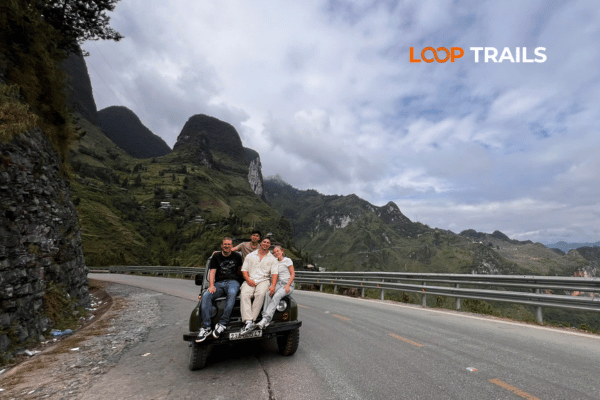
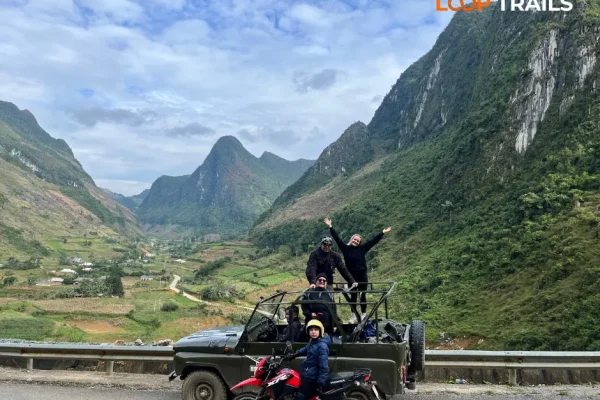
Jeep Tour → Best if: You can’t or don’t want to ride, you’re traveling as a couple or small group, you want comfort and flexibility without physical risk, or you’re going in rainy season when road conditions are unpredictable.
There’s no wrong answer — only the answer that’s right for your actual situation.
Not sure which fits you? Contact us on WhatsApp for an honest recommendation based on your group, experience, and dates. No pressure, no sales pitch.
Learn more: Ha Giang Cao Bang by Jeep and motorbike
If you’ve decided to self-ride, here are the things that actually make a difference:
Rent the right bike. A semi-automatic with engine power suited to the terrain is more forgiving on sustained climbs and descents than a low-powered automatic. Ask your rental provider specifically what they recommend for the loop — a good shop will have an opinion based on your experience level. Check out our motorbike rental options in Ha Giang for well-maintained bikes matched to the route.
Don’t overplan your daily distance. Less is more on mountain roads. A comfortable 80 km day with stops beats a rushed 130 km day. Leave buffer time — for viewpoints, for rest, for unexpected road issues.
Ride in the morning. Mountain fog often clears by mid-morning and returns by late afternoon. Starting early gives you the best visibility and the coolest temperatures for climbing.
Take real breaks. Stop every 60–90 minutes. Get off the bike, drink water, rest your hands and back. Micro-fatigue compounds into macro-errors.
Practice descents before you need them. Before you hit the serious passes, use the earlier sections of the loop to practice engine braking. Get comfortable with it at low stakes before it matters.
Travel with a group or tell someone your route. Cell signal on the loop is inconsistent. If something goes wrong, you want people who know where you are.
Know when to stop. If you’re tired, stop. If visibility is bad, wait. The loop will still be there in an hour. There’s no arrival time worth riding past your limits for.
Ready to do the Ha Giang Loop the right way for your experience level? Explore our Ha Giang Loop tour options — from self-drive motorbike rental to private jeep tours — and find the setup that actually makes sense for you.

Learn more: Ha Giang Loop Insurance
Not for complete motorbike beginners riding solo. The mountain roads, sustained switchbacks, and steep descents require more than basic riding ability. If you’re a beginner, consider a jeep tour or Easy Rider tour where an experienced driver handles the road — you still get the full experience without the risk.
Vietnam’s licensing rules for foreign riders are a complicated and frequently misunderstood topic — and they can change. Rather than give you outdated specifics, check current regulations with your tour operator or rental provider before you commit. Rules vary by bike engine size and are enforced inconsistently but not to be dismissed.
Most people do it in 3–4 days of riding. Four days is the more comfortable option — it gives you time to stop properly and not feel rushed. Three days is possible but fast. Some travelers take 5–6 days and add side routes or the Cao Bang extension.
Ma Pi Leng Pass is the most visually intense — the road runs along the edge of a deep canyon with significant drops. The approaches to Dong Van from Yen Minh also involve sustained switchback climbing. Most experienced riders find these sections manageable; beginners find them anxiety-inducing.
Yes, meaningfully so. Rain creates slippery road surfaces, reduces visibility, and causes landslides that can block passes or cover roads with debris. If you’re going in rainy season (roughly June–September), a jeep tour is significantly safer than self-riding.
Technically yes — some people do. But automatics offer less control on steep descents where engine braking matters, and low-powered scooters can struggle on sustained mountain climbs. If you’re riding an automatic, make sure it’s a reasonably powerful one and that you know how to use the brakes conservatively on downhills.
This is actually a reasonable scenario to plan for. Let your tour operator or rental provider know your plan before you go — they can often help arrange alternative transport (jeep pickup, for example) if you decide partway through that you’re not comfortable continuing. Having a contact number for this situation is sensible.
Yes, even for experienced riders. Multiple days of sustained mountain riding, at altitude, with variable weather and basic accommodation, takes a physical toll. Building in a rest day or keeping daily distances conservative helps. Fatigue is a legitimate safety consideration.
A useful benchmark: have you ridden a manual or semi-automatic motorcycle on mountainous roads before, outside of a city? If yes and you were comfortable, you’re probably in good shape for the Ha Giang Loop. If your experience is mostly automatics on flat terrain, treat the loop as a step up and consider building in more time or choosing a guided option.
The Cao Bang extension adds distance and days, which means more cumulative fatigue. The roads toward Cao Bang are generally less technical than the plateau sections of the Ha Giang Loop, but the added length makes overall physical difficulty higher. It’s best suited to riders who’ve done the Ha Giang Loop before or are confident in their stamina for multi-day mountain riding.
Yes — riding pillion is common. The passenger’s experience is less physically demanding (no active riding) but long days on the back seat on mountain roads are genuinely uncomfortable. Pillion riders sometimes find the drops and descents more alarming than the rider because they have less control. Communication between rider and passenger about pace, stops, and comfort is important.
Absolutely. The scenery, culture, and experience of the Ha Giang Loop aren’t exclusive to motorbike riders. Jeep tours give you access to everything — every viewpoint, every village, every pass — with an experienced driver handling the road. The landscape doesn’t care how you got there.
Contact information for Loop Trails
Website: Loop Trails Official Website
Email: looptrailshostel@gmail.com
Hotline & WhatSapp:
+84862379288
+84938988593
Social Media:
Facebook: Loop Trails Tours Ha Giang
Instagram: Loop Trails Tours Ha Giang
TikTok: Loop Trails
Office Address: 48 Nguyen Du, Ha Giang 1, Tuyen Quang
Address: 48 Nguyen Du, Ha Giang 1, Tuyen Quang
Facebook X Reddit Table of Contents Learn more: Ha Giang Loop Tours This is the question that sits in almost every Ha

Facebook X Reddit Table of Contents Learn more: Ha Giang Loop Tours Most people drive past the Quan Ba area twice on