

Phong Nam Valley: Where to Go After Ban Gioc
Facebook X Reddit Table of Contents Ban Gioc is the photograph. It is on every poster, it is why most people come

Thúy Kiều (Grace) is a travel blogger and content contributor for Loop Trails Tours Ha Giang. She holds a bachelor’s degree in Sustainable Tourism from Vietnam National University, Hanoi, and has a strong passion for exploring and promoting responsible travel experiences in Vietnam’s northern highlands.
Learn more: Ha Giang Loop Tours
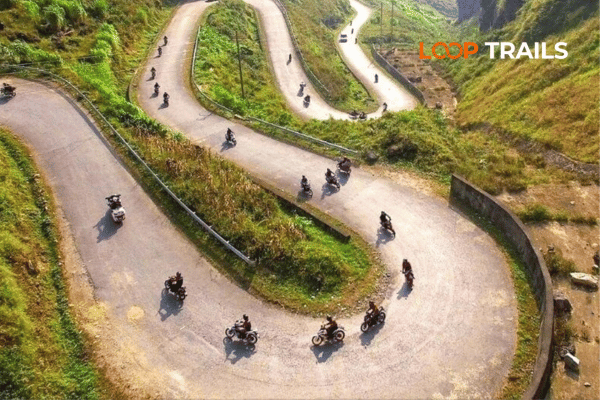
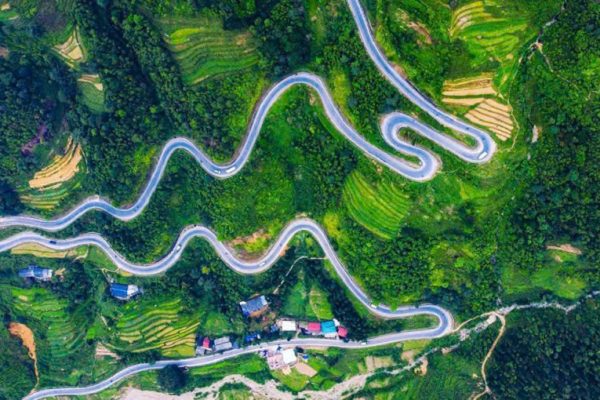
There’s a moment on Tham Ma Pass where you stop, look down, and count the bends below you. One. Two. Three. By the time you hit seven, the road beneath you has folded back on itself so many times it looks less like a road and more like a question someone scratched into the side of a mountain.
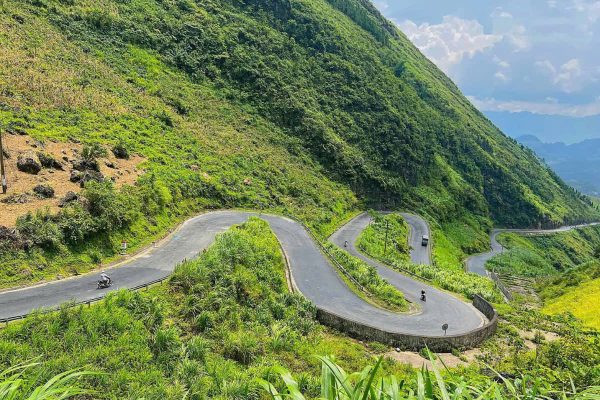
That’s Tham Ma Pass — locally called Đèo Thẩm Mã, which translates roughly to “Horse Washing Pass.” It’s not the most famous pass on the Ha Giang Loop (Ma Pi Leng holds that title), but it’s arguably the most visually dramatic when you’re standing right on it. Nine hairpin bends, sheer drops, karst cliffs stacked above and below you, and almost nothing between your tyres and a very long fall except your own attention.
If you’re planning a Ha Giang Loop and wondering what Tham Ma Pass is, how hard it is, when to go, and whether you should ride it yourself or let a guide take the wheel — this is the full breakdown.
Learn more: Vietnam Motorbike Routes Ranked
Tham Ma Pass is a mountain pass in the Dong Van Karst Plateau Geopark in Ha Giang Province, northern Vietnam. It sits in one of the most geologically striking corners of Southeast Asia — a UNESCO-recognised geopark built from 500-million-year-old limestone formations that have been folded, eroded and cracked into the kind of landscape that looks more like a sci-fi set than a real place.
The “nine bends” (locally chín khúc cua) refer to the tight hairpin turns that zigzag the road up and over the pass. The exact number of sharp bends varies slightly depending on which part of the approach you count from, but the nine-bend description has stuck — and when you’re on it, nine feels about right.
What makes it distinctive compared to other mountain passes in Vietnam isn’t just the bends themselves. It’s the combination of tight switchbacks, elevation change, exposed ridge sections with dramatic views across the valley, and the way the rock face closes in on one side while the earth drops away on the other. It’s a pass designed by geology, not by engineers trying to make your life comfortable.
The name “Horse Washing” is thought to come from a nearby stream where horses were once watered by local traders and ethnic minority communities crossing the pass. The H’mong and Lo Lo communities have been navigating this landscape for centuries — long before anyone thought to grade it for a motorbike.

Learn more: Ha Giang Motorbike Rental
Tham Ma Pass is located in the Dong Van–Meo Vac corridor — the northeastern stretch of the Ha Giang Loop that most riders consider the route’s crown jewel.
On a standard Ha Giang Loop itinerary, you typically encounter Tham Ma Pass on the section running between Dong Van town and Meo Vac. It’s often combined with (or compared to) Ma Pi Leng Pass, which sits on the same stretch of road and overlooks the Nho Que River canyon.
This roughly 23-kilometre section of road — part of which is officially called Highway 4C — contains more concentrated visual drama than almost anywhere else in Vietnam. You start in Dong Van, a historic border town with a centuries-old market and preserved old quarter, and finish in Meo Vac, a smaller, rawer market town tucked into a deep valley below the limestone massif.
Along the way you pass through:
Tham Ma Pass is typically reached before Ma Pi Leng when riding the loop in the standard direction (Ha Giang City → Yen Minh → Dong Van → Meo Vac → Du Gia → Ha Giang City), though the exact sequence depends on your guide or itinerary.
Learn more: Ha Giang Loop route and itinerary
Let’s get specific, because “mountain pass with hairpin bends” covers a lot of ground in Vietnam.
Coming from the Dong Van side, the road rises sharply through a series of increasingly tight bends. The surface has been paved and is generally in reasonable condition, but “reasonable” in the Ha Giang context means you still deal with cracked sections, patches of loose gravel at the edges, and occasional rock debris after rain. The road is narrow — wide enough for two vehicles to pass, but not comfortably. When a truck comes the other way on a blind bend, someone has to hug the inside.
The ascent gives you views back toward Dong Van and the surrounding plateau. The landscape shifts from terraced fields and small villages at the base to exposed limestone cliffs and almost no vegetation at the top. The sky feels closer here — that sounds dramatic, but at this elevation, the clouds genuinely do sit lower and closer than you’d expect.
The descent toward Meo Vac is where most riders feel the pass most acutely. The road pitches downward through the tight bends with the valley floor visible far below. The exposure is real — there are sections where the rock wall on one side and a cliff drop on the other leave you with a narrow strip of asphalt and your own nerve.
In dry conditions, the descent is challenging but very manageable for an experienced rider. In wet conditions, it becomes genuinely technical — the road surface gets slick, the bends tighten psychologically even if they’re the same width, and the braking distances you rely on disappear faster than you expect.
One thing people often don’t anticipate: the descent takes longer than the map suggests. You’re not just going downhill — you’re braking, leaning, correcting, checking the road ahead, watching for oncoming traffic, and doing all of this while your knees are already tired from the climb. Budget time, not just distance.
Learn more: Ha Giang Loop Weather
The dry season is the safest and most visually rewarding window for riding Tham Ma Pass. The road is at its most stable, the air is clear, and the views from the top of the pass — across the karst plateau and down into the valley — are at their best.
Within this window, two periods stand out:
Mid-winter (December–February) brings cold, fog, and the occasional frost at elevation. The pass is rideable, but visibility can drop significantly, temperatures at the top can be unexpectedly harsh, and the landscape is more stripped-back and austere. Some riders love this — fewer tourists, a rawer feel. Others find the cold and fog more punishing than they bargained for.
The rainy season on the Ha Giang Loop is a different beast entirely. The mountains get heavy, fast rain — not constant drizzle, but the kind of downpour that turns a surface into a stream in minutes. Landslides and road closures are genuinely possible, particularly after sustained rainfall.
Riding Tham Ma Pass in rainy season isn’t impossible, and some experienced riders do it knowingly. But the risk profile is meaningfully higher: wet roads, reduced visibility, unpredictable surface conditions, and the possibility of encountering a freshly blocked road with no easy detour.
If you’re going in rainy season, go with a guide who knows the route, check road conditions before you leave Dong Van, and be genuinely prepared to change your plan.
Start early. The Dong Van to Meo Vac section — including Tham Ma Pass — is best ridden in the morning for two reasons: the light is better for photos (especially on the descent), and you avoid the midday haze that can flatten the views significantly. Early morning also means less traffic on the pass itself.
Avoid riding the pass in the late afternoon if you can. Fading light on a narrow mountain road with steep drop-offs is not the place to be rushing.

Learn more: Ha Giang Loop Self-Drive & Motorbike Rental
The honest answer: it depends entirely on your riding experience and conditions.
Tham Ma Pass is doable for a confident intermediate rider on a well-maintained bike in dry conditions. It’s not technically extreme — the road is paved, the bends are visible, and there’s no off-road section.
What catches people out is a combination of factors: fatigue (you’re typically riding this after several days on the loop), the narrow road width on blind bends, the psychological weight of the exposure on the descent, and the possibility of encountering trucks or jeeps on the tightest sections.
If you’ve ridden mountain roads before — in Vietnam, Southeast Asia, or elsewhere — you’ll likely find Tham Ma Pass challenging but manageable. If this is your first time on a motorbike in Vietnam or your first mountain pass, the Ha Giang Loop broadly — and Tham Ma Pass specifically — is not the place to learn. The consequences of a mistake here are not minor.
Gear matters too. Proper helmet, gloves, and closed shoes aren’t optional on this road. Check your brakes before you leave Dong Van.
Thinking about riding the Ha Giang Loop self-drive? Loop Trails’ [motorbike rental page] covers available bikes, condition, and what’s included — worth a read before you decide.
On the back of an experienced Easy Rider guide, Tham Ma Pass is significantly more manageable. You’re not making the decisions — the guide handles the lines, the braking, the timing around blind bends, and reading the road. Your job is to sit properly, not to lean unpredictably, and to trust the person in front of you.
The physical experience is still real — you feel every bend and every pitch on the descent — but the risk profile is fundamentally different when you’re with someone who has ridden this pass hundreds of times.
For first-time visitors to Vietnam, nervous riders, or anyone who wants to absorb the scenery rather than manage the road, Easy Rider is the smarter call on this section.
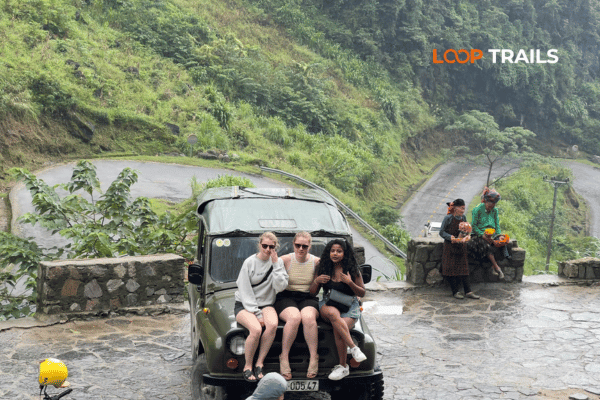
If you’re on a jeep tour, Tham Ma Pass is a different experience again. The jeep handles the road’s technical demands entirely, and you’re elevated above the road surface with better views on the descent. The trade-off is that some of the raw, physical sensation of the pass is insulated — you’re watching it through a windscreen rather than feeling it through your hands.
Jeep tours work well for groups, for travelers with mobility limitations, for families, and for anyone who wants the dramatic scenery without the riding component. The pass is equally dramatic from a jeep window — you’re just a different kind of observer.
Learn more: Ma Pi Leng Pass
This comparison comes up constantly, and the short answer is: they’re famous for different things.
Ma Pi Leng Pass is the one everyone knows by name before they arrive. It’s one of the Four Great Passes of Vietnam (tứ đại đỉnh đèo), it has the sky road section that looks unreal in photos, and the overlook above the Nho Que River is one of the most photographed spots in the country. Ma Pi Leng is a landmark — it has a cafe at the top, it has a name recognition that draws people from across Vietnam and abroad, and on a clear day the view over the canyon is genuinely stunning.
Tham Ma Pass doesn’t have the same brand recognition, but it has the nine bends — a more compact, dramatic, visually readable stretch of road that photographs differently and rides differently. Where Ma Pi Leng is about the panorama, Tham Ma is about the road itself: the way it folds, the way the rock presses in, the way you can count the bends below you from the top.
They’re not competing with each other — most loop itineraries include both, and they’re close enough geographically that you’d have to deliberately skip one. But if someone asked which was the more visceral riding experience, Tham Ma’s tight switchbacks give it the edge. If someone asked which has the more spectacular single viewpoint, Ma Pi Leng wins.
Both deserve the time you give them. Don’t rush either.
Learn more: Lung Cu Flag Tower Guide
The best viewpoints on Tham Ma Pass are organic rather than official — pull-outs where the road widens slightly or where a concrete barrier gives you a safe spot to stop and look back down the bends. The highest point of the pass offers a 360-degree view across the karst plateau that’s worth stopping for even if you’ve been stopping constantly since Dong Van.
On the descent toward Meo Vac, look for spots where the valley opens up and you can see the scale of the terrain below — the road you’ve just come down, the villages at the base, and the wall of limestone that defines the horizon.
There is no official “viewpoint platform” with a sign at Tham Ma Pass in the way there is at Ma Pi Leng — the pass rewards riders who stop when the moment calls for it rather than following a prescribed photo spot.
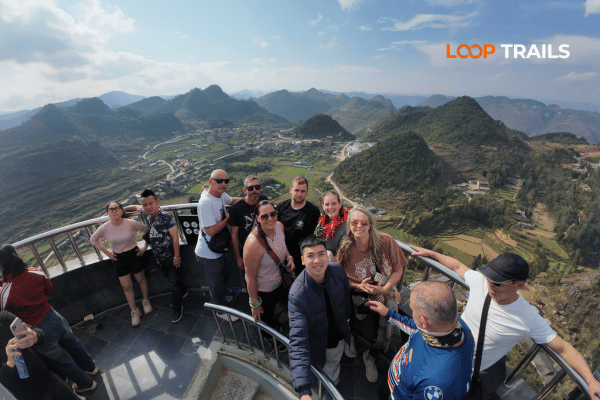
About an hour north of Dong Van (pre-pass), Lung Cu Flag Tower sits at the northernmost point of Vietnam, on a peak that overlooks the Chinese border. It’s one of the most visited stops on the Ha Giang Loop and a natural pairing with the Dong Van area. Most loop itineraries that include Tham Ma Pass also swing through Lung Cu — the extra distance from Dong Van is worth it.
Learn more: Dong Van Old Quater at Night
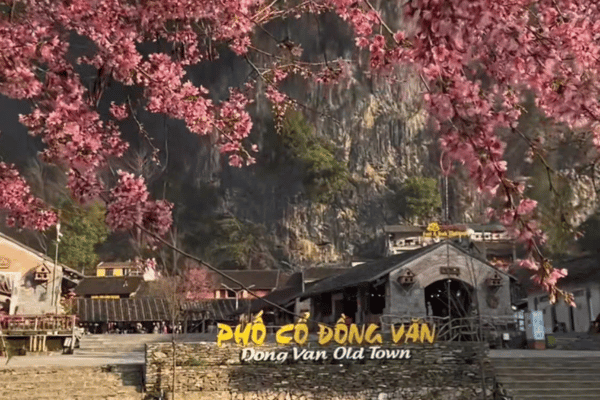
Before you tackle the pass, spend time in Dong Van. The old quarter — a collection of French-colonial and traditional H’mong architecture that dates back to the late 19th and early 20th centuries — is one of the most atmospheric town centres on the Ha Giang Loop. The Sunday market here is particularly good if your timing lines up: local H’mong, Lo Lo, Pu Peo, and Dao communities come down from the surrounding villages to trade.
On the other side of the pass, Meo Vac hosts one of the most vivid weekly markets in northern Vietnam. The Sunday market is the main event, but there’s activity most mornings. After the physical focus of the pass, Meo Vac’s market is a good reason to slow down, eat something local, and absorb the contrast between the road you’ve just ridden and the everyday life happening in the valley below.
The return leg of the standard loop — from Meo Vac south through Du Gia and back toward Ha Giang City — passes through river valley scenery that’s softer and greener than the karst plateau. Du Gia waterfall is a popular stop, and the road through the Nho Que valley section is genuinely beautiful in a completely different register from the pass. Don’t treat the return as just the drive home.
Learn more: Ha Giang Road Conditions 2026
The road over Tham Ma Pass is paved and maintained, but northern Vietnam’s mountain roads are subject to ongoing wear, seasonal damage, and variable quality patch repairs. After heavy rain, check locally (your guesthouse, a local guide, or riders who came through that morning) before you leave.
Rock falls are possible on the cliff sections, particularly after rain or in areas where the road cuts through unstable limestone. This isn’t constant or inevitable, but it’s worth knowing — ride at a speed that lets you respond to the road surface ahead, not just the road you can see.
Road rules and requirements — including documentation needed for foreign riders — do change in Vietnam. Check current regulations before you go, not just forum posts from two years ago.
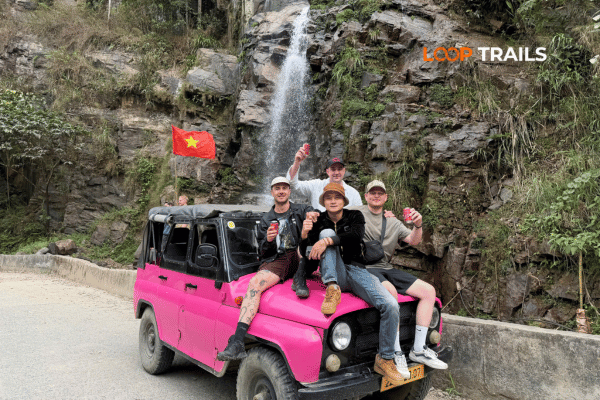
Learn more: Ha Giang Cao Bang Loop Jeep tour Guide
Three main ways to ride the Ha Giang Loop — including Tham Ma Pass — each with a different profile:
Easy Rider (Guided Motorbike Tour) You ride on the back of an experienced local guide’s motorbike. No riding license required, no solo navigation, and you get a running commentary on the landscape, villages, and culture as you go. Best for: first-timers, solo travelers who want company, anyone nervous about mountain road riding, people who want to focus on the experience rather than the mechanics.
Self-Drive Motorbike You rent a motorbike (semi-auto or manual) and ride the loop at your own pace, typically with a basic map and your own navigation. Best for: experienced riders who’ve ridden challenging roads before, people who want full independence and flexibility, those with a valid motorcycle license.
Jeep Tour A private or small-group jeep takes you through the loop with a driver and often a guide. The road experience is different — you’re in a vehicle rather than on a bike — but the scenery is identical. Best for: groups, couples wanting comfort, travelers with physical limitations, families, or anyone who wants the Ha Giang Loop without the riding component.
Not sure which is right for you? Loop Trails runs all three options with small groups, well-maintained bikes, and guides who know the Dong Van–Meo Vac section intimately. [Browse our Ha Giang Loop tours] or [contact us on WhatsApp] to talk through which option fits your trip.
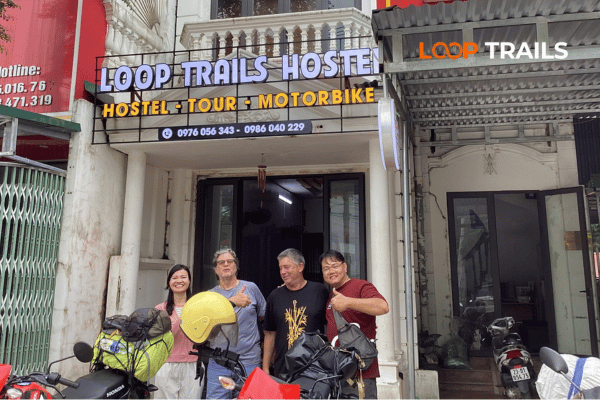
Learn more: Loop Trails Tour Ha Giang website
Tham Ma Pass is part of the standard Ha Giang Loop route — any properly structured loop tour will include it. What varies between operators is the quality of the guide, the condition of the vehicles, the pace of the itinerary, and how much flexibility you have on the road.
A few things worth asking any operator before you book:
Loop Trails keeps group sizes small, uses regularly maintained bikes, and builds genuine stop time into the Dong Van section of the itinerary. The pass isn’t a thing to get through — it’s a thing to experience.
Ready to plan your loop? [View our Ha Giang Loop tours here] or [send us a WhatsApp message] and we’ll put together the right option for your dates, group size, and experience level.
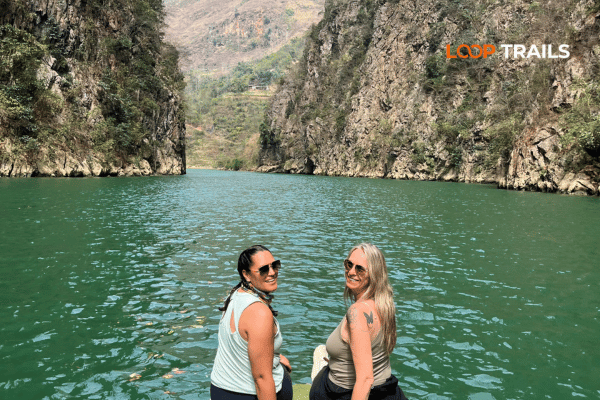
Learn more: Tu San Canyon & Nho Que River Boat Trip
Tham Ma Pass (Đèo Thẩm Mã) is a mountain pass in Ha Giang Province, northern Vietnam, located in the Dong Van Karst Plateau Geopark. It’s known for its dramatic nine hairpin bends and is a key section of the Ha Giang Loop route between Dong Van and Meo Vac.
Tham Ma Pass is most commonly described as having nine hairpin bends, which is how it earned its “nine bends” reputation. The exact count can vary depending on where you start counting, but nine is the number that’s stuck locally and in traveller descriptions.
Riding Tham Ma Pass carries real risk if you’re inexperienced, riding in wet conditions, or on a poorly maintained bike. In dry conditions with an experienced rider, it’s challenging but very manageable. For first-timers or nervous riders, going with an Easy Rider guide significantly reduces the risk profile.
Both are on the Dong Van–Meo Vac stretch of the Ha Giang Loop. Ma Pi Leng is more famous and has a spectacular panoramic viewpoint over the Nho Que River canyon. Tham Ma Pass is known for its tight nine-bend road structure — more visceral as a riding experience, slightly less famous as a viewpoint destination.
October to April (dry season) is the optimal window. October–November is especially good for clear skies, cooler temperatures, and post-harvest scenery. Avoid the rainy season (May–September) if possible — wet mountain roads and the risk of landslides and road closures are real factors.
We’d strongly advise against it for true beginners. The combination of tight hairpin bends, narrow road, oncoming traffic, and cliff exposure makes Tham Ma Pass unsuitable for first-time mountain road riders. Consider the Easy Rider or jeep option if you’re not an experienced rider.
The distance is roughly 23 km, but the time depends significantly on how many stops you make, traffic conditions, and road conditions. Budget at least 1.5–2 hours to do this section properly, more if you want to stop at viewpoints. Don’t rush it.
Yes — it’s part of the main road connecting Dong Van and Meo Vac, which is a core section of every Ha Giang Loop itinerary. Any properly structured loop tour will cover it. If an operator’s itinerary somehow skips this section, ask why.
Layers are important — temperatures at the top of the pass are noticeably cooler than in the valley. A windproof jacket, gloves, long trousers, and closed shoes as a minimum. In winter or on a cold morning, add an extra layer. Proper helmet always.
Yes — jeep tours run the same route and cover all the major passes including Tham Ma. You don’t get the same physical experience, but the scenery is identical and you avoid the riding demands entirely. A good option for groups, families, or anyone who wants to focus on the views rather than the road.
Driving regulations in Vietnam can change — check current requirements before your trip, as rules for foreign riders and specific license categories are subject to updates. Easy Rider tours avoid this question entirely since you’re a passenger, not a driver.
Dong Van Old Quarter and Sunday market, Lung Cu Flag Tower (northernmost point of Vietnam), Ma Pi Leng Pass and the Nho Que River viewpoint, Meo Vac Sunday market, and Du Gia Waterfall on the return leg. All of these are standard stops on a well-structured Ha Giang Loop itinerary
Contact information for Loop Trails
Website: Loop Trails Official Website
Email: looptrailshostel@gmail.com
Hotline & WhatSapp:
+84862379288
+84938988593
Social Media:
Facebook: Loop Trails Tours Ha Giang
Instagram: Loop Trails Tours Ha Giang
TikTok: Loop Trails
Office Address: 48 Nguyen Du, Ha Giang 1, Tuyen Quang
Address: 48 Nguyen Du, Ha Giang 1, Tuyen Quang
Facebook X Reddit Table of Contents Ban Gioc is the photograph. It is on every poster, it is why most people come
Facebook X Reddit Table of Contents Learn more: Ha Giang Loop Tours Northern Vietnam is a long way from Europe and it
Facebook X Reddit Table of Contents Learn more: Ha Giang Loop Tours Every operator on the Ha Giang Loop says “small groups”.