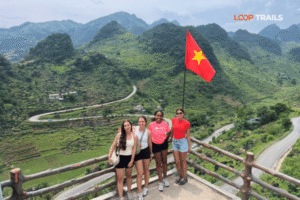


Thúy Kiều (Grace) is a travel blogger and content contributor for Loop Trails Tours Ha Giang. She holds a bachelor’s degree in Sustainable Tourism from Vietnam National University, Hanoi, and has a strong passion for exploring and promoting responsible travel experiences in Vietnam’s northern highlands.
Learn more: Ha Giang Loop Tours
There’s a moment — usually somewhere between the second hairpin and the sheer 800-metre drop to the river — when you stop trying to take a photo and just look.
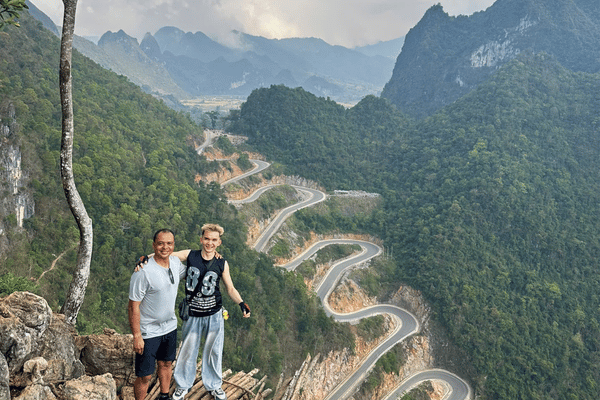
Ma Pi Leng Pass has that effect on people. One of the most dramatic stretches of road in all of Southeast Asia, it cuts across the northern edge of the Ha Giang Loop through a landscape so raw and vertical it feels almost unreal. Limestone peaks tower overhead. The Nho Que River threads through the gorge below, its colour an improbable turquoise-green against the grey rock. The road itself is narrow, winding, and — depending on the day and the season — can be genuinely challenging to ride.
This guide covers everything: the road conditions, the viewpoints, the skywalk, the best time to go, how to get there, and which way of experiencing Ma Pi Leng Pass suits you best. Whether you’re planning to ride it yourself or want a guide to take the wheel, read this before you go.
Learn more: Ha Giang Loop 2 Days 1 Night
Ma Pi Leng Pass (Đèo Mã Pí Lèng) is a high mountain pass in Ha Giang Province, in Vietnam’s far north. It sits on the route connecting Dong Van and Meo Vac — two of the most visited districts on the Ha Giang Loop — and stretches roughly 20 kilometres through the Nho Que River gorge.
The pass reaches elevations of around 1,500 metres and is widely considered one of the four “great passes” of northern Vietnam, alongside Pha Din, O Quy Ho, and Khau Pha. Of the four, Ma Pi Leng is the most dramatic in terms of sheer vertical exposure. The road doesn’t gently climb and descend — it clings to the cliff face, with the gorge dropping hundreds of metres on one side and the karst walls rising on the other.
The name is said to mean “the height of a horse’s nose” in the local Hmong language — a reference to how close it feels to the sky when you’re up there. Whether or not that translation is exact, it captures the feeling well.
Why it matters for your Ha Giang Loop trip: Ma Pi Leng isn’t a detour. It’s the centrepiece. Any Ha Giang Loop itinerary worth doing passes through here, and for most travellers, it ends up being the single most memorable stretch of the entire trip.
Learn more: Ha Giang Loop 3 Days 2 Nights
Ma Pi Leng Pass sits on National Highway 4C, between Dong Van town and Meo Vac town. On a standard Ha Giang Loop itinerary, you’ll ride it on the day you travel between these two points — typically Day 2 or Day 3 depending on your route direction.
Most people ride it from Dong Van toward Meo Vac (west to east), which means the gorge opens up on your left side as you descend. That’s the side with the best views. If you’re going the other direction — Meo Vac to Dong Van — the pass is equally dramatic, but the most famous viewpoints face the opposite way, so you may need to pull over and cross the road to get the full effect.
Starting point: Dong Van town (~25 km from Ma Pi Leng) Ending point: Meo Vac town (~8–10 km past the end of the pass section)
From Ha Giang City, you’re looking at roughly 150 km to reach Dong Van, which takes most of a day to ride properly (with stops). Ma Pi Leng itself is not an isolated attraction you drive to — it’s part of the larger loop that starts and ends in Ha Giang City.
The most dramatic section of Ma Pi Leng Pass — the part that hugs the cliff above the Nho Que gorge — is about 20 km. Allow at least 1.5 to 2 hours for this stretch if you plan to stop at viewpoints, which you absolutely should.
Total Dong Van → Meo Vac: roughly 45–50 km, typically 2–3 hours with stops.
Learn more: Ha Giang Loop 4 Days 3 Nights
The road surface on Ma Pi Leng Pass has improved significantly compared to a decade ago. The main route (Highway 4C) is paved along the entire pass, and for most of the year, the surface is in reasonable condition.
That said, “paved” doesn’t mean “easy.” Here’s what you’re actually dealing with:
If you’ve ridden mountain roads in northern Vietnam before (Sapa, Hai Van Pass, Moc Chau), Ma Pi Leng is a step up in terms of exposure. The combination of altitude, narrow road, no barriers, and the sheer vertical drop makes it more demanding than most.
If you haven’t ridden mountain roads in Vietnam before — see the options section below. There’s no shame in choosing a guide or a jeep.

Learn more: Ha Giang Cao Bang 5 Days 4 Nights
There are a few named stopping points along the pass that most riders pause at:
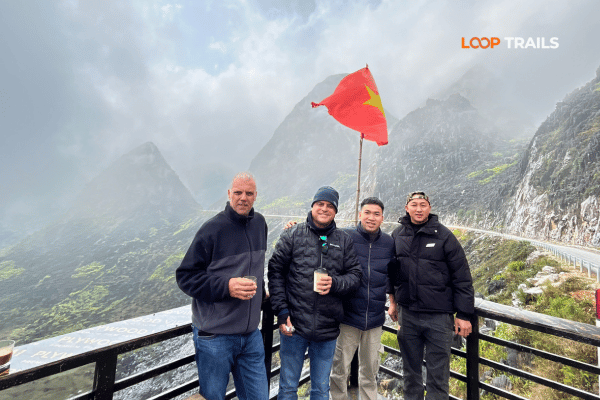
The main Ma Pi Leng viewpoint (km marker area): This is the most photographed spot — a wide section of road where you can pull over and look both directions along the gorge. The river is visible far below, the peaks frame the horizon, and if you’re there in the morning with mist in the valley, it’s genuinely spectacular. There’s usually a small drink stall here.
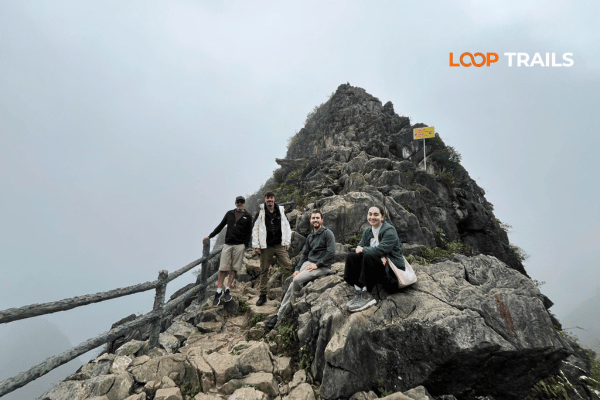
Heaven’s Gate (Cổng Trời): Technically a separate but nearby landmark, often visited on the same stretch. A rocky outcrop with views across the Dong Van plateau and back toward the pass.
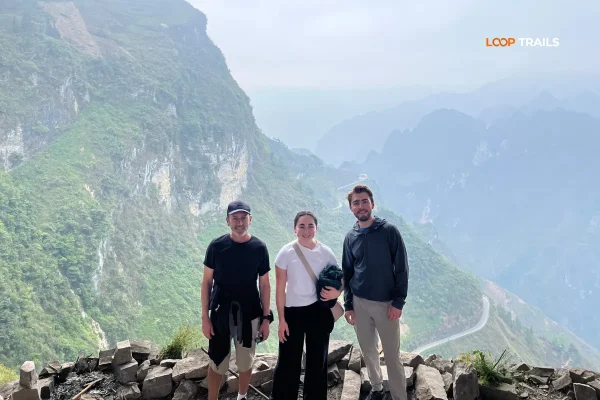
The curve above the river: There’s no official name, but there’s a particular bend — roughly halfway through the pass — where the road turns and the full depth of the gorge becomes visible directly below. Most experienced riders will tell you this is the moment that gets people.

Learn more: Ha Giang Cao Bang Ba Be Lake 6 Days 5 Nights
The Nho Que River (Sông Nho Quế) is what makes Ma Pi Leng visually extraordinary. It runs through the gorge at the base of the pass, and from up on the road, it looks impossibly blue-green — a colour that comes from the limestone sediment in the water and the way light hits the narrow gorge.
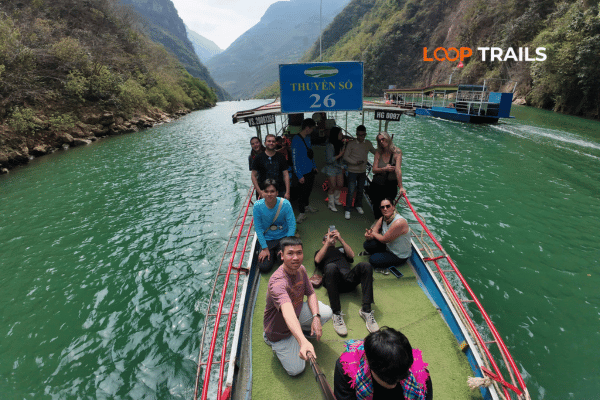
You can get much closer to the river from Meo Vac side: there are boat trips available on the Nho Que that take you through the gorge from below, looking up at the cliffs you just rode across. It’s a completely different perspective and worth doing if you have the time.
Learn more: Ha Giang Motorbike Rental
A relatively recent addition to the pass, the Ma Pi Leng Skywalk is a viewing platform that extends out from the cliff face, giving you an unobstructed view straight down into the gorge.
There is typically a small admission fee to access the skywalk (fees and opening hours can change — check locally when you arrive). It’s become popular quickly, and during peak season can get crowded, especially mid-morning when tour groups arrive.
Honest take: The views are genuinely impressive, and the glass-floor/transparent panel sections give you a visceral sense of the drop. If you’re not afraid of heights, it’s worth the stop. If you are afraid of heights, the road itself will probably already have tested you — the skywalk just makes it explicit.
Access is off the main road and clearly signed. Most riders stop here, spend 20–30 minutes, then continue toward Meo Vac.
Learn more: Ha Giang in September & October
October to April — Dry season, generally recommended
This is when most international travellers visit Ha Giang, and for good reason. Roads are drier and more stable, visibility is better, and the risk of landslides or flash flooding is lower. The downside: it can get cold, especially November through February. At 1,500m elevation, early morning temperatures can drop to 5–10°C or lower in winter. Pack layers.
October and November are peak season — the buckwheat flower bloom covers the Dong Van plateau in pink and white, and the light is excellent for photography.
March to May: Warmer, spring colours, rapeseed flowers on the plateau. Increasingly popular and less crowded than October/November.
May to September — Wet/rainy season, proceed with caution
Rain in northern Vietnam doesn’t always mean drizzle. Prolonged heavy rain can cause road damage, landslides on the cliff sections, and severely reduced visibility. The Nho Que River also rises and can lose its characteristic colour during peak rainy months.
This doesn’t mean the pass is impassable in summer — many riders do it successfully — but conditions are less predictable. Roads can close after heavy rainfall. If you’re going in rainy season, build flexibility into your itinerary and check road conditions locally before riding.
Early morning (before 9am): The best time, especially for photography. Mist sits in the valley, light is soft, and traffic is lighter. You’ll often have the major viewpoints to yourself.
Midday: Most crowded. Tour groups arrive, the skywalk gets busy, and the harsh overhead light isn’t ideal for photos.
Late afternoon: Light improves again. If you’re riding from Dong Van and take your time, arriving at the main viewpoints around 3–4pm can be beautiful — especially if there’s any cloud movement.
Learn more: Ha Giang Loop Self-Drive
This is where it’s worth being honest with yourself about your experience level and what kind of trip you actually want.
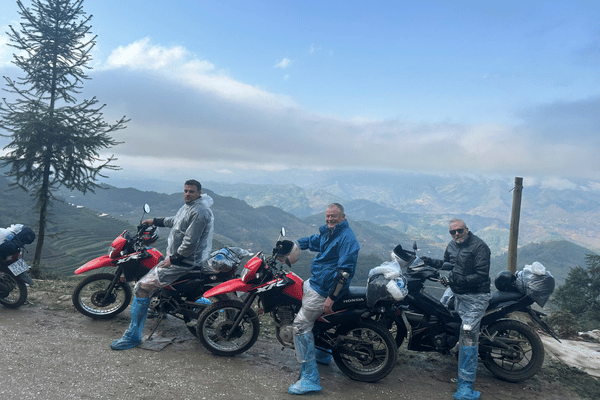
Riding Ma Pi Leng on your own bike is the experience most people have in mind when they picture the Ha Giang Loop. You set the pace, stop when you want, sit with the views for as long as you like.
This option works well if:
Renting a motorbike in Ha Giang City is straightforward. Loop Trails offers motorbike rentals from Ha Giang City — semi-automatics for newer riders, manual bikes for those with more experience. If you want to know what’s available and what condition the bikes are in, [reach out before you arrive].
Be realistic: If you’ve never ridden a motorbike on a mountain road, Ma Pi Leng Pass is not where you want to figure it out. The scenery is spectacular, but the road demands your attention.
Learn more: Ha Giang Loop Easy Rider
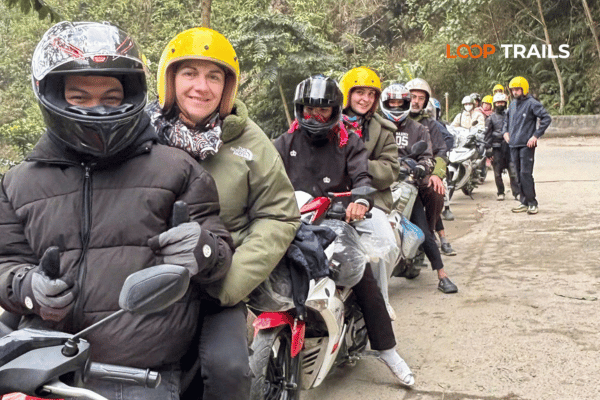
An Easy Rider tour means you sit on the back of a motorbike driven by a local guide. Your guide handles the riding; you handle the looking around.
This is, genuinely, one of the best ways to experience Ma Pi Leng Pass — especially if you want to absorb the scenery without managing the road at the same time. Your guide knows every viewpoint, every pullover spot, every local tea stop. You get the full Ha Giang Loop experience without the riding pressure.
This option works well if:
Loop Trails runs small-group Easy Rider tours on the Ha Giang Loop, with experienced local guides who know the pass well. See the [Ha Giang Easy Rider tour page] for current itineraries and pricing.
Learn more: Ha Giang Loop by Jeep for Families & Groups
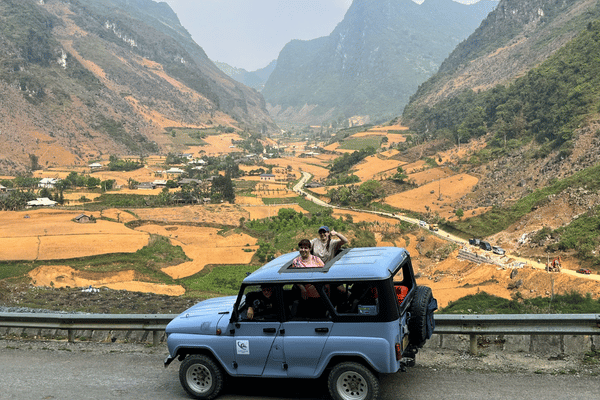
A private jeep gives you comfort, protection from weather, and the ability to do Ma Pi Leng Pass regardless of your motorbike experience or fitness. It’s increasingly popular with couples, small families, and travellers who want the scenery without the exposure.
You stop at all the same viewpoints — you just travel between them in a vehicle rather than on two wheels.
This option works well if:
Loop Trails runs jeep tours on the Ha Giang Loop and combined Ha Giang–Cao Bang routes. [See the jeep tour options here.]
| Self-Drive | Easy Rider | Jeep Tour | |
|---|---|---|---|
| Prior riding experience needed | Yes | No | No |
| Best for | Independent riders | Solo travellers, beginners | Couples, groups, comfort seekers |
| Views from the road | Full exposure | Full exposure | Good (from windows/stops) |
| Flexibility | Highest | High | High |
| Weather sensitivity | High | High | Low |
| Guides included | No | Yes | Yes (driver + optional guide) |
If you’re still unsure, send us a message on WhatsApp before you book. We’ll give you an honest recommendation based on your experience level and travel style — no upselling.
Learn more: Ha Giang Packing List
A few things that are genuinely worth knowing:
Slow down on the bends. Most incidents on Ma Pi Leng happen from riders taking the hairpins too fast, not from the road itself. The correct speed for the tight bends is slower than you think.
Watch for oncoming traffic. Local trucks and tour vehicles use the road too. On blind bends, stay to the right side of your lane and be prepared to stop.
Don’t stop on the road. If you want to take photos or look at the view, find a pullover spot. Stopping mid-lane, especially on a bend, is dangerous for you and everyone behind you.
Fuel up before you leave Dong Van. There are no petrol stations on the pass itself. Fill up in Dong Van before departing.
Check your brakes before the descent. If you’re self-driving, make sure your brakes are in good condition. The descent toward Meo Vac is long and steep in sections.
Gear up. A helmet is non-negotiable. Gloves, a jacket, and something warm for the morning are also worth having — even in warmer months, the altitude brings wind chill.
Don’t push it in bad weather. If you arrive at the start of the pass and conditions look genuinely bad — heavy rain, mist so thick you can’t see the bends ahead, or roads that look slick — wait. An hour’s delay is worth it.
Learn more: Tu San Canyon & Nho Que River Boat Trip
Ma Pi Leng Pass sits in the middle of what is arguably the most scenically dense area of northern Vietnam. If you’re doing the Ha Giang Loop, you’ll naturally be passing through or near most of these:
Dong Van Old Quarter: The historic centre of Dong Van district, with traditional stone houses, local markets, and a very particular frontier-town atmosphere. Worth an evening and a morning. [Read the Dong Van guide →]
Dong Van Karst Plateau Geopark: The wider UNESCO-recognised geopark that encompasses Ma Pi Leng and the surrounding plateau. The geology here is ancient — some of the exposed rock formations date back hundreds of millions of years.
Meo Vac Sunday Market: One of the most authentic ethnic minority markets in northern Vietnam. Hmong, Dao, and other groups come down from the mountains to trade. Best visited early morning.
Nho Que River Boat Trip: As mentioned — seeing the gorge from the river level is a completely different experience from the road above. Boats operate from the Meo Vac side.
Lung Cu Flag Tower: Vietnam’s northernmost point, about 24 km north of Dong Van. Worth the ride up if you’re interested in the geography and significance.
Du Gia Waterfall: On the return route from the loop toward Ha Giang City, Du Gia is a good rest stop with a waterfall and swimming access. [Read the Du Gia guide →]
If you’re extending your trip, the Cao Bang Loop — including Ban Gioc Waterfall and Pac Bo — can be combined with Ha Giang into a longer northern Vietnam itinerary. [See Ha Giang + Cao Bang combined tour →]
Learn more: Explore just the Cao Bang Loop
Genuinely, yes. Ma Pi Leng Pass is not overhyped — if anything, photos undersell it, because they can’t capture the scale.
The gorge is deep in a way that you feel physically. The road is narrow in a way that sharpens your attention. And the river below has a colour that doesn’t look real from that height.
It’s also the kind of place that affects people differently. Some riders describe it as the best stretch of road they’ve ever ridden. Others are mostly relieved when they’re through it. Both reactions are legitimate — the exposure is real, and not everyone finds altitude and drop-offs comfortable.
What matters is that you approach it prepared: the right transport option for your experience level, the right time of year, the right gear, and the right expectations. Ma Pi Leng Pass isn’t a casual scenic drive. It’s the kind of road that becomes a story you tell for years.
If you’re building your Ha Giang Loop itinerary and want to make sure you don’t miss anything — or you’re trying to decide between self-drive, Easy Rider, or jeep — [get in touch with the Loop Trails team]. We’ll help you put together something that fits.
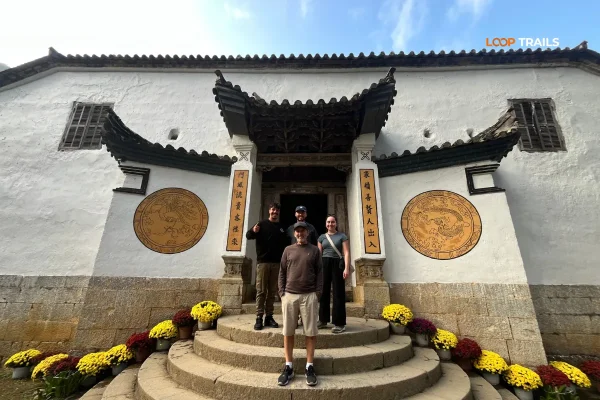
Learn more: Hmong’s King Vuong Palace
It depends on your experience. The road is paved but narrow, with steep drops and tight bends. Riders with mountain road experience generally handle it comfortably. Complete beginners should seriously consider an Easy Rider tour or jeep instead.
The road itself is free to ride. The Ma Pi Leng Skywalk viewing platform charges a separate entry fee. Amounts can change — check locally on arrival.
Allow 2–3 hours including stops at viewpoints. If you rush it, you can do it in under an hour — but you’d be wasting the whole point.
Technically yes — you could hire a car or motorbike from Ha Giang City, ride to Dong Van, cross the pass to Meo Vac and return — but this takes multiple days and still covers most of the loop. It makes more sense to just do the full loop.
October and November for the buckwheat flowers and best light. March and April for spring colours and fewer crowds. Avoid peak rainy season (June–August) if possible.
Yes — from several points on the pass, you can see the river clearly in the gorge below. The boat trip on the Nho Que (accessible from Meo Vac) lets you see it from below as well.
Licence and documentation requirements for foreign riders in Vietnam are subject to change and local enforcement varies. Check the current rules before hiring a bike — don’t rely on outdated forum advice.
The Ha Giang Loop is the full multi-day motorbike circuit through Ha Giang province. Ma Pi Leng Pass is one section of that loop — about 20 km of the most dramatic road on the entire route.
Yes. A jeep or suitable 4WD can handle the pass. Standard sedans are not recommended due to the road width and gradients. Loop Trails runs jeep tours that include Ma Pi Leng as part of the route.
The skywalk is a permanent, engineered structure. It’s as safe as any similar attraction. If you have a fear of heights, the transparent floor sections will feel intense — but the structure itself is not the risk.
Not on the pass itself. Dong Van and Meo Vac both have guesthouses and restaurants. Stock up on snacks and water before riding, as facilities on the pass are limited to a small roadside stall at the main viewpoint.
If you have limited motorbike experience or you want local context and company, yes. An Easy Rider guide makes the whole day easier and more interesting. If you’re an experienced rider who prefers solo travel, self-drive works — but rent from a reputable operator and inspect the bike properly.
Contact information for Loop Trails
Website: Loop Trails Official Website
Email: looptrailshostel@gmail.com
Hotline & WhatSapp:
+84862379288
+84938988593
Social Media:
Facebook: Loop Trails Tours Ha Giang
Instagram: Loop Trails Tours Ha Giang
TikTok: Loop Trails
Office Address: 48 Nguyen Du, Ha Giang 1, Tuyen Quang
Address: 48 Nguyen Du, Ha Giang 1, Tuyen Quang

Facebook X Reddit Table of Contents Learn more: Ha Giang Loop Tours Stand on the road between Trung Khanh and Phục Hòa
Facebook X Reddit Table of Contents Learn more: Ha Giang Loop Tours You’re traveling with three friends. Or maybe it’s four of