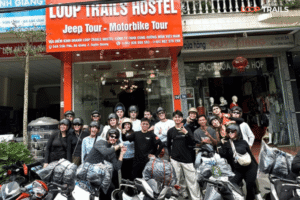


Thúy Kiều (Grace) is a travel blogger and content contributor for Loop Trails Tours Ha Giang. She holds a bachelor’s degree in Sustainable Tourism from Vietnam National University, Hanoi, and has a strong passion for exploring and promoting responsible travel experiences in Vietnam’s northern highlands.
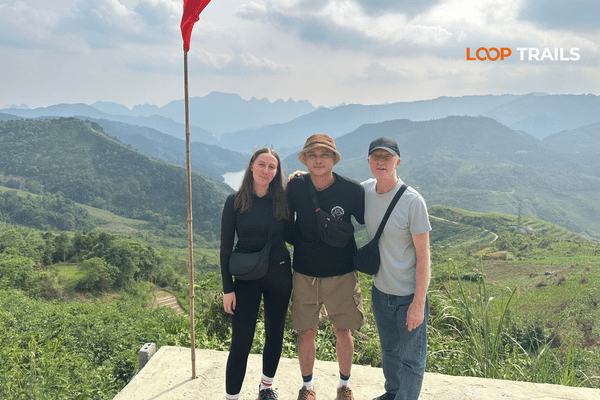
Learn more: Ha Giang Loop Tours
I’ve watched a lot of travelers step off the night bus in Ha Giang City looking slightly broken, slightly thrilled, and entirely unsure what they’ve signed up for. That’s about right. Ha Giang isn’t a polished destination yet, and that’s exactly why people who visit Ha Giang tend to call it the best part of their Vietnam trip.
This guide is for the version of you who’s still on the fence: the one comparing it to Sapa, wondering if the Loop is overhyped, asking whether you really need a guide, trying to figure out if November is too cold or July is too wet. I’ll walk you through everything I’d tell a friend who messaged me at 1 a.m. asking, “okay, talk me through this.” No fluff, no glossy travel-magazine voice. Just what works.
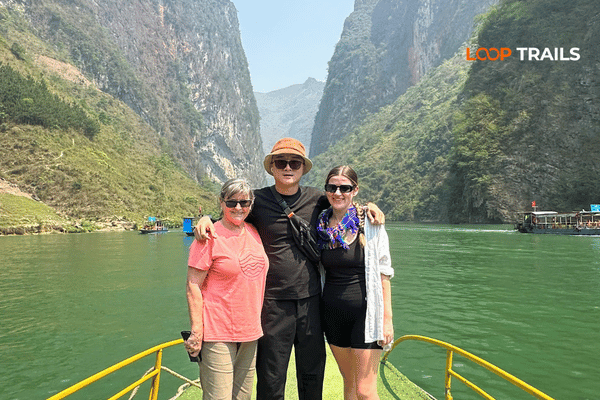
Learn more: Ha Giang Loop 2 Days 1 Night
Ha Giang sits in the far north of Vietnam, pushed right up against the Chinese border. It’s mountainous, sparsely populated, mostly inhabited by ethnic minority communities (Hmong, Tay, Dao, Lo Lo, and others), and until fairly recently it was off the standard backpacker map.
What makes it different from Sapa is honest distance from mass tourism. Sapa got its cable car, its luxury hotels, its bachelorette weekends. Ha Giang still has more livestock on the road than tour buses. You’ll ride past kids walking home from school in indigo Hmong jackets, women carrying hay bundles bigger than themselves, and viewpoints where you can sit for an hour and only hear wind.
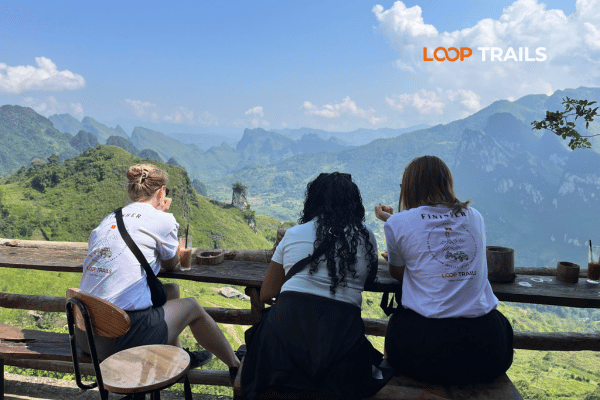
The scenery is the obvious draw. Limestone karst peaks pile on top of each other for hundreds of kilometers. The Ma Pi Leng Pass section, where the road clings to a cliff above the Nho Que River, is genuinely one of the most dramatic motorbike routes in Southeast Asia. But the reason people stay an extra day, or come back, isn’t the scenery. It’s the texture of the trip: cold beers in a homestay courtyard, rice wine you didn’t ask for but can’t refuse politely, learning your guide’s name is Tuan and that he has three kids and a wicked sense of humor.
If your version of travel is “see things, post things, leave,” Ha Giang will frustrate you. If you want a few days where the days feel long and you actually remember what you ate, this is the trip.
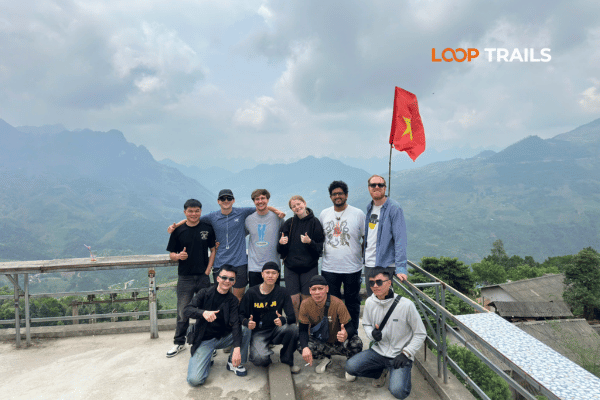
Learn more: Ha Giang Loop 3 Days 2 Nights
Ha Giang is a province, and Ha Giang City is its capital. Most travelers use “Ha Giang” loosely to mean “the Loop,” which is a roughly 350 kilometer circuit through the mountains north of Ha Giang City. The Loop usually passes through Quan Ba, Yen Minh, Dong Van, Meo Vac, and Du Gia before circling back.
Hanoi to Ha Giang City is around 300 km by road. There’s no airport in Ha Giang and no train. You arrive by bus or van, and you start the Loop from Ha Giang City itself. That detail matters because the bus ride sets your timeline: it’s an overnight or a long day either direction, which is why most itineraries are built around 3 or 4 nights minimum.
Learn more: Ha Giang Loop 4 Days 3 Nights
Ha Giang has real seasons, which is something travelers coming up from Saigon or beach Vietnam sometimes forget. Mountain weather flips fast, and a sunny morning at 9 a.m. can be a fog wall by 11. Here’s how the year shakes out.
The most photogenic stretch for many travelers. March brings flowering plum and pear trees, and by April the rice terraces are filling with water (the reflective stage), which is the look people have in mind when they imagine Vietnamese mountains. Temperatures are mild, rain is occasional rather than constant. Roads are usually in good shape after the dry winter.
Green, wet, lush, occasionally dangerous. The rice terraces are deep emerald and the rivers run high, but this is also rainy season, with real risk of landslides on mountain roads. If you visit Ha Giang in summer, build buffer days into your itinerary because road closures happen, and don’t ride hours through heavy rain just to keep to a schedule. Mornings are often clear; afternoons get moody.
The classic window. September and October bring golden rice harvest, which is the “yellow terraces” you’ve seen on Instagram. November is cooler, drier, with crisp visibility and beautiful light. This is peak season for international travelers, and prices and bookings reflect that. If you want autumn in Ha Giang, plan a few weeks ahead.
Cold. Sometimes very cold. January temperatures in Dong Van can drop to single digits Celsius, and frost or even rare snow happens at the highest passes. The terraces are bare and brown, but the mountains are clear and the skies are sharp. You’ll need real layers, not just a hoodie. The advantage: fewer travelers, quiet homestays, slower mood. The trade-off: riding all day in the cold is genuinely tiring.
A clean rule of thumb: if you want comfort, go April or October. If you want green and dramatic, go September. If you want quiet, go winter and bring proper jackets.
Quick CTA: Already know your dates? Skip the planning headache and check our Ha Giang Loop Tours for departures that match your timing. Small groups, set itineraries, real local guides.

Learn more: Ha Giang Loop Private Car from Hanoi
Most travelers come up from Hanoi. You have a few options, and the right one depends on how much sleep you care about and how much you’re willing to spend.
Sleeper bus. The default. Buses leave Hanoi (usually from My Dinh bus station, though some operators run from the Old Quarter) in the evening and arrive in Ha Giang City early morning. It’s cheap, it works, and it’s how 80% of backpackers do it. Sleep quality varies. If you’re tall, the upper bunks are tight. Book a day or two ahead in peak season.
Limousine van. A nicer option that’s gaining popularity. Smaller van with reclining individual seats, faster, generally more comfortable. Costs more than the sleeper bus but less than a private car. Several operators run morning and afternoon departures.
Private car. Most expensive, fastest, most flexible. Worth it if you’re a small group splitting the cost or you simply hate buses. About 6 to 7 hours door to door depending on traffic.
Train + bus combo. There’s no train directly to Ha Giang, but some travelers take the night train to Lao Cai (the Sapa train) and then connect, which is overcomplicated for most itineraries. Skip this unless you have a specific reason.
If you’re already on a tour, your operator usually handles the Hanoi to Ha Giang transport as part of the package. With Loop Trails, both the bus and the limousine van are options, and we’ll book it for you so you don’t have to decode the local bus station.
Learn more: Ha Giang Cao Bang 5 Days 4 Nights
The Loop is the reason most international travelers visit Ha Giang. It’s not a single official route, it’s a general circuit through the most scenic parts of the province, and the exact path depends on your timeline.
3 days Loop is the minimum to see the highlights. It’s tight. You’ll ride 4 to 6 hours per day with photo stops, sleep in Yen Minh or Dong Van the first night and Du Gia or Ha Giang City the last. Doable, but it can feel rushed if you want to actually sit at viewpoints rather than glance and roll on.
4 days Loop is the sweet spot for most travelers. You get a slower morning here and there, time for the Nho Que boat ride, a real afternoon in Dong Van Old Quarter, and a chance to swim at Du Gia waterfall without sprinting back to your bike. This is the itinerary I’d recommend to a friend.
5+ day Loop opens up side routes: the road to Lung Cu Flag Tower, the Du Gia detour, slower stops at Hmong villages, an extra night in Meo Vac. If you’re a photographer, a slow traveler, or you simply hate rushing, take the extra days.
A standard 4-day Loop usually looks something like this:
| Day | Route | Approx. distance |
|---|---|---|
| 1 | Ha Giang City → Quan Ba → Yen Minh | 100–120 km |
| 2 | Yen Minh → Dong Van → Lung Cu (optional) → Dong Van | 80–100 km |
| 3 | Dong Van → Ma Pi Leng Pass → Meo Vac → Du Gia | 130 km |
| 4 | Du Gia → Ha Giang City | 70–90 km |
Distances are short by highway standards but slow by mountain standards. Average riding speed is genuinely 30 to 40 km/h on a lot of this road, with photo stops doubling that time. Treat distance numbers loosely.
Learn more: Ha Giang Loop Easy Rider
This is the decision that shapes your whole trip. Take it seriously.
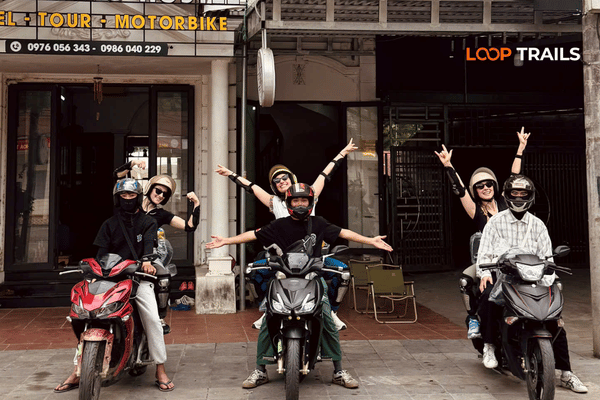
A local guide drives the motorbike; you sit on the back. You don’t need any riding experience, you don’t deal with road conditions, you just hold on, look around, and enjoy. The guide carries your daypack on the bike, handles fuel stops, navigates, and translates at homestays.
This is the most popular option for international travelers, and honestly the one I’d recommend to most people who haven’t ridden a manual motorbike on real mountain roads. Ha Giang’s roads are not Bali’s. There are gravel patches, hairpins, livestock, fog, and trucks that don’t care about your line. A good Easy Rider guide makes the difference between “best trip of my life” and “I crashed on day two.”
Pick this if: you don’t ride, you ride only automatic scooters in cities, you’re traveling solo and want a built-in human, or you simply want to look at scenery instead of the road.
Learn more: Ha Giang Motorbike Rental
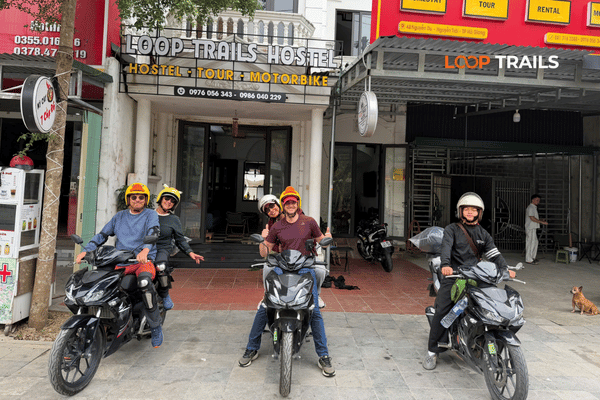
You rent a motorbike and ride yourself, usually in a small convoy with a lead guide. You’re responsible for the bike, you make all the riding decisions, and you carry your own bag (or a sherpa bike carries it for the group).
Pick this if: you have real motorbike experience, ideally on manual or semi-auto bikes in mountainous terrain. Not Ho Chi Minh City scooter weaving, but actual bikes with gears on twisty roads with elevation changes.
A few honest things about self-drive on the Loop:
If self-drive is your plan, our Motorbike Rental in Ha Giang has properly maintained bikes with current paperwork, and we’ll talk you through whether it’s the right call for your skill level. We’d rather lose a rental than put someone on a bike that’s too much for them.
Learn more: Ha Giang Loop by Jeep for Families & Groups
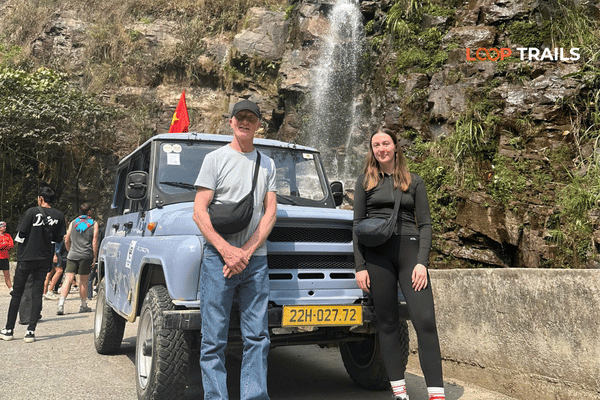
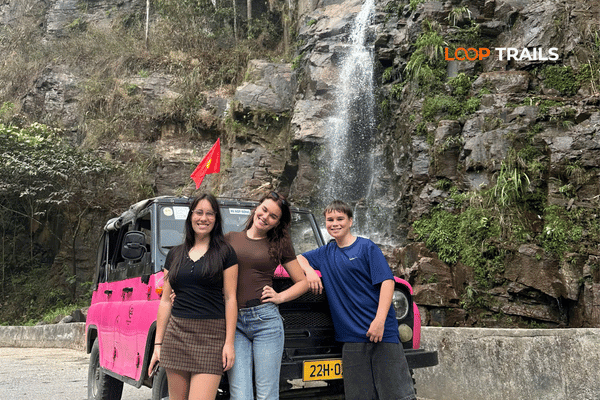
You ride in a 4×4 with a driver. Costs more, much warmer in winter, much drier in rain, much easier on your back if you’re traveling with kids or older parents. You lose some of the wind-in-your-face feeling, but you keep all of the scenery, and you can roll the window down. Photographers sometimes prefer this because they can shoot from the moving vehicle without worrying about a helmet.
Pick this if: you’re traveling with family, you have any back or knee issues, the weather forecast is grim, or you simply don’t want to be on a motorbike for 4 days straight.
Soft CTA: If you’re still weighing options, our team can help you pick. Send us a WhatsApp message with your dates and group size and we’ll lay out which tour fits best, no hard sell.
Learn more: Ha Giang Cao Bang Ba Be Lake 6 Days 5 Nights
I’ll be careful here because prices shift, exchange rates move, and tour operators all package things slightly differently. So instead of throwing numbers at you, here’s the structure of what you’re paying for, and what to ask before you book.
A typical Ha Giang Loop tour package usually covers:
What’s usually not covered:
Get a written breakdown before you book. If an operator can’t or won’t itemize what’s included, that’s a sign. With Loop Trails, you get the breakdown up front, and what we quote is what you pay.
For self-drive renters, the cost is just bike rental + fuel + your own accommodation and meals. It’s the cheapest way to do the Loop if you’re already a confident rider.
Learn more: Ha Giang Packing list
Don’t overpack. You’re going to spend most of the trip in three outfits and a jacket. But there are a few things travelers consistently regret leaving behind.
The non-negotiables:
Smart additions:
Skip:
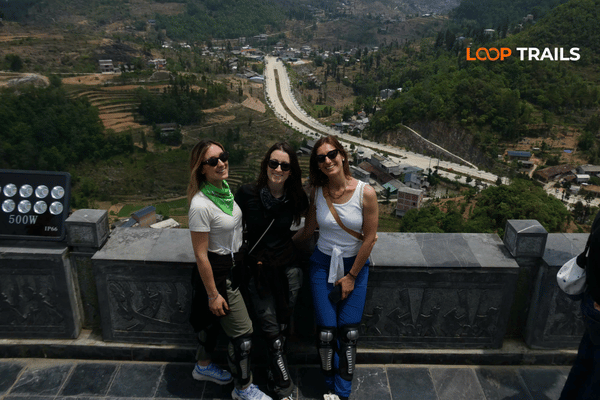
If you’re on a tour, check what gear is provided. We supply rain gear, helmets, gloves, and knee pads, so you don’t need to bring your own.
Learn more: Lung Cu Flag Tower Guide
The Loop itself is the main event, but there are specific stops worth planning around. Here are the ones I’d hate for you to miss.
The signature view of the entire province. The road climbs above the Nho Que River, and there’s a viewpoint near a stone marker where you can pull over and just sit. Go in the morning if you can; afternoon haze can soften the view. The pass connects Dong Van to Meo Vac and is part of every standard Loop itinerary.
A small boat takes you down the Nho Que River through the Tu San Canyon, the deepest canyon in Vietnam (and one of the deepest in Southeast Asia). The boat ride lasts about 30 to 40 minutes and runs from a small pier reached via a steep descent off the main road. It’s a separate fee, often not included in tour packages, but worth it. The scale of the cliffs from the water is something you can’t get from above.
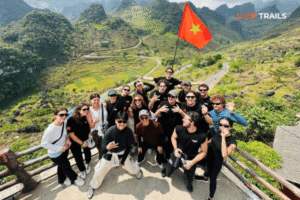
The northernmost point of Vietnam, more or less. A flag tower on a hill near the Chinese border, with stairs leading up to a viewing platform and a giant Vietnamese flag visible from kilometers away. It’s a detour off the main Loop and adds time, but for many travelers it’s symbolically meaningful. The drive there is also stunning.
A cluster of stone houses around 100 to 200 years old, once a trading post for Hmong, Tay, and Han Chinese merchants. Walk it in the late afternoon, grab a coffee at one of the cafes overlooking the square, and stay for evening when locals come out. Sunday morning is the Dong Van market, which is its own experience: livestock for sale, women in full traditional dress, food stalls of dishes you haven’t seen before.
Learn more: Du Gia Waterfall
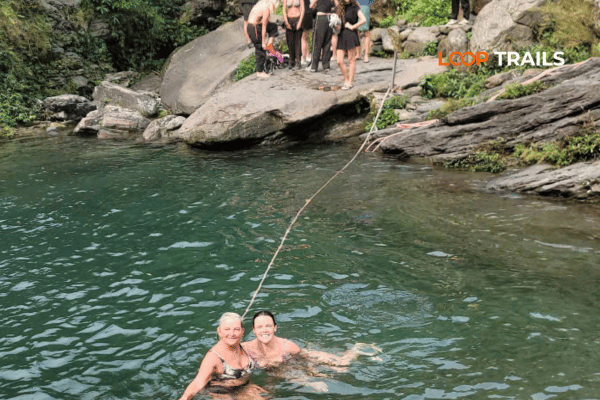
Du Gia is a quiet valley in a Tay village, increasingly on the Loop circuit because it offers something the upper passes don’t: a swim in a clear, cold waterfall pool surrounded by rice fields. The drive in is a fun winding section and the homestays are some of the friendliest on the Loop.
Beyond Dong Van’s Sunday market, Meo Vac Sunday market is also major. Markets in Ha Giang are functional, not staged for tourists, which is part of the appeal. You’ll see local produce, livestock trading, hand-stitched fabric, and breakfast pho being served at 6 a.m. to traders who rode in at dawn.
Image suggestion: Wide shot of the Sunday market at Meo Vac, women in colorful Hmong dress browsing stalls, with the misty hills of Ha Giang in the background.
Learn more: Ha Giang Homestay Guide
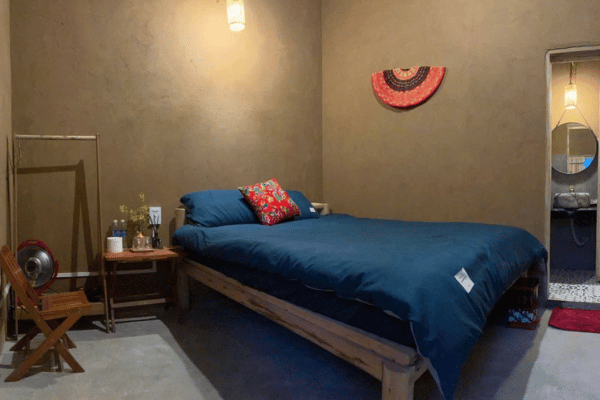
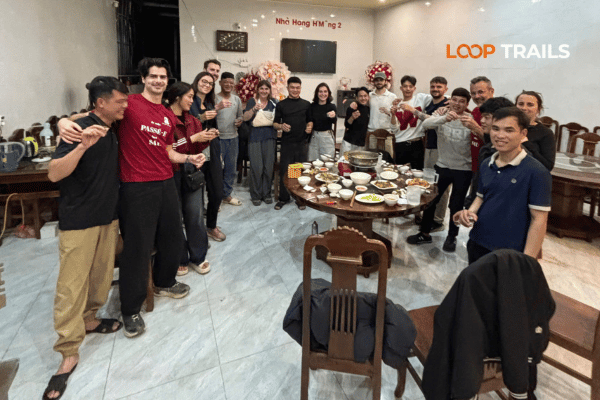
Almost every Loop tour stays in homestays, which in Ha Giang means a room (sometimes private, sometimes a shared dorm-style sleeping platform) inside a local family’s home or guesthouse. This is part of the experience. You’ll eat dinner family-style, often share rice wine with the host, and sleep on a mattress or floor mat under a thick blanket.
Standards vary. The newer homestays in Yen Minh, Dong Van, and Du Gia have private rooms with hot showers and proper bathrooms. The more traditional ones can be more basic. If hot water and a private room matter to you, ask before you book; any honest operator will tell you exactly what you’re getting.
Hotels exist in Ha Giang City, Yen Minh, and Dong Van for travelers who prefer them. They’re fine but they’re not the highlight; you don’t come to Ha Giang for hotels.
Learn more: Ha Giang Food guide
Ha Giang food is northern Vietnamese with strong ethnic minority influence. A few things to try:
If you have dietary restrictions (vegetarian, gluten-free, allergies), tell your operator before you book. Mountain homestays cook what they have, but with notice they can absolutely accommodate. Surprise vegetarians at dinner is harder.
Learn more: Ha Giang Loop Mistake to Avoid
This section isn’t fun but it’s the most important part of the post.
Helmet, every kilometer. Whether you’re on the back or driving, real helmet, properly buckled. The cheap plastic ones some street rentals hand out aren’t enough.
Don’t ride in heavy rain or fog. The Loop is beautiful, the schedule is not worth your life. If conditions turn, stop. Tea house, homestay, anything. Most accidents on the Loop happen because people push through bad weather.
Be honest about your skill. If you’ve ridden a scooter in Hanoi for three days and you’re considering self-drive on the Loop, that’s not enough. Take an Easy Rider or a Jeep instead. You can always rent a scooter near your homestay for short rides.
Insurance. Most travel insurance does not automatically cover motorbike accidents in Vietnam, especially without a valid local-recognized license. Read your policy. If you’re not covered, take an Easy Rider.
Permits and paperwork. The Ha Giang tourist permit, which used to be required to enter parts of the province, has changed in recent years. Rules can shift again. The simple version: if you book through a registered operator, they handle whatever is currently required. If you’re going independently, check the latest updates with local authorities or a local agency before you ride.
Respect local communities. Don’t photograph kids without permission. Don’t hand out candy or money to children at viewpoints (well-meaning but encourages begging, and is something local communities often ask travelers not to do). Ask before entering villages off the main road.
Learn more: Ha Giang Loop Mistake to Avoid
After years of running tours, here are the patterns:
Learn more: Cao Bang Loop 3 Days best kept secret
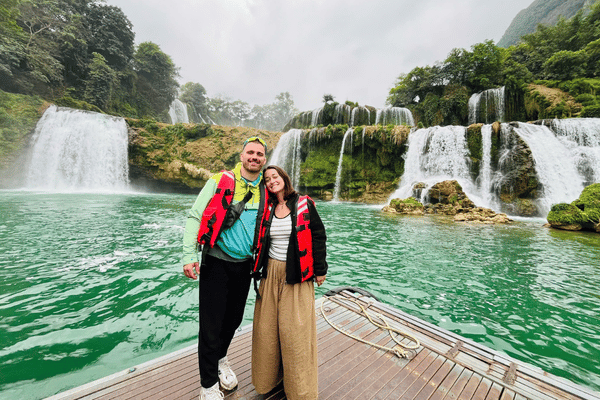
If you’ve got the time, Ha Giang and Cao Bang together are exceptional. Cao Bang is the next province east, equally mountainous, equally photogenic, with a different character: more lakes, more limestone, Ban Gioc Waterfall on the Chinese border, and Phia Oac mountain for cool-weather forest scenery.
You can ride from Ha Giang to Cao Bang directly through Bao Lac, which is one of the most beautiful and underrated stretches of road in northern Vietnam. The combined trip usually runs 7 to 10 days depending on pace.
We package this as a Ha Giang to Cao Bang combine tour, and it’s increasingly popular with travelers who want fewer destinations, more depth. If you’re already flying halfway around the world, the extra days are worth it.
Learn more: Ha Giang Loop with Kids
Quick decision guide based on the most common travelers I see:
If none of these match exactly, that’s normal. Tell us your situation and we’ll build something that fits.
Learn more: Ha Giang Loop Photography Guide
We’re a small operator based in Ha Giang. Our guides are local, our bikes are maintained on a fixed schedule, our group sizes are kept small on purpose, and our pricing is itemized so you know what you’re paying for.
To book:
If you’re an experienced rider who just needs a bike, head to Motorbike Rental in Ha Giang and we’ll get you sorted with a properly maintained machine and the right paperwork. Same goes if you want to ride further into Cao Bang or beyond; we can rent for longer trips.
The best version of your Vietnam trip might be the part you almost skipped because the bus from Hanoi sounded long. Don’t skip it. Pack the rain jacket, ride the Loop, and come back with a story that’s actually yours.
Yes, Ha Giang is generally safe for travelers in terms of crime. The main risk is road safety, particularly motorbike accidents on mountain roads. Choose your tour or rental carefully, wear proper gear, and don’t ride in poor weather.
The Ha Giang tourist permit requirement has changed over the years. If you book with a registered operator, they handle whatever is currently required. If you’re going independently, check the latest updates locally before traveling.
Three days is the minimum for the Loop, four days is the sweet spot, and five or more lets you slow down and add side routes. Add at least one travel day on either end from Hanoi.
Yes. You can ride pillion with an Easy Rider guide, or you can take a Jeep or private car tour. You get the same scenery either way.
The safe answer is yes: bring your home license plus an International Driving Permit (IDP) issued under the 1968 Vienna Convention. Rules can change, so check the latest updates before relying on this.
September and October for golden rice terraces, April and May for green and reflective rice fields, November for clear skies and crisp light. Avoid heavy rainy season in July and August if you can.
Different trips. Sapa is more developed, easier to access, more comfortable. Ha Giang is wilder, less touristy, more about the road than the destination. If you’ve already been to Sapa, Ha Giang is the natural next step.
In December and January, temperatures in higher towns like Dong Van can drop into single digits Celsius and occasionally near freezing. Pack real layers in winter.
No. The drive each way is too long. The minimum realistic trip from Hanoi is 4 days total (1 night bus up, 2 nights in Ha Giang, 1 night bus back).
Honestly, no. It’s not the right place to learn. If you’re new to manual or semi-automatic bikes on mountain roads, take an Easy Rider tour. You’ll have more fun and arrive home in one piece.
Most newer homestays do. Some traditional ones don’t. If hot showers and Wi-Fi matter to you, ask your operator before booking and they’ll match you with the right places.
Yes. Cao Bang is the most natural pairing because it’s the next province east with similar mountain scenery. You can also continue south to Sapa or back to Hanoi for a flight onward. Combined Ha Giang and Cao Bang tours typically run 7 to 10 days.
Contact information for Loop Trails
Website: Loop Trails Official Website
Email: looptrailshostel@gmail.com
Hotline & WhatSapp:
+84862379288
+84938988593
Social Media:
Facebook: Loop Trails Tours Ha Giang
Instagram: Loop Trails Tours Ha Giang
TikTok: Loop Trails
Office Address: 48 Nguyen Du, Ha Giang 1, Tuyen Quang
Address: 48 Nguyen Du, Ha Giang 1, Tuyen Quang
Facebook X Reddit Table of Contents Learn more: Ha Giang Loop Tours This is the question that sits in almost every Ha
Facebook X Reddit Table of Contents Learn more: Ha Giang Loop Tours Most people drive past the Quan Ba area twice on