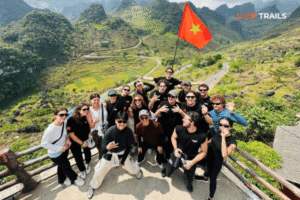


Thúy Kiều (Grace) is a travel blogger and content contributor for Loop Trails Tours Ha Giang. She holds a bachelor’s degree in Sustainable Tourism from Vietnam National University, Hanoi, and has a strong passion for exploring and promoting responsible travel experiences in Vietnam’s northern highlands.
Learn more: Ha Giang Loop Tours
The first time I rode out of Ha Giang City, I was overdressed, slightly nervous, and convinced I’d packed all wrong. Within an hour I’d stopped on a switchback above the Lo River, killed the engine, and just sat there. Vietnam unfolded in green and grey terraces all the way to the Chinese border. That’s the moment most people on this loop have, somewhere in the first 100 kilometers. The rest of the trip is figuring out how to keep finding it.
This guide is written for people actually planning a Ha Giang road trip in 2026, not for Pinterest. I’ll cover what the loop is, what it costs, when to go, how to pick between Easy Rider, self drive, and jeep, plus the boring useful stuff: licenses, paperwork, scams, and what to pack. If you scroll to the FAQ at the bottom, that’s where most readers find their last question.
If you already know you want to ride and just need a tour or a bike, you can skip ahead to Which option is best for you? or jump straight to a Ha Giang Loop tour or motorbike rental.

Learn more: Ha Giang Loop 2 Days 1 Night
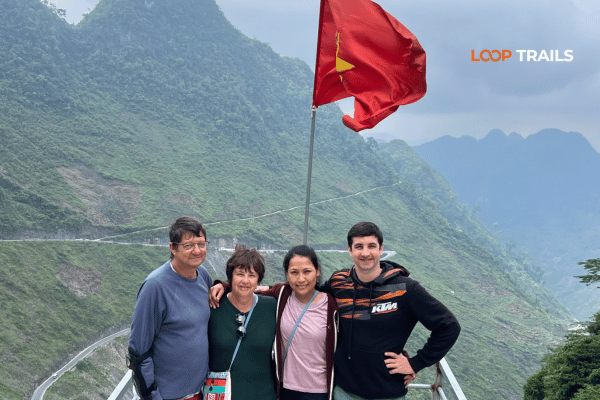
The “Ha Giang Loop” is a roughly circular route through Ha Giang Province, Vietnam’s far north. It starts and ends in Ha Giang City and winds through Quan Ba, Yen Minh, Dong Van, Meo Vac, and (on longer versions) Du Gia. The loop pulls you over high passes including Tham Ma, Ma Pi Leng, and the Heaven Gate at Quan Ba. You’ll cross the Dong Van Karst Plateau Geopark, a UNESCO listed landscape of tower karst and limestone valleys.
Total distance depends on which version you ride. A standard loop sits roughly in the 350 to 400 km range. The long version (with Du Gia) adds another day and an extra detour. Most people ride it on a manual or semi auto motorbike, but jeeps and cars are now common too.
A few things to set straight upfront:
Learn more: Ha Giang Loop 3 Days 2 Nights
Most travelers I meet have already done Sapa, Hoi An, Phu Quoc. They come to Ha Giang because they’ve heard it’s “the real Vietnam,” and that phrase usually annoys me, but here it has a kernel of truth. The mountains are sharper, the villages are smaller, the homestays are closer to family homes than to hotels. You wake up in a wooden stilt house in Du Gia and a grandmother is feeding ducks in the yard. You ride for 40 minutes and don’t see another tourist. Then you crest a pass and find 30 of them taking photos. That’s Ha Giang in 2026: still raw, no longer secret.
People come back because the loop forces you to slow down. You can’t speed through hairpins. You stop because a buffalo is in the road. You stop again because the light hits Ma Pi Leng and your camera battery is begging for it. The trip rewards patience.
Learn more: Ha Giang Loop 4 Days 3 Nights
There’s no perfect month, only seasons with different trade offs. Weather in mountainous northern Vietnam is its own thing, and conditions can change fast. Always check the forecast 48 hours before you start. What follows is a general feel, not a guarantee.
This is one of the most comfortable windows. Temperatures are mild, mornings can still be cool. By April the rice terraces in some valleys start filling with water, which gives you that mirror effect for photos. Skies are often hazy in March, clearer by late April.
Good for: first time visitors, photographers, riders who don’t want extreme heat or cold.
Hot, green, and wet. The rice is in full growth, the waterfalls (including Du Gia) are pumping, and the colors are at peak saturation. The downside is rain. You should expect afternoon storms, slick roads, and the occasional landslide. Riding in heavy rain on a mountain pass is not fun, and it’s not safe if you’re inexperienced. If you’re going in summer, build buffer days into your trip.
Good for: travelers chasing waterfalls and lush scenery who can handle weather.
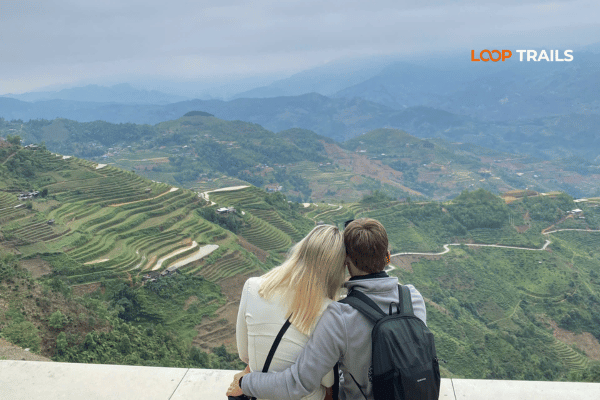
The most popular season for a reason. Late September into early October is rice harvest in many valleys, and the terraces turn gold. The air is cooler, the skies clearer. October and early November also bring buckwheat flower fields around Dong Van, which photograph beautifully.
This is also the most crowded time. Homestays in Du Gia and Dong Van fill up fast. Book at least two to three weeks ahead if you’re traveling in October, and don’t expect to be the only group at a viewpoint.
Good for: photographers, leaf peepers, anyone who can plan in advance.
Cold. Genuinely cold, especially at altitude. Mornings can hover near freezing in Dong Van and Meo Vac, and fog is common on the high passes. On clear days, the light is incredible and crowds thin out. Snow is rare but does happen at the highest points. If you’re coming in winter, layers are non negotiable, and a wet, cold pass is a different kind of riding challenge.
Good for: experienced riders, repeat visitors, and anyone who wants the loop quieter.
Learn more: Ha Giang Cao Bang 5 Days 4 Nights
Short answer: 4. Slightly longer answer: it depends on your priorities, your tolerance for long ride days, and whether you want to add Du Gia.
You can do the standard loop in 3 days. It works. But it’s tight, the days are long, and you skip Du Gia, which most riders agree is one of the best stops. If you’re crunched on time, take the 3 days option, but know what you’re trading.
Four days is what most travelers and tour companies build their itineraries around, and it’s what I recommend. You get a sensible pace, reasonable ride times, time for actual stops at viewpoints, and you can include Du Gia for the swimming hole and the homestay vibe.
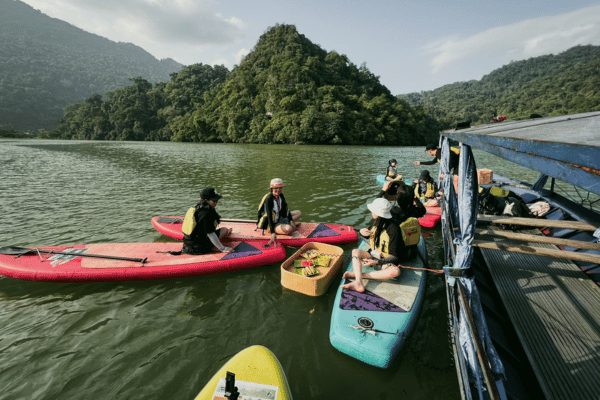
If you have the time, take it. Five or six days lets you stretch out, do a side trip to Lung Cu Flag Tower without rushing, take a boat on the Nho Que River, and not feel like every day is a sprint. Couples and photographers especially benefit from the extra time
Learn more: Ha Giang Motorbike Rental
This is where most travelers get stuck. There are four main ways to do the loop, and the right one depends on your riding experience, your budget, and how much you want to think versus look around.
You ride on the back of a motorbike, behind a local driver. He carries your luggage, navigates, picks the stops, and handles every bit of road logic. You hold a camera, take in the scenery, and don’t worry about anything.
This is the right choice if:
The downside: you give up some independence. You can ask to stop, of course, but the route is decided. For most travelers this is a good trade.
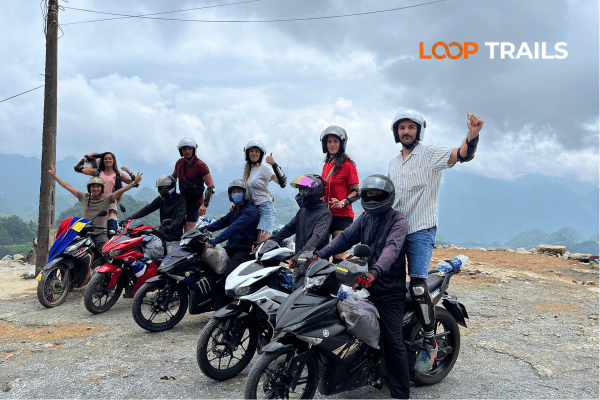
You rent the motorbike, you ride it, you make your own decisions on the road. Most self drive tours come with a lead guide who rides ahead, knows the route, sets the pace, and handles bookings. A “tail” guide often rides at the back to help with mechanical issues or anyone struggling.
This is the right choice if:
Be honest with yourself here. The loop has technical sections, steep grades, blind corners, and the occasional truck taking up most of the road. Self drive isn’t a confidence builder for nervous riders, it’s a multiplier for ones who already have it.
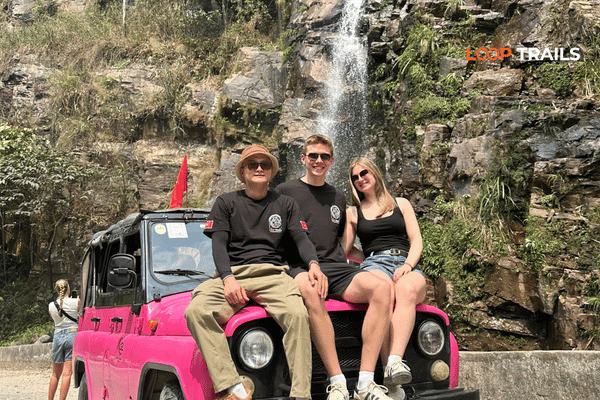
You sit inside a vehicle (usually a 4 to 7 seater jeep or van), driven by a local. Same route as the bike tours, same stops, but you’re behind a windshield. Comfortable, climate controlled, and weather proof.
This is the right choice if:
Jeep tours have grown a lot in popularity. The view is still incredible, but you’re separated from it by glass.
If you have more time (think 7 to 10 days), combining Ha Giang with the Cao Bang Loop is one of the best long format trips you can do in Vietnam. Cao Bang gives you Ban Gioc Waterfall on the Chinese border, the Phia Oac mountain area, and a quieter set of roads with fewer tourists than Ha Giang. Most operators do this as a continuous trip with a transfer day in between. If that sounds like your kind of journey, the Ha Giang and Cao Bang combine tour is built exactly for that.
Quick CTA: Not sure which style fits you? Send a message on WhatsApp with your dates and riding experience, and we’ll send back an honest recommendation, even if that means pointing you toward a different option than the one you came in asking about.
Learn more: Ha Giang Loop by Jeep for Families & Groups
Here’s a cheat sheet:
| Your situation | Best fit |
|---|---|
| Never ridden a motorbike | Easy Rider or jeep |
| Ride at home, comfortable on twisties | Self drive |
| Traveling with parents or kids | Jeep |
| Solo, want photos, want zero stress | Easy Rider |
| Couple, both confident riders | Self drive (one bike each, or two on one) |
| Couple, only one rides | Easy Rider for the non rider, self drive for the other |
| Have 7+ days and want more remote | Ha Giang plus Cao Bang combine |
| Tight schedule, only 3 days | Easy Rider, less to figure out |
If you’re still unsure, default to Easy Rider. It’s the lowest risk choice for the highest scenery payoff. Self drive is more rewarding if you can handle it, but the cost of getting it wrong is real.
Learn more: Ha Giang Cao Bang Ba Be Lake 6 Days 5 Nights
This is roughly what most well run 4 days loops look like. Distances and ride times will vary by group pace and weather, so treat the times as approximate. We don’t quote them as guarantees because they’re not.
You start with bike checks, gear sizing, and a safety briefing in Ha Giang City. The first ride day takes you out through Tam Son and over the Heaven Gate at Quan Ba, with a stop at the Twin Mountains viewpoint. Then you climb through the karst plateau toward Yen Minh.
Highlights: Heaven Gate viewpoint, Quan Ba Twin Mountains, the long pine descent into Yen Minh.
Overnight: small hotel or homestay in or near Yen Minh.
Day two is one of the visual highlights of the trip. You ride the Tham Ma switchbacks, drop into Sung La Valley, and stop at H’mong King Vuong’s old mansion. From there, Pho Bang and Lo Lo Chai sit just off the main route if you want a side trip toward Lung Cu Flag Tower.
Highlights: Tham Ma Pass, Sung La Valley, Vuong family mansion, Lung Cu (optional), Dong Van Old Quarter at dusk.
Overnight: Dong Van.
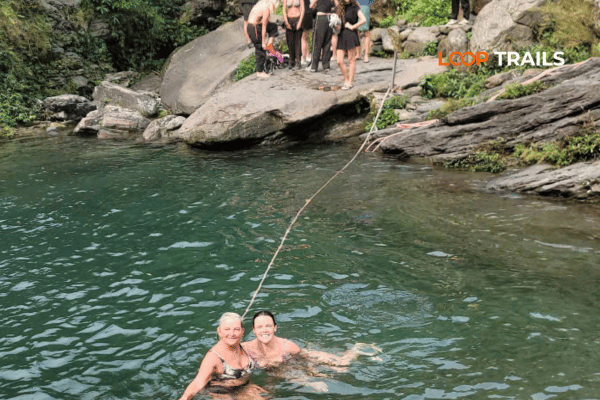
This is the day you came for. You leave Dong Van and ride the Ma Pi Leng Pass, with multiple viewpoints over the Nho Que River canyon. There’s an optional boat trip on the river, which is worth the detour if the weather is right. Then you push on through Meo Vac and over to Du Gia, a smaller village built around a waterfall and a swimming hole.
Highlights: Ma Pi Leng Pass, Skywalk viewpoint, Nho Que River boat, Du Gia waterfall and homestay.
Overnight: Du Gia homestay.
The final ride day winds through smaller valleys and back roads, with fewer “must stop” landmarks but a quieter feel. Most groups arrive in Ha Giang City by mid afternoon, with time to clean up and catch an evening bus or sleeper back to Hanoi.
Highlights: rural valley riding, lunch stop in a small village, return to Ha Giang City.
If you have a 5th day, you can split this differently and add a full day in Du Gia or extend to a side trip.
Learn more: Du Gia Waterfall
Beyond the daily breakdown, here are the spots that show up in almost every traveler’s photo dump:
You won’t see all of this in 3 days. You’ll see most of it in 4. You’ll feel like you actually saw it in 5.

Learn more: Cao Bang Loop 3 Days best kept secret
This is the section most blogs skip, so here’s the honest version.
Road quality. Most of the loop is paved. Quality varies. There are patches of broken asphalt, gravel, ongoing construction zones, and the occasional landslide cleanup. Conditions change every season. Reports from a year ago are out of date. Check recent updates before you commit, and budget a buffer day if you’re going in monsoon.
Traffic. You’ll share the road with trucks, buses, scooters, motorbikes carrying entire families, dogs, chickens, and the occasional water buffalo. Trucks especially can swing wide on blind corners. Ride defensively.
Weather. Fog can roll in fast, especially on Ma Pi Leng and the high passes. If visibility drops, slow down or stop. Don’t push through to make a schedule.
Crashes. They happen. The most common are low speed slides on gravel, drops on hairpins, and collisions caused by riders looking at the view instead of the road. Most of these are avoidable with conservative riding.
Helmets and gear. Wear a real helmet. A flimsy half shell isn’t protection, it’s decoration. If your tour or rental gives you a poor helmet, ask for a better one or bring your own. We provide proper helmets and basic protective gear with our self drive tours and rentals: it’s not negotiable.
Insurance. Many travel insurance policies don’t cover motorbike riding without a valid local license. Read your policy carefully. If you’d rather not deal with the licensing question at all, an Easy Rider or jeep tour sidesteps it.
CTA: If you want a local lead rider on the route who actually knows where the rough patches are this season, our Easy Rider and self drive tours include experienced guides riding with you the entire loop.

Learn more: Loop Trails Tour Ha Giang website
I’m not going to quote specific prices in this post because rates change with season, group size, and inclusions. What I’ll do is break down what your budget actually has to cover, so you can ask smart questions and compare quotes properly.
A Ha Giang road trip generally includes some combination of:
Cheap tours cut corners somewhere. Usually it’s the bike (older, less maintained), the helmet (low quality), the food (less variety), or the guide (less experienced). When you compare prices, ask exactly what’s included and what the bike model is. A dramatically cheaper tour usually isn’t the same product.
Learn more: Motorbike License IDP Guide 2026
This one comes up in every email we get, and the honest answer has nuance.
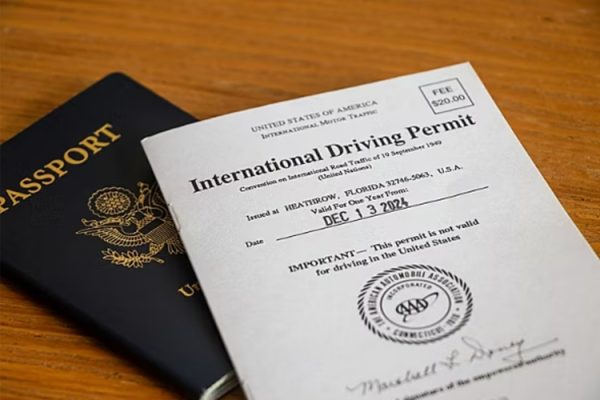
To legally ride a motorbike in Vietnam, you generally need a Vietnamese license or an International Driving Permit (IDP) issued under the 1968 Vienna Convention, with the appropriate motorbike category. Many travelers ride in Vietnam without one. Many tour companies rent to travelers without one. Whether police enforce this on the loop varies, and rules can change. We don’t promote any specific workaround, and we strongly recommend you check the latest official guidance before you ride.
What you can control:
If license and insurance are a worry for you, take it as a signal: book Easy Rider, sit on the back, and let someone else handle the road and the paperwork.

Learn more: Ha Giang Packing list
Pack lighter than you think. You’re carrying everything on a bike or a small jeep, and bigger bags slow everyone down.
Essentials:
Leave behind:
Day pack on the bike, main bag stays with the support vehicle if your tour has one. If you’re self drive without support, pack accordingly.
Learn more: Ha Giang Loop Mistake to Avoid
Ha Giang isn’t scammy, but a few things trip travelers up.
There’s no big scam epidemic. Just normal traveler mistakes amplified by mountain roads.
Learn more: Ha Giang Homestay Guide
You’ll mostly stay in two kinds of places:
Hotels in town centers (Yen Minh, Dong Van, Meo Vac). Functional, clean, hot showers, sometimes air conditioning. Useful when you want a real bed after a long day.
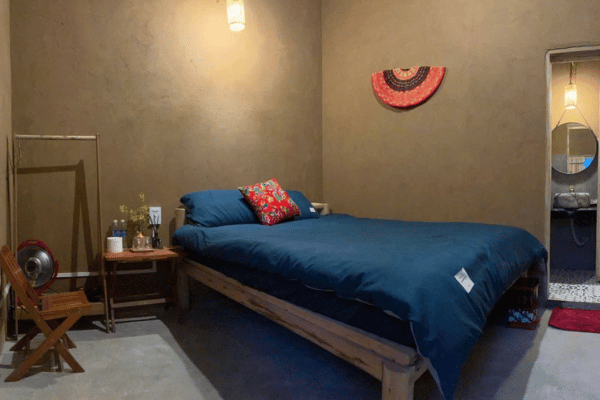
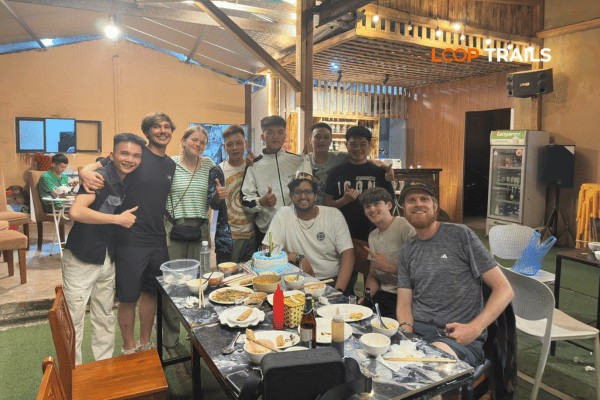
Homestays in villages (Du Gia, Lo Lo Chai, smaller stops). Family run wooden houses, often with a shared dinner of multiple local dishes. The vibe is the point. Don’t expect luxury. Expect community.
If you’re booking your own accommodation in October, plan well ahead. Du Gia in particular fills up fast. If you’re on a tour, the operator handles all of this.
Learn more: Ha Giang Food guide
Local dishes you’ll meet on the loop:
Vegetarians and vegans can eat fine here, but you may need to flag it in advance. Tofu, eggs, and vegetable stir fries are widely available. Tell your tour or homestay early so they can adjust.
Learn more: Ha Giang Limousine Bus from Hanoi
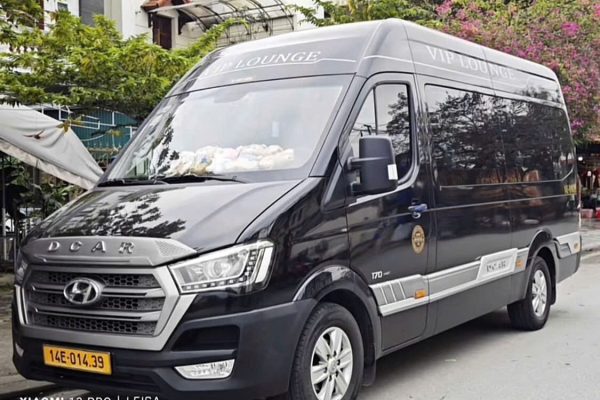
There’s no airport in Ha Giang City, so you’re getting there by road. The standard option is a sleeper bus or van from Hanoi, departing in the evening or early morning. The journey usually takes most of a night or most of a day, depending on departure time and traffic.
Tips:
If you’re combining the trip with the Cao Bang Loop, the transfer logistics are different and best handled through one operator who covers both regions.
Learn more: Ha Giang Loop Easy Rider
Ha Giang in 2026 isn’t the loop the early backpacker blogs described. It’s not undiscovered. It’s not empty. There are a lot of motorbikes, a lot of jeeps, and a lot of homestays now built specifically for foreigners. That’s the trade off of any place that gets famous: you get more comfort, you lose some of the rawness.
What hasn’t changed is the geography. Ma Pi Leng is still Ma Pi Leng. The Nho Que still cuts through the canyon. The H’mong markets still happen on schedule. The pines on the Yen Minh descent still smell exactly the same after a rain. If you ride the loop with the right expectations, you’ll come home thinking about it for months.
If you want company on the road, a maintained bike, an experienced guide, and someone who handles the booking puzzle for you, that’s what we do. Have a look at our Ha Giang Loop tours, browse motorbike rental options in Ha Giang, or message us directly on WhatsApp with your dates. We’ll send back an honest answer, even if it’s “you should ride next month instead, the weather will be better.”
Final CTA: Ready to lock in your dates? Book a Ha Giang Loop tour or grab a rental bike and ride with our guide. If you’re still narrowing it down, send a WhatsApp message with how many days you have and your riding experience. We’ll match you with the right option.
Learn more: Ha Giang Loop Photography Guide
It has real risks: mountain roads, weather, and traffic. Most accidents happen to inexperienced riders going too fast or distracted. With a proper helmet, conservative riding, and a guide who knows the route, the loop is doable for most travelers. If you’ve never ridden a motorbike, take an Easy Rider or jeep tour rather than self drive.
Many people do, but rules can change and travel insurance often won’t cover you without one. To stay on the safe side, ride pillion on an Easy Rider tour or take a jeep. Always check the latest official guidance before riding.
Most travelers do it in 4 days. You can compress it to 3 (tight) or stretch it to 5 or 6 (more relaxed and includes Du Gia). Combining with Cao Bang takes 7 to 10 days total.
Late September to early November for autumn rice and buckwheat flowers. March to May for milder weather and spring greens. Summer is lush but rainy. Winter is cold but quiet.
They’re different trips. Sapa is hill tribe trekking with a town center and easy access. Ha Giang is a multi day road trip with sharper landscapes and more remote villages. Many travelers do both.
Easy Rider if you don’t ride at home, are nervous on twisties, or want zero stress. Self drive if you ride confidently and want the full experience. When in doubt, default to Easy Rider.
In October and during big holidays, yes, several weeks ahead. Off season you can sometimes book a few days out. Bus seats from Hanoi sell out faster than tours.
Ha Giang has higher passes and more dramatic karst scenery, including Ma Pi Leng. Cao Bang is quieter, with Ban Gioc Waterfall and the Phia Oac area. Combining the two gives you a fuller picture of northern Vietnam.
Yes. Couples ride together (one driver, one pillion) or take an Easy Rider each. Families with kids or older travelers usually take a jeep tour, which covers the same route in comfort.
A small backpack on the bike, a main bag with the support vehicle if your tour has one. If you’re self drive without support, pack to fit on the bike rack: smaller is better.
Light rain is manageable with proper gear. Heavy rain or fog on the high passes means slowing down or pausing. A good tour will adjust the schedule rather than push through unsafe conditions.
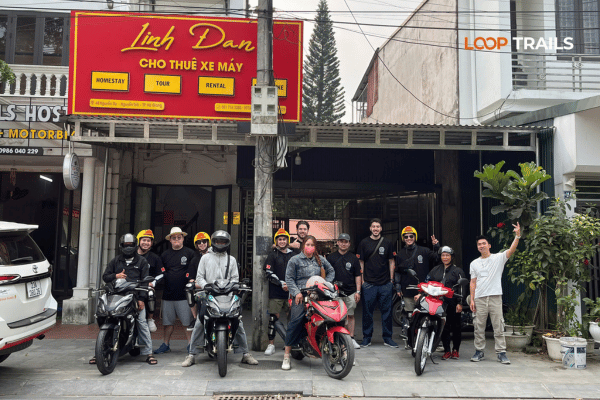
You can. We do offer motorbike rental in Ha Giang for confident riders. We strongly recommend going with at least a lead guide if it’s your first time, both for safety and because the route logistics (homestays, viewpoints, side roads) are easier to navigate with someone who knows them
Contact information for Loop Trails
Website: Loop Trails Official Website
Email: looptrailshostel@gmail.com
Hotline & WhatSapp:
+84862379288
+84938988593
Social Media:
Facebook: Loop Trails Tours Ha Giang
Instagram: Loop Trails Tours Ha Giang
TikTok: Loop Trails
Office Address: 48 Nguyen Du, Ha Giang 1, Tuyen Quang
Address: 48 Nguyen Du, Ha Giang 1, Tuyen Quang

Facebook X Reddit Table of Contents Learn more: Ha Giang Loop Tours Most people drive past the Quan Ba area twice on

Facebook X Reddit Table of Contents Learn more: Ha Giang Loop Tours The Ha Giang Loop has a reputation problem with older