


Thúy Kiều (Grace) is a travel blogger and content contributor for Loop Trails Tours Ha Giang. She holds a bachelor’s degree in Sustainable Tourism from Vietnam National University, Hanoi, and has a strong passion for exploring and promoting responsible travel experiences in Vietnam’s northern highlands.
Learn more: Ha Giang Loop Tours
The Ha Giang Loop sits roughly 1,700 kilometers north of Ho Chi Minh City, in a region most Saigon residents have only seen in Instagram reels. That distance is the first thing to wrap your head around. You’re not just driving up the country, you’re moving into a completely different climate, a different food culture, and roads that behave nothing like the ones you know.
This is a guide for anyone planning the Loop while based in Saigon or flying into Tan Son Nhat first. It covers the logistics most blogs skip: how to actually get there without burning your trip on transit, what the trip really costs from the south, and which format of the Loop fits the time you’ve got. No fluff, no copy paste itineraries. Just what works.
Learn more: Ha Giang Loop 2 Days 1 Night
Most travelers who fly into HCMC plan their Vietnam trip around the south and central coast. Phu Quoc, Hoi An, Da Nang, maybe Da Lat. They look at Ha Giang on the map, see how far it sits from where they landed, and quietly drop it.
Here’s the thing: the Loop is the trip that everyone who actually goes ends up calling the best part of their whole Vietnam journey. The scenery changes by the kilometer. Karst peaks, terraced rice fields, Hmong markets where nobody speaks English, switchback roads that climb into clouds. Ma Pi Leng Pass alone is worth the flight up. You’re not doing a road trip, you’re doing one of the last raw mountain experiences in Southeast Asia.
The fact that it takes effort to reach is actually part of the appeal. When you arrive after a flight, a sleeper bus, and a night in transit, you’ve earned something. The Loop pays you back for the work it takes to get there.
Most travelers who fly into HCMC plan their Vietnam trip around the south and central coast. Phu Quoc, Hoi An, Da Nang, maybe Da Lat. They look at Ha Giang on the map, see how far it sits from where they landed, and quietly drop it.
Here’s the thing: the Loop is the trip that everyone who actually goes ends up calling the best part of their whole Vietnam journey. The scenery changes by the kilometer. Karst peaks, terraced rice fields, Hmong markets where nobody speaks English, switchback roads that climb into clouds. Ma Pi Leng Pass alone is worth the flight up. You’re not doing a road trip, you’re doing one of the last raw mountain experiences in Southeast Asia.
The fact that it takes effort to reach is actually part of the appeal. When you arrive after a flight, a sleeper bus, and a night in transit, you’ve earned something. The Loop pays you back for the work it takes to get there.
Learn more: Ha Giang Loop 3 Days 2 Nights
Before anything else, picture the route in your head:
Ho Chi Minh City → Hanoi → Ha Giang town → the Loop itself.
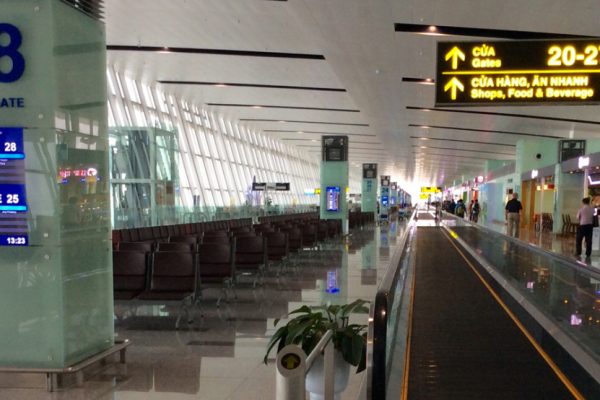
There’s no airport in Ha Giang. The closest commercial airport is Noi Bai in Hanoi, and from there you still need to cover roughly 300 kilometers north by road. That’s the part most first time visitors underestimate.
This is what 95 percent of travelers do. Domestic flights between HCMC and Hanoi run constantly on Vietnam Airlines, Vietjet, and Bamboo. Flight time is around two hours. One way fares typically land between $40 and $100 depending on how early you book and which airline you pick. Vietjet runs the cheapest, Vietnam Airlines runs the most reliable.
Book at least two weeks ahead to avoid last minute price spikes, especially around Vietnamese holidays like Tet, Reunification Day, and the September 2 national holiday.
If you have time and want to see Vietnam from a window, the SE series trains run from Saigon Station up to Hanoi. The trip takes around 33 to 36 hours depending on the service. A soft sleeper berth is significantly cheaper than the flight but burns two full days of your trip in each direction.
The train is worth doing if Vietnam is your only travel for the year and the journey itself is the point. If you’re tight on annual leave, skip it. The flight pays for itself in days saved.
A nice compromise some travelers use: fly to Hanoi to save time, do the Loop, then catch the train back south so you can stop in Da Nang or Hue on the way home. This stretches the trip into a proper Vietnam end to end experience without losing the front end of your annual leave.

Learn more: Ha Giang Loop 4 Days 3 Nights
Once you land in Hanoi, you have three main ways to handle the final leg up to Ha Giang.
Cheapest and fastest in calendar days. You fly into Noi Bai in the morning, transfer to Hanoi’s old quarter, kill the afternoon eating bun cha and walking around Hoan Kiem Lake, then catch an overnight sleeper bus or limousine van that leaves Hanoi between 8 PM and 11 PM. You wake up in Ha Giang town at sunrise, ready to start the Loop the same day.
This compresses two travel days into one. The downside is fatigue. If you don’t sleep well on buses, you’ll start the Loop tired, and tired riders make mistakes. Worth doing if you’ve slept on buses before and trust your body to recover.
The smarter choice for most people coming from Saigon. Fly to Hanoi, get a proper hotel for one night in the old quarter, sleep, eat a real breakfast, then take a daytime limousine van or sleeper bus up to Ha Giang. Or take the sleeper that night, sleep on the bus while well rested from your hotel sleep the night before.
You spend one extra night, but you arrive in Ha Giang town genuinely ready to ride. The Loop is intense. Starting it tired is a bad trade.
If you’ve come this far north, consider stretching the trip. Sapa sits roughly six hours from Hanoi by limousine van and works as a natural add on before or after Ha Giang. Cat Ba and Ha Long Bay are an easy two day side trip from Hanoi. Ninh Binh sits two hours south of Hanoi and pairs nicely with a return flight from Hanoi.
The trick is to do Ha Giang first when your legs and back are fresh. Bouncing on a bike or in a jeep for three days is real fatigue. Adding it after a Sapa trek means you’re entering the Loop already sore.
First soft CTA: Already know you want to ride? Check our Ha Giang Loop tours for 2 days, 3 days, and 4 days options departing from Ha Giang town. Most travelers from HCMC pick the 3 days, 2 nights tour because it fits a 5 days total trip including transit. Drop us a WhatsApp message if you want help matching the right tour to your schedule.

Learn more: Ha Giang Cao Bang 5 Days 4 Nights
This is the question I get asked most by travelers calling from Saigon. The honest answer depends on how much time you can take off.
5 days total. Day 1 flight up plus night bus to Ha Giang. Days 2, 3, and 4 on the Loop. Day 5 night bus back to Hanoi plus flight home to HCMC.
This is doable but tight. You’ll spend roughly 40 percent of your trip in transit. The Loop itself is only three full days. You’ll see Ma Pi Leng, Dong Van, and Meo Vac but skip side villages like Du Gia.
7 days total. Same as above but with one night in Hanoi each way, a full four day Loop, and breathing room to recover. This is what we recommend for most first time visitors flying up from HCMC. You don’t feel rushed, you see more of the region, and you come home rested instead of wrecked.
10 days plus. Adds Sapa, Cat Ba, or Cao Bang. If you’re combining Ha Giang with Ban Gioc waterfall in Cao Bang province, give yourself at least 10 days. Our Ha Giang Cao Bang combo tours cover both regions in one continuous loop, which saves you doubling back to Hanoi.

Learn more: Ha Giang Cao Bang Ba Be Lake 6 Days 5 Nights
This is where most travelers get stuck. There’s no single right answer. The right format depends on your riding experience, who you’re traveling with, and how much you want to focus on driving versus looking around.
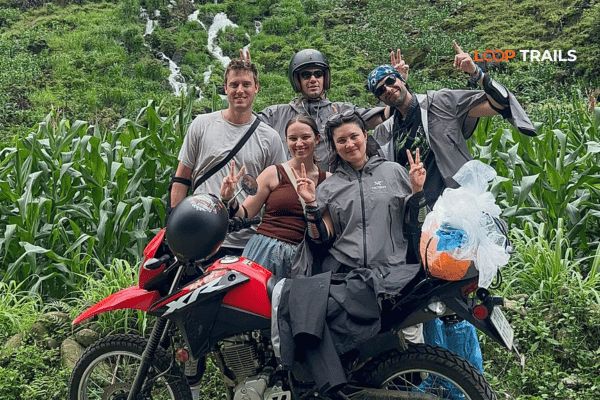
You ride pillion behind a local guide who handles the bike. You bring nothing but a daypack. Your job is to enjoy the view and stop for photos.
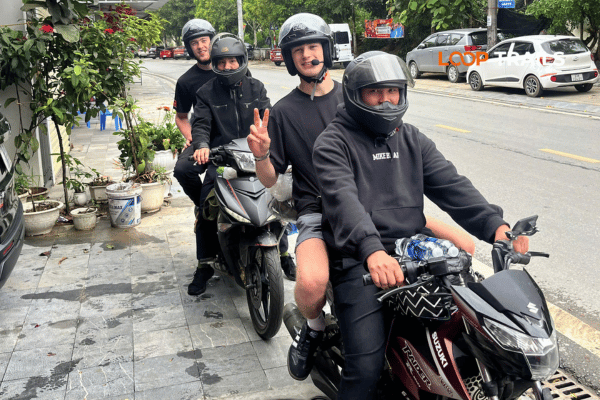
This is the most popular option for travelers from HCMC who don’t ride motorbikes regularly, or who want to drink at dinner without worrying about hangovers on tight switchbacks the next morning. It’s safer than self drive for anyone not used to mountain roads, and it lets you fully absorb the scenery without watching the road.
You rent a bike, follow a route, and ride it yourself with or without a guide. This is the option for travelers who already ride confidently, especially anyone who’s done other mountain rides like Hai Van Pass or the roads around Da Lat.
Worth knowing: Ha Giang’s roads are nothing like coastal Vietnam. Switchbacks are tight, surface conditions change without warning, and rain turns clay into something close to ice. If you’ve never ridden a manual or semi auto on steep switchbacks before, self drive is not the place to learn.
We rent Honda XR150 and semi auto 150cc bikes for self drive travelers. Both are popular, both handle the Loop well. If you want to know which fits you better, check our motorbike rental page or send us a quick WhatsApp message and we’ll match you.
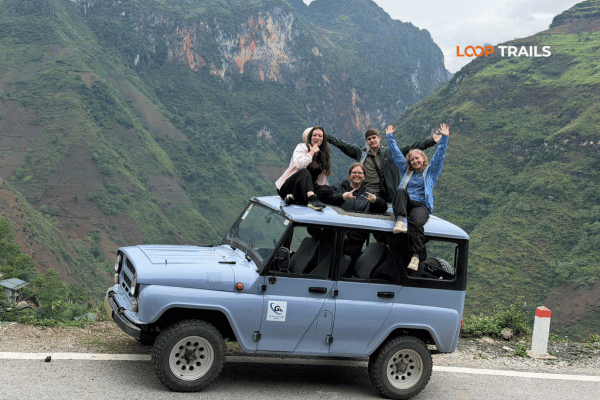
You ride in an open top or convertible jeep with a driver guide. You see the same passes, the same villages, the same viewpoints, but from inside a vehicle instead of on a bike.
This is the right call if you’re traveling with parents, with kids, in monsoon season, or if you simply don’t want to be on a bike for three days. The trade off: jeeps need to be booked early because availability is limited. Most jeep guests book one to three months ahead.
If you’re flying up from HCMC with family or a partner who doesn’t ride, the jeep format removes the entire question of “what if they fall.” It’s also the easiest format to combine with a camera setup, which matters for serious photographers.
Learn more: Ha Giang Motorbike Rental
Quick honest matrix:
| If you… | Pick |
|---|---|
| Ride regularly back home and want freedom | Self drive |
| Want to relax, drink at dinner, focus on views | Easy rider |
| Travel with family, kids, or non riders | Jeep |
| Have never ridden a manual bike | Easy rider or jeep, not self drive |
| Travel solo and want to meet other travelers | Easy rider (group departures) |
| Travel in monsoon season (May to September) | Jeep |
| Want maximum comfort with same scenery | Jeep |
If you’re still not sure, this is the kind of question we’d rather you ask on WhatsApp than guess at. Tell us what you actually want from the trip and we’ll tell you which format we’d put a friend on

Learn more: Ha Giang Loop by Army Jeep Tours
Saigon has two seasons. The north has four, and the mountains have their own micro climate on top of that. If you’ve spent your life in HCMC, your weather instincts will mislead you up here.
October to early December: The sweet spot. Cool, dry, clear views, golden rice in places. Roads are at their best. This is also peak season, so book early.
Mid December to February: Cold. We’re talking 5 to 10 degrees Celsius at night, sometimes lower in Dong Van. Saigon residents almost always underestimate this. Bring real layers. Daytime is still rideable, mornings are brutal until the sun gets above the ridges. Fewer crowds, prices soften.
March to April: Pleasant temperatures, dry, occasional mist on passes. A solid second window. Buckwheat flowers in some valleys.
May to September: Monsoon. Rain, mud, occasional road closures from landslides. This is when self drive gets risky and easy rider or jeep becomes the smart pick. The scenery is at its lushest greens but visibility on passes can drop fast. Plan flexible days. Rules and road conditions can change with the weather, so always check local updates the day before you ride.
The takeaway: don’t plan from HCMC assuming “it’s tropical Vietnam, weather will be fine.” Check forecasts the week before you fly and pack for the season you’re entering, not the one you’re leaving.

Learn more: Ha Giang Packing list
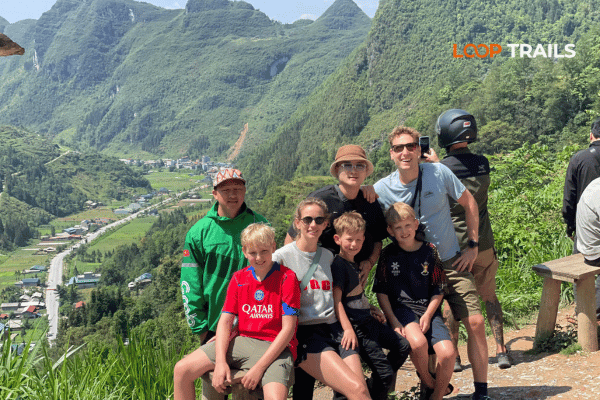
Most travelers flying up from HCMC pack like they’re going on a beach trip and freeze the first night. Build your bag around the actual conditions:
Skip: heavy luggage, suit cases, anything you can’t fit into one duffel or backpack. You’ll want minimum gear strapped to a bike or thrown in a jeep.
Learn more: Ha Giang Loop With Kids
Total trip budget varies wildly depending on tour format and how many days you take. Rough framework:
So transit alone, before you even start the Loop, runs roughly $200 to $400 per person depending on choices.
Tour prices vary by format and duration. Self drive is the cheapest, easy rider sits in the middle, jeep is the highest because of vehicle and driver costs. For exact current rates check the relevant tour page on our site, since prices shift with season and group size. What I’ll say is the difference between formats is usually less than the difference between booking on the day versus booking ahead. Last minute always costs more.
On the Loop itself, food is included in most tour packages. Outside the tour, budget for:
Realistic total budget for a 7 days trip from HCMC, mid range tour format, comes out somewhere between $700 and $1,400 per person. Backpacker tight you can do it for less. Premium with private rooms and upgraded vehicles, more.
Learn more: Cao Bang Loop 3 Days best kept secret
When you’re planning from Saigon, the temptation is to book in random order as you research. Don’t. The right order is:
Booking the tour second to last is the most common mistake. You end up with cheap flights and no jeep availability, then have to scramble.

Learn more: Ha Giang Loop Mistake to Avoid
A handful of things repeat across travelers we’ve hosted who flew up from HCMC:
Underpacking warm clothes. Especially in winter months. Saigon weather instincts lie. Pack like you’re going to Da Lat in cold season, then add one more layer.
Skipping insurance. It costs almost nothing for a week and covers things you genuinely cannot afford to pay for out of pocket if something goes wrong on a pass.
Trying to self drive without mountain experience. Riding a manual bike in District 1 traffic is not the same as riding switchbacks at altitude in fog. If you’ve never done mountain roads on a bike, take easy rider or jeep this trip. Save self drive for next time.
Booking the bus too late. Sleeper buses out of Hanoi sell out on weekends and around holidays. Book at least two or three days ahead.
Not telling the guide about dietary restrictions. Northern Vietnamese mountain food is heavy on pork, chicken, and tofu. If you’re vegetarian or have allergies, tell the tour operator when you book, not when you sit down at dinner. Most operators can accommodate easily with warning.
Going in May to September without rain plans. Monsoon season is real. Mud closes roads. Self drive is not the move. Either go in a jeep, take easy rider, or shift the trip to October.
Treating the trip as a photo op only. The Loop’s best moments are not at the viewpoints with the parking lots. They’re in the small villages, the unplanned tea stops, the conversations with guides over rice wine at dinner. Build in unstructured time.
Learn more: Ha Giang Loop Easy Rider
Three frameworks depending on how much time you have:
This is the absolute minimum. You’ll see the highlights but skip side villages. Good for travelers with hard time limits.
This is the sweet spot. You arrive on the Loop rested. You see Du Gia or other side villages. You don’t feel like you’re constantly catching transit.
For the combo, the cleanest option is our Ha Giang to Cao Bang combo tour which routes you straight east from Meo Vac through Bao Lac and into Cao Bang. You skip the backtrack to Hanoi and pick up at Ban Gioc waterfall the next day.
Learn more: Ha Giang Loop Self-Drive
A few things that genuinely matter:
Insurance is non negotiable. Standard travel insurance often excludes motorbike riding without proof of a valid license. Read the fine print or buy a policy that explicitly covers two wheel travel. Companies like World Nomads, Safety Wing, and similar policies sold in Vietnam exist for this. Confirm coverage before you fly.
Licenses and regulations. Rules around foreign driving permits in Vietnam can change. Don’t take advice from a forum post written three years ago. Check current rules with your embassy or a reliable source close to your travel date. If you’re doing easy rider or jeep, the licensing question is moot because you’re not driving.
Health prep. Mountain elevation isn’t extreme on the Loop, but cold and exhaustion can stack. Bring any regular medications. Pharmacies in Ha Giang town are basic. Anything specific, bring from Saigon.
Money. ATMs in Ha Giang town work. ATMs in Dong Van and Meo Vac exist but are unreliable. Carry enough cash for the full Loop from Ha Giang town.
Signal. Mobile coverage drops on some passes. Tell people back home roughly where you’ll be each night. Most accommodations have wifi by evening.
Respect locally. Hmong and Dao villages are not theme parks. Ask before photographing people. Don’t go into houses uninvited. Buy something small at a market stall if you’ve spent twenty minutes browsing.

Learn more: Tu San Canyon & Nho Que River Boat Trip
The Ha Giang Loop is not the easiest trip to plan from HCMC. It costs more days, more transit, and more energy than the south coast options most travelers default to. The reason it’s worth doing anyway is simple: there’s nothing else like it in Vietnam, and the people who skip it almost always wish they hadn’t.
Plan it as a proper week. Don’t try to bolt it onto a weekend. Pick the format that matches your actual riding comfort, not the one you want to brag about. Book early, pack layers, and don’t show up tired.
If you want help building the right itinerary or matching a tour to your dates, send us a WhatsApp message. We’d rather spend ten minutes getting your trip right than have you book the wrong format and regret it. Browse our Ha Giang Loop tours, our motorbike rental options, or our combo Ha Giang and Cao Bang tours and we’ll take it from there.

Learn more: Corn wine “Happy Water” in Ha Giang
Minimum 5 days realistic, 7 days comfortable, 10 days plus if you want to add Sapa, Cat Ba, or Cao Bang. The Loop itself takes 3 to 4 days. The rest is transit and a buffer night in Hanoi.
Fly. The train takes around 33 to 36 hours each way and burns four travel days for the round trip. Unless the journey itself is part of the experience you want, the time saved on flights is worth the extra cost.
Sleeper bus or limousine van. Both leave Hanoi mostly in the evening, arrive in Ha Giang the next morning. Daytime limousine vans also run and are more comfortable but eat a full day. Book at least 2 to 3 days ahead, more around holidays.
Yes. Easy rider tours put you on the back of a bike with a local driver. Jeep tours give you an open top vehicle with a driver guide. Both cover the same routes, same viewpoints, same villages. You miss nothing by not riding yourself.
October to early December is the sweet spot. March and April are also solid. Avoid May through September if possible because of monsoon rain, unless you’re going by jeep. December and January are coldest, so layer up if you go then.
Self drive without mountain experience is risky. Switchbacks, weather, and surface conditions catch out riders who only know flat city roads. Easy rider and jeep formats remove the risk entirely. If you ride confidently and have done mountain roads before, self drive is fine with proper care.
Roughly $700 to $1,400 per person for a balanced 7 days trip including flights, tour, hotels, food, and a buffer. Tight backpacker budgets can come in under, premium private options run higher. Tour pricing varies, so check the current rates on the tour page.
Rules can change and enforcement varies, so check current requirements close to your travel date through your embassy or a reliable source. If you’re doing easy rider or jeep, you don’t drive, so this doesn’t apply. For self drive, confirm coverage with your travel insurance regardless of the licensing situation.
Yes. Cao Bang combines naturally because you can route east from Meo Vac to Bao Lac and skip backtracking to Hanoi. Sapa requires a return to Hanoi first. Both add 3 to 4 days to the total trip. The Ha Giang Cao Bang combo is the most popular extension for travelers with 10 days plus.
Flights at least 2 to 4 weeks ahead. Loop tours 1 to 3 months ahead, especially for jeep tours which have limited availability. Sleeper buses 2 to 3 days ahead. Hanoi hotels can be booked closer to the date with flexibility. Holiday periods like Tet and the September 2 holiday compress these windows significantly.
Contact information for Loop Trails
Website: Loop Trails Official Website
Email: looptrailshostel@gmail.com
Hotline & WhatSapp:
+84862379288
+84938988593
Social Media:
Facebook: Loop Trails Tours Ha Giang
Instagram: Loop Trails Tours Ha Giang
TikTok: Loop Trails
Office Address: 48 Nguyen Du, Ha Giang 1, Tuyen Quang
Address: 48 Nguyen Du, Ha Giang 1, Tuyen Quang

Facebook X Reddit Table of Contents Learn more: Ha Giang Loop Tours Most people drive past the Quan Ba area twice on

Facebook X Reddit Table of Contents Learn more: Ha Giang Loop Tours The Ha Giang Loop has a reputation problem with older