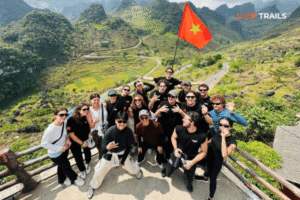


Thúy Kiều (Grace) is a travel blogger and content contributor for Loop Trails Tours Ha Giang. She holds a bachelor’s degree in Sustainable Tourism from Vietnam National University, Hanoi, and has a strong passion for exploring and promoting responsible travel experiences in Vietnam’s northern highlands.
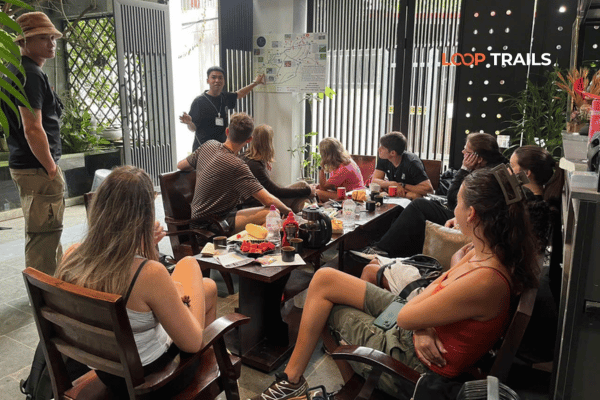
Learn more: Ha Giang Loop Tours
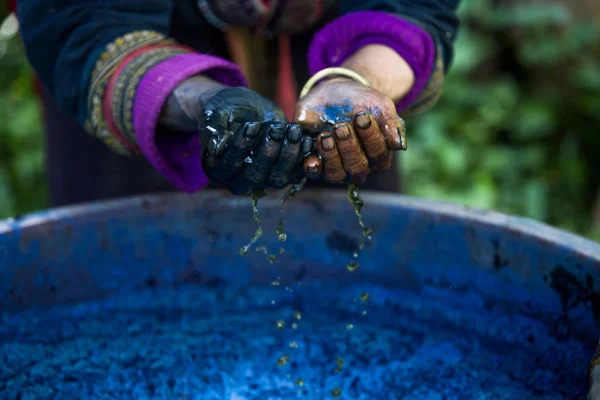
The first thing you notice is the hands. You will be standing in a courtyard somewhere off the road in Quan Ba, watching a woman fold a heavy length of cloth, and her fingers are blue. Not dirty blue. Deep, settled, dye in the creases blue, the kind that does not wash off for weeks. That is the quiet signature of Ha Giang indigo dyeing, and once you have seen those hands you start noticing the same blue everywhere on the Loop: on jackets, on market stalls, on the skirts of women selling corn by the roadside.
This guide is about how that blue gets made, who makes it, and how you can see the whole thing for yourself without turning a real working craft into a zoo exhibit. It is one of the most rewarding stops on the northern Loop, and most travelers ride straight past it because nobody told them it was there.
Learn more: Ha Giang Loop 2 Days 1 Night
Up here, cloth was never bought. It was grown.
For the H’Mong communities scattered across the Ha Giang plateau, textile work was the whole supply chain, from a seed in the ground to the jacket on your back. A girl learned to strip hemp fibers as a child. By the time she married she could spin, weave, draw batik, and dye, and the clothes she made said exactly who she was: which group she belonged to, whether she was married, how skilled her hands were. Indigo was the color that held it all together, partly because the dye plant grew well in the mountains and partly because the deep blue black tone simply lasts.
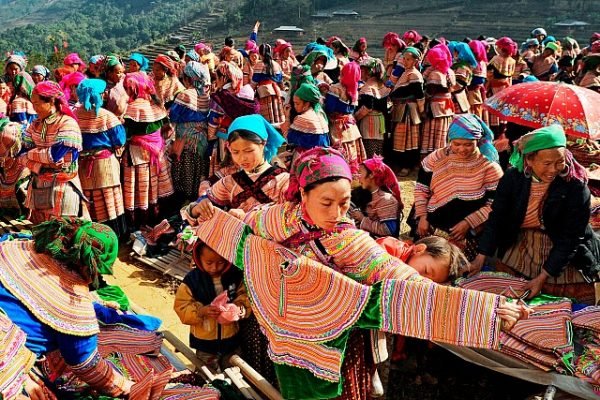
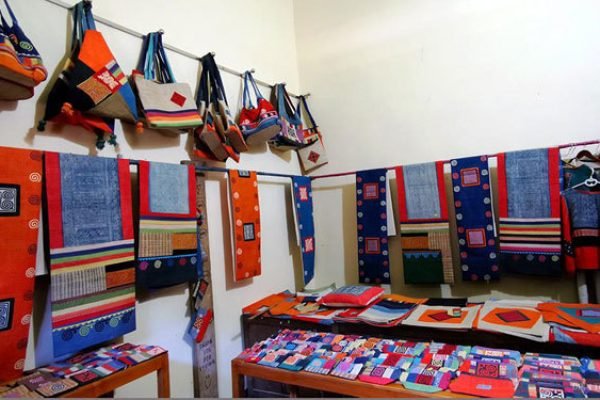
You will still see this living in plain sight. Walk through Dong Van market on a Sunday morning and half the women are wearing things their own hands made. The craft did not get preserved in a museum. It just kept going, quietly, in courtyards you cannot see from the main road.
Learn more: Ha Giang Loop 3 Days 2 Nights
When people say indigo, they usually picture a tidy jar of blue powder. The real thing is messier and more alive.
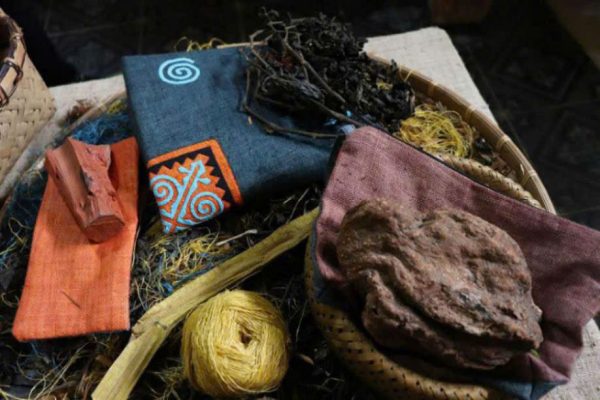
Indigo here comes from a plant, often called chàm locally. The leaves are harvested, soaked, and fermented into a thick paste, then mixed into a dye vat with ash water, lime, and sometimes rice wine or other local additions that vary household to household. The vat is not really “blue” when it is working. It looks murky green or yellow brown, and it smells. That smell is the sign it is healthy. A good vat is treated almost like a living thing that needs feeding and resting.
The magic happens with air. Cloth comes out of the vat looking greenish, and as it hits oxygen it turns blue in front of you. One dip gives a pale, washed out shade. To reach the famous deep indigo black, the cloth gets dipped, aired, and dipped again, over and over, sometimes for weeks. The depth of the blue is basically a record of patience.
Learn more: Ha Giang Loop 4 Days 3 Nights
Here is the part most visitors do not expect. The cloth itself is usually not cotton. It is hemp, grown right there. Locally it often gets called linen, and you will see “linen” on shop signs, but botanically the plant is hemp, and the long process below is why a single piece can take months.
Hemp is sown in spring and grows tall and thin through the warm months. After harvest the stalks are dried, then the outer fibers are split off by hand, thread thin, and tied end to end into long strands. You will often see older women doing this while walking, while sitting at market, while chatting, a spindle of raw fiber tucked into their belt. It is constant background work.
The joined fibers are spun on a wheel, then boiled and pounded to soften them. Raw hemp is stiff and rough. Getting it soft enough to wear comfortably takes repeated cycles of beeswax rubbing, beating, and boiling. This step alone is days of labor before a single thread is woven.
Weaving happens on simple wooden looms, often a backstrap or treadle loom set up in or beside the house. The cloth comes off narrow, because the looms are narrow, which is why traditional pieces are often sewn together from several strips. Watching someone weave at speed is hypnotic. Watching how long one full length takes is humbling.
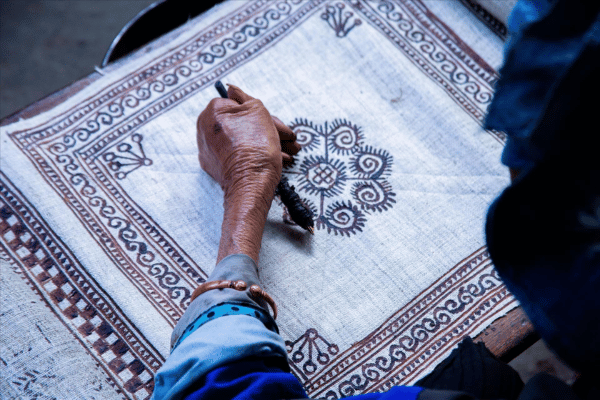
Before any blue touches the cloth, patterns go on in hot wax. A woman heats beeswax over coals and draws onto the white cloth with a small metal pen, freehand, no pencil guide, geometric lines and spirals and tiny repeating motifs. Wherever the wax sits, the dye cannot reach. This is the batik step, and it is the one that makes people gasp, because the precision is done entirely by eye and memory.
Now the dyeing. The waxed cloth is dipped, aired, dipped, aired, day after day. The waxed lines stay white, everything else goes deeper blue with each round. When the color is right, the cloth is boiled to melt the wax away, and the pattern appears in crisp white against the indigo.
The final flourish is mechanical. Finished cloth gets folded and beaten with a heavy stone or wooden roller, sometimes over a smooth rock, until it takes on a faint metallic sheen. Run your hand over a finished piece and it feels almost waxed. That glow is not chemical. It is hours of pounding.
If you do the math on all of this, a single skirt can represent a season of work. That is worth holding in your head later, when you are standing at a stall deciding whether something is “expensive.”
Learn more: Ha Giang Cao Bang 5 Days 4 Nights
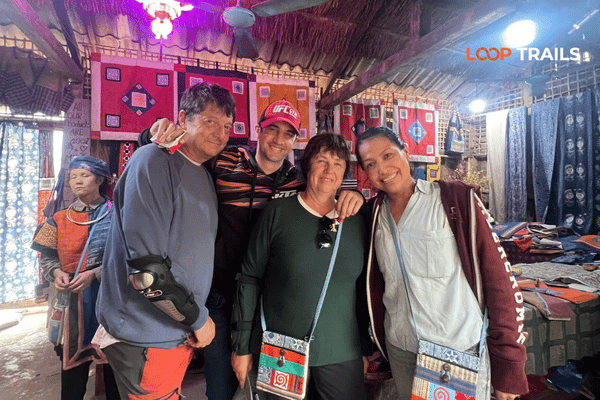
The most established place to watch the full process is the Lung Tam linen cooperative in Quan Ba district, roughly an hour north of Ha Giang city. It is a women’s cooperative that has been running for around two decades, set up to keep the craft alive and give local women steady income from it. You can usually watch spinning, weaving, batik drawing, and dyeing in one visit, and buy directly from the people who made the pieces.
A few honest notes. Opening hours and whether a demonstration is running on a given day are not guaranteed, especially around farming season or holidays, so treat any schedule you find online as a maybe and confirm locally before you build your whole day around it. Things change, and a quick check beats a wasted detour.
Lung Tam is the easiest to reach, but it is not the only place. Smaller workshops and individual households across Quan Ba, around Dong Van, and near Meo Vac do the same work, often with no sign at all. If you are riding with a local guide, this is where they earn their keep, because they know which courtyard is dyeing this week and can ask permission for you to watch without it feeling like an intrusion.
Planning a route through Quan Ba and want a stop like this built in properly rather than rushed? Our Ha Giang Loop tours can fold a textile workshop into the first day instead of leaving you to gamble on timing. More on choosing a tour style near the end of this guide.
Learn more: Ha Giang Cao Bang Ba Be Lake 6 Days 5 Nights
It is calmer than you expect. There is no ticket booth energy, no staged show. You walk into a working space where people are getting on with their day, and you fit yourself around it.
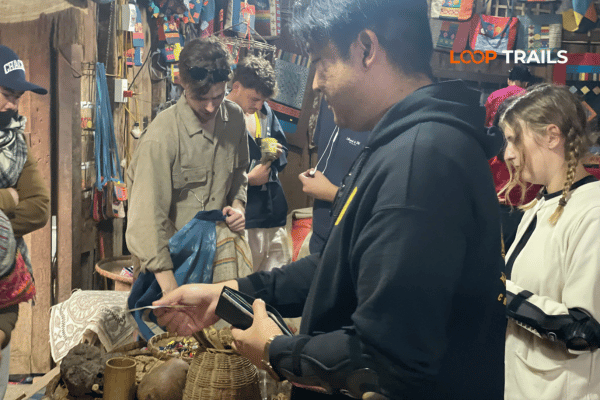
Expect a sequence something like this. Someone shows you the raw hemp and lets you feel how rough it starts. You watch the spinning wheel turn. You see a woman drawing batik and realize she is not following any template. You stand over the dye vat, and if the timing is right you watch a green cloth turn blue in the air. At some places you can try a small piece yourself, a quick dip or a stamped pattern, though whether that is on offer depends on the day and the workshop, so ask rather than assume.
The best moment is usually unglamorous: the smell of the vat, the slap of cloth being beaten, an old woman laughing at how clumsy your batik line came out. That is the real thing, and it sticks with you longer than any viewpoint.
Bring small cash, because buying something directly is the most useful thing you can do, and most workshops will not take cards.
Learn more: Cao Bang Loop 3 Days best kept secret
Once you know a little, the patterns stop looking decorative and start looking like language.
Different H’Mong groups carry different signature motifs and color habits, and the patterns often reference the natural world and old stories: snail spirals, fern shapes, water, mountains, paths. A woman’s outfit can mark her group, her marital status, and the region she comes from. None of this is written down. It is passed mother to daughter, hand to hand, which is exactly why losing it would lose something that has no backup copy.
You do not need to memorize any of this. Just know that when you ask “what does this pattern mean,” you are asking a real question with a real answer, and the person you are buying from usually loves being asked.
Learn more: Ha Giang Motorbike Rental
Geography makes this easy, because Quan Ba is the first major district you hit heading north out of Ha Giang city, on the main road toward Yen Minh and Dong Van. A textile stop here barely costs you any detour. It slots naturally into the morning of a first day on the Loop, before you climb toward Heaven’s Gate and the Twin Mountains viewpoint.
From there the rest of the route is the route you already came for: Yen Minh, Dong Van old town, the Lung Cu flag tower up near the border, Ma Pi Leng Pass with the Nho Que River far below, Meo Vac, and the long ride back down through Du Gia if you have the days for it. The indigo stop is a slow, human counterweight to all that big landscape, and putting it early in the trip sets a nice tone.
A practical reality worth flagging. Road conditions, weather, and what is open shift constantly up here, and rules around things like permits or which roads are passable can change with the season, so check current local updates close to your trip rather than trusting a blog from two years ago.
Most travelers reach Ha Giang city from Hanoi by overnight sleeper bus or a daytime limousine van, then start the Loop from there. If you would rather not deal with that leg solo, a tour can sort the transfer, the route, and stops like this in one booking, which is the simplest way to make sure the textile visit does not get sacrificed to a tight schedule.
Learn more: Lung Tam Linen Village
This is where a little knowledge protects both you and the craft.
The honest problem: as indigo got fashionable, cheaper machine made and chemically dyed lookalikes started appearing, sometimes sold as the real handmade thing. There is nothing evil about a cheap printed scarf if you know that is what you are buying. The issue is paying handmade prices for factory work, or worse, undercutting the women whose months of labor cannot compete with a printing press.
A few ways to buy well, framed as general guidance rather than hard rules, since every piece is different:
What makes good souvenirs: scarves, table runners, small bags, and cushion covers travel home easily and actually get used. Full traditional garments are stunning but bulky, so think about your luggage.
Learn more: Hmong’s King Vuong Palace
These are working homes and workplaces, not a set. A few habits keep it good for everyone, including the travelers who come after you.
None of this is complicated. It is just the difference between being a guest and being a problem.

Learn more: Ha Giang Loop Coporate Retreat
You can see indigo work year round, since it is not strictly seasonal in the way the landscape is, but a few things are worth knowing.
The cloth beating, dyeing, and selling happen all year. The hemp itself follows the farming calendar, sown in spring and harvested later in the warm months, so if you want to catch fieldwork stages you are tied to the season, while the workshop steps are more flexible. During heavy farming and rice planting periods, some women are simply busy in the fields, so a quieter craft day at a workshop is more likely outside peak farm work.
For the Loop overall, the shoulder periods tend to be kind for riding and for clear views, while the wet months bring greener scenery but muddier roads. Weather up here is its own beast and changes fast, so pack for rain regardless of the forecast and check conditions close to your dates. As a general rule on this plateau, layers and a waterproof bag for anything you buy will not let you down.

Learn more: Ha Giang Loop by Army Jeep Tours
Seeing the indigo workshops is easy. The bigger question is how you want to travel the Loop that connects them. Here is the straight version.
For a trip where the textiles and culture are the point, easy rider and jeep both shine, because you spend your attention on people and patterns rather than on traffic. If freedom to roam is your priority and you can ride, self drive is hard to beat.
Not sure which fits your group? Tell us how many of you there are, whether anyone rides, and how many days you have, and we will point you to the right setup. You can message us on WhatsApp for a quick honest answer, or browse the Ha Giang Loop tours and motorbike rental pages to compare. If you are continuing east afterward, our Ha Giang to Cao Bang combo tours add Ban Gioc waterfall and more without backtracking

Learn more: Ha Giang Loop Easy Rider
The indigo workshops are not the headline act of a Ha Giang trip. The passes and the river gorge will always grab the photos. But this is the stop people end up talking about months later, because it is the one where the plateau stopped being scenery and became people, with months of work in their hands and a deep blue stain to prove it.
Build it into your first day, buy something real, ask about the patterns, and tip your respect to the women keeping a centuries old craft alive one dip at a time. It is the easiest meaningful thing you can do on the whole Loop.
When you are ready to plan the route around it, we are happy to help you choose the style that fits, sort the Hanoi transfer, and make sure the workshop stop does not get rushed. Browse our Ha Giang Loop tours, check motorbike rental if you want to ride yourself, or just message us and we will sort the rest.
Learn more: Ha Giang Loop Self-Drive
It is the traditional craft of dyeing hand woven hemp cloth a deep blue black using fermented indigo plant dye, practiced mainly by H’Mong communities. Cloth is dipped and aired many times over days or weeks to build the color, often with wax drawn patterns that stay white.
The most established spot is the Lung Tam linen cooperative in Quan Ba, about an hour north of Ha Giang city. Smaller household workshops around Quan Ba, Dong Van, and Meo Vac also do it, though many have no sign, so a local guide helps you find an active one.
It is usually hemp, grown locally, even though it is often labeled linen on shop signs. The long process of stripping, spinning, softening, and weaving hemp by hand is why a single piece can take months.
The dyeing alone can run for weeks, since the cloth is dipped and aired repeatedly to deepen the blue. Add growing, spinning, weaving, and batik, and a full garment can represent most of a season of work.
Some workshops offer a small hands on demo, like a quick dip or a stamped pattern, but it depends on the day and the place. Ask first rather than assuming, and bring small cash to buy something in return.
It sits in Quan Ba district on the main road north toward Dong Van, roughly an hour from the city by motorbike or car. It fits neatly into the first morning of a Loop trip before you reach Heaven’s Gate.
Buy at the source when you can, look for the small irregularities of hand drawn batik, feel for the weight and faint sheen of real beaten hemp, and ask about the dye. Perfectly identical prints and suspiciously cheap fabric are signs of machine made lookalikes.
Prices vary by piece and seller, so we will not quote numbers that could be out of date. Keep in mind the labor behind each item and pay fairly. Buying directly from makers is the best value and the most ethical option.
Not strictly, but a local guide makes a big difference. They know which courtyards are working that week and can ask permission on your behalf, turning a potentially awkward visit into a welcome one.
Scarves, table runners, small bags, and cushion covers are easy to carry and actually useful at home. Full traditional garments are beautiful but bulky, so weigh that against your luggage.
Workshop steps like weaving and dyeing happen year round, while hemp fieldwork follows the spring to warm season farming calendar. Riding conditions and views shift with the seasons and weather changes fast, so check current local updates close to your trip.
You can see all the same textile stops on a jeep tour. The workshops are roadside in villages, so a jeep reaches them just as easily as a motorbike, with more comfort and weather cover.
Contact information for Loop Trails
Website: Loop Trails Official Website
Email: looptrailshostel@gmail.com
Hotline & WhatSapp:
+84862379288
+84938988593
Social Media:
Facebook: Loop Trails Tours Ha Giang
Instagram: Loop Trails Tours Ha Giang
TikTok: Loop Trails
Office Address: 48 Nguyen Du, Ha Giang 1, Tuyen Quang
Address: 48 Nguyen Du, Ha Giang 1, Tuyen Quang

Facebook X Reddit Table of Contents Learn more: Ha Giang Loop Tours Most people drive past the Quan Ba area twice on

Facebook X Reddit Table of Contents Learn more: Ha Giang Loop Tours The Ha Giang Loop has a reputation problem with older