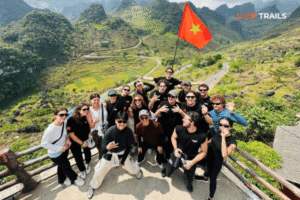


Thúy Kiều (Grace) is a travel blogger and content contributor for Loop Trails Tours Ha Giang. She holds a bachelor’s degree in Sustainable Tourism from Vietnam National University, Hanoi, and has a strong passion for exploring and promoting responsible travel experiences in Vietnam’s northern highlands.
Learn more: Ha Giang Loop Tours
Let me save you a small disappointment before it happens. People sometimes arrive in Ha Giang picturing a jungle full of monkeys and exotic birds, the way you might imagine a national park in Borneo or Costa Rica. That is not really what the Ha Giang Loop is. The wildlife here is quieter, more scattered, and easy to miss if you are blasting through on a motorbike chasing the next viewpoint.
Here is the thing though. If you slow down and know where to point your eyes, Ha Giang has real nature to offer, and it happens to be the global stronghold of one of the rarest monkeys on the planet. This guide is the honest version of Ha Giang wildlife and bird watching: what you will genuinely see, what you almost certainly will not, where the good pockets are, and how to plan a loop that gives nature a fair chance instead of drowning it out under engine noise.
No invented safari. Just a straight account, the way I would tell a friend who asked.
Learn more: Ha Giang Loop 2 Days 1 Night
The Ha Giang Loop is one of the most beautiful road trips in Asia. It is famous for limestone mountains, river gorges, mountain passes, and the daily life of the Hmong, Tay, Dao and other communities who farm these slopes. It is not famous, and should not be sold, as a wildlife destination in the safari sense.
The reasons are not a secret. These valleys have been farmed and lived in for a very long time, and across much of northern Vietnam, hunting and habitat loss have thinned out the larger animals over the decades. So the big charismatic mammals most people daydream about are either gone from the inhabited areas or pushed into small, protected, hard to reach forest pockets. You are not going to round a bend on the Ma Pi Leng and spot a tiger. Nobody will.
What you get instead is more subtle, and honestly more in keeping with the rest of the trip: the working animals of mountain farms, a decent cast of birds if you pay attention, butterflies along the streams, and the knowledge that somewhere in the protected forests of this province lives a monkey found almost nowhere else on Earth. Set your expectations there and you will enjoy it. Show up expecting a zoo on the roadside and you will spend the trip slightly let down for no good reason.
Learn more: Ha Giang Loop 3 Days 2 Nights
Once you stop looking for the dramatic stuff and start noticing what is actually around you, the loop fills in. Here is the realistic cast.
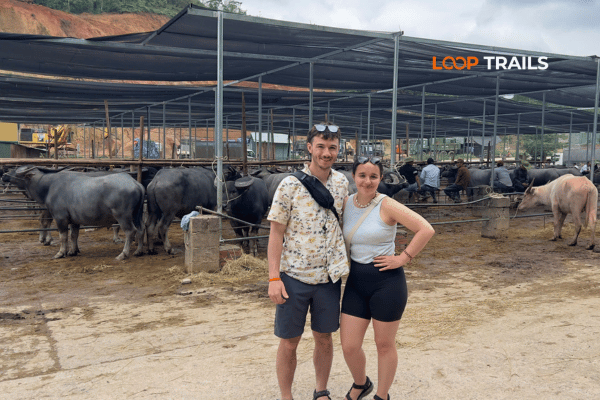
This is the wildlife you will see most, and it grows on you. Water buffalo standing in flooded terraces or being walked along the road by a child half their size. Cattle picking through dry season fields. The small, dark Hmong pigs that wander the villages, piglets included. Goats doing genuinely alarming things on near vertical limestone. Ducks in roadside ponds and chickens absolutely everywhere. It is not exotic, but it is the texture of the place, and some of the best photos people bring home from Ha Giang are of a buffalo in the mist rather than anything rarer.
Ha Giang is not a tick list birding hotspot, but rural northern Vietnam has plenty of common, lively birds if you keep an eye and ear out. Along farmland and village edges you will often come across bulbuls, drongos, mynas, and wagtails working the ground near water. In flowering trees you may catch sunbirds, small and fast and brilliantly colored. Over open valleys and the big passes you will see swallows and swifts cutting through the air, and now and then a raptor riding the thermals high above somewhere like the Ma Pi Leng.
I am deliberately not handing you a long list of rare endemics to expect on the standard loop, because that would be setting you up. Exactly which species turn up depends heavily on the season, the elevation, and the specific spot. If you care about names, download a bird ID app like Merlin and check the eBird hotspots for the areas you are passing through. That will give you a far more accurate picture than any blog promising you a parade of jewels.
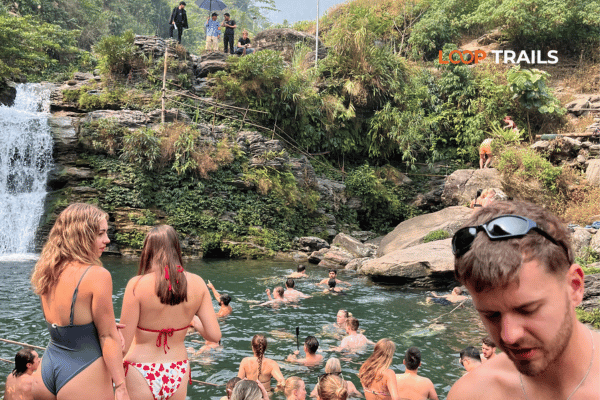
In the warmer months the streams and waterfalls are where the small life concentrates. Around the Du Gia waterfall, the Nho Que River, and quieter creeks you will often find butterflies in good numbers, sometimes clouds of them on a damp morning. Add geckos and lizards on sunny rock, frogs near water after rain, and the general buzz of insect life, and there is more going on than the “no animals here” first impression suggests. It just operates at a smaller scale.
The limestone here is riddled with caves, and where there are caves there are usually bats. You will not be on a dedicated bat watching tour, but it is a normal part of the karst ecosystem and worth a mention. Nothing to be nervous about, just part of the picture.
Learn more: Ha Giang Loop 4 Days 3 Nights
Here is the part that genuinely makes Ha Giang special in wildlife terms, and it is worth knowing even though you almost certainly will not see one.
Ha Giang is the world stronghold of the Tonkin snub nosed monkey, scientific name Rhinopithecus avunculus. This is one of the rarest primates anywhere on Earth. Estimates put the global population at only a couple of hundred animals, and the large majority of them live right here, mostly in the Khau Ca forest within Du Gia National Park, with smaller groups elsewhere in the province. For a long time the species was even feared extinct before it was rediscovered. Ha Giang is effectively the last place this animal still holds on.
That fact deserves respect, and respect means being clear about something: this is not a tourist attraction you can go and tick off. The monkeys live in a strictly protected conservation area. Access is restricted, the population is fragile, and even the researchers and rangers who work there for years count themselves lucky to get a clear sighting. Conservation groups, including Fauna and Flora International, have spent years working with local communities and forest rangers precisely to reduce human pressure on these animals. The last thing the species needs is a stream of visitors demanding to be taken in to find one.
So the honest and responsible way to engage with this is not to chase a sighting. It is to know the story, to choose operators and homestays that support conservation rather than undermine it, and to feel a quiet bit of awe that you are traveling through the home range of an animal most people on the planet will never know exists. That is the right kind of wildlife experience to have with a creature this endangered.
Learn more: Ha Giang Cao Bang 5 Days 4 Nights
If your goal is to weave as much nature as possible into a loop trip, some stretches reward you more than others.
The Du Gia area is the most nature forward stop on the standard loop for most travelers. It sits in a greener, quieter valley a bit off the busiest sections, with a lovely waterfall, a river to swim in, and the kind of slow mornings where you can actually hear birdsong instead of scooters. Many people already include Du Gia on a longer loop, and it is the place I would point a nature leaning traveler toward first. The broader Du Gia National Park forest lies in this wider region, though, as covered above, the strictly protected parts are not open for casual visits.
The Nho Que River gorge and the quieter creek valleys come alive early. If you are staying somewhere near water, getting up at first light and simply sitting or walking slowly for half an hour will show you more birds and activity than a full day of riding. Animals are busy at dawn and dusk and hidden in the heat of midday, which is the single most useful thing to understand about seeing wildlife anywhere.
The remaining patches of forest on the higher slopes hold more life than the farmed valleys, and the big passes are good for watching the sky. Scan the ridgelines above the Ma Pi Leng and you have a fair chance of a raptor or two on a clear day.
One honest cross reference, traveler to traveler: if serious bird watching is the entire reason for your trip and you want a big species count, Ha Giang is not where Vietnam’s birders go. The famous northern hotspots are parks like Cuc Phuong, Tam Dao, the Ninh Binh and Van Long karst wetlands, and further south Phong Nha. Ha Giang is a landscape and culture trip with nature woven through it, not a dedicated birding park. If you want both, do Ha Giang for the road trip and tack a dedicated park onto your wider Vietnam route.
If you would rather have a slower, nature leaning loop than a fast highlight reel, that comes down to how the trip is built: more days, the right stops, and an unhurried pace. Our Ha Giang Loop tours can be planned around Du Gia and quieter routes so you actually have time to stop for the buffalo, the birds, and the waterfalls.
Learn more: Ha Giang Cao Bang Ba Be Lake 6 Days 5 Nights
The difference between “I saw nothing” and “there was actually a lot out there” usually comes down to how you travel, not luck. A few things that genuinely help.
A quick checklist for a nature leaning loop:
Learn more: Khau Vai Love Market
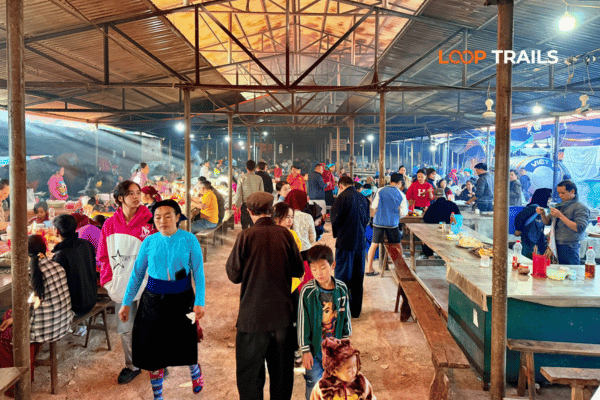
This part matters and it is not a scam warning so much as a responsible travel one. In some rural markets and roadside spots across the region you may occasionally see wild birds kept in small cages for sale, or products made from wildlife. The simple guidance: do not buy any of it. Demand from buyers, including well meaning tourists, is part of what keeps wildlife trade alive, and this is the same province trying to protect one of the world’s rarest monkeys. Skip anything involving wild animals or animal products, do not feed or chase animals for photos, and never try to enter protected conservation areas without proper permission. Enjoying the wildlife here and protecting it are the same thing.
Learn more: Ha Giang Motorbike Rental
The kind of trip you book shapes how much you actually notice. Here is how the options stack up for a nature minded traveler.
Whichever you pick, the real lever is pace. A slower, longer itinerary that includes Du Gia and some early mornings will always out perform a faster trip for wildlife. Tell us how you like to travel and we will steer you to the right Ha Giang Loop tour, or just message us through our contact page with your plans.

Learn more: Cao Bang Loop 3 Days best kept secret
Depends entirely on what kind of wildlife lover you are. If you are a hardcore birder building a life list, be honest with yourself and point your trip at Vietnam’s dedicated parks instead. Ha Giang will frustrate you as a pure birding destination.
But if you love landscapes, rural mountain life, and the idea of nature woven through one of the great road trips of Asia, with butterflies on the streams, birds at dawn, buffalo in the mist, and the quiet thrill of traveling through the last refuge of the Tonkin snub nosed monkey, then yes, absolutely. Just come for what it actually is, travel slowly, and let it surprise you in small ways rather than big ones.
If that sounds like your kind of trip, we can build you a loop with the pace and stops to make the most of it. Have a look at our Ha Giang Loop tours, and if you want to extend into the wider region, our Ha Giang and Cao Bang combined tours cover even more ground. Questions about the best season or route for nature? Reach us any time on our contact page and we will help you plan it properly.

Learn more: Ha Giang Loop by Army Jeep Tours
Not in the safari sense. It is a landscape and culture road trip, not a national park full of large animals. The wildlife is more about farm animals, birds, butterflies and the karst environment than big mammals. Come for the scenery and rural life and treat nature as a bonus.
Mostly the animals of mountain farms: water buffalo, cattle, pigs, goats, ducks and chickens. Plus common birds along farmland and villages, butterflies near streams and waterfalls, lizards and geckos, and bats around the caves. Larger wild mammals are rare and usually confined to protected forest.
Almost certainly not, and that is intentional. Ha Giang is the global stronghold of this critically endangered primate, but the monkeys live in strictly protected conservation areas that are not open for casual tourism. Even researchers rarely get clear sightings. The responsible approach is to know the story and support conservation, not chase a sighting.
For casual bird watching while you travel, yes, there are plenty of common birds if you slow down and look. For serious birding with a big species count, no. Vietnam’s birding hotspots are parks like Cuc Phuong, Tam Dao, Van Long and Phong Nha, not the Ha Giang Loop.
Spring brings flowers, sunbirds and butterflies, and the cooler months bring some migratory birds to northern Vietnam generally. Conditions vary year to year, so check current weather and timing for your travel dates rather than relying on a fixed rule.
If you care about birds at all, yes. Even an inexpensive pair makes a huge difference, and a bird ID app like Merlin helps you identify what you spot. They are easy to pack and well worth the space.
Du Gia is the most nature forward stop for most travelers, with a quieter valley, a waterfall, a swimmable river and good birdsong at dawn. Quiet river valleys and the higher forest patches are also better than the busy farmed sections.
Yes, if you do it responsibly. Stay out of strictly protected conservation areas unless you have proper permission, do not buy wildlife or wildlife products, do not feed or chase animals for photos, and choose operators and homestays that respect conservation.
Avoid anything involving wild animals or wildlife products, including caged wild birds and items made from wildlife. Buyer demand fuels the wildlife trade, so simply not buying it is one of the most useful things a traveler can do.
At least 3 to 4 days. A rushed 2 days loop is all riding and no stopping, which is the opposite of what wildlife watching needs. More days, a slower pace and a couple of early mornings make all the difference.
Nothing that should put you off the trip. Use normal common sense around tall grass and damp forest, watch where you put your hands and feet on trails, and you will be fine. The loop is a very manageable environment for an ordinary traveler.
For a dedicated birding trip, the northern parks of Cuc Phuong, Tam Dao and Ba Vi, the Ninh Binh and Van Long karst wetlands, and Phong Nha further south are the targets. Many travelers ride the Ha Giang Loop for the road trip and add one of these parks elsewhere on their route for the birds.
Contact information for Loop Trails
Website: Loop Trails Official Website
Email: looptrailshostel@gmail.com
Hotline & WhatSapp:
+84862379288
+84938988593
Social Media:
Facebook: Loop Trails Tours Ha Giang
Instagram: Loop Trails Tours Ha Giang
TikTok: Loop Trails
Office Address: 48 Nguyen Du, Ha Giang 1, Tuyen Quang
Address: 48 Nguyen Du, Ha Giang 1, Tuyen Quang
Facebook X Reddit Table of Contents Learn more: Ha Giang Loop Tours Most people drive past the Quan Ba area twice on
Facebook X Reddit Table of Contents Learn more: Ha Giang Loop Tours The Ha Giang Loop has a reputation problem with older