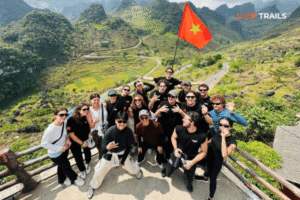


Thúy Kiều (Grace) is a travel blogger and content contributor for Loop Trails Tours Ha Giang. She holds a bachelor’s degree in Sustainable Tourism from Vietnam National University, Hanoi, and has a strong passion for exploring and promoting responsible travel experiences in Vietnam’s northern highlands.
Learn more: Ha Giang Loop Tours
There are markets in Vietnam, and then there is Khau Vai.
Once a year, in a small valley in Meo Vac district, something happens that has no real equivalent anywhere else in the country. Former lovers meet again. Couples who were separated by circumstance, tradition, or family opposition come together for a single afternoon, share a meal, talk quietly among the hills, and then go home to their separate lives. Their spouses know. Their children sometimes come along. Nobody pretends it isn’t happening, because here, it never had to be hidden.
That’s Khau Vai Love Market, and if you’re timing a visit to Ha Giang around it, this guide covers everything you need to know: when it is, how to get there, what to actually expect on the day, and how to work it into a Ha Giang Loop itinerary that doesn’t feel rushed.
Learn more: Ha Giang Loop 2 Days 1 Night
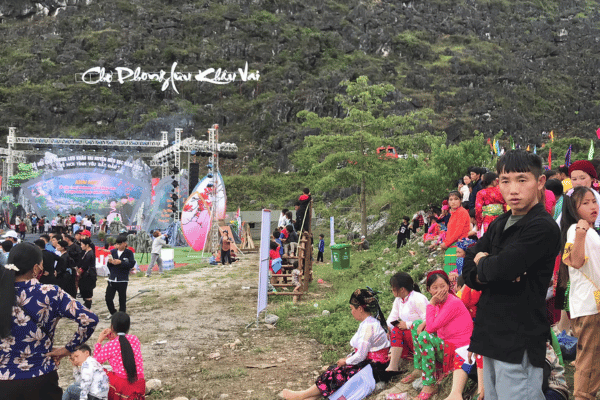
Khau Vai Love Market (locally written as Chợ Tình Khâu Vai) is an annual gathering held in Khau Vai commune, Meo Vac district, in Ha Giang province, northern Vietnam. It’s one of a handful of “love markets” that still exist among ethnic minority communities in the region, but Khau Vai is the most well-known and the most visited.
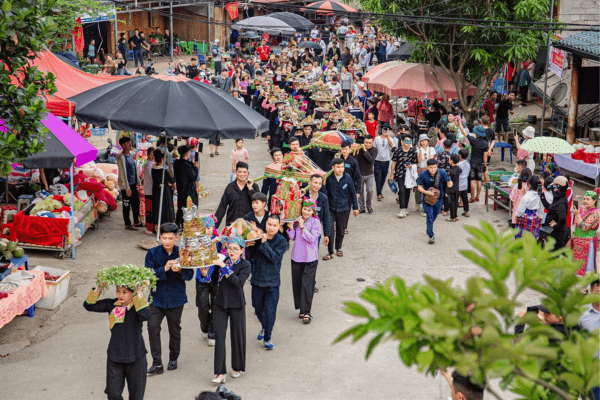
The market draws ethnic minority groups from across the surrounding mountains, including H’mong, Dao, Tay, Nung, and Lo Lo communities. People arrive in full traditional dress, many traveling on foot or by motorbike from remote villages a day’s journey away.
What sets it apart from a typical highland market is its cultural purpose. Yes, there’s food, local produce, handicrafts, and rice wine. But the reason people travel from so far, and the reason outsiders keep coming to witness it, is the reunion tradition that plays out alongside the regular market activity.
The market has been recognized as a National Intangible Cultural Heritage of Vietnam, which means it carries official protection and acknowledgment of its cultural significance. That status also means it’s increasingly organized and attended, for better or worse, which we’ll get into later.
The story most commonly told goes something like this: a H’mong man and a Lo Lo woman fell in love, but their different ethnic backgrounds made marriage impossible under the customs of the time. They eventually went separate ways and married others, but agreed to meet at this valley once a year to see each other. The tradition spread. Other couples in similar situations, separated not by choice but by custom, began doing the same.
Whether the story is historically documented or mythologized over generations, the cultural practice it gave rise to is very real. And what makes it genuinely remarkable is that it operates openly, within full community knowledge, without stigma.
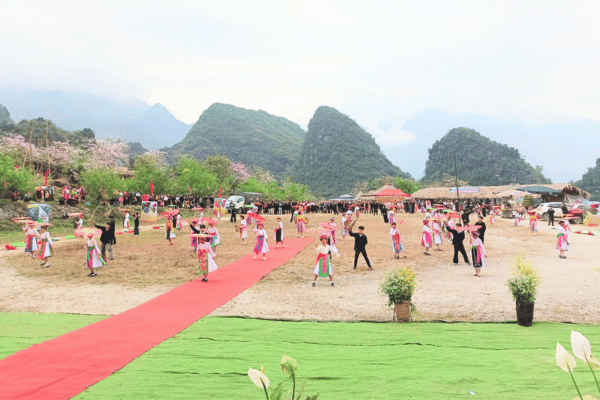
The majority of attendees are from the H’mong (both Black and Flower H’mong), Dao, Lo Lo, Tay, and Nung communities. Each group has distinct traditional clothing, and the visual contrast at the market — cobalt and silver Flower H’mong embroidery next to the deep red and black of Dao dress — is part of what makes the event so striking to witness.
If you’re interested in ethnic minority culture in Vietnam’s far north, Khau Vai is one of the most concentrated opportunities to observe it in a setting that feels less staged than some highland village tourism experiences.
Learn more: Ha Giang Loop 3 Days 2 Nights
The market falls on the 27th day of the 3rd lunar month each year. That typically lands sometime in late April or early May in the Gregorian calendar, though the exact date shifts each year depending on the lunar calendar.
For any specific year, look up a Vietnamese lunar calendar converter and plug in the 27th of the 3rd lunar month to get the Gregorian date. Because this moves, always verify the exact date well in advance before booking travel. Don’t rely on blog posts from previous years as the final word on the date.
The market itself runs for roughly one day, though the atmosphere builds the evening before as vendors set up and travelers arrive from distant villages.
The simplest approach: search “Khau Vai Love Market [year] date” closer to the time, or ask directly when booking a tour. Any reputable Ha Giang tour operator will know the date and can tell you whether it falls within your travel window. Tour operators sometimes build special itineraries around it, which is worth asking about.
Morning is when the market stalls are at their most active and the atmosphere is still relatively calm. By midday the crowds peak. The reunions and quieter interpersonal moments tend to happen throughout the afternoon, often away from the main market stalls, in the surrounding fields and hillsides.
If you want photographs of traditional dress without too many other cameras in the frame, early morning is your window. If you want the full atmosphere of the event, late morning through early afternoon is when it’s most alive. Plan to spend most of the day there if you can, rather than rushing in and out.
Learn more: Ha Giang Loop 4 Days 3 Nights
Khau Vai commune sits in Meo Vac district, roughly 20 to 25 kilometers from Meo Vac town. Meo Vac itself is one of the stops on the classic Ha Giang Loop, sitting at the far end of the Ma Pi Leng Pass from Dong Van.
If you’re already riding or traveling the Ha Giang Loop, Khau Vai fits naturally as a detour from Meo Vac. If you’re planning a visit specifically around the market date, you’ll want to base yourself in Meo Vac the night before.
The distance from Ha Giang city to Meo Vac is around 150 kilometers via the mountain route through Dong Van. The road is one of the most scenic in Vietnam — it passes through Yen Minh, Dong Van, and over Ma Pi Leng Pass before dropping down into Meo Vac. It’s also one of the more demanding roads in the country. The surface condition is generally paved but includes steep switchbacks, narrow sections, and areas prone to landslides after heavy rain.
Driving time varies considerably depending on your pace, how often you stop, and road conditions. Don’t plan on completing it quickly. If you’re on a motorbike for the first time on these roads, factor in extra time and take it seriously.
Late April and early May fall in the transition to the wet season in Ha Giang. The weather can shift quickly. Morning fog is common in the valleys, and afternoon rain is possible. The roads become genuinely slippery in wet conditions, particularly on the limestone-heavy sections of Ma Pi Leng.
Come with the right gear: rain jacket, proper footwear, and waterproofing for your bags and electronics. Road conditions change seasonally, so checking current updates before you ride is always worth doing. Rules and conditions can change — check local updates when you book.
Learn more: Ha Giang Cao Bang 5 Days 4 Nights
If you’re picturing a secret gathering of romantic tension, the reality is both more ordinary and more moving than that.
The reunions don’t happen at a specific time or in a designated area. They’re woven into the fabric of the day. Former partners sit together under trees, share food from market stalls, or simply walk together through the surrounding hillsides. Some couples bring their current spouses. Some come alone. It’s not a performance, and that’s what makes it so worth paying attention to.
What strikes most visitors is the quiet dignity of it. These are older couples, often, who have built full lives apart. This single annual meeting is a form of acknowledgment — of what was, and of what both people carry. There’s no drama in the Hollywood sense. It’s just human and understated in a way that most travel experiences aren’t.
You may also see younger generations attending simply as participants in the cultural event: young men and women using the occasion to meet potential partners, which is a secondary (and older) function of the love market tradition.
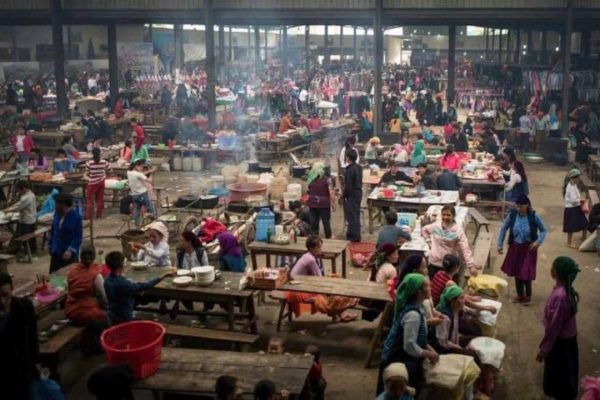
Beyond the reunion tradition, Khau Vai functions as a regular highland market. You’ll find:
The food stalls make for a good lunch stop. Thắng cố is an acquired taste — the stew uses every part of the animal and has a strong flavor — but it’s culturally significant to the region. You’re not obligated to eat it, but it’s worth at least knowing what it is.
The visual richness of Khau Vai comes almost entirely from the traditional clothing. Flower H’mong women in intricately pleated skirts with geometric embroidery. Lo Lo women in colourful panelled tunics. Dao women with elaborate headdresses and silver accessories. The contrast between groups is remarkable.
Photography etiquette matters here. Always ask before photographing people at close range, especially during what appear to be private conversations or moments of reunion. A smile and a gesture toward your camera is usually enough to gauge whether someone is comfortable. Many people are happy to be photographed in their traditional dress; others, particularly during more personal moments, clearly prefer not to be. Read the situation.
Avoid using a flash without permission. And if someone declines, move on without making a scene about it.
Learn more: Ha Giang Cao Bang Ba Be Lake 6 Days 5 Nights
This question comes up more and more as the market grows in profile.
The short answer: yes, genuinely, but go in with calibrated expectations.
Tourism has changed the event. There are more vendors, more outside visitors, more organized elements than there were a decade ago. You will share the space with other tourists, including domestic Vietnamese visitors who travel specifically for this. The market has a managed, event-like quality in places that it didn’t always have.
What remains intact is the actual cultural practice. The reunions still happen. The ethnic communities still come in traditional dress. The food, the music, the language, the social dynamics between different minority groups — none of that has been replaced by performance for tourists. It’s still a real community gathering that outsiders are permitted to witness.
The difference from a typical tourist attraction is that Khau Vai hasn’t been built for visitors. It’s been opened to them. That’s a distinction worth keeping in mind as you move through the day.
If you come expecting a pristine, undiscovered cultural ceremony with no other cameras in sight, you’ll be disappointed. If you come curious and patient, willing to observe more than you consume, it’ll likely be one of the more memorable days of your Vietnam trip.
Learn more: Ha Giang Loop route and itinerary
The Ha Giang Loop is the natural framework for a Khau Vai visit. Meo Vac is already a key stop on the loop, and Khau Vai sits a short detour away. If you’re timing your trip around the market date, the main planning question is how many days you have.
4-Day Loop with Khau Vai:
5-Day Loop with More Breathing Room:
Note that the Nho Que River viewpoint below Ma Pi Leng is one of the most photographed spots on the entire loop — don’t rush past it on your way back.
These are rough outlines. Actual stops, distances, and pacing depend on your riding experience, group size, and what you want to prioritize. A good guide will adjust the itinerary around weather and road conditions in real time, which is one of the reasons having a local on the ride with you genuinely makes a difference on this route.
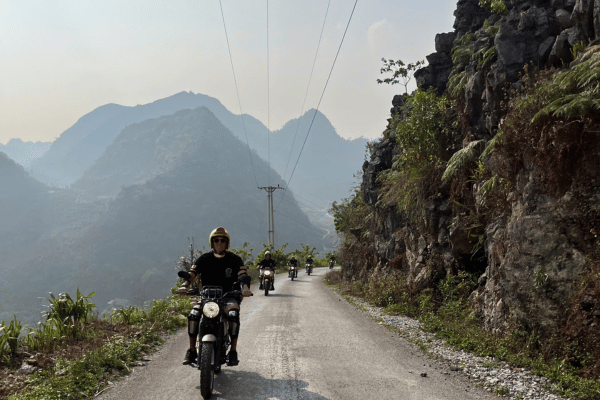
Easy Rider (guided motorbike with a local driver): This is the most popular option for people who want to experience the loop without the stress of navigating the mountain roads alone. Your guide drives, you ride pillion, and you get the insider knowledge about stops, culture, and conditions that a first-time visitor simply can’t replicate from a map. For Khau Vai specifically, having a guide who speaks the local language and can provide context for what you’re seeing is genuinely valuable.
Self-Drive Motorbike: If you’re an experienced rider and want the freedom to set your own pace, self-drive is the most independent way to go. The Ha Giang Loop is achievable on a semi-automatic or manual motorbike for riders with solid experience. Be realistic about your skill level — these are mountain roads, not city streets.
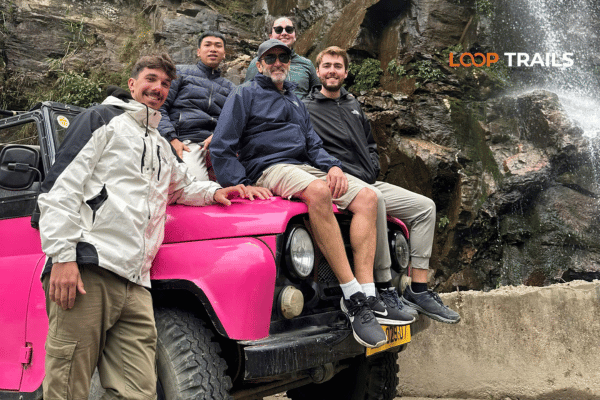
Jeep Tour: A good option for couples, small groups, or anyone who wants to cover more ground comfortably without riding. You get the views without the physical demands, and it’s easier to manage if the weather turns. Less flexibility for spontaneous stops than a motorbike, but still very capable on these roads.
Not sure which suits you? [Check out the Ha Giang Loop tour options on our tours page] and feel free to send us a message on WhatsApp — we’ll match you to the right format based on your experience and travel style.
Learn more: Ha Giang Packing list
Clothing:
For the Market Day:
Practical:
Photography Gear:
Learn more: Ha Giang Homestay Guide
To visit Khau Vai comfortably, plan to stay in Meo Vac the night before and possibly the night of the market. Meo Vac is a small but developing town with a growing range of accommodation. Guesthouses are the norm here — most are simple but clean, with hot water and wi-fi. A handful of more comfortable options have opened in recent years for travelers who prefer something beyond a basic homestay.
Prices are significantly lower than in Ha Giang city. Book ahead if you’re visiting on the Love Market date specifically — accommodation fills up fast in the days surrounding the event. This is not a situation where you can expect to show up and find a room.
For the actual market day, Khau Vai commune doesn’t have significant accommodation options. It’s a day trip from Meo Vac, not an overnight destination in itself.
Learn more: Ha Giang Loop Mistake to Avoid
Showing up without knowing the date. The lunar calendar date moves every year. Confirm it before you book anything. Arriving the day after is a real and entirely avoidable disappointment.
Rushing. The market doesn’t peak in the first hour. Give yourself the whole day. The quieter moments — the ones you’ll actually remember — happen when the initial crowd energy settles.
Being intrusive with your camera. The reunions are personal events, even when they happen in a public space. Treat them accordingly. You’re a guest.
Arriving without cash. Everything at the market is cash-only. Bring enough VND in small bills.
Ignoring the weather. Late April can be warm and clear or wet and cold. Plan for both. The roads from Meo Vac to Khau Vai can be slippery in rain.
Booking transport too late. If you’re visiting independently and need a motorbike or driver for the day, don’t assume you can arrange it in Meo Vac on the morning of the market. Organize transport through your accommodation or tour operator the day before.
Skipping the surrounding area. Khau Vai is worth combining with more time in Meo Vac district. The Nho Que River from the viewpoint below Ma Pi Leng is one of the most striking landscapes in the whole north. Don’t treat this as a day trip in isolation when it sits inside one of Vietnam’s best long-ride circuits.
If you want to plan the full loop around the Love Market date, [our Ha Giang Loop tours] are built with flexibility — let us know your dates and we’ll structure an itinerary that gets you to Khau Vai at the right time without rushing the rest of the ride.
Learn more: Ha Giang Motorbike Rental
The market falls on the 27th day of the 3rd lunar month each year. The Gregorian date shifts annually. Check a Vietnamese lunar calendar converter for the exact date for your year, or ask when you book your tour — any reputable Ha Giang operator will know.
Entry fees, if any, are subject to change. As of recent years, a small admission fee has been charged at peak events — check current updates when planning, as these policies can change between years.
Khau Vai is approximately 170 to 180 kilometers from Ha Giang city, via Dong Van and Meo Vac. It’s not a day trip from the city — plan to stay at least one night in Meo Vac.
Yes. Independent travelers ride or hire transport to Meo Vac and then to Khau Vai on the market day. The roads are navigable if you have motorbike experience. A guided tour adds context and ease, particularly if it’s your first time on the Ha Giang Loop roads.
The local communities speak their own ethnic languages (H’mong, Lo Lo, Dao, etc.) and Vietnamese. English is very limited. If you want real interaction or cultural context during the market, a local guide who speaks Vietnamese and some minority languages will make a significant difference.
Yes, but with caveats. The roads to reach it are mountain roads — not suitable for everyone. A Jeep tour is the most accessible option for travelers who want to avoid the physical demands of a motorbike. The market itself is family-friendly.
Handmade embroidered textiles, silver jewelry, and woven accessories from local artisans are the most meaningful purchases. Avoid buying items that appear mass-produced — the value of the market is in its authenticity, and supporting the artisans directly matters.
Generally yes. The market has been open to outside visitors for many years, and the local communities are accustomed to and often welcoming of curious, respectful guests. The key word is respectful: observe more than you intervene, ask before you photograph, and treat it as a cultural experience rather than entertainment.
Absolutely. Ha Giang and Cao Bang are neighboring provinces, and a combined tour covering the Ha Giang Loop and the Cao Bang circuit (including Ban Gioc, Phia Oac, and Nguom Ngao Cave) makes for a compelling extended itinerary. This typically requires at least 7 to 9 days to do without feeling rushed. [See our Ha Giang and Cao Bang combined tours] for itinerary options.
Contact us directly with your intended travel dates. We’ll confirm whether the Love Market falls within your window and build the itinerary around it. [WhatsApp or our booking page] is the fastest way to get an answer.
Easy Rider means you ride pillion with an experienced local guide who drives. Self-drive means you handle your own motorbike. Easy Rider is recommended for anyone unfamiliar with mountain riding, first-time visitors to Ha Giang, or those who want cultural commentary along the way. Self-drive suits experienced riders who prefer independence. Both can work for a Khau Vai itinerary.
Ha Giang and the Love Market are generally considered safe destinations. As with any travel, standard awareness applies. Traveling as part of a guided tour adds an extra layer of comfort, particularly on the road sections, and is a common choice for solo female travelers doing the loop.
Contact information for Loop Trails
Website: Loop Trails Official Website
Email: looptrailshostel@gmail.com
Hotline & WhatSapp:
+84862379288
+84938988593
Social Media:
Facebook: Loop Trails Tours Ha Giang
Instagram: Loop Trails Tours Ha Giang
TikTok: Loop Trails
Office Address: 48 Nguyen Du, Ha Giang 1, Tuyen Quang
Address: 48 Nguyen Du, Ha Giang 1, Tuyen Quang
Facebook X Reddit Table of Contents Learn more: Ha Giang Loop Tours Most people drive past the Quan Ba area twice on

Facebook X Reddit Table of Contents Learn more: Ha Giang Loop Tours The Ha Giang Loop has a reputation problem with older