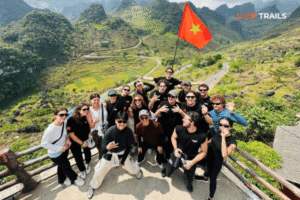


Thúy Kiều (Grace) is a travel blogger and content contributor for Loop Trails Tours Ha Giang. She holds a bachelor’s degree in Sustainable Tourism from Vietnam National University, Hanoi, and has a strong passion for exploring and promoting responsible travel experiences in Vietnam’s northern highlands.
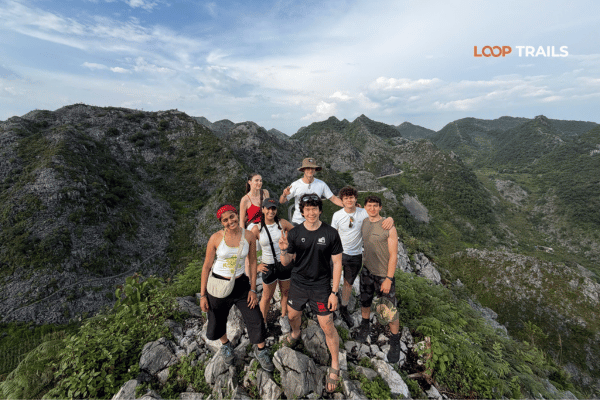
Learn more: Ha Giang Loop Tours
Vietnam looks manageable on a map. Then you drive it. The country runs about 1,650 km from the Chinese border to the southern tip, and almost nothing interesting happens on the straight line between two cities. It happens on the ridge road nobody mentioned, on the pass that opens without warning onto a river gorge, at the market that only exists on Sunday morning and is gone by noon.
This is a working list of the best road trips in Vietnam by car and jeep: where each route goes, what the road is actually like, when to go, and which vehicle makes sense. No romantic vagueness, no invented statistics.
One thing up front, because it matters when you read a list like this. We run tours in the far north, so Ha Giang and Cao Bang are the roads we know best, kilometre by kilometre. The other routes are here because they genuinely belong on the list, not because we sell them. Where we have a product that fits, we say so plainly. Where we do not, we tell you that too.
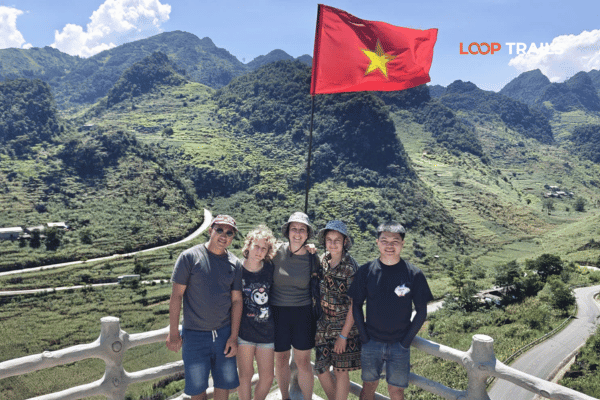
Learn more: Ha Giang Loop 2 Days 1 Night
Two things changed in the last few years, and together they reshaped what is possible here.
The first is the road surface itself. Mountain highways that used to be a rumour of gravel and landslides are now mostly sealed, with real drainage and real barriers on the worst corners. Not all of them, and not permanently, since a bad monsoon can undo a year of work in one night. But the general direction is clear.
The second is that the country finally has vehicles worth taking up there. For a long time the only way to reach the good stuff was on two wheels, which quietly excluded everyone who does not ride, everyone travelling with a parent or a small child, and anyone visiting during a wet month. Cars and open top jeeps changed that.
What you get in return for driving instead of flying is the part of Vietnam that does not appear in a three city itinerary: hill markets, terraced valleys, roadside noodle stalls with plastic stools and one dish on the menu, and the specific pleasure of stopping whenever something looks interesting.

Learn more: Ha Giang Loop 3 Days 2 Nights
Get this decision right and everything else falls into place.
A sedan or a small van with a local driver is the quiet, comfortable, boring choice, and boring is often correct. Air conditioning, a closed roof, a locked boot for your bags, and a driver who reads the traffic the way locals do. On long transfer days, on the coast, and anywhere the road is properly paved, a car is hard to beat.
Where a car falls short is on the roughest mountain sections and, honestly, on the experience itself. You are looking at the north through glass.
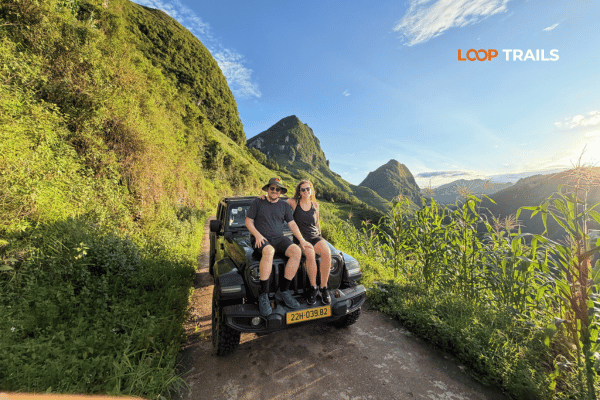
An open top jeep is the sweet spot on mountain routes, and it is the vehicle most of our guests choose for Ha Giang and Cao Bang.
The practical case: real ground clearance on rough sections, a driver who knows the passes, luggage secured, and you arrive at the homestay able to walk properly instead of unfolding yourself off a bike. The emotional case is simpler. On Ma Pi Leng you can stand up, look straight down into the gorge, and take a photograph that a windscreen would have ruined.
Jeeps work in weather that makes riding miserable. Cold January fog, a heavy afternoon in July, a stubborn drizzle in March: you put the roof on and keep going. Trip still happens.
The tradeoff is honest. A jeep is slower than a car on flat highway, louder, and it costs more per day than a motorbike. Most people decide that is a fair trade for the north. Some do not.
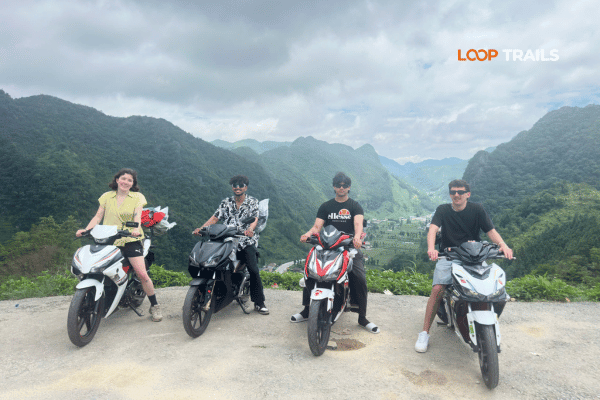
If you already ride at home, if you are travelling in the dry months, and if the physical act of riding is the reason you came, then ride. Nothing here is an argument against it. A motorbike on the Ha Giang Loop in October is one of the great experiences in Southeast Asia.
Just be honest with yourself about experience level. The mountain roads punish overconfidence, and a scooter you rented in Hanoi last week is not the same as the bike you own at home. If you want to ride but not navigate, an easy rider tour puts you on the back of a bike with a local driver, which is a genuinely good middle option.
Not sure yet? Tell us your dates, your group and whether anyone rides, and we will tell you which mode fits. Message us on WhatsApp and you will usually have an answer the same day.
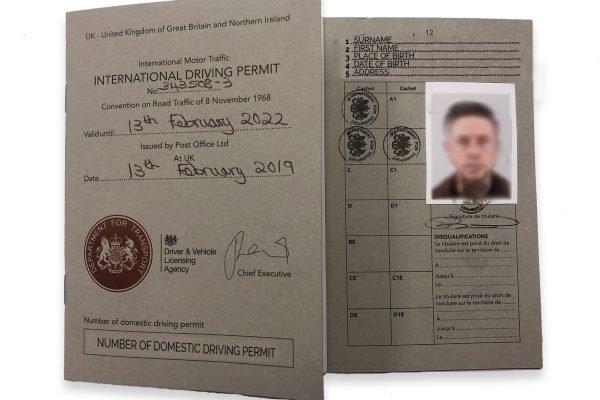
Learn more: Motorbike License IDP Guide 2026
This section is short because the honest answer is short.
Driving yourself legally in Vietnam is more complicated than most travellers expect, and the requirements depend on which country issued your licence, what kind of international permit you hold, and what you intend to drive. The rules are also revised from time to time. Do not rely on a forum post from three years ago, and do not rely on this article either. Check the current position with your embassy or with a licensed local agency before you assume you can drive here.
Two practical points that stay true regardless of the details:
Border areas in the far north have additional access requirements in places, and enforcement of these changes over time. Licensed operators handle the paperwork as part of the trip. If you are organising independently, ask locally before you set off rather than after.
Learn more: Ha Giang Loop 4 Days 3 Nights
Ordered roughly from the north down. The first three are the strongest routes in the country for a car or a jeep, and we say that as people who drive them constantly, so weigh it accordingly.
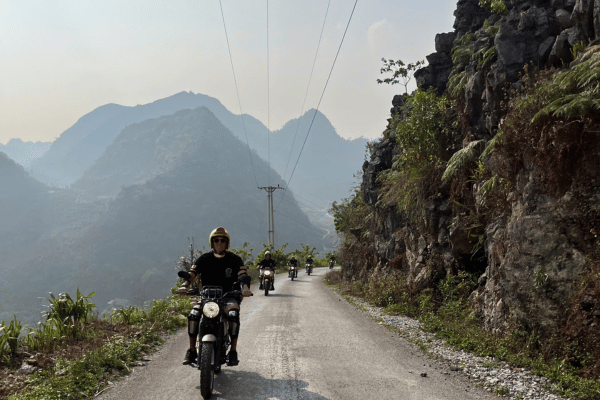
The Ha Giang Loop is the reason most people come north, and it deserves the reputation. Limestone spikes out of the ground in every direction, villages sit on ledges where no village should reasonably sit, and the road just keeps climbing.
The set piece is Ma Pi Leng, the pass between Dong Van and Meo Vac, with the Nho Que River in a gorge far below. Most itineraries add a boat trip on the river into the Tu San canyon, which is worth the detour purely for the sense of scale. Elsewhere on the loop: Quan Ba Heaven Gate early in the trip, the old quarter at Dong Van, Lung Cu near the northernmost point, and the run down to Du Gia if you take four days instead of three.
Take the four day version if your schedule allows. The three day loop works and it is what most people book, but day four is where the pace finally drops, the villages get smaller and the itinerary stops feeling like a checklist.
If a jeep is the right fit, our Ha Giang Loop tours run in 2 days 1 night, 3 days 2 nights and 4 days 3 nights formats, with open top jeeps, English speaking guides and small groups.
Learn more: Ha Giang Cao Bang 5 Days 4 Nights
Cao Bang is where northern Vietnam looks the way people imagine it before they arrive: rice paddies, karst hills, water buffalo actually working, and a fraction of the tourist traffic.
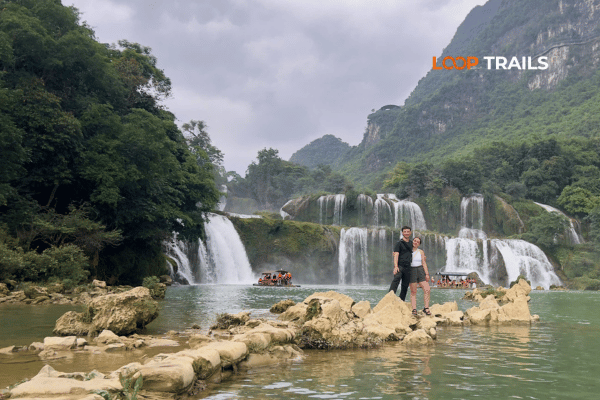
Much of the region falls inside the Non Nuoc Cao Bang UNESCO Global Geopark, and the geopark routes are a useful way to structure a couple of days. Ban Gioc is the headline. Phia Oac and Phia Den, up in the highlands, are the surprise: cool enough to feel like a different country, with mossy forest, old French era ruins and mist that sits in the trees most mornings.
It works as a standalone trip from Hanoi, and it works even better bolted onto Ha Giang.
See our Cao Bang Loop tours if you want this section run independently.
The classic northwest circuit is longer and gentler than Ha Giang. You trade sheer limestone for wide valleys, tea plantations around Moc Chau, the stilt house villages of Mai Chau and the terraces of Pu Luong.
Dien Bien Phu adds a serious historical layer if you have any interest in twentieth century history, and the run up towards Sapa closes the loop through some of the highest road in the country.
The main planning error is underestimating driving time. The distances look modest and the average speed is not. Build in more hours than the map suggests, and do not schedule the final leg for after dark.

Learn more: SaPa vs Ha Giang
O Quy Ho is one of the great drives in Vietnam, a long, wide, well engineered pass with viewpoints that earn a stop. Sapa itself has changed enormously and is not to everyone’s taste any more, but as a base for driving it still works.
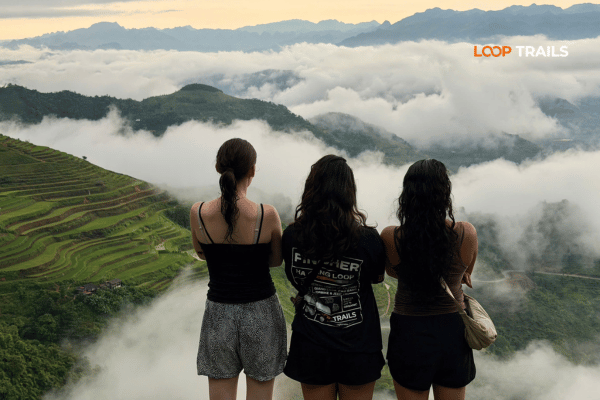
Y Ty is the reason to keep going. Terraces stacked up entire hillsides, cloud that pools in the valleys at dawn, and a market that draws people from villages across the region. Time it for the rice: green terraces around June, gold around September, water mirrors in spring. Exact weeks shift year to year, so ask locally before you commit to dates.
Ba Be is the largest natural lake in the country, ringed by forest and limestone, and a night in a stilt house homestay by the water is one of the calmest stops in the north. The drive on to Cao Bang is short enough to leave the afternoon free.
This is a good option if you have four days and do not want to spend all of them climbing.
The western branch of the Ho Chi Minh Road is the quietest good road in Vietnam. It runs through the forested spine of the country near the Laos border, and you can drive for long stretches without seeing another vehicle. Jungle on both sides, river crossings, and almost nothing built.
Fuel and food are genuinely sparse out there, so fill up before you leave Phong Nha and carry water and snacks. Mobile signal drops in places. This is the one route on the list where a bit of self sufficiency matters.
Phong Nha at the northern end has some of the largest caves in the world, and it is worth two nights on its own.
Learn more: Ha Giang vs Hai Van Pass
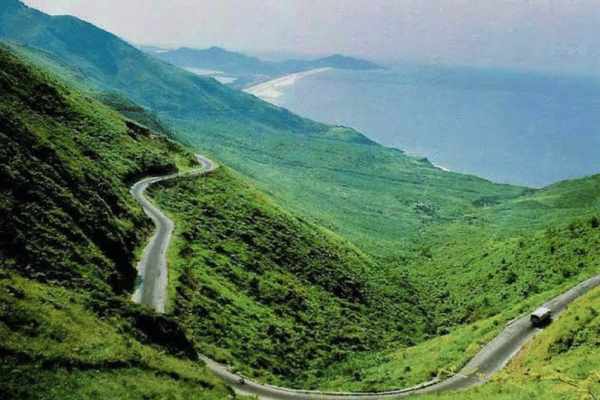
Most through traffic now uses the tunnel, which means the old pass road is far calmer than it used to be. It climbs out of Lang Co with the sea on one side, tops out at the old bunkers and gate, then drops towards Da Nang with the whole bay in front of you.
You can drive it in ninety minutes. Do not. Take the day, stop at Lang Co for seafood, spend an hour at the top, and go slowly down the far side. It pairs perfectly with a couple of nights in Hoi An.
This drive changes climate on you. You leave the coast in heat and humidity and arrive in Da Lat in a fleece. The pass between them is long, green and often wrapped in cloud, with waterfalls visible from the road.
Da Lat itself is pine forest, greenhouses, French era architecture and the centre of Vietnamese coffee country. Push further into the highlands towards Buon Ma Thuot and you get plantations, crater lakes and very few other foreign visitors.
No passes, no views, and it still belongs on the list. The delta is about texture: floating markets early in the morning, orchards, endless bridges over brown water, and a pace of life that is completely unlike the north.
Drive it as a two day loop from Ho Chi Minh City, or take four days and continue to Chau Doc near the Cambodian border. Mornings are the good part, so start early and take the afternoon off.
Learn more: Cao Bang Loop 3 Days best kept secret
Vietnam does not have one climate. It has at least three, and they disagree with each other constantly.
| Region | Best months | What to expect otherwise |
|---|---|---|
| Far north: Ha Giang, Cao Bang, Sapa | September to November, and March to May | Cold and foggy from December to February, wet with landslide risk from June to August |
| Central coast: Hue, Da Nang, Hoi An | February to August | Heavy rain and storm season from roughly September to December |
| South and the delta | December to April | Afternoon downpours from May to November, usually short |
Notes worth having:
Learn more: Ha Giang Border Area Permit 2026
Traffic here operates on flow rather than on rules. Vehicles merge continuously, the horn means “I am here” rather than “I am angry”, and gaps close faster than you expect. Once you understand it, it is oddly readable. Learning it from the driving seat, in the mountains, on holiday, is not the ideal introduction.
In the countryside the hazards are different and more literal: buffalo on the road, dogs, children, a truck taking the whole corner, gravel washed across a bend after rain. On mountain roads assume every blind corner has something in it and drive accordingly.
Two rules we hold to on every trip, and would recommend to anyone driving independently:
Fuel is easy to find in towns and scarce on remote stretches. Fill up when you can rather than when you need to.
Learn more: Ha Giang Loop by Jeep for Families & Groups
We are not going to publish numbers here, because rates move and a stale price on a blog helps nobody. What is worth knowing is how the pricing is structured, so you can compare two quotes properly.
Car and jeep tours are usually priced per vehicle per day, or per person on a group departure. Anything sold per vehicle gets cheaper per head as your group grows, which is why four friends often find a private jeep costs less each than they assumed.
Ask what is included before you compare anything. The usual variables are fuel, the driver, the driver’s own accommodation and meals, park and site entrance fees, boat trips, and any permits. A cheap quote that excludes four of those is not cheap.
Accommodation tier is the other big lever. A basic homestay and a boutique room in the same town can differ by a multiple, and both are sold as “3 days 2 nights”.
Our own rates for Ha Giang and Cao Bang trips are listed on each tour page and include what we say they include. If a quote elsewhere looks dramatically lower, it is usually the inclusions rather than the discount.

Learn more: Ha Giang Loop Mistake to Avoid
Vietnam is a straightforward country to travel in. These are the recurring annoyances, not warnings about danger.

Learn more: Ha Giang Packing list
For a mountain trip by jeep, in roughly the order you will want them:
Learn more: Ha Giang Loop by Wrangler Rubicon Jeep
Find yourself below.
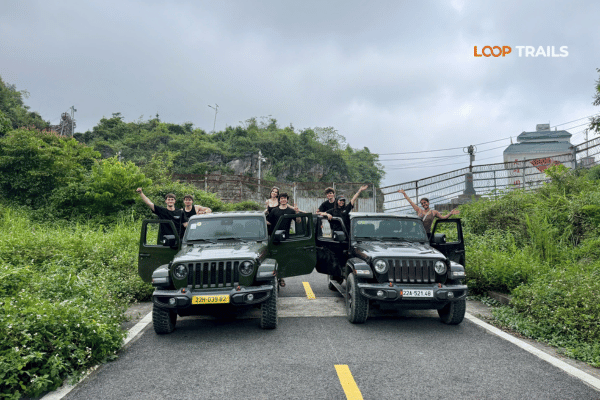
“We do not ride, and we want the north.” Jeep, three or four days on the Ha Giang Loop. This is the exact scenario the jeep product exists for: same road, same stops, same homestays, none of the riding.
“We ride at home and we came here to ride.” Self drive motorbike, dry season, and take the four day loop. We rent bikes in Ha Giang and can put a guide with you for the harder sections if you want one.
“We want to ride but not to navigate.” Easy rider. You are on the back with a local driver who knows the road. Popular with solo travellers and with couples where only one person rides.
“We have a full week and want more than the loop.” Ha Giang to Cao Bang, five or six days. Best value week in northern Vietnam and you never repeat a road.
“We are travelling with parents or young children.” Jeep or private car, and add a day. Comfort, a closed option if the weather turns, and a schedule that does not need everyone at full energy by 8am.
“We only have three or four days total, from Hanoi.” Cao Bang, or the Ha Giang Loop in three days. Both work. Cao Bang is quieter, Ha Giang is more dramatic.
“We are in central Vietnam and just want one great drive.” Hai Van Pass, Hue to Hoi An. Take the whole day.
Learn more: Best Adventure Activities in Vietnam
Exact stops shift with weather, road works and market days, which is a feature rather than a problem. Any good local operator will adjust on the day.

Learn more: Best time to visit Cao Bang
If the north is where you are heading, that is our home ground. We run the Ha Giang Loop in 2, 3 and 4 day formats and the Ha Giang to Cao Bang combine in 5 and 6 day formats, by jeep, by easy rider or self drive, with small groups and English speaking guides. We also rent motorbikes in Ha Giang if you would rather do it yourself.
Once you have a confirmed travel date, we recommend booking as soon as possible. Most guests book 1 to 3 months in advance. Unlike motorbike tours, jeep availability is limited, so early booking helps us arrange everything properly.
Send us your dates and group size on WhatsApp and we will come back with a route that fits, including the honest version of what the weather will be doing that month.
It depends on which country issued your licence and what permits you hold, and the rules are updated periodically. Check the current requirements with your embassy or a licensed local agency before you plan around self driving. Most visitors hire a vehicle with a driver, which removes the issue completely.
For almost everyone, a driver. It solves the licence question, the insurance question and the navigation question in one step, and a local driver reads mountain traffic far better than a first time visitor can. It also costs less than people expect once fuel and time are counted.
For a first visit with three to four days, the Ha Giang Loop. For a full week, Ha Giang continuing to Cao Bang. For a single great drive in the centre of the country, Hue to Hoi An over the Hai Van Pass.
Yes. The route is sealed for almost all of its length and jeeps run it daily. You visit the same viewpoints, villages and homestays as motorbike groups, including Ma Pi Leng and the Nho Que River boat trip. Nothing on the standard itinerary is bike only.
Three days is the common choice and it works. Four days is better if you can spare it, since it adds Du Gia and takes the pressure off the driving. Two days is possible but it becomes a long transfer with a couple of stops.
September to November is the strongest window, with clear air and the rice harvest, followed by March to May. December to February is cold and often foggy in the mountains. June to August is green and dramatic but wet, with occasional landslide repairs.
They are demanding rather than dangerous. Tight corners, mixed traffic and animals on the road are normal. Incidents almost always involve speed on blind bends or driving after dark. Going slowly and finishing each day before dusk removes most of the risk.
It depends on vehicle, group size and accommodation tier more than on distance. Car and jeep trips are usually priced per vehicle per day or per person on a group departure, so larger groups pay less each. Always compare what is included: fuel, driver, entrance fees, boat trips and permits.
Yes, with the right vehicle. A jeep with a roof handles wet months far better than a motorbike, and the north is at its greenest then. Expect slower driving, more roadworks and fog on the passes.
Some border areas have access requirements, and these change over time. Licensed operators handle the paperwork as part of the trip. If you are travelling independently, ask locally before you set off rather than assuming.
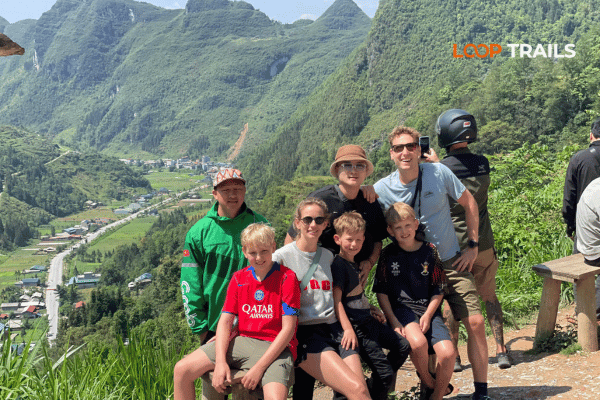
Yes, by car or jeep. Add an extra day so the schedule is relaxed, choose homestays with private rooms if that matters to you, and tell your operator the ages in advance so the driving legs can be adjusted.
Most people take an overnight sleeper bus or a daytime limousine van, and private transfers are available. Trips normally start in Ha Giang city the following morning. Tell us your arrival details and we will match your start time to the bus.
Contact information for Loop Trails
Website: Loop Trails Official Website
Email: looptrailshostel@gmail.com
Hotline & WhatSapp:
+84862379288
+84938988593
Social Media:
Facebook: Loop Trails Tours Ha Giang
Instagram: Loop Trails Tours Ha Giang
TikTok: Loop Trails
Office Address: 54A Tran Phu, Ha Giang 2, Tuyen Quang
Address: 54A Tran Phu, Ha Giang 2, Tuyen Quang
Facebook X Reddit Table of Contents Learn more: Ha Giang Loop Tours Most people drive past the Quan Ba area twice on

Facebook X Reddit Table of Contents Learn more: Ha Giang Loop Tours The Ha Giang Loop has a reputation problem with older