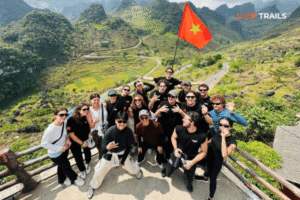


Thúy Kiều (Grace) is a travel blogger and content contributor for Loop Trails Tours Ha Giang. She holds a bachelor’s degree in Sustainable Tourism from Vietnam National University, Hanoi, and has a strong passion for exploring and promoting responsible travel experiences in Vietnam’s northern highlands.
Learn more: Ha Giang Loop Tours
Ha Giang gets famous for its mountain roads. Ma Pi Leng Pass gets photographed ten thousand times daily. The cliff edges make riders’ hands shake and adrenaline spike.
But the moments that actually changed how I see this region happened on water.
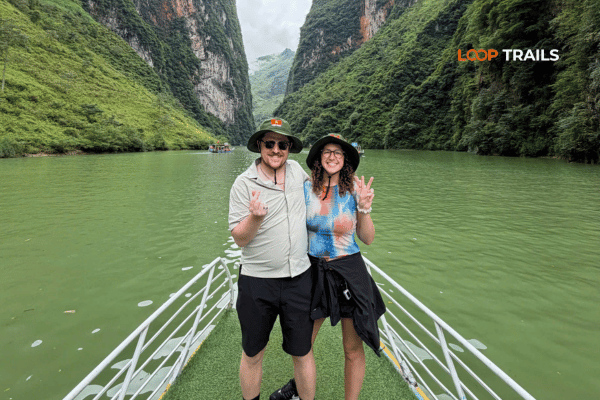
Floating down Tu San Canyon on a bamboo raft, I watched limestone walls rise 800 meters on both sides. The water was jade green, reflecting peak and sky so perfectly I couldn’t tell where water ended and air began. For twenty minutes, I didn’t take a single photograph. I just sat there.
That’s what northern Vietnam’s water adventures offer. They’re not adrenaline rushes or Instagram moments, though they photograph beautifully. They’re meditative. They break the relentless climbing and descending of mountain roads. They show landscapes from a perspective you can’t get from a bike.
Here’s what you need to know about the four essential water adventures in northern Vietnam and how they fit into your Ha Giang trip.
Lorem ipsum dolor sit amet, consectetur adipiscing elit. Ut elit tellus, luctus nec ullamcorper mattis, pulvinar dapibus leo.
Learn more: Ha Giang Loop 2 Days 1 Night
Three to four days of mountain riding is physically demanding. Your hands cramp from gripping handlebars or holding on to Easy Rider bikes. Your back aches from the constant acceleration and braking. Your eyes strain from focusing on technical road sections.
Water activities give your body a break. You’re sitting, usually without intense focus, letting your muscles rest while still experiencing the landscape. For riders over 50 or anyone with mobility considerations, this matters significantly.
Even younger, fit travelers appreciate the respite. A mountain pass section requires constant attention and minor stress. A boat ride requires minimal physical effort.
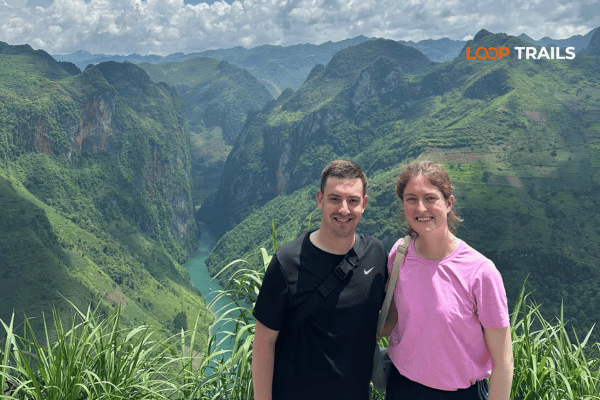
Mountains look completely different from water than from roads. Nho Que River runs below Ma Pi Leng Pass. You ride over it on Day 2, seeing the valley from above. Then you boat on it, seeing the cliffs from below. These two perspectives together create fuller understanding of the landscape’s scale and complexity.
Water also shows geological features invisible from roads. The canyon walls of Tu San reveal stratification, erosion patterns, and limestone formations that make sense once you see them directly. Cave systems show how water literally carved mountains over millennia.
Water features connect communities differently than mountain villages. Fishing communities live along rivers. Boat operators have skills and knowledge distinct from motorcycle guides. Cave exploration reveals different cultural sites (spiritual significance, historical refuges, research locations).
The communities serving water tourism are different. You might meet fishermen who’ve worked Nho Que their entire lives, not tourism guides trained to show foreigners around. That distinction matters for authentic cultural exchange.
Learn more: Ha Giang Loop 3 Days 2 Nights
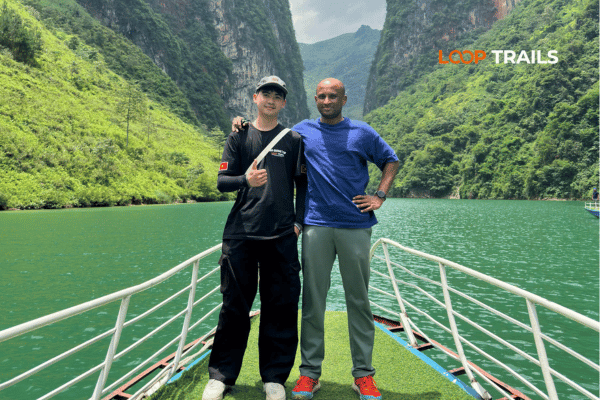
Nho Que River flows beneath Ma Pi Leng Pass through Tu San Canyon, Vietnam’s deepest canyon. The canyon floor is 800+ meters below the pass rim. The Nho Que itself is relatively modest in size, but it’s dwarfed by the canyon walls surrounding it.
The water color is extraordinary: jade green in dry season, milky turquoise after rain. Light bouncing off limestone walls and water creates colors that photographs struggle to capture accurately.
The canyon ecosystem is remarkable: The bottom stays cool due to canyon depth and shadow. Vegetation grows differently than on the surrounding plateau. The river supports fish and freshwater life adapted to rapid water and limestone environment.
Access is managed: The Vietnamese government regulates access to Tu San Canyon. You can’t explore it independently; you must go with authorized boat operators. This actually protects the ecosystem and ensures safety standards.
Learn more: Ha Giang Loop 4 Days 3 Nights
Standard Nho Que River boat tour:
Duration: 45 minutes to 1 hour
Boat type: Wooden boats, typically 4-6 passenger capacity
Operators: Local Meo Vac-based guides, licensed by government
Route: Launch from dock near Highway 4c, ride upstream into Tu San Canyon
Activities: Boat ride only (no swimming in Tu San Canyon itself, though some operators offer swimming options at different locations)
Experience flow:
You board small wooden boats with bench seating. The boatman poles/paddles upstream. As you enter Tu San Canyon, the walls rise progressively. Light takes on surreal quality due to canyon depth and stone reflections. The sound changes due to canyon acoustics. At the deepest section, the canyon is so narrow you can almost touch both walls if you lean out (don’t, but you could).
The ride is peaceful, not thrilling. The current is slow. There’s no whitewater or rapids. It’s designed for people of all ages and fitness levels.
Best times to visit:
October-March: Clear skies, consistent water levels, comfortable temperatures. This is ideal.
June-September: Rainy season means higher water volume (impressive but potentially murkier water due to sediment). Rain can make the canyon dangerously slippery, and boats operate only if water levels are safe.
April-May: Transitional period, variable conditions.
Seasonal water color:
Dry season water is clear jade green, showing the sandy bottom and rock formations underneath. Rainy season water is milky turquoise from suspended sediment but shows the canyon’s raw power. Both are beautiful, just different aesthetic.
Learn more: Ha Giang Cao Bang 5 Days 4 Nights
The Nho Que River boat ride is a standard component of most Ha Giang Loop tours. It happens on Day 2 or 3 depending on route, right after crossing Ma Pi Leng Pass.
Typical timing:
Morning: Cross Ma Pi Leng Pass by bike
Mid-morning: Arrive at boat dock near Meo Vac
Boat ride: 45-60 minutes
Then: Continue riding to afternoon destination or return toward Meo Vac
Integration with different tour types:
Easy Rider tours include boat rides as standard stops. Your guides will coordinate timing and ensure smooth transition from bikes to boats.
Jeep tours include boat rides as standard activities.
Self-drive motorbike rentals require you to arrange boat rides separately with local operators.
Cost: Approximately 200,000-250,000 VND per person for the boat ride itself. Usually included in tour packages as part of the daily itinerary cost.
Learn more: Ha Giang Border Area Permit 2026
Quay Son River forms the Vietnam-China border in Cao Bang Province. The river flows through karst landscape, creating dramatic scenery.
The border aspect adds intrigue. You’re literally boating between two countries. Chinese territory is visible on the opposite bank. Government watchtowers and barriers are visible in places, though they’re not obtrusive.
Political context: The border is peaceful. There’s no tension for tourists. Trade and casual movement across the border is common and regulated. You’re simply aware you’re at an international boundary, which makes the experience unique.
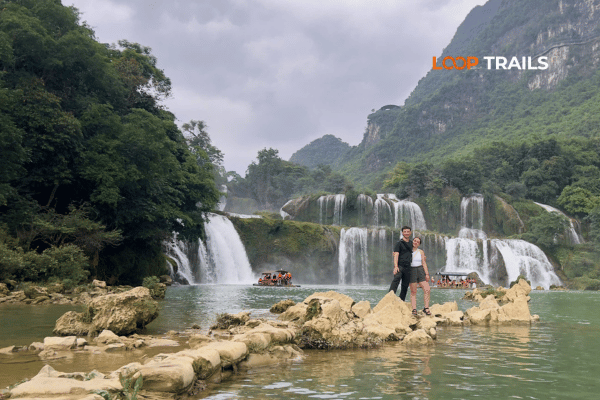
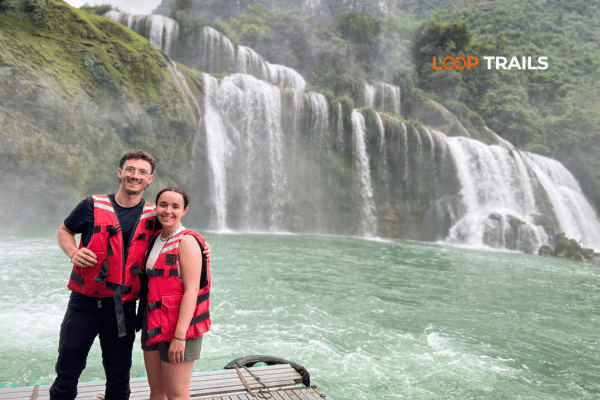
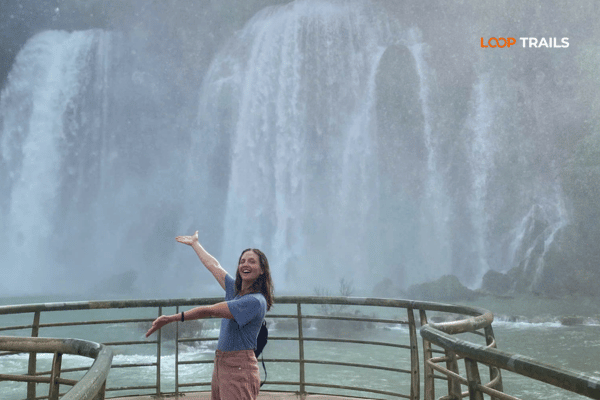
Quay Son River reaches its most famous point at Ban Gioc Waterfall, Southeast Asia’s largest waterfall. The waterfall straddles the border, with 30 meters height and 300 meters width at peak flow.
Boat tours on Quay Son typically launch near Ban Gioc and go upstream or downstream depending on the tour operator and your interests.
Raft options: You can take bamboo raft rides that bring you directly to the waterfall base, with mist and spray from falling water creating immersive sensory experience.
Boat types: More substantial boats than Nho Que, designed for longer journeys and higher water volumes.
Access: Quay Son requires reaching Cao Bang Province. This is easily done via Ha Giang-Cao Bang 5-day combined tour, or as a separate Cao Bang-focused trip.
Timing: Boat operations depend on water levels. Rainy season (June-September) offers maximum flow and visual impact. Dry season offers calmer, safer conditions.
Best duration: Half-day or full-day depending on specific tour. Most tours are 3-4 hours on the water.
Cost: Approximately 200,000-400,000 VND per person depending on duration and raft type.
Temperature: Water is cold, especially from mountain runoff. Bring layers. Swimming is sometimes available but depends on water conditions and operator safety standards.
Guides: French-speaking guides are increasingly common in Cao Bang due to tourism growth. English-speaking guides are less common than Ha Giang but available through organized tours.
Learn more: Ha Giang Cao Bang 6 Days 5 Nights
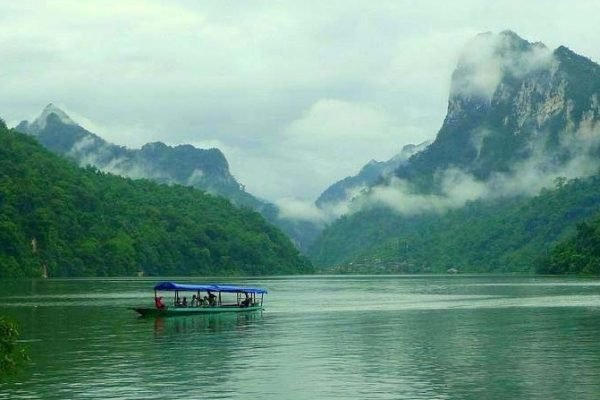
Ba Be Lake is Vietnam’s largest natural freshwater lake, located in Ba Be National Park in Bac Kan Province, roughly 150 kilometers northeast of Ha Giang.
The lake is stunning: surrounded by limestone mountains, dense forest, and minority ethnic communities. Unlike Nho Que’s dramatic canyon aesthetics, Ba Be offers serene, almost meditative beauty.
The lake basin formed thousands of years ago in a limestone depression. Water clarity varies seasonally. In dry season, it’s reasonably clear. In rainy season, sediment makes it more opaque.
Lake boat tours: Standard 4-6 hour tours depart from Ba Be town (the main village on the lake shore). Boats are larger and more comfortable than Nho Que canyon boats, designed for longer journeys.
Tour highlights typically include:
Pac Ngoi floating village: A Thai ethnic minority village of stilt houses where families fish and raise water agriculture. Tours stop for brief village visits and cultural interaction.
Dau Dang Waterfall: A tiered waterfall flowing into the lake. Depending on water levels, you may be able to approach it by boat.
limestone caves: Several accessible caves accessible by short walks from boat stops.
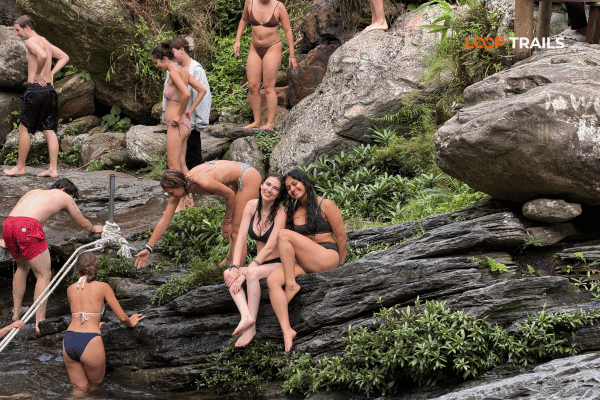
Swimming: Ba Be’s water is generally swimmable, unlike some other water features. Water temperature is cool (15-20 degrees Celsius even in summer).
Hiking: Many tours include 1-2 hour hikes through forest to caves or viewpoints.
Full-day vs half-day tours:
Half-day tours (4 hours) hit main highlights: Pac Ngoi village, Dau Dang waterfall, swimming.
Full-day tours (8 hours) add cave exploration, longer hikes, more time in villages.
Learn more: Ha Giang Motorbike Rental
Distance and travel time: Approximately 90-100 kilometers from Ha Giang City, 3-4 hours by vehicle.
Route: Ha Giang City south/southeast toward Bac Kan Province. Roads are decent but twisty (mountain roads, though not as dramatic as Ha Giang Loop).
Integration with Ha Giang tours: Ba Be requires custom tour arrangement or side trip from Ha Giang. It’s not naturally on the standard Ha Giang Loop route unless specifically requested.
One-day side trip: Possible to do Ba Be as a single-day excursion from Ha Giang if you have an extra day. You’d depart early morning, do lake activities, return evening. It’s rushed but doable.
Multi-day Ba Be trips: Better experience if you can devote 2-3 days. Overnight in Ba Be town, do lake activities, explore national park trails.
Cost: Tours approximately 1,500,000-2,500,000 VND per person for full-day tour including boat, guide, entrance fees, and meals.
Learn more: Best Adventure Activities in Vietnam
Phong Nha is one of Southeast Asia’s most impressive cave systems, located in Quang Binh Province (south of Ha Giang and Cao Bang, roughly 300+ kilometers away).
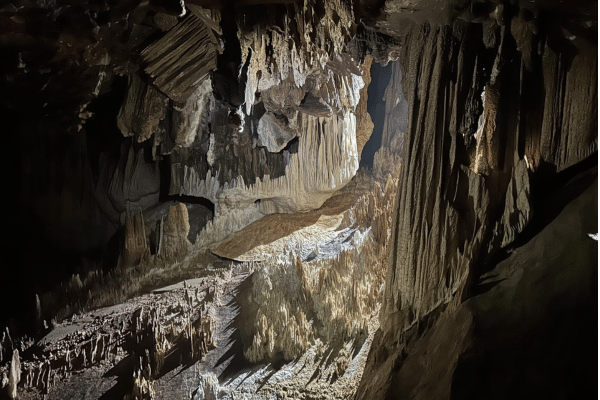
The cave is world-famous among geologists and adventure travelers. The cave system includes multiple chambers, some cathedral-sized, with underground rivers and streams.
What makes it exceptional:
Largest chamber in Vietnam and among the largest in the world
Multiple interconnected caves
Underground river you can boat through
Stunning rock formations, stalactites, stalagmites
Archaeological significance (evidence of human habitation dating back millennia)
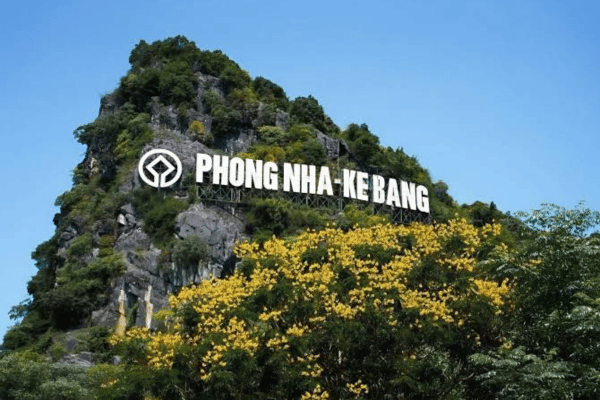
The cave exists within Phong Nha-Ke Bang National Park, a UNESCO World Heritage site recognized for geological and biodiversity significance.
The park protects limestone karst topography, subtropical forest, and diverse wildlife. The cave is the centerpiece, but the park has trails, other caves, and natural attractions.
Other notable caves in the park:
Tien Son Cave: Second-largest chamber in the park
Hang Ech (Frog Cave): Smaller but atmospheric
Paradise Cave (Thien Duong): Recently developed for tourism
Phong Nha Cave boat tour:
Duration: 2-3 hours
Boat type: Larger wooden boats, 10-15 passengers
Route: Launch from dock at park entrance, boat through underground river into cave
Activities: Boat ride, walking through cave chambers, photography
Experience:
You board at daylight, boat enters the cave through a large opening. Lights (installed for tourism) illuminate the interior. You pass through massive chambers, see formations, hear the water echoing. Some tours allow disembarking to walk through sections and explore chambers.
The cave stays around 20 degrees Celsius (cool but not cold). You’ll want a light jacket.
Sound and light in the cave are otherworldly. Your voice echoes dramatically. Water sounds magnify. The scale is genuinely awe-inspiring.
Difficulty: Easy. There’s minimal physical exertion if you stay on the boat. If you walk through sections, trails are relatively gentle.
Best season: Year-round, unlike water-level-dependent adventures. Phong Nha operates consistently regardless of rainy season.
Cost: Approximately 150,000-250,000 VND per person for cave entry and boat tour.
Getting there: Phong Nha is in Quang Binh, accessible from Ha Giang/Cao Bang via 7-9 hour drive south through Vietnamese countryside.
Learn more: Caving in Vietnam
Nho Que River:
Physical demand: Minimal (sitting on boat for 45 minutes)
Difficulty: None, safe for all ages
Swimming: Not in the canyon (water is rapid and unsafe), but swimming options available at other locations
Accessibility: Excellent for anyone with mobility limitations
Quay Son River:
Physical demand: Low-moderate (sitting on raft, possibly 2-3 hour duration)
Difficulty: Low
Swimming: Possible depending on water conditions
Accessibility: Good, though getting to dock may involve some walking
Ba Be Lake:
Physical demand: Moderate (combination of boating and 1-2 hour walks)
Difficulty: Moderate (walking trails on national park have uneven terrain)
Swimming: Excellent (designated swimming areas)
Accessibility: Moderate (trails have slopes and uneven ground)
Phong Nha Cave:
Physical demand: Minimal-low (boat ride, minimal walking if staying on boat)
Difficulty: None (or moderate if doing extensive cave walking)
Swimming: Not available inside cave
Accessibility: Good (boating requires minimal exertion, cave floor is stable)
Learn more: Cao Bang Loop 3 Days best kept secret
Nho Que River:
Ideal: October-March (clear water, stable conditions)
Acceptable: September, April (transitional weather)
Risky: May-August (occasional dangerous conditions, water opacity)
Quay Son River:
Ideal: October-March (safer water levels)
Acceptable: September, April (higher water dramatic but riskier)
Risky: May-August (high water, strong currents)
Ba Be Lake:
Ideal: October-March (clear water, comfortable temperatures)
Acceptable: April-September (more rain, but lake is less dependent on timing)
Best for swimming: May-September (warmest water, though temperatures never get hot)
Phong Nha Cave:
Ideal: Any season (cave doesn’t depend on water levels or weather)
Note: May-August humidity inside cave is high. Cave temperature stays constant (always cool)
Nho Que River boat: 200,000-250,000 VND per person
Quay Son River raft: 200,000-400,000 VND per person
Ba Be Lake full-day tour: 1,500,000-2,500,000 VND per person
Phong Nha Cave: 150,000-250,000 VND per person
Value assessment:
Nho Que offers best value relative to experience quality and Ha Giang integration (already on your route).
Phong Nha is cheapest per-person but requires long travel time from Ha Giang.
Ba Be requires travel time and thus total time investment is significant, though the experience is distinctive.
Quay Son works perfectly as part of Ha Giang-Cao Bang extension (already traveling that direction).
Learn more: Ban Gioc Waterfall Guide
Nho Que is automatically included on any standard Ha Giang Loop tour (3-4 days). It’s part of the route, not optional.
When you experience it: Day 2, after crossing Ma Pi Leng Pass
How long: 45-60 minutes on water
Included in tour price: Yes, as part of your daily itinerary cost
What you need to bring: Nothing special beyond what you already pack (camera, sunscreen, water)
Quay Son is accessible if you extend Ha Giang Loop to Cao Bang (5-day Ha Giang-Cao Bang combined tour).
Integration: Part of the extended route as you approach Ban Gioc Waterfall
When you experience it: Day 4 in the 5-day itinerary
Optional vs included: Can be included as part of tour itinerary or done independently
Connection to Ban Gioc: Raft rides to Ban Gioc Waterfall base are often recommended additions (additional cost beyond base tour)
Ba Be requires deliberate detour from standard Ha Giang routes.
Options:
Best approach: Add to trip length. One-day side trip feels rushed. Two days allows better immersion.
Logistics: Loop Trails can arrange Ba Be connections if you give advance notice.
Phong Nha requires significant time investment due to distance (300+ km from Ha Giang).
Realistic integration:
Option 1: Do Ha Giang Loop, return to Hanoi, depart Hanoi for Phong Nha (requires backtracking)
Option 2: Extend Ha Giang-Cao Bang south to Phong Nha (adds 2-3 additional days, very long driving)
Option 3: Skip Ha Giang, do Phong Nha from Hanoi as separate trip
Best approach: Phong Nha works best as separate trip unless you have 8+ days for extended northern Vietnam exploration.
Cost of separate Hanoi-Phong Nha trip: Transportation plus Phong Nha cave tour approximately 2,500,000-3,500,000 VND per person all-in.
Learn more: Du Gia Waterfall
General safety principles:
Vietnam’s mountain lakes and rivers are generally safe for swimming, but follow local guidance.
Water temperature: Mountain water is cold (15-20 degrees Celsius even in summer). Hypothermia is a real risk if you stay in cold water extended periods.
Water quality: Generally safe, though post-rain water can have higher sediment. Avoid swallowing water.
Currents: Nho Que Canyon water is not strong enough to create real current danger, but respect local warnings. Quay Son can have stronger flows depending on season.
If you plan to swim:
Only swim in designated areas approved by tour operators.
Don’t swim alone.
Wear life jacket if operator provides one (optional in some cases, but sensible).
Inform guides of any health concerns (cardiac conditions, seizure disorders, etc.).
Check water conditions with guides before swimming.
Exit water immediately if you feel cold, cramped, or unwell.
Rainy season considerations:
October-March is safest across all water adventures. May-August has occasional safety considerations.
Heavy rain can raise water levels and increase current strength. Guides will cancel tours if conditions are unsafe.
Flash flooding can occur downstream from mountains. If guides say don’t enter water, trust their judgment.
Watercraft safety:
Vietnamese boat regulations are less rigorous than Western standards. Life jackets aren’t always available, though reputable tour operators provide them.
Request life jackets if not automatically offered.
Boats are hand-managed (poles or oars), which is safe if operators are experienced (and they are on standard tours).
What happens if boat capsizes:
Unlikely but theoretically possible in rough conditions. Operators choose not to operate when risk is genuine.
If you capsize: Stay with boat, don’t try to swim to shore, signal for help.
This is why staying with authorized operators matters.
Loop Trails and authorized operators provide life jackets on standard tours. Use them.
Some older bamboo raft operators are less professional about safety equipment. If booking independently, ask specifically about life jackets and safety gear.
What “life jacket” means in Vietnam: May be basic flotation device (better than nothing), not high-end rescue gear. Sufficient for calm water; less ideal for rapids (which these tours don’t have anyway).
Personal equipment: Bring your own if you have specific needs or preferences.
Learn more: Ha Giang Cao Bang Packing List
Essential items for water adventures:
Swimsuit (if you plan to swim or might get splashed)
Waterproof bag for phone/camera
Dry clothes (even on boat tours, you can get wet from splashing)
Sunscreen (reflection off water intensifies sun exposure)
Hat or headwear
Water to drink (bring plenty)
Shoes that dry quickly (water activities involve boarding/exiting)
Light jacket (mountain water/caves are cool)
Motion sickness medication if prone to nausea on boats
Optional but helpful:
Waterproof camera or GoPro
Underwater camera/phone housing
Lightweight dry pack for valuables
Microfiber towel
Insect repellent
Seasickness patches
Physical preparation:
No intense training required for standard boat tours.
If Ba Be lakes includes extensive walking, basic fitness helps (ability to walk 2-3 km with elevation changes).
Balance is helpful but not essential (boat decks are generally stable).
Learn more: Northern Viet Nam Itinerary 2026
Optimal settings:
Polarizer filter: Reduces water glare and deepens blue tones (if you have filters)
Fast shutter speed: Water movement requires 1/500 or faster to freeze motion
Wide angle lens: Captures canyon walls and cave spaces
Macro/telephoto: Captures details of rock formations and formations
Composition tips:
Frame canyon walls to show scale and towering perspective.
Capture water color and reflections showing landscape (mirror effect).
Include people for scale in large spaces (cave chamber vs boat).
Get close-ups of rock formations and color variation.
Morning/late afternoon light in caves (if any) creates dramatic shadows.
Waterproofing essentials:
Waterproof bag or phone case: Essential (you will get splashed)
Secondary camera protection: Bring backup if seriously invested in photography
Dry microfiber cloth: Wipe condensation and water constantly
Etiquette:
Don’t block other passengers’ views with extended photography sessions.
Ask operators if they want you to avoid certain shots for safety reasons.
Be aware in caves that flash photography can disturb cave ecosystems (use available light when possible).
Some cultural sites may have photography restrictions.
Learn more: Vietnam in 3 weeks: North to Center
Nho Que River and Standard Ha Giang Tours
Included automatically: Nho Que boat ride is built into Loop Trails’ Ha Giang Loop tours (3D2N, 4D3N).
No additional booking needed: It’s part of your daily itinerary.
If doing independent motorbike rental: You must arrange boat tours separately with Meo Vac-based operators (guides can help facilitate).
Included in Ha Giang-Cao Bang 5-day combined tour: Yes, Quay Son activities are typically part of the route.
Additional raft rides to Ban Gioc: May be optional add-ons (ask when booking).
Independent booking: If doing Cao Bang separately, arrange through local Cao Bang tour operators or contacts.
Through Loop Trails: Contact Loop Trails directly to arrange 1-2 day Ba Be extension (requires custom itinerary).
Independent booking: Multiple operators in Ba Be town (Ba Be National Park administration can point you to regulated operators).
Cost: Included in extended tour or additional 1,500,000-2,500,000 VND for independent booking.
From Ha Giang: Arrange through Loop Trails or independently if doing extended trip.
Most practical: Book Phong Nha tours from Hanoi, treat as separate trip.
Multiple operators: Phong Nha is well-established tourism destination. Many operators, ranging from budget to luxury.
Cost and booking: 150,000-300,000 VND per person depending on tour scope and operator quality.
Learn more: Ha Giang Loop vs Ninh Binh
Yes, generally safe. Nho Que Canyon itself is not swimmable due to water movement, but other locations on Ha Giang tours allow swimming. Ba Be Lake is specifically good for swimming with designated safe areas. Always follow local guide advice. Don’t swim alone. Check with guides about current conditions before entering water. Mountain water is cold even in summer, so hypothermia risk exists if you stay in too long.
October-March is optimal for all water activities. Weather is stable, water conditions are predictable, temperatures are comfortable, and visibility is excellent. Rainy season (May-August) can make some water activities risky due to flooding potential and high currents. Phong Nha cave operations aren’t affected by season. If choosing between seasons, prioritize October-March for Ha Giang water adventures.
Yes, if you do the 5-day Ha Giang-Cao Bang combined tour. Nho Que happens on Day 2-3, Quay Son on Day 4. Both are standard components of extended tours. Most travelers who extend to Cao Bang experience both water adventures. This combination offers excellent comparison of different water ecosystems.
Nho Que boat ride: Absolutely suitable (minimal physical demand, sitting only).
Quay Son raft: Generally suitable (sitting on raft, 2-3 hours).
Ba Be Lake: Moderately challenging (involves walking 1-2 hours on trails).
Phong Nha Cave: Suitable if staying mostly on boat (walking inside cave can be tricky).
Jeep tours include water activities and offer easier logistics for less-mobile travelers. Discuss any limitations with tour operator when booking.
Nho Que: Included in base Ha Giang Loop tour price.
Quay Son: Included in Cao Bang extension or approximately 150,000-250,000 VND if separate.
Ba Be: 1,500,000-2,500,000 VND for full-day independent tour, or additional cost for extension.
Phong Nha: 150,000-300,000 VND if booking independently from outside Ha Giang.
Most water activities are either included in tours or add minimal cost (100,000-300,000 VND per person).
Boat tours on these water features are stationary or very slow-moving. They’re not thrilling water sports. If you’re genuinely boat-phobic, chat with your guide beforehand. You can often skip water activities and do alternative cultural stops instead. Phobia-level fear of boats might make Ha Giang touring challenging since many scenic areas require short boat rides.
No. None of these water adventures require swimming ability, diving certification, or boating experience. They’re beginner-friendly. You’re passengers, not operators or athletes. Basic comfort with water is helpful but not essential.
Nho Que River boat tour is automatic if doing Ha Giang Loop (happens on Day 2-3). It’s spectacular, accessible, and requires no extra planning. If extending to Cao Bang, Quay Son River adds excellent contrast. Ba Be and Phong Nha are side trips requiring extra time. Start with Nho Que, add others if time/interest allows.
Tourism impact on these water features is monitored. Numbers of boats/visitors are regulated in most cases. Following local environmental guidelines (not touching formations in caves, not collecting rocks, respecting wildlife distance) is essential. Tour operators with Loop Trails meet environmental standards. Using regulated operators rather than rogue outfits supports conservation.
Yes, absolutely. Nho Que water tour is built into standard Ha Giang Loop tours. You bike to Meo Vac, boat on Nho Que, continue biking same day. Quay Son works similarly on 5-day extension. Ba Be requires longer detour but is possible with extra days. Phong Nha is separate trip. Most travelers combine Nho Que + Ha Giang biking effortlessly.
Bring your own water (you’ll drink more than you expect due to sun reflection). Most tours include lunch at restaurants, but if doing very short tours (45-60 minutes), you might not stop for meals. Bring snacks. Some tour operators provide basic snacks; don’t count on it. Hydration is critical on water since sun exposure is high.
Guides monitor weather constantly. If conditions become unsafe (sudden storms, rapid water level changes), tours are cancelled or postponed. This is rare but happens. Weather in October-March is highly predictable. Rainy season is higher risk for weather disruption. Malaria cancellations are rare and usually announced in advance. Travel insurance should cover weather-related cancellations.
Contact information for Loop Trails
Website: Loop Trails Official Website
Email: looptrailshostel@gmail.com
Hotline & WhatSapp:
+84862379288
+84938988593
Social Media:
Facebook: Loop Trails Tours Ha Giang
Instagram: Loop Trails Tours Ha Giang
TikTok: Loop Trails
Office Address: 54A Tran Phu, Ha Giang 2, Tuyen Quang
Address: 54A Tran Phu, Ha Giang 2, Tuyen Quang
Facebook X Reddit Table of Contents Learn more: Ha Giang Loop Tours Most people drive past the Quan Ba area twice on

Facebook X Reddit Table of Contents Learn more: Ha Giang Loop Tours The Ha Giang Loop has a reputation problem with older