

Ha Giang in November: Buckwheat, Cool Air, Fewer Crowds
Facebook X Reddit Table of Contents Learn more: Ha Giang Loop Tours If you could pick one month to see the Ha

Thúy Kiều (Grace) is a travel blogger and content contributor for Loop Trails Tours Ha Giang. She holds a bachelor’s degree in Sustainable Tourism from Vietnam National University, Hanoi, and has a strong passion for exploring and promoting responsible travel experiences in Vietnam’s northern highlands.

Learn more: Cao Bang Loop 3 Days best kept secret
Most travelers who visit Ban Gioc waterfall come for the obvious thing. They come for the curtain of white water that drops along the Chinese border, the bamboo raft ride, the photos. And it is worth every bit of that attention.
But the road back to Cao Bang city passes through two of the most quietly impressive places in northern Vietnam. Neither has a waterfall. Neither has a view that stops traffic. Both are working villages where people have been making things by hand for generations, and both are part of the Nung craft villages of Cao Bang that most loop travelers drive through without fully understanding what they are seeing.
Phia Thap is an incense village. Phuc Sen is both a paper village and a blacksmith village, with two distinct craft traditions running side by side in the same community. Together they represent a kind of living craftsmanship that is genuinely rare: not preserved for tourists, not performed for cameras, just continuing quietly as it always has.
This guide explains what each village is, what happens inside them, and how to visit in a way that is worth more than a five minute roadside stop.
Learn more: Ha Giang Loop Tours
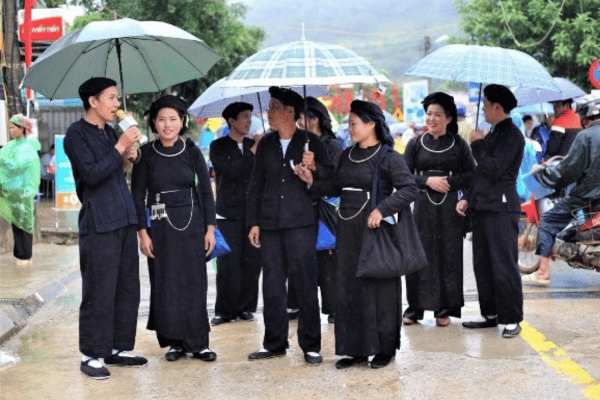
Cao Bang province has one of the most diverse ethnic compositions in Vietnam. Tay, H’Mong, Dao, Lo Lo, and several other groups have lived on this land for centuries. The Nung are one of the largest communities here, concentrated particularly in the districts around Trung Khanh, Quang Uyen, and the areas southeast of the provincial capital.
The Nung speak a Tai Kadai language related to Tay, and the two communities share many cultural traits: a tradition of living in stilt houses, a rice based agricultural economy, and a craft culture that has historically produced everything from textiles to tools to ritual objects.
What sets certain Nung communities apart is their specialization in crafts that require both precise knowledge and significant patience. Incense making in Phia Thap and paper making in the Dia Tren area of Phuc Sen commune are both trades that families pass down through direct demonstration. There are no written manuals. There are no schools. The knowledge lives in the hands of the people doing the work.
This transmission model is part of what makes these villages special and part of what makes them vulnerable. As younger generations find other work in cities, some of these crafts contract. What remains is worth seeing while it is still fully alive.

Learn more: Ha Giang Loop 2 Days 1 Night
Both villages appear on Day 5 of the Loop Trails Ha Giang Cao Bang 5-day 4-night tour, after the morning visit to Nguom Ngao cave near Ban Gioc waterfall. The route runs northeast to southwest across Quang Uyen district, passing through or near both Phia Thap and the Phuc Sen paper area on the way back to Cao Bang city.
This placement is deliberate. By Day 5 on a combined tour, you have already seen the dramatic landscape highlights: Ma Pi Leng Pass, Nho Que River, the passes between Meo Vac and Bao Lac, Khau Coc Cha, and Ban Gioc itself. The final day is designed to slow the pace and shift the register from landscape to culture and craft.
Phia Thap and Phuc Sen are part of that shift. They require a different kind of attention than a mountain pass: less visual intensity, more curiosity and patience. If you show up ready to watch, ask, and understand, these stops become among the most memorable of the entire journey.
For travelers on the standalone Cao Bang Loop 3-day 2-night tour, the same Day 5 logic applies on the final day. The route and the craft stops are consistent.

Learn more: Ha Giang Cao Bang 5 Days 4 Nights
The first thing you notice when you arrive at Phia Thap is color. Outside almost every home, wooden drying racks are covered in bundles of incense: pink, red, violet, and deep maroon, laid out in neat rows in the sun. The air carries the woody, slightly sweet smell of the drying incense blend.
Phia Thap is in Quang Uyen district, Cao Bang province. The village is home to Nung An people, a subgroup of the Nung who have been making incense here for more generations than most residents can precisely trace. The craft is so embedded in this community that the village itself has become known by it. If you ask locals in Cao Bang where the incense comes from, they will tell you Phia Thap.
The process starts with bamboo. Local bamboo is split into thin cores by hand, each one a consistent length and diameter. This splitting is skilled work: a core that is too thick will not burn evenly; one that is too thin will break during rolling.
The aromatic blend used to coat the cores is made from wood powder, bark, and various locally sourced natural materials. Families guard their exact formulas, and the specific mix varies from one household to another, which is part of why incense from Phia Thap has a range of distinct notes rather than a single uniform smell.
The bamboo cores are dipped and rolled in the damp powder mixture until they carry an even coating. They are then sorted, bundled, and laid out to dry. Drying time depends on the weather. In the dry season, a single day of sun is usually enough. In the wet months, drying takes longer and the work slows.
Coloring is applied by rolling the dried sticks in natural pigment powders: red from certain mineral and plant sources, pink from a lighter blend, deeper tones from other materials. The colors are not just decorative. Different colors carry different ritual meanings in the traditions where the incense is used. Red incense is common for ancestor worship. Other colors serve other ceremonies.
Finished bundles are wrapped and either sold locally, distributed to markets in Cao Bang city and neighboring provinces, or taken across the border into China, where demand for Vietnamese incense has historically been strong.
Walking through the village, the production is not hidden. Residents work outside on the drying racks, sorting tables, and rolling frames. At most homes, someone is working at some stage of the process.
Watch for the splitting phase: older men or women using simple blades to divide bamboo lengths into cores with a practiced efficiency that makes the work look easier than it is.
The rolling is usually done by women, often in groups, with the bamboo cores fanned across a flat surface and the damp powder spread in front of them. The motion is a quick forward roll, coating the stick evenly in a single pass.
The color sorting at the end of drying reveals the village economy clearly. Bundles are graded by color consistency and size, then priced accordingly. What looks like a simple craft from the road is, up close, a quality controlled small scale industry.
Incense bundles are sold directly at many homes in Phia Thap. Prices are low, the quality is genuine, and the scent of a Phia Thap incense bundle is noticeably different from mass produced alternatives. If you use incense at home, buying here is both a good souvenir and a direct economic contribution to the village.
Bargaining is not necessary and not expected. Prices are already village prices, not tourist prices. Paying what is asked is the right approach.
Photography is usually fine, but ask before you photograph individuals at work. Most residents are accustomed to visitors, but a quick gesture of permission before pointing a camera at someone’s face is always the right move.
Learn more: Ha Giang Cao Bang 6 Days 5 Nights
About fifteen minutes along the road from Phia Thap, the Phuc Sen area appears at a bend where the landscape softens into farmland and low hills. The Dia Tren part of Phuc Sen commune is where the traditional paper making happens, and it is immediately visible: flat sheets of pale cream paper drying against walls, fences, and wooden frames wherever the sun reaches.
This is giay do, a type of handmade paper produced from the bark of the do tree (Rhamnoneuron balansae or related species). The paper has been made in this area for a very long time, and it carries a particular significance in Vietnamese and regional Chinese cultural practice: it is used for ancestor worship offerings, for traditional calligraphy, for printing folk woodblock images, and for certain spirit money ceremonies.
Paper from this village is not a decorative craft item. It is a functional material with an active market among communities who use it for ceremonies and spiritual practice across northern Vietnam and into southern China.
Do trees grow in the forest areas around Cao Bang. The inner bark, stripped carefully from felled or coppiced trees, is the raw material. The outer bark is removed and discarded. What remains is soaked in water until soft.
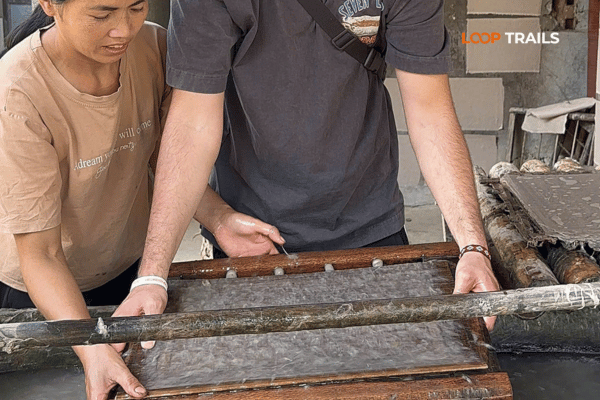
The softened bark is then beaten into a pulp, either by hand using wooden mallets or by mechanical means in some households. The pulp is mixed with water in large vats to create a suspension. A flat bamboo or wire screen is dipped into the vat and lifted horizontally, trapping a thin, even layer of fiber on its surface as the water drains through.
This sheet of wet pulp is then transferred to a flat surface, usually a wall or a wooden board, and left to dry in the sun. When dry, it peels off as a single sheet of paper: slightly translucent, with an organic texture quite unlike commercial paper, and extremely durable. Well made do paper will last for centuries under the right conditions.
The whole process from bark to finished sheet takes several hours per batch, and the yield per tree is limited. This is why do paper has always commanded a price premium over machine made alternatives, even in the communities that use it routinely.

Learn more: Things to do in Cao Bang
At the working households in Dia Tren, the process is usually visible at multiple stages simultaneously. Near the soaking vats, strips of pale bark float in dark water. At the beating stations, the work is rhythmic and physically demanding. At the drying frames, sheets at various stages of completion overlap each other, the freshest ones translucent and damp, the finished ones dry enough to flex without breaking.
The paper comes in different sizes depending on the intended use. Smaller sheets are used for direct ceremony items. Larger ones may be cut or folded for specific ritual applications. Some households also produce specialty papers with particular textures or weights for use in traditional art.
Watching the screen lifting step, where a single motion of lifting a bamboo frame from the vat deposits a uniform sheet of pulp, is one of those moments that makes the depth of craft knowledge visible. The angle of the lift, the speed of the drain, the thickness of the suspension: all of these factors are managed by feel, not by measurement.
Sheets of do paper are available for purchase directly from producing households. Prices are modest. The paper is lightweight, easy to pack, and genuinely beautiful as a material object even if you have no ceremonial use for it. Calligraphers and artists who work with traditional media prize it.
If you are buying a few sheets as a souvenir, let the household know and they will typically give you an assortment. Do not expect packaged souvenirs or gift ready presentation: this is a working production facility, not a craft shop.
Photographs of the process are usually welcomed, particularly the more photogenic stages: the drying walls covered in pale sheets, the screen lifting moment, the bark soaking vats. Use judgment when photographing individuals.
Phuc Sen is not just a paper village. It is also one of the most respected blacksmith communities in Cao Bang province, and the forge work here predates the tourism attention by a very long time.
The blacksmiths of Phuc Sen are Nung Phan people, a subgroup of the Nung distinct from the Nung An at Phia Thap. The two communities live in the same general area but maintain separate craft specializations. The Nung Phan have built their reputation around metalwork: knives, machetes, sickles, hoes, plows, and other blades and tools used in agriculture and daily life across northern Vietnam.
What happens at the forge
The forge at an active household in Phuc Sen is an immediately sensory experience. The coal fire runs hot. The sound of the hammer on the anvil carries down the road before you arrive. Metal glows orange at the working temperature, and the craftsperson moves quickly between the fire and the anvil, shaping the blade with a series of precisely angled strikes before the metal cools.
The process starts with raw iron or steel rod stock, fed into the coal fired forge until it reaches working temperature. The heated metal is then hammered into shape on an anvil: first into the rough profile of the blade, then refined with smaller blows to create the edge bevel. Cooling and reheating happen multiple times as the shape develops.
After the blade is shaped, it goes through quenching: plunging the hot metal into water or oil to harden the steel. The quench timing is critical and is judged entirely by the color of the metal and the craftsperson’s experience. Too fast or too slow and the blade will be brittle or too soft.
Grinding and sharpening follow, using whetstones of different grits. A finished knife from Phuc Sen will hold an edge significantly better than mass produced alternatives, which is exactly why local farmers, hunters, and households across the region have been buying from this village for generations.
What you will see
If the forge is active when you arrive, you can typically watch the full sequence from a few feet away. The heat is intense. The sparks are real. Standing beside a working forge while a craftsperson shapes a blade is one of those genuinely visceral travel experiences that stays with you.
Look for the full range of products at each household: long machetes for cutting through jungle vegetation, shorter knives for kitchen and camp use, curved sickles for rice harvesting, and heavier tools for field work. The range reflects the actual needs of the communities this craft serves.
What to buy
Blades from Phuc Sen are worth buying if you have any practical use for a good knife. Quality is genuine. Prices are reasonable compared to what equivalent handmade knives cost elsewhere.
A note on travel logistics: knives cannot be carried in hand luggage on flights. If you are flying out of Vietnam after your loop, pack any blade purchase in your checked luggage or ship it home. Your guide can advise on how other guests have handled this. Purchasing a blade and leaving it wrapped in your pack for the rest of the journey is a common and practical approach.

Learn more: Pac Bo Historical Site
Travelers sometimes underestimate Phia Thap and Phuc Sen because they look modest from the road. There are no viewing platforms, no entry fees, no interpretive panels, no guides in historical costume. They look like villages because they are villages.
That is precisely the point.
The craft villages on the Sapa tourist circuit, by contrast, have largely been reorganized around visitor expectations: shops in front, demonstration areas in back, performances scheduled for tour groups. The experience is polished and predictable. The economic exchange is weighted toward the tourism infrastructure rather than the producing families.
Phia Thap and Phuc Sen have not been reorganized this way. The incense is made where it has always been made. The paper is dried on the same walls. The families selling directly at their gates are the same families making the product. When you buy at either village, the full transaction price reaches the household.
This is not a reason to feel smug about your itinerary choice. It is simply a reason to show up with proportionate attention: to slow down, look properly, ask your guide questions, and spend a little money with the people doing the work.
Learn more: Homestay in Cao Bang
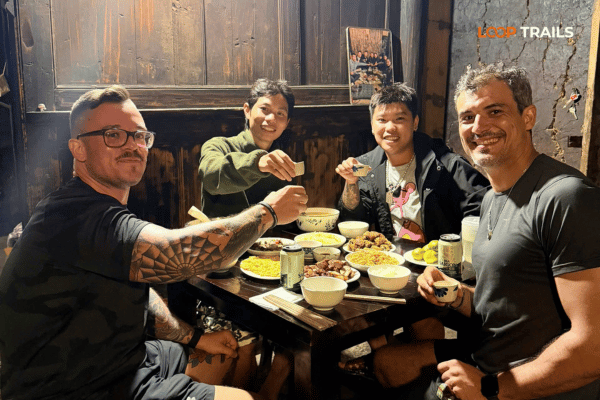
Both villages are visited as part of a guided tour rather than independently for most international travelers. The road from Ban Gioc toward Cao Bang city passes through the right area, but finding the actual producing households in each village without a local guide who knows the families is genuinely difficult.
Your guide is the most important practical resource here. A good guide will know which families at Phia Thap are currently active producers, which households at Phuc Sen welcome visitors to watch the paper process, and how to make introductions that feel natural rather than intrusive.
If you want to spend more time at either village than the standard itinerary allows, tell your guide in advance. It is usually possible to rearrange timing to give you an extra thirty minutes at the stop that interests you most.
A few practical notes: the craft work at both villages happens in the morning and early afternoon, tapering off by late afternoon. Visiting after three in the afternoon means you may find the drying racks full but the active work finished. The itinerary timing on Loop Trails tours is designed to catch both villages during active production hours.
The villages are in the lowland area of Cao Bang province, warmer and more humid than the highland areas around Dong Van and Meo Vac. Light clothing and rain cover are appropriate, particularly in the wet months between May and September.

Learn more: Ha Giang Cao Bang Packing List
Both craft villages are included as stops on the Loop Trails Ha Giang Cao Bang 5 days 4 nights tour and the 6 days 5 nights extended version, on the final day of each. They are also included on the Cao Bang Loop 3 days 2 nights tour.
The 5 days 4 nights tour covers the full Ha Giang Loop on Days 1 through 3, then crosses into Cao Bang on Days 4 and 5. After Ban Gioc waterfall and Nguom Ngao cave on Day 5, the route passes through Phia Thap and Phuc Sen on the way back to Cao Bang city.
The 6 days 5 nights tour allows more time at each stop along the Cao Bang section, which means the craft village visits are less rushed.
If you are traveling on a jeep tour, the Jeep Army format used for Cao Bang Loop tours is a comfortable vehicle for this terrain. If you are on a motorbike tour, the road quality in this area is generally good, and the riding itself is enjoyable: flatter than the Ha Giang highlands but still scenic.
Loop Trails also offers easy rider format for the Cao Bang section, where your guide rides alongside you and handles all cultural introductions, including at the craft villages. This format is particularly well suited for these stops because your guide can explain the production process in real time, translate conversations with the families, and help you buy directly with appropriate context.
If you want to plan a combined Ha Giang and Cao Bang tour that includes these stops, get in touch via WhatsApp and we can walk you through the options and help you choose the right duration for your schedule.

Learn more: Ha Giang Cao Bang Loop by Wrangler Rubicon Jeep
Both are in Quang Uyen district, Cao Bang province, in the lowland area south of Ban Gioc waterfall. They are on the route between Ban Gioc and Cao Bang city, making them natural stops on the final day of any Cao Bang loop tour
The Nung An are a subgroup of the Nung ethnic minority, one of several Nung communities in Cao Bang province. They speak a Tai Kadai language related to Tay and have historically specialized in agriculture and craft production. The incense tradition at Phia Thap is specific to this community and has been practiced for many generations
The incense made at Phia Thap uses bamboo cores coated in an aromatic powder blend made from wood, bark, and other locally sourced natural materials. Each family has their own formula. The finished sticks are colored with natural pigments: red, pink, violet, and deep tones for different ceremonial uses
Yes, noticeably. The aromatic blend is natural and locally formulated rather than synthetic, which gives it a wood and forest character quite different from mass produced incense. The scent is less sharp and more complex, and it tends to burn more slowly
Do paper is a traditional handmade paper produced from the inner bark of the do tree. It is used in ancestor worship, traditional calligraphy, folk printing, and spirit money ceremonies across northern Vietnam and in parts of southern China. The paper is durable, slightly textured, and valued both for practical and spiritual reasons.
Technically yes, if you have your own transport. But finding the actual producing households without a local guide who knows the families is difficult. The villages are not signposted for craft tourism. A guided tour ensures you reach the right places during active production hours and can interact with producers through proper introductions
On standard Loop Trails itineraries, each village gets approximately thirty to forty five minutes. If you want more time at one or the other, ask your guide in advance: it is usually possible to adjust timing to give you an extra half hour at whichever stop matters more to you
Yes. Both products are lightweight, easy to pack, and available for direct purchase at producing households. Incense bundles are affordable and make excellent gifts. Do paper sheets are fragile but can be carefully rolled around a core for transport. Ask your guide for help with purchasing and packing recommendations
Yes. The craft processes are interesting to children as well as adults, particularly the visual stages: colorful incense drying in the sun, paper sheets covering the walls of a farmhouse, workers splitting bamboo with practiced speed. There are no physical hazards or restricted areas under normal visiting conditions
The Nung speak a Tai Kadai language related to Tay. Many residents, particularly younger people and those used to receiving visitors, also speak Vietnamese. Your tour guide will handle all communication at the villages; knowing a few words of Vietnamese greeting is always appreciated but not required
Yes. Blades from Phuc Sen are genuine working knives and worth buying if you have practical use for a quality blade. The key logistics note: knives cannot be carried in hand luggage on flights. Pack any blade purchase in checked luggage or ship it home from Vietnam. Your guide can help you wrap and store it safely for the rest of the journey
Contact information for Loop Trails
Website: Loop Trails Official Website
Email: looptrailshostel@gmail.com
Hotline & WhatSapp:
+84862379288
+84938988593
Social Media:
Facebook: Loop Trails Tours Ha Giang
Instagram: Loop Trails Tours Ha Giang
TikTok: Loop Trails
Office Address: 54A Tran Phu, Ha Giang 2, Tuyen Quang
Address: 54A Tran Phu, Ha Giang 2, Tuyen Quang
Facebook X Reddit Table of Contents Learn more: Ha Giang Loop Tours If you could pick one month to see the Ha

Facebook X Reddit Table of Contents Ha Giang in August does not look like the photos most people have in their heads.
Facebook X Reddit Table of Contents Most of the Ha Giang Loop is about the landscape: passes, canyons, karst peaks that go