


Thúy Kiều (Grace) is a travel blogger and content contributor for Loop Trails Tours Ha Giang. She holds a bachelor’s degree in Sustainable Tourism from Vietnam National University, Hanoi, and has a strong passion for exploring and promoting responsible travel experiences in Vietnam’s northern highlands.
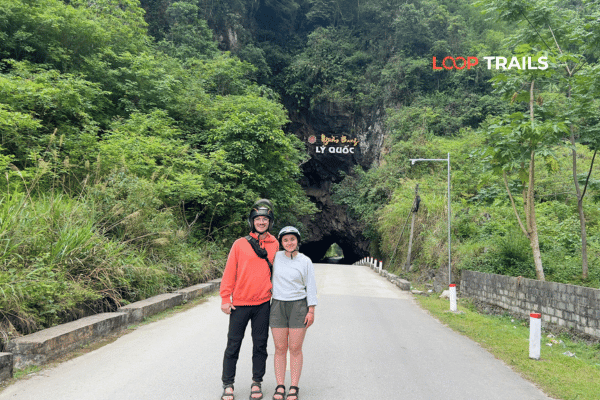
Learn more: Ha Giang Loop Tours
Most travelers who make it to northern Vietnam stop at Ha Giang and call it done. The Ha Giang Loop is genuinely spectacular — the Ma Pi Leng Pass, the Nho Que River canyon, the terraced fields above Dong Van — but there is a region further east that fewer people talk about, and it might actually be the more rewarding destination if you have the time.
Cao Bang province sits at the northeastern edge of Vietnam, sharing a long border with Guangxi, China. The provincial capital, Cao Bang City, is a low-key market town of around 100,000 people. It is not particularly photogenic on its own. What it is, though, is the base for some of the most dramatic scenery in the country: the Ban Gioc waterfall complex, the Nguom Ngao cave system, the misty forests of Phia Oac National Park, and a mountain road west toward Bao Lac that most tour groups never touch.
This guide covers everything you need to plan a visit: how to get here, where to stay, what to see, when to go, and how to decide whether to come independently or with a tour.
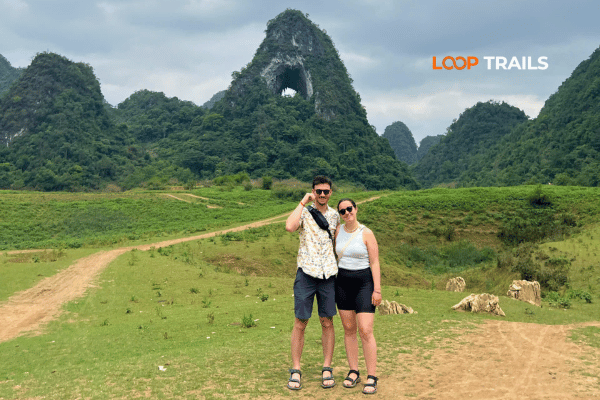
Learn more: Ha Giang Loop 2 Days 1 Night
The default approach among Vietnamese tour agencies is a long-day-trip from Hanoi to Ban Gioc and back, sometimes packaged as a “2-day 1-night” sprint with a single night in Cao Bang City squeezed in the middle. That works if your time is genuinely short. But it does not do justice to what this region offers.
Cao Bang is the kind of place that reveals itself slowly. The karst geology here belongs to the UNESCO-recognized Non Nuoc Cao Bang Geopark, one of the largest geoparks in Southeast Asia. The landscape is older and more eroded than Ha Giang’s sharper peaks — the mountains are lower but the valleys feel wider, the rivers broader, and the sense of isolation is real even in peak season. Villages in the province are predominantly Tay, Nung, and Hmong; the culture along the back roads is distinct from anything you find in the more-visited north.
The honest case for staying longer is this: if you spend two full days in the province instead of one frantic morning, you can actually walk to Ban Gioc’s less-visited lower cascade, take a bamboo raft on the Quay Son River, spend a real two hours inside Nguom Ngao rather than a rushed forty minutes, and still have time to drive the Bao Lac road through the afternoon light. That is not a luxury itinerary. It is just what the place is worth.

Learn more: Ha Giang Loop 3 Days 2 Nights
Cao Bang City is roughly 270 kilometers from Hanoi by road. The journey takes between 5 and 7 hours depending on your route, the vehicle, and the time of year. There is no train.
Several sleeper bus companies (Hung Thanh, Phuong Trang, and others, check latest schedules) run nightly services from Hanoi’s My Dinh or Gia Lam bus stations. The overnight bus is the most common budget option: you leave around 9 or 10 p.m. and arrive in Cao Bang City early morning. Seats and sleeper berths are both available; prices change seasonally so check directly with operators or at the bus station.
A faster but more expensive option is a shared limousine van. These leave from various points in Hanoi’s Old Quarter in the morning and arrive mid-afternoon. They are significantly more comfortable for tall travelers or anyone with back issues.
One thing worth knowing: the last stretch of the road into Cao Bang City on Highway 3 climbs through narrow mountain passes. If you get carsick easily, take medication before boarding.
This is the route that interests most adventure travelers, and it is genuinely excellent. The direct road from Ha Giang City to Cao Bang runs through Bao Lac, climbing across high ridges before descending into Cao Bang province. Total distance is roughly 200 kilometers; by motorbike it takes most riders a full day. By jeep or car the same route runs about 6 to 8 hours depending on stops.
This road is part of what makes the Ha Giang to Cao Bang combination such a good itinerary. You are not just moving between two destinations; you are riding through scenery that is every bit as dramatic as the Ha Giang Loop itself, and you are doing it on roads that see almost no other tourists.
Road conditions on this route can be challenging, particularly during and after the rainy season (roughly May to September). Mountain sections may have loose gravel, landslide debris, or fog in the early morning. Check conditions locally before setting out, especially if traveling independently.
If you want to see both Ha Giang and Cao Bang without the logistics headache of planning transport between them, a combination tour is the most practical option. Loop Trails runs Ha Giang to Cao Bang combination itineraries in 5 days (4 nights), covering the Ha Giang Loop in the first half and continuing to Cao Bang, Ban Gioc, and Nguom Ngao before returning to Hanoi from Cao Bang.
This format works particularly well for travelers who want to ride or be guided through both regions without renting a motorbike for a week or worrying about arranging multiple buses and hotels independently. [Explore the Ha Giang to Cao Bang combination tour here — link to tour page.]
Learn more: Ha Giang Loop 4 Days 3 Nights
Cao Bang City is not a major tourist hub, which means the accommodation scene is functional rather than charming. Most guesthouses and budget hotels cluster near the central market (Cho Cao Bang) and along Xuan Truong street. Options range from basic fan rooms in local guesthouses to air-conditioned rooms in mid-range hotels. International-standard accommodation is limited; a few mid-range properties offer reasonable comfort for the price.
Some practical points worth knowing:
For travelers on organized tours, accommodation is typically arranged by the tour operator: this removes most of the guesswork.
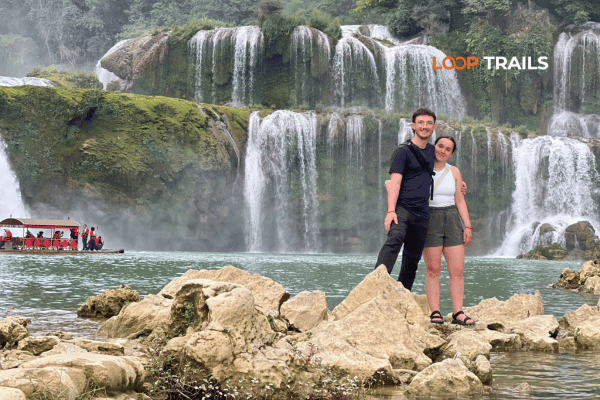
Learn more: Ha Giang Cao Bang 5 Days 4 Nights
Ban Gioc is the headline attraction, and it earns the billing. At roughly 300 meters wide, it is the largest waterfall in Vietnam and one of the largest in Southeast Asia. The upper cascade drops across the international border between Vietnam and China; the lower cascade is entirely on the Vietnamese side and is where bamboo raft rides are offered.
The sight changes significantly by season. In October and early November, after the rainy season has passed and the water level is still high, Ban Gioc is at peak volume. The thundering sound reaches you from the parking area; the spray drifts 50 meters into the surrounding paddies. In the dry season (December to April), the flow is lower but the water runs clearer, the light is softer, and crowds are smaller outside of Chinese New Year.
A few practical notes:
Learn more: Ha Giang Cao Bang Ba Be Lake 6 Days 5 Nights
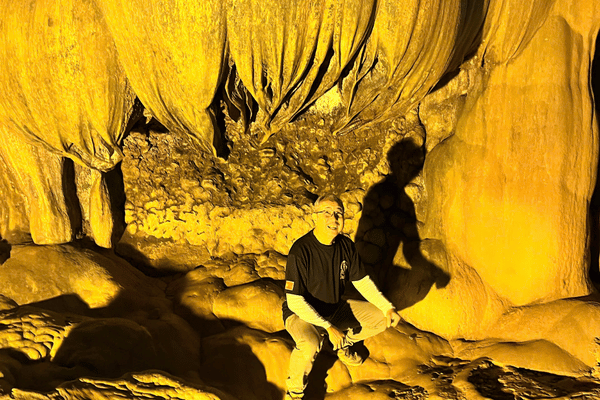
Nguom Ngao means “tiger cave” in Tay. It sits about 3 kilometers from Ban Gioc and is typically visited on the same half-day as the waterfall. The cave system extends for several kilometers, though only a portion is currently accessible to tourists.
What makes Nguom Ngao stand out compared to more commercial cave experiences in Vietnam is the scale of its chambers and the density of its formations. The stalactites and stalagmites here are not roped off into tidy rows; they form walls, curtains, and forests of stone. The cave temperature stays cool year-round — bring a light layer.
Guided tours of the accessible section take 45 minutes to just over an hour. Going slowly and using your own flashlight (in addition to the installed lighting) is worth it.
Most visitors skip Phia Oac entirely. This is understandable — it is not as dramatically photogenic as Ban Gioc — but it is worth knowing about if you are spending more than two days in the province.
Phia Oac is a national park in the western part of Cao Bang province, centered on a forested mountain range that peaks above 1,900 meters. The park protects one of the best-preserved temperate forest ecosystems in the Vietnamese north. In the cooler months (November to February), the summit area is frequently blanketed in fog and low cloud, and temperatures can drop to a few degrees at night — genuinely cold by Vietnamese standards.
The main activities are hiking, birdwatching, and driving the road through the park’s lower slopes. There are waterfalls, hot springs (check current status locally), and a few Dao minority villages accessible by trail. Visitor infrastructure is basic; bring your own food and water if venturing more than an hour from the main road.
If you are coming from or going to Ha Giang, Phia Oac is roughly en route via Bao Lac: it makes a natural half-day stop.
Learn more: Cao Bang Loop 3 Days best kept secret
If Ban Gioc is Cao Bang’s famous attraction, this is its secret one.
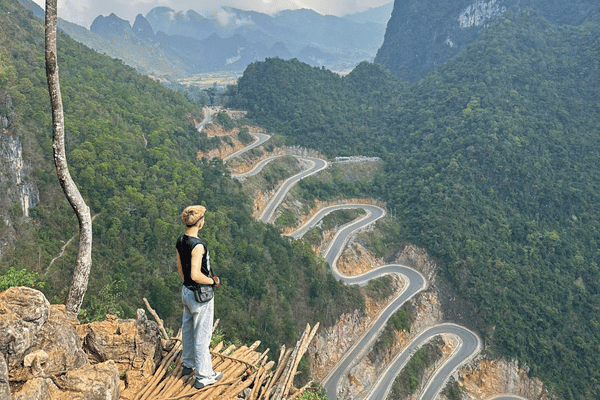
The mountain road running west from Cao Bang City toward Bao Lac and eventually to Ha Giang passes through some of the most unspoiled terrain in northern Vietnam. The villages are Hmong, Nung, and Dao; the terraced hillsides grow buckwheat and rice; the road itself winds through valleys that see a fraction of the traffic of the Ha Giang Loop.
On a motorbike this route takes most of a day. In a jeep it is achievable in 6 to 8 hours with stops. The appeal is not any single sight but the accumulation of landscapes and villages encountered along the way — a market town on a Tuesday morning, a river crossing, a ridge that opens suddenly onto a valley you could not have imagined from below.
This road is the backbone of the Ha Giang to Cao Bang combination itinerary. Traveling it between the two regions means you are riding through the connection, not just skipping over it on a highway.
Do not spend too much time here trying to find things to do. That is not a criticism: it is a calibration.
Cao Bang City is a Vietnamese market town that happens to be the base for excellent day trips. The morning market near Cho Cao Bang is worth an early walk: fresh produce from the surrounding mountains, Tay and Nung women in traditional clothing selling vegetables and herbs, the kind of lived-in local atmosphere that tourist attractions do not manufacture.
The Bang Giang River runs along the northern edge of the city; there is a small waterside promenade that comes alive in the early evening. A few local pho spots and bun shops along Xuan Truong street are perfectly good for breakfast and lunch. For dinner, the area around Kim Dong street has a cluster of local restaurants where the bill for two, including rice wine, will not break your budget.
Learn more: Ha Giang Motorbike Rental
The honest answer is that Cao Bang rewards visits in nearly every season: they just reward different things.
October to early December is the sweet spot for most travelers. The rainy season has just ended, the water levels at Ban Gioc are still high, the rice terraces in the surrounding countryside are golden at harvest time, and the weather in the mountains is dry and comfortable (cool at elevation, warm in the valleys). This is the peak season, and it shows in accommodation prices and crowds at Ban Gioc.
January to April is dry season proper. The waterfall runs lower, but the visibility is excellent, the skies are often clear, and highland temperatures are cool and pleasant. The Tay New Year celebrations (Tet Nung, late January or early February depending on the lunar calendar) add cultural richness if you time the visit right. One caveat: Chinese New Year brings significant day-trip crowds from Guangxi, particularly at Ban Gioc — if you want the waterfall to yourself, avoid that window.
May to September is rainy season. Roads can be muddy or washed out after heavy rains, particularly on mountain sections. On the other hand, the Bao Lac road and Phia Oac forests are intensely green, the waterfalls are at maximum volume, and the region’s villages feel genuinely off the tourist circuit. Travelers comfortable with muddy roads and variable conditions who do not mind adjusting plans often find this the most authentic time to visit.
A general note: weather in the Vietnamese north can be unpredictable regardless of season. Build flexibility into your itinerary.
Learn more: Ha Giang Loop by Army Jeep Tours
Here is a practical breakdown to help you decide how to approach Cao Bang:
Come independently if:
Join an organized tour if:
For most first-time visitors to northern Vietnam, the Ha Giang to Cao Bang combination tour is the format that makes the most sense. You cover more ground, see both regions properly, and arrive back in Hanoi having experienced a full circuit of the northeast rather than just one half of it.
Loop Trails offers this itinerary in multiple formats: easy rider (guided motorbike), self-drive (you ride, we guide), and jeep. Jeep is particularly well-suited to couples, small groups, or anyone who prefers to leave the riding to someone else and focus on the scenery. [Check the Ha Giang to Cao Bang combination tour page for options and availability.]

Learn more: Ha Giang Packing list
A Cao Bang trip requires some planning that a beach holiday does not. Here is what matters:
Documents and permits:
Clothing:
Electronics and practical gear:
Health and safety:
Learn more: Ha Giang Loop Mistake to Avoid
Do not try to do Ban Gioc as a day trip from Hanoi. It is technically possible in a long-haul minibus, but you will spend more time in a vehicle than at the waterfall. The road from Hanoi to Ban Gioc is not a scenic one; it is an arterial highway through lowland towns. The experience of driving it for 8 hours each way, with 90 minutes at the falls in between, is genuinely not worth it. Stay in Cao Bang City for at least one night.
Book accommodation before arriving in peak season. October to November is the province’s busiest period. The number of decent hotels in Cao Bang City is not large; good rooms fill up, particularly on weekends.
Verify current road conditions before driving the Ha Giang to Cao Bang route independently. This road is rewarding but it is not a highway. After heavy rain, sections can be impassable. Local tour operators and guesthouses in Ha Giang City are usually the best source of current information.
Watch out for overpriced raft rides at Ban Gioc. Bamboo raft rides on the Quay Son River are offered by multiple operators; pricing is supposed to be standard but negotiation and overcharging are reported. Ask at your accommodation what the current fair rate is before walking down to the riverbank.
Do not skip the lower cascade. The upper waterfall (visible from the main viewing platform) is what all the photographs show. The lower cascade, a 10-minute walk from the main area, sees fewer visitors and has an entirely different character up close — quieter, greener, the sound of the water filling the valley without a crowd around you.

Learn more: Ha Giang Loop Wrangler Tour
Ban Gioc is approximately 85 kilometers from Cao Bang City, taking 2 to 2.5 hours by motorbike or car on Highway 34 via Trung Khanh. Road quality on most of this route is reasonable but can deteriorate after heavy rain on mountain sections.
Yes. Independent travelers regularly visit Cao Bang by overnight bus from Hanoi, hire a motorbike locally, and self-navigate to Ban Gioc and Nguom Ngao. Vietnamese is the working language outside tourist sites, so basic phrases or a translation app is helpful. If you want to combine Cao Bang with Ha Giang on a single trip, an organized tour is significantly more practical than arranging two separate regional trips independently.
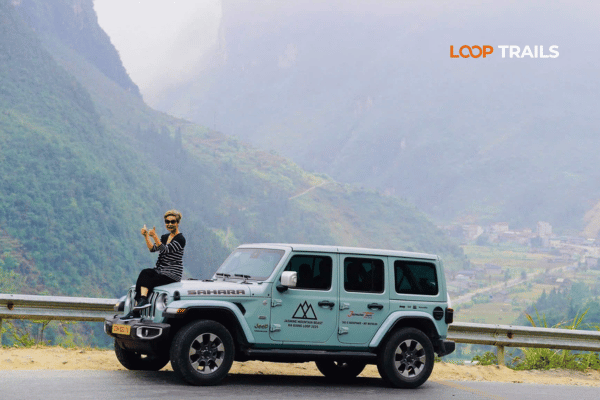
Absolutely. Jeep tours cover the same roads and stops that motorbike riders use on the Ha Giang to Cao Bang route. The scenery is identical; the difference is comfort and the fact that a local driver handles the vehicle. This format is particularly popular with couples, small groups, and travelers over 45 who want a full northern Vietnam experience without the physical demands of riding a motorbike for several days.
October and November are the peak months for Ban Gioc: the water level is high after the rainy season, the surrounding terraces are golden at harvest, and the weather is dry. January to April offers clearer skies and fewer crowds (outside of Chinese New Year). Each season has its own character; there is no bad time, only different tradeoffs.
Plan 45 minutes to 1.5 hours depending on pace. The cave is usually combined with a Ban Gioc visit on the same day; it adds about 30 minutes to the schedule including the drive between the two sites.
The Ban Gioc tourism area charges an entrance fee (amount subject to change — confirm locally). Visitors should carry a passport when traveling near the Chinese border. Any specific permit requirements in the border zone can change; check current rules with your accommodation or tour operator before visiting.
Cao Bang is considered one of the safer destinations in northern Vietnam. Petty crime is rare. The main practical considerations for solo travelers are transport (local buses work but require flexibility) and language (minimal English outside tourist facilities). Solo female travelers who have traveled independently elsewhere in Vietnam should be comfortable here.
Overnight buses run from Cao Bang City to Hanoi’s My Dinh bus station; the journey takes approximately 7 hours. Shared limousine vans also operate on this route. If you are on a combination tour that ends in Cao Bang, your operator will typically arrange the return transfer to Hanoi.
Yes, and this is probably the most rewarding way to experience northern Vietnam in a single trip. The Ha Giang to Cao Bang route via Bao Lac takes 1 full travel day and is spectacular in its own right. A 5-day combination itinerary is the minimum for doing both regions justice. Loop Trails runs exactly this format — check the combination tour page for current options.
Renting a motorbike in Cao Bang City and riding to Ban Gioc independently is straightforward for experienced riders. Hiring a local xe om (motorbike taxi) is a lower-effort option; agree the price before departing. Organized day tours by van or car from Cao Bang City are also available — your hotel or guesthouse can usually arrange one.
For travelers interested in hiking, birdwatching, or forest landscapes, yes. Phia Oac is genuinely under-visited and the scenery in the cooler months (November to February) is outstanding. For travelers primarily focused on Ban Gioc and Nguom Ngao, it is an optional add-on that fits naturally into a longer stay or into the route between Ha Giang and Cao Bang.
Vietnamese is the official language and is universally spoken in the city. In rural areas, Tay, Nung, and Hmong languages are spoken alongside Vietnamese. English is available at some hotels and tourist sites near Ban Gioc, but is not widespread. Basic Vietnamese phrases, a translation app, or traveling with a guide will significantly improve the experience outside the city center.
Contact information for Loop Trails
Website: Loop Trails Official Website
Email: looptrailshostel@gmail.com
Hotline & WhatSapp:
+84862379288
+84938988593
Social Media:
Facebook: Loop Trails Tours Ha Giang
Instagram: Loop Trails Tours Ha Giang
TikTok: Loop Trails
Office Address: 48 Nguyen Du, Ha Giang 1, Tuyen Quang
Address: 48 Nguyen Du, Ha Giang 1, Tuyen Quang
Facebook X Reddit Table of Contents Learn more: Ha Giang Loop Tours Most people drive past the Quan Ba area twice on

Facebook X Reddit Table of Contents Learn more: Ha Giang Loop Tours The Ha Giang Loop has a reputation problem with older