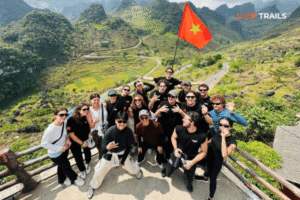


Thúy Kiều (Grace) is a travel blogger and content contributor for Loop Trails Tours Ha Giang. She holds a bachelor’s degree in Sustainable Tourism from Vietnam National University, Hanoi, and has a strong passion for exploring and promoting responsible travel experiences in Vietnam’s northern highlands.
Learn more: Ha Giang Loop Tours
Most blog posts about the Ha Giang Loop assume you’re on a motorbike. Wind in your hair, GoPro on the helmet, two wheels into the limestone. That’s the famous version, and it’s earned its reputation. But every week we get messages from travelers who can’t or simply don’t want to ride: families with young kids, couples where one person isn’t comfortable on a bike, older parents joining their adult kids, photographers hauling gear, and plenty of solo travelers who’ve heard one too many stories about scraped knees on Tham Ma Pass.
If that’s you, here’s the good news: the Ha Giang Loop by car is absolutely doable. The road is paved the entire way, the views don’t change because you swapped two wheels for four, and there are nights you’ll be very glad to have a roof and a heater.
Here’s everything you actually need to know before you book one, written by people who run trips up there every week.
Learn more: Ha Giang Loop 2 Days 1 Night
Short answer: yes.
The Ha Giang Loop, the classic 350 km circuit through Quan Ba, Yen Minh, Dong Van, Meo Vac, and back to Ha Giang City, follows QL4C, a paved highway that’s been steadily upgraded over the years. Cars handle it fine. SUVs, 7 seat vans like the Toyota Innova or Fortuner, and proper jeeps all run the route year round.
What’s changed in the last few years is how mainstream this option has become. The motorbike loop boom brought a wave of travelers, and a chunk of them realized partway through booking that they didn’t actually want to ride for eight hours a day on mountain roads they’d never seen. Operators responded. Today you can pick from open jeep tours, private SUVs with a driver, mini vans for groups of six or seven, and combine trips that pair Ha Giang with Cao Bang in one shot.
The one thing you cannot really do, at least not legally and easily as a foreign tourist, is rent a car and self drive. We’ll get to why in a minute.
Learn more: Ha Giang Jeep Tours
These three options aren’t interchangeable. Each one delivers a slightly different version of the same trip, and the right choice depends on what you actually want out of those three or four days.
Learn more: Ha Giang Motorbike Rental
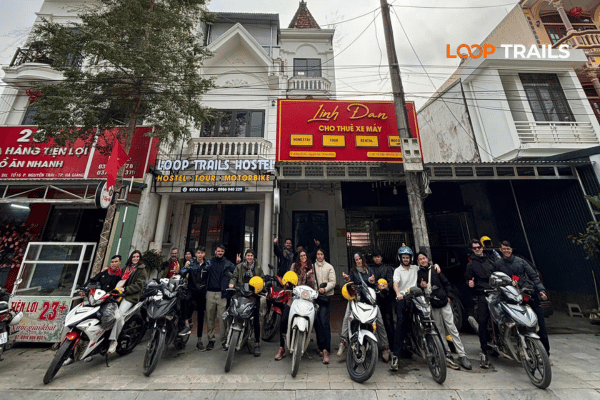
This is the version Instagram sold you. You’re outside, exposed to the air, smelling the pine forest after rain, stopping wherever you want to take a photo. It’s the most physically engaging way to do the loop, and for many people the most memorable.
If you can ride confidently in mountain conditions, self drive on a manual or semi auto bike gives you full freedom. If you can’t, or you’d rather not gamble on weather and traffic, an easy rider tour puts you on the back of a local guide’s bike. You still get the open air experience without managing the throttle on a wet downhill.
Learn more: Ha Giang Loop 3 Days 2 Nights
A private car (usually a 4 to 7 seat SUV or van) is the most comfortable option. Air con, music, somewhere to leave your bags during the day, and a driver who knows where the police checkpoints, lunch stops, and best photo pullouts are. You stay dry in the rain, warm in the cold, and you can sleep between viewpoints.
The trade off is sensory. You’re behind glass. You don’t smell the buckwheat fields or feel the temperature drop as you climb out of Yen Minh into the karst. You’ll still see everything, just at slightly more remove.
Learn more: Ha Giang Loop 4 Days 3 Nights
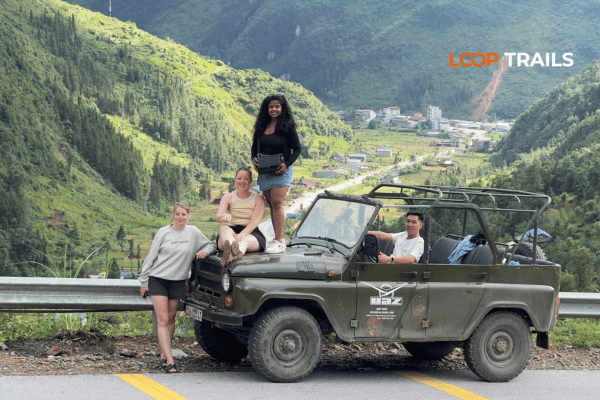
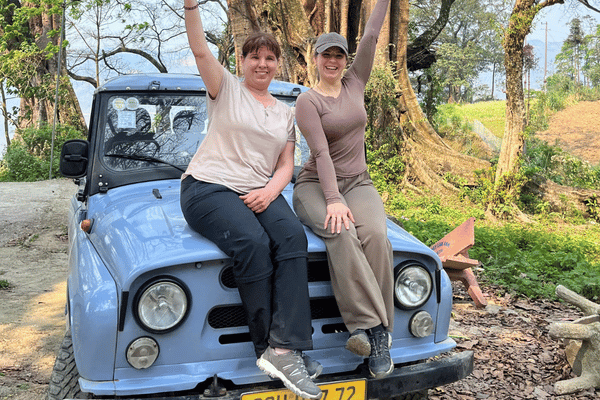
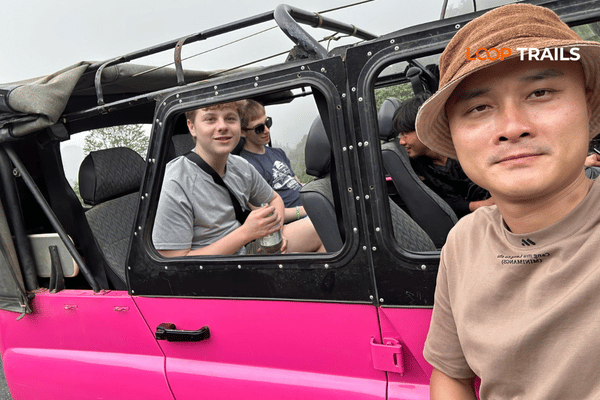
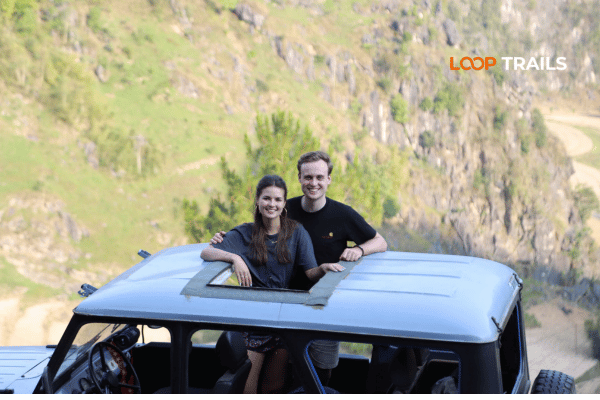
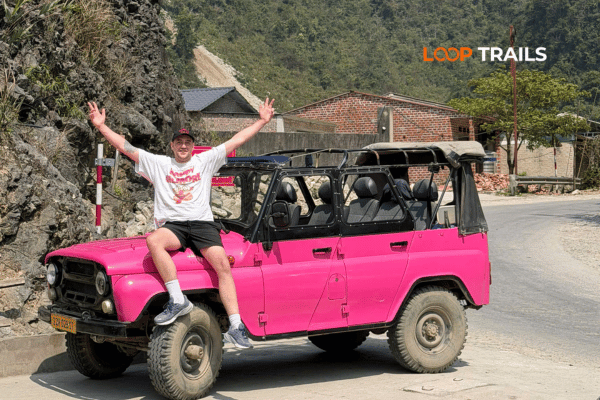
Jeeps split the difference. Most of them are converted military style or open top vehicles where the canvas roof comes off in good weather, so you get something close to the motorbike experience without sitting on a saddle. They’re rugged, they handle dirt detours fine, and they look great in photos.
Downsides: less weather protection than a sedan if it really comes down, and the ride is bumpier. Some travelers love that, others find it tiring on day three.
| Option | Comfort | Open air feel | Rain proof | Best for |
|---|---|---|---|---|
| Self drive motorbike | Low | High | Low | Confident riders, solo travelers |
| Easy rider motorbike | Medium | High | Low to Medium | Travelers who can’t ride |
| Private car | High | Low | High | Families, couples, photographers |
| Jeep | Medium to High | Medium to High | Medium | Groups wanting a bit of adventure |
If you’re already leaning motorbike but worried about safety, our [Easy Rider tours] solve that without giving up the open air feel. If a car still sounds right for your group, keep reading.

Learn more: Ha Giang Loop with Kids
Honestly, more people than you’d think.
A car makes sense if you’re traveling with kids under twelve, with parents in their sixties or older, with anyone recovering from an injury, or with someone who just doesn’t enjoy being on a bike. It’s the right call if you’re carrying expensive camera gear you don’t want bouncing around in a backpack for three days. It’s also the right call if you’re squeezing the trip into shorter dates and need to move efficiently.
Couples often pick a car when one partner rides and the other doesn’t, because it lets you do the trip together rather than one person sitting on the back of a stranger’s bike for the whole loop. Small groups of four to six friends often pick a car for the simple reason that it’s social. You can talk, share snacks, plan the next stop, and not lose each other on the road.
It’s a bad fit if your reason for coming to Ha Giang is specifically to ride a motorbike through northern Vietnam. In that case, switch to a [self drive motorbike rental] or [Easy Rider tour] and don’t look back.
Learn more: Ha Giang Cao Bang 5 Days 4 Nights
The standard loop runs three days. Most travelers find that the right amount: enough to hit the major sights without rushing, short enough to fit a typical Vietnam itinerary. Four days gives you breathing room and a couple of unhurried mornings, which is genuinely worth it if you have the time.
Here’s how a three days car itinerary usually flows.
You’ll start in Ha Giang City, which most travelers reach on a sleeper bus or limousine van from Hanoi the night before. Tours typically pick up in town around 8 or 8:30 in the morning.
The first big stop is Quan Ba Heaven Gate, about an hour and a half north of Ha Giang City. This is where the karst landscape really announces itself. You’ll also see the Twin Mountains (locally called the Fairy Bosoms, no judgment) from a viewpoint just past the gate.
From Quan Ba you continue to Yen Minh for lunch, then climb through pine forest into the heart of the limestone plateau. The afternoon is for stops along the way: Tham Ma Pass with its nine switchback turns, Sung La Valley where the H’mong King’s house sits among buckwheat fields, and the small village of Pho Bang if your driver detours that way.
Most car tours overnight in Dong Van or just outside it. Dong Van Old Quarter has stone houses going back generations and a quiet evening atmosphere once the day trippers leave.
Day two is the headline day.
Morning starts with a run up to Lung Cu Flag Tower, the symbolic northernmost point of Vietnam. The tower itself is a short hike up; the views from the top stretch into China on a clear day. You’ll feel why people make the detour.
Back to Dong Van, then onto the Ma Pi Leng Pass. This is the section everyone has seen on Instagram: the road carved into the cliff, the Nho Que River a thread of jade green at the bottom of Tu San Canyon, layered mountains in every direction. Your driver will pull over at the main viewpoint, and there’s a cafe nearby called Panorama where you can grab a coffee and stare for half an hour.
A lot of travelers add a Nho Que River boat tour here. It’s a thirty minute drive down to the dock, a one hour boat ride through the canyon, and back up. Worth it on a clear day. Skip if it’s pouring rain because the canyon walls disappear into mist.
You’ll end the day in Meo Vac. If you happen to be there on a Saturday night, you’re in luck: the Sunday market on Meo Vac mornings is one of the most authentic ethnic markets left in the region. Plan ahead if that’s important to you.
Day three loops you south. The Meo Vac to Du Gia section is one of the prettiest stretches of road in the whole trip and gets less attention than Ma Pi Leng. Rivers, terraced fields, and far fewer tour groups.
Du Gia is a small village known for swimming holes and waterfalls in the warmer months. Lunch usually happens here. From Du Gia, you cut back to Ha Giang City through forest and rice paddies, arriving by late afternoon or early evening.
You’ll be back in Ha Giang City in time to catch a night bus to Hanoi if you’re tight on schedule, or stay one more night if you want to actually sleep in a proper bed before the long ride back.
If you have the time, four days is better. The extra day usually goes one of two places: a slower Day 2 with both Lung Cu and the Nho Que boat tour without rushing, or an additional overnight in Du Gia which adds a swimming and waterfall morning. Some four days car itineraries also include a stop at Lung Khuy Cave near Quan Ba on the way back.
For travelers wanting to push further, [Ha Giang and Cao Bang combine tours] add three to four days connecting the two regions. Cao Bang’s Ban Gioc Waterfall and Phong Nam Valley are dramatically different scenery and well worth tacking on if your visa allows the time.

Learn more: Cao Bang Loop 3 Days best kept secret
I’m not going to throw made up prices at you because rates change with fuel costs, season, and group size. Here’s what actually drives the price:
The biggest variable is whether you book a private car or join a small group tour. Private gives you flexibility and your own pace; small group is cheaper per person if you don’t mind sharing the vehicle with strangers.
Vehicle type matters. A 4 seat SUV used by a couple costs more per person than a 7 seat van split among six people. Jeeps usually sit between the two.
What’s typically included: vehicle, driver, fuel, English speaking guide if it’s a tour package, accommodation in homestays or hotels, all main meals, and tickets to major sights.
What’s typically extra: drinks, optional add ons like the Nho Que boat tour, and tips for the driver and guide if you want to leave them.
For an honest current quote, message us on WhatsApp with your dates and group size and we’ll send you actual numbers, not a marketing range.
Learn more: Ha Giang Cao Bang Ba Be Lake 6 Days 5 Nights
The good news first. QL4C, the main loop highway, is paved end to end. It’s been improved significantly over the last decade. Cars handle it without drama in dry conditions.
That said, this is mountain driving, and there are things worth knowing.
The road is narrow in places, sometimes only a lane and a half. You’ll share it with trucks hauling cement, motorbikes, water buffalo, and the occasional school bus. Drivers honk before blind corners, which feels chaotic for a day and then makes complete sense.
Weather matters. In the rainy season (roughly May through September), landslides do occasionally close sections of road. They’re usually cleared within hours, sometimes a full day. A good operator monitors conditions and reroutes when needed. If you’re traveling in rainy season, build a buffer day into your overall Vietnam plans just in case.
Fog is a daily morning feature in the cooler months, especially November through February. It usually burns off by mid morning. Drivers who run the loop full time know how to navigate it; tourist self drivers often don’t, which is one of the reasons we don’t recommend rental cars to visitors.
Road rules can change without much warning, particularly around licensing and checkpoints. Always check the latest local updates before you go, or just ask your tour operator before booking.
Learn more: Ha Giang Loop Self-Drive
Here’s the part you probably won’t see written this directly elsewhere.
Foreign tourists in Vietnam generally cannot legally rent and self drive a car. To drive a car here, you need a Vietnamese driver’s license. International Driving Permits issued under the 1968 Vienna Convention are technically accepted, but enforcement varies and the rental market for self drive cars to foreign tourists is essentially non existent in northern Vietnam, especially in Ha Giang.
What this means in practice: every “Ha Giang Loop car” trip you’ll find as a foreign visitor includes a driver. Sometimes that driver is also your guide, sometimes you have a separate English speaking guide who rides along.
This is genuinely better anyway. Loop drivers do this route weekly. They know which roadside stops have the best photo angles, which restaurants serve clean food, which homestays have hot water that actually works, and where the police set up checkpoints. They handle the road so you can look at it.
For motorbike rules it’s slightly different, and self drive bike rental for tourists is well established in Ha Giang. If that interests you more, our [motorbike rental in Ha Giang] page covers the requirements honestly.
Learn more: Ha Giang in September & October
There’s no bad time to do this trip, only different versions of it.
September to November is peak season for a reason. Rice terraces turn gold, weather is cool and clear, and the views are at their sharpest. Book ahead because everyone else figured this out too.
November to early February brings cold, dramatic landscapes. Mornings are foggy and afternoons crisp. Buckwheat blooms pink and white in October and November around Sung La. Pack proper warm layers; a car keeps you out of the wind but the homestays in Dong Van and Meo Vac are not heated like a Western hotel.
March to May is warmer with green mountains and occasional rain. Easter and golden week travelers from Hanoi mean weekends are busier; weekday departures are quieter.
June to August is the rainy season. Heavy mist, lush green everywhere, fewer foreign tourists, and yes, occasional landslides. A car is actually a strong choice in this window because you stay dry. Just keep flexibility in your schedule.
A car removes a lot of the weather risk that puts people off coming in shoulder seasons. If you’re worried about rain ruining a motorbike trip, switching to a car solves that problem cleanly.

Learn more: Ha Giang Packing list
Less than the motorbike packing lists you’ve seen, because you don’t need rain gear at the same intensity. But still:
A duffel or soft bag works better than a hard suitcase because of trunk space. Most cars handle two large bags plus carry ons for four people without issue, but a 7 seater full of luggage gets tight.
Learn more: Ha Giang Loop Mistake to Avoid
A few patterns we see go wrong, written as warnings rather than finger pointing:
Booking the cheapest option you can find online. A loop trip is one of those things where the difference between a great experience and a frustrating one is the operator, not the route. Drivers, vehicle condition, accommodation quality, and what happens when something goes wrong (it sometimes does) all vary wildly. Read recent reviews carefully.
Trying to do it in two days. Yes, you technically can. But you’ll spend the entire trip in the car looking at scenery you don’t have time to stop at. The loop is meant to be paced.
Underestimating the cold in winter. Dong Van and Meo Vac sit at elevation. December and January nights can drop near freezing. Travelers showing up in shorts and t-shirts in January are a recurring sight, and not a comfortable one.
Skipping insurance. Travel insurance covering Vietnam is cheap and worth it. Mountain roads, remote areas, occasional weather delays. Don’t skip it.
Booking a Hanoi to Ha Giang day tour expecting to see the loop. Some operators advertise “Ha Giang day trips” from Hanoi. You cannot meaningfully see this region in a day. The drive alone is six hours each way.
A few patterns we see go wrong, written as warnings rather than finger pointing:
Booking the cheapest option you can find online. A loop trip is one of those things where the difference between a great experience and a frustrating one is the operator, not the route. Drivers, vehicle condition, accommodation quality, and what happens when something goes wrong (it sometimes does) all vary wildly. Read recent reviews carefully.
Trying to do it in two days. Yes, you technically can. But you’ll spend the entire trip in the car looking at scenery you don’t have time to stop at. The loop is meant to be paced.
Underestimating the cold in winter. Dong Van and Meo Vac sit at elevation. December and January nights can drop near freezing. Travelers showing up in shorts and t-shirts in January are a recurring sight, and not a comfortable one.
Skipping insurance. Travel insurance covering Vietnam is cheap and worth it. Mountain roads, remote areas, occasional weather delays. Don’t skip it.
Booking a Hanoi to Ha Giang day tour expecting to see the loop. Some operators advertise “Ha Giang day trips” from Hanoi. You cannot meaningfully see this region in a day. The drive alone is six hours each way.
Learn more: Ha Giang Loop Easy Rider
Quick decision tree:
If you’re a confident rider traveling solo or as a couple, and the riding itself is part of why you came, book a [self drive motorbike tour] or [motorbike rental] and have at it.
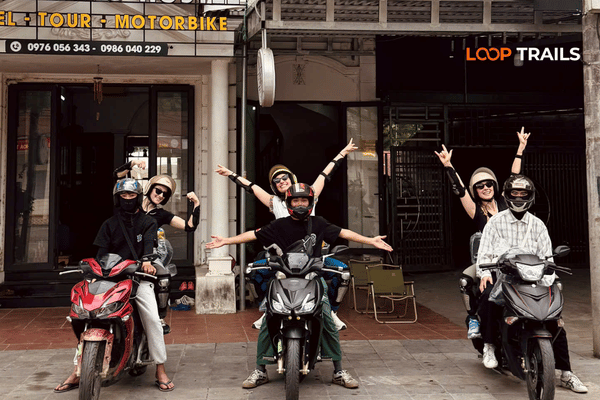
If you’d love the open air motorbike experience but don’t want to drive in mountain conditions, an [Easy Rider tour] is the best pick. You’re on the back of an experienced local rider who’s done this route hundreds of times.
If you have non riders in your group, kids, older parents, or anyone with mobility concerns, go with a [private car or jeep tour]. It’s the right call.
If you’re a small group of four to seven travelers who like comfort and want to talk to each other during the trip, a private 7 seater is genuinely a great way to do this trip.
If you have a week or more and want both Ha Giang’s karst and Cao Bang’s waterfalls, look at [Ha Giang and Cao Bang combine tours]. Two regions, one trip, completely different scenery.

Learn more: Ha Giang Loop for Couples
Here’s how it works on our end.
You message us on WhatsApp or through the contact form with your group size, dates, and any preferences (private vs small group, jeep vs SUV, three vs four days, any add ons). We send you an honest quote with what’s included and what’s optional.
If everything looks right, we send a small deposit link and lock in your dates. The full balance is paid in cash on arrival in Ha Giang City, in dong or USD. No hidden fees, no upsells once you arrive.
Pickup happens at your hotel or the bus drop off point in Ha Giang City. Your driver and guide brief you on the day’s plan. Then you go.
For travelers who want a bit more of an adventurous feel without committing to riding a motorbike, we run [open jeep tours] that hit the same itinerary with a different vibe. It’s worth asking about both when you message.
If your dates aren’t fixed yet, send us your rough window and we’ll let you know which week is likely to have the best weather and lightest traffic. Local intel goes a long way on this trip.
In practice, no. Vietnam requires a Vietnamese driver’s license to drive a car, and self drive car rentals to foreign tourists in Ha Giang are essentially not offered. Every car based loop tour includes a driver.
Three days is standard, four days is more relaxed. Two days is technically possible but rushed and not recommended.
A regular SUV or sedan handles the main loop fine. The whole circuit is paved. Jeeps and 4x4s are used more for the experience than because they’re necessary.
Yes, and a car is usually the best option for families. Bring motion sickness tablets for younger kids since the road has constant curves. Most homestays accept children without issue.
Prices vary by vehicle type, season, and group size. Message us on WhatsApp with your group size and dates for an honest current quote rather than a generic range that may be out of date.
A jeep gives you a more open, adventurous feel and looks great in photos but is bumpier and less weather proof. A private SUV or van prioritizes comfort: air con, full enclosure, and a smoother ride. Pick based on which trade off matters more to you.
For most foreign travelers, yes. Drivers in Ha Giang typically speak limited English and focus on driving. A separate English speaking guide explains what you’re seeing, handles homestay check ins, and translates with local hosts.
Generally yes, with experienced drivers. The road is paved and well traveled. Watch for weather related landslides in rainy season and book with operators who monitor conditions actively.
Yes. Combine tours typically run six to seven days and link the two regions through Bao Lac. It’s a great option if you want both the karst landscapes of Ha Giang and the waterfalls of Cao Bang.
For September to November and major Vietnamese holidays, yes, ideally three to four weeks ahead. Other months, a week or two is usually fine. Last minute is sometimes possible but limits your vehicle and accommodation options.
A 4 seater car comfortably handles two large bags plus carry ons. A 7 seater fits more but gets tight when full of passengers. Soft duffels work better than hard cases.
A good operator adjusts the itinerary. We’ve rerouted around landslides, swapped the Nho Que boat for an indoor stop, and pushed days back when needed. Build a buffer day into your overall Vietnam schedule if you’re traveling in rainy season.
Contact information for Loop Trails
Website: Loop Trails Official Website
Email: looptrailshostel@gmail.com
Hotline & WhatSapp:
+84862379288
+84938988593
Social Media:
Facebook: Loop Trails Tours Ha Giang
Instagram: Loop Trails Tours Ha Giang
TikTok: Loop Trails
Office Address: 48 Nguyen Du, Ha Giang 1, Tuyen Quang
Address: 48 Nguyen Du, Ha Giang 1, Tuyen Quang
Facebook X Reddit Table of Contents Learn more: Ha Giang Loop Tours Most people drive past the Quan Ba area twice on

Facebook X Reddit Table of Contents Learn more: Ha Giang Loop Tours The Ha Giang Loop has a reputation problem with older