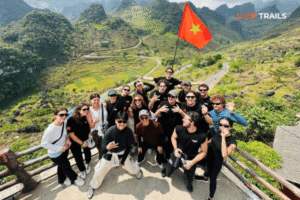


Thúy Kiều (Grace) is a travel blogger and content contributor for Loop Trails Tours Ha Giang. She holds a bachelor’s degree in Sustainable Tourism from Vietnam National University, Hanoi, and has a strong passion for exploring and promoting responsible travel experiences in Vietnam’s northern highlands.
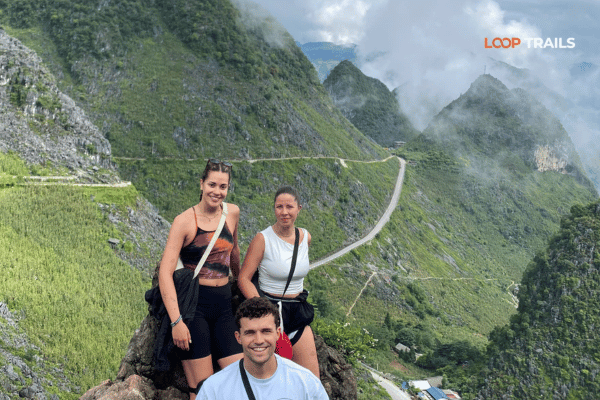
Learn more: Ha Giang Loop Tours
Every week someone sends us a message that begins the same way: “This looks amazing, but is it actually safe?” Usually it arrives at 2am their time, after a long evening of watching drone footage of Ma Pi Leng Pass and reading one alarming forum thread too many.
It is a fair question and it deserves a real answer rather than a marketing one. So here it is: Vietnam is a genuinely safe country for adventure travel, and the specific things that hurt travellers here are almost never the things they worry about before they arrive. Nobody gets robbed on the Ha Giang Loop. People do come off motorbikes on wet gravel.
This guide is written by people who run tours in the northern mountains for a living. That gives us a bias, and you should know about it. It also means we see the incidents, the near misses and the small decisions that separate a great week from a bad one. We would rather you arrive with a clear head than book blind.
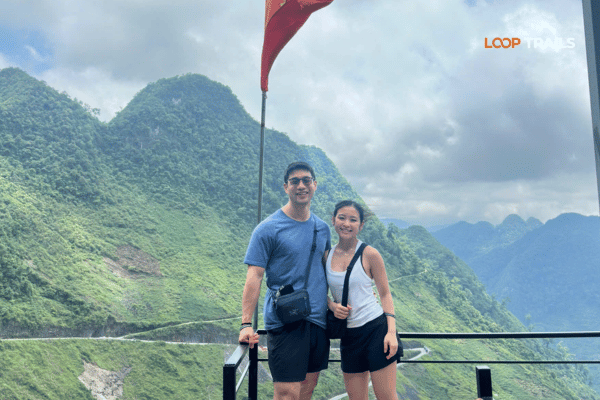
Learn more: Ha Giang Loop 2 Days 1 Night
If you only read one section, read this one.
Everything below is the long version.
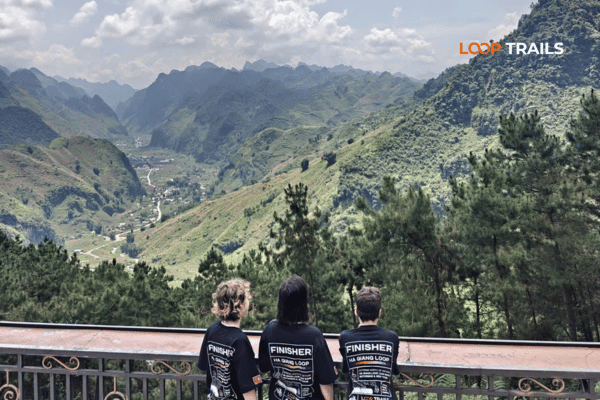
Learn more: Ha Giang Loop 3 Days 2 Nights
Travellers tend to rank risks in the wrong order. The fear list usually looks like: crime, food poisoning, getting lost, then somewhere near the bottom, the roads. The reality is close to inverted.
Here is a rough map of what we see in practice. This is field observation from running tours, not statistics, and you should treat it that way.
| Risk | How likely | How serious if it happens | Mostly preventable? |
|---|---|---|---|
| Motorbike accident (minor: scrapes, sprains) | Moderate for self drive riders | Low to medium | Yes |
| Motorbike accident (serious) | Low | High | Largely |
| Stomach upset | Moderate | Low | Partly |
| Petty theft (phones, bags in cities) | Low to moderate in Hanoi, low up north | Low | Yes |
| Scams and overcharging | Moderate in tourist hubs | Low | Yes |
| Weather related road problems | Seasonal | Medium | Manageable with planning |
| Violent crime | Very low | High | Rare enough not to shape your trip |
The useful takeaway: you can remove most of your real risk with about four decisions, and almost none of it by worrying about crime.
Those four decisions are your transport mode, your insurance, your alcohol behaviour, and whether you ride at night. We will get to each of them.
Learn more: Ha Giang Loop 4 Days 3 Nights
The first hour in Hanoi convinces most visitors that the traffic is chaos. It is not, quite. It runs on a different operating system.
In many Western countries, traffic works on right of way: you have your lane, your turn, your priority, and everyone else is expected to respect it. In Vietnam, traffic works on continuous negotiation. Vehicles flow into gaps. Speeds in town are low. People merge without looking behind them because the expectation is that the person behind is watching and will adjust. Horns are not aggression, they are a way of saying “I am here.”
Once you understand that, the city becomes predictable. The dangerous move is to behave as if you have priority. The safe move is to be smooth, slow and readable: no sudden braking, no swerving, no dramatic changes of direction.
Crossing the road on foot follows the same rule. Walk at a steady, constant pace and let the traffic flow around you. Freezing in the middle or sprinting is what causes problems, because you become unpredictable.
The north is not the city. Up here the traffic thins out dramatically, which feels safer and in some ways is. What replaces it:
None of that is exotic to anyone who has ridden mountain roads before. It is simply unfamiliar to people whose riding experience is a scooter on a flat island.
Do not do it. This is the single easiest safety rule in this entire guide.
Mountain roads in Ha Giang and Cao Bang have no street lighting, oncoming headlights are often on high beam, animals are invisible until they are close, and the temperature drop makes you slower and less alert. Any decent operator plans days that finish before dark, and if a schedule keeps slipping into the evening, that is a red flag about the operator, not about the road.
Not sure whether to ride yourself? That decision is the biggest lever you have on your own safety. Our easy rider and jeep options exist for exactly this reason: you get every viewpoint and every homestay without having to manage a bike on unfamiliar mountain roads. If you are on the fence, message us on WhatsApp and describe your riding experience honestly. We will tell you straight which option fits.
Learn more: Motorbike License IDP Guide 2026
This section is where honest guides tend to go vague. We will be specific about what we know and clear about what you need to verify yourself, because the rules can change and we are not going to publish anything that pretends otherwise. tellus, luctus nec ullamcorper mattis, pulvinar dapibus leo.
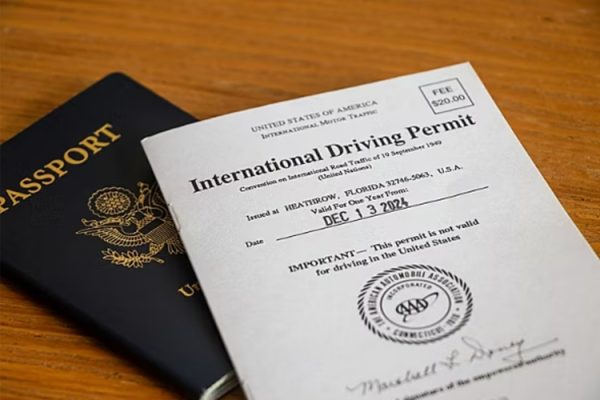
The short version: to ride a motorbike legally in Vietnam you generally need a valid licence for that category, and for most foreign visitors that means an International Driving Permit issued under the convention Vietnam recognises, carried together with your home licence. Not every International Driving Permit is the same document, and not every home motorcycle licence covers every engine size.
Requirements and enforcement have shifted over the years and can change again, so treat this as the starting point of your research and not the final word. Check the current position with the Vietnamese embassy or consulate in your country, and check what your own licence actually authorises you to ride, before you commit to a self drive trip.
Why this matters more than it looks: the licence question is usually not about police fines. It is about insurance.
Read your travel insurance policy wording. Specifically, look for what it says about motorcycles.
Many standard travel policies exclude motorbike injuries entirely, or cover them only if:
If one of those conditions fails, a policy that looked comprehensive can end up paying nothing. Medical evacuation from a mountain province to a major hospital is not cheap, and an uninsured serious injury is the scenario that genuinely ruins trips.
So the practical rule is:
If your insurer will not cover you to ride, that is useful information rather than an obstacle. It usually means an easy rider or a jeep is the better trip for you anyway.
You do not need to arrive dressed for a rally. A few things do make a real difference:
Learn more: Ha Giang Cao Bang 5 Days 4 Nights
This is the question behind the question, so let us answer it directly.
The Ha Giang Loop is a mountain motorcycle route with exposed sections, variable surfaces and limited emergency infrastructure. That makes it demanding. It does not make it reckless. Thousands of travellers complete the Loop every season without incident, and the ones who do have trouble usually fall into a small number of recognisable categories.
From what we see, incidents cluster around five situations:
Notice how few of those are about the road itself. The road is the constant. The variable is the decision making.
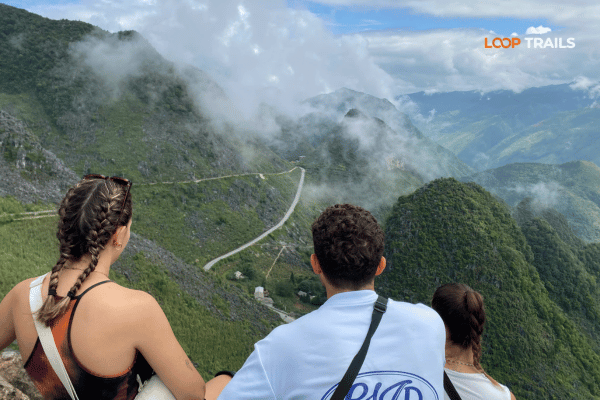
The stretch of the QL4C along Ma Pi Leng between Dong Van and Meo Vac is the postcard section and also the most exposed. The tarmac is generally in reasonable condition, but the road is narrow in places, tour vans stop in awkward spots, and the view is genuinely distracting.
Practical approach: stop to look, ride to ride. Pull in properly at the marked viewpoints, take the photo, then put the phone away and give the road your attention. The overwhelming majority of near misses on that section involve someone looking sideways.
The Tu San canyon boat trip on the Nho Que River is a separate consideration. Check that life jackets are available and worn, and skip it if the water is high and brown after heavy rain. A boat operator who shrugs at that question is telling you something.
The trekking path down to the river and the various viewpoint climbs are more slippery than they look after rain. Every season someone twists an ankle on a wet stone step in flip flops.
Learn more: Ha Giang Motorbike Rental
Your choice of mode changes your risk more than anything else you will decide. Here is how we think about it.
| Mode | Best suited to | Main risk consideration |
|---|---|---|
| Self drive motorbike | Confident riders with real experience on manual or semi automatic bikes, ideally on hills | You are managing the road yourself, in unfamiliar conditions |
| Easy rider (you ride behind a local driver) | Almost anyone, including complete beginners and nervous first timers | Very low personal risk, you are a passenger with an experienced local driver |
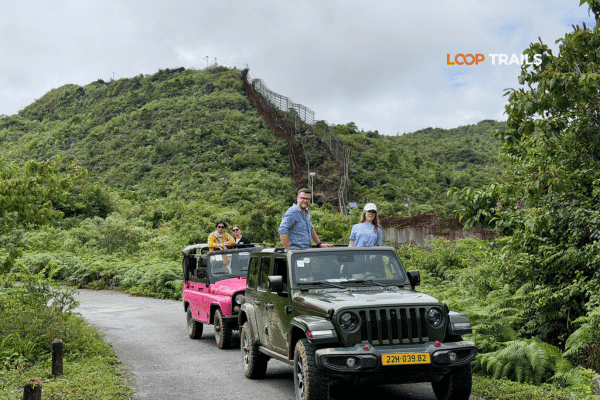
| Jeep | Couples, families, travellers who do not ride, anyone travelling in the rainy or cold season | Lowest exposure, weather protected, no riding skill required |
There is no prize for riding yourself. Some of the best trips we run are for people who arrived intending to self drive, sat down with us, and switched to an easy rider or a jeep after an honest conversation about their experience level. Nobody has ever regretted that call halfway up a wet pass.
Learn more: Ha Giang Loop by Wrangler Rubicon Jeep
Northern Vietnam has a real seasonal cycle, and it changes what the roads feel like.
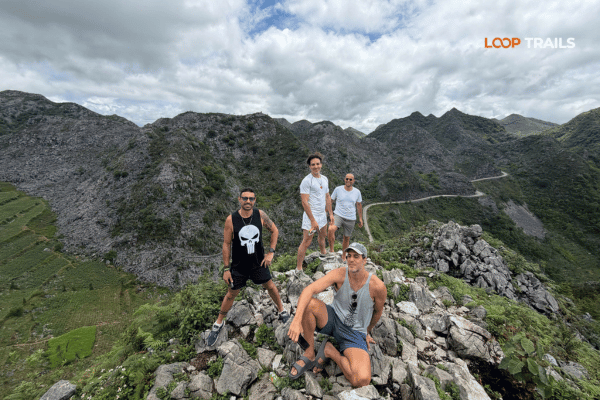
Roughly from late spring through early autumn, the mountains get serious rain. What that means on the ground:
Roads do get cleared, usually quickly, but a diversion or a delay is a normal part of travel in this season. Build a buffer day into your plans if you have onward flights.
Storms that form over the sea can bring several days of heavy rain inland even when the coast takes the brunt of it. Watch the forecast in the week before you travel and stay flexible.
Winter in the far north surprises people. It gets genuinely cold, especially on high passes and at night, and thick fog can cut visibility on mountain roads to a few metres. It is beautiful, quiet, and a season we love, but it is not the season for a beginner on a motorbike.
If you are travelling in the coldest months, bring proper layers, thermal base layers, gloves that actually block wind, and consider whether a jeep is the more sensible way to see the same landscape.
Broadly, the shoulder periods in spring and autumn give the best balance of dry roads, clear views and manageable temperatures. Autumn in particular is popular for good reason. Book earlier for those windows, because everyone else has worked this out too.
Conditions vary year to year and the mountains do what they want, so check recent local updates close to your travel dates rather than relying on a general rule.
Learn more: Ha Giang Safety Tips
Here is where Vietnam quietly outperforms a lot of destinations.
Violent crime against foreign travellers is rare. Solo travellers, including solo women, generally report feeling comfortable here, and the northern provinces in particular are relaxed places where people are more likely to invite you in for tea than to bother you.
The realistic concern is opportunistic theft, and it is concentrated in busy urban areas rather than the mountains:
Simple habits fix most of it: keep your phone in your hand only when you are away from the road edge, wear your bag on the shoulder away from traffic, and use the safe or a lockable bag for your passport and cards.
Up in Ha Giang and Cao Bang, homestay theft is very uncommon. Basic sense still applies: do not spread cash and electronics across a shared room.
We are not going to name businesses or make accusations we cannot verify. What we can do is describe the general patterns travellers report in tourist areas across the country, so you recognise them.
Almost all of this is inconvenience rather than danger. The financial damage is usually small. The point is to spend your energy on the trip instead of on disputes.
Solo travellers do very well in northern Vietnam, partly because the tour and homestay culture is social by design. If you are travelling alone and want company on the road, a small group departure gives you built in company plus a local driver or guide who knows the route.
Two habits that help: share your itinerary with someone at home, and keep an offline map downloaded, because mobile coverage in the mountains is patchy in places.
Learn more: What to wear on Ha Giang Loop?
The most common health complaint, and rarely serious. Vietnamese food is generally fresh and cooked to order, and street food is often safer than a lukewarm buffet because you can watch it being made. A few sensible habits:
Village dogs in the mountains are working animals, not pets, and some are territorial. Do not approach them, do not try to pet them, and give them space when you stop.
Rabies exists in Vietnam. Any bite or scratch from a mammal should be washed thoroughly with soap and water immediately and then assessed by a medical professional, urgently, regardless of how minor it seems. Vaccination before travel is a conversation worth having with a travel health clinic, particularly if you plan to spend a lot of time in rural areas.
Dengue is present in Vietnam and there is no preventive medication for it, so the defence is not being bitten: repellent, long sleeves at dawn and dusk, and a mosquito net where one is provided. Malaria risk is low in most tourist areas but the picture varies by region, so ask a travel health professional about your specific route rather than relying on general advice.
Get proper medical advice on vaccinations several weeks before you travel, since some need time to take effect.
The mountain sun is stronger than it feels when there is a breeze. Sunburn on the back of the hands and neck is a classic rider injury. Drink more water than you think you need, especially on riding days.
The Ha Giang plateau sits high enough to be noticeably cooler than Hanoi but not high enough for altitude sickness to be a concern for most travellers.
This is the honest limitation of remote travel. Ha Giang and Cao Bang have local hospitals and clinics that handle everyday problems. Serious trauma care is concentrated in Hanoi. That distance is exactly why insurance with medical evacuation cover matters, and why we push so hard on the boring safety habits: the goal is not needing the system in the first place.
Carry any prescription medication you need in sufficient quantity, in its original packaging, because specific brands are not reliably available in small towns.
Learn more: Corn wine “Happy Water” in Ha Giang
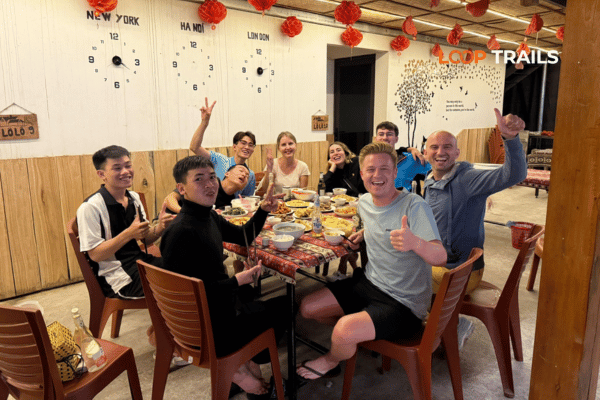
Homestay dinners in Ha Giang are one of the best parts of the trip. Long tables, shared food, a lot of laughing, and the local rice wine that gets introduced as “happy water.”
The hospitality is genuine and the toasts keep coming. It is very easy to drink far more than you intended, in a country where you have already had a long day in the sun.
Two rules, and they are not negotiable:
Nobody minds if you pass on the rice wine, or nurse one glass all evening. Saying “I am riding tomorrow” is a complete and respected answer.
If you want to enjoy the evening properly without doing mental arithmetic about tomorrow morning, that is another argument for an easy rider or jeep trip. Passengers get to relax.
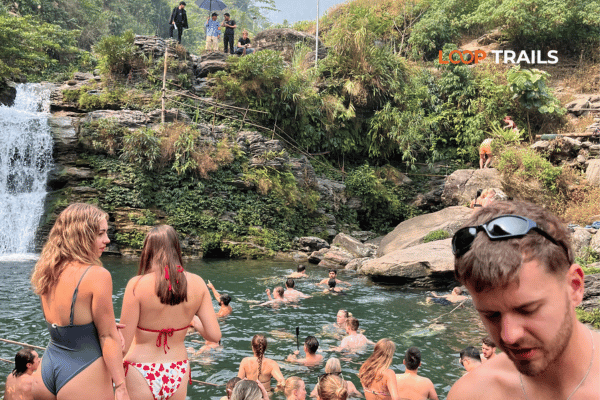
Learn more: Du Gia Waterfall
Adventure travel in Vietnam is not only about the roads.
Trekking. Trails in the north are often unmarked, and rain makes limestone and clay paths genuinely slippery. Going with a local guide is not just about safety, it is the difference between walking past a village and being welcomed into one. Tell someone your route, carry water, and start early enough to finish in daylight.
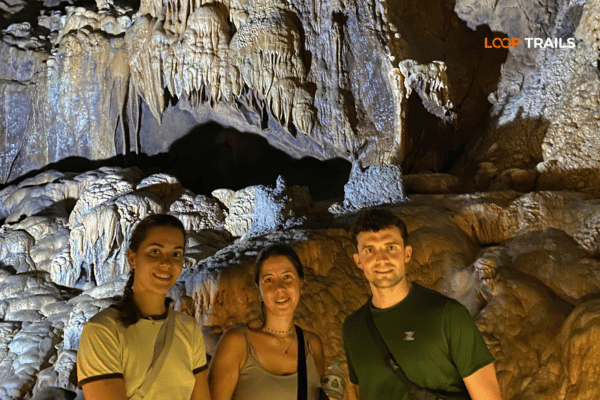
Caves. The cave systems in the north, including those around Cao Bang, are spectacular and mostly visited on developed walkways. If you are doing anything more adventurous than a lit tourist cave, do it with a licensed operator, with helmets and lights, and never alone.
Water. Rivers rise fast after rain in the mountains, and currents in canyon sections are stronger than they look. On boat trips, insist on a life jacket and wear it. Vietnam has beautiful swimming spots and also a lot of unsupervised water, so be conservative about where you get in.
Canyoning and adventure sports in the central highlands and elsewhere are best booked with operators who show you their safety equipment and their guide qualifications without being asked twice. If the answer is vague, walk away. There are plenty of good operators.
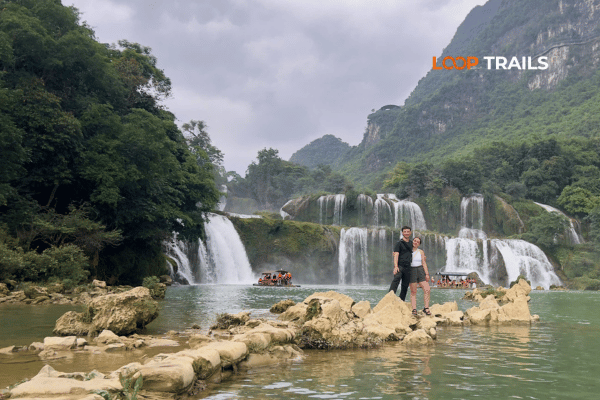
Learn more: Cao Bang Loop 3 Days best kept secret
Cao Bang deserves its own note, because it is on a lot of itineraries now as a combination with Ha Giang and it is not simply “more of the same.”
The combination itinerary, typically 5 days 4 nights, works well precisely because it splits the demanding mountain riding of Ha Giang with the more open roads of Cao Bang. It is often the better choice for travellers who want distance without a week of tight switchbacks.
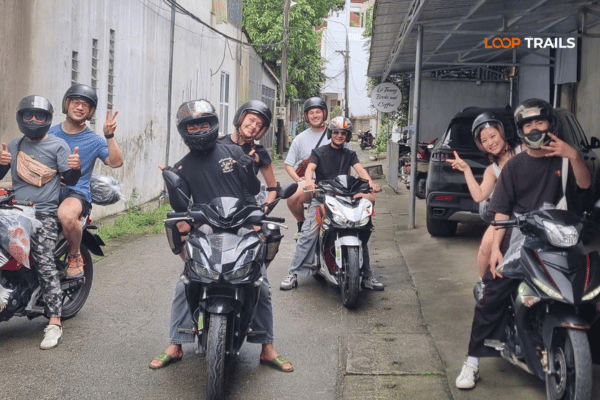
Learn more: Ha Giang Loop Easy Rider
Be honest with yourself here. This section is genuinely the most useful safety advice in the article.
Choose self drive motorbike if: you ride regularly at home, you are comfortable with a clutch or a semi automatic, you have ridden on hills and in rain, and your insurance covers you with the correct licence. You want the freedom to stop whenever you want and you accept that you are managing the risk yourself.
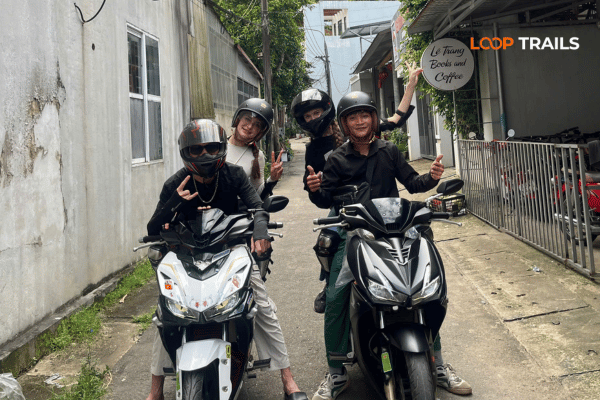
Choose easy rider if: you love the idea of the Loop but you are not an experienced rider, or you are but you would rather look at the view than the road. You sit behind a local driver who rides these passes every week. You still get the wind, the passes, the homestays, all of it, without managing the bike. This is the option we recommend most often to first time visitors, and there is no shame whatsoever in it.
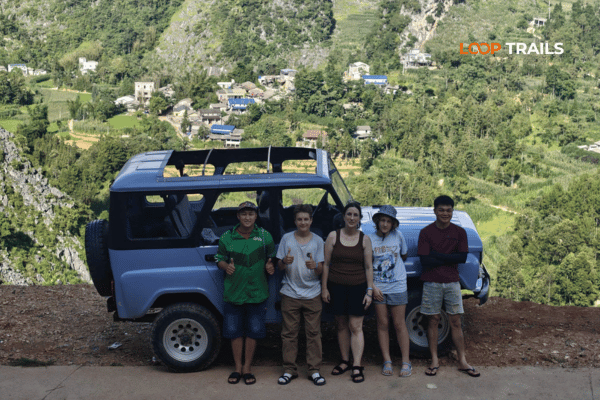
Choose jeep if: you are travelling as a couple or family, you do not ride, you are travelling with someone who is nervous, you are visiting in the rainy or cold season, or you simply want comfort and a dry seat. You stop at exactly the same viewpoints and stay at the same homestays. You just do it with a roof and a driver.
Choose the Ha Giang and Cao Bang combination if: you have 5 or 6 days, you want two distinct landscapes, and you would rather go deeper than double back.
Ready to talk it through? Tell us your riding experience, your dates and who you are travelling with, and we will tell you honestly which option we would put our own friends on. Have a look at the Ha Giang Loop tours, the Ha Giang and Cao Bang combination tours, the Cao Bang Loop, or motorbike rental in Ha Giang if you already know you want to ride. If you would rather just ask a human, message us on WhatsApp. We answer most enquiries the same day, and we will say so if we think a different option suits you better.

Learn more: Ha Giang Packing list
Print this, screenshot it, whatever works.
Before you leave home
Packing that affects safety
On the road
Learn more: Ha Giang Loop Mistake to Avoid
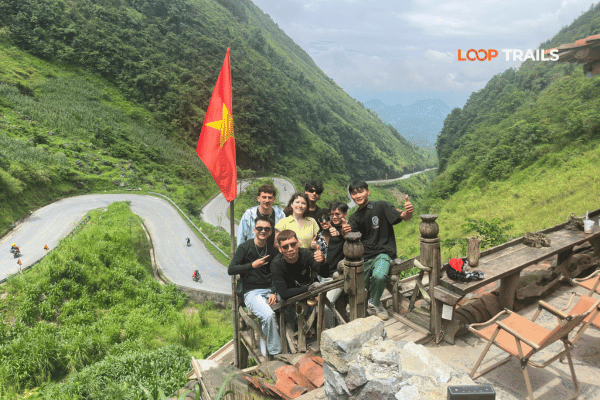
Learn more: Best Adventure Activities in Vietnam
Yes, with the same caveat that applies to any mountain destination: the country is not what puts you at risk, the decisions are.
We have watched nervous first timers finish the Loop grinning and slightly changed by it. We have also watched confident riders scrape themselves up on a gravel corner on day two because they got comfortable too fast. The difference between those outcomes almost never comes down to luck.
Pick the mode that matches your actual experience rather than your ambition. Get insurance that matches your mode. Do not ride at night and do not ride after the happy water. Wear the helmet and the shoes. Slow down for the villages.
Do that, and the northern mountains of Vietnam are one of the great adventure landscapes anywhere, and one that is far more welcoming than its cliff edge photos suggest.
Yes. Solo travel is common and generally comfortable in Vietnam, including for solo women, and the northern provinces are relaxed and welcoming. Standard precautions apply in busy cities, mainly around phone and bag snatching. Joining a small group departure is an easy way to have company on the road.
It is demanding rather than dangerous. The roads are mountainous with exposed sections and variable surfaces, and the risk comes mostly from rider decisions: speed, gravel, following too close, and alcohol. Travellers who take an easy rider or a jeep have a very low risk profile.
Generally you need a valid licence for the category of bike, and for most visitors that means an International Driving Permit recognised by Vietnam carried with your home licence. Rules and enforcement can change, so check current requirements with the Vietnamese embassy in your country before you travel.
Often only under conditions: correct licence, helmet worn, engine size within a stated limit, and no alcohol involved. Many standard policies exclude motorbikes altogether. Read the wording carefully and buy a policy that explicitly matches how you plan to travel.
A jeep is the most protected option, followed by riding as a passenger with an experienced easy rider driver. Self drive is perfectly reasonable for experienced riders with the right licence and insurance. All three see the same viewpoints and stay at the same homestays.
For most travellers, yes. Food is generally fresh and cooked to order, and busy places with high turnover are a good sign. Drink bottled or filtered water, carry rehydration salts, and give your stomach a day or two to adjust before going all in.
Yes, with flexibility. Rain brings slippery roads, occasional landslides and temporary closures, so build in a buffer day and expect route adjustments. Many travellers choose a jeep in these months for comfort and weather protection.
Mostly minor ones concentrated in tourist hubs: taxi overcharging, rental damage disputes, unclear pricing in nightlife areas. Photograph rental vehicles before riding, agree prices in advance, and avoid leaving your passport as a rental deposit.
Yes, and a jeep makes it straightforward. Families do the Loop regularly with a driver, stopping at the same viewpoints and homestays. Bring warm layers for the passes and plan slightly shorter driving days with young children.
Local clinics and hospitals in Ha Giang and Cao Bang handle everyday problems, while serious trauma care is in Hanoi. Your operator should have a plan for this. That distance is why insurance with medical evacuation cover matters.
The rice wine is part of the experience and most people enjoy it. The issue is quantity and timing. Never ride the same evening after drinking, and never ride the next morning unless you are completely clear.
Once you have confirmed travel dates, book as soon as you can. Most guests book 1 to 3 months ahead, and jeep availability in particular is limited, so early booking gives us time to arrange everything properly.
Contact information for Loop Trails
Website: Loop Trails Official Website
Email: looptrailshostel@gmail.com
Hotline & WhatSapp:
+84862379288
+84938988593
Social Media:
Facebook: Loop Trails Tours Ha Giang
Instagram: Loop Trails Tours Ha Giang
TikTok: Loop Trails
Office Address: 54A Tran Phu, Ha Giang 2, Tuyen Quang
Address: 54A Tran Phu, Ha Giang 2, Tuyen Quang
Facebook X Reddit Table of Contents Learn more: Ha Giang Loop Tours Most people drive past the Quan Ba area twice on
Facebook X Reddit Table of Contents Learn more: Ha Giang Loop Tours The Ha Giang Loop has a reputation problem with older