


Thúy Kiều (Grace) is a travel blogger and content contributor for Loop Trails Tours Ha Giang. She holds a bachelor’s degree in Sustainable Tourism from Vietnam National University, Hanoi, and has a strong passion for exploring and promoting responsible travel experiences in Vietnam’s northern highlands.
Learn more: Ha Giang Loop Tours
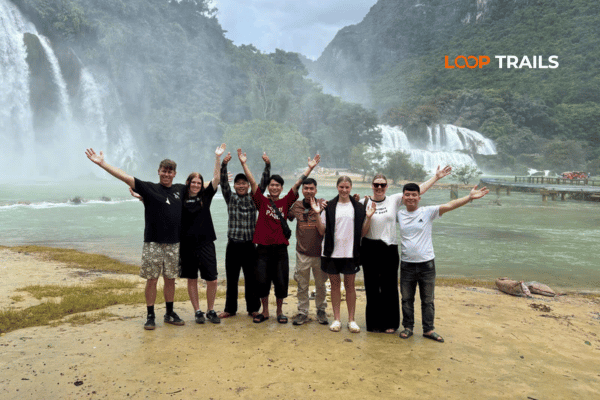
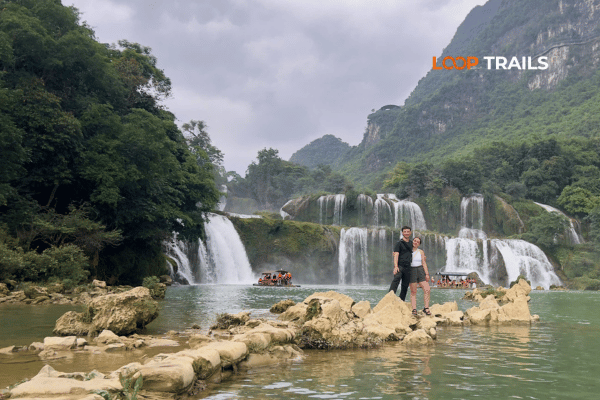
Most people who visit Cao Bang come for Ban Gioc Waterfall. That makes sense — it’s one of the most striking waterfalls in Southeast Asia and a legitimate bucket-list stop. But a short drive from the falls sits a cave that honestly deserves equal billing: Nguom Ngao.
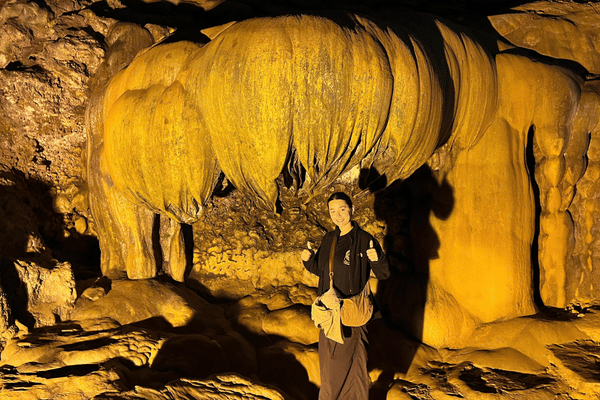
Nguom Ngao translates from the Tay language as “Tiger Cave.” You won’t find any tigers inside, but you will find something that stops most visitors mid-step: a cavern that stretches for kilometers, packed with stalactites, stalagmites, and formations that genuinely look like they’ve been carved by someone with too much time and a very good imagination.
If you’re planning a trip to Cao Bang and wondering whether Nguom Ngao is worth the stop it is. This guide covers everything you need to know before you go, from how to get there to what to actually look for once you’re inside.
Learn more: Ha Giang Loop 2 Days 1 Night
Nguom Ngao is a limestone cave system located in Dam Thuy Commune, Trung Khanh District, Cao Bang Province, in the far northeast of Vietnam. The cave sits within the Non Nuoc Cao Bang UNESCO Global Geopark, a designation it shares with the broader geological landscape of the region, which includes Ban Gioc Waterfall, Phia Oac Mountain, and the Pac Bo Revolutionary Site.
The cave system stretches for approximately 2,144 meters in total, though the publicly accessible section open to visitors covers just under 1,000 meters. That section alone takes most groups around 45 minutes to an hour to walk through — longer if you spend time with the formations, which most people do.
The cave was formally opened to tourism in the 1990s but has been known to local Tay communities for much longer. The name itself tells you something about how it was perceived: a dark, deep space associated with animals that don’t want to be found.
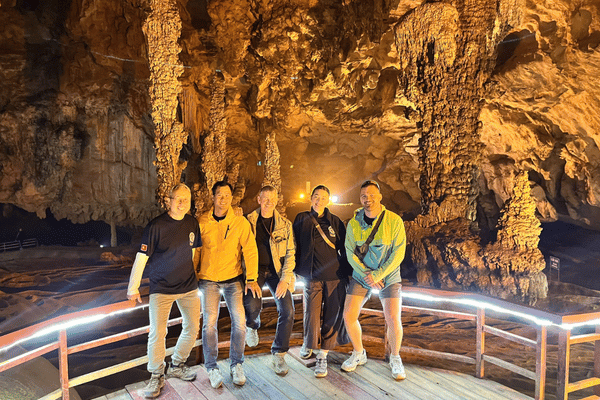
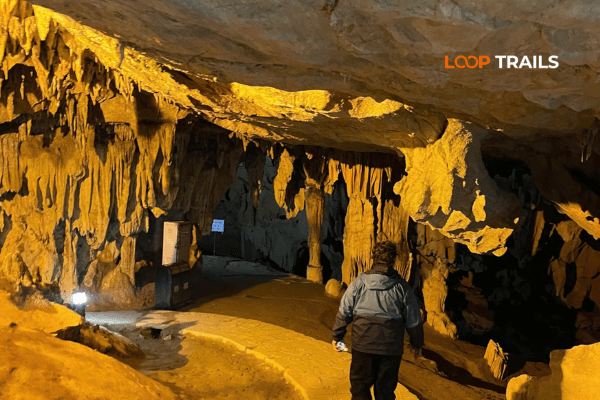
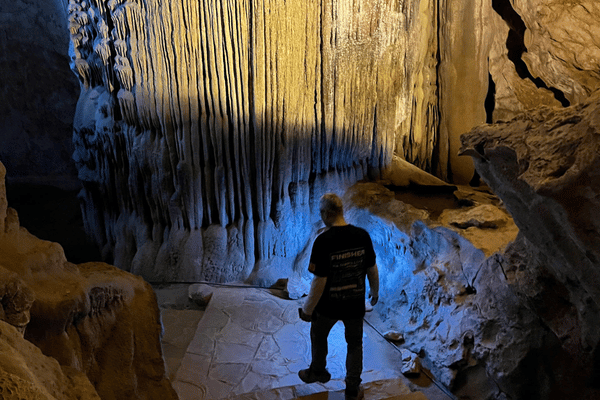
What makes Nguom Ngao unusual is the sheer density and variety of its speleothems the collective term for stalactites, stalagmites, and the other mineral formations that grow inside limestone caves. There are sections that look like coral reefs, sections that resemble frozen waterfalls, and columns thick enough that multiple people could stand behind one and disappear from view. Cave lighting has been installed throughout, which improves the visitor experience considerably compared to similar caves in the region.
Learn more: Ha Giang Loop 3 Days 2 Nights
If you’ve already visited Phong Nha Cave in Quang Binh or Sung Sot Cave in Ha Long Bay, Nguom Ngao is going to feel very different and not in the way you might expect.
It’s not as long as Phong Nha. It doesn’t have the boat-entry drama of Sung Sot. What it has is a kind of rawness that more heavily visited caves have lost. Crowds are thinner here, the infrastructure is lighter, and the cave itself hasn’t been over-engineered. You walk through it on proper pathways with railings and lighting, but you don’t feel like you’re on a theme park ride.
A more useful comparison is Pac Po Cave, also in Cao Bang: smaller, historically significant (Ho Chi Minh sheltered there during the resistance), but a very different geological experience. Nguom Ngao wins on spectacle; Pac Po wins on history.
The honest take: Nguom Ngao is one of the most visually impressive cave experiences in northern Vietnam, and it’s genuinely undervisited relative to its quality. If you’re in Cao Bang, skipping it would be a mistake.
Learn more: Ha Giang Loop 4 Days 3 Nights
This is by far the most common approach, and for good reason: the cave and the waterfall are only about 3 kilometers apart. Almost every visitor to Nguom Ngao pairs it with a Ban Gioc visit on the same day.
The road between them runs through rice paddy country with views toward the karst ridgeline that forms the border with China. On a motorbike or in a jeep, it takes around 10 minutes. The roads in this area are paved and generally in good condition, though check locally if you’re visiting during or just after the rainy season (roughly May to September).
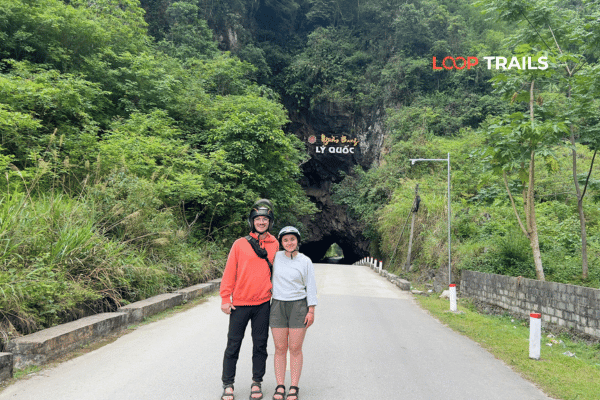
Cao Bang City to Nguom Ngao is approximately 85 to 90 kilometers, heading northeast on Provincial Road 206 and then following the route through Trung Khanh. By motorbike or jeep this typically takes 2 to 2.5 hours. The road passes through some genuinely spectacular limestone terrain, particularly once you clear the immediate outskirts of the city — this stretch itself is worth leaving early for.
There’s no direct public transport option to the cave. Most independent travelers either rent a motorbike in Cao Bang City, hire a private jeep, or join a guided tour that includes transportation.
Cao Bang Province is not a short trip from Hanoi. The most common approach is to take an overnight bus or sleeper van to Cao Bang City (check current schedules and operators locally these change), then arrange onward transport from there.
The more popular option for travelers who want to cover both Ha Giang and Cao Bang is to combine the regions into a single multi-day tour. The Ha Giang to Cao Bang route (often via Bao Lac and Phia Oac) is spectacular on its own and positions Nguom Ngao as a natural endpoint before the return to Hanoi.
Planning a trip that includes Nguom Ngao and Ban Gioc? Our Ha Giang and Cao Bang combined tours are built around exactly this route. [Take a look at the Ha Giang–Cao Bang tour options] to see how we connect the two provinces.
Learn more: Ha Giang Cao Bang 5 Days 4 Nights
The accessible section of Nguom Ngao is typically described in three chambers or sections, each with a distinct character.
Section 1: The Entry Chamber The first section begins about 30 meters inside the entrance. The ceiling opens up considerably here you get your first real sense of the cave’s scale. The formations in this section tend to be thicker and more clustered: large stalagmites growing up from the floor, stalactites descending from the ceiling in curtains, and in some places the two meeting to form full columns. The lighting in this section uses warmer tones that bring out the amber and cream hues of the calcium carbonate.
Section 2: The Middle Passage The second section is where most visitors slow down. The passage narrows in places and the formations become more intricate thinner stalactites, more delicate curtains, and what cave guides often call “cave flowers” (helictites), which are formations that seem to grow in defiance of gravity, curling sideways and upward rather than simply hanging down. This is the section that tends to get the most photographs.
Section 3: The Inner Reach The third section is the deepest accessible part. The cave is still active here you’ll notice moisture on the formations and hear dripping if it’s been raining recently. The air is cooler and the formations denser. This is also where you’ll find the most dramatic columns and the largest single formations in the cave.
Most of what you’ll see in Nguom Ngao falls into a few categories:
None of this requires any geology background to appreciate. But knowing what you’re looking at makes the scale of time involved feel more tangible: the largest formations you’ll see are likely older than recorded human history.
Budget 45 minutes to 1 hour for a relaxed walk-through of the accessible section. If you’re a photographer or you simply want to stop frequently and look, allow 1.5 hours. The path is one-way, so you exit from the other end of the accessible section rather than backtracking.
There is a small rest area near the exit where you can sit before making your way back to the parking area. The walking path is paved and reasonably comfortable, though the surface can be slippery in wet conditions more on that below.
Learn more: Ha Giang Cao Bang Ba Be Lake 6 Days 5 Nights
The cave is managed by local authorities and charges an entrance fee. Ticket prices and opening hours are subject to change, so confirm current rates when you arrive or check with your tour operator in advance. As a general guide, expect the cave to be open during daylight hours on most days of the week, with the final entry typically being an hour or two before official closing time.
If you’re visiting with a guided tour, entrance fees are sometimes included and sometimes extra clarify this when you book.
This isn’t an adventure caving trip. You don’t need helmets, ropes, or technical gear. But a few things will make the visit significantly more comfortable:
Leave large backpacks in your vehicle if possible. The passage gets narrow in places.
Photography is allowed. A few practical notes:
Turn off your flash. Seriously. Not just because it’s bad cave etiquette (it is), but because flash flattens the very formations you’re trying to capture. The installed cave lighting, particularly in the middle section, gives you enough to work with in night mode.
Tripods are technically possible in the wider sections but will slow you down and block other visitors. A steady hand and a higher ISO setting will serve you better on a casual visit.
The most photogenic sections are the second and third chambers. If you only have one chance to take a deliberate shot, do it in the middle passage where the helictites and curtain formations are densest.
Learn more: Cao Bang Loop 3 Days best kept secret
The cave maintains a fairly consistent internal environment year-round, so the time of year doesn’t change the cave experience itself dramatically. What it does change is everything around it.
October to April is the most comfortable window for visiting Cao Bang. The dry season means clearer roads, better visibility of the surrounding karst landscape, and more pleasant riding conditions if you’re on a motorbike. The period from late September to late November is particularly good: the rice harvest is in, the air is clear, and Ban Gioc is running at good volume after the summer rains.
May to September is the rainy season. Cao Bang can receive heavy rainfall during this period. Roads in the region can be affected by landslides and flooding, particularly on smaller provincial routes. The cave itself is fine, but access to it and the surrounding area requires more caution. If you’re visiting in this window, build flexibility into your itinerary and check road conditions locally before setting out.
The summer months also bring more domestic Vietnamese tourists to Ban Gioc Waterfall, which means the area around the waterfall entrance can feel busier than usual. The cave itself tends to be less affected by this — the visitor volume at Nguom Ngao is consistently lower than at Ban Gioc even during peak periods.
Learn more: Ban Gioc Waterfall Guide
These two sites are almost always visited together, and there’s good reason for that: they’re close, they complement each other well, and together they form the core of what makes Trung Khanh District worth the journey from Cao Bang City.
A typical half-day itinerary looks like this:
If you’re staying overnight in the Ban Gioc area (there are guesthouses in Dam Thuy village that cater to tourists), you can do both sites at a more relaxed pace over two sessions and have time to explore the surrounding paddy fields and karst villages in between.
One thing to consider: the road from Cao Bang City to Ban Gioc and Nguom Ngao passes through some of the most scenic terrain in the province. It’s worth leaving time to stop along the way rather than treating the drive purely as transit.
Arriving from Ha Giang? The most scenic route to Cao Bang comes through Bao Lac and then southeast, connecting the Ha Giang highlands with the karst country of Cao Bang in a single flowing drive. Our [Ha Giang to Cao Bang combined tour] covers this route over five or six days with stops at both Nguom Ngao and Ban Gioc built in.
Learn more: Ha Giang Loop Mistake to Avoid
A few things that trip up first-time visitors to Nguom Ngao and the broader Cao Bang region:
Wearing the wrong shoes. The cave floor is polished smooth by foot traffic and coated in a light film of moisture. More visitors than you’d expect have slipped. Wear something with actual grip.
Trying to rush both sites in a single afternoon from Cao Bang City. Ban Gioc and Nguom Ngao together are a half-day trip minimum. Adding the 2 to 2.5 hour drive each way means a full day. Don’t try to squeeze this in as a last-minute add-on to an already packed schedule.
Skipping the drive itself. The road from Cao Bang through Trung Khanh is legitimately scenic limestone towers, ethnic minority villages, rice terraces in the right season. Treating it as a chore rather than part of the experience is a waste.
Not checking the weather. Cao Bang’s weather can change quickly, particularly between May and September. A sunny morning doesn’t guarantee a dry afternoon. If you’re riding a motorbike, carry a rain cover for your bag and know where to shelter along the route.
Assuming you can figure out transport on the day. There’s no regular public bus to Nguom Ngao. If you’re not on a guided tour, sort out your transport (motorbike rental or jeep hire) before you arrive in Cao Bang City, not after.
Learn more: Ha Giang Loop by Army Jeep Tours
Nguom Ngao sits within a broader Cao Bang itinerary that most people approach one of three ways.
If you’re coming from Ha Giang: The best way to see both regions is a combined tour that links them. The Ha Giang Loop handles the mountain passes and ethnic minority villages; the Cao Bang extension adds waterfalls, caves, and a totally different kind of karst landscape. Our [Ha Giang and Cao Bang combined tours] run over five days and include Ban Gioc, Nguom Ngao, and the key highlights of the Ha Giang Loop guides handle all transport and logistics, so you just ride (or sit back, depending on your preference).
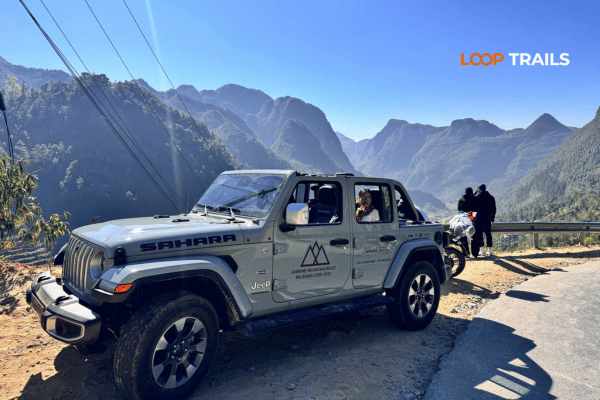
If you prefer not to ride a motorbike: Cao Bang’s roads are well-suited to jeep touring. Open-air jeeps are particularly good on the Trung Khanh run the views of the karst landscape between Cao Bang City and Ban Gioc are the kind of scenery you want to be sitting up in, not hunched behind a windscreen. Our jeep options cover the same stops with the same guides, just on four wheels. [See jeep tour options here.]
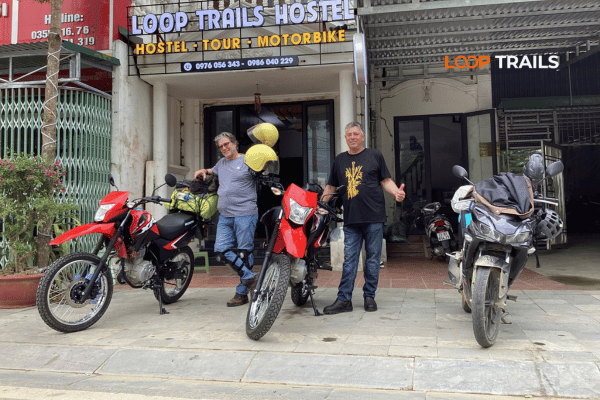
If you want to self-drive: Cao Bang City has motorbike rental options and the roads to Ban Gioc and Nguom Ngao are manageable for experienced riders. That said, navigation in this area requires more attention than Ha Giang some of the smaller roads aren’t well-signed in English, and phone signal is patchy in the karst valleys. A local guide makes a real difference here. If you want the self-drive experience with a support network, our [Ha Giang self-drive tours] can be structured to include the Cao Bang leg with guide support.
Not sure what fits your trip? Message us on WhatsApp and we’ll help you figure out the right combination. No sales pitch just practical advice based on your dates, group size, and what you actually want out of the journey.
Learn more: Ha Giang Motorbike Rental
Approximately 3 kilometers, which takes about 10 minutes by motorbike or car. The two sites are almost always visited together on the same half-day outing.
Yes. The path is paved and well-lit, and the walk-through section doesn’t require any climbing or crawling. The cave temperature (around 18 to 20°C) might feel cool to young children after a warm day outside, so bring a light layer. The main concern is the slippery floor keep kids in shoes with grip.
An entrance fee applies. The exact rate can change, so confirm current pricing locally or with your tour operator before visiting. If you’re on a guided tour, ask in advance whether the entrance fee is included.
Cave guides are typically available in Vietnamese and sometimes basic English or other languages depending on demand. If you need a fully English-speaking guide for the cave walk-through, arrange this through your tour operator in advance rather than relying on on-site availability.
You can enter and walk through the accessible section independently after purchasing your ticket you don’t need a personal guide. However, knowing what you’re looking at significantly improves the experience. Most guided tours that include the cave will have a guide walk through with you and explain the key formations.
The path is paved and doesn’t involve stairs or significant elevation changes in most sections. However, the surface can be slippery and there are some uneven stretches. If mobility is a concern, check current conditions with the cave management before purchasing tickets. It’s not wheelchair-accessible in the conventional sense.
Morning is generally preferable, both because you can combine it naturally with an early visit to Ban Gioc Waterfall and because tour groups tend to be lighter before midday. The cave itself doesn’t have windows, so sunlight doesn’t affect the internal experience but the light on the surrounding karst landscape is better in the morning and late afternoon if you’re photographing the exterior approach.
It’s less famous than Phong Nha and less commercialized than Sung Sot, which works in its favor. The formation density in the accessible section is genuinely impressive, and visitor numbers are lower than you’d see at comparable caves in more heavily touristed regions. For travelers in northern Vietnam, it’s one of the better cave experiences available.
Yes, and it’s one of the most rewarding combinations in northern Vietnam. The standard route links Ha Giang’s high passes and ethnic minority villages with Cao Bang’s waterfall and cave country over five to six days. See our combined tour pages for how this is structured.
The cave maintains a temperature of roughly 18 to 20°C year-round. After a summer day in Cao Bang that might reach 32 to 35°C outside, the cave will feel noticeably cool. A light layer is enough you won’t need anything heavy.
Yes. Ban Gioc Waterfall is the obvious neighbor. The broader Trung Khanh District also has Tay minority villages worth walking through, local restaurants serving Cao Bang specialties (rice wine, grilled meats, freshwater fish from the Quay Son River), and the road itself through the limestone karst country is an attraction in its own right.
Cao Bang is an open province for foreign tourists no special permit is required to visit Nguom Ngao Cave or Ban Gioc Waterfall under standard tourist conditions. Regulations can change, so verify current requirements before travel, particularly if you’re visiting as part of a self-drive trip close to the Chinese border area.
Contact information for Loop Trails
Website: Loop Trails Official Website
Email: looptrailshostel@gmail.com
Hotline & WhatSapp:
+84862379288
+84938988593
Social Media:
Facebook: Loop Trails Tours Ha Giang
Instagram: Loop Trails Tours Ha Giang
TikTok: Loop Trails
Office Address: 48 Nguyen Du, Ha Giang 1, Tuyen Quang
Address: 48 Nguyen Du, Ha Giang 1, Tuyen Quang
Facebook X Reddit Table of Contents Learn more: Ha Giang Loop Tours Most people drive past the Quan Ba area twice on

Facebook X Reddit Table of Contents Learn more: Ha Giang Loop Tours The Ha Giang Loop has a reputation problem with older