


Thúy Kiều (Grace) is a travel blogger and content contributor for Loop Trails Tours Ha Giang. She holds a bachelor’s degree in Sustainable Tourism from Vietnam National University, Hanoi, and has a strong passion for exploring and promoting responsible travel experiences in Vietnam’s northern highlands.

Learn more: Ha Giang Loop Tours
Two weeks in North Vietnam is a genuinely useful amount of time. Long enough to get past the tourist circuit, short enough that you won’t burn out on bus journeys. And if you structure it right, you can fit in the Ha Giang Loop — the single most dramatic landscape in the country — alongside a few other northern highlights that most people on shorter trips never reach.
This itinerary isn’t the easiest version of a North Vietnam trip. It asks you to cover some real distance and deal with roads that are occasionally challenging. But it’s the one that people who’ve done it tend to talk about years later — the kind of trip that becomes a reference point.
Here’s exactly how to do it.

Learn more: Ha Giang Loop 2 Days 1 Night
One week in North Vietnam typically means Hanoi plus either Halong Bay or Sapa. That’s fine. But the north is bigger and stranger than most first-time visitors expect, and a week doesn’t leave room for the parts that require more effort to reach.
The places that tend to define people’s trips — Ha Giang, Cao Bang, Ba Be Lake — are not quick detours. Ha Giang alone deserves four days minimum to do the loop without rushing. Cao Bang needs two. Ba Be needs at least one proper night on the water.
Fourteen days gives you the time to get to all three, with breathing room in Hanoi on either end. You won’t feel like you’re just ticking boxes, which is the problem with trying to compress this into ten days.
If you have three weeks, even better — the itinerary below notes where to add extra time. If you only have ten days, there’s a shortened version at the end of this article.

Learn more: Ha Giang Loop 3 Days 2 Nights
Before the detail, here’s the full route at a glance:
| Day | Location | Main Activity |
|---|---|---|
| 1–2 | Hanoi | Arrival, Old Quarter, day trip option |
| 3–4 | Ninh Binh | Tam Coc / Trang An boat trip, Mua Cave hike |
| 5 | Travel: Hanoi → Ha Giang | Overnight bus or private transfer |
| 6 | Ha Giang → Dong Van | Loop Day 1 (Quan Ba, Yen Minh) |
| 7 | Dong Van → Meo Vac | Loop Day 2 (Ma Pi Leng Pass) |
| 8 | Meo Vac → Du Gia | Loop Day 3 (Nho Que River) |
| 9 | Du Gia → Ha Giang | Loop Day 4 (loop closes) |
| 10–11 | Cao Bang | Ban Gioc Waterfall, Nguom Ngao Cave |
| 12–13 | Ba Be Lake | Boat trips, village stays, forest walks |
| 14 | Return to Hanoi | Travel day, evening flight or overnight stay |
This route runs roughly in a clockwise direction from Hanoi — north to Ha Giang, east to Cao Bang, south to Ba Be, back to Hanoi. It’s logical, it minimizes backtracking, and the escalating drama of the landscapes builds in the right direction.
Learn more: Ha Giang Loop 4 Days 3 Nights
Most international flights into North Vietnam land at Hanoi’s Noi Bai Airport. Two days here before heading north is the right amount — enough to adjust to the timezone, sort your gear, and get a feel for Vietnam before you’re riding a motorbike through mountain passes.
What to do with two days in Hanoi:
What not to do: Book a Halong Bay overnight cruise. It doesn’t fit this itinerary timeline and will eat two days you need elsewhere. Save it for a different trip or add it as a standalone extension.
Practical: Grab a local SIM card at the airport (Viettel and Mobifone both have good coverage in the north, including remote areas). Sort out any gear you’re missing — Hanoi has decent outdoor shops in the backpacker district. If you’re planning to self-drive the Ha Giang Loop, check your international driving permit and license situation now, not when you arrive in Ha Giang.

Learn more: Ha Giang vs Ninh Binh
Ninh Binh is about 90 minutes south of Hanoi by train or bus, which makes it feel like the wrong direction. It’s not. The reason to go here before heading north is that Ninh Binh offers a version of dramatic karst landscape that’s more approachable and less physically demanding than Ha Giang. It functions as a visual calibration — after two days here, you’ll have context for what’s coming.
The highlights:
Where to stay: Tam Coc village is the most convenient base. There are guesthouses and small hotels at various price points. The area is heavily touristed during peak hours but quieter in the early morning and late afternoon.
Getting there from Hanoi: Trains and buses run regularly. A rental motorbike from Hanoi is also popular for this leg, but bear in mind the road between Hanoi and Ninh Binh is busy and not a highlight in itself.

Learn more: Ha Giang Sleeper Bus
Ha Giang city is roughly 320 km north of Hanoi. You have a few options for getting there:
Overnight sleeper bus — The most common choice for budget travelers. Several operators run direct routes from Hanoi’s My Dinh bus station. Journey time is typically 6–8 hours. You arrive in Ha Giang early morning with a full day ahead. Bring a layer — these buses are cold.
Private car or minivan transfer — More comfortable, door-to-door, costs more. Good option for small groups or anyone who values sleep quality before several days of motorbike riding. Journey time is similar or slightly faster depending on traffic.
Train to Lao Cai + onward bus — This route goes via Lao Cai (the gateway to Sapa) and is longer. Not worth it unless you’re building a Sapa extension into your trip.
Arriving in Ha Giang city: Ha Giang city is not a destination in itself — it’s a functional base. Check in, sort your gear, confirm your loop permit (foreign travelers need a travel permit to access the loop areas — arrange this through your accommodation or tour operator, and note that regulations can change, so verify current requirements locally).
If you’re starting the loop the following morning, use the afternoon to check over your motorbike (if self-driving), confirm your itinerary with your guide (if on a tour), and eat something proper.
Learn more: Ha Giang Cao Bang Ba Be Lake 6 Days 5 Nights
This is what the whole itinerary is built around. Four days on the Ha Giang Loop is the minimum to do it without feeling rushed. Five is better. Six lets you add trekking days. For this 14-day framework, four days is the practical allocation.
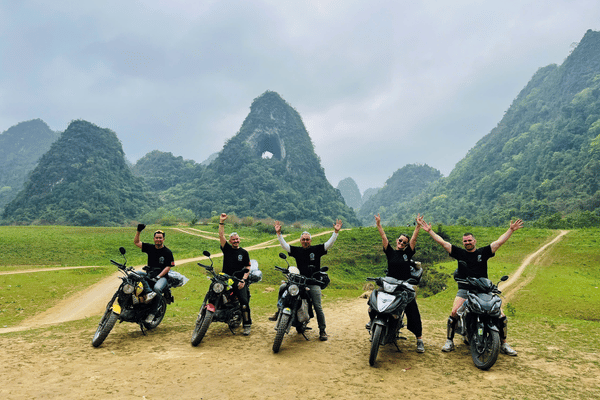
The loop covers approximately 350 km of mountain roads through the Dong Van Karst Plateau — a UNESCO Global Geopark and one of the most visually extreme landscapes in Southeast Asia. The roads are paved but narrow, often edging along cliff faces with steep drops and no barriers. This is not a warning to put you off. It’s context for how good it is.
The first day sets the tone. You leave the flat valley floor of Ha Giang city and within an hour you’re already climbing.
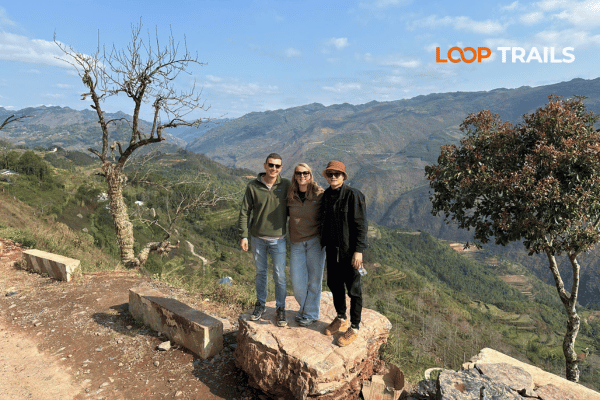
Quan Ba (Heaven Gate) is the first major viewpoint — a sweeping look north over the valley from a mountain pass. The “Fairy Bosom” twin peaks (two rounded limestone hills rising from the valley floor) are directly below. Most people stop here for 20–30 minutes. In clear weather, the view is immediately impressive; in fog, it has a different quality that’s equally worth seeing.
Yen Minh is the usual lunch stop, a small town mid-route with a handful of local restaurants. Nothing remarkable, but a good pause point before the afternoon push to Dong Van.
Dong Van town itself is the main hub of the upper plateau. The old quarter has French colonial-era shophouses alongside traditional Hmong architecture — a combination you won’t find anywhere else in Vietnam. Walk it after dinner when it’s quiet. The Sunday market draws communities from across several districts, so if your timing aligns, stay an extra morning.
Overnight: Dong Van town.
This is the day most people remember most clearly.
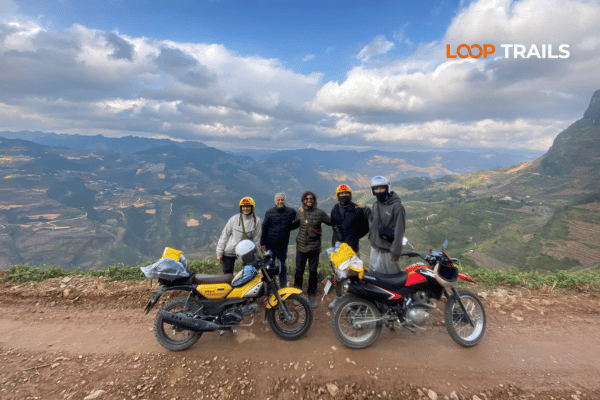
Ma Pi Leng Pass is a 20-kilometer section of road cut directly into the edge of a limestone massif, with the Nho Que River running turquoise and impossibly far below. There’s a viewpoint roughly halfway along where you can stop, look down into the gorge, and fully accept that this place is real.
The road between Dong Van and Meo Vac also takes you through a landscape of stone fences, terraced cornfields on impossible angles, and H’mong villages that appear to have grown out of the rock itself. The light in the afternoon here — when it’s angled across the plateau — is extraordinary.
Meo Vac is smaller and less developed for tourism than Dong Van, which is part of its appeal. The Tuesday market here is one of the most authentic in northern Vietnam, drawing Lo Lo, Giay, H’mong, and Dao communities from the surrounding mountains.
Overnight: Meo Vac.
Learn more: Ha Giang Motorbike Rental
The route from Meo Vac back toward the eastern side of the loop passes through increasingly lush scenery as altitude drops and vegetation changes. The Nho Que River accompanies you for sections of this route.
Du Gia sits at a point where the river valley opens up and the landscape becomes softer — less extreme than the plateau, but with its own quiet quality. The riverside trails here are excellent for an afternoon walk if you arrive with daylight to spare. Tay ethnic villages are within walking distance.
This is also where some travelers choose to add a trekking day — the trails around Du Gia are among the most accessible on the loop for walking. If you have a flexible extra day and you’re here, use it.
Overnight: Du Gia village.
The final day of the loop covers the return leg to Ha Giang city. The scenery is less dramatic than the previous three days but still pleasant — forested hills, river valleys, occasional villages. Most people arrive in Ha Giang city by early-to-mid afternoon.
Use this afternoon to rest, do laundry, and eat somewhere that isn’t a guesthouse kitchen. You’ll be back on the road tomorrow.
A note on how you ride the loop:
You have three main formats:
Easy Rider (guided, you ride pillion or your own bike with a guide) — Ideal if you’re not a confident rider or you want the benefit of a guide who speaks the language, knows the roads, and has relationships with local communities. The quality of the experience often depends significantly on the quality of the guide.
Self-Drive — You rent a motorbike and navigate independently. More freedom, more responsibility. Suitable for experienced riders comfortable with mountain roads. Having offline maps downloaded and this route pre-researched is non-negotiable.
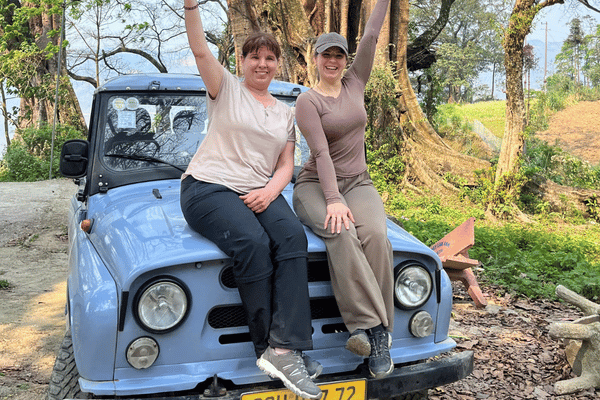
Jeep Tour — Covered vehicle, usually for groups of 2–4. Good for couples where one person isn’t comfortable on bikes, or for anyone who wants comfort without sacrificing the route.
→ Loop Trails runs all three formats. If you’re not sure which suits your group, [check the Ha Giang Loop tour page here] — or send a WhatsApp message and someone will help you figure it out before you commit to anything.
Learn more: Ha Giang Cao Bang 5 Days 4 Nights
Most travelers finishing the Ha Giang Loop head straight back to Hanoi. That’s understandable — the loop is intense and Hanoi feels like a soft landing. But if you skip Cao Bang, you’re leaving out a province that many people who’ve been there consider equal to Ha Giang in terms of natural spectacle, and significantly less crowded.
The road from Ha Giang to Cao Bang city takes roughly 3–4 hours on a good day — check current road conditions, as this route can be affected by weather. The journey itself is scenic.
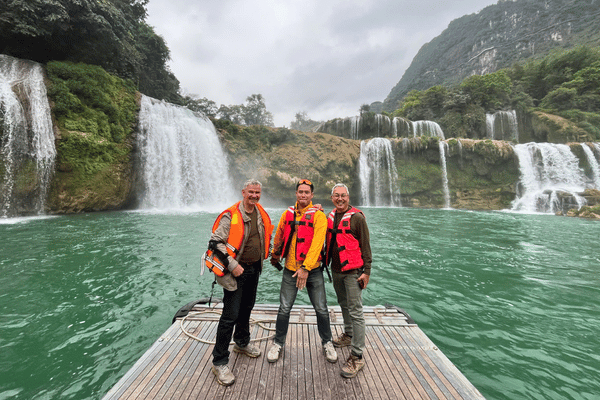
Ban Gioc is one of the largest waterfalls in Southeast Asia and sits directly on the Vietnam-China border. The fall is wide — much wider than it photographs — with a smaller secondary cascade beside the main curtain. The border arrangement means half of the waterfall is technically in China, which gives the site a strange geopolitical quality that adds to its interest.
Visit early morning before tour groups arrive from the Chinese side. You can hire a bamboo raft to get close to the base of the falls. The mist is significant and you will get wet.
Nguom Ngao Cave — 3 km from Ban Gioc, this limestone cave system is one of the more impressive in northern Vietnam. About a kilometer of the cave is accessible to visitors. Bring a layer; it’s cold inside.
Phia Oac National Park, south of Cao Bang city, is a highland forest area with trekking trails and significant biodiversity. It’s less visited than the waterfall and requires an extra half-day minimum. If you’re extending to a third day in Cao Bang, it’s worth considering. If you’re keeping to two days, prioritize Ban Gioc.
Overnight: Cao Bang city (Days 10–11).

Learn more: Northern Viet Nam Itinerary 2026
Ba Be Lake sits in a national park in Bac Kan province, roughly 3–4 hours south of Cao Bang. It’s the quietest stop on this itinerary and deliberately so.
The lake is ringed by forested karst hills and fed by three rivers — the name means “three seas” in Tay. It’s a National Park and a Ramsar Wetland Site, and the biodiversity here is substantial. You’ll see kingfishers. You might see otters if you’re quiet and early.
How to spend two days at Ba Be:
Practical: Ba Be is significantly less touristed than Ha Giang or Ninh Binh. Accommodation options are limited but good — book ahead in high season (October–November). Food is simple; guesthouses serve set meals, and the village restaurants are basic but honest.
→ If you’re combining Ha Giang with Cao Bang and Ba Be into a single northern circuit, Loop Trails offers a Ha Giang–Cao Bang combined tour that covers this region with experienced guides and sorted logistics. [See the combined tour here] — it removes a lot of the planning complexity.
Learn more: Ha Giang Loop for Couples
Ba Be to Hanoi is roughly 240 km. Options:
Arrive in Hanoi with enough time for a final meal in the Old Quarter. You’ve earned it.
Learn more: Ha Giang Loop route and itinerary
Not everyone has exactly 14 days, and not everyone wants the same balance. Here are the most practical modifications:
If you have 10 days: Drop Ba Be Lake. Return directly from Cao Bang to Hanoi. You still get Ninh Binh, four days on the Ha Giang Loop, and two days in Cao Bang — a strong trip.
If you have 10 days and want to skip Ninh Binh: Use the extra days to extend your Ha Giang Loop to 5 days and add a trekking day, or spend three nights in Cao Bang.
If you have 18–21 days: Add Sapa (2–3 days) at the beginning or end of the route. Sapa is easily accessed from Hanoi by overnight train. Note that Sapa has changed significantly in the last decade — it’s more developed than it used to be, but the surrounding trekking villages are still excellent. Alternatively, extend Ba Be to 3 nights and explore more of the national park.
If you want a less physically demanding trip: Replace the Ha Giang Loop self-drive or Easy Rider component with a Jeep tour. Same route, same scenery, more comfortable. Not a compromise — genuinely different experience, not a lesser one.
If you’re skipping Ninh Binh: It’s a reasonable call if you’re short on time or have already been. The itinerary works without it; you gain 2 days to redistribute.

Learn more: Ha Giang Loop by Jeep for Families & Groups
This is the question that trips up the most people in the planning stage. Here’s a practical breakdown:
You’re a confident motorbike rider with mountain road experience: → Self-drive with a rental bike. You’ll have full flexibility — stop whenever, take as long as you want at each viewpoint, park up for trail walks without coordinating with anyone. Requires advance research and offline maps. [Ha Giang motorbike rental options here.]
You’ve ridden bikes before but haven’t done mountain roads like this: → Easy Rider guided tour is the smarter call. Your guide handles navigation, knows which guesthouses are good, and — critically — can read road conditions and make judgment calls you won’t have the local knowledge to make.
You’re traveling as a couple or small group with mixed confidence levels: → Jeep tour solves the problem. Everyone gets the views, nobody is white-knuckling a cliff-edge road they didn’t sign up for.
You want to add trekking days: → Any format can accommodate this. Tell your operator upfront — itineraries can be built around specific walking days at Du Gia or Meo Vac.
You’re combining Ha Giang with Cao Bang: → The Ha Giang–Cao Bang combined tour handles both legs with consistent guide support and logistics already sorted. It’s a significantly more efficient way to do this combination than arranging each leg separately. [See combined tour details here.]
→ Still unsure? Drop a WhatsApp message to the Loop Trails team. They’ll ask you a few questions and tell you honestly which format suits your group — no upselling.
Learn more: Ha Giang Safety Tips
Budget framework (approximate, not guaranteed — prices change):
Rather than quoting specific figures that may be outdated by the time you read this, here’s how to think about the budget categories:
The permit: Foreign visitors need a travel permit to access the Ha Giang Loop area. This is typically arranged through accommodation or tour operators in Ha Giang city. Requirements and processes can change — confirm the current situation when you arrive or ask your operator in advance. Don’t assume it’s the same as what you read six months ago.
Booking the Ha Giang section: Book your Ha Giang Loop tour or rental motorbike before you arrive in Ha Giang city — especially in peak season (October–November). Walking in without a plan and trying to arrange everything same-day is possible but risky. Good operators fill up.
Travel insurance: Non-negotiable for this itinerary. Make sure your policy covers motorbike riding (many standard policies explicitly exclude this — read the fine print) and medical evacuation. The nearest major hospitals are in Hanoi.
Learn more: Ha Giang Loop Weather
The whole route works year-round, but some windows are clearly better than others.
October–November (Best overall) The post-monsoon dry season hits northern Vietnam at its peak. Temperatures are pleasant at altitude, skies are often clear, and this coincides with buckwheat flower season in Ha Giang — the plateau turns pink and white, and it’s as good as the photos suggest. This is also peak season, so expect more travelers on the loop and book accommodation in advance.
March–April (Second best) Spring brings plum and peach blossoms to the Dong Van plateau. Less crowded than autumn, cooler at night, occasional fog that creates dramatic morning light. Road conditions are good. A genuinely good window that’s underrated.
December–February Cold — sometimes very cold above 1,000 meters. Fog is frequent and can obscure views for entire days. The upside: almost no crowds, a different kind of atmosphere, and the Tet holiday period (late January or February depending on the lunar calendar) brings local markets and celebrations to life. Requires proper warm layers.
May–September (Monsoon season) The landscape is at its most lush and the waterfalls are dramatic. But: landslides are a genuine hazard on mountain roads, some routes become impassable, and rain can make roads genuinely dangerous. If you travel in monsoon season, go with an experienced guide who knows the roads and is willing to adjust the route based on conditions. Don’t attempt self-drive in this window unless you have significant mountain road experience.
For this specific 14-day itinerary: October, November, March, and April are the sweet spots. Plan around these if you can.
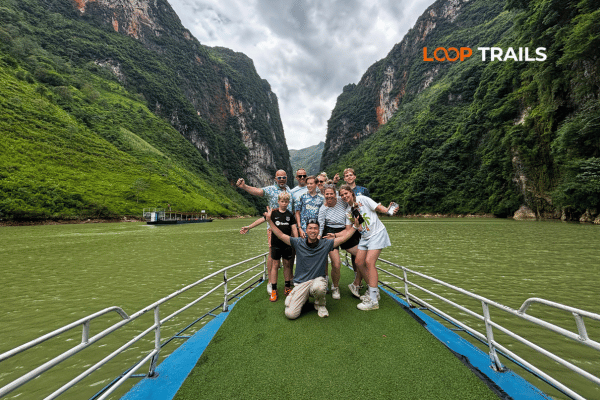
Learn more: Tu San Canyon & Nho Que River Boat Trip
This itinerary asks more of you than a beach holiday. The roads are real, the distances are real, and the rewards are real. Ha Giang doesn’t look like anywhere else in Vietnam. Cao Bang’s waterfall is one of those places you’ll realize you underestimated once you’re standing in front of it. And Ba Be Lake on a quiet morning — the mist on the water, the sound of oars — is the kind of thing that comes back to you later, unbidden.
Two weeks is enough to do this properly. Not rushed, not squeezed. Just the right amount of time to actually be in these places rather than just pass through them.
Ready to lock it in? Loop Trails handles Ha Giang Loop tours (Easy Rider, Jeep, and Self-Drive), motorbike rentals, and the Ha Giang–Cao Bang combined circuit. [Browse tour options here] or reach out on WhatsApp to talk through the specifics for your dates and group size.
Learn more: Ha Giang Loop Hidden Gems
Fourteen days is a well-paced itinerary for this route — not rushed, but not leisurely either. You’ll have a few dedicated activity days and some travel days. If you prefer a slower pace, consider dropping Ninh Binh or reducing Hanoi to one day and extending your time in Ha Giang or Cao Bang.
Yes, particularly for October and November. Good tour operators and quality motorbike rentals fill up weeks ahead in peak season. Even outside peak season, booking 1–2 weeks ahead is sensible. Don’t count on arranging this same-day in Ha Giang city.
Yes,foreign visitors require a permit to access the loop areas north of Ha Giang city. It’s typically arranged through accommodation or your tour operator. Requirements can change, so confirm the current process before your trip.
Yes. Jeep tours cover the same route with the same scenery from a covered vehicle. It’s not a lesser experience — it’s a genuinely different one, and the right choice for anyone not comfortable on bikes.
Scenic but variable. The road connects two mountainous provinces and can be affected by weather and seasonal conditions. It’s typically drivable year-round but check for any issues before you travel. A private transfer or bus is the standard option for this leg.
If you genuinely can’t fit it, it’s the easiest leg to drop from this itinerary. But it’s a notably different landscape from everything else on the route — forests and water rather than karst peaks — and it functions well as a decompression before returning to Hanoi. If you can fit two nights, do it.
It covers both provinces in sequence — Ha Giang Loop first, then Cao Bang — with a single operator handling guides, accommodation bookings, and logistics for the whole circuit. It removes a lot of the coordination overhead compared to arranging each leg separately. [See the combined tour page for itinerary details.]
Most travelers take an overnight sleeper bus from My Dinh bus station. It’s cheap, direct, and deposits you in Ha Giang in the early morning ready to start the loop. Private transfers and minivans are more comfortable options for those who prefer them.
The roads are genuinely challenging in sections — narrow, cliff-edge, sometimes unpredictable surfaces. For riders without mountain road experience, an Easy Rider guided tour (where a local guide drives) or a Jeep tour is the more sensible choice. There’s no award for self-driving if you’re not ready for it.
Layers for cold mountain nights (even in October), a waterproof jacket, trail shoes or hiking boots for walking days, a daypack, offline maps downloaded on your phone, a power bank, and travel insurance documents. Check our Ha Giang packing guide for the detailed list.
Yes, Sapa fits naturally at the beginning or end of this route via Lao Cai, connected from Hanoi by overnight train. It adds 3–4 days minimum. Be aware that Sapa is significantly more developed
Build buffer on Day 1 and Day 14. Travel days in North Vietnam — especially bus journeys between provinces — can run longer than scheduled due to traffic, road conditions, or weather. Don’t book a same-day flight on the day you’re traveling back from Ba Be to Hanoi.
Contact information for Loop Trails
Website: Loop Trails Official Website
Email: looptrailshostel@gmail.com
Hotline & WhatSapp:
+84862379288
+84938988593
Social Media:
Facebook: Loop Trails Tours Ha Giang
Instagram: Loop Trails Tours Ha Giang
TikTok: Loop Trails
Office Address: 48 Nguyen Du, Ha Giang 1, Tuyen Quang
Address: 48 Nguyen Du, Ha Giang 1, Tuyen Quang

Facebook X Reddit Table of Contents Learn more: Ha Giang Loop Tours This is the question that sits in almost every Ha
Facebook X Reddit Table of Contents Learn more: Ha Giang Loop Tours Most people drive past the Quan Ba area twice on