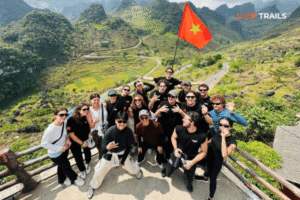


Thúy Kiều (Grace) is a travel blogger and content contributor for Loop Trails Tours Ha Giang. She holds a bachelor’s degree in Sustainable Tourism from Vietnam National University, Hanoi, and has a strong passion for exploring and promoting responsible travel experiences in Vietnam’s northern highlands.
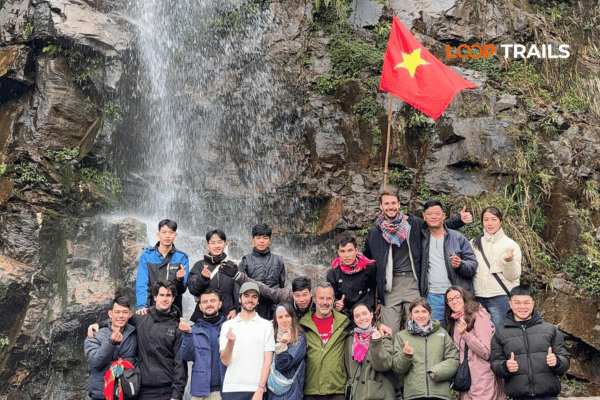
Learn more: Ha Giang Loop Tours
If you’ve spent more than two minutes researching a trip to Vietnam, the Ha Giang Loop has probably popped up. Influencer reels, backpacker forums, that one friend who came back tanned and obsessed. The hype is real. The route deserves it.
But the internet is also full of slightly outdated, slightly oversold versions of this trip, written by people who did it once in October when the weather was perfect and everything went right. Real life is messier. The roads are narrow. The weather flips. Some homestays are amazing, others are basic. Some operators are honest, others overpromise.
This guide is the version I wish someone had handed me before my first loop: what the trip actually is, how to get there, the four ways to do it, what it costs, where you’ll sleep, what to pack, and the small decisions that quietly determine whether you have a great trip or a frustrating one.
If you’re a first time visitor to northern Vietnam, this should give you everything you need to plan with confidence and avoid the rookie mistakes.
Learn more: Ha Giang Loop 2 Days 1 Night
The Ha Giang Loop is a roughly 350 kilometer circular route through Ha Giang province, the northernmost slice of Vietnam, pressed against the Chinese border. It starts and ends in Ha Giang City and winds through limestone karst plateaus, rice terraced valleys, ethnic minority villages, and a handful of high mountain passes including Ma Pi Leng, which most travelers consider the most spectacular stretch of road in the country.
The “loop” part is literal. You leave Ha Giang City heading north, climb onto the Dong Van Karst Plateau (a UNESCO Global Geopark), pass through the towns of Quan Ba, Yen Minh, Dong Van, and Meo Vac, then drop south through Du Gia and back to Ha Giang City.
It’s mostly done by motorbike, but cars and jeeps run it daily too. It’s not a hike. It’s not a trek. It’s a road trip through some of the most beautiful and culturally distinct landscape in Southeast Asia, with overnight stops in homestays where the dinner table is shared with the family who owns the place.

Learn more: Ha Giang Loop 3 Days 2 Nights
Three reasons it took over the backpacker circuit, in order of importance.
The landscape doesn’t look like the rest of Vietnam. Ha Long Bay is famous for limestone karsts rising from water. Ha Giang has limestone karsts rising from earth, into a plateau that looks more like the Tibetan foothills than tropical Asia. You drive through it for three days. The scale doesn’t quit.
It still feels different. Sapa has been a tourist destination for over a century and now feels like one. Ha Giang only opened up to foreign motorbike traffic relatively recently, and large parts of it remain genuinely rural. You’ll pass H’Mong women in handwoven hemp skirts walking to market with their kids, water buffalo blocking the road, kids waving from doorways carved into stone. It’s not a performance. They live there.
The loop format is satisfying. A linear trek can feel like a slog. A loop has a beginning, a middle, and an end. You leave from one place, you come back to the same place, and in between you cover ground that genuinely changes day to day.
There’s a fourth reason that nobody admits out loud: it photographs unbelievably well. Ma Pi Leng makes you look like a real traveler. That’s a small piece of the appeal, even if you’re too cool to say so.

Learn more: Ha Giang Loop 4 Days 3 Nights
Ha Giang City sits about 300 kilometers north of Hanoi. There’s no airport and no train station. You’re getting there by road. Here are the four ways travelers actually do it.
The classic backpacker option. Buses leave Hanoi in the evening and arrive in Ha Giang City in the early morning, typically between 4 and 6 AM. You sleep (or try to) in a reclining bunk. Pros: cheap, saves a night of accommodation. Cons: bumpy, cold in winter, hard to actually sleep. Several companies run this route. Quality varies, so book through your tour operator or a reputable agent rather than the cheapest option you can find.
A 9 to 11 seater minivan with proper reclining seats. These run during the day and take a similar amount of time but are more comfortable than a sleeper bus, and you actually see the scenery on the way up. Slightly more expensive. Worth it for most travelers, especially couples and anyone over 30.
A private car with driver from Hanoi to Ha Giang City. Most expensive option, but flexible: you choose departure time, you can stop where you want, and you arrive rested. Worth considering for groups of 3 or 4 splitting the cost, or anyone with a tight schedule.
The cleanest option. When you book your loop tour, the transfer to and from Ha Giang is usually included in the package, either by limousine van or by private vehicle depending on the tier you choose. No coordinating, no separate booking, no waiting at a random bus station at 5 AM trying to find your guide. This is what most first time visitors actually want, even if they don’t realize it when they start planning.
Learn more: Ha Giang Motorbike Rental
This is the most important decision you’ll make. The way you do the loop changes the entire trip.
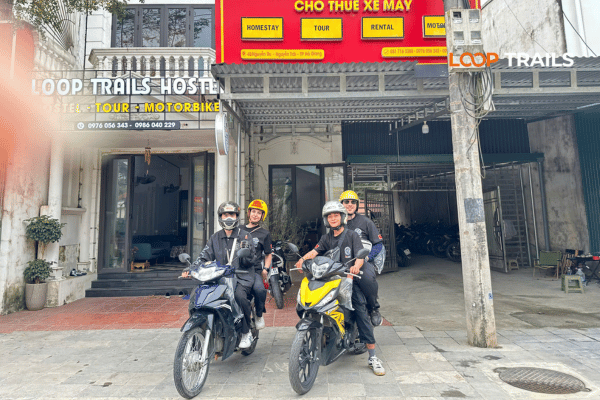
You sit on the back of a motorbike. A local guide drives. They know the road, they know the stops, and they speak enough English to share what’s worth knowing as you go.
This is the most popular option for solo travelers and a big chunk of couples. It’s the closest you can get to the bike experience without being responsible for the bike yourself. You feel the wind, you smell the woodsmoke from villages, and you don’t have to worry about gravel, switchbacks, or what the lever on the left does.
Best for: solo travelers, couples where one or both don’t ride, anyone who wants the bike experience without the risk.
You drive your own bike. Usually a manual semi automatic 110cc, or a proper 150cc dual sport like a Honda XR150 for stronger riders. You’re in control, you can stop anywhere, you go at your own pace.
This is the most freeing way to do the loop. It’s also the most demanding. The roads have switchbacks, gravel sections, occasional landslides, and trucks that take corners wider than they should. If you’ve never ridden in mountains before, the loop is not the place to learn.
Bikes need to be in good condition. A breakdown on Ma Pi Leng with a worn out chain is not a fun afternoon. Stick with operators who maintain their fleet properly. The [Ha Giang motorbike rental] page lists the bikes worth renting.
Best for: experienced riders with a license that’s recognized in Vietnam, ideally with prior experience riding in similar terrain. Rules around foreign drivers’ licenses can change, so check the latest before assuming yours covers you.
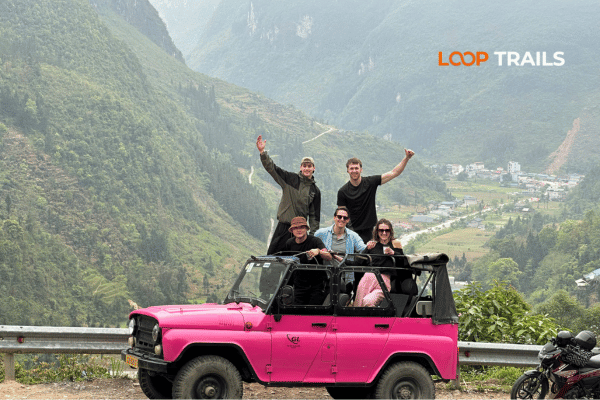
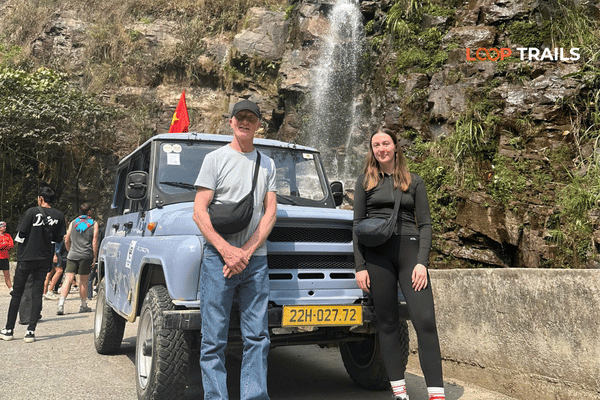
A 4WD vehicle, usually with bench seating in the back and a removable canvas roof. You’re not driving. You get the open air feel without being on a bike. Photogenic. Fun in a group.
Best for: small groups of 3 or 4 who want a shared adventure with personality, who don’t want to ride but don’t want to feel like they’re in a regular car either.
A regular SUV or 7 seater with aircon, real seats, and a driver who knows the route. Quietest, most comfortable, easiest on bodies. The choice for families, older travelers, anyone with a kid, or anyone who just wants to relax and look out the window.
Best for: couples wanting comfort, families, multigenerational groups, travelers with mobility issues, anyone visiting in heavy rain.
If you’re already leaning one way and just want to see what each format actually looks like in practice, the [Ha Giang Loop tours] page has the current options for easy rider, self drive, jeep, and car all in one place.
Learn more: Ha Giang Cao Bang 5 Days 4 Nights
Most travelers do the loop in 3 or 4 days, plus travel time to and from Hanoi. Here’s how the math actually works.
3 days, 2 nights. Doable, especially if you travel by motorbike and don’t mind long days. You’ll hit the headline stops: Ma Pi Leng, Lung Cu, Dong Van Old Quarter, the Nho Que River boat. You’ll skip Du Gia. You’ll feel like you ran a marathon by the end.
4 days, 3 nights. The sweet spot for first timers. Real time at every viewpoint, two nights in proper homestays (Dong Van and either Du Gia or Meo Vac), the Sunday market if your dates line up, and you arrive back in Ha Giang City with energy left for Hanoi.
5 or more days. For people who want to slow down, build in a market day, swim in Du Gia waterfall, or extend toward Cao Bang.
Counting the buffer days, here’s the realistic ask on your overall Vietnam itinerary:
If you only have 2 days in northern Vietnam, do something else. Sapa or Ninh Binh both work as shorter trips. Trying to compress the loop into 2 days isn’t worth the cost or the rush.

Learn more: Ha Giang Cao Bang Ba Be Lake 6 Days 5 Nights
This is the route most travelers run, with small variations depending on operator and weather.
Pickup in Hanoi early morning. Transfer to Ha Giang City takes most of the day with a lunch stop somewhere around Tuyen Quang. By early afternoon you’re meeting your guide and gear.
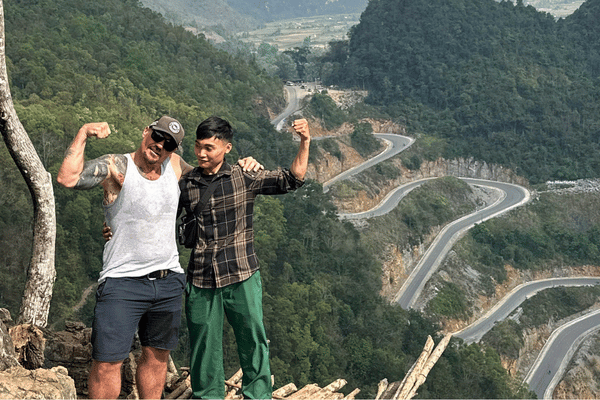
The loop officially starts as you leave Ha Giang City heading north on QL4C. The first big stop is Quan Ba Heaven Gate with its panoramic view over the Twin Mountains, two perfectly rounded hills rising from the rice fields below. From there you continue to Yen Minh, a quiet mountain town where most tours overnight.
Yen Minh isn’t anybody’s favorite stop, but it splits the drive sensibly. Dinner is usually a long table of northern Vietnamese dishes, and most homestays here have hot showers and decent beds.
This is a full scenery day. The road climbs through Tham Ma Pass with its famous switchbacks (the photo spot you’ve definitely seen), drops into Sung La Valley with its stone walled H’Mong houses, and stops at the Vuong family palace, the residence of an early 20th century H’Mong “king” who controlled the local opium trade. The architecture and the story are both worth the entrance fee.
Lunch is usually in Dong Van Old Quarter, where French era buildings have been turned into cafes. A coffee in one of these, with afternoon light slanting through wooden shutters, is one of those small moments that ends up in everyone’s photo dump.
Afternoon: Lung Cu Flag Tower, the northernmost point of Vietnam. It’s a climb up several hundred steps, but the view of the Chinese border running through the karst hills is real reward.
Night in Dong Van. There are real hotels here as well as homestays.
This is the day you came for.
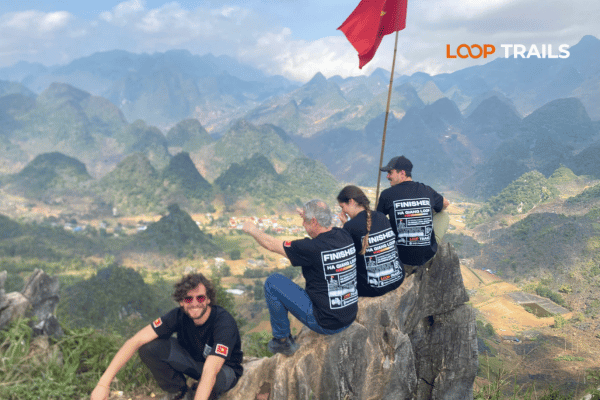
The road from Dong Van to Meo Vac goes over Ma Pi Leng Pass, an 18 kilometer stretch where the road clings to a cliff with the Nho Que River running close to a kilometer below in a turquoise gorge. There are several pull offs and viewpoints. A good guide stops at all of them.
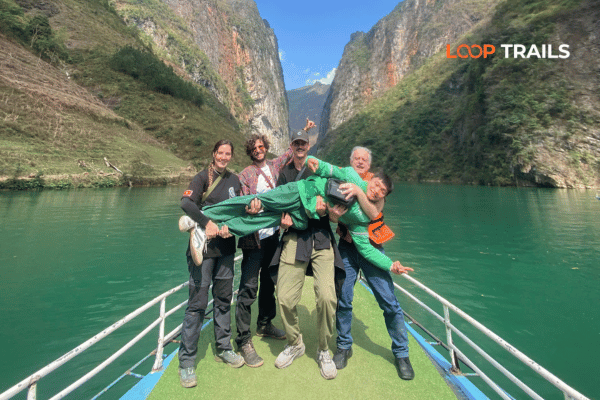
About halfway down, there’s a turnoff to the Tu San gorge boat dock. The road down is steep but doable. The boat itself runs about an hour, gliding through the narrowest karst gorge in Southeast Asia, cliffs rising on both sides. Worth it.
Back up and over to Meo Vac for the night. If your trip lands on a Saturday night, the Meo Vac Sunday market the next morning is one of the most authentic ethnic minority markets in northern Vietnam. H’Mong, Lo Lo, Tay, and Giay traders selling pigs, hemp textiles, herbs, knives, and a thousand things you don’t expect.
The road from Meo Vac to Du Gia is a quieter, greener stretch with a long descent through bamboo forest and a stop at Du Gia waterfall, where you can swim in a clear pool when the weather cooperates.
From Du Gia back to Ha Giang City is the last serious mountain drive of the loop. By late afternoon you’re back where you started, often catching a celebratory beer with your guide before the evening transfer or sleeper bus back to Hanoi.

Learn more: Ha Giang in September & October
Ha Giang has four distinct seasons, and each one looks like a different country.
October to November. Peak season. Buckwheat flowers bloom across the karst plateau in pinks and whites, the rice terraces are gold or just harvested, the air is crisp and dry. Books out fast.
December to February. Cold. Foggy mornings, often clear afternoons, occasional frost on the highest passes. The landscape feels stark and dramatic. Plum and peach blossoms appear in late January, which has its own quiet magic. Bring real winter layers.
March to April. Green up season. Rice terraces flood for planting and reflect the sky. The whole region looks lush. Underrated and uncrowded.
May to early June. Warm in valleys, pleasant on the plateau. Rice is bright green.
Mid June to early September. Rainy season. Roads can flood, landslides happen, views often hide in cloud. Travel still works, but build buffer days and accept that some plans will shift.
Late September. Rice harvest. Valleys turn gold. One of the most photographed times of year, for good reason.
Conditions can change with little warning, so check the latest weather and road updates close to your travel date.
If you want help matching season to format (some seasons make sense for bikes, others lean strongly toward car), drop a quick message and the team can talk it through. The current schedule is on the [Ha Giang Loop tours] page.
Learn more: Ha Giang Loop Cost & Tips
Costs shift constantly with season, fuel, group size, and inclusions, so I’m not going to throw a single number at you. What I will tell you is what affects the total and what to look out for.
Things that increase the cost:
Things usually included in a standard loop package:
Things often not included:
When you’re comparing operators, line up inclusions side by side. A “cheaper” tour that doesn’t include the boat ticket and has you paying for half your meals isn’t actually cheaper, it just looks that way at first glance.
Learn more: Ha Giang Homestay Guide
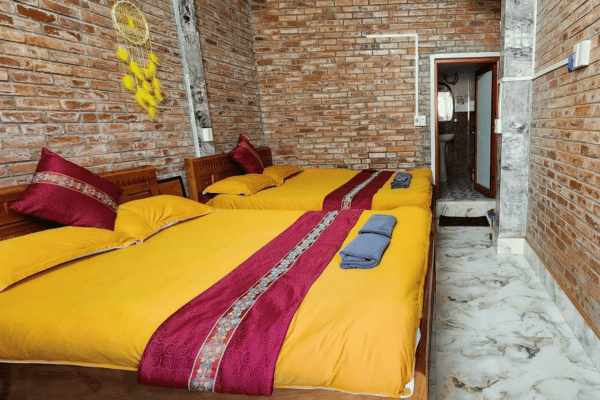
Accommodation has improved dramatically in the last few years. There’s now a real range:
Most car based and easy rider tours default to private rooms with private bathrooms and hot water. If you specifically want the more atmospheric homestay experience, just say so when booking. Most operators happily mix and match.
Wifi is available almost everywhere now, but expect it to be slow, especially in Du Gia. Bring offline entertainment for evenings.
Learn more: Ha Giang Food guide
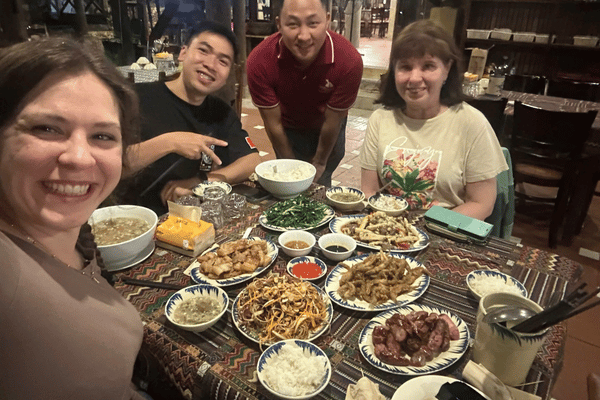
Northern Vietnamese mountain cooking, mostly. Expect:
Vegetarians eat fine. Vegans need to flag it clearly when booking, since fish sauce and lard are common in nominally “vegetarian” dishes. Allergies the same. Tell your operator before you go, not at the homestay.
Coffee on the loop is excellent. Vietnamese coffee culture is strong even in remote villages, and Dong Van Old Quarter has several cafes that wouldn’t feel out of place in a bigger city.
Learn more: Ha Giang Safety Tips
A few honest notes.
Helmets are mandatory for everyone on a motorbike, including passengers. Reputable operators provide proper helmets. If yours feels like a piece of cracked plastic, ask for a better one.
Riding licenses. If you self drive, you need a license recognized in Vietnam. Rules can change, and enforcement varies. Don’t assume your home country license is valid here. Check the latest before you book a self drive option.
Insurance. Get travel insurance that covers motorbike riding if you’re on a bike (passenger or driver). Many standard policies exclude it. This is not a place to be uninsured.
Roads. The main loop is paved and maintained, but switchbacks, gravel patches, and occasional landslides happen, especially in rainy season. Drive within your skill level. The road will still be beautiful at 30 km/h.
Border zone. Parts of the loop are close to the Chinese border, particularly around Lung Cu. Drone use can be restricted. Photography of border installations is a bad idea. When in doubt, don’t.
Health. Pharmacies in remote villages are limited. Bring any prescriptions you need. Bring motion sickness tablets if you’re prone, the road is winding by definition.
Learn more: Ha Giang Packing list
Even non riders feel the altitude here. The plateau is high, the weather changes fast, and the loop covers enough variation that one outfit will not work.
Essentials:
For motorbike riders specifically:
Things you don’t need:

Learn more: Quan Ba Heaven Gate
A short list of things travelers regret most often.
Booking the cheapest tour. A loop tour quoted dramatically below market rate is cutting corners somewhere. Older bikes, weaker guides, fewer meals, basic homestays passed off as standard. Pay enough for a real operator.
Trying to do it in 2 days. You’ll spend most of your time in transit. The loop deserves at least 3 days, ideally 4.
Riding hung over. Mountain switchbacks, narrow shoulders, cliff drops. Pace yourself with the corn wine.
Skipping the Nho Que boat. It looks like a side trip on the map. It isn’t. The Tu San gorge from water level is one of the highlights of the entire loop.
Underestimating cold. Even May has cold mornings on the plateau. December through February has serious cold. Bring layers.
Treating homestays like hotels. Wifi is slow, hot water sometimes runs out, dogs bark, roosters do what roosters do. Adjust expectations and you’ll love it.
Not buying travel insurance. I know. I’m boring. Buy it anyway.
Cramming too many people in one vehicle. Six adults plus luggage in a 7 seater on day three is misery. If you’re a bigger group, two vehicles or two bikes per couple is worth the extra cost.
Booking last minute in October. Peak season fills up. Book your dates as soon as you know them.
Learn more: Cao Bang Loop 3 Days best kept secret
If you have 7 to 10 days, combining Ha Giang with Cao Bang is one of the best moves you can make in northern Vietnam. The two regions sit next to each other and the road between them runs through rural country that gets very few foreign visitors.
What you get from each:
A combined trip works well by motorbike, by jeep, or by car. The transit days between provinces are long, which makes the comfort of a car attractive for some travelers, while others love the riding.
If that sounds like your kind of trip, the [Ha Giang and Cao Bang combine tour] page has the full route. Or, if you want Cao Bang on its own, the [Cao Bang Loop tours] page is the place to start.
Learn more: Ha Giang Loop Easy Rider
A quick decision guide based on the conversations we have most often.
Choose easy rider if: You’re solo or a couple, you’ve never ridden a motorbike, you want the bike experience without the responsibility, and you want a guide who can chat with you as you ride. This is the default recommendation for first timers and probably what you should pick if you’re on the fence.
Choose self drive if: You’re an experienced rider, you have a license recognized in Vietnam, you’ve ridden in mountains before, and you want full freedom to stop wherever and pace yourself. Rent from someone who maintains their fleet seriously. The [motorbike rental in Ha Giang] page has the bikes we trust.
Choose jeep tour if: You’re a small group of 3 or 4 friends who want shared adventure with personality, who don’t want to ride, who don’t mind some bumps, and who like the photos.
Choose private car if: You’re a couple who wants comfort, a family with kids or older parents, a multigenerational group, anyone with mobility issues, or anyone visiting in heavy rain. Quietest, smoothest, easiest on bodies.
Add Cao Bang if: You have at least a week, you want fewer tourists, and you want a deeper, more rural experience after the relative buzz of the Ha Giang circuit.
Still unsure? Send a quick message on WhatsApp with your dates, group size, and what you care about. A two minute conversation usually clears it up faster than another hour of forum scrolling.
Learn more: Ha Giang Loop by Jeep for Families & Groups
The booking process should be simple. Here’s how it works with a good operator.
The fastest path for most travelers is to message us directly on WhatsApp. We confirm same day in most cases, and we’ll tell you straight up if a date is full instead of stringing you along. October and November dates fill up fastest, sometimes weeks in advance.
If you’re ready to look at specific tours, here’s the breakdown:
The Ha Giang Loop is a real trip in a real place. It’s beautiful, it’s a little tiring, it’s almost certainly going to be the part of your Vietnam trip you talk about most when you get home. Plan it well, pick the right format for you, and the rest takes care of itself.
Yes, when done with a reputable operator and reasonable judgment. The roads are mountain roads, not death traps. The bigger risks are inexperience (riding above your skill level) and skipping helmets and insurance. Pick a serious operator and you’re fine.
Most travelers do 3 or 4 days on the loop itself, plus travel time to and from Hanoi. 4 days is the comfortable choice for first timers. 3 days works if you’re tight on time. 2 days is too rushed.
Yes. Easy rider tours, jeep tours, and private car tours all run the full loop without you needing to drive anything. Self drive is the only option that requires a recognized license, and rules can change, so check before booking.
October and November for buckwheat flowers and clear weather. March and April for green terraces. Late September for golden rice harvest. Avoid mid June to early September unless you’re prepared for rain.
It varies by season, group size, vehicle type, and inclusions. Compare quotes side by side with the same inclusions to get an apples to apples view. Cheapest is usually not best.
Different trips, both worthwhile. Motorbike (easy rider or self drive) is the classic experience, more immersive, more intense. Car is more comfortable, better for families, older travelers, or anyone who doesn’t want to be on a bike for three days.
Yes. Always, but especially here. If you’re on a motorbike, make sure your policy covers motorbike riding, since many standard policies exclude it.
Yes, easily. Solo travelers most often do easy rider tours, since you get a guide and don’t ride alone in unfamiliar terrain. You’ll meet other travelers at homestays.
Busier than five years ago, still nowhere close to Sapa or Ha Long. Outside of peak weeks in October, you’ll have viewpoints largely to yourself for big stretches of the loop.
Ha Giang has the dramatic karst plateau and Ma Pi Leng cliff road. Cao Bang has Ban Gioc Waterfall and a quieter, more rural feel. They sit next to each other and combine well into a longer trip.
Generally not recommended for foreigners. Licensing requirements for cars are stricter than for bikes, and the mountain roads are not the place to figure it out. Hire a driver
On most tours run for foreign travelers, yes, at a conversational level. If English fluency is critical (for example you’re traveling with someone who needs more support), confirm with the operator before booking.
Contact information for Loop Trails
Website: Loop Trails Official Website
Email: looptrailshostel@gmail.com
Hotline & WhatSapp:
+84862379288
+84938988593
Social Media:
Facebook: Loop Trails Tours Ha Giang
Instagram: Loop Trails Tours Ha Giang
TikTok: Loop Trails
Office Address: 48 Nguyen Du, Ha Giang 1, Tuyen Quang
Address: 48 Nguyen Du, Ha Giang 1, Tuyen Quang
Facebook X Reddit Table of Contents Learn more: Ha Giang Loop Tours Most people drive past the Quan Ba area twice on

Facebook X Reddit Table of Contents Learn more: Ha Giang Loop Tours The Ha Giang Loop has a reputation problem with older