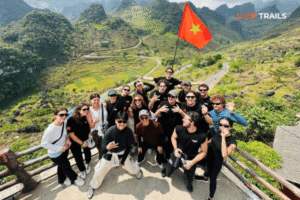


Thúy Kiều (Grace) is a travel blogger and content contributor for Loop Trails Tours Ha Giang. She holds a bachelor’s degree in Sustainable Tourism from Vietnam National University, Hanoi, and has a strong passion for exploring and promoting responsible travel experiences in Vietnam’s northern highlands.
Learn more: Ha Giang Loop Tours
If you’ve already done the Ha Giang Loop and you’re looking for somewhere in northern Vietnam that hasn’t been completely shaped by Instagram, Cao Bang is probably the next answer. The roads are quieter, the scenery is just as good in a different way, and the villages feel less performative. The trade off: fewer rental shops, less English, less infrastructure built around foreign riders, and a slightly more remote feel that rewards riders who are comfortable solving small problems on their own.
This guide is for travelers who want to actually ride Cao Bang themselves. Not pillion behind a driver, not in a jeep with the AC on. I’ll cover what the standard self drive route looks like, what it costs, where to find a bike, the border permit situation, road conditions, and the honest things blogs usually skip. If you’ve never ridden mountain passes before, I’ll be straight with you, this isn’t where to start.
If you’ve already decided and just want to lock in dates, you can jump to a Cao Bang Loop tour or motorbike rental. Otherwise, keep reading.
Learn more: Ha Giang Loop 2 Days 1 Night
A Cao Bang self drive tour is a multi day motorbike trip through Cao Bang Province in Vietnam’s northeast, where you ride the bike yourself instead of sitting pillion behind an Easy Rider or in a jeep. Most well run self drive tours include a lead guide who rides ahead and a tail rider for support, plus accommodation, most meals, and the route logistics. You handle the riding. They handle everything else.
The standard loop starts in Cao Bang City and runs through Ma Phuc Pass, Ban Gioc Waterfall, Khuoi Ky stone village, Nguom Ngao Cave, Angel Eye Mountain (Nui Mat Than), the craft villages around Phuc Sen, and (on longer versions) Pac Bo, Phia Oac, Thang Hen Lake, and Me Pja Pass to the west. Most travelers do it as a 3 days or 4 days trip, sometimes longer if combined with Ha Giang.
Two things to set straight upfront:
Learn more: Ha Giang Loop 3 Days 2 Nights
Almost everyone researching Cao Bang has already considered Ha Giang. So let’s get this comparison out of the way.
If you’ve never been to either and you’re choosing one, I’d still default to Ha Giang for first time visitors and Cao Bang for repeat visitors or travelers who specifically want quieter roads. If you can do both as a combined trip, that’s the best of both worlds.
Learn more: Ha Giang Loop 4 Days 3 Nights
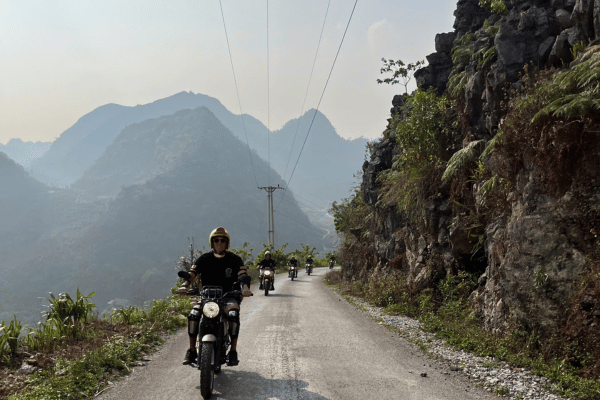
Self drive in Cao Bang is genuinely doable. The main routes are mostly well paved. Roads are wide. Traffic is low. But:
If any of those gives you pause, an Easy Rider or jeep version of the Cao Bang Loop is a smart move. There’s no shame in skipping self drive when the conditions don’t suit you.
Learn more: Ha Giang Cao Bang 5 Days 4 Nights
There’s no single “official” Cao Bang Loop. Different operators ride slightly different routes depending on time, weather, and which villages they prefer. What follows is the version most 3 days self drive tours use, with notes on how to extend to 4 days.
The day starts in Cao Bang City with the standard bike check, gear sizing, and safety briefing. If you’re on a self drive group tour, you’ll do a short shakedown ride before heading out. Don’t skip this. The climb out of the city onto Ma Phuc Pass is steep, and you want the bike feeling right.
You leave the city heading northeast on Highway 3. The first significant moment is the An Lai Slope, a long straight climb that feels like it’s pointing at the sky. After that you hit Ma Phuc Pass itself, a series of seven switchbacks coiling around limestone pillars. The viewpoint at the top is one of the signature stops on the Cao Bang Loop. Then you drop into the karst valleys and continue toward Trung Khanh.
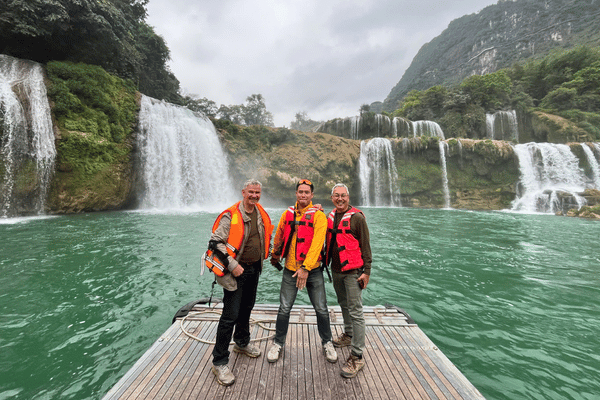
Most groups make a detour through Phong Nam Valley before reaching Ban Gioc. It’s one of the most underrated stretches on the loop: rice paddies cradled by limestone karst, almost no traffic. From there you continue to Ban Gioc Waterfall on the Chinese border, the headline sight of the trip.
A practical note: the waterfall is much more dramatic when the dam upstream is open, which is usually in the early afternoon. Time your arrival accordingly. There’s an optional bamboo raft that takes you close to the falls, worth the small fee on a good weather day.
After Ban Gioc, it’s a short ride to Khuoi Ky stone village. This is where you sleep, in a 400 year old stone stilt house. The village is small (around 14 households), and the homestays are family run.
Highlights: Ma Phuc Pass, Phong Nam Valley, Ban Gioc Waterfall, Khuoi Ky stone village. Overnight: Khuoi Ky homestay. Mood: The “I made the right call coming here” day.
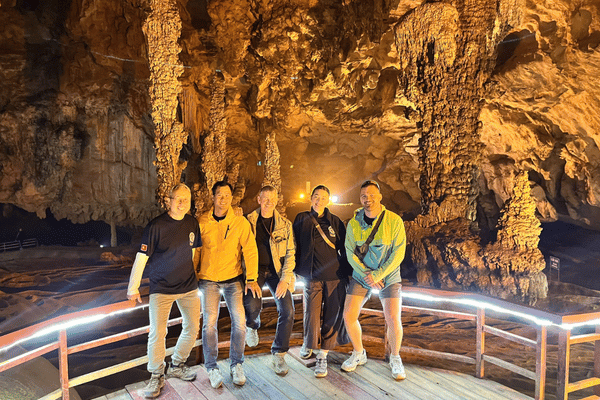
Day 2 is more about variety than headline mileage. It starts with a short walk from your homestay to Nguom Ngao Cave (the Tiger Cave). Two ticket options: a short loop or a longer guided route. The cave maintains a constant cool temperature year round and has some genuinely impressive stalactite chambers. Wear shoes with grip, the limestone floor is slippery.
From Nguom Ngao, the route winds back toward the craft villages around Quang Uyen: Phia Thap (incense making), Phuc Sen (blacksmiths still hand forging knives and farming tools), and Dia Tren (a Nung An paper making village where only a few families still practice). These aren’t curated tourist demonstrations, they’re actual working villages. Buying something small at each one supports a craft that’s quietly dying out.
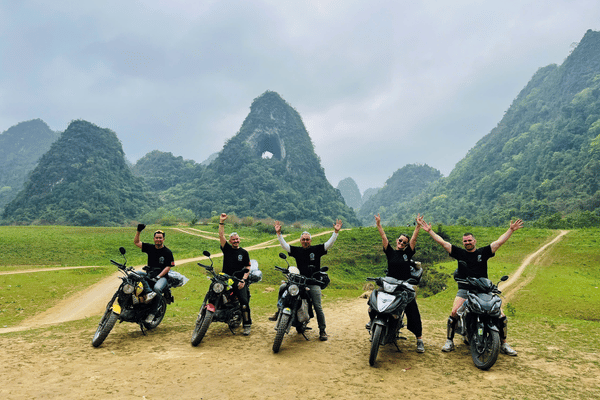
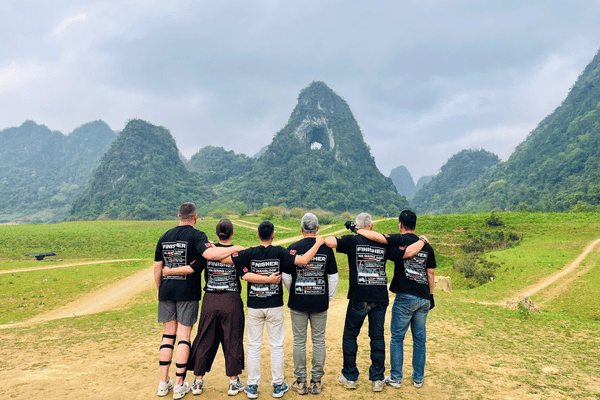
After lunch, the route heads to Angel Eye Mountain (Nui Mat Than, also called God’s Eye Mountain). This is the karst peak with a 50 meter wide hole punched right through it, sitting in a wide valley that genuinely looks like Mongolia. The road in is rough, narrow, and partly gravel. Ride it slow.
You then continue west toward Pac Bo, the cave site where Ho Chi Minh hid after returning from exile in 1941. There are guesthouses and homestays in the area. Some operators stay here, others continue back toward Cao Bang City.
Highlights: Nguom Ngao Cave, Phia Thap incense village, Phuc Sen blacksmiths, Dia Tren paper village, Angel Eye Mountain. Overnight: Pac Bo area homestay or guesthouse. Mood: Less dramatic riding, more cultural depth.
Learn more: Cao Bang Loop 3 Days best kept secret
The final day takes you up into the Phia Oac National Park area. Phia Oac is the highest mountain in Cao Bang at around 1,931 meters, and the road climbing toward it cuts through misty pine slopes that feel like a different country. Snow is rare here but does happen in some years. On a clear day, the views from the upper ridges are some of the best in the province.
After Phia Oac, you ride back toward Cao Bang City through smaller roads and rural valleys. Most groups arrive by mid afternoon, with time to clean up and either catch an evening sleeper bus to Hanoi or stay one more night.
Highlights: Phia Oac National Park, pine forest riding, return to Cao Bang City. Mood: Quieter, reflective, end of trip.
If you have an extra day, the most rewarding addition is to head west toward Bao Lac and ride the Me Pja Pass. Me Pja is sometimes called the “14 stories pass” for its stacked switchbacks. It’s far from the Ban Gioc cluster of sights, sees almost no other tourists, and the viewpoint at the top is one of the most panoramic in northern Vietnam.
A 4 days route usually shifts the order: Cao Bang City to Phia Oac and Bao Lac on Day 1, Bao Lac to Pac Bo on Day 2, Pac Bo to Khuoi Ky on Day 3, Khuoi Ky and Ban Gioc back to Cao Bang City on Day 4. This is also the natural connector if you’re combining Cao Bang with Ha Giang, since Bao Lac sits on the route between the two provinces.
Quick CTA: If this sounds like the trip you want, you can lock in dates for a Cao Bang Loop tour or send a WhatsApp with your dates and riding background. We’ll match you to a self drive, Easy Rider, or combined option without the hard sell.
Learn more: Ha Giang Motorbike Rental
Here’s the cheat sheet for Cao Bang specifically:
| Your situation | Best fit for Cao Bang |
|---|---|
| Confident motorbike rider, want quiet roads | Self drive, 3 to 4 days |
| Ride at home but new to mountain passes | Easy Rider |
| Never ridden a motorbike | Easy Rider or jeep |
| Already done the Ha Giang Loop | Self drive Cao Bang as the next step |
| Traveling with kids or older parents | Jeep |
| Want both Cao Bang and Ha Giang | Combined tour, 7 to 10 days |
| Tight schedule, only 2 days | Easy Rider 2 days, Cao Bang City to Ban Gioc and back |
| Want to ride remote western Cao Bang | Self drive with a guide, 4 days minimum |
When in doubt, default to Easy Rider for Cao Bang. Self drive is genuinely rewarding here, but the combination of fewer English speakers, less rental infrastructure, and remote roads means the cost of getting it wrong is higher than in Ha Giang. If you’re confident and prepared, self drive is the better experience.
Learn more: Ha Giang Cao Bang Ba Be Lake 6 Days 5 Nights
The general feel by season, not a guarantee, always check forecasts before you commit:
If you’re flexible on dates, late September through October and April through early May are the windows I’d push you toward.

Learn more: Ha Giang Loop Self-Drive
I’m not going to quote specific prices because rates change with season, group size, and inclusions, and stale numbers are how outdated information spreads. What you can do is line up the components and ask the right questions.
A Cao Bang self drive budget needs to cover:
When comparing tour quotes, ask:
Cao Bang is generally a bit cheaper than Ha Giang for the same length of trip because demand is lower, but the gap isn’t huge.
Learn more: Hanoi Sleeper Bus
There’s no airport in Cao Bang, no train. Roads only.
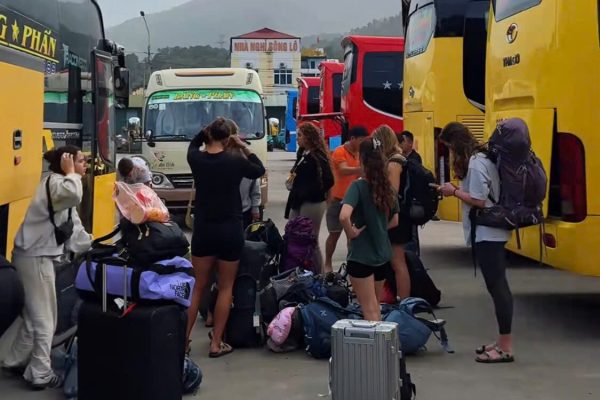
The journey takes most of a night or most of a day depending on departure and traffic. Don’t try to start riding the loop the same morning you arrive on a sleeper. Take a rest morning, eat properly, do the safety briefing fresh.
There’s no direct bus between Ha Giang City and Cao Bang City. If you’re combining the two provinces on one trip, the smart move is to ride between them with a guide who knows the route. The connecting day usually goes through Bao Lac. This is much easier through one operator who covers both regions, and it’s exactly what our Ha Giang and Cao Bang combine tour is built for.
This is one of the practical hurdles of Cao Bang self drive. The province has fewer rental shops than Ha Giang, and quality varies. A few options:
If you’re booking a guided self drive tour, the bike is usually arranged for you. Just confirm the model and condition before you commit.
Learn more: Ha Giang Loop Insurance
This part takes some care. Cao Bang is a border province with China, and several of the highlights (Ban Gioc, Pac Bo, Ngoc Con) sit in sensitive border districts.
Border permits: Foreign visitors entering certain border districts in Cao Bang are generally expected to carry a border travel permit. Whether and where this is enforced varies, and rules can change. Most reputable operators arrange this for you when you book a tour. If you’re DIY, ask your accommodation in Cao Bang City to point you to the current immigration counter, or contact us in advance and we can advise.
Motorbike licenses: To legally ride a motorbike in Vietnam you generally need a Vietnamese license or a 1968 International Driving Permit (IDP) with a motorbike category. Many travelers ride without one. Enforcement in Cao Bang has historically been lighter than in Ha Giang, but rules can change at any time. We don’t promote any specific workaround.
The bigger issue is insurance. Most travel insurance policies exclude motorbike riding without a valid local license. If you crash and you’re not licensed, your policy may not pay out. That’s the real reason to take this seriously, not roadside fines.
What we recommend:
Learn more: Cao Bang Travel
Most of the main routes are paved and in reasonable condition. That said, conditions change every season, and reports from a year ago are usually outdated.
Honest things to know:
CTA: If you want a local lead rider on the route who knows where the rough patches are this season, our Cao Bang self drive tour includes an experienced guide riding with you the entire loop, plus the border permit handled in advance.

Learn more: Ha Giang Packing list
You’re carrying everything on the bike or in a small support vehicle if your tour has one. Pack light.
Essentials:
Skip: a second pair of shoes, hardback books, anything you’d cry about losing.
Learn more: Explore just the Cao Bang Loop
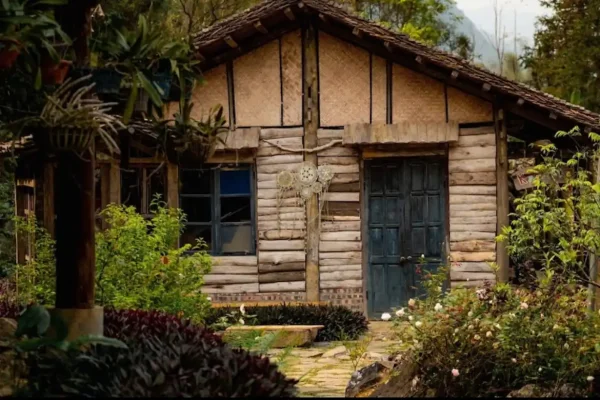
You’ll mostly sleep in two kinds of places on a Cao Bang self drive:
If you have specific accommodation needs (private bathroom, queen bed, dietary restrictions), tell your operator in advance. Most can adjust with notice.
Learn more: Things to do in Cao Bang
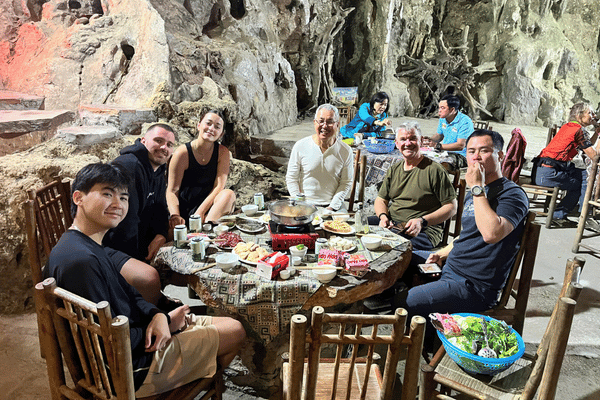
Cao Bang’s food scene is genuinely distinctive and worth planning meals around rather than treating as a fuel stop.
Worth trying:
Vegetarians and vegans can eat well, but flag dietary restrictions early so homestays can prep.
Learn more: Visiting God’s Eye Mountain
A few patterns we see again and again:
There’s no big scam epidemic in Cao Bang. Mostly just normal traveler mistakes amplified by remote roads and limited English.
Learn more: Ha Giang to Cao Bang
If your trip has more flex, this is the question worth asking. The two provinces sit next to each other, and combined they give you a much fuller picture of northern Vietnam: Ha Giang’s high passes and karst plateau on one side, Cao Bang’s emerald rivers, waterfall, and quieter roads on the other.
The catch is logistics. There’s no direct bus between Ha Giang City and Cao Bang City. Combining well usually means riding between them via Bao Lac with a guide who knows the route. That’s a 7 to 10 days trip total, and it’s much easier through one operator that covers both regions.
If you have that time, our Ha Giang and Cao Bang combine tour is built for it. If you only have 3 to 4 days, do Cao Bang on its own and save the combined trip for a return visit.
Learn more: Cao Bang to Ban Gioc waterfall
A Cao Bang self drive tour is one of the best motorbike trips you can do in Vietnam right now, with a real caveat: it suits experienced riders who don’t mind a bit more friction in exchange for genuinely quieter roads. The geography is special. Ban Gioc, Khuoi Ky, the craft villages around Phuc Sen, the Phia Oac mountain area, and the western Me Pja Pass are all worth the trip on their own. Together they make a compact, varied loop that’s still meaningfully off the main backpacker trail in 2026.
The choice that matters most isn’t the operator. It’s whether self drive is genuinely the right mode for you here. If you’re a confident rider, comfortable solving small problems on the road, and you specifically want quieter scenery than Ha Giang, self drive is the right call. If you’re not sure, take Easy Rider in Cao Bang and self drive somewhere with more support.
If that’s the kind of trip you’re after, that’s what we do. Browse our Cao Bang Loop tours, look at motorbike rental options if you’d rather sort the bike yourself, or message us on WhatsApp with your dates and riding background. We’ll send back an honest recommendation, even if that means suggesting a different mode or pointing you toward Ha Giang first.
Final CTA: Ready to ride? Lock in dates for a Cao Bang self drive tour or grab a rental bike with a route guide. Still narrowing it down? Send a WhatsApp with your dates, group size, and riding experience. We’ll match you with the right option, no fake urgency, no upsell.
Learn more: Ha Giang Loop for Beginners
Not really. The main routes are well paved but steep, and the road into Angel Eye Mountain plus parts of the western loop are rough. You should be a confident motorbike rider on a manual or semi automatic before riding here. If you’re new to mountain passes, take Easy Rider or jeep.
Three days covers Ban Gioc, Khuoi Ky, Nguom Ngao, the craft villages, and Phia Oac. Four days lets you add the western Me Pja Pass and Bao Lac, or pace the trip more comfortably. Two days is enough for Ban Gioc and back only.
Late September through October for clearer skies, drier roads, and the rice harvest. April through early May for milder weather and fewer crowds. Summer is hot and wet. Winter is cold, especially at Phia Oac, and quieter.
Yes, but the rental scene is much smaller than Ha Giang. A handful of shops in Cao Bang City rent semi automatic and manual bikes. Inspect the bike thoroughly before you ride and keep the shop’s contact. Renting in Ha Giang and riding east is another option if you’re combining the two provinces.
For some border districts (around Ban Gioc, Pac Bo, Ngoc Con), foreign visitors are generally expected to hold a border travel permit. Rules can change. Most reputable operators handle this when you book. If you’re DIY, ask your accommodation or contact us in advance.
Different. Cao Bang has quieter roads, Ban Gioc Waterfall, and a less staged village feel. Ha Giang has more dramatic high passes, more rental infrastructure, and a stronger backpacker scene. First time visitors usually default to Ha Giang. Repeat riders often prefer Cao Bang.
Many travelers do, and historically enforcement in Cao Bang has been lighter than in Ha Giang. Rules can change at any time. The bigger issue is travel insurance, which usually doesn’t cover motorbike riding without a valid local license. If license and insurance are a worry, take Easy Rider or jeep.
Sleeper bus from My Dinh station (around 6 to 7 hours, arriving early morning) or limousine van. Don’t try to start the loop the same morning you arrive on a sleeper. Take a rest morning first.
At minimum a semi automatic 125cc. A manual 150cc adventure bike is more comfortable on the steeper sections, especially toward Angel Eye Mountain and Phia Oac. A small automatic scooter will struggle on the climbs.
Yes. It’s one of the largest waterfalls in Southeast Asia and the headline sight of the Cao Bang Loop. Time your visit for early afternoon when the upstream dam is usually open, the water volume roughly doubles. The bamboo raft trip up close is worth the small extra fee on a clear day.
Yes. The two provinces sit next to each other, and a combined trip usually takes 7 to 10 days, riding between them via Bao Lac. There’s no direct bus, so it’s much easier through one operator that covers both regions.
Generally yes, but stay on legitimate roads, carry your passport and any required permits, and don’t fly drones near the border without checking sensitivity rules. Police checks happen on the approach to certain districts. Be polite if stopped, present your documents, and you’ll usually be waved through.
Contact information for Loop Trails
Website: Loop Trails Official Website
Email: looptrailshostel@gmail.com
Hotline & WhatSapp:
+84862379288
+84938988593
Social Media:
Facebook: Loop Trails Tours Ha Giang
Instagram: Loop Trails Tours Ha Giang
TikTok: Loop Trails
Office Address: 48 Nguyen Du, Ha Giang 1, Tuyen Quang
Address: 48 Nguyen Du, Ha Giang 1, Tuyen Quang
Facebook X Reddit Table of Contents Learn more: Ha Giang Loop Tours Most people drive past the Quan Ba area twice on

Facebook X Reddit Table of Contents Learn more: Ha Giang Loop Tours The Ha Giang Loop has a reputation problem with older